Omi Diaz-Cooper: Crushing Limiting Beliefs & Human-Centered Sales | Women of HubSpot
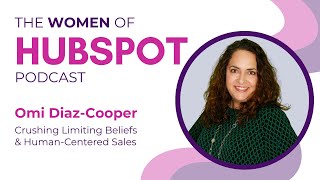
Omi Diaz Cooper, co-founder of Diaz and Cooper, talks about overcoming limiting beliefs, building a HubSpot Solutions partner firm, and what it takes to succeed as a woman in sales and revenue operations.
Welcome to the Women of HubSpot podcast, the show that celebrates the voices shaping marketing technology and the ever evolving HubSpot ecosystem. Hosted by George B. Thomas from Sidekick Strategies, each episode brings you the stories, strategies and superpowers of the women driving this industry forward. It's their time. It's their mic. This is Women of HubSpot.
All right, ladies and gentlemen, it's your boy, George B. Thomas. And we're back for another beautiful conversation. Again, if this is your first episode, it was a while ago. It was a Super Bowl. The Philadelphia Eagles were in it, and there's a quarterback for the Eagles that has an all women's team. I was sitting there and I started to listen to my daughters talk about how they were just amazed and loved the fact that there was all women's team behind the quarterback. And it got me thinking, why are we not putting more information? Why is there not more of this? And so I went to LinkedIn, I created a post. The post went nuts, nuts, crazy. I just said, hey, tag a woman of HubSpot that, you know, that is killing it. And I was amazed. My daughters and I, we looked at each other and we said, hey, there's something here. We've got to have these conversations. We've got to create this content. And so we picked up the mantle. We started running with it. And so today I'm excited because it's not just me. Omi, how are you doing today?
I'm doing great today, thank you. I'm glad you told that backstory because it tied some loose ends for me about football and men and women of HubSpot.
Yeah, yeah. Where the two collided. You got to kind of give that context or people are like, how did we get here? Why are we doing this? Here's the thing. I'm going to ask you some questions. We're going to go through what I lovingly call the Valley to get to the kind of the peak of the mountain with some of these questions. But before we get started, why don't you explain to people who you are, what you do, and kind of where you do it?
So my name is Omi and I'm the co founder of Diaz and Cooper, and we are a platinum HubSpot Solutions partner. But more than that, we're really a revenue operations consultancy. We do strategic rev ops from the top down. Right. So from business objectives and the C suite on on down, we specialize in Aviat and travel, two of our top niches. But really almost any B2B technology, things like that, we Have a lot of expertise. And we're about to celebrate 25 years in business next year. So that's super exciting. And we are fully remote. Although I personally am headquartered in Miami, Florida. I have team members in Canada, in the uk, in Texas, in all over Florida, some in Latin America. So we're fully remote.
I love, love, love, love that you're remote. Also, congratulations on the 25 coming up on 25 years. I also have to just say I love your background. If you're, if you're not watching this on YouTube, if you're listening this on the podcast, between your background and my background, there is just visual delights everywhere that people could be looking at. Okay, enough of that. Not why we're here. Omi. If we could go back in time and meet young Omi Diaz Cooper, just starting out one, what would we see and what would she be most surprised about where you are right now?
She would definitely have her socks blown off by the fact that I am in a sales position. As a young person, I thought of sales in a kind of a negative way. And it actually was a self limiting belief that I had to overcome in order to have my business be successful. But I think you saw somebody who was a hustler who was really wanting to just learn and be open to all kinds of things. My background that you mentioned is actually an homage to the fact that I have a degree in anthropology, which has helped me in my career. And I wasn't sure back then that it would, but it has. So that's another surprising thing that I think young Omi would. Would be surprised by, as well as the fact that I've had a long lasting business of my own because entrepreneurship wasn't really on my mind back in my early 20s.
Oh, that's interesting. Sales, limiting beliefs, which by the way, I think right there would be a topic that we could dive into for hours about limiting beliefs. One of the best books I ever read was by Gay Hendricks, and it talked about limiting beliefs in your zone of genius and the big leap. And so if you're listening or watching this and you're like, hey, I have some limiting beliefs, hey, maybe that book will help. But. Okay, so let's kind of continue on. We've got sales, we've got entrepreneurship. Did you say archeology?
Yeah, Anthropology.
Anthropology, yeah.
Yeah.
Wow. Crazy. Okay, so that's note one of I had no clue, nor would I probably ever know. So I'm already glad that we're having this conversation. So you've had this journey, right? You you even mentioned at the beginning going on almost 25 years in business along the way. And by the way, you can go as back as far as you want to as soon as you want. Who are some of your biggest inspirations or mentors along the way?
So I do want to start by saying that I was nearly eight months pregnant when we decided to open the business and the inspir fort was leaves.
It's very interesting how far the places and spaces that you can go into. So amazing, amazing story there. Okay, let's keep going down this journey again. We're getting into kind of some of what I call the valley questions, but I, I promise eventually we'll go into the mountaintop. So Omi, have there been any hurdles, biases that you've had to overcome in your career? And, and if so, like, how did you navigate them along the way?
Oh my gosh. Have there. Besides the typical hurdles that we faced in, in, in the last couple of decades, like recessions and Covid and you know, almost being bankrupt, you know, a couple times, you know, over history. Right. I think the ones that really are more like things that really make you think about how you want to handle them are things like for example, early on, almost all men clients that we had assumed that I was my husband's like assistant or secretary and I was actually the owner of the company and the president and the CEO. Not to take anything away from him, but he's definitely not like a growth strategist. He's more of a cfo. He's more of a, you know, of a farmer and a mechanic than a hunter. You know, so there were, you know, differences that made it work. But a lot of times, you know, I mean, I sat in a room where, you know, where men just assumed that I was the secretary. So overcoming that, overcoming the fact that women still don't get women owned businesses, still don't get funding the way that men owned businesses do. Like honestly, you know, any tech bro with a laptop can get funding from just about anybody. But women have to triple and quadruple, you know, prove themselves. So we learned to bootstrap and we learned to self fund and we learned to just make it happen with, you know, with again with grit and then my own, my own head. Right. So being able to say like, yes, I can do it, even though I'm a woman, yes, I can do it. Yes, I can show up and be my full self and be a, you know, and be kind and listen to people while still acknowledging that I might be smarter than Some of the guys that I'm talking to, that's a. That's a tough pill for some people to swallow. And it's also. I came from a background where, like, my own mom said, you know, hey, like, never show how smart you are because men don't like that.
Oh, wow.
Right.
So, yeah, man, it's so many good things already, because when I hear you talking about that, I hear, like, self love, self belief, and then this thing that I think is so important and. And you called it grit. Like, I love to call it persistence. Right. Just, hey, put your head down, figure it out, like, with grit. Let's get it done. Again, a key thing if you're going to be successful to kind of pack away or build into yourself. Okay, let's dive a little deeper into that. Because you kind of alluded to, like, sitting at the table and people having the wrong perception of even who you are. Have you ever faced a moment where you felt maybe underestimated, overlooked, out of place just in the industry, and how did you handle it?
Yeah, I think there's been moments like that throughout. Throughout history. I. I recall I was in a boardroom one time with, you know, two guys, and my co worker and I are two women. And it was a highly technical discussion. And she and I knew that there was a lot more behind the issue that we were discussing. Like, the problem of why this thing hasn't happened yet is because there are things going on in the back end. It was, like, highly technical. There were things going on in the back end that needed to be resolved before could step in and make the right integration. And I just felt like we were being completely dismissed because we were two women and they were two men. And I think they felt like, gals can't possibly know, you know, they just can't get it done. Their team isn't capable. And I finally ended up, like, literally drawing it out on a chart for them. And then the light bulbs kind of went off and they were like, oh, okay, we, you know, we get it now. So sometimes you just. You can't let that get to you, and you can't get defensive. You have to, like, listen and see if there's a better way to explain it, though, that they will listen, you know, to you. Right. Without resorting to, like, well, my dev's a man, you know, or my other dev's a man or whatever. You know what I mean?
Yeah. I love this idea of you can't let it get to you. Listen, and you trying to figure out how to Communicate a better way where they can get it. I think the power of listening again, where we're kind of unpacking all these pieces so we can build them into ourselves as we kind of move forward and learn from the journey that you've been on. So let's again kind of go into this and I love the stories that you're telling. A little bit deeper. I promise we're going to crest to the mountaintop here in a hot minute. But have you ever experienced a significant failure, a setback where it just felt like a punch in the gut? And if so, or when, what did you learn from it?
I'm going to say one of the biggest ones was absolutely 2020. We had already survived the dot com bust, we had already survived the real estate crash, we had already survived the recession, and we had very carefully pivoted to being mostly a travel focused company. And so literally every. We know, we had airlines, we had cruise lines, we had hotel chains, Everybody was a travel company. And so you could imagine that by the end of Q1 of 2020, we had lost nearly 80% of our revenue. And I felt like a failure because I had made the decision to go into that niche. I had made the decision that that was a space that I loved. It was a space that I felt alive in. But I said to myself after a grieving, because I got to tell you, none of this is easy, right? And you have to allow yourself the time to feel it and to, and to grieve a little bit before you can move. But I said this isn't gonna, you know, this isn't gonna end us. And I believe that this is going to come back. And so my first instinct wasn't let's cut people or let's cut this and that my first instinct was, oh my gosh, a lot of my friends are being furloughed. A lot of people that have a lot less than me that depended even more on this industry than I did are suffering right now. And I put out a whole series of emails on, you know, if you know people, if you know people that are hiring, if you know people that, you know, that have food banks, like, you know, things like that to like, help out in the industry. And then thank goodness, you know, yes, we were able to pivot, we were able to get more, you know, SaaS clients, a lot of clients use the time to do communications around Covid safety, etc. Etc. And you know, between, you know, some of the, you know, the loans and, and some of that, we, we were able to make it through. But I think if I had let that go, it was a major gut punch. Don't get me wrong. I mean, I literally was sobbing at the table a couple of times, you know, thinking about, like, oh, my gosh, you know, we've. We've survived so much already, and now for this to also happen, but not letting. Not letting it get to you. Like I said, you know, giving yourself the time to grieve and then figuring out how you move on, but starting from a place I give back, how can I help others first? Because eventually it'll come back to you somehow or another. But that's not why you do it. You do it because you genuinely feel like, oh, my gosh, it's a horrible situation for me. But look at all these people that are even worse. Yeah, right.
I love that you kind of. Well, first of all, the idea of giving it space and grieving and then moving forward from it, when you give it the space, you can actually learn from it. Which, by the way, nobody saw any of that coming. It was just all sudden it was there. And so it's like nothing we can control. We didn't have power over it. Like, any decision we made before that had nothing to do with it. And so. But the fact that you leaned into, how can I help other humans? Because they're going through this, first of all, that tells me a lot about who you are as a human. And I'm always in the camp of, like, how do I show up as a happy, helpful, humble human for those that we're trying to serve? And so the fact that you leaned into that is absolutely amazing to me. All right, let's dive a little bit deeper. But now we're going to kind of crest out into the mountaintop questions that we're going to get into. Omi, what does empowerment mean to you, and how do you pass it on to others in your field? Or that you work with this idea of empowerment?
Yeah, I think, first and foremost, empowerment is not something anyone else can give you. Empowerment is something that you have to dig deep and find out and gift it to yourself. So that, to me, is how I see it. And it is not an easy lesson to learn, But I think it's that source of, you know, what we were calling grit or persistence or whatnot is that you have to have a level of belief in yourself. And I'm not talking about the surface, fake it till you make it kind of thing. I'm talking about, like, really saying, what can I do? How can I Show up in the world. How can I help others? What is my. What is the meaning of what I'm doing? And then showing up for that? And that's going to give you the most empowerment than anybody else can give you, you know, in any other way. I mean, obviously there's great books and there's great mentors and great examples, but you got to find it within yourself.
Yeah, I. I love that so much. I love that you said gift it to yourself, like, and. And it's your meaning. So those are some things the threads that I would want the viewers are listening to pulling is like, what is my meaning? How do I gift myself this empowerment mindset? So with that said, though, can you share a moment where in your career you felt especially empowered or proud of something that you achieved?
Yeah, there's. You know, thankfully, there's been quite a few of those as well. One of my earlier ones was when I was on Stage at Inbound 2017 with Dan Tyre, and he picked little old me, you know, to. To be on a. You know, to be on a panel and speak in front of, like, four. I don't four or five hundred people that were in the room. And it was about sales. And the reason that that felt so, you know, so empowering was because I had overcome my beliefs that sales was something like used car salesman, and that it was, you know, tacticy and gimmicky and manipulative. And I had flipped the switch and learned through one of the greatest salespeople, you know, in HubSpot's history, you know, Dan Tyre, that sales is about helping other people, that sales is about figuring out what solution you can offer, seeing if the person has that problem that that solution will fix, and then connecting the two for a happy ending. Once that switch had been flipped, you know, that changed things for me. And so the culmination of having gone through the boot camp and graduated and then being part of being on the stage at Inbound was really, really gratifying.
I love that story. And I also love me some Dan Tyre. Like, he is an amazing human, and to be on stage at Inbound is an amazing feat. So congratulations on that. And I. I love, too, that it just ties back to, like, I had this personal hurdle. I got over this hurdle, and because I got over, I got to actually educate others again to that helpfulness that seems rooted deep inside of you.
So, yeah, I teach that boot camp now, by the way.
There you go. There you go. I love it. I love it. So if you haven't taken that Boot camp. Go take the boot camp, because you might have to get past your own hurdle. That's a little plug there. So, Omi, if you could change one thing about how women are supported in this industry, what, you got a magic wand? What the heck would you change the.
Way that we connect together as women? So I'm probably in four or five different slack groups for different women's groups, and that's fabulous. Having these micro communities is fabulous. But I wish there was some bigger thing that we could all come together under that we could all collaborate under and learn from each other and support each other, because for a long time back in my mom's day, I think part of what came out of that advice she was giving, you know, back in. Back in those days, it felt like a lot of women were, like, more like, competing against each other and, you know, like, trying to claw their way out, you know, from the depths. But we've, you know, I think we were standing on the shoulders of those women, and we now need to see that we'll get a lot further by collaborating, communicating, and helping each other out. There's plenty of business for everyone, and we all have a, you know, a slightly. Even if we do the same thing, we either do it for different audiences or we do it in a slightly different way, or we have a different, you know, niche. So there's really no reason why there couldn't be some sort of, like, a broader platform for women to come together instead of all these little micro communities all over the place.
I love this idea of a bigger community, and my brain goes to, like, a community where you can be lifting up, you know, you. You. I think that comes to my mind because you're kind of, like, clawing or scratching our way out and, like, standing on the shoulders of these other women. And now you're in the position, or it feels like you're in the position to want to. Like, how do we just elevate or escalate this even more than where we are now? And I. I love that idea. Somebody needs to, like, put something together for that. If you're listening to this and you're like, hey, this is something I think, too, then, well, you know, that you should probably reach out to Omi and we can see if something can happen there. Okay, Omi, this is. It's called the Women of HubSpot Podcast. I literally asked one question about HubSpot, by the way, and so we've arrived at that moment. Are there any particular tools, strategies, or trends in HubSpot? Right now that, like, excite you?
I'm gonna say that a lot of people obviously are very excited about the AI direction that HubSpot is taking, and I am as well. However, I feel like what is more exciting is that we can be a lot more human utilizing the tools. It has been said a lot, but, but you really have to live it. You really have to be genuine. You really have to give value first. You really have to stay in touch and in connection with your customers to make sure that you're, that they're getting the impact that they signed up for. And as a, as a customer platform, HubSpot helps you do that. So do it right, like start using the, you know, the CX tools to see, like, how you're, you know, how they're doing. Don't just send the damn survey, right? Follow up, call them up, follow up with a personal email. The other day I took a client out to lunch and I'm doing that, you know, with, with the local clients that we have. Because that human connection, that's what keeps the clients happy. Knowing that you've heard them and that they feel listened to and heard, that's what's going to keep you in, you know, keep you in their good graces and what's going to help you serve them better, right? And so all the tools that, you know, for automation or whatever, they're all wonderful, they're all great, but just make sure that you're using them for that, that you're using them to listen better and to give more value and to be more human.
I love listening. More value. And, and you had me at be human, by the way. I was like, I felt like it was my Jerry Maguire moment. You had me at hello, like, so here's, here's one. Networking, right? How important is networking with other females or just general humans? And if it is important, like, are there certain strategies that you use to build connections?
Oh, yeah. So networking, whether it's at live events and luncheons and things like that, or whether it's on, you know, communities and slack channels and groups is super, super important because the more other people get to know you and who you are, the likelier they are to then remember you and refer you. And it's not always about trying to get business right. It's to. I approach it more as curiosity. For me, curiosity is the biggest, best trait that you can have when you're networking, right? So asking questions, genuinely listening to people, something may or may not come out of it, but sometimes you just, by just being Naturally curious and having, like, nice human conversations. You might find out that they have a cousin or they have a, you know, a friend, or that their own business needs that X, Y and Z, or whatever the case might be. Just the other day on one of the Facebook groups, one of my friends from one of my women's groups recommended me for a niche that somebody was looking for because, you know, again, she just knows me. She trusts me. It's really about building that trust. And building trust isn't. You can't do it with AI generated content. Building trust is about making people feel heard. It's about, again, providing that value and having those human connections. Connections so that people then feel like, okay, yeah, I trust that that person can. Is saying that if they. If they're saying they can do it there, they can, because I trust them.
I love that so much. So many good pieces in there. It might be a rewind point of this episode, to be honest with you, but I love this idea of curiosity as a networking superpower. I think that is so amazing. Omi, you've had an amazing journey. We've covered some of the things, you know, hurdles and things that you have gone through. So I'm curious on the other side of the coin, like, what has been the most rewarding aspect of your career.
Besides obviously helping, you know, clients reach their objectives. Right. And being able to have clients that come back even after they switch jobs? We've had one that has taken us with them on, like, four or five different jobs. That's obviously the number one. But. But the one that, like, is very close to my heart and is seeing some of the people that started out with us as very young, sometimes interns, sometimes entry level people, and now today, seeing that they have positions as VPs of marketing at a major pet chain and a major jeans manufacturer and digital strategists for a major tech company. Like, seeing these folks that, you know, that had a journey with us and that learned certain things, and I'm not saying it was all because of us, just the fact that we were part of that journey and we gave them an opportunity and, you know, in many cases did teach them things. Right. It. That's very gratifying to see that their success today.
I love that because, well, one of the things on my georgebthomas.com website, the tagline is catalyst for growth. And what I hear you saying is we like to help our clients grow. But it's also really cool when you see people who are inside of our own walls, virtual or real, go to be, do these great things. And I love that because again, it comes down to like this idea of being helpful, of being human, and almost even like a little bit of mentor in there. And so speaking of mentor, let's get you to be a mentor for a second. What advice would you give other women who might want to choose this same career path that you've been on?
Well, first and foremost, you know, this whole believing in yourself, you know, it, it is not easy. I'm not, I'm not sitting here saying like, hey, anyone can do this. Like, no, you're gonna have moments where you're gonna doubt yourself. You're gonna have moments where you're gonna feel like somebody punched you in the face. And you know, let yourself feel it and then figure out how to move on. But the number one thing that I, that I would tell people today is, is don't try to be something that you're not in the hopes that you will eventually get there. Okay? If you genuinely feel that you're going to get there, then be true to where you are and learn as much as you can along the way. But don't over promise, don't use fake tools to, you know, because people will suss you out. And I think that's going to be a bigger hurdle, you know, during these times than any outside perception of female, you know, capabilities or anything like that. I think a lot of that hopefully is, is behind us. Maybe not all of it, but, but I think you can hurt yourself more by being inauthentic than anything else.
First of all, that is the rewind spot for sure, if the other one wasn't. But like, you can hurt yourself more by being inauthentic than anybody else could I. So again, you've been on this journey. There's so much I want to say about that, but I'm just going to let it sit there so it can brew in the brains of the viewers and listeners. You've again been on this amazing journey, you know, going on 25 years in business. You've reached this destination that you are right now. But I'm super curious, Omi, what are your long term goals from here to wherever?
So we're actually working on that now. So we're, my husband and I are kind of in the last five years or so of where we'd like to really figure out what's next for the company and what makes the most sense in an ideal world. I would love for the company to be run by, you know, by the team. I have a very Capable team. I think it. It could, it could play out, you know, really nicely that way. But personally, I am dying to just live long term in Europe, particularly in Spain and Italy, around the Mediterranean. My husband loves to sail. We both love the ocean. I'm of Spaniard descent, so. And I. And I speak Spanish and Italian, so I, you know, I'm just so looking forward to that. Yeah, we're working towards making that happen in a way that everyone ends up winning, hopefully.
I love that I. I love that everybody ends up winning. Team driven culture and company would be amazing. And by the way, sailing and. Yeah, let's go. Come on. That wouldn't suck at all. At all. Okay, so we're gonna land the plane. We've got two more questions for you, then we'll let you get back to your regularly scheduled day. So I've learned a lot about you, by the way. A ton during this interview. So had the viewers and listeners. But I just need one more thing. Like, what's a surprising or little known fact about you that people might not expect?
Probably the fact that I really love horseback riding. Don't get to do it enough. And if I had my choice of where I would be at any given moment, if I'm not like, reading a book, I would be on horseback.
I absolutely love that, by the way. I grew up in Montana, so I used to ride and train horses. And a little unknown fact, not why we're here, but before HubSpot, I was actually a certified western and English riding instructor, so.
Oh, my gosh. I used to take dressage, so I can. I can ride both saddles as well. Yeah. So there's another little thing I want to say and that you and I are kindred spirits in another way because I know that you also talk a lot about being human and being. And you could see from my mug here that I believe in that as well. And I'm not sure if you remember, but we actually met back in inbound, like in 2018 or something, and had like a long conversation. And you were one of my early inspirations to, like, stick it out and stay as a partner, so.
Oh, yeah. Thank you so much. That is amazing. See, I love when I get those little nuggets handed back to me that I was part of a conversation that actually made a difference. And. And in your case, probably many, many differences. So absolutely love it. Okay, last question, Last question. Finish this sentence for me. Success to me is blank.
Success to me is feeling like I've helped others to achieve something greater than they could have otherwise and feeling good about it.










