Ranya Barakat: From Breaking Barriers to Building Legacy | Women of HubSpot
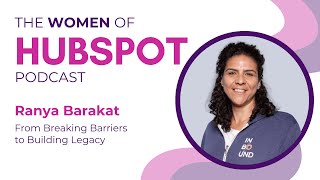
This is a YouTube video titled "Ranya Barakat: From Breaking Barriers to Building Legacy | Women of HubSpot" created in June 2025. It features an in-depth interview hosted by George B. Thomas with Ranya Barakat, a prominent figure in the HubSpot ecosystem. The conversation covers Ranya's personal and professional journey, challenges she overcame as a woman in a male-dominated industry, her mentorship experiences, empowerment philosophy, and long-term goals. The discussion also touches on HubSpot tools and community networking, highlighting Ranya's impact and legacy within the marketing technology space.
Welcome to the Women of HubSpot podcast, the show that celebrates the voices shaping marketing technology and the ever evolving HubSpot ecosystem. Hosted by George B. Thomas from Sidekick Strategies, each episode brings you the stories, strategies and superpowers of the women driving this industry forward. It's their time, it's their mic. This is Women of HubSpot.
All right, we're back with another episode of Women of HubSpot and I'm super excited to keep this train going. These have been some of the most fascinating conversations I've had. I've learned so much along the way about, well, what people love about HubSpot, the world that they navigate as far as women, empowerment, success, all sorts of things. And to think that this all started a Super bowl conversation. Me, my daughter, the Philadelphia Eagles, him having an all woman team and seeing how she was excited about that. And I went to LinkedIn, no strategy, and just said, hey, if you know a woman of HubSpot, tag them. The post went crazy. The post now has turned into content and a podcast and it's just a joy to be here. So, Rania, how are you doing this morning?
I am very well, George. I am excited to be here. Thank you for having me.
Well, I'm excited that you're here too, because otherwise it would be a very boring episode. And so here's the thing. I'll warn you, we're going to go on a little bit of a journey. I've noticed that some of these questions are peak questions, some of them are valley questions, but there's a lot I think that we can learn about your journey and it depends how far back you want to go. But let's go ahead and kick into this and I'll ask you the first question here. If we could go back in time, a DeLorean time machine, a phone booth, whatever you want to do. And we met young Rania just starting out. What would we see and also what would she be most surprised by? About where you are now?
Let's go with two options. First option is let's go all the way back to seven year old Rania and what you would see is a very playful, high energy, cheeky little girl who new I don't fit in here. And if you go back and talk to her, you can just let her know it's okay, be your authentic self. And that would have helped a lot. If we go as far back as 2013, which is when I became a HubSpot partner, what you would see is Rania, also very cheeky, very high Energy. Only this time, not in Kenya as a little girl, but. But in Chile, in Latin America. Who had just moved to Chile, didn't know anyone, didn't speak a word of Spanish, but had to survive.
Wow. So Kenya to Chile and then a new location, had to figure out the language, had to survive. And so. And this is. You're basically starting to work with HubSpot, correct?
In 2013? Yeah.
As a partner.
Yep.
Okay, so almost. Let's see, what would that be? 12 years, 13 years? Now you've been doing this. Okay. All right. So along the way, this journey, we're talking 12, 13 years. And if we go back to seven, a long journey. Who are some of your biggest inspirations or mentors along the way?
On the HubSpot side, there's a number, the ones that have really left sort of a mark with me, and they are a huge reason of our success with HubSpot. I'll list them out for you. David Torres. We were very fortunate to work with David back in December 2013. He did our onboarding with us. So everything HubSpot. Dan Tyer, he worked with me. I met him, actually, in our first inbound in 2016. I remember seeing this guy. A lot of people were going to say hi. I had no clue who this person was. And I remember walking up to him and I'm like, hi, you look famous. Who are you? And he, you know, fist bump. D Tire worked with Dan year after year after year in many different ways. Had him over in Santiago for a hug, did boot camp with him, became a boot camp academy instructor with him. So a lot, A lot, a lot of stuff with Dan Tire. I'd also say Mali Diaz. She was a phenomenal, phenomenal woman in HubSpot, actually. If you want someone for your list, she was our channel consultant at the time. Worked with her four or five years. And then when we pivoted out of latam and into namm, definitely hats off to Ali Rockovich, who's now Ali Cox. She was our cam when we broke into the NAM market. One more would be Jose Martins as well. He took over from David Torres, and he really helped us scale. And what I like with Jose, one thing that really struck out is he was one of the very few people that I've worked with probably in all of my career. They knew how to push me, how to get more out of me. And. And for that, I'm really grateful because it kept, you know, bursting my bubble. Bursting my bubble, which is wonderful.
I love that you had a list. My brain Goes to. It takes a village. Right. And I also love that, to have that human in our life that knows how to, like, kind of poke us or point us in the right directions or make us rethink. Those are the mentors, those are the inspirations that kind of keep us going. I love that. And Dan Tyre, by the way, OG miss him tremendously now that he's retired from HubSpot, but he has been a force to be reckoned with in the ecosyste, without a doubt. Okay, so I feel like even outside of the HubSpot side of this, there's. There's been a journey. And so again, we're kind of going into Rania, some of these maybe valley questions. And the first one that I'll ask is, have there ever been any hurdles or biases that you've had to overcome in your career? And if so, how did you navigate them?
Oh, great question. There's been a number of hurdles that I had to Overcome on this 12, 13 year HubSpot journey. The first one was when we had just moved to Chile, became HubSpot partners. There were two HubSpot partners in Chile at the time. And so the first thing we did was we went and met them like, hey, how are you? We're also HubSpot partners. You know how the ecosystem was that brohood. And one of them actually was, I'd say, fuel to our success, because his exact words were, do you speak Spanish? We were like, no. Do you know anybody here? We were like, no. He's like, oh, you have no chance of succeeding in HubSpot. And I heard that and in my mind I was like, watch me. Yeah, just. Just because of that statement. So I'm very grateful that he said what he said because that was like, fuel to keep going, keep going. You can do it. You know, when you. It's tiring opening a HubSpot agency and running and growing and scaling. And so that was one hurdle that I had to overcome where we had to find a way where not speaking Spanish and not knowing anybody, we could still be a successful HubSpot partner. And the way we did that was I used the fact that I don't speak Spanish as an advantage rather than a disadvantage. So that was one, definitely. The other one was it started in 2018. So we had grown the agency. We were diamond at the time, you know, on our way to what is now called Elite. And we had reached that level where we were doing a lot of enterprise. So banks, insurance companies, universities, and Latin America at the time, in the Martech space or CRM space is a very male dominated industry. And so going in as a woman who at the time, by 2018, I did learn Spanish, but I had this weird accent. I'm a physically large woman. I look different, I act different, I. Right. Going back, going back to seven year old Rania. So there was the hurdle of breaking that male dominated industry where I'd be sitting, you know, in these big boardroom meetings, eight, nine, ten men in suits, and there's me. So that was a hurdle. And I, I, what I, how did I break it? I just stayed focused on what value am I adding, what am I bringing to the table that is this board of directors does not have on the table. And that worked well.
Okay, those are great. So there's a couple of things like I want to pull out of there. One, everybody watching this or listening, the fact that you focused on value. Let me, let me just focus on the value. Let me focus on the words that are about to come out my mouth, because that's what it should be about. But also, I love that in your first story you were like, tell me I can't do something and watch what happens. Like that right there tells me a lot about you just as a, as a woman, as a human in general. Because I do have one of those stories where a math teacher in the ninth grade told me I'd never amount to anything. And I said, okay, watch me. Just, just watch me. So I love this so much. Okay, so let's keep moving forward. Have you ever faced a moment where you felt underestimated, maybe even overlooked, out of place? And this could be in the industry, this could be before HubSpot and, and when you kind of pinpoint that moment, like how did you handle that feeling of, you know, underestimated or overlooked or out of place?
I have a few and I'll have. One is tied to the HubSpot industry, one is not. So the first one is underestimated. We had a HubSpot client in December 2018. Huge client, don't need to mention names so I don't get in trouble.
Right, right.
And the POC was the type of Persona that would underestimate you as a partner. You know, there's a specific type of client that is like that. And we kept raising the flag, raising the orange flag, red flag. Hello, hello. We don't work this way. We don't work this way. And this was an enormous client, as in 20 portals type client. And because I was so underestimated, not only me, actually, this Persona kept underestimating our whole team. That was actually the first client that we fired. And it was such a crazy story because it was like revenue wise was a lot of money you're leaving on the table. HubSpot MMR. O It's a lot of HubSpot MMR that's going to impact your tier. But it was like. And the way I see it is when you're in the service industry, if partner, HubSpot partner and customer are not on equal sides of the table, this relationship is not going to work. I don't care how big you are, I don't care who you are. It just doesn't work that way. So how did I overcome that is I walked out of that relationship very proudly. And the other one would be in my first job when I graduated from university. I work corporate at the time. And it just so happened that I had a quite a serious job. Like I was the general manager in a really big Internet service provider that had a lot of digital products. And I managed to grow revenue, you know, year after year after year. And I, and I remember by year four, I started to feel like, okay, I'm, I'm good at my job, but my soul is a little bit empty. And then I remember I had our annual meeting with my boss, who was the CEO, and I was, you know, walking them through the growth, 300% growth. And typically what I was hoping was, oh, well done, 300%, that's awesome, right? The response I got was, oh, why isn't it 400? There we go. Your reaction was exactly my sentiment. I closed my laptop, I shut the screen, and I said, you know what? I quit and I resigned and I walked out. And I've never worked corporate ever again since. So again, underestimated the outcome is, if I do feel underestimated, I will try understand why. But if it reaches a point that it's not something related to my performance and it's more just a personality difference, which is okay because people are different. If it's not for me, I'll walk out.
I think there's, there's power in the understanding of like, when it's not a good fit, when you need to make a pivot. And both of your stories kind of lean into that. What I really love about the first one is you said these words, well, it could affect our tier and my brain goes, or it could affect your team. And I think you're the type of human that you're about growth, you're about humans, and it's like I'd rather affect the tier than the team, the humans that I have to, like, work side by side with. And I love that as far as being able to pull that out as. As a nugget of wisdom of people who are in any space that can kind of understand, like, yeah, when it's time to go, it's time to go and just do. It's about health, mental, physical, spiritual, versus, like, the grind.
Spot on. Yeah, you nailed it. And I'm a really big believer that not all revenues healthy, so. So even if it's like, you know, a lot of revenue, well, guess what? If we're being bullied, I'd rather not have it, you know?
Yeah. At the. At the end of the day, you gotta want to wake up the next morning and actually enjoy what you're doing. I love this. Okay, so talk me through a moment in time where you had a significant failure or a setback, and what did you do and what did you learn from that?
So in 2011, I used to live in a beautiful part of the world. My home country, Egypt, South Sinai. It was, like, literally the perfect place to be living by the Red Sea, scuba diving. Everything is wonderful. Okay. And there was the Arab Spring. And because where I lived was a tourist destination, you know, kind of like what's going on in the world today. If you're in an area with social unrest, tourists aren't really gonna go there. So the failure, I think, was I waited three years before deciding to move on, because I was holding on to. But it's gonna come back. But it's gonna come back. But it's gonna come back. And the reason I call that a failure is in those three years, my life sort of went on pause because you're just waiting for something that's beyond your control. And I think had I made that decision earlier, probably I would have been a HubSpot partner three years earlier, you know?
Oh, it's. Man, that one hit me, like, right in the. Right in the heart. Like, I hope people who are listening or watching this realize, like, are you in a place in your life where your life is on hold because you're believing something that might never happen? Okay, so we're going to crest up the hill a little bit. Get out of the valley. Questions. What does empowerment mean to you, and how do you pass that on to others in your field?
Oh, I love that question. Empowerment, to me means enabling an individual to have a soft or hard skill to be able to navigate any situation. So, for example, how do I pass that on to my team. I manage a globally, a global team now. And what we do is every week we have short bursts of coaching sessions, and those coaching sessions are usually soft skills, not hard skills, so that this individual can feel comfortable and confident to be able to navigate the different scenarios that we are faced with in a HubSpot ecosystem.
So you've defined now and even given an example of what you consider empowerment, can you share a moment in your career where you felt especially empowered or proud of what you achieved?
Oh, yeah, definitely. A couple of ones that sort of have stayed with me, and I. I feel really good about them. One of them is in. I remember I was at inbound. It was our second inbound. So 2017. No, 2018, our third inbound, because we were diamond at the time. So we got invited to the VIP party.
Oh, there you go.
Yeah, right. And in that VIP party, Brian Haligan walked up to Izzy, who's my partner and also my partner knife, and said, so who are you? And we were like, we are living proof that HubSpot can help businesses. He was like, what? And so we told him our story. Like, you know, we moved to Chile. We didn't know anyone. We didn't speak a word of Spanish, and we became a HubSpot partner, and we built our whole business, you know, using HubSpot and being a HubSpot partner. And the outcome is we are now in this room talking to you. And the outcome of that, what I'm sort of really proud of us is I think something clicked with him because I was then invited to go to the HubSpot 1212 internal meeting to share our story. And so that kind of made me feel like, oh, okay, so if we can do it with HubSpot, then I can definitely enable all of our customers to grow. Because I did it literally from scratch. Like, we set up the agency working. We didn't even have furniture.
I love that so much. There's something very powerful about a Brian Halligan moment in your HubSpot kind of career. I've had a couple, you know, Brian Halligan sightings along the way. So I totally get what you're throwing down, where you're like, and now I'm talking to this guy. So that's. That's absolutely amazing.
It's like I'm talking to this guy, and I got invited to this thing, and I'm just a nobody. And I didn't even know how to spell CRM. I didn't even know what is cr.
And what's fun about that moment Is. And I hope you realize this, and I hope the listeners and viewers realize this. If you've got invited into that room, you have transported yourself from a nobody to a somebody, and. And it's time to, like, just stop, turn around, and look at the historical journey that got you to that point to be able to. So say those things. I love it. Okay. If you could change one thing about how women are supported in this industry, what would it be?
Don't position women as part of the diversity group. And I'll give you a really good example of that. I was having a chat with somebody the other day about how they're structured and they're bored. And this person said to me, oh, yeah, but, you know, I just realized our board doesn't have any women, and it's not very diverse. And I just struck me that why does woman go under diverse? Because in reality, you need masculine energy, female energy, and the world can't function without the other. So I don't think women should be a category as an extra kind of thing. But you know what I mean?
I do, I do. Okay. I love that. And that is the first time that that has been the answer. But I love, I love that direction. There's so much we could unpack with that. Let's, let's, let's move forward, though, because this is called the Women of HubSpot. So I had to throw at least one HubSpot related question into the interview. Are there any particular tools, strategies, trends in HubSpot that excite you right now?
I'm a big fan of Commerce Hub and everything that comes with us because that seamless sales to finance, you know, with a few clicks is just mind blowing.
Yes.
It's so underestimated, like, but it's huge.
Yes, I totally agree with you.
There's that one. I don't want to go down the whole AI route because I don't want to go there. I'm a big fan of the Sandbox updates.
Yep.
Oh, my goodness. Like, that is like. Yes. Ooh, mcp.
Yes.
Fire to that one.
Yeah, I love it. So, MCP Sandbox. You're also kind of. You're showing me a little bit of the nerdy side of who you are and what you do when you mention those as well. But I do agree with you on the Commerce Hub because just blows my mind how many people haven't adopted it to, like, fix that historically dysfunctional part of getting paid or allowing people to easily pay them. So, okay, let's. Let's do a little Bit of a left shift, right shift, whichever direction we go here. How important to you is networking with other females or just networking in general? And do you have any strategies that you use to build connections?
Very, very important. You know, if you're an entrepreneur or within the ecosystem, community is huge. So networking is huge. I network, you know, the typical attendee inbound, those type of things, the events online, offline. I also network by being an active participant in the HubSpot ecosystem. Like running a pug, running a hug, pugs and hugs throwing events, joining things like the women led sales group. Like within the HubSpot ecosystem, there's a lot of networking opportunity. I would encourage everybody to leverage it, be a part of it, join it. It will help you learn, it will help you grow, it will help you understand, it will help you realize that you're not on your own in a lot of the things that we feel we struggle in. So big, big, big fan for networking, that's for sure.
I love it. Okay, you've had what sounds like an amazing career, a very interesting life by the way, if we think about all the traveling in different places and hurdles you've gotten past. Rania, what has been the most rewarding aspect of your career so far?
Showing my daughter that a woman does not have to be a stay at home mom. A woman can be a business owner. It's okay to be bossy, also known as tenacious, if it's not in a male driven context. Basically kind of leading by example in what I would hope my daughter would understand of the role of woman in working society.
So good. I, I couldn't help but think about my daughters and be like, I hope they hear this part like this. That was really good. So let's keep on the advice train. Let's keep on like you, you as mentor here for a second. What advice would you give other women, your daughter? Other women, my daughters, whoever who might want to choose this type of career path in HubSpot or agency or just like being an entrepreneur or business owner.
Yep. Gender is irrelevant is what the advice I would give them. Whatever what it is you want to do, whatever industry it is, be a sports, be it CRM, tech, coding, AI, whatever what it is. Don't ever feel that because you're a woman or you're a female that your gender is actually something that works for or against you because it's actually your brain and what you know and how you use it and how you position that value. And I think gender is something that is indoctrinated to have women feel like, oh you're a woman, step aside. And men to feel like, oh we're so on top of it. So if we can strip that and just focus on what is common between male and woman, it would be our brain. And what can we do with that brain? That's the sky's the limit, you know, man, Hashtag fire.
I, I have, I'm sitting there listening to you and I'm like so true. The brain and the spirit and, and not to get all woohoo on anybody but like the essence of you as a human versus the like exterior container, like spot on.
Okay, going deep, George.
I'm trying to just dip my toe into it but not go all the way there. I'd like, I like to let people take their own journey kind of on some of those things. So here, here we go, Here's a good one. By the way, we're going to start kind of landing the plane a little bit with these last couple questions. Again, you've, you've had a great journey, you've come a long way. I'm super curious, like what are your long term goals from here?
We took the playbook and exhausted it. And what I mean by that is we started in LATAM, full marketing agency, dumped the marketing service in 2018, pivoted to the CRM and tech partner, moved to NAMM without actually being in namm, hitting elite in Nam with a tiny team, moving to emea, getting acquired by one of the biggest HubSpot partners out there. So it has been a good run and I'm really grateful to have been on that run. My long term goals is I want to do something like in the future that's a give back to the ecosystem and community, be it working with other partners to help them understand. Well, how do you grow a women, for example, women led agency, if that's important. It's like the form of the give back. Like I feel what's really special about the HubSpot ecosystem is that community and the ones that have been doing this for a really long time. If everyone gives back to people who are coming in fresh, I think that will keep it really helpful, really healthy. Sorry. Apart from outside of the HubSpot ecosystem, my long term goal is to have a farm, grow my own vegetables, have my own chickens, have yoga retreats, have a juice bar, a salad bar, while helping people. Because you know, whether I help them with the CRM, whether I help them understanding how to grow a successful company that's profitable or whether I help them, you Know, do yoga postures or feel less sad when they are sad. Feels good.
Yeah. I, man, I, I feel you. It's funny because I don't feel so weird about myself right now because you're literally like, I'm this tech person in a tech industry and by the way, I want to farm and I want to get back to like the natural thing of like, life, which I have literally said. I feel like my retirement is I'm going to be on 40 acres and I'm gonna be a pastor without a church, meaning I'm just gonna be helping humans have a better life. And. Yes. So connected with that. Okay, okay, okay. First of all, I've learned a lot about you. So this, this question will be very interesting to see where we land. What's a surprising or little known fact about you that people might not expect?
I'm quite shy.
Get out of here.
Yes. There's a part of me that is very shy. No one believes me when I say that, but there really is a part of me that is very, very shy.
Wow. I mean, you've killed this interview. I would have never guessed it. And especially going to inbound, which, I mean, I get it, you can be an introvert or be shy and be in the inbound space, but it's, it's so like, lights on, energy out for most of the time. Wow. Okay.
Yeah. There is a part of me that is very, very shy. And every time I say that, people, it's your reaction like, what are you talking about? I'm like, I promise I am.
Well, the good thing is it was surprising and that's what the question asked for. Okay, Rania, finish this sentence. Success to me means blank.
Showing up my best every day that I can, period.
That's it.
Yeah. Showing up at my best, be it in my career, in my role as a mom, taking care of my dog, as a partner, life partner, whatever what it is. Success to me means. I woke up today, I showed up at my best, I did my best, and tomorrow I'll do even better.










