Scaling Your Digital Agency, Working with Duct Tape Marketing, and Writing the SEO for Growth Book
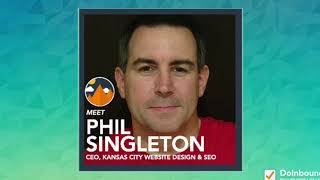
Phil Singleton, a Kansas City agency owner, talks about scaling his inbound marketing and SEO business, his operational strategies, and co-authoring the book SEO for Growth with John Jantz of Duct Tape Marketing. He covers client engagement, the tools that work, and why ongoing relationships matter in digital agencies.
Foreign welcome to Inbound Agency Journey. This is the show where inbound agency leaders share the strategies, shortcomings and successes they've experienced in their journey toward building their dream agency. Now here are your hosts, Andrew and Gray. Hey Phil. Welcome to Inbound Agency Journey. Excited to have you here this week. Would you mind just saying, hey, introducing yourself to the listeners and kind of give them a background of who you are and how you got to where you are today?
Sure. My name is Phil Singleton. I am an agency owner here in Kansas City. I do web design but mostly I'm really into, you know, SEO and inbound marketing and that kind of stuff. But in order to succeed, as most of you know these days, you got to kind of start. It all kind of starts with the website in some shape or form. I've also written a couple best selling books. The most recent one I wrote with John Jantz of Duct Tape Marketing. But you know, I've got kind of an unconventional, I had an unconventional path in the way I turned in to be an agency owner. I kind of started this thing after I was 30 years old. I have a degree in an MBA and a degree in finance actually and college actually got a D in computer science. So I had kind of a funny, funny journey. Funny journey from going from a D and doing an insurance job out of school and spending 10 years in Asia and then ending up after 30 years old doing my first website and Microsoft front page on a barter deal which has now rolled into I don't know how many. We've done over 500 custom websites and got scores of retainer based clients for SEO, Internet marketing. That in a nutshell, I'm sure you might have a couple questions on. That's kind of a quick way tour through it. But yeah, kind of a winding path. And I think I come into this business almost kind of as an outsider because I see a lot of people, my competitors, at least here in town in the Midwest, a lot of them kind of came up, they're like digital natives, you know what I mean? They knew graphic designs, they came up in it through graphic design or they came up as a coder. But I think I don't see as many people that kind of came into this as kind of a, you know, kind of a second career almost type of thing and have been able to grow an agency out of it. And that's I think where I'm maybe a little bit different, at least in terms of how the makeup is here in the Midwest.
That's pretty cool. So yeah, I want to dive in on two sides of it. One, as an agency owner, I want to talk kind of operationally. How do you guys structure a team, scale out SEO services, How do you break that down for clients? And then I want to circle back after that and talk about how did you become an author, get into that side of the business as well. So let's start from the agency side here. How do you go from just building out a few websites here to now managing retainers for SEO services? Give us kind of a walkthrough of that journey and then some of the lessons learned that have kind of brought you to where you are today.
Great. Yeah. So I kind of got into this business really just off of a one site front page deal on barter that I did in 2005. And I kind of treated it almost like a lifestyle gig for a while. I had some early success, but I also had twin boys that I had for a while and I really wanted to kind of stay at home and be with them because I had one of these workaholic fathers that I appreciate everything that he did for us and still do to this day. But he was gone a lot when I was younger, just traveling and that kind of stuff. And I wanted to be with my kids every day that I could, at least while until they went to school full time. And that happened about three years ago. So again, I had this as a lifestyle gig from about 2005 up until about two, three years ago when they went to school full time. And I kind of basically took the gloves off, got office space, started hiring some more overhead and that kind of stuff, and then really, really got into it and started investing it more. So that's really kind of been a big game changer, is just from a lifestyle standpoint, treating it more like a business and less as kind of a work when you can, when you want to type of a thing. And I learned quite a bit, I think, on the way some of it was kind of stumbling around figuring it because I think even still to this day I almost kind of probably in some ways run my business like a solopreneur. Even though I've got seven full time people that I'm responsible for in some shape or form and an army of, of independents and contractors like a lot of us have these days and these kind of agencies. How did I learn? Well, just stumbling around. One of the things that I did that has really helped me out and has led into lots of different opportunities was working with the Duct Tape Marketing Network and John Jantz in the book, the reason I actually even became a Duct Tape Marketing certified consultant was I had this book, Duct Tape Marketing referred and recommended to me like four or five times by various clients and prospects that I was having. So I finally ended up reading it and inside the book I never realized he was actually in Kansas City where I am. He was referencing some of my clients and stuff. So he ended up kind of pulling me into his network through his own inbound marketing. Right. Great content out there. And I got sucked in and then I just realized the value of what the network that he has. And so he's got this book and he's got courses, but he actually has kind of like a, an actual network of 120 plus certified consultants. And we all kind of get together as like a brain trust, share things, share what's working, figure out what kinds of tools. Because there's so many, you know, software, the service tools out there for agency owners. Every time you look at that, like if you see that famous Martech logo collage, it gets put out on LinkedIn every once in a while. I think three or four years ago it was like, it looks pretty impressive. Now you look at, you can barely tell what it is. Looks like one color, like one gray color. Now there's so many of them. So it's hard for us as agency owners to stay on top of even what tools are working because it seems like everybody's kind of leapfrogging each other. But if you're running an agency and you got 10 clients or 50 clients or 100 clients, you can't be, you can't afford to go chase it the chasing the next best tool. So having a group of people that you trust that are kind of stay on top of things, that really helped because I put a lot of, I took a lot of advice from guys that have been doing a long time in terms of what tools were working for them in terms of return on investment. So that got me started on a few things. I use a few tools that really helped me out. One that I use a lot is that I think has helped change my business quite a bit is Upcity, if you ever heard of that one.
But it's kind of what's that all about?
It's basically a, it does several things, but the reason I think it's important for us is it's basically a search engine optimization task management system.
Okay.
So they've got their own like hundreds of pre made tasks that are already in the system. But they also give you the ability to put your own tasks in there. So every time we've got a new client, we can just create one of these deals. And what it does is enables the people that I've got like a full time SEO specialist, she goes in and is able. The work that she puts on does for the day, she's actually able to task that stuff out and do it and mark it off. And then what ends up happening with Upcity is they track your week to week rankings up to 50 keywords that you have at least in the account. I have IT tasks. It does kind of a report, like almost like a scorecard for it on a month to month basis. It tracks the analytics activity and that kind of stuff and also does the task management activity. So we've got these things that without even having to do any report generation, like my SEO specialist can do the work, I can see the work that she's doing. It gets logged, all that stuff gets compiled together into a nice four or five page PDF that gets emailed out to the client so they have a complete transparency. All the stuff that we're doing.
Nice.
Because one of my team members that came from another SEO firm, they were spending a week out of every month just generating reports. Yeah, you get a tool like this where you can actually. It's being done as you're doing the work over the course of the month that actually gives you a lot more productivity. Enables me to go in and if a client calls and asks me what's their account, I can literally open it up and see the work that's been done off of it and talk to them. So that really helped out a lot because I think it helps us do more, get more clients with less people and helps us scale some.
That's awesome.
So that one's really helpful and in terms of like doing the. That's really more on the SEO. You know, I've got two ways I look at clients when they come in, they come in and most often we're either doing a web redesign, web tweaking, website audit or a website rebuild. So that comes in in that case. That's one side of the business I look at. I got a project manager and we actually manage this stuff in one called Active Collab. I don't know if you heard of that.
Yeah.
One yet. So it's not, it's just one that I've been worked on for a long time. I don't know if it's my favorite one or the best one, but sometimes you get like latched into one of These early on, it kind of becomes hard to pull yourself out. Although we're kind of looking at maybe some other. Other ones that might help us do more things or be better. But it still does help us in a lot of ways to log the product, the projects, and do the project management, that stuff from the web development side. So that helped out quite a bit from not having anything or trying to do it through email before in the early days. So those are a couple things I think that we use. I also use. And a lot of people use like HubSpot and stuff for their own business. I use one called Hatchbuck on the sales, you know, business marketing automation side for our own business.
Okay.
So that's kind of a. I'm gonna call it like a poor man's HubSpot, but it's basically got the key CRM, slash marketing automation and email marketing stuff. So people call in or send us emails from the website. It comes right in, gets logged in. You know, we send them an email out and tracks it and tracks the website activity and all that kind of stuff. So that helps, I think, helped us not have to invest in as many or as much inbound marketing talent or inbound marketing sales folks, because a lot of that's taken care of us and that's really kind of how we do it. But I have to admit, I mean, we're growing pretty fast and I know that we probably don't have the efficiencies that larger agencies have, having gone through some of this before. So it seems like it's always a little bit of triage and learning the stuff that I wish we would have known two years ago what we know today type of thing.
Yeah, definitely. It's always building. It's always building on itself and you're just kind of improving as you go forward. So those are good tools to know and it's cool to see kind of how your process has kind of led to them. Can you walk us through how are. How are you guys presenting your different retainer options to customers today? What's kind of your client journey look like and some of those common recurring packages you have folks set up on.
Yeah, so it's interesting because I've run in Kansas City here we've got three different websites that we test and market. I've got one that's set up just for like marketing services, so just general marketing. And then I've got one that's set up specifically for SEO and then one set up specifically for web design. So my method and the way that works and gets us the most amount of customers is that we focus a lot on getting web design leads.
Okay?
Because today's person or business owner, I think what ends up happening is they all need like marketing strategy, right? But when I'm. When a small business needs help, they just look for like a band aid or a tactic or get me more phone calls. So they try something. They try like the tactic of the week. So they do a search for, oh my gosh, I need a new website. Oh my gosh, I need adwords. Oh my gosh, I need somebody to help us with social media. So they're looking for a tactic, but they need strategy, right? So from what I see at least here in our market, most people, when they figure out they gotta have a problem or want to get more leads at least, or figure out something online, is they look for websites. So even though we want to sell them retainers, we try and get our foot on the door on websites. Because it's really. Because no matter what, you get a lot of people out there that still think of websites as digital brochures and they haven't quite figured out that they have to be marketing platforms in order to succeed now. But if you can get somebody in the door and then explain to them how websites have evolved and how you need to kind of make them them into a marketing asset, and then saying what goes into them and how you can help them to become an inbound platform, it kind of opens the door for you to be their digital marketing partner if you can make that flip. Because they're always going to be coming in until you educate them. I think at some point it's like, geez, I just need. I'm hoping that I make a pretty website and I put it out there and I'm going to get new phone calls. Well, it doesn't work like that. So we walk them through the whole process of, look, you got to figure out who your ideal client is. You got to do your keyword research. We have to reverse engineer a website from the ground up with SEO and all this kind of stuff. And then once you build it, we've got to do all these things that I think Google helps you get visibility. So all that stuff that we're talking about, like reputation management, blogging, all those things that need to fuel a website. And all of a sudden you're kind of opening their eyes up to, wow, this is a bit more involved than I thought and I see how it works type of thing. And we do a lot to show them behind the curtain. I mean that's one thing that again, get them in the door on web design, show them stuff on websites, show them things. Like we show them a lot. Like we use Ahrefs or Semrush. That shows them where third party backlinks are coming from or what the adwords value of their current organic traffic is and stuff like that. And then really what opens their eyes up is when we start asking them who their main competitors are, they think they're killing it. And then we show them the difference between their website and the people that are causing them pain. And it almost always is, those guys are usually kicking their butts online, which is why they're coming. So that kind of stuff really wakes them up. And they start to see like going from a cost of doing business expense type of thing into a website into okay, I get why this needs to be a revenue generating asset. Here's what goes into it. So we get a lot of folks that'll come in, they're just like, just did this last week, happens every week, guy will call up, ask us what anyway happens. Business owners, when they, when they look for websites, they literally will call around and they'll be like, the first guy will say a guy and his mom basement will say $500. Then they call like downtown to a large agency and they say like $50,000. And then they called maybe a boutique agency and they say like $10,000. And you're a small business owner, it's like, what the hell is going on here? How come the pricing's all over the place, you know, and they don't know the difference between a theme and somebody building them a custom thing or a website, you know, all this stuff and there's all these prices in between because they just think it's a website. And then here you got like GoDaddy, Wix, Weebly, Squarespace. All these guys online that are saying all you need is $25, $50 a month and we'll quote, unquote, list you on Google. So from a buyer standpoint, you know, these guys that are small business owners or business owners, they don't really know what the difference is. They just think website's a website, right? So we bring them in there and walk them through the process and all of a sudden you can turn somebody who goes in like would never consider spending more than a grand or two on a website. All of a sudden they, you know, they'll consider spending $7,500, maybe $10,000 on a website because you're Showing them that it can actually make them money and produce a return. And that's kind of where we start in our range is we're like, you know, we try and be in that $10,000 website area because I think from what we think, even with all the things that we think smart we are with in building websites these days and we try and build custom ones and not work with themes, it's kind of a grind to work to do a new website. I think a lot of your agents just, it really is, you charge somebody $10,000 for a website, do it custom, you have to like figure out how to get the content and go out with them and fight and struggle with clients and it ends up being always longer than you think it is just to get the right content up in there and launch. All of a sudden like a $10,000 website ends up being kind of a break even, ish type thing. Or maybe you make some money, maybe you don't, but it's not like, and this, you can't have it be a one time thing. That's, I think one problem a lot of agencies have is they go in for these one time dev things. That's not really where the, I think anyway where the opportunity, the opportunity is to flip those into digital marketing engagements. And you got a unique opportunity as a web designer to position yourself as the digital marketer. Because if you fill the website up with all the things that they need to succeed for lead generation and conversion, that kind of stuff, they need help, they need help with blogging, they need help with social media posting, they need help with reputation management. And those are all things that web design firms are uniquely positioned to do. Even though I think a lot of them don't think of it that way, I think a lot of them still think of getting those one time dev deals and then trying to jump from those versus where the real money is. And I think that's in the ongoing retainers.
Yeah, walk me through a little bit of your, your transition process. So you want to position the website and I think that's a good point that we want to, we need to go where the prospects feel the pain and then it's our job to take them from here's what you feel to here's what you need. And a website is a great kind of discovery project to push them through that gap. What tips, tricks have you used or have you learned through the years to kind of take someone from that point of oh, here I have a website now, let me come in and pay you on an ongoing basis to actually get it to be fruitful for me. Any insight you would share there on getting people to actually take that next step and go into more of the ongoing relationship?
Yeah, well, most of it's like we get into telling people, hey, yeah, the website's got to be your. You have to invest in it and nurture it like you would anything. So it can't just be a static digital brochure. So that means you have to grow it with content, invest in it and do that kind of stuff. That's the one thing that we try and push. Another thing that I do that I think is really awesome in terms of getting people to understand. I'll give you two things actually. One is go buy the Art of SEO book, the current version of it, and bring it to every meeting that you have. If you're selling SEO, it's a thousand page textbook. That's really impressive. When you see it in person and you explain to a business owner, it's like, look, the reason they wrote this book was to show you how you can get a website to show up so that it makes your phone ring or that you can get email inquiries, right? And all that book is about is how about how to set up websites the right way and how to manage an ongoing plan to get the phone to ring. So when they see that and hold that book, they understand there's not a lot of smoke and mirrors to it and that more goes into it. And that there's. It's not actually you're just some kind of an artist that's trying to put up some nice digital picture up on a screen. But there's actually a lot of planning and technology that goes under the hood. And that's why you have to invest more in this type of a thing versus trying to look at it like it's just, you know, your business card. That's one thing that we do. The other thing that I've done lately that really gets people to sit up in their seats is I pull up this website called Dogs of the Dao and there is a. Every day they show you the largest companies in America by market capitalization. So the most valuable companies in the world, they show you. And almost always for the last two years anyway, it's been the same five companies jockeying for position. And it's Apple, it's Google, it's Microsoft, it's Facebook and Amazon. Okay? So it's like you lay these companies out and show somebody, it's basically the entire Internet and everything that powers it, you know what I mean? It's like this is where the Wall Street's screaming at you and saying this is where all the action is. These are the most valuable companies in the world right now. If you think about that. Facebook, all these things. It's social media, it's E commerce, it's reputation management. If you look at Amazon, most of that, what's driven there is, you know, people buy off reviews and pricing and that kind of stuff. So you show them this little list, it's not like some of the things they think it is. It's like this is where you got to be focused because this is where everybody else is. And if Wall street, you know, gets it, you're going to kind of miss the boat. And that's what we see with a lot of folks. So that really creates a little sense of urgency. But it's really powerful to pull that, to be able to pull that up and get them thinking about, geez, we really do have to get this digital piece right. The other thing we try and tell people is it's not about doing because I think people, they're just trying to get better and get more leads online. So like I said, they just kind of do these tactical hip shots. But that's not how you win today. Online, you have to have a website that is the referral source for all your best content. And it has to be done in a strategic way where it all ties back together to that website so that you get the right signals and that you can follow people and pixel them and adwords remarket to them and do everything that. So you're building all your best work on your website as a referral source for everything. So that kind of becomes an asset and you have to do it strategically versus just randomly trying hip shots at stuff. So one of the things we tell small business owners, it really gets them to resonate is, look, here's what we see a lot of folks do today. They build a website or they have a website, it's basically dead in terms of content. It hasn't been blogged on in a couple years, if any, or maybe every once in a while. And, and anything that they have that's really good content, if they do anything, they put it up on like a place like Facebook, where it gets. Passes through the river once and basically dies. Yeah, where we tell, look, here's a simple way to think about this in terms of inbound marketing or the way Google would think about it. You post your best content on your website, you share that link onto Facebook and other social media and you bring people back to your website. That's the way to do it in an integrated way. It's a simple thing, but there's lots of things that you do like this to tie it all together. And if you just think about it right and tie it up the right way, you can get 10x instead of 1 or 2x. And again, these are some things you kind of flip people around to get them thinking into, hey, this is. We really got to get this digital piece right. Because this is where, you know, all the action is. And they kind of start thinking about you and kind of their website and the plan a little bit differently. And I think in a lot of ways it ends up getting them to understand that it's not this cost of doing business thing. Yeah, it is a return on investment type of a thing if you've got the right partner to do it with.
Gotcha. So you're just repositioning their perspective on things through this whole process.
Pretty much, it's that educational, you know, piece of it. Because all these business owners out there that you're trying to work with, big, small, even CEOs of bigger stuff, I mean, they're so into their own thing that they don't really understand how it all ties together. So it's a great opportunity to kind of show them behind the curtains a little bit and how it does kind of tie together.
That's cool. Where do you. What do you commonly see as the next step for people? What kind of. What's the first step you would take someone through after they've created a website within your services? What do you want to do first?
We do a few things all, I mean, you know, kind of all at once. Start rolling it out. I mean, the first thing I like to try and get started is some type of content calendar. Because a big thing that we like to try and do right out of the gate is we want to position everybody to be more of an authority in their space. It doesn't matter if it's a micro business or local business or regional or national. We want to get that business owner, that key person in the company, and to elevate their authority. So the easiest and quickest way we do it that gives us the most bang to the buck is to create a content calendar that almost looks like a table of contents. So we'll create a blog series of maybe 10 or 15 blog posts that each time we post one out, they're standalone blog posts. But at the end of, say 10 or 15 weeks. We can then stitch them together into an ebook that then becomes a call to action on the website. And then we take it a step further by turning that into a Kindle book, put it up on Amazon and making them like a quote unquote published author, which then becomes a launchable piece of content for them. It's nice and shiny for the client, but it also gives them some sense of authority and type stuff that in some cases we can actually leverage and maybe start doing things like a small press release on it or perhaps even some targeted podcast guesting and that kind of stuff. So it really kind of all starts back. But then how do you do the blog? Well, the blog post is, we want to do our keyword research, make sure that those are packed in there. We do research on some place like Buzzsumo to make sure we can kind of pack in some of the things that are trending to help us increase the chance that we're going to get some engagement off of it. But really, again, instead of just trying to do like, okay, let's make sure that we're on a once a week blogging calendar, let's look at a little more strategically so that the blog post can be stitched together and used as something else that can then also turn into another cascade of wins for us down the road. And I think it's this kind of stuff. When people start seeing it, they're just like, okay, I get it. It's not just about more blogging. It's about blogging on the right stuff in the right way, with the right keywords, and then trying to package it up so that you can repurpose it in a way that actually can help you make money. So that's the first thing I think we try and do is get that piece going. Because, look, if you get the right blog strategy down, it really solves a lot of stuff for an agency owner. I think you get that. You get a blog post, you write it up, you post it on the website. On WordPress, we like to use a plugin called Snap Auto Poster that I'm sure a lot of people are familiar with. You plug it in. So we optimize, we post one blog post, we hit publish, and then it kind of stagger posts the release that post out to their social media automatically. So like Facebook today, LinkedIn tomorrow, that kind of stuff. So again, one blog post we're publishing on their WordPress after we optimize it, and all of a sudden it's automatically posting that single post on multiple Platforms, maybe over the course of a week type of thing. And then we're also in the that same blog strategy, we're also building them an ebook and kind of developing them some kind of little content marketing plan off of that. So if you get this one strategy in place that's based on blogging, you can actually deliver a lot of, I think high value stuff with not a lot of work that actually gets them results and is nice and super shiny for them and you can charge them a decent monthly retainer for. And that's kind of how we're trying to do it. Because there is one thing, and I think a lot of people that you are in your audience right now and you're yourself maybe even is that I found over the years it's really hard to offer something under $1,000 that makes a whole lot of sense and actually move the needle. And it's sexy and really appealing to try and get the 5,000, $10,000 and up engagement. But the problem with those high dollar engagements is they're hard to scale because the companies usually end up wanting their pound of flesh, meaning they want you to meet more often. They're just on you. Because now you're the cost of a mid to higher level employee if you're charging five to $10,000 a month. So I think there's this sweet spot of 1,000 to maybe four, maybe $5,000 a month. But I think it's $1,000 to $3,000 to be truly scalable, where it's a nice dollar amount and if you get that up to 50 or 100 of those in your clientele, you can actually make some really good money with not a huge team. And I think that's kind of the moral of the story that I've learned because I've gone kind of both directions. I've tried to say, okay, what can I offer really cheap, really low cost that I can scale and how much can I do in terms of bigger ones and do it that way. And I've kind of found this sweet spot in that range where I think it can really be a semi. You're always kind of, I think a little bit in this consulting space, which is hard to truly scale, like a true software as a service type thing. But there's certainly ways and packages you can offer that I think can help move the needle in terms of lead generation for clients. And you can get up there in the 50, 100, maybe 200 clients with not having a super large team, which makes it highly profitable.
Yeah, just Making. I mean, having the process behind that, the fixed deliverables in there, so that if you're getting good at this process of 10, 12 blogs and then the ebook and the Kindle, if you do that for one client a quarter, you can do that for 10, 15, 20. Having the process behind that seems to be the key to make that model really out of the park.
Exactly.
Cool. Well, let me pivot here, because I think that you've shared a lot of good tips on how to get clients, how to upsell clients, continue to deliver quick wins, which I think is huge. Like, you. You mentioned the Kindle book being like, the shiny thing for the client, and I think that's big to keep hitting on those things early on. Can you kind of shift gears here? Tell us the story behind how you got SEO for Growth, the book you wrote with John at Ducktape. How did that book come to be and kind of. What have you seen through that process?
Yeah, it's been a really fantastic, Basically an opportunity of a lifetime type of a deal. And what I think, you know, looking back on it, saying, okay, what's something that happened really cool or why? How did that happen in the first place? And I think looking back, it's this. It's like you get a lot of these guys that are influenced out there, like John. I mean, John pretty much knows everybody in this space. He's a handshake away. You got a ton of people to endorse the book for us. You got Brian Clark, copy blogger, to write the forward and that kind of stuff. But what I noticed, the reason I had the opportunity to write a book with John is because he's one of these. I think it's a few influencers like himself, but there's probably other ones doing, I think more should, where, you know, they've all got courses or some type of online thing. But there's a few of them, like John, that actually have almost kind of a. He's got like a network. I call it like a mastermind thing, but it's an actual physical network of people that are certified consultants. And the reason that's special is because we meet once a year. We're doing actually at the end of this month for an annual summit, and then we also do it throughout the course of the year at these boot camps. And. And the reason why that's really important is because we're meeting in person. And I had the chance over the course of a year or two to actually, like, rub shoulders with him and develop a relationship that way. Which you can't do, I think a lot. Virtually that type of thing.
Yeah.
And then I also had the opportunity to give a lot because I wanted to make an impression for the chance of being able to somehow leverage his influence and do. Being able to develop mine. And so I did that, I guess blog forum, I did webinars and I still do. I've helped educate our network and audience. Every opportunity that I could to give and prove myself, I did it. And it didn't take me too long. It was some of an investment, but I mean, I was also learning and getting back from the group as well. But I think I got to a point where he trusted me a lot, saw my work, was, I think, appreciative of some of the stuff that I did. I had an opportunity to kind of pitch him on some things like this. So the way the book worked is I actually, actually basically develop my own, almost a fully written manuscript when I went to pitch him in the first place, because in my mind I was thinking, okay, he knows me well enough, he knows I know my stuff on SEO, perhaps I can get him to write the forward. But I also had a little more aggressive approach where I was like, maybe I can actually get him to co write this thing so we can launch another business off of it. And I ended up doing that. I pitched him here. I got these two ideas. One is I'd like to do would you write the forward for me and maybe help me soft promote it? And he was like, yeah. So I got this other idea where you come on as a co writer and then we use this to launch our own course and this other licensing model that we're now doing across the country. And he was all over it. So I was like, oh my gosh, this really worked. I played it well again, a lot of it. I figured by the time that I had asked him, I had a pretty high chance of him saying yes on it. But really the reason I had that opportunity was because I went and actually essentially kind of bought my way into the network that he already have.
Yeah.
And made it work for me. I didn't just sit back and try and do stuff. I actually took action on it. And I went out of my way to give and give and give before I asked for a take. And it worked. And now I'm able to. I got all sorts of people. If you look at our book, I mean, Brian Halligan wrote us a nice endorsement on the back of it. Larry Kim Pretty much there's like 50 people that gave us endorsement that's pretty much everybody who's my, you know, my superheroes and digital and inbound marketing, that kind of stuff said nice things about the book. And that only really happened because John was involved.
That is so cool. I mean, it's cool to see you put in the hustle before the ask. Because if you just go out there and send someone a cold email and say, hey, do you want to co author a book with me? They're going to be like, who the heck is this guy? What are you doing here right now? But to kind of get into that network, and I'm sure that wasn't free. You probably had to invest in that and then take advantage of that opportunity. There seems like a.
Exactly. And some of these guys have. There's a guy like Michael Port that does the heroic public speaking and book yourself solid. He's a New York Times bestselling author. I know he's got, like, his camps or whatever. He can actually rub shoulder to shoulder of them, but this has been the single best investment that I've ever made in my entire life because it's opened so many doors. It's almost unimaginable at this point. Right. So it was an investment to get in there, but it's paid itself back so many times because I've been able to, like, you know, warp speed, my influence level by leveraging his coattails. Right. But I did so in a way where I earned it because I basically delivered some great content that he would have never been able to do basically on his own without his help. He came in, of course, after I presented the manuscript, he came in, add the chapter, rewrote a bunch of his stuff, and basically made it his too. But, yeah, this just would have never have happened without that kind of strategy.
That is awesome, Phil. The name of the book is SEO for Growth. Check that out on Amazon if you want to up your game, which you definitely should. Phil, thank you so much, first of all, for coming on, sharing your insights, sharing your story. If listeners here want to reach out and say, hey, what's the best way for them to get in touch with you or to learn more about you.
Love for people to check out seoforgrowth.com that's kind of where the book story is. And there's kind of a little side story to that. The main reason for writing the book wasn't actually 100% to write the book and just elevate authority. The main reason was to actually try and figure out a way to leverage success. I had here in Kansas City So what we've done is we built that book website on WordPress multisite and we've developed these child sites on top of where we got these agencies. We've got 20 agencies around the country that have signed up for this right now where we set up these lead gen sites. So for example, if you type in like St. Louis SEO, you'll see St. Louis SEO for growth. That child site pops up number one in St. Louis. And we've done it in Las Vegas and Denver and all these other places. You got these agency owners that would never be able to get search results probably on their own with their own marketing websites. We've kind of developed them. So that's one of the things like people to check out is he go check out the book site but also take a look at some of these licensee sites that we have where people have these little lead generation things they've done as part of our kind of our course and our agency partner program. So that's the coolest thing about the books. We actually build a real business on top of what became a best selling book. And that was really the end goal. I mean the books made some money, which is great, but I think anyone writes a book these days, it's not really about the book's not the end, it's the beginning. You know what I mean? And you got to use it to launch into other things. And that's the one thing. So SEO for growth.com is a place to go to it. You want to check out our little website, Casey? Web designer.com is kind of our little local kind of my, my, my first baby type of a thing. I think that still makes, you know, still pays for most of the bills here, at least in the Midwest for us. And I like to connect with people on LinkedIn. I'm not a big like Facebook type person except for the business groups that I'm in. But LinkedIn's a great place to where I put all my best stuff. Anyway.
Cool, thank you so much man. Talk to you soon.
All right.










