Tackling Your First RevOps Project | Admin HUG | March 21, 2023
Beth Abbott from New Breed walks through how to plan and run your first revenue operations project. She covers stakeholder alignment, defining clear objectives, and measuring business impact with practical frameworks and real examples.
All right, welcome everybody to this event of the HubSpot Admins Hug. Super excited to have Beth Abbott here from Newbreed to talk about tackling your first Revops project. Beth, take it away.
Awesome. Thank you guys. I'm really excited to be joining this hug group today. I'm going to go ahead and try to share my screen. We did practice this, but we're going to try it again and make sure it works. Okay. And we'll jump right in. Okay. Think we're looking good, right? The practice worked. All right, sweet. So like I said, super excited to be joining you guys today. Just a little bit about me first. So my name is Beth Abbott. I'm the senior Manager of Revenue Operations at New Breed. A little bit more about New Breed in just a minute. But just in terms of me, I've really played a lot of different roles in the past and in my career that have really led me to revenue operations. I feel like that's the for a lot of folks, they kind of dabbled in sales, maybe marketing, maybe kind of grew up out of maybe a finance or even IT space. But really for myself, you know, I've kind of graduated from a past life of a demand gen marketer. I've been an account executive. I actually was the head of inside sales for New Breed for a while and then really graduated into my role full time in Revops about a year and a half ago. So it's been really, really exciting to have all of those different experiences from those different departments and different organizations because it really helps me recognize or it's helped me recognize firsthand how critical the revenue operations role and function really is to an organization. It really is and can act as that glue that holds everything together. And there's a lot of opportunity that can be missed for growth without having that type of function or role or set of roles at a company. So I've been super excited in general just to see in recent years this role and the growth of this function continue to grow and advance industry wide. I think again, the work we do plays such a big part in a business's ability to function. So it's a really exciting space to be in. And for those of you that know a Revops person or leader are thinking about becoming one, I think it's a really, really fun and fast place pace role to be in. A little bit more About Me I've been a HubSpot power user for over seven years now, so obviously I've seen the tool grow and expand and flourish in that time and have always, even though in those former marketing and sales roles, have dabbled in operations again, it plays such a critical role that I was always finding myself drawn towards key operational tasks, thinking through product process systems, how our people were working within them. So that's kind of what drew me to revenue operations in the beginning. I also led our team at New Breed's advanced implementation certification at HubSpot when it was first released. So we were part of that inaugural cohort. So again, a lot of background and understanding the depths of HubSpot, understanding how people, processes and platforms all work together to make a business run smoothly and let me go, let me hide this thing, it's a little annoying. And just a really quick touch on New Breed so you guys understand where am I actually doing all of this revenue operations work? So for those that aren't familiar, New Breed is a revenue performance management firm and we're actually currently HubSpot's top partner in North America. So as a partner, you know, as for New Breed, we combine a strategic consulting, technical implementation and integrated technologies that really aim to target mid market and corporate companies to help you guys drive business outcomes with HubSpot CRM. So we are all things HubSpot all the time. We've got cross functional teams that support our clients across the board with any hub across HubSpot. So you can see this is something New Breed leans really heavily into solving revenue operations challenges for our clients. Which means the pressure is on for me as overseeing our own revenue operations at New Breed to make sure everything's running smoothly. I also think for myself it's a great opportunity for me to try things out and to test things that end up being better best practice guidance for our own team and serving our clients and revenue operations. So it's a really, I mean high pressure but, but fun place to be in in an organization. All right, let's, let's get into the meat, right? We're here to talk about tackling your first maybe revenue operations project. Whether you're new to the role, maybe you've been in it, but maybe taken like a step back or haven't been the lead on something. I'm really excited that this is really soft skills oriented today. So we're really going to talk about the approach, how to think through it, how to execute all of those different components. So let me go ahead and talk through our agenda, what we're going to cover. So really today we're going to focus on first and foremost how do we create alignment on project objectives and business impact RevOps, we know, does not operate in a silo. Not at all the furthest from that, actually. Right. So we're not operating in a silo, which means how do we create alignment on overall project objectives and business impacts with everyone involved? The second thing we're going to do is take a look at a project management framework that I've used in the past I really enjoy. There's lots of project management frameworks out there, but as a RevOps leader, right, we also often have to wear this project management cap too, along with many others. But we're going to talk a little bit about how we lean into using a project management framework to create that shared visibility and understanding of roles and responsibilities from the start of actually wanting to kick off any type of RevOps project. The third thing we're going to touch on here is really then getting into the meat, right? We've looked at what are the business impacts, we've aligned with stakeholders, we understand the framework for who's responsible for what and when. And now we really want to dig in. So what are the key components of mapping out a set of milestones to complete your project from start to finish? And then really I want to end with a couple kind of major takeaways, really, just from my experience in the role, having been in this industry for a while, having made mistakes in the past, right. And learned from those mistakes, what are some of the key tips and takeaways I could share broadly around executing your first role revenue operations project? And if that sounds good, everyone, we will get right into it.
Let's go.
Let's go. All right, so we're really going to start here with how to create alignment on project objectives and business impact. Like I said, right, we do not operate in a silo. We need to create alignment when a project comes in. And I think it's also really important that, you know, we could be talking today about a project that you, as a revenue operations leader or individual, want to bring to the table for your organization. Or we could be talking about it in terms of, you know, someone higher up, maybe an executive, a VP has given you a directive of a project they'd like you to take on. Either way, I think what we're going to talk through today is really important, but it's interesting to look at both lenses of or both sides of that. So let's start with talking about alignment. I'm kind of a gift fan. I'm sure everyone else is, right? I think it's really important. Like I said, when you're Potentially bringing something to the table, or someone is giving you a revenue operations project or directive that it's really critical from the on site that you get together with your stakeholders and align on the overall objectives of what the project is intended to accomplish and, and can tie those objectives back to business impact. Right. We've all been in a place, whether it's in work or personal life, where you think you're on the same page. You hear something from someone, you don't ask the whys, you don't ask all the people, then you're going this way and they're thinking you're going this way. Right. We don't want to end up in that situation. I also think it's really important. Us Revops folks typically, and probably a lot of your leadership team, team too, are just natural problem solvers. Right. So we like to hear something, oh, there's a gap, there's a challenge, there's an opportunity for me to solve. I want to get right to work on solving that. It's really important that you kind of, you kind of squish a little bit of that ambition for a minute and take your step, take a step back and understand how do we actually approach this in a way that's going to be effective? Because if we don't address some of these things at the forefront, we're going to end up spending time down the road on things that we should have done in the beginning. And things can get off the rails pretty easily. All right, enough of this gif. All right, so what does this look like to actually create internal alignment? So Revops projects, again, I'm sounding like a broken record already. They impact multiple stakeholders and areas of business. So we need to get that alignment and documented expectations on project outcomes before we begin the work. So this is your first step and there's really kind of three components to getting that alignment that I go through in my head or actually physically before we get started here. So the first piece is really understanding the project origin, right? How did this project get put on your lap? Again, you may have recognized an area of opportunity yourself for the business, or you might have had a different stakeholder come to you with a specific project in mind. So what I mean when I say understand the project origin, really the things that I think through in my head related to that are who assigned you this project, how are they involved? Right. Is this coming from a CRO, Is this coming from your CEO? Is this coming from your head of marketing? Right. Who assign. Is this coming from yourself? Right. Based on Something you've identified, who assign you this project? How are they intended to be involved in either what the challenges or what the solve could be? The other thing I think through is, you know, overall, what business problem does this solve? Is this something that's being brought to you or you're identifying that could support the overall business, the organization, a specific department, a specific team? Or is this really an individual kind of one off request which we know from those in RevOps come in fast and furiously very often. But it's really important to understand is this a challenge? Is this an opportunity that we're solving for the greater business or is it segmented out by department, team or individual? Who are we solving this for? The next thing I like to consider is is this something that's been attempted before, right? How did it go? Did it work? What did it not work? Why did it not work if it didn't work? I think understanding the history of something and, and if that was a challenge previously, how you addressed it or how the business addressed it, how it wasn't able to be addressed is really important context to have going into developing alignment around how we're going to look to solve it today. And then I think this is important not just from a project origin standpoint, but in general to understand is what are the consequences of not doing this project. We'll get into this a little bit more when I talk about understanding and defining true business impact and communicating the value of a RevOps project to a key stakeholder. But it's really important that you think through, all right, this is a challenge. What is it impacting us by not moving? What are the negative consequences associated with not making this change and not making this change in X amount of time? The second kind of pillar for creating that internal alignment, once we understand more about the product origin, where did this come from? Come from? Has it happened or been attempted before? Is really then taking a look at broader and consideration of key stakeholder priorities and perspectives. Broken record again, right? Chances are the problem that you're being asked to solve or that you're bringing to the table to solve impacts a lot of different people and a lot of different teams or key stakeholders. So really thinking through what is this project I'm doing and for impacted departments, who leads these teams, what are their priorities? You kind of have to put yourself in the shoes of those folks and those individuals to think through how would this impact my team my day to day, where does the stack rank over other things that are happening at this department or at the company? Right now, really need to get into an understanding of their business priorities at each individual stakeholder impacted to make sure everyone is on board and aligned. I think that goes hand in hand with understanding how could a potential solution positively or negatively impact a department. Our hope, right, is that any of these solutions are never negatively impacting someone. But it's really important, I think, to understand what are the downstream effects that a change like this could bring to any of those departments. And you're really honest about, you know, what could that mean in terms of change? What's very positive about this? How could this have, maybe not negative, but like a different type of impact on any specific department? And then really, really important is a chance for you personally to consider are these stakeholders that are likely going to be impacted or involved have the same or different goals for the project outcomes or objectives. This is really critical because if you have one key stakeholder that's assuming that your project outcome is going to be X, you have another one that maybe is assuming your project outcome is going to be Y, you want to make sure you have a chance to bring those folks together and say, hey, maybe we can only accomplish X here. Are we okay with this? Do we understand the downstream effects? Or in the ideal state, hey, everyone, there's more than one objective here where you want to accomplish X and Y within this holistic project. So I think it's really important to understand where there may be different goals and project outcome expectations. And then finally, we've done a lot of thoughtwork ourselves as that revenue operations project lead on the first two points, maybe asking a couple questions along the way. This third piece is really physically meeting with this group of relevant stakeholders, right? So you can kind of make assumptions yourself on the first two, get yourself in the right frame of mind before going into a meeting with key stakeholders. But having this meeting is critical. And what this type of meeting allows you to do is really reaffirm the questions above with the broader group, right? Ask them, you've made some assumptions, you've put yourself in the right frame of mind. You think you have the context. Reaffirm with the broader group. Ask those whys. Ask the whys of the key stakeholders to make sure everyone is on the same page and repeat those responses back to ensure there is really true alignment. A lot of times people might say something to you and you can shake your head and move on to the next question. Don't be afraid to double it back and make sure there's alignment. That's actually something I pulled from my sales career and understanding that sometimes you need to repeat something back to make sure you actually are on the same page about what that next step is in the process. So that's a really key thing to do in this physical meeting with your stakeholders. And then I think where you want to leave this kind of stage overall of alignment is leaving with that verbal agreement and documentation on the overall project objectives and more specifically the overall business impact, the value, the core driver that this project is meant to impact the business. So this is like a very, very critical piece. If you don't leave this meeting understanding that, or having all of the stakeholders nodding their head and saying, yep, and that's what we're trying to do, things are going to get messy later on because you're going to have mismatched expectations from different key stakeholders. You leave yourself vulnerable to delivering on a project that ultimately doesn't meet the expectations of a key stakeholder. And that just puts everyone in a really weird position. So that's kind of the first stage of creating that internal alignment. But one thing I want to sidebar on a little bit more specifically is this idea. I've thrown out the word objectives, goals, outcomes, and then separately business impact. Objectives and business impact I view as very, very different things. And I think it's important that we talk about that, not just because it's important. If a stakeholder brings a project plan or idea to you and you want to make sure you're aligned, but specifically as a revops leader that may identify a project yourself. How do you, how do you really push through and recommend to those executive stakeholders and get them to understand the real value and the solution you're trying to drive forward. And all of that comes with an understanding of how you differentiate between what are the objectives of this project and what is the business impact and value it can provide. So I'm just going to take a sidebar here and talk about that for a minute. Right. How do we communicate real business impact and differentiate that from just what are the objectives this solves for? So I mentioned this a minute ago, but I personally really love, I feel like I'm very fortunate to have been in a demand gen marketing role, to have been in a sales individual contributor role and in a sales leader role. I love being able to pull aspects from my former experience and different tools I used during those times to and pull them into my tool belt for revops when needed. So one thing I really always enjoyed in my selling role, sales leadership and as an account executive was this idea of these three layers of selling and how to communicate and sell on true business value and impact. So within this three pronged approach for selling, it's really talking about the idea of the differentiation of features, benefits and value and where you want to land. Where the most successful sellers land is selling on value always. So it's kind of thinking through those, those three tiers. I'm going to talk about what that looks like in a minute. But I'm really just a firm believer that no matter what role you're in, and I think especially in rev apps, you're always selling, you're always selling an idea, you're always trying to push something forward, you're always trying to get people aligned with an initiative you want to work through. So I really like the idea of how are we getting to true business impact, relating back and having a parallel to these three layers of selling features, benefits, value. So I'm going to talk about that really quickly. So when I think about selling features and how that relates back to communicating what's going on in a project, right? This idea of selling on features is the description of what's included, what are the things that were being sold and on the project side, what is the project, what is the ask? What's the thing that we're asking you to do? The what, Right. So in a project standpoint, when we think about features, an example could be, you know, hey, I think we should implement a new lead scoring model for our revenue department. That feature or that what or that just general ask of the project is implement a new lead scoring model. That's the thing that we're doing. The next thing that the selling the three pronged selling model talks through is selling on benefits. And this is where I kind of shift gears and draw parallels to what are our core objectives. Right? So selling on benefits is really how the collective set of features will improve X. So what I mean by that is these are the resulting objectives of doing this project. So an example of what that could look like is in the same kind of model, we should set up a new lead scoring model for our revenue department to help improve quality of leads that get assigned to sales. Right. So the objective of the project that is lead scoring, implementing lead scoring, the objective of that is to actually help improve quality of leads that gets assigned to sales. Well, that's great. We want to make sure we have core objectives understood because I think that helps inform why we're doing the project in the first place. But it still doesn't get us to that top tier of business impact. Right. A set of benefits can help us make up the true value and the true business impact. And it's really important, the same way it is in sales to be able to sell in value for us to understand what is the true business impact, not just the objectives involved in any, any project. So top tier is our value here. This is, this is really where you win. It's actually interesting again, through, through my sales lens, it's really interesting. Not a lot of sellers or individuals get to this top tier because it involves a degree of deeper diving, deeper critical thinking and question asking that a lot of people just don't think to get through. But this is really where you see sellers that sell in true value have the highest win rates. I like to think of that seller win rate as the way that if you can get to value and business impact as a rev ops leader in your project, you're going to have a higher success rate with your project you're trying to execute. So let me give you the example in our same model. So selling on value, we should set up a new lead scoring model for our revenue department to help improve quality of leads that get assigned to sales. But ultimately because our company's current CAC cost of acquisition puts us at risk for true revenue growth. Right. So what is the key business impact that's resulting from us putting this project in place? And it's not just what are the benefits? Right. What are the objectives, the lower level things we're trying to solve, how does this tie into overall business and impact and growth? I'll kind of, I'll pause there. I really again, like, like creating these models and this duality between sales and operations roles. But I'll pause for a second.
Yeah, there's a conversation happening in the chat in certain organizations, actually in a lot of organizations, executive teams don't want to hear anything negative. They don't. They a lot of times see suggestions like this as, as coming from a place of complaint and negativity. Do you have advice for overcoming that?
Totally. Again, I pull from my sales tool belt. So the way in this example you can see it kind of puts the business impact in the frame of a negative consequence. If we don't do this, negative. If we don't do this, this could happen. And that can work for some organizations. The other way to flip it is you can do positive implications. That's the other side. So if we do do this, here is what it can offer us. Right? Here are the positive implications, the positive results that can stem from us making this change. That we otherwise might not have gotten if we kept with the status quo. So I think it totally depends. I'm glad that's kind of a conversation happening in chat right now. It totally depends on the makeup of your executive team, your organization, how they've handled change in the past, how they've looked at different projects and how they've prioritized projects, whether they lean more towards the negative consequence risk, if not, or if they lean more towards the, hey, look at all the awesome stuff that can happen if we didn't do this otherwise. So that's a great question. Awesome. I'm going to keep trucking along here. We're still on the alignment phase, right? So we're still thinking through how do we get to this business impact. I just wanted to make sure we paused here because again, I think there's a lot of nuance and a lot of really clear examples of a difference between, you know, sitting down with your stakeholders and discussing overall objectives versus taking it to that next next level and being able to say, hey, here's this is awesome. These are all the benefits of doing this. But here's really, at the end of the day, what's where it's going to impact the business and it really should be one kind of core business impact that all of those stakeholders can align on where you might have a multitude of objectives that are involved. Awesome. Let me, so let me bring you through a real life scenario for connecting the dots on creating this alignment and how that ties in. I know we just went through the idea of lead scoring and we talked about the features, benefit value or the project objectives business impact. But I kind of want to bring you through another example that you can apply this to. So let's say as a RevOps leader, your CRO comes to you asking to implement a solution to help understand what amount of open opportunity so open deal value with current clients is considered at risk. Right? Here's a, here's a project, here's an opportunity, a challenge that needs to be solved and it's being presented to you from the CRO. Well, the CRO, through conversation, through our assumption, through what they presented to you as a project they would like underway, the top priority seems to be understanding they've communicated is the dollar value of projected opportunity at risk. Now, zero is all numbers, right? We want to know what is the dollar value at risk and that's why we're asking you to execute on this. And for the CRO, having that understanding that dollar value at risk, the objective in this is to create Visibility into dollars at risk to allow the business to more accurately forecast revenue and staffing needs. Right. That is the lens of the CRO. I, as the rev Ops leader, might say, great, the CRO is bringing me this objective or bringing me this project. I understand their objective, I understand the outcome they're trying to get to. But thinking through what else does this impact? Who else at the organization could a project like this impact? Or would the information that is gathered out of the project be valuable for. Right. So immediately, I think through our chief customer officer and our chief marketing officer, right? What are their top priorities? I loop them into the conversation and say, hey, we're trying to understand amount of open opportunity at risk at the organization. This is a project we're probably going to undertake. You know, how could this be a priority for you? How would you use this information? Right. And the Cs, the chief customer officer might say, you know what, the dollar value is helpful. But for me, a top priority in this initiative would actually be understanding the list of, of accounts that are considered at risks. So I want to see the names, I want to see the total number of accounts that are deemed at risk, not just the dollar value here. And the CMO says, hey, that's a similar priority for me. I would love to see the names of those accounts so that we know who's at risk, not just the dollar value. So similar priorities there, but then they ultimately might have different objectives. Right. So that chief customer officer wants to know that the account's actually labeled at risk. And that's because they want to be able to identify trends with at risk customer accounts so they can create mitigation plans for current and future at risk accounts. So this idea of creating the shared visibility, less so for the dollar value that the CRO originally came to you for, but more to say, hey, I need to gauge who's at risk out of my accounts so that I can create and work with our services department to create mitigation plans. On the CMO side, they also said that they wanted to have a list of accounts at risk, but what was their objective? In that their objective would be to get that visibility so that they could maybe build targeted customer campaigns or work with the marketing department to build those targeted customer campaigns to identify the accounts and support the services department in course correcting. Right. So different objective. Having a list for the marketing department might allow them to target things a little bit differently when it comes to customer marketing and customer campaigning. So now you see where you get a project that's brought in from one individual, how they can have a different set of expected outcomes, priorities and objectives that come from each role. Now, in all of this, we haven't gotten to business impact yet. And this is important because I can have all of these conversations with these individuals, I can have all these conversations individually with these stakeholders and get to this information. But again, right, the goal is that we sit down together with anyone involved and we talk through these objectives so that we can get to the core of the business impact. Right. We need to align across the board on this business impact, which requires us meeting with all of those parties. So we're going to sit down with CRO, CCO and CMO together, make sure everyone has heard the different outcomes and impacts they are going to expect from this overall project, and then we're going to align on business impact. So in this situation, right, the overall business impact in this scenario is that we're mitigating current economic headwinds by improving customer dollar retention. Right. We're going to, at the end of this project be able to say, what's the total dollar value of projected opportunity at risk with our client accounts. But we're also going to want to be able to see the total count and the actual accounts that we're looking at that are risk. Because ultimately, as a business, that's going to help us mitigate current economic headwinds we may be experiencing by improving our customer dollar retention. So that's just kind of tying all those pieces together and why it's really important we start on that alignment phase so that we get everybody in the same room, we understand how many different objectives are going to come out of this port project and then we can talk through really, where does this lead in terms of business impact. And again, I'm really going to drive this home for you revenue operations folks that want to lead the charge in presenting a project or bringing forward a project yourself you want to accomplish. Getting to the business impact with those executive stakeholders is the most successful way for you to push something through. I can pause again for a minute if we want to ask any other questions. I haven't taken a look at chat.
I think we're okay. I think you're holding them in rapt attention.
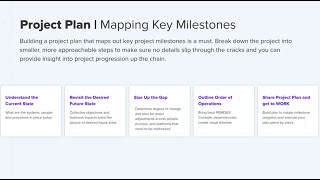
Okay. Love it. I'm a big talker, so that would make sense. All right, awesome. So let's get into our kind of next pillar here for our Revops project. We're going to talk a little bit more about how to leverage project management framework for that shared visibility when we are actually executing, starting and executing on the project long term. And I know a lot of you are thinking right when you start this, right at this point, we've got alignment on the goals, the objectives. Let's just, let's dive in. We know what we need, we know what we need to accomplish. Let's go. You're going to be diving in way too soon. You don't want to end up like this. For women on Survivor, that's belly flopping. It's really important. Again, as much as you want to problem solve, we want to get everything in order, all of our ducks in a row, before we start executing, because it's going to make it a much cleaner timeline and execution from start to finish. So what we need to do right now is outline roles and responsibilities for the project. And I really, as I said in the beginning, there's a lot of different project management frameworks people can use. I'm going to be talking about the Darcy model today. I think a lot of people are familiar maybe with the RACI model. I'll talk about really quickly where that's slightly different, but very similar concept. Really, the goal of this, this exercise and this step of your project is to help clarify who the accountable parties are and create that shared language for assigning and tracking accountability and responsibility for the overall course of the project. This is going to make your teams much more efficient and allowing everyone to have again, that shared visibility on who's performing what role, what task throughout the project from start to finish. And I also think it's important, you may be. This is more of like a hot take, if you will. You may be a RevOps leader going into something like this as a team of one, right? You might be the only person on your team for RevOps. You might be the leader and the executor all at once. You might have a whole fleet of revenue operations folks underneath you willing to support and execute. But I think it's important and why we put this framework together is because I think it's sometimes maybe second nature for a RevOps person to think, all right, this project has been given to me. Everything is on me from start to finish. I'm accountable. I'm responsible for all parts. I need to do every single task involved. And that's really not the case. I think it's really, really important to know that just because you are the RevOps leader and you may be leading the project from an accountability standpoint, you're not always the only one or the best one to execute on every single piece of the project. So it's really important again to sit down with stakeholders, use a framework like the Darcy model, which I'm going to talk about really quickly here to make sure we truly outline who needs to be involved with the resources that have to be applied part of this. So I'm going to jump in and kind of talk through the components of what make up a Darcy framework for those that haven't used it or maybe have used a different model in the past. Again, there's many different models. This is one I've used personally for many years and I've found it to be really successful. So the D, this is the decider or the decision maker. This helps us outline the role of the person that's going to give the final check mark on. This is good. This has gone live. We feel good about the overall, overall direction of this. This typically ends up being, I would say a VP C Suite member, someone that maybe brought the project to you in the first place. If it was someone from a higher up role, they're going to be kind of that final decision maker on how we move through the project. They're typically the one that's most invested in that overall project. From an executive stakeholder standpoint. This is really the only difference if you're more familiar with the RACI model than the Darcy model. The Darcy model just adds in a final executive maker, whereas RACI is doesn't have that final kind of decision maker role built in. The A in our Darcy model is accountable. Again, this is now where every other step is going to mimic that RACI model. So accountable is the party that's seeing that initiative through really the project manager hat on on the role and determining the overall project approach. This is you, this is that rev ops leader. This is 9.9 times out of 10 going to be you that are leading the charge. It's really important when you map this out too, that there's only one accountable party, right? I think we've all probably been on projects where we've kind of lightly said, yeah, I'll take that on or I'll do that or maybe someone will do, you know that I'll help move it through there. But until you sit down and say no, this is the one person that if the project goes wrong, the project goes right. If the timeline is not met, I'm coming back to this person because they're the ones accountable for seeing the project through. We're talking revops projects. So again, this is going to be that RevOps leader. When we get to the R the responsible party. This is going to be usually a group of different individuals. Yes, you can be on the response responsible party. If you're also accountable, that's going to happen again. Nine times out of ten, as the RevOps leader on your RevOps project, you're usually going to be accountable and responsible for a couple set of things, but you might also have other responsible parties. So responsible parties are the people that are hands on and actually helping to execute on pieces of the project. Right. They're not accountable for the overall project, they're not given the final say, but they're actually going to support you in any of the hands on effort that needs to go into this. This could end up being, you know, most often sales leaders could be your learning and, excuse me, your learning and development team. It could be folks from marketing. It could be a bunch of different people depending on what the project entails. But this is really where I say to folks, you know, lean in. Don't make yourself the only responsible party on the RevOps team for a project or you will go crazy. Right? And again, I say that in a silly way, but you might actually not always be the best person to execute on pieces of this project. And that's okay. Right? That's why we have specialized roles for things. But it's important that you make sure you get the right people involved. Then you come to consulted. So I think this is like, I think of this one as responsible light. Right? So they're actually not executing on anything. But these folks might be other key executive stakeholders. They might just have information about the project or pertaining to what you're trying to accomplish that could help you execute in the project itself. So these are going to be folks that you can go to for information you can consult with, gather stuff that you, maybe it's specific departmental knowledge you're not really privy to because you're not living that day to day. You're just going to collect that information effectively from these people. But it's important to list these folks out again ahead of time. No one likes to be the consulted party that they were never told they were going to be consulted in a project. And then now all of a sudden you're the RevOps leader accountable and your project's held up because the consulted part is like, hey, I don't know what you're talking about. I don't have time to talk to you. Right. So again, why we set this framework ahead of time is really important to make sure that everyone is aware of and everyone is agreed to being A component of this project in some way and then the I, the informed or sometimes impacted parties. So who is being impacted by the completion of this project? Sometimes it's folks that are the D, A, R or C. Sometimes it's a lot of other people. And it can be really broad depending on the degree of initiative. If it's a really broad stretches, cross departmentally project, multi month, multi year project you're leading, this could be everyone at your company. That's okay. We'll talk about change management in a minute. But we really want to make sure we understand what are the groups being impacted by this change. So again, I think it's super important that we just sit down and you actually get this built out. There's probably a lot of different tools to use. Of course, I'm using Excel to build out my Darcy template model that we have and we can sit down again with that same stakeholder group and make sure we outline all these roles and responsibilities ahead of time. And we want to make sure we get that approval and commitment from those being listed from the get go. I think it's also important, you know, in revops projects specifically for those that have led one before maybe are just tuning in today to learn a little bit of a different approach. Sometimes our initial thoughts of what needs to be completed or what needs to get done can turn into something more as we're exploring or deepening the project itself. I think it's really important to understand that it's okay to revisit this Darcy model and rearrange or add or remove different folks that we've listed out originally. It's not set in stone. The one thing you need to remember is that if you're going to go back and adjust, you need to make sure you share with the broader stakeholder group again. Hey, here are the amendments that were made. Here's how it impacts you. Are you still understanding in terms of your role and responsibility in this? So again, not set in stone you can revisit. But the important thing is that you make anybody aware of changes to this model throughout. Okay, we're all chomping at the bit, right? How do we get in? Beth? We're doing a lot of documentation and that's important, right? The workshopping, the document documentation, getting everybody aligned is a huge step that's going to save you tons and tons of time in the future, if not actually help you complete the project itself. I've been a part of projects before where we didn't spend enough time here and then at the end or we never actually were able to finish the project because we didn't have the right people on board. They weren't able to prioritize or we really didn't understand or couldn't tie it to overall business and impact. So I know you're like, let's get into it, we're going to get into it now. But this, these two first steps are very, very critical. All right, how are we going to map out these key project milestones? And I know we're probably pumped like Dwight on this, we're ready to get going. But I also know that sometimes when you are ready to kick start this project or get going and mapping out these milestones, it can be a little bit daunting at first. I think, you know, when you're building out this project plan, it can really feel like a lot at first. But it's important that you, you really think about steps in pieces, right? There's one way to eat an elephant, that's one bite at a time. So it's really, really important that you keep that in mind when you're staring down the barrel of maybe a giant multi month or multi year project. Don't let that overwhelm you. Take things in milestones, take things in pieces. So we're going to build out each of these project milestones, make sure that things feel more approachable, feel accomplishable, details don't slip through the cracks and you can really provide insight into project progression up the chain, which again is super important. Making sure you keep your stakeholders aware throughout. Okay, so the first step in this mapping out your project, we're getting into it, let's understand the current state and what I mean by that is what are the systems, people, processes in place today. Really map out visually, you know, where is everything sitting today in terms of data flow into integrated systems. Right. All these revenue operations projects can take on many forms, but I think it's really good to understand what is operating today that's related to where we're going. We'll get into that in the next pillar, right? So visual any forms. But I think it's really good to understand what is operating today that's related to where we're going. We'll get into that in the next pillar, right? So visualize what's happening today. I literally map it out. I say, look, we're making these changes to this system. Here's what it looks like today. We've got this system passing information here at this point point. Here are the roles involved in that. Really just a visual Map of again, what is our current state? Next, where we go is mapping out our desired future state. Right? So we've got an idea for the project. It's been given to us. We have a visual of what is going on today in terms of people, process and platforms. This is now where we're going in to say, all right, based on what the ask was, what the desired outcomes and objectives are, what is that future state going to look like? Again, we don't have to overcomplicate this. Just create a quick little visual map of what are they expecting to be in place? What is the visual change? How is that maybe going to look different from where we're at today? And then the next really critical pieces where some of the heavy lifting comes in and these next three boxes we have are size up the gap. Right now you've got a really good visual understanding and a map of where you're at currently with your company. And then you've got over here where you want to go. You've got your ideal future state. This third step is really where we take a deep look at the differences and how big of a change it's going to take to go from point A to point B. This is really where you're going to want to make a lot of considerations around what that degree of change looks like. This is also, I would say, a really great opportunity for Revops folks in a project to potentially identify quick wins. Right? I think that's probably a very common struggle for Revops folks. We come in, we know it's going to take XYZ to get this whole project done and we really should wait a long time and our executive stakeholders like, no, we want it next week. Right? The way to find that balance in this third step where you're sizing up the gap and understanding the change, is to pull out a couple quick wins that you can implement either before you get underway with the rest of the work or as you go through so you can help people see some benefit a little bit sooner on. So sizing up the gap is both understanding what is it going to take, what are the major adjustments from a people process and platform standpoint that are going to need to happen to get from A to B? But it's also, where can I pull out some MVP things to put in some quick wins to help keep our stakeholders feeling good and feeling value from what we're doing. The next piece, definitely a heavy component here is outlining the order of operations. So for any math geeks in the room, we're bringing back pemdoc, I don't know if people remember learning that in school. I had to actually look up what each of those letters stood for again, which apparently is parentheses, exponents, multiplication, division, addition, subtraction. If anyone was just burning to know, because I was yesterday. But bringing back PEMDAs, what I mean by that is just the overall concept that there is an order of operations. When you're executing on a revenue operations project, right. You need to think through and consider what are the dependencies. I can't update this property here until I update this property here. If I need to add different options and move data here, or build a workflow and turn it on, there's probably other impacted properties and workflows that need to be audited or considered beforehand. When you outline your tasks and your visual timeline and your pieces of this project, you really need to be considering your PEMDAs, your order of operations, as you go through, because it really helps you kind of sort through the order of what has to happen and when. And I think another big piece for this. So once you've kind of sorted through those, those PEMDAs, the order, the, the dependencies that are going to be involved in something like this, you want to again, fit it into that visual timeline. So again, you have more of a map of. Here are all the activities I have to do in Excel order from point A to point B. This is also typically a point where you as a RevOps professional can assign kind of time estimates to some of these tactics, because either you've kind of experienced them before you've gone through, or you have a sense of what is it going to take again, after sizing up the gap, what is it going to take to make this change? Again, I say estimate, right? We all know in RevOps, we get into things, things end up being connected to more things, and all of a sudden our time is spiraled. I'll talk about that as a tip in a minute. And then our last piece is we're going to. Now, once we've outlined our order of operations, we're sharing our project plan, we're getting to work. This is when the work is happening. We've built out really clear, more consumable, more approachable milestones. We understand the order of operations. They have to happen in order to go from point A to point B. Now we're actually just going to build things out in a way where you can monitor progress. And again, this can take a different form for folks. Some folks might have a kind of a project plan template that they use. Maybe Excel, maybe they use a different tool like Monday, Maybe they use HubSpot's Project Manager tool. There's a lot of different places that you can go to kind of keep track of progress and have all of your milestones in one place. I personally like to have a couple sections next to each of my tactics that let me know what's in progress versus completed versus not started. And that way, once I've shared this documentation with again, all of our key, key stakeholders, they can actually see they have an opportunity to see what is happening and when. When are things getting completed and not. I know we only have a couple minutes left here. That kind of wraps up the mapping out the milestone section. I really want to make sure we hit on the last couple points and my major takeaways for anyone plunging into this process, what I've learned in the past, you know, what I wish I knew in the beginning and just areas that even I'm continuing to evolve as a RevOps leader. We all love our tips and tricks, right? So we'll jump into this right away. For anyone focusing on a RevOps project, again, especially in a RevOps role, we start to very easily pull in things we notice along the way. Our minds are really tuned to, oh man, there's a gap there. Oh, that could be more efficient, that could be better. Don't stray from the main objectives of the project. If you see additional things, document them on the side. By all means, you're probably going to have to go back and adjust those at a different project later. But when it comes to actually executing start to finish in a project, really don't stray. Try to focus on what was the core business impact and objectives you need to accomplish and then move through the project from there. The next one. And our leadership teams might not want to hear this, but this is how we keep our sanity, right? Under promise and over deliver. Again, estimate more time than you think you need at the beginning of the project. Because, and especially in the context again of Rev Ops where we look under the hood and what we thought might be a two hour fix is now a two day fix, right? Under promise and over deliver in terms of timeline is really what I'm tying this to because you really are going to end up needing more time than you think. I personally like to mimic kind of an 8020 rule. So if I've estimated out a project in terms of time it's going to take, I consider that 80% of probably the time it's going to take. I add A little bit of a 20% time buffer onto that. And then either I finish the project ahead of schedule or I finish it just as I had committed to in the beginning. So leave that time for yourself. This is a big one. And even if I end here today, I think this is very important for everyone to hear. I believe this is a Winston Churchill quote. So don't let perfection be the enemy of progress again. Our brains are wired in revops to say we need to get the perfect ideal state, everything working. You know, when we launch this, that's not the case. That's not how you're going to see traction in a project. That's why Quick wins MVP solutions are really important to consider because you're going to spend your entire career trying to launch one project if you think you're going to get it to a perfect set state. And guess what? There is no perfect state. You need to be able to iterate on things. That's part of our job is to change and evolve and learn and grow. Don't let perfect perfection get in the way.
Awesome. Thanks so much, Beth. I know people got to jump to other meetings. I do too. But just quickly, if people want to connect with you after this, what's the best way for. What's your preferred platform?
Definitely people feel free to reach out on LinkedIn. If people want to check, jump over to the New Breed site and submit anything. I'm happy to. Happy to field and be a part of those. We also have a couple different resources available for folks if they're trying to do some of this themselves. So I'm sure, I think Kelly, my counterpart here, has been sharing some of those resources along the way. But if anyone has any questions for me, feel free to reach out on LinkedIn.
Amazing. Thanks so much. And if you could all hit the survey on your way out the door, we'd love your feedback on this session and any ideas you have for future sessions. Beth, thanks again for being here. Kelly, thanks for all your work in the background. Deanna, you too. And I'll see you all later.
Thank you. Hey.










