The 5 Key Principles of Client Service with Robert Solomon from Solomon Strategic
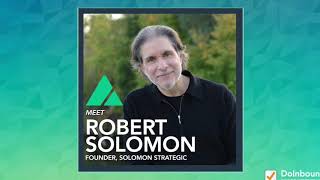
Robert Solomon, an advertising agency executive, outlines five principles for client service: show up, follow up, speak up, make it up, and straighten up. The focus is on building trust-based relationships and practical advice for agency professionals managing client accounts.
How do you build an agency that allows you to live the dream that you have for yourself, for your family, for your community, for your team, while at the same time helping your clients knock it out of the park and doing it all profitably? These are the big questions that we tackle here on the Agency Journey podcast. I am your host, Andrew Demski. Now let's get to it. Welcome to Agency Journey. So excited this week to have Robert Solomon on the line with us. Robert, how are you doing today?
I'm fine, Andrew. And how are you?
I'm doing so, so good. Thank you so much for coming on the podcast. I'm excited to. To dive in and talk a little bit about client servicing, how we can really deliver delight to clients. But before we jump in, would you mind introducing yourself to the audience and kind of sharing your story about how you came to be where you are today?
Sure. Okay. Thanks, Andrew. All right, so my name is, as Andrew says, Robert Solomon. And I am the founder of a consulting coaching organization called Solomon Strategic. And I've been doing this for many years. But before that, I was an advertising agency executive. I was the president of two divisions of a legendary agency that you might know by the name of Amarati Impuris. If you don't know that agency, you do know one of its clients, which was BMW. BMW Amarati was the agency that actually coined the tagline the ultimate driving machine, which is still what BMW uses today. Before that, I was at Footcone and Belding, and before that, I was at a shop all of you know as Digitas. So I've been an agency guy for the longest time. And I've been. I'm not a writer, I'm not an art director. I'm not a technology guy. I'm a client service guy. I've spent my life interacting and collaborating with clients on behalf of the agencies that I represent. So that's a little bit about me, unless you want to know a little bit more, Andrew.
No, that's. That's a fantastic summary, and I. It's really going to segue into our conversation, because what I want to know is, you know, after these years in the industry and then working with tons of agencies as a coach, kind of that outside set of eyes coming in, I just want to chat about, like, what are the most common things that you see agencies doing that if they fix them, you know, these little things that they could really see a big uptick in the type of experience that they're delivering for their clients? So maybe we'll just jump Right in there, sure. And yeah, you take it away.
All right, so no surprise, this is not the first time someone's actually asked me this question. That's a good thing. And I've had a chance to think about it and you know, if you, you know, I happen to publish a book which is called the Art of Client Service, which is all about how to enduring trust based relationships with clients. Because I came to a startling but obvious insight many years ago when I wrote the first edition of the book. We're now in the third edition. But back many years ago when I first wrote this, I used to think that if you took care of the work, everything else would take care of itself. You know, look, if we do great work for our clients, no problem, everything will be just fine. But when I thought about it and when I actually examined the relationships that my agencies had and the relationships that other agencies had had, I actually came to the opposite conclusion. It isn't that great work drives everything effectively or drives a great relationship. It's the other way around. A great relationship drives great work. And people will say, well, why is it? Why is a relationship so central to the vitality, success and growth of an agency? And my answer is very simple. Most agencies really, in all of their forms, including all of your listeners, want to do great work for their clients. Now most great work involves an element of risk. And most clients, at least the clients I know, are risk adverse. They sort of retreat to the more safe or even the average. But if a client is going to take a risk, they're going to do it with an agency that they trust. So trust is at the foundation of a great relationship. And if you look at some of the advertising and marketing work that's most celebrated, inevitably you will find that it is underpinned and driven by a really well developed trust based relationship with clients. So the book is all about how do you do that? How do you actually build a relationship with clients? Should I stop there or should I go on? Andrew, do you have a follow up or shall I continue?
Well, my natural follow up is let's go, let's jump right into it and talk about that because I'm curious, I'm curious about like relationships specifically because that just sounds like something that is one off that you can't really scale. Like how do you scale a relationship? But obviously to grow a strong agency, you need the ability to develop those relationships with every client that you work with. So maybe we could start there and just what are the things that we need to be thinking about? To make, to kind of continue to extend relationships with new people that come into our sphere.
Well, you know, it's funny because I actually think in an odd way, relationships are scalable because it's a little of duplicate and replicate. If you do it well for one client and if you perfect the techniques, the skills, the qualities that define a really good relationship with one client, they should be very transportable to the next client and to the next client. And when you build a good relationship and when you sustain it, that client will grow. And while all of us are focused on new business, how do we get the next new client in the door? The big secret in the new business world is how do you develop the clients you already have and how do you preclude them from leaving? Which is the sort of dark secret of all of the advertising and marketing services agencies that I deal with isn't just winning business, it's keeping the business you have. So oddly enough, clients want surprisingly evident things when they talk with their advertising and marketing partners who are supposed to be their collaborators. And I've sort of distilled this down into like five key principles. And in order to make them almost memorable, I've sort of, I would characterize them this way. I would say the first one is called show up. The second one is called Follow up. The third one Speak up. The fourth one is make it Up. And the last one is Straighten up and I'll talk for just a minute on each one of these things. Because in the aggregate, if you do all of these things well, chances are you will be effective in building trust based, sustainable relationships with your clients, which in turn will lead to growth and hopefully vitality and success of your organization. So, you know, with show up, it's just a very simple thing. Clients just want their agency people to appear. So many of us sort of depend on email, phone calls, Skype, all of the things that feel remote. But I will tell you, there is nothing, it's the most old fashioned part of this business. There's nothing that replaces face to face contact with your client, especially when things are good. I mean, obviously when things go wrong, you may be a little bit more inclined to appear in your client's office. But my point of view is that you should appear when things are good because you want to be building and sustaining that relationship because things ultimately will go bad and you want to have a relationship to fall back on when you do. So when people ask me how important is it to show up, I'd rather just call them. I'd rather Just email them and I will tell them, look, the more important the contact, the more essential it is that you try to schedule a face to face meeting. And oh, by the way, clients are busy, they're swamped, they don't want to do this kind of stuff. But you really need to be inventive in figuring out a way how to see them. And it's not necessarily seeing them for a meeting. It may be seeing them for a breakfast, a lunch, a dinner, a cup of coffee, a cocktail, whatever. But you want to be able to, to develop that relationship so that when things go wrong, you have something to fall back on. So show up is point number one. And then point number two is follow up. You know, it seems so simple. You know, a client calls you, you call them back, A client emails you, you email them back. And I don't know how many times I've seen agency people fail to do this in a very prompt and efficient way. And clients get enormously frustrated by radio silence. So always advise the people I'm working with to be enormously responsive to their clients. So if a client emails you, I would say, look, within an hour of getting that email email back, you don't have to have the answer. What you have to have is just acknowledgement, acknowledging, hey, I got your email, I got your voicemail message, I got your text message. Here's what I'm doing, here's when I'll come back to you. Clients feel a whole lot better when they're heard. So follow up is the second thing. I mean, the third thing I call speak up, but that's really just shorthand for communicating effectively. If someone were to ask me what's the single most important attribute in actually dealing not just with clients but also colleagues, I would say clear, concise communication. And so I advocate in the speak up realm, I say whether you're in a meeting, whether you're presenting in front of a client, whether you're on a phone call, you've got to be in absolutely concise and clear in your communication. And when you're writing, whether it's a scope of work or a letter of proposal, or it's a point of view email, or it's a conference report, or anything that takes the form of a written word, you need to be clear, concise, accurate and effective in the way in which you do that. So speak up is the third thing. The fourth thing I call make it up. And this is because I believe ideas are the currency we trade in. This is what distinguishes average agencies from good agencies. And good agencies from great agencies. And I think the agencies that are effective in actually presenting more and better ideas to their clients ultimately will prevail. So, you know, I'm not going to go into it now, but I do a whole sort of workshop on how to ideate on this, how to actually create, create more and better ideas. Because I think that that's an incredibly key component in dealing with clients. And oh, by the way, clients will tell me the thing that I find most frustrating in dealing with my agency is that they don't come up with new and innovative solutions to the challenges and problems I'm confronting. And the fifth thing is something I call straighten up, which is a catch all term for all the things an agency needs to do, right, the blocking and tackling of the. Because I find agencies have a tendency to give short shrift to things like a budget or a schedule or a scope of work. And I will just tell people, look, you got to do budgets are more than numbers on a page. It takes some real skill to produce a budget that's neither too high nor too low. It takes real skill to do a schedule that accurately reflects reality. And it takes really terrific skill in order to create a scope of work that accurately reflects the work to be done. So these five things show up, follow up, Speak up, Make it up and Straighten up are kind of the core tenets of how you build a trust based relationship with a client. And with that I will shut up now.
No, those five points are right on. And I really like how they're bookend. I like showing up like just the physical presence there and doing it before the fire because how much you know, you're in those client fire situations, you're basically using the trust that you've built as the fire suppressant at that point. You know that's going to really help you in that case there. So my first follow up question off of that is do you have any advice for setting that meeting schedule? Especially if an agency is remote from their clients where they might be spread out all over the country and it's a bigger investment to be there in person. Have you seen anything to be helpful there in terms of how often we should be getting together, whether even if it is just for dinner, just for lunch, kind of a timetable around that?
The best way I can answer that is to actually speak from personal experience. Years ago I worked at Digitas, which had its headquarters in Boston. And my biggest client was a little company called American Express which happened to be housed in New York. Now New York is the home of agencies like Ogilvy and Mather, which have been working with American Express for years. And I was up in Boston. So for me to go down to American Express required me to get on a plane. I mean, take a cab to the airport, get on a plane, spend the money, come down to land at LaGuardia, and then go into the city. And it took a day. So I instinctively made a decision that not a week would go by where I wouldn't walk the halls of 200 Vesey street, which is the headquarters of American Express. And what I would do is, even if I didn't have a meeting, I would invent one. I would say to a client, hey, Jim or Jane, I'm going to be in town. I've got a meeting. So and so, how about if we get together? Breakfast, lunch, dinner, coffee, drinks, whatever. And I would use the pretense of a meeting to schedule another one. They said, well, if you're going to be here anyway, sure, drop one by. I don't have time for. I don't have time for lunch, dinner, but, you know, drop them by. We'll spend a half an hour. Let me put you in the calendar. And then once I got that meeting, that became an anchor for all my other meetings. And so I would schedule when I go. I'd fly in for the day. I. Or I fly in the night before. I'd meet for breakfast, I'd meet for a second breakfast. I, you know, I would then, you know, walk the halls. Now, back in those days, security was a little more lax, so I had a little freedom to roam a bit. So I would just walk the halls. I'd go visit clients for ad hoc meetings, and I'll just tell you, people would pull me into all kinds of serendipitous opportunities. Hey, we were just. We're dealing with this problem. Can I grab you for a few minutes? Let's just talk this through. I don't know how many assignments I dragged back to Boston just by showing up. And I had a client once say to me, this was a very interesting observation he made. This was an American Express client who said, you know, you guys are up in Boston, and my agency, Ogilvy and Mather, is right up, sort of literally up the block. They're in midtown. And, you know, I see you a whole lot more often than I see the people from Ogilvy. And, you know, it was a funny but telling observation. He saw me more than he saw the people who were local. So my advice to people who are Everybody has a reason for not going. It takes, it costs too much money. It takes too much time. The client doesn't want to see me. All of those things are valid. And I just will say to people, at minimum, I would want to go and see a client if it were me. And depending on the size of the client. But the bigger the client, the more frequent the visits. But my sense is when I was dealing with American Express, which was a very large client, I went to American Express, I kid you not, three weeks out of four, month in, month out, for all the years in which I led that account. And I can't advise your listeners on what's exactly right for a particular client in a particular circumstance, but I will remember I was speaking at HubSpot's inbound agency and one of the, well, you may know him. Well, let me not reveal his name, but he actually asked me and he said, he said, how often should I go see this client or should I just deal with it on the phone? And I say, chris, get on a plane. I know it's expensive, but get on a plane and go see them. I'm just going to tell you the thing that you need to deal with with this particular client warrants an in person meeting. You could some things that simply cannot be handled by a phone call, let alone an email. So I don't know whether he took my advice, but my advice in general, when in doubt, get on a plane, go and see them and by the way, you'll come home. And you say, well, that was a big waste of time. But it's not because the sheer act of showing up says to your client, oh, we must matter. This is important because Andrew has taken the time and coming has come to see us. And even though it seems like a relatively small thing, it obviously isn't small to Andrew. True. So that's my point of view. So I don't know whether that answers the question. If it doesn't, I'm sorry, but that is kind of my philosophy in doing this, I think.
Yeah, I think that makes a lot of sense, especially when you look through the same lens that you said earlier of, you know, it's when it comes to sales, what's the cost of keeping a client or what's the cost of growing a client? And the more projects you're able to bring back home after just wandering the halls in your situation or even if it's going out to meet with a client once a month or once a quarter that, you know, being in those brainstorming sessions can really have a big impact on growing accounts and moving things forward without needing to start from scratch with a brand new prospect.
Excellent point. My. When I was at Digitize, what I was known for was my skill in developing that account, in actually growing it, in bringing in assignment after assignment. Now, some of this was based on the relationships I had forged with people who actually trusted that I was a good person in whom they should invest this particular assignment. So that was one thing. But my sheer presence also helped tremendously. The fact that I was there often meant that someone says, hey, could you take a look at this? Could you do a proposal on this? And so many agencies get focused on the next client. The client they don't have when sitting in front of them is a client they do have which actually works.
Yeah, no, that's such a good reminder. And how about from kind of the back end there, thinking about like sitting up or straightening up, I can't remember which one it was.
Straighten up.
Straighten up.
You can call it sitting up if you want. Whatever the hell helps remember it.
Yeah, I like that one because, I mean, that's my background, right? Doing Bend, where I. We're a process project management tool. So we're coming from that getting your ducks in a row perspective here. And I'm curious from. From your expertise, from your experience here. For people that are creative, like I'm a marketer, it's a really. It's hard for me to think in terms of operations and repeatable pieces. But have you, have you learned anything through the years? Or is there any advice you would offer to people who do struggle to kind of put a tight operation together? They might fall more on that creative side. Anything that they. Any exercises they should go through or resources you would recommend to kind of bring them down and help straighten up the operation.
You know, it almost sounds like a perfect plug for my book, the Art of Client Service, because the book is actually designed honestly, not just for project managers or even client service people, account people. It's a great book for creative people because it will tell them all of the things that an agency needs to do well in order to be efficient on behalf of their clients. And if you're efficient, you're more likely to be cost effective. And if you're more likely to be cost effective, you're more likely to be competitive. Because we're all competing for business based in part on price. I mean, as much as I'd like to say clients will trust you so much that they will give you assignments regardless of cost, that's certainly not the case. And in these days, as you get bigger as an agency and work with your clients, you're going to find agency procurement departments are going to be more engaged in the process. And procurement people have a tendency to view advertising the way they view the purchase of paper clips. They have no appreciation for the creative, the non linear creative aspects of forging a solution to a client challenge that is particular, that's build to order, it's not build to stock. So the book is all about this and it gives you kind of a formula for how to do these things. Well, there's a whole section in it. I mean, I'm answering your question. I sound like I'm shamelessly pandering for my book, but it's the reason why I wrote it. I wrote it because no one else wrote it. And I felt that with agency training programs not getting the time, attention and money they deserve, young account people need something that sort of will guide them on how to do this. So there's a whole section in the book that's called how to and it has eight chapters in it. And it tells you very basic things like how to run a meeting, how to write a conference report, how to do a letter of proposal, how to do a scope of work, how to write a presentation, how to do a budget, how to do a schedule. It's got all of these very pragmatic things. And I don't care whether you're a creative person or a creatively driven organization or you are process intensive, getting some guidance if you're unfamiliar with these things from someone who did it his entire life. I've been in this business for more years than I care to admit can actually be very, very helpful as you sort of calibrate your own work processes to actually fit the needs of your clients and the culture of your organization. So I don't have specific advice that I could share with you today other than to say you ought to start with either my book or any other book that's good on this side of the business and then look to other books that get recommended. I mean, my book includes a list of 25 recommended titles you should also invest in. Because I think doing a little bit of reading to supplement your day to day working knowledge can be enormously beneficial to you and your colleagues. So I don't know if that answers your question, Andrew, but if it didn't, okay, if it didn't, ask it, ask me again, I'll take another swing at it.
No, that's perfect, Robert. Thank you so Much for coming on and sharing, kind of sharing this framework. It's really helped you really break it down into easy to understand pieces. And so I'd encourage you guys listen to check out the Art of Client Service. You can find it on Amazon. It's got five star reviews over there. Robert, if people want to reach out, they've got specific questions for you or if they want to follow up up about the services that you, you offer. What's the best way for someone to get in touch?
Absolutely. So thank you for actually asking that. The best way is to, I mean you could call me, which is perfectly fine.
Robert wants you to show up and take him to lunch, guys. That's what he wants.
My door in Napa, California. What you I think probably the most efficient way in this case is probably email. And let me give you my email address. So if anybody feels like there's a question they want to ask or if they feel like they want to get on the phone with me, by all means we can do that. But and by the way, all of my information is out. If you go to the Art of client service, www.artofclientservice.com you'll get all my contact information. But my email address is Robert Solomon, which is three O's S O L O M O N Strategic and I'm going to spell it because it doesn't trip off the tongue. S T r a t strategic.com SolomonStrategic.com they can email me there, Andrew, and I'll be happy to field whatever questions they have. And if it requires a telephone call, we can jump on the phone and talk. And then again, if someone wants to come visit, well, Napa, except for the wildfires we're dealing with right now, is usually a very nice place to visit and I would encourage all of you to show up here.
Awesome, Robert, thank you so much. You shared so many great tips with us. We really appreciate it. Appreciate you taking the time here on Agency Journey.
My pleasure, Andrew. Happy to do it. Just have a good day.
Want more great episodes like this one? Hey, I'm Gray MacKenzie, a host here on Agency Journey. I don't know about you, but sometimes I get a little overwhelmed when I find a new podcast. There are so many great episodes and great guests, it's hard to know which ones to listen to first. That's why we put together a list of the top 10 most downloaded episodes of Agency Journey and you can get a copy of that list plus all of our notes and takeaways just by texting the word doinbound to 44222 again. That's doinbound, all one word to 44222. Standard text rates apply. You don't want to miss these great episodes. Text do inbound to 44222 now.










