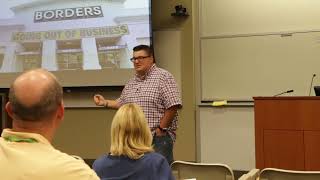
In this keynote-style presentation, George B. Thomas argues that the biggest challenge facing marketers today is the rapid evolution of consumer buying habits. He emphasizes that inbound marketing is essential because it is affordable and aligns with the way modern customers research and purchase products online. Thomas illustrates the shift with relatable examples: Zappos earns trust through easy returns, Borders failed by not pivoting to digital sales, and CarMax succeeded by reimagining the used‑car buying experience. Throughout, he stresses that marketers can succeed even with minimal or zero budgets by leveraging low‑cost tools and adopting a proactive mindset, encouraging attendees to take initiative regardless of whether they receive formal budget approval. The talk blends audience interaction, humor, and practical advice to motivate marketers to adapt to the changed buyer landscape.
Chapters
Okay. So what we're talking about is actually one of the biggest issues in our industry and that's why we're having this session today. Because what I want you to realize is that after today, you are going to have a plethora of options that you can choose from. We're going to talk about tools that no matter if you have a small budget or honestly zero budget at all, that you'll be able to pick up and use so that you can be successful. So. So that you're not frustrated, so that you don't feel non important to the company and you can show them this is what we should be doing moving forward. And I don't care if you're not going to give me the budget, I'm going to do it anyway. We're going to give you the thumbs up. So before we get into the tactical part of this, the tool set of this. Why do you think inbound marketing is important? Any guesses why inbound marketing is important? Leads? Yes. Because you can. It's affordable. Okay, very good. Any other reasons why you think inbound marking is important? The customer. And what's interesting is the customer has actually changed. Right. So we got to look how the customer's changed. Who knows who this guy is? Al Bundy. Al Bundy, Exactly. And what did he do for employment? Shoe salesman. Shoe salesman. Very good. So he's a shoe salesman. Exactly. And so you know what's interesting is most of us, we don't really want to go into a shoe store and actually have to look at shoes and pick them out. Well, some of you women, you may actually still enjoy that. But I would say that I don't like people messing with my feet. I'm very ticklish. And so if. Next slide, please. If I can just go online and go to this company and look, we have nodding of heads in the audience, which is amazing. We're going to order it on Zappos because we trust them. Marcus talked about this earlier. We. Why do we trust them? Because we know if we don't like them, if they don't fit, we can. What? Yeah. Next slide, please. So what is this? Do we even remember what one of these are? Anybody? It's a bookstore. It's a bookstore. Right. So this happens to be the CD section, but on the left you can see a bunch of books. Anybody want to take a wild guess what bookstore this is? Borders. Bam. Next slide, please. Exactly. They did good. So Borders, it says they're going out of business. Is this a lie? It's the truth, they're actually already out of business. But I have a question for you. What didn't they see? They didn't see the future. And when you say the future, what do you mean by the future? What were they missing? What did they not pivot on? Online sales? Right. So I'd love to say that they're the only folks. Well, look at this. This is a list of bookstores that no longer exist because they couldn't see that fundamentally the customer was changing the way that the game had to be played. Everybody understand that? Next slide, please. Marcus talked earlier about the used car salesman. Now, this is what I envision when I think of a used car salesman. Something kind of smarmy, maybe a little skeezy. Right? You're just worried that you're not going to get a good deal. But again, CarMax, next slide. Has actually changed the game by what they did. We already talked about that this morning. So we all would. We all agree that consumers have changed. And by the way, when I say consumers, I really mean us. We have changed the way that we purchase.