The Future of Customer Acquisition with Mattherw Iovanni from FullFunnel
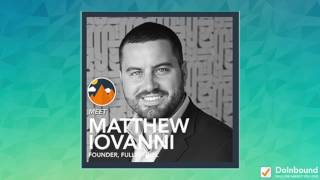
Matthew Iovani, founder of Full Funnel, talks customer acquisition strategy and how discovery processes shape agency work. He covers what's changing in the industry and how agencies should operate to stay ahead.
Foreign. Welcome to Inbound Agency Journey. This is the show where inbound agency leaders share the strategies, shortcomings, and successes they've experienced in their journey toward building their dream agency. Now, here are your hosts, Andrew and Gray.
All right, this week, I have the pleasure of bringing on Matthew Iovani from Full Funnel to the podcast. Matthew, thanks for jumping on with me, man.
Thank you so much, Bray, for having me. I really appreciate it.
Yeah. So I'm excited to dig in to today's episode. You and I were just talking ahead of time, but you guys, you are HubSpot Partner Agency. You've built a great business and brand and may be recognized by listeners for being in the inbound community. But. But a lot of the inbound tactics as we were just talking about, are just a part of the way that you're actually delivering value and leads for your business. So I'm excited to dig into some of that. But before we get too far into the weeds, into the tactics here, do you want to give us kind of a background of where Full Funnel came from and just kind of your path to where we are today?
Yeah, sure. That's a great question. So, effectively, in September 2014, I actually started Blarney Venture, which was an LLC that I created after moving out to San Francisco to initially work for a startup. My former career path had been in the corporate middle market space, so I was leading sales and marketing for $100 million services business based in Boston and was in that services business for quite a while, about seven years. Decided I was going to get out of it, go do something exciting in tech. Ended up meeting some guys from blackrock that were starting their own business and moved out to San Francis sort of on a whim to go out and essentially work for this early stage company, which was a kind of complete departure from what I had been doing previously. And long story short, that startup ended up folding after six weeks. It was like a mortifying experience for me professionally and personally. You'll leave Boston, you'll leave your corporate gig, you're going to work in tech. And then you get out there and realize the reality is a sort of early stage life, which is that 95% of these people are running around with no idea what they're doing. After that company folded and whatnot. The people who we've been working with in the community for that particular startup, which was raising money essentially for other startups, acting as a broker, dealer, they started approaching me and they had realized as I was working on their accounts that I had a pretty Significant sales acumen. They started coming to me and asking if I would then help them with their customer acquisition process. Sort of how Blarney Ventures was born. Blarney. Pretty simple. My nickname in college was Blarney Ventures. Every other idiot in San Francisco is a venture this, venture that. So I just sort of joined Suit and there I was. And then really over the next three months, September to, let's say December of 2014, we just realized we hit a vein in the market and we're like, wow, there's a lot of people here who don't know what they're doing. And more surprisingly, that customer acquisition as a business was not even a thought. You either had your inbound folks, you had your digital marketing folks, you had your sales consultants, you had your sort of call center, call agent sort of companies, but no one really did the whole thing as like one sort of comprehensive service. And I kept walking by KPMG on second street in San Francisco and looking up at the building and trying to be like, how what do these guys do that they have this building full of essentially consultants and outsourced agents for all these companies. And I started digging into it and I just started making sort of correlations between the customer acquisition business and what people people do in sort of an outsourced accounting and business advisory services format. And then that was sort of the catalyst for starting Full Funnel, which is a much more appropriately named sort of customer acquisition, sales and marketing, outsourcing and advisory services business.
Gotcha. Wow, what a story. One question that popped to mind right away is why were you good at sales? You talked about just briefly, your experience in Boston, but is it something just innate? I mean, I'm sure it's always a common combination, but just the way that you were wired or was it the experience you'd had before?
Yeah, so, I mean, there is like, you know, one of the methodologies we believe is that there's a psychographic profile that matches sort of people who are going to be good at particular aspects of sales and or marketing. So I definitely have a psychographic profile that would sort of mirror being, you know, a extroverted, high energy, high sense of urgency human being. And the reality of it though, is how I got from A to B, you know, doing what we're doing now and sort of building the business is really just sort of the aggregation of experiences that you pick up. And I had incredible sort of opportunities within my 20s, believe it or not, to serve on boards, to exist in C level capacities. Take a company from like 7 million to 25 million, move on to a bigger company. And as a result of that, I got incredible mentorship, coaching experience, doing, you know, such a wide variety of things that it started to build this huge amount of perspective about what works and what doesn't within certain sales and marketing contexts. That got me to sort of September 2014, and then since September 2014, I've worked with roughly about 85 companies. And so, you know, I, you know, like anything else you subscribe to, like Malcolm Gladwell's 10,000 hours to become an Expert, the reality check of sort of what I've been doing up until starting blarney and full funnel to what we're doing now is that I've just compressed 20 or 30 years of experience into a very short time frame. And I think what enables us to do this job and to do it well in most instances is just that we have such a vast amount of perspective around what businesses go through, what their challenges and hurdles are, but more importantly, what works demographically for different prospect demographics and buying Personas. And just leveraging that in the outbound sales process. And the inbound sales process, because at the end of the day, whether you're doing inbound marketing, you're doing broad based prospecting, the goal is to get people to sign on the line that is dotted. Right? And I think a lot of people forget that. And that's something that we just focus on holistically. And as a result of that, I think we're driving kind of a better product out there than any sort of singular or myopic tactic.
Right. So that makes sense. And one of the things that I'm always curious about, when there are the folks who we talk to who are running, not necessarily just your traditional. It's funny that we say traditional inbound because inbound itself is so young, but not necessarily like a traditional inbound agency, but focused on whatever tactic, whatever growth tactic will work to get work, to ultimately generate business or leads or whatever they're delivering for their end customer. What does in those cases? There are some folks who have a very standard here's the way that we're going to go about this and we go about it scientifically, or we have a hypothesis, we go test that channel, we see what the results are, we move on to the next one, test, test, test, optimize and move from there. Then there are some folks who just say every single engagement is completely different and we're just learning the client. And we don't really have a distinct process for how things go what does working with Full Funne as a client of Full Funnel? I guess if you could describe maybe like the goal, but also what is the process by which you're taking people to that goal?
Yeah, so every client engagement is unique and different. So what you're hitting on is there is not a one size fits all solution out there, especially within B2B, Middle Market, SaaS, et cetera. There are certainly corollaries, right? There are things that sort of look and feel the same based on certain different demographics and tactics and price points and sales cycle duration, things of that nature. But when we work with any sort of client, I always start every client engagement with a discovery of some sort. So it's initial sort of consultative management consulting, rip down of their current environment, process, etc. Because I think this is a folly that most marketing companies fall into, is that they feel like they have a product that people consume and as a result of consuming it, the output should be valuable enough for them to keep consuming it. The reality in the S and B segment, so that's anyone with $2 million in top line revenue to about $200 million in top line revenue. The way that we define it, they're inherently screwed up, every single one of them. We've been doing this for a long time and there's no one that approaches me that says, hey, we have this product or service that's absolutely flying off the shelves. We just need to market it, get some ebooks out there. We can't stop people from buying this. It's such a sort of lubricated product. Within the space. We're much more in the trauma center business where companies come in limping, broken bones, amputees, years of mental baggage, and they're trying to assess usually whether or not their problem is specific to the people that they've been hiring, their process, their product, or just them as a company. Before you go down the road of implementing any solutions, first you need to hit calm. And that's what my first step with any client engagement is. And I also charge them for that. And we charge them a lot for it. And the reality of why you do that is simple, is that if they're not willing to pay for that sort of assessment and prescription, there's two things. A, whatever you're selling isn't that valuable and B, they're not really committed to the process. So if you have someone coming in in pain who's, you know, got a broken leg or is an amputee of sorts, like you really got to estab like why do they have this broken leg? What happened? Why are they in the current situation? And then you need to work with them to essentially plot out a course or a trajectory to get from A to B. And that's going to involve things that they're going to have to change as well as things that you're going to do on behalf or with them in order to facilitate that change to happen. So, you know, the process that we take everyone through is a very intimate sort of business rip down before we will engage with anyone. And we just try to lay it all on the table like we don't pull magic rabbits out of mag cats. What we do is we, you know, essentially we're brokers in reality. This is sort of the reality that you live in now. This is what it would cost to augment that reality. This is the pathway that we would take to sort of vet out that process. And this is the expected outcome. And Full funnel has a stupid high hit rate on companies that we essentially do assessments for. And the reason I think our hit rate is so high is because we just give them reality. There is no sale here. It's just simply this is where you are and this is how you would overcome said hurdles. And if it takes, you know, six grand a month to do that, or if it takes 50 grand a month to do that, it's immaterial as long as it's quantified. Right.
That makes a lot of sense. And we, I mean, so my background as also an agency co founder back at Guavabox, once we started doing the discovery project, that was, that was a huge win and a turning point for our agency. And I think one of the questions, one of the natural questions that that people will have and will ask is, well, what does that discovery process look like? Is there some standardization on pricing or timeline or what you're diving into? How does that work? Because in our situation that discovery project was always could at least tell people, hey, this is going to be a two to four week process. It's going to be somewhere between 5,000 and $15,000. Once we had specifics, then we'd give them that information. Is it nailed down and somewhat standardized what that process looks like or is that also completely custom?
No. So I think the assessment function is somewhat nailed down in terms of process. Right. Because what you want to get out of them is essentially access to everything. So that's something that I feel like a lot of folks don't do when I say access to everything, like down to the color of their underwear. Like we're talking everything, financials, org charts, roles and responsibilities, access to every system they use, whether that's a CRM, marketing automation platforms, Google Analytics, chat tools, I mean literally everything. And there's just a number of other sort of aspects of the program that just we have them give us every aspect of what they're doing currently so we can sort of walk in with a baseline assessment. And then after that, you know, it follows sort of a standard process and procedure in terms of, you know, going through that information, digesting it and then coming up with a quality output which is sort of like, you know, your deliverable from that discovery phase, which is essentially what you're going to do and why and what the objectives are.
Right, okay, that makes a lot of sense. I think you kind of have to have that standardized process after you do like you were mentioning the experience that you've had once you've worked with enough businesses, you understand what do I need to know in order to tell you where you need to go or what you need to do next? So that definitely is a level of standardization that comes in play there.
Yeah, it's really interesting actually. One of the things that you get hit with all the time is like, well, people will reach out to you, you'll reach out to them and you'll get them on the phone in some context and they'll say something to the effect of my business is a unique individual snowflake. There's no way you could possibly understand the interests of my business. The reality check is like look, after a while you start to see the matrix. No one's business is different. There are probably four or five problems that I see in 90% of the people that we work with. Things like terrible culture and communication. Communication is the number one folly I see with the entire SMB landscape. Even our publicly traded clients, I would say communicate, maybe get a C at best. Just certain aspects that you start to like look and see and you can figure things out very quickly. Like for instance when you go on site, because I always go on site, I want to see who I'm working with. If I enter into a lot of closed door meetings, like people shutting the door and having hushed conversations with you, you know, immediately. This is a backstabbing, terrible culture full of just all these awful things that you don't want. Whereas conversely, you get into some companies and it's a wide open, everyone knows everything, we're all here for the right reasons, sort of culture and mantra and you're able to dissemin that Within a minute and a half, two minutes of sort of being in private sessions with people. So perspective is something that is hard to teach and you have to sort of, you know, aggregate it over time. And you know, part of the challenge that I have with my staff is that I'm trying to essentially get them the same amount of perspective in a shorter time frame. And so I have some people that have been with the organization since, you know, day one, day two, who now have seen, you know, between 30 and 50 companies, you know, that we've worked with and have seen the dirty laundry and they have perspective on what works and what doesn't. They have worked with successful businesses that have a checked out owner that doesn't come to meetings, doesn't read emails, doesn't do this, doesn't do that. They've had ownership or stakeholder groups that are super involved, that are always on demos, always ready to go, ready to pitch in any way they can. And they're starting to realize too, like within the first couple of weeks of an engagement, okay, this guy or this gal is going to be a problem in one of these sectors. And we try to sort of move them along in a productive pathway. But that perspective is very, very valu. And I think that, you know, and I'm sure you can appreciate this as an agency owner yourself, is that you just start to see people for what they are in a business context. And it's not a unique and individual snowflake sort of scenario. In fact, most SMB businesses are 90% exactly the same whether they're selling tissue paper or SAS technology. Right?
Yeah. There's way more similarities than dissimilarities. I definitely agree with that. Matthew, I'm curious about how you're servicing clients. I guess one of the big appeals, one of the things I think HubSpot's partner program specifically and a couple others have marketed well is you need to be good at one thing or you need to have one type of focus. I think that the simplicity appeals to a lot of people. As you guys are figuring out, listen, we're going to figure out what you need to do, what's the shortest path to roi, and then go after that with whatever the tactics are. How do you deliver on those tactics? Is it partnerships and contractors? Is it a large, diverse team? How are you, I guess, tangibly delivering the wide array of services that your clients need?
Yeah, so it's actually a great question and it's not easy. And what I mean by it not being easy is that first off, you cannot rely on 1099 contractors. There's no way to create product consistency with a whole bunch of 1099s. It's just never going to happen. So if you're sort of committing yourself to having a lifestyle, small agency business, make some money and sort of do your thing, you can go down that route. The next option really is to develop a sort of firm, right? So a company that is diverse in their skill sets. They're all full time employees, they're all culturally bought in, they're economically bought in. And doing that in a way that allows your customers to receive product continuity, which is everything. And we have taken the latter option and it's a more expensive option. And so as a result of that, you have to be mindful of a couple things. First and foremost, you need to make sure that you have contracts that are legit. So contractual relationships are everything. Long term relationships are everything. Sort of having defined aspects of customer life cycle stages is something that we spend a lot of time doing. And the other thing too is you have to charge enough money for it to be real. We have at the moment pretty much a full outbound prospecting group. We have a full inbound marketing group, we have a full paid digital acquisition group, we have a full advisory services group. All of those groups are sort of intertwined within our operating process. And they're all full time employees. They all command much. I mean, I pay people more than the industry average and I've just done this by looking at Glassdoor and figured out like, wow, really am paying people more than my peers. But the reality of this is that we're trying to elevate this game. We're not an inbound agency, we're not a marketing company, we're not a paid digital agency, we're not a sales company. We are in the customer acquisition business. And you come to us with your customer acquisition problems the same way that you go to kpmg when you have tax compliance, accounting and sort of problems that are of that sort of nature. And it's an expensive endeavor, but as long as you're getting people to sort of have a rate in terms of compensation for full funnel, that's appropriate. The numbers all sort of stack out, but that's how we went from zero to five million plus in sales in two, two and a half years.
Wow, that's awesome. I'm curious as you look. So we're almost coming up, I guess on halfway through 2017. One of the questions that I love to ask people is around this is kind of a backdoor way of figuring out where they either think the future is, or basically the question is simply what's an area that you're focused on improving the company right now? Whether that's either just trying to address a weakness or something that's hard, or just seeing an opportunity in the market and trying to push into that space. Anything come to mind?
Yeah, I mean, I can tell you from like a training and development standpoint, that's where the money is. Like, you know, I joke that we have a $20 million problem at full funnel, which is getting everybody to a certain competency level. Because in my head that brings US to about $25 million in top line revenue. But I think the broader sort of context of even figuring out what those sort of areas of focus are or like what is the opportunity in the market. And if you actually know what's going on in the market, generally, you know, you're seeing a lot of advertising revenue be sucked. Some of these firms like Accenture, by Deloitte Digital, by some of these programmatic marketing firms, as opposed to advertising in a traditional sense, they're leveraging big budgets into more digital infrastructure funnel marketing, they're selling these companies this service at a very high clip. And if you're actually looking at growth, whether it's the PwC digital group, whether you're looking at the Accenture one, whether you're looking at any of these firms, they're all doing it. And what's fascinating about it is I feel like the small business middle market sector has missed the boat in some sense. Everyone wants to go out and plant a flag on their sort of small piece of the island and say, hey, we do inbound content in a really significant way, or we're great at paid digital acquisition. When the reality of this is that no one cares about any of it. All they care about is did you or did you not put meat on the table? Did you get a return on deployed capital that is above industry benchmarks, which is like a 3x return? So if they gave you a dollar, did you get $3 back for them? And in some sense I feel like the trend of the industry is going to stop being sort of these fragmented marketing or agency format businesses that don't have a tangible delivery and it's going to start moving into an aggregated sort of return on deployed capital model. And there's no difference between an investment and a acquisition firm in the sense that the reality check of this is that you can go in and deploy capital in any way that you want. Full funnel has sort of carte blanche with our clients. Usually when we're going in like we can spend 50, 60, $100,000, whatever we want to do. But are you generating a return on deployed capital? And once that narrative is sort of what drives your business, then compensation, culture, performance, training, everything has to go back to this return. And I think the different differentiating factor with how we think about the business, but I think how successful businesses moving forward are going to think about this is do you or do you not have a fiduciary responsibility to your customers to return capital at an acceptable rate and more importantly, to deploy capital in a responsible way? We work with a lot of venture firms and a lot of early stage startups as well. If 9 out of 10 startups fail statistically, if anyone can go on there and make it 8 out of 10 as opposed to 9 out of 10, that's 100% improvement. That's amazing. But that still means 8 out of 10 fail. When you have investment groups deploying capital, how do you mitigate that capital's deployment in a responsible sense? How do you mitigate people wasting capital? I can't even begin to tell you the amount of folks that we go into. They don't have product market fit, they got 10 SDRs, three AES, an inbound marketing person, no one has any clue what they're doing and they're literally just burning cash like it's going out of style. So I feel like long winded, the trend of the industry is going to be starting to move towards being an investment manager for sort of prospecting or customer acquisition capital as opposed to what we've been doing as an industry which is just feeding on this Kool Aid of whether it's content marketing or paid act or anything to that effect. It has to be an omnichannel acquisition tactic. You have to put meat on the table if you don't expect high customer churn and high employee churn and just generally a less productive business. Right.
I totally agree that and I have, and I know we're coming up on time here, but I kind of love talking about the big picture, the long term of where the industry is going. And a lot of people kind of continue that train of thought and say this is going to go to pay per performance where you just get a part of whatever the revenue is that you bring in. And then there's other people who argue, well, some of the, especially in the B2B space, the longer sales cycles you might get cut before you get whatever your piece was that should have been coming or may not have the opportunity to finish implementing what you needed to do. You have a take on that. Do you think that this is going to go to a pay per performance model or no?
I don't think it's going to ever be completely paper performance because there's just not enough of a business there. What does pay for performance really mean? If a company wants to expand their customer act program, they've got three choices. Either do nothing, which is completely counterproductive to elevating anything. They either invest in sort of assets within the four walls of their company, and those assets are going to require recruiting, onboarding, training, development, management, et cetera, et cetera, et cetera. And there's a very high cost to that. The outsourcing business is nothing new. It's been going on for about a century at this point. So the mechanics of outsourcing make a lot of sen. And the third group would be actually outsourcing it to a third party in some context. But it's very illogical to think that people are going to be outsourcing that function within a pay for performance model because at the end of the day, you have to invest capital in order to yield a result from that capital. However, having said that, we have a variable compensation model at full funnel. We do take a percentage of revenue that we generate in excess of our monthly retainers. And so we feel that the blended approach is pretty much where the industry is going to go. Because unless we were taking massive rips on revenue, there's just no way that that model works. And it's funny because when someone calls you and they say, well, we're only interested in pay per performance, it's like, okay, well how many salespeople do you have? We don't have any. And how many customers do you have? We have a few. It's like, so you have no product market fit, no money, and you want me to take a risk on your business? Business? Logically, you kind of just laugh at these people and it's like, all right, keep walking. The people who get it, and I do think there's quite a few that get it, realize at a very financially fundamental level that outsourcing this function within a larger company not only is wildly attractive from a compensation and sort of cash outlay perspective, but the reality is that demographic, I shudder at the word agencies. Let's just say that anyone who's in the sort of outsourced sales and marketing function of any sort of kind, you should have a hiring training and acquisition process that is so unbelievably good that your customers have no reason to doubt that you are a better use of capital than hiring in Joey off the street. And you know, that's where I think we've found success is that people will literally just sort of litmus test us and go, yeah, these guys look like they know what they're doing and that's it. You have to be the top 5%. And if you're not the top 5%, like I said, go back to lifestyle business or go home. Like it's. That's just not going to be something that's going to be productive for you.
That's awesome. Well, a lot of good stuff here, a lot of Hilo stuff. And I appreciate you coming on and showing sharing. Matthew, if people want to follow what you're up to, Full Funnel, Blarney Ventures, any of the businesses that you're involved with, what's the best place for them to follow along?
Yeah, I would just say subscribe to Full Funnel as a blog. Blarney Ventures is just a holding company, so we're just sort of owning assets and love to talk to anyone in the industry at any point in time. I'm actually actively talking with a number of folks that do customer acquisition as a service because the market is about a trillion dollars. There's not a lot of community around that, so that would be how I would do it.
Awesome. Cool. Well, we'll definitely link that up in the show notes@DMount.com podcast. Matthew, thanks for coming on. Really appreciate your time and you being willing to share.
Thank you very much.










