Tips on Building Your Remote Marketing Agency
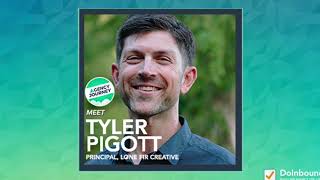
Tyler Pigott, founder of Loan for Creative, talks about leaving corporate startup roles to build a remote marketing agency. He covers hiring remote teams, managing clients across time zones, and scaling service offerings without a physical office.
Hey, what's up, guys? Welcome to Agency Journey this week. Thanks for carving out a little time out of your busy week to be here with us. I've got a conversation this week with Tyler Pigott from Loan for Creative and cover a lot of ground in this interview. How Tyler built a remote agency and how his background in kind of the corporate startup world has shaped his vision as an agency owner. And the story of how he got his company up and off the ground last year. Of cool takeaways in here, and I hope a lot of encouragement. What I really appreciate about Tyler is just his authenticity and his vulnerability. Just kind of sharing where he is at right now. As the agency gets up and gets going, all of us as business owners face different struggles and different challenges, and we ask questions all the time. And so when you can listen to a podcast, it's easy to just think like, oh, this is another person with a fantastic highlight reel. But don't forget, everyone here is building a real business just like you are, and they had the same doubts and, and questions that you do. So here, Tyler digs into his story. You're gonna enjoy it. You're gonna learn a lot. Check it out. How do you build an agency that allows you to live the dream that you have for yourself, for your family, for your community, for your team, while at the same time helping your clients knock it out of the park and doing it all profitably? These are the big questions that we tackle here on the Agency Journey podcast. And I am your host, Andrew Demski. Now let's get to it. All right, Tyler, welcome to Agency Journey. So excited to have you here this week. Can you say hey to the listeners and share a little bit about your story where, how you got to where you are today?
Cool. Thanks, Andrew, for having me. Appreciate it. Hey to the listeners. Yeah, super excited to be here and it's been fun to kind of listen to your guys', your guys's journey a little bit through the podcast and understand a little where you guys are at. So it's fun to. Fun to be part of your story a little bit and excited to share, I guess kind of how I. How I started and kind of where I'm at in the agency life. So I started. So my agency is a little over two years old, started in 2015, but my career has been more along the lines of kind of the corporate startup life. And so I've worked at a variety of different opportunities and kind of some of them started from, from nothing or from an idea. And I was got to Be part of teams that grew them all the way to, through test and all the way into rolling out on the west coast and some of those kind of things. So I probably have maybe a little bit of a unique perspective from the startup life and have learned a bunch of different things from that realm. But primarily my whole life has been spent in kind of communications, marketing, creative. I've gotten the opportunity to have job functions or roles within every area that I now run an agency in. So I don't know if that gives you a little bit of a snapshot.
But yeah, it's a little. I mean, it's a cool background. How like, as you're in kind of the agency trenches right now, two years in, how is like your background in startups impacted where you are today? Like, what value do you see day to day from those experiences that you learned in your previous jobs?
Sure, that's a great question. I would say, I mean, I would. Overall, it's, you know, you're always looking at. I think there's lots of different types of people in the world. And I mean, some that I would probably highlight now are like some of those perfectionists where I'm like, hey, I have a product or a service or a business and I need to have it perfect. And then once it's perfect and all shiny and polished and looks really nice, I'm going to then present it to the world and it's going to be amazing. And I think most everybody that's started a business run a business that's just not really reality. And so I think just that idea of really, okay, so everything I'm doing now, how does that connect back to the mission, the vision, the goal, objective, whatever it might be as far as like just that business. So maybe it might be in a startup, in a specific startup life. It's like, well, we've got, you know, we've raised, you know, a million bucks and we've got this long a Runway and here's what we have to do. We don't want to raise any more money. This is what we have to do to get there. And so, you know, it's like tying back every activity that you do to that main goal. So I think that's a huge piece that I pull from, from my own business as well as, you know, different clients and of prospects or even people I'm just dialoguing with to help kind of advise them and consult them on, you know, their business to be able to provide value to them in all, you know, all steps of the Journey, I guess that's real cool.
How has that background in startup space kind of impacted the way you've structured your agency? Can you kind of walk us through what your journey was like from leaving your last job and then making the decision to venture out and start your own firm?
Yeah, for sure. You know, like I said, I've had a lot of different experiences. The most recent one, got to work on a consumer product. Super fun. Really enjoyed it, really enjoyed everything in it. But it was starting to go a direction that I wasn't, I guess, kind of super pumped about. And so there was a pretty clear exit opportunity there, which is a whole, probably another podcast and another series. But, you know, for me, it was. Got that kind of opportunity in early 2015 and then really took a little bit of time to kind of figure out, hey, what. What am I good at? You know, it's a little bit of. I don't. I wasn't, I guess, kind of in my gut, wasn't ready to jump into, let's just repeat what I've just done and want to figure out kind of what's next. And part of one of the things that I started to identify was, you know, over the last decade or more of kind of work experience, I'd been starting to see the amount of effort I was putting in helping somebody else build their. Build their thing. What a quote unquote thing, whatever that might be, business, product, team, whatever it is. And I kind of started to kind of got this feeling of like, hey, I want to build my thing. Like, what's my thing? What is that, first of all? And I'm feeling like I want to do that. And so took a couple of months to just really figure that out kind of work. Did some random consulting things here and there, and one of those, I guess, opportunities that I got was to be a golf coach. And so I was a golf coach at a local Division 3 university here, kind of south of Seattle. And it was super fun. Loved being with. I'm going to call them kids or students, which sounds weird because I don't feel like I'm old enough for that. But anyway, so I got a ton of opportunities to play golf. Just walk the golf course with them, just enjoy that, you know, it just kind of. It was more of like almost like a mentoring experience. I feel like I probably got more out of it than I was able to give to them. That. And so I think for me, that was a time where I just really got to kind of dream a little bit. Naturally. I'm A dreamer, naturally. I'm always thinking, hey, what's that crazy thing that's at the end of the road or end of the path that I could go get and what's the process to get there? And so for me, that was part of my journey and kind of funny. So the name of my company is called Loanfer. It's LoanFurConsulting. LoanFurCreative.com is our URL. It's kind of morphed into LoanFour. Creative is the main name of the company. But our home course for the university was at a course called Chambers Bay. And for any golf fans out there, Chambers Bay, 2015 US Open PGA US Open was the location where that tournament was played. And there's a hole, hole number 15, par three, downhill. It's called Lone Fur. And so I was talking with some of the guys, we were teeing off on that hole, and we were talking about what I would do next. And at that point, it was really just a dream or a thought that I might start my own company. One of the. Hey, owner. You know, And I didn't really think about it. And then that started to stick and started to really have some meaning to me, both from a personal side. I've grown up playing golf. Love playing golf. It's kind of like it's an escape for me. And then also just like that kind of that lone fir, that fir tree. It's like when you look at it or you're looking at the tree, it's like deep roots. It's one that, you know, it's, like, established. It's helping you kind of stand apart or stand alone. So there's all these, like, tree references you can go into, which are all after the fact. But that's, I guess, a little bit of the story of how we've gotten to or how I got to transition from startup corporate life to start my own thing.
That's fantastic and a cool thing. I mean, just kind of before we hit record here, going through your story a little bit, it's been neat how you've kind of put a remote team in place. Can you walk us through that journey? I guess from when you decided to go out and do this, what made you decide, hey, I want to build a remote team here? And kind of what led you to that end?
Yeah, that's a great question. I think, like, everything. It was definitely a journey to figure it out. I wouldn't say that I started out with the goal of a remote team. I think it's probably a rarity in the agency space where someone starts with this perfect plan and it actually rolls out that way. So I started, you know, just by assess, essentially doing a lot of freelance gigs and so websites, logos, graphic design, whatever, essentially whatever anybody would, what they needed and what I was talented in. And so, but I was working from home at the time and you know, I think some people, it totally works where they can work from home and they're self motivated and they don't have as many distractions or they've got space where they can close the door or whatever. And I think I started to really enjoy it. I'm definitely a family guy, married, have two little girls and really love getting to spend more time with them. And that was one of the things that I didn't like about the startup corporate life was just the amount of hours you were gone. And so I think I kind of just morphed into huh, I wonder if I could figure out a way where I could be, you know, available but, but at the same time obviously still working. And I say that all with anybody that's listening that's like, runs their own business. It's one of those like, hey, you gave up a 40 hour work job, you know, a week job so you could work, you know, 60 to 80 hours. So it's, I'm saying that really lightly because I understand like the reality but for me as far as just that remote side, it was starting an agency and then you land a project where hey, can you, do we want to redesign this website? Can you do all the design and then you land that project, you do all the design, work with them for a number of months and then they're asking about development and I'm going, I'm not a developer, I don't know PHP, I don't know WordPress, I don't know all that stuff. But do I learn it? So I'm asking those questions but at the same time going, well, I know friends that make this, so could I, you know, just hire them to do it? And then you know, obviously fast forward a number of years that obviously grew into, well, there's remote, you know, remote opportunity there. So I mean fast forward to today. So it's myself and then I've got a full time employee in Phoenix. So our business is primarily based in Seattle and Phoenix. And then we have a remote team that spread across the US and then a small team in Cape Town. So we've got anywhere from six to eight people ranging from part time to full time contractors. And it's really nice from a business side because I hire people based on the work that we have. And so as far as just that overhead and like, oh, you know, becoming that person that's respondent to, I'll take any project that's, you know, got the right number on it and I've got to, you know, have got to keep the lights on, got to pay for rent, got to buy, you know, all the, all the materials for that, got to keep people happy. And so it's definitely, you know, there's pros and cons for sure, but as far as kind of where I'm at, that's. We built a remote team and have really enjoyed it. So.
Yeah, that's awesome. I have a couple follow up questions off of that. The first one is kind of when it comes to serving the clients, how have you gotten to the point to where, you know, you have this, how have you selected the services that you want to provide to your clients? Because with a remote team like that, you can do pretty much anything if you're bringing in the right people to do the right work. So how have you filtered through that and decided on, you know, this is what we offer, this is what we don't or, you know, where are you at in that conversation?
Yeah, that's a great question. We, you know, like anything, we definitely started out in one, one area and we, we are kind of still doing some of that, but it's, it's morphed pretty drastically I think a lot of it as far as just, you know, choosing the services that we provide and what, you know, and those types of things, a lot of it was connected to, hey, what are we good at? How does our mind function? What do we want to do? And so, and being, you know, as, you know, the history and background of kind of a startup life, our focus or not necessarily a focus, but a lot of the ideas and clients we've then become to work with are people that are starting, starting a company, launching a product, starting the vision of their company and those types of things. And so, you know, a lot of the, I guess, kind of tactics or activities that we would do for clients, projects we do for clients were around kind of that, I guess, industry or style of product or service. So, you know, I guess in, you know, in the early days it was project only and I got to the spot of where I was not really interested in quote unquote, rebuilding my house every month and having to go find, you know, project work. And I'm sure everybody can relate to that. But we wanted to make the change to doing retainer work. And part of that was obviously the ease of building that partner. I shouldn't say ease or it's not easy to build a partnership, but it's just the easier side of not having to go out and sell projects and projects and projects, projects. So there's that side of it where it's a little bit easier to continue to build that. There's the side of that more predictive revenue from the agency perspective is I know what's coming in because we've signed a, a multi month or a year contract. And then there's the other side where for me I'm highly relational, love being around people and I love to help people put legs to their vision. And most of the time it's pretty hard to put legs to someone's vision when they pass to you like, hey, here's this like kind of infant website we have. I'm going to pass it to you. Can you make it shinier and then pass it back? That's not. Obviously we do some of that, but I would say our strength is around really partnering with people longer term. And some of those longer term deals have been 90 days, some have been six months, some have been 12 months and some have been a couple years. So we've really morphed into the retainer based model and that is where we feel comfortable because we can provide the most value to the client by doing that.
Awesome. Now when it comes to the team that's delivering those retainer services, do you have any tips or how have you gone about building that team? The remote team of folks? How do you find people? How do you keep good people? Any thoughts there?
Yeah, that's definitely, I mean, in some ways an intimidating question. Well, I've had a lot of freelance or outsourcing projects that have totally been a disaster. And so in some ways I'd like to think, oh, I've never had to learn the hard way, but that's just not been my upbringing or my path. I think we had one two years ago or three. Yeah, two years ago that was, you know, we'd passed a web project, a web dev project over to. We essentially, you know, outsourced it and this, it was like maybe two days or 48 hours before we were supposed to deliver the first, you know, Devlink we call it, which is, you know, that first, first under the hood look that the client gets to see.
Yeah.
And the contractor was mia. They were gone. Like they literally took the first half of the money that we gave Them, their deposit and they were gone. Oh. And so, you know, total disaster. And those moments you're like splitting headache because you're all of a sudden super stressed out and what the heck do I do? And. But you know, you figured out and you obviously get smarter from it for sure. But so I just would say in that side, as far as like finding people, we've had a history of now kind of really starting like outside contractors, freelancers, whatever you want to call them on like smaller projects. So for instance, some of the designers we work with, maybe they helped us with like a couple versions of a logo design for a client or a redesign of a client so we could kind of see how they worked, how they function, what their work product was beyond just a portfolio. And then they've now morphed into 20 plus hours a week with us doing multiple client work and have kind of ebbed in that. And some of them obviously didn't quote, unquote, make the cut. So we kind of have brought them on slowly and there's so many tools now that have allowed us to do that. So it's whether it's Upwork or Freelancer or Speedlancer I think is another one. There's a bunch of different platforms out there. You can find talent and such and some of those we've used for different clients. We found relationships that way. But most of our contractors we do work with now that are more full time. We've all found word of mouth and so we're a HubSpot partner. And so we've done some training with HubSpot. And I did a sales class about 18 months ago and one of the. I was asking the question of like, hey, I'm kind of maxed out trying to. I'm having a hard time finding the talent that I'm wanting. And so I just started asking people and they had some great references. Oh, you should check out, you know, this agency that supports agencies or this guy I know is doing part time stuff. I know he needs more work. So it's. You kind of just evolve because you get more ingrained in the community, I guess. And that, I mean that's I guess a whole nother point to jump into. Just as far as, you know, we kind of jumped into inbound, inbound marketing. The HubSpot realm a little over that for me has been a total game changer as far as just really diving into a community so I can sit here in town. HubSpot, I think it's awesome. Obviously I wouldn't be a partner if I'm not. But I would say just finding that community that you can be a part of. And so like Andrew, I think we met from essentially being HubSpot connect. It wasn't necessarily directly through HubSpot, but it was inbound or something like that. And so, but, and so it's like you really just start to ingrain yourself into a community and this community with specifically in digital marketing, marketing inbound. It's a really giving community and people are really willing to share, share with you things that I haven't. That's not been familiar for me in other areas of business in the past. And so I just would encourage people to find that community. And there's a lot of, you know, there's so many different networks, partner networks, whatever it might be. But for us it's been HubSpot and becoming a HubSpot partner. But that's kind of how we found some of the talent. I don't know if that answers your question at all, but I covered a lot of things, so my apologies.
No, that's great. It's helpful to think, okay, I want to. There's sites to go check out, freelancers obviously, but start it with smaller projects, see how they do, work them up the chain. From there it's kind of like hiring slow but applying like applying definite jobs to that process. There's.
Yeah.
Do you, how do you handle client communication? Is that something that you bring your freelancers in to directly communicate with clients or do you like to be the kind of the go between there?
Well, like anybody, I like to control everything. And that works great. Yeah, I mean, I think for me I've tried to as long as I can. I would say I primarily, I do a lot of sales and then I onboard the client and I'm really, you know, kind of, I guess hand holding in that process. And then over time it kind of morphs into having some freelancers help me with that. I think fast forward six to 12 months from now, we'd like to have somebody more in the spot, more in that slot that's more of like an account manager, that type of a role. And I envision really hiring them and having them be part of our core team versus an outside contractor or freelancer. And I think part of that's just, I would say we have a, you know, like any agency or any business, you've got like this internal culture that you have. And it's very difficult to spread that to contractors, even though, you know, they might be full time. But there's still just that disconnect. And so there's, there's an element of when I'm caring for the people that we're working for and they're, they're entrusting, you know, dollars and the value that we can bring to their team and they're essentially bringing up us on part of their team. We really do value that kind of client communication. So right now I play a huge part in it. And then I've got another, another guy that works with me that also plays a huge part in that. But primarily a lot of it at this point goes through us. So.
Awesome. I think what you said there around like it being hard to get that freelancer to take almost that ownership or to, to assume that sort of role in your culture. In my experience, I've always had a hard time when you can work with very reliable contractors, very reliable freelancers, but at the end of the day their job is freelance.
Yeah.
And so it's like, unless they're, unless they've said like, yes, I'm committing to you full time, it's hard to get them to think to where they own the position.
I guess what I'm trying to say, yeah, for sure. And I, but I think it's possible and I think, you know, it does come down to the types of individuals. You know, we look for owners, not renters. And so we're trying to find people that really want to own the projects with us and we're committing to them as much as we can because, you know, maybe we land a 12 month agreement or a 6 month agreement or whatever and we're going to bring somebody on to help us execute that agreement and we're pretty transparent around, hey, we'd love to bring you in on this. You know, here's the length, here's the cost, here's, you know, all those pieces to it. But right now that's kind of where we're at. We're not able to commit to you outside of that. Yeah, that's just kind of has been, I guess, you know, honest or transparent moment for us of just kind of, hey, this is where we're at for an agency perspective and maybe someday we'll be able to hire people full on and just, you know, hopefully we make it, but that's just not where we're at today. And not, you know, not something that I'm super pumped about as far as just kind of bringing that many people on. I'm more of a small group. I'd rather have, you know, three to five people that I'm going kind of deep with on a team versus 50. So. But yeah, no, I think it's possible. I think it's possible to find contractors and freelancers that do have that kind of ownership mentality where they're going to really care that the product is excellent when it goes out the door.
Yeah. When you look forward, like for the next year where. How would you like to see the agency grow, moving forward?
Yeah, growth is always fun because my mentality is nothing's happening fast enough. So I'm definitely not, I wouldn't classify myself as a patient individual, but I'm really working on it. So. Yeah, I mean, I think, you know, as far as kind of the, you know, we've spent a fair amount of time in the last number of months really trying to fine tune and define our client. Like, who do we want to work with? Who fits in that specific space and what type of individual are they? What types of services do they want? What are their goals and objectives? And really kind of trying to define what some of us in the inbound space would call the Persona or the target market or whatever you want to call it. But, you know, I think a lot of agencies don't spend a ton of time on that. They're really still focused on, hey, what's the paying client? Dah, dah, dah. But we've been really trying, I mean, as much as we can from the bandwidth we have, we've been trying to treat ourselves like our own client. And so I would say as far as kind of what the next year looks like and kind of where that goes, you know, we really want to align and adjust our current clients to be able to kind of fit into the areas of service we can provide the most value and then being able to go get more of those types of clients, you know, I think that we've gotten to the spot of where, I'm not going to say the word picky, but we can choose a little bit of, hey, these types of people feel like they fit and people that we actually, you know, my, my barometer for it is like if they call my, you know, my, my mobile phone and it comes up and it's their name and I'm like dreading picking up the phone. They might not be the right customer.
Yep.
And so I don't want to do that, you know, anymore. And every agency has them, every business has that, those types of people and, and it's almost impossible to know how. I feel like we've landed some clients that seem like they're going to be amazing. And then three months in, you're going, oh, my word, how fast can we get to the end of this contract? And so it's really hard to predict, but you get better at it the more opportunities you get. So I think just kind of building the agency from that perspective of just wanting to go out and find the clients that align with us the best. And I don't know if that really answers your question. I mean, we've got some financial goals, we've got a number of client goals, all those kind of things, but we're at a spot right now where we're really trying to take our agency a little more serious as far as just kind of the messaging, the positioning, where our agency fits. The agency space is pretty crowded. And so how do you become actually known or noticed for something within the space where you're not just another agency that provides inbound marketing or content marketing or SEO or website design? I mean, you keep going with all the different services, but I get that question a lot. Even the last couple days when I've talked to new prospects of, you know, what makes you different than, you know, I was told this by this agency and they do SEO, and you guys say you do SEO. What? Like, what's the difference? Like, why? Who should I listen to? You know? And so I think we're really trying to focus a lot on kind of our internal structure from that perspective of, like, public facing and that kind of thing.
Awesome. Well, yeah, I love hearing. I love hearing from an owner that's taken the time to figure out what do I want to build, and then applying singular focus to that. So that's gonna be exciting to see how things go in 2018 for sure. Tyler, I just wanna thank you so much for coming on and sharing your story here. It's been really, really helpful and really interesting. If anyone has any questions or they want to reach out and connect, what's the best way they can get in touch with you?
Yeah, probably on Twitter or email. Twitter is Tyler T Y L E r last name pyget p I g o t t.com sorry dot com. It's. That's not my Twitter. It's first and last name and then email is Tyler T I r@loanforcreative.com so shoot me a note there. Find us through our website, whatever. I'm fairly available, so thanks for having me. I appreciate it.
It's been my pleasure. Thanks for taking the time.
All right, see you guys.
Want more great episodes like this one? Hey, I'm Gray MacKenzie, a host here on Agency Journey. I don't know about you, but sometimes I get a little overwhelmed when I find a new podcast. There are so many great episodes and great guests, it's hard to know which ones to listen to first. That's why we put together a list of the top 10 most downloaded episodes of Agency Journey. And you can get a copy of that list, plus all of our notes and takeaways, just by texting the word do inbound to 44222. Again, that's do inbound all one word to 44222. Standard text rates apply. You don't want to miss these great episodes. Texts do inbound to 44222 now.










