Top Takeaways, Podcast & Software Updates, and Inbound 2017 Preview
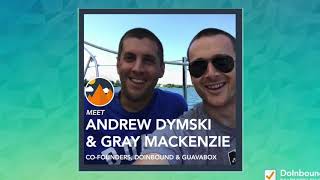
This is a YouTube video titled "Top Takeaways, Podcast & Software Updates, and Inbound 2017 Preview" recorded in September 2017. It features a conversational podcast-style discussion between two hosts, Gray and Andrew (Dimmer), who recap their podcast season, discuss upcoming events including a conference appearance at Inbound 2017, and share updates about their software pricing and business model. The content focuses on agency growth, podcasting, and software product updates relevant to their audience of agency owners and entrepreneurs. The conversation is informal and includes personal anecdotes and plans for future episodes.
Welcome to another week of Inbound Agency Journey. This is Gray and this week I'm joined by Andrew. How are you doing, Dimmer?
Hey, buddy. I'm doing great, thank you. I'm excited to be back together. We haven't done one of these in a while.
You know what, I should go back through our content master plan and see, but it's been a really long time. Maybe since May. No, you know what? That wasn't even you and I together. I think the last one we did was our hundred episode celebration way back in April. So it's been a while since you and I have been on together and giving the people what they want, AKA a little recap of what's been going on.
Exactly. Gray, you and I, that's exactly what they want. Lol.
I think, I think we all know that intuitively. Nobody's really had the courage to voice that to this point, but I'm just kidding.
That's what I'm saying.
Yeah, definitely. Cool. So let's start off going to cover a couple different things here on this recap episode. So today, in case you haven't figured out, you're just going to have to put up with Dimmer and myself, we wanted to go through, give you guys a little bit of a look at what's been happening here at Do Inbound, but also a couple forward looking things and a quick recap of what's been happening on the podcast here. So that's one of the things that we have done a better job of in the past, but kind of looking back at what episodes we've been through. Darren, you and I, way back in the day, the podcast structure was you or I would have the one on one conversation with the guest. After that, the other person would listen to that interview and then you and I would get on and record kind of our recap of that. Either what stuck out to us, what do we agree with, disagree with, and what would we add to that?
Yeah.
Do you have any idea? We stopped doing that relatively early on maybe 40, 50 episodes in, I don't know, maybe. But I think it's still kind of helpful to look back. I kind of want to pick your brain as the place to start. Just if we look back over this past. Well, since the last time you and I chatted, anything from the podcast that stuck out to you, from the interviews that we've done. First of all, can I ask you a full transparency question?
Yes.
You know what I'm going to ask?
I know exactly what you're going to ask.
The answer is no.
Exactly.
Okay, fair enough. Well, let's leave that one unasked. I think everyone. Everyone also knows the classic question here is, have you listened to all the interviews that I've done, Andrew?
Cannot say that I have, Gray. I apologize.
Nice. Do you. Are you subscribed? Are you subscribed to the podcast?
Yes, definitely.
So you just see them and what do you do? Do you try and clear out your queue? Do you delete them after they've downloaded? Or do you just leave them there and just keep. Keep going to the top, and then they automatically delete based on your.
It depends. I use. I use a couple different podcasting apps.
If you see. Be honest. If you see I'm on the feed, you're like, I'll delete that one. Otherwise.
Well, in this. This season, you've done a lot more of the interviews than I've done, so that's. I use Breaker, one podcast player I really like because it helps me find new podcasts out there. So they should. They pop up on there, but they don't. It's like an ongoing feed. Like, it's kind of your news feed on Facebook. It's less of, like, you need to clear all these. All these out. And I also use. What is this guy? Overcast? I use Overcast as well.
Yep.
And there it's. They. You have to load them in there, but it just pulls them in there whenever I pop them up. I don't. I don't know. I did something in my settings so I don't have to clear it out, but.
Nice. That's a rabbit hole right now. I've been hearing Snow. What apps, people. I have. I've tried all three of those. I used to use Overcast a decent amount. One of the things. Does Overcast have this or is it Breaker? It'll let you, like, clear out the pauses. I think both of them might have that feature.
Yeah. And they do like smart speed, too, right? Like, I like 1.5 speed on my podcast. Two is a little too intense for me, but I like the. You can also just kind of fill in. Takes away the gaps there.
It's pretty cool, right? I like that. We should leave a long pause just for the people who are using those to benefit from and everyone else just to be annoyed by. Just kidding.
That takes way too much time.
Yeah. Let's be real here. Cool. So anyways, anything from this past season since you've not listened to most of the episodes?
Just kidding.
Anything stick out to you?
1. I mean, the big thing that stuck out to me was just the diversity of guests that we had on. And that's been pretty cool just to kind of see the scope. The scope's increasing a little bit. Like when we got started, it was pretty much just HubSpot partners on here, but we've got a wide range this past season of agency folks that are just web design, that are purely SEO type stuff. Agency consultants. Go back to Brent Weaver there was a good one. And then Rob Bailey, who was just last week, who came on first as a HubSpot partner. Now he's no longer one. Running a completely different style of agency now. So the diversity, I think, has been the cool thing this season. Just kind of seeing different people from different spaces, but the stories still line up. You know, it's not just inbound agencies that share stories. It's a wider birth of agencies. And inbound might be a part of what each of these folks do, but they still have kind of that journey that, you know, you're chugging along, you're grinding, you're building something here. And that was really cool to see.
That's true. I really enjoyed. I got to do a lot of these episodes. And I mean, even going back as far as we even brought on a couple of people who weren't even in the in the agency. Like we brought on Dave Gerhardt from Drift.
Yeah.
And talked about in a live chat, which was funny that he hates that term, but going back as far as that and then through like Charles McKay and Ross Lauder, we had a good number of people who are from outside the U.S. sean Sweet. A good number of people who are outside the US on in this season. And then we got in all kinds of things. It was really fun to have Blake, I'm assuming from Lime Kuda on for a couple episodes in a row and go real deep into their web design process tools. They use sales. Kind of their whole story was fun and. And kind of a mix of, like you said, people from all different places, but also all different topics. We had Jason Blummer on and talked about financials, but we had a mix of episodes too, that were heavily story driven. Like, here's kind of my narrative, what happened? And then also really tactical, like, here's specifically how we do stuff and spending less time on the story side of things.
Yeah, it's cool with like having Blake on because Blake's also obviously a Grove City College graduate like you and I. And I remember junior year being in our dorm room. We were roommates together, raing together that year playing Lacrosse together, doing everything. And you like going to meet with Blake talking about web design stuff. And that was kind of right at the early phases where you were figuring out the web design side of things. I was in the early stages of social media strategy for the LAX team, and it's just cool to see that kind of come full circle there, where we're both. We're all in our own businesses now doing this thing full time, but. But it got its start back there at the old Grove City College dorm room.
Yep. Yeah. So a great season. I'm excited for moving forward. You and I have talked a little bit about the podcast, even the name of the podcast, Inbound Agency Journey, and kind of the focus. Obviously, we went with folks like Ryan Stewart and a couple consultants in the agency space, people who are kind of tan, they're related, but they're not actually running their own agencies and have seen kind of feedback and response to those types of episodes. We've talked about maybe rebranding the podcast. Do you want any updates there that you want to share or get into?
Yeah, it's really just widening the scope a little bit. We're still not. Haven't finalized the name yet, but Agency Journey Podcast is something that I'm leaning towards just kind of opening it up a little bit. Because the stories, the stories that we share on this podcast, the story these guests come on and tell, are not just applicable to the inbound agency space. They are definitely very applicable to that. But also, even, like, beyond the agency space, I know that there are entrepreneurs that listen to this podcast stream that are not in the agency space at all, but they just love hearing owners come on and tell their story and they can kind of relate to that. So Agency Journey Podcast is something I'm thinking about. We're working through some rough designs for, like, a new. A new podcast logo and stuff like that. So it's really early on. So it's kind of like a first. Our first drop of the news that the name might be changing here, but we'll see where that goes and how that solidifies. But this season has just really testified that there's an audience outside of just the inbound agency owners. And the inbound agencies can still learn a lot from people who are doing things a little bit differently than they are.
Yeah, I kind of wanted to. To break the thought that we might be changing that and see how many people boycott or maybe picket us if anyone shows up. And if I see picketers in good old Hermitage, Pennsylvania, I'm going to be really Excited. So feel free to. If you don't like that idea, come find me and pick it outside my place. I will be flattered, honestly. And in honor of you, I will not change the name. Yeah, I will not authorize that.
That's commitment right there. I'll be a little worried about that, too.
So I was gonna say you're probably following us a little too closely. That's priority number one on the list. Oh, man. Well, good stuff. All right, well, let's. That was. So I just wanted to kind of see if there were anything that stuck out to you from the past season. Let's talk about what's coming up here in a couple weeks. Now we're recording this. What is today? September. Early September. Yeah. So we're a couple weeks away from Inbound Happening up in Boston, and wanted to give people just kind of a sneak peek of what is happening there. Dimmer, you are going to be speaking for the second year at Inbound. And then myself, Tristan from our team, we are going to be up at the conference as well. We're getting in Sunday and heading out Wednesday.
Yeah.
Current travel plan. So, number one, wanted to let people know we're gonna be there. If we haven't talked to you already, we're gonna be there and would love to find time to. If you listen to this podcast, if you're still with us this far, let's be honest, if you listen to this podcast, let's find a time to at least say hi, shake each other's hands, give each other a hug, whatever makes sense. Dimmer situation where someone's a podcast listener, so, you know, there's. There's at least they know about us. At least a little bit. There's a chance we might know about them. They come up to you, you don't know them at all, or you might have seen their name online, but you don't actually know the person. What's your preference? Would you rather have someone come up and say, hey, man, listen to the podcast and give you a handshake, or, hey, bro, listen to the podcast and go in for the hug?
That's a good question. I would say I'm comfortable with either. Gray. I do prefer high fives. Those are awesome as well. Hugs are cool. Just depends on really how many episodes you've listened to. If you're like 50 plus in. I think we're at the hugging phase right there, because.
At least hugging.
Yeah, at least. No, we'll stop at hugging.
Oh, okay. Let's go. A little peck on the cheek.
There maybe a chest bump. That's as far as I'll go, though, so. But definitely, like, definitely stop us and say hi, because that makes my. Makes my day. That was awesome at Inbound last year. To be able to be up there and get to meet people from literally around the world who listen to this podcast on a week by week basis, that feels really cool. Be able to see you guys because it's. You get to listen to us each week, but I don't get to interact with you really at all unless you reach out. So please, please reach out and say hello. I'd love to hear your story. I'd love to hear where you're at right now. We're all getting the chance to go to Boston, and that's really cool. So let's take advantage of that opportunity and just say hi to each other. That'd make my day. Gray.
Yep, I'm in the same boat. Dimmer.
Yeah, that's.
You guys approach me with your culturally appropriate greetings. I'll do my best to respond in like, and we shall go from there. No, but. But would love to have conversations with anybody who listens and also be afraid. One of the things I respond really well to is just honesty. I take that as, like a sign of respect or that we're like, if someone feels like they can give me honest feedback that I feel like, all right, they respect, like, they're serious about a relationship. And so if you have feedback on the podcast, positive or negative, it's totally fine to. And maybe negative is like, that sounds like. I would love to hear what you'd like to see done differently or what questions you have for us. Suggestions, anything like that. So come up, tell us. Hey, I love. I love this about the podcast. I don't like this about the podcast. Why don't you guys try it? Have you tried this? Have you considered this guest shoot? Any of that over? And also if you don't have any of that, if you just want to say what's up? I've heard you on a podcast before. Thought I thought I'd say hi. That's totally fine, too.
We. I'm gonna go on a little tangent here, Greg, because what you said really makes a lot of sense. I like, I love it when people give negative feedback. I just viewed that as more authentic when it's constructive feedback. I think we live in a culture that's like, over overplays the affirmation card sometimes. Our Church on Sunday sermon was all about this, like, effective pastoral leadership. And one of the Main points he brought up was not edifying. If it's not authentic. And I think it's like we really need to be encouraging each other and sharing positive feedback. But if it, if, if you don't really have anything of value to share and sometimes value can be negative, then maybe you don't share it right there. And that's my little tidbit for the day. Gray.
I just. So I held. I coach high school baseball. We're into fall ball right now. I just held our pitchers kickoff meeting yesterday and told them that. That as a coach, I would assume that you guys would understand this. But then I realized in high school I didn't. Most people don't realize this, but if there's something that you don't like or that you like, that we should be talking about a way that you think I as your coach can improve or could communicate with you differently. I would value that more than just about anything else if you'd come up and tell me that because that's. Very few kids do that on their own and come up and do that in a respectful way.
Yeah, definitely.
There's plenty of kids who make that apparent in disrespectful ways. So I would rather get away from that and just get to. Let's, you know, trying to teach these kids and myself. What does this mean to be a man? What does this mean to be a grown up?
Yeah.
And. And tell people the truth and do that with love and compassionately. So.
Amen, dude.
That's all I have anyways. Okay, that's enough on. On coming up and greeting us in culturally appropriate ways at the inbound conference dimmer. Without giving away too much, can you tell us just kind of high level what you're going to be talking about during a breakout session?
Yeah, definitely.
And when I should know that, I do not know that.
That's okay. I didn't listen to all your interviews, so I don't. Why in the heck should you know I'm speaking?
All right.
Just being a little. Some authentic communication. So the title of the talk is find your breakthrough session. Thanks, Greg. You just interrupted me.
Okay, carry on.
Title of talk. Get your pen ready. That was last year. Find your breakthrough Five steps to cutting the crap and seriously scaling your agency. I'm really excited about this talk, Ray, because it's all about an agency framework and putting the building blocks in place that prepare you for growth. Because one of the biggest struggles that we had at Guavabox was we put in the work and the hustle to grow but when we got those clients, we didn't have the building blocks in place to sustain those, to really deliver good results to those clients, but then build on top of that growth and just kind of build and build and build. And so one of the cool perspectives that we have now that we run Do Inbound, we can see things through the lens of Guavabox. So we've been there. We understand the agency owner struggle and the. The mindset. But here at Do Inbound, we get the chance first to interview some really successful owners here on this podcast. And we're 120 episodes in now. So there's a lot of content there that really shapes our view of what makes a successful agency versus a not successful agency. What are those ups and those downs? And how can we take the best practices from all those interviews and put them into a framework? That's one really cool thing. Number two is I take point on onboarding. And so when someone signs up for Do Inbound and they want to come and check out our tool, our platform, I get a chance to work with them through their operations. Agencies of all sizes, like from the HubSpot ecosystem, we've got platinum partners down to untiered partners. So we've worked with a lot of different people and seen behind the curtain. How do they structure their teams? How do they handle hiring? Are they internal employees versus contractors? Are they in person, on site, or are they a remote team? How do they structure their processes? Do they have, like, a very strict list of stuff that they do and stuff they don't do, or are they digital? Yes, and they'll do anything. So I've worked with hundreds of agencies behind the curtain, under the hood, whatever you want to say, to review their operations and help them create a more standardized, scalable process. And so these five steps are things that if I were to start an agency tomorrow, if I'm coaching someone who's starting an agency tomorrow, I would have a plan to address these five steps. And I'm going to kind of present a plan in the talk how to how to prepare your agency for growth using processes using this framework that we talked about here. So I'm excited about that. That's the overview. When am I speaking? Wednesday, September 27th. So the Wednesday of Inbound at 10:30am is my breakout session. Gray. And again, the title is find your breakthrough. Five steps to cut the crap and seriously scale your agency. Came up with that in the shower.
That is awesome. I'm in. I take it all back. I will be there.
I sold.
He's going to be there 10:30am that's awesome. I'm excited for that. That's essentially dimmer, you going deep, as deep as you can in 45 minutes into our Agency framework course. Like one of the things that we've taught to agencies around the world what this looks like. So if you're not a D.O. inbound customer, if you haven't gone through that yet, even if you have, I think this is going to be illuminating, helpful still. But if you've not gone through that, that's definitely something that you're not going to want to miss out on because that's been hugely beneficial to a ton of agencies.
One thing I'm doing a little differently in this talk is each of those five steps I've got specific homework that agencies can take home because 45 minutes is nowhere near enough time to sum all this up. So if you're in the session, um, you'll get, you'll get downloads for each of these five steps with like tangible take home pieces that you'll work on when you get home from inbound. Like questions give you some kind of guidance to walk through each of these five steps. So there's a lot of resources there for folks who are in house on site. So if you're going to be in Boston, show up Wednesday the 27th at 10:30am and I'd love to say hi to you if you're there.
Those are the best types of sessions to go to because when you're at Inbound, my mindset is kind of like just let it all wash over you. Just go all in and don't worry about you got. I don't know whether this is actually. I mean there's a lot of people who've been there multiple times who are probably writing frantically, but you can always tell who's there for the first time because those are the people with just the notebooks absolutely chock full and they're trying to type up every word on every slide and everything. And I think once you've been there a couple times or you've been to a couple conferences, you realize kind of let this wash over you. Make sure you're taking notes on what pieces you want to follow up on and where you're going to grab these resources. So these are the best sessions when you can kind of like take it all in, let it sink in, jot down a couple notes, whatever sticks out to you inspires you and then you've got the resources to go back and dig back into it after the fact and go through that. So I'm a big fan of that.
And I think it's a shout out to HubSpot too. And they've gotten better at this over time. But the work that they do, the investment that they make to make the sessions accessible after the fact is a game changer.
Huge.
Like being able to go back and watch all those YouTube videos just like to. To revisit something after. After the fact, to let it sink in a little bit further and then double check. That's amazing to have that resource there. So shout out to the whole inbound team at HubSpot because they've year after year really stepped up their game and done a good job with capturing the content there and the breakout specifically.
Yep. Awesome. Well, let's wrap this episode up with. Speaking of shouts, a shout out to our internal team around a big, big thing that we've launched here at the beginning of September. And that is the. The fundamental. Like when you look at the business model, it's basically what are you selling? How much do you sell it for? How does that get delivered? And we changed over our pricing. We just went through a pricing change which was well overdue. Hear people like Patrick from Price intelligently talking about how you should always be playing with your price. And there's all kinds of philosophies on pricing. You should constantly be adjusting it and figuring it out. You shouldn't because you don't want people to be disrupted or to be surprised by how things are constantly changing. But we just changed our pricing here at Do Inbound and wanted to share with you just a little bit about what that process looks like, what the change is and how that overall kind of what we went through in that process. So dimmer do you want to start off? Maybe we don't bury the lead, just walk people through what the pricing change was. Do you want to give us an overview on that and then we'll talk a little about how that came to be?
Yeah. So. Well, wait a second. You want me to say what it used to be and what it is now?
I usually tell people in an irritating way, use your best judgment, AKA I don't want to own this decision. I'm just kidding. Yeah, let's. So let's start with that. So we'll walk them through what pricing was and then what our current pricing model is. And maybe we just do this at a high level. I mean, there's no. Not trying to hide any of the details here. Yeah, those are all just go to waybackmachine.com and you can find any of our old pricing versus new pricing. But yeah, high level. Go ahead.
Okay. Pricing model used to be basically software plus training was how we built our pricing table. So we had three packages, Basic, Jumpstart and Growth. And what we did was every package had equal access to all the software. And then the Jumpstart package also got access to our let's Game Plan training course, plus all of the process templates that go into Do Inbound to help you build a discovery project game plan and sell that to a client and walk through all that process. And the Growth package had let's Game Plan plus the agency sales system, which is our comprehensive course on how to build a pipeline system for the owner or an agency sales rep to really make sure no leads are falling through the cracks. Awesome. Both those are awesome, awesome courses. Our two best courses. Our two best courses are two most popular courses here at Do Inbound. And we've seen people from around the world, all different markets, apply those, see success, and it's really exciting. So what we did is we shifted that up, and now our goal was, okay, how do we simplify the signup process? How do we make it easier for people to come in, see value first of all and then implement value second? So we made a shift. We took a software which has developed a ton since we launched that first pricing model, where we didn't have enough features at that point for people to see value without getting access to everything. But as the software has evolved over the last two years, we now have a full suite of features that lines right up there with Basecamp, with Teamwork, with Asana, with Wrike, all the big project management tools that you see out there. You know, we've got a feature set that I will stand next to with pride and say, yeah, we can. We can do everything that they do. You know, they might do things, handle things in one way, we might handle it in another. But from a core project management standpoint, our feature stack lines up with those big boys and chest bump gray. I'm fired up about that. I'm really proud of our product team that's gotten us there in a relatively short period of time. So the way that we've structured things now is we've looked at basically in the agency life cycle, there are those folks that are just getting started, maybe even haven't started yet. And so those young agencies, what do they need? They really need to come in and they need to build out a process for. For how they handle their work and how they service their clients. So that base level is our basic package. Now you can come in there at a affordable price, build out the processes that are gonna power your agency growth so that you have those in place, and then as you grow, you kind of move up the line. Our middle package is our pro package there. And the agencies at the pro package are the ones that have seen success. They're ready to scale. They wanna get a better handle on how they're going about servicing their clients. So time tracking is in there, budgeted time tracking, scene actual versus budgeted times, and getting a better view into your productivity as a team, into those types of things, being able to add more team members in there. And then our third package is our advanced package. And here we're bringing in more of the client reporting, team allocation, those feature sets that are more applicable to people with bigger teams that are trying to service maybe more clients up there. So that's how we split it up. We've actually taken the pricing page and now the focus is just on the software. We've pulled the training piece out of it. You can still buy those as standalones, but that kind of complicated the sales process gray and led to a longer sales process. Where now the idea, the hypothesis that we're moving forward with, and this is if we focus just on the software, get people up and running on that, we can then follow up and share additional education and address needs as the agencies field them with those other different software or those other different training courses.
Yeah, you know, it's an interesting dilemma to have delete when you have both assets. You've got a lot of training, and that's a big part of the business model. And kind of at the core, you also have software, but the software is so much more useful if you understand at least a little bit of the framework that we're trying to help you build for your agency. Yeah, I mean, that's one of the big differences with do inbound is we're very opinionated in a lot of the decisions we've made and the way that we've built things based on how we think and what we've learned about how agencies ought to run. What are the core fundamentals? There's a lot of ways that people vary. It's the same thing with the baseball example. You've got hitters and pitchers who do all kinds of different things, but you break down the core underlying principles, and all the basics are there for everybody who's successful. Everyone's got the same fundamental things going on. Batter might have A high lag kick, or he might just have a simple toe tap or almost no movement on the front side at all. But at the end of the day, everyone's getting the same launch position and the same thing's happening. So the same is true with agencies. And so we kind of have that dilemma of which one do you lead with? How do we help people focus? How do we help? Ultimately, sales is a combination of you're trying to ultimately do the best thing for your prospects and customers, and you're also trying to align your sales process with what their expectations are, coming into it. And trying to merge those two together can be a challenge where sometimes people think, I just need software right now, and that'll solve my problems. And we know we've been doing this long enough to know software alone. That's not going to. If software alone was the answer, you would not be coming to do inbound, because there are lots of tools that have been around longer than us that could have solved that problem for you. So there's other pieces that you need here, and you might already have a good idea of what that framework is. You might not. So bringing those two together has been a challenge for us. And all of those, the resources that you talked about, Galact, game plan, agency, sales system, all of those products are still available in the marketplace. And one of the reasons that we do personal demos with a lot of folks who sign up is to kind of walk through where they are right now and then help identify together. All right, based on this, it sounds like this software package makes sense for you, or it sounds like this course would be the right place for you to start and then move into this. So I think that's been something that we've had to work through and hasn't been. It's not an easy. It's a good problem to have, but it's not an easy problem to have.
Yeah, no, definitely. And so leading with software, then is kind of the decision that we came to and then using that to help people kind of figure out, like, where. Where do I need additional help? You know, we want to make those options available in a not. Not pushy, not salesy kind of a way, but just authentically. We want to help you out. And we've seen from our experience, from all the interviews we've done for the agencies we've worked with over the last three years, what success can look like and want to help you put that plan in place. So I'm excited about it. Gray. The early results are good. We've Seen, seen good feedback from folks, seeing people sign up on them. So I'm really excited to see where it goes three months from now, six months from now as we continue to make tweaks and adjustments on this. But man, it was six months I think in the works from like specking it out, getting the additional ideas in there, going through all the different options that we had and then a huge shout out to our internal team for all the work that they poured into making this happen on the backside of the software through Stripe and making sure no one who's currently a customer got charged the wrong thing. There's so many things to worry about there and great. I'm just so thankful for an awesome team that was able to help pull that off. It was great.
Yeah, absolutely. Nope, it's been cool to get it out and start to get live feedback and, and see. Just kind of already starting to see how much easier it is to comprehend when people. This is kind of what I was talking about. People are used to. Okay, I'm looking for software. There's three different packages that are software specific, not, not training specific. It's already simplified some of those sales conversations and just walking through the pricing themselves. So you can see all that doinbound.com pricing, any of our training courses and packages and everything there. You can look@DoingBound.com marketplace, which is in its infancy, just rolling out right now. So you will be among the first to see that we've not really promoted that at all yet. And that'll be as we get that, get a little farther into that, get a little more feedback on that. That'll become more and more vibrant and continue to fill up with kind of add on pieces to help you grow your agency. But both of those are live right now. You can check them out on the website and we'd love your feedback on any of that.
Yeah, well, Gray, let's wrap it up there. We've got more updates. This is not going to be another six month hiatus between another update piece. We've got more going on here that we want to share. So stay tuned in the near future for another episode with Gray and I will be sharing some cool things that we're just not ready to take live right now. But stay tuned for that. That's coming up again. We're going to be at Inbound, so if you're going to be there, feel free to reach out to us. You can hit us up on Twitter, you can email us Gray or andrewinbound.com let us know you're going to be there. We'd love to say hi. Whether you are a doin bound customer you were in the past, you're just a podcast listener. Wherever you find yourself, we'd love to say hi, shake your hand, and just learn about where you came from, learn about your story. It's all awesome stuff, Gray. So thank you so much for listening today. You guys are awesome and we'll chat with you again next week.
Thank you for listening to inbound agency Journey. You can find the show's notes for Today's episode@doinbound.com podcast again, that's doinbound all one word.com podcast. If you enjoyed this episode, head over to itunes to subscribe or leave us a review of the show. Until next time. Remember, life is a journey. Keep moving forward.










