Viking Accountability: Prioritizing Work and Finding Time for Rest with Ben Catley-Richardson
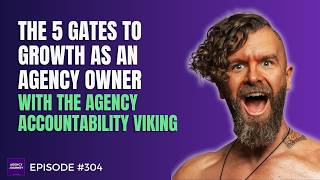
Ben Catley-Richardson, the Accountability Viking, talks with Kuba Greizar about how agency owners can prioritize work and protect time for rest. They cover a neuroscience-based productivity framework and how Norse symbolism can drive accountability without burning out.
Hello, hello, hello, everyone, and welcome back to Agency Journey. I'm your host, Kuba Greizar, and with me on the call today is Ben Catley Richardson, the accountability Viking for agencies. Ben, how are you doing today?
I'm really, really well. Yeah, I know we've just started before we came on talking a lot about Norse stuff, but I'm definitely here to talk about agencies. But we just have to be careful what we get lost in with the Viking.
Definitely. I mean, the pre game for this has been excellent and I want to actually share a bit of on the show. So the first thing I noticed, I mean, all of you watching, not listening but watching, will notice that Ben looks a little different on the show. You've got a suit of armor on, you've got a sword behind you, and you've got this necklace. And I just realized that we both got kind of Nordic themed necklaces on today. Tell me about yours. What is that? Is that Thor's hammer?
Yeah. So this is Mjolnir, and I've actually also got it here. And for me, and this is where you kind of can get into maybe the sentimental side of it, the sort of whatever side of it. But for me, if I'm leaping ahead and giving you a reason, like addressing the elephant in the room, what the hell? You know, you and my parents have the same question, what the hell is going on with the Viking thing? Right. It gives me a boost. It gives me room to maneuver into, like, permission to kind of be big and stand out. It obviously wins half the battle for me, which is that. Yeah, I mean, I get people walking across the room when I dress like this at a networking event who just want to know what I do. But the other side of this, and this is why it serves accountability so well, is it makes me live up to it. So the hammer and the Mjolnir on my neck is very much about that source of, you know, power that it can kind of get you places. It can definitely lift you places, but when you are lifted to those places, you then better perform. You have to keep going. You have to follow through with it. So for me, there's two sides of that. And, you know, that's why I love it. That's why I love getting the Viking armor on.
Yeah, you create a Persona for yourself and then you live up to it. It's such a strong motivator. Have you heard of the book the Alter Ego Effect by Todd Herman?
No, but I will now. I'll definitely look that one up.
That is such a Perfect fit with what you're doing here. And the whole framework in that book is about creating an alternate Persona for yourself, maybe multiple for different areas of your life and then embodying them and how that affects performance. And there's research behind it. I recommend it whenever I can because it's one of my favorites. Watchers and listeners, if you've heard me talk before, maybe you know this one already. If it's the first time, definitely recommend it. And then in the pre game we looked at our necklaces and you and I mentioned that I have a Nordic themed one as well. I need to show it to the camera now. So I've got the not this rune on mine. And then can you share again, like what you said about the meaning of this and you mentioned it connects to what we might be discussing today.
Yeah. So it's sort of one of those moments where, you know, you have good news and bad news. Right. So let's get the bad news out. The way with the bad news is that the whole of Norse Nordic culture, Viking culture, has been completely co opted and taken over by the New age movement. So ultimately, if you want to know what a rune means, we're asking the wrong question. Because the runic Alphabet, the, the way of communicating with runes was so rarely used by the Vikings because they were too busy doing stuff, right? They were too busy invading and pillaging and all that, you know, all that stuff. And so there are very, very few written sources from the Vikings. And most of them hilariously, essentially are graffiti. I was ear is basically what most Vikings wrote or I'm really proud to have done this thing or this guy died. There's one which is I can reach this high, right. So it's literally just graffiti. So the idea that runes have some magical meaning unfortunately turns out to be false. However, the good news is that the romance, the sort of vivid nature of the Viking world meant that even in their world there were people who adapted and used the runes and explored them. They had things called skulls which were essentially their kind of court jesters or court singers who would build up these, you know, big stories. And so in the late Viking period you have the Prose Edda and these, you know, sagas which led to a poem called the Norwegian Rune Poem. There's also one in Anglo Saxon that, you know, there's several different versions and your version, so your rune, if you like, actually has a whole verse to it. And we were just going through it and I can't, I won't even try to butcher the Norwegian you know, I've tried it with other things. I can read you mine, which I've learned. But the north is rune that we've talked about is. The poem is constraint gives scant choice. A naked man is chilled by the frost. And for me, although that's unusual and it doesn't immediately make sense, for me, that tells you a lot about the Viking mindset, which was that they didn't have a lot of time for the whole kind of, you know, writing and putting things down, but they had a lot of time for imagination and thinking and for, you know, imagining concepts and the way to approach the world. You just have to look at their myths to see how vivid their stories were. So I think, yeah, we have to kind of leave behind this idea that there's a, like a magic to the runes and maybe look deeper at the sort of the romance and the meaning and the kind of bigger stories that they might have represented that then came through in the poems that came pretty much after the Viking period.
Right. Okay. So that's amazing. And I love finding additional meaning or additional depth to kind of the objects in my life that I attribute meaning to, particularly this necklace I'm really attached to. So thank you for that additional understanding. So that watchers and listeners, that gives you an idea of Ben as a person, the interests, and it's also the origin story behind the episode. I found you on LinkedIn. I saw the personal brand. I believe my very first message was like 10 out of 10. Personal brand. Let's chat. And now we're having this conversation. You, of course, professionally are focused on the agency world, and we will be talking about insights for agencies, and hopefully you'll take away a lot of actionable insights from this one. We're meaning to dive into accountability, maybe unveil a little bit also about the personal brand, because I know that a lot of agency professionals care about that too. First, Ben, to start things off, I'm going to hit you with a traditional agency journey question. Are you ready for it? Let's do it then. What is your number one tip for agency operators?
Okay, so I think it's important that we recognize that the world has taught us or has given us some misinformation about how we grow. So a lot of the people I work with, and I generally work with agencies that are within three to five years of their inception. So the people I'm working with, they're beyond this kind of scope of proving that there's a business there, and they're into wanting it to grow and Ultimately wanting it to grow beyond their own head. Right, so you have people with a band of freelance contractors that they call on and maybe one part time person in house. Or I'm working with a guy at the moment who has three members of staff on varying time contracts and is looking to get beyond the kind of 3 and 400,000 pound revenue for the year. So it's a bit of a kind of scale. But the thing that I see most of all is that at that moment where you're trying to grow and it's pretty much true further down the line, but certainly now the idea of working a 60 day week seems to be the solution. The idea of giving up freedom to enjoy the life that you started this for seems to be the solution. And the idea that you've got to work every hour that God sends seems to be the solution. And there are moments where it's necessary to get shit done. Right. My background way, way, way back, I used to be a video games journalist and there were moments in that magazine cycle, say the last week before we had to go to press, where we were in all the time, you know, we worked long days, it was quite exhilarating anyway because we was there as a team and you had to pull a lot of effort in that time. But the ultimate thing is to realize that that kind of effort is not sustainable. If you are taking your laptop with you on holiday, every holiday and looking at it for hours and every day, it's not sustainable. And I think the number one tip that I can give to really sum it down is that you need to see, we need to see that rest, reflection is actually part of the growth cycle. And later on maybe we'll go into the science of it and I'll show everybody listening or demonstrate that this isn't just a good idea, this isn't just about well being and you know, woo woo and all that kind of stuff. There's a proper scientific reason for this. But the number one tip would be that if people can start to see that the not working, the off game, the switching off and having downtime is just as valuable, in fact sometimes even more valuable as the 60 hour weeks and the long time spent at the desk, that is, I think the number one tip is find a way to recognize, and again we'll talk about that as we go through to recognize that taking time off isn't doing nothing, it's actually still driving you forwards and making it possible to create a sustainable business.
There's a connection forming in my mind related to what you said just before you mentioned, you know, I'm thinking about the Vikings again, because I really like Vikings. You mentioned they didn't have a lot of time for writing, but they spent a lot of time being out there thinking. I imagine them, you know, experiencing a lot. Is there a connection between that and what you just said? That there's a. Like, when you disconnect, it's not like your mind stops mulling things over, but it's processing them in a different way? Or is that not necessarily the same thing?
Maybe. I mean, if you get into the kind of cod psychology of it, you know, I'm not a psychologist. I know psychologists, and I kind of rely on their work when I'm looking at something that I want to be based in the science. So I have a friend, for instance, who's a neuroscientist, has been for many decades, and my system, which we can talk about, is based upon his work. So there is some level of, you know, me interpreting here. But when you look at the lives that we lead now, we all know that we're overstimulated. We know it. And one of the reasons that I love working with digital agency owners is because of all of the disciplines, I've discovered that that is one of the most overstimulated and the hardest to kind of dissuade yourself from that stimulation. So getting up in the morning first thing, and before anything else, looking at your phone for anybody else, it might just be, have I got an email? Right? And we can be reached by email everywhere. But that's like normal work for digital agency owners. They feel that it's necessary because they've got to be part of the world. And the world never sleeps. The world of online marketing never sleeps. So you get up, you look at your phone, and you're thinking, have I missed anything? You know, do I need to know anything? Is there anything that's happened on a client account overnight? You know, you feel like that's a viable use of your time. Then through the day, you're scrolling LinkedIn, you're reading about trends on LinkedIn, you're trying to engage with stuff on LinkedIn, and you feel that that's valuable. Some of it is because it's part of your job. And then in the evening again, the world is still going on on the other side of the planet. So you're trying to figure out, you know, what are they doing right now? Or maybe you have clients on the other side of the planet and you're trying to stay in touch. So I think as a world, yeah, it's really easy for digital agencies to become overstimulated if you contrast that with, yeah, the Viking era, let's just talk about it. You know, they had large periods, incredible periods of menial labor or doing almost nothing. So they walked everywhere or they rode everywhere or you know, they were in their boats traveling everywhere and they weren't rowing the entire time because obviously they'd kill themselves. You know, you can't put that kind of energy in on a 24 hour, 48 hour basis. So there would have been huge amounts of time in that world where you were waiting for something or traveling to something, or sitting waiting for something to come to you. And what can you do in that time? Yeah, what can you do in that time other than mull over? You didn't have a phone, you didn't have all that kind of stuff. So I think the benefit of that gives you this ability to mull over, to think about, to process and to just leap ahead. Maybe as I say, we'll go into the system later. But essentially, when you look at the science, what it proves to us, what it suggests to us. Anyway, let's talk about it like we're really, really talking about science. What the best science suggests is that there are steps or gates you need to pass through.
If you with an agency owner where the stakes are so much higher, you need to be so, so much more involved. You're getting direct questions, pings on slack and it might seem even a little bit like a little bit of a utopia or even so far it's out of reach to disconnect, to unplug, to find that rest. If you can guide the watchers and listeners there, I think that's going to be a really useful kind of class to teach here. So how do you even start taking the first steps in that direction?
Well, I think you're making a great point there, which is that all of the theory in the world is useless if we can't do anything with it. And it feels insurmountable. So I think the first thing to talk about is the idea, like I say, you know, I completely empathize. You're there, you're talking about having only slept a few hours night, you know, and I empathize with people who are working their asses off, excuse my language, to make something happen. And part of it is because that is what we're told, right? We're told that hard work gets rewards. I mean, the first again, you know, more bad news, we don't Live in a meritocracy and hard work doesn't always get the results it gets. And most of the time we find that actually we're punishing ourselves more than anybody else is punishing us, right? We're really. We're beating ourselves up. So I think the first thing we've got to look at though is what can we do about it? Like you say, what can you do about it? Well, sleep's a very difficult, tricky subject. And I wouldn't really want to go there in terms of scientific advice because I'm not equipped for that. And, you know, I would just recommend. You've got to read that book why we Sleep. Because part of the process there is understanding that this isn't just a nice to have, it's an essential, and there are many reasons for it. But one of the things that I know has helped people that I've worked with to switch off, take down time and relax, which is really key to getting sleep, is this idea of having a single priority. Now, whether that's a priority that you focus on for just a week or whether it's a priority that guides you for many months. One of the issues that we kind of hit with, and if you wanted to talk about, what should I get, what should I ask agencies to stop doing, right, Stop thinking that you can have priorities. The word priorities is actually a recent invention, right? The, the word priorities didn't exist until about 100, 150 years ago, which, coincidentally is the Industrial revolution, when we were all told where we had to be and how long we had to work and all that kind of stuff, right? But if you look at the word, it means the thing, the one thing that comes before all other things. You can't have multiple priorities because it just doesn't make sense. Now, the reason that this is then difficult is, yeah, fine, people will say to me, but I've got life stuff, I've got client delivery and I've got business development. You know, they've all got importance. So they can't all have the same priority. I have to have multiple priorities. But that's the problem, right? This is why you're working so long, why you get distracted. Because if you're constantly having to evaluate what's the best use of time, if. If you're constantly having to make decisions about your time, what should I do next, right? Is that common thing we all think about, you're draining your energy on decision making and actually procrastination, distractions, all these are triggered by your body, your brain not wanting to make a decision, not wanting to make the wrong commitment. And so essentially, you can see procrastination is really a defense mechanism. I don't want to do this. I don't want to think about this right now. If you can take the time to pinpoint a priority one priority, it actually, although it hurts to begin with, like every good planning session, like every good strategy, it hurts to begin with because you have to make sacrifices. But the payoff is immense because it makes everything else easier. So as anyone with a digital agency will know. Sorry, yeah, I'll just jump in there. If you have a strategy, it makes everything else you do easier. If you have a priority, it makes every decision you make easier.
Yeah. And the next natural question, I really just want you to prompt you to continue. Next natural question that comes up is how to select a single priority. Especially with so many. I mean, owners often talk about competing priorities. I also heard what you said about kind of the origin of the word, and I tried to share that with people as well. So how do you pick one? How do you arrive at the priority?
Well, to kind of evoke the Viking image, you've got to make everything fight to the death. You have to get your tasks to fight for survival. And the only way you can do that is by. Okay, testing a single priority. Now, again, more bad news. I'm full of bad news today. More bad news is there's no tried and tested, easy, convenient route to a single priority. Right. The only way you're going to find that is by experimenting, testing. Does this work? Does this not? So six months ago, my single priority may have been to enhance my onboarding process. Now, if I then applied to. Applied that to all of my tasks, what you immediately find is that either it doesn't feel right because these things don't relate to it, but they're still important. Okay, I'm not going to do it. So you have to then work on where's another priority. The other side of it is you go, actually, maybe it does feel right. Which means that client delivery, how do I relate that to this priority? How do I relate client delivery to improving my onboard experience? Well, immediately I can see that if I'm very engaged with my client delivery, how hard I have to work the process. I go through the value that people get, then I can immediately apply that to building an onboard process that gets people to the value faster and makes it more scalable and easier for me to deliver that high value. So there are ways that you can kind of play with that. But realistically, the best way that I've found is if you're struggling to find that priority, it means that you're actually struggling with clarity, with direction. And this is another kind of issue that we've been told. We've been told that we have to know what we want, our goals. But the secret to really getting shit done and getting towards your goals is you have to go further. You have to understand what is the thing that means I don't have that goal right now. Why don't I have it right now? What's the blocker? And usually maybe with some help or talking through with somebody, you can find the blocker to your goal. And then the priority is the thing that is going to assist you in removing that blocker and then all of your tasks, if they service that priority. So if everything you do in some form works towards that priority, you make more progress, you remove that obstacle faster, which means you get to your goal much faster.
So what I'm hearing and kind of the picture that's building in my mind from what you're saying is looking at your process, your view on all of this. Pick a single priority. Not easy. One tactic to do it is to make tasks fight to the death. And that's really interesting. I've heard of that tactic before, but it never really sunk in. Imagining it in the Viking context, I think it'll be a little bit more memorable, at least for me. Once you pick the priority, look at the kind of the blockers and, you know, those, those, like, this is the obstacles to fight, basically. Now I wanted to ask you, like, what are the next steps after that? You know, an agency owner might be following along in that journey. How then do I actually attack it? How do I maintain the energy? Does this tie already into accountability? Is there some step along the way? Just. Let's keep going there.
Yeah. So let's get the structure of my program out of the way with. And I'll talk to you about the research that, um, my friend, Dr. John Molidor, who's based in the States, he's the head of the. Of a neuroscience institute over there, he has essentially shared with me his research, which creates a picture of the gates that I was talking about earlier. And this is also reflected in the research of other neuroscientists. So if you think. Let's talk about an analogy first. If you think about going to the gym. So if you want to exercise and build muscle, where do we think the most muscle is built? Is it in the gym? When we're lifting the weights, is it when we're having the protein shakes or is it somewhere else?
Yeah, I do occasionally work out and watched a little bit of YouTube about it. What I'm being told is the actual growth happens after the workout and primarily when you sleep. Actually that's where most a lot of the growth happens. Am I on the right track?
Absolutely, yeah. I'm sorry, I really need to let you in time to jump in and speak as well because I just get so passionate about this stuff, I get carried away. But this is one of the things that got me started on this journey was I started working with my own personal coach about two or three years ago and he gave me this kind of revelation was that you build the most muscle when you sleep. And that to me went against everything I'd ever been told. And, and in fact, when you look at learning and skills development, it also is counterintuitive to how we used to think things went. So that model of muscle building was more aware and more understood than learning and skills building. But it turns out that the systems are essentially exactly the same. So when we actually sleep is when we pass a lot of the process that we've been through in the day, the learning that we've made, the skills that we've adapted or, you know, improved, that stuff gets embedded or banked. Think about it like banking your games. So just as working harder in the gym won't necessarily get you as much muscle as working in the gym and then getting better sleep, working harder and harder on a task or longer hours, the 60 hour weeks will not get you as far as, or give you as much learning as doing the work that you need to do and then getting as much sleep. So it's this sleep process that's important. And essentially what Dr. John has taught me through is these five gates that lead to this need for sleep. So you begin with gate one, which is awareness. Now without awareness of a problem, there's no opportunity to change, there's no learning or growth that you can make. And there's, and this is where we come to this idea of just having a goal isn't enough. You need to know the obstacle, the blocker. Because if you imagine, you know, if you think about however many people are listening to this show right now, what's their main goal? Get more clients, right? Get a bigger business, get more money. So if you can imagine that goal is so generic, doesn't mean it's not valuable. It's so generic that it can't tell you what to do it can't tell you what's missing other than not having the thing that you want. Whereas if you unpack it and look at, or as I say, if you know your enemy, know the problem, you really explore the blocker that's going to tell you your specific circumstances and your specific solutions which is going to help you to figure out what you should be doing. So you need that awareness stage to begin with. The next stage is agitation. And this is really where a lot of people get stuck, right? They get stuck for two reasons. First, they get stuck because this is about getting going. This is the trigger that makes you move. So in the wild, you know, when we were kind of roaming as bands of, you know, cavemen, it would have been the injection of adrenaline that gave you the ability to run or, you know, you heard something in rustling in the undergrowth and the adrenaline came and then that made you move or, you know, so basically we're talking about the reason that you should do anything. The second problem with this, the reason that people get stuck on this is because often a stick, like a threat is a good way to get you moving, right? It can be a deadline or you've over promised to somebody, or you said you've done something for something or I did a workshop a few weeks ago, I hadn't prepared it until a week beforehand. And normally that's very similar to a lot of people because a week beforehand something is delivered, you suddenly go, oh crap, I must get this ready. Right, that's the trigger. But if you keep using sticks, you just get bruises. So this is where people get the idea of motivation and momentum mixed up. Motivation is what gets us going from a nothing, from a stop start. So you can use deadlines, you can use carrots, like you know, an incentive or you can. In Atomic Habits, James Clear calls it environment design. So for instance, you want to go to the gym. Well, you just put your gym clothes on. When you get home. You are designing your environment so that the easiest route, the route of least conflict is, is to go to the gym, right, because it's natural. Now you've got your kit on, but all of this is just getting you going. The next phase is called attention. And this is where other people struggle with distractions and, you know, getting shiny object syndrome and stuff like that. Because what we need here is focus. And this is where we hit the problems that people are going to experience, which is this is where sacrifices and giving things up has to come into it. Because we can't focus on everything at the Same time. And now we come back to priorities. Imagining that you can have and survive with competing priorities is like imagining that you can breathe in and out at the same time, or imagining that you can walk using both of your legs at the same time. You could do it for a little bit, right, but it's exhausting and you're going to fall over, you know, you're going to land on your face. So when we start to look at this middle stage, so we know what's missing, we know why we're doing it, we're agitated and triggered to do it. At this stage, the last thing we want to do is interrupt that flow and interrupt that forward momentum, that movement. And so if we have a priority, a single priority that is going to make sure that everything we do we can be focused on. Because, well, if I do this, it gets me closer to the goal. If I do this, it's going to clear service, a clear goal. If I do this, it has a clear value, that clarity, that understanding that what we do will have an immediate or a clear long term value helps us to focus. And you can only really get that by prioritizing. Then stage four is reflecting or rewarding really. So this is the stage where we build momentum. The motivation comes from, this has got to be done, oh my God, I've got to do this. But the reward phase, the momentum phase comes from, I'm doing the right thing, I'm getting there, I can see that, I'm making progress. And the problem that we face often here is that we look to external rewards or things that we don't control. So winning a client, you can't make a client decide to come on board with you. You can only give them a good reason to. Or winning an award, you can't make that award come to you. You can only do the best job. So at this stage, what we really need to do is focus on process goals rather than outcome goals, because again, we can control those processes. We can control how many people we talk to, how many events we go to, how many events we run. And those processes can then be measured and can service directly to a single priority. So again, we have this clarity. And then finally you have the process stage. And process is essentially that idea of resting, that idea of taking everything you've learned and like I said before, banking it, and resting, recovering critically so that you can come back ready to go again so that you can come back having recovered all of your energy. And if you continue that cycle, if you go through all of the gates, you Find yourself in this rhythm and you find yourself making progress. If you try and miss out, and usually people miss out the last two gates, you get stuck and you're not getting anywhere and all you're doing is exhausting yourself. And if you get stuck in that stage of like, we're talking about attention and focus and doing stuff, if you don't know that it's definitely getting you somewhere, you're going to stop doing it. And what do we know separates successful people from unsuccessful people? It's that the successful people kept doing the thing that turned out to work because they kept themselves motivated and they kept that momentum. And so getting stuck in that system can really, really drag you down in terms of growth and progress.
It seems like step zero of all of this is just being aware that this whole cycle exists and being able to kind of pin yourself, like, which part of the cycle am I in where I spend too much time, whether I'm progressing through the steps? And can we just name them one more time? For the people taking notes, it was awareness, agitation.
Yeah, I know I kind of blew everybody away with a lot of a dump of information there. But essentially you're right. We have not been told how growth works. So knowing how it works in this system is an immediate understanding that's going to help us. Then we have step one, awareness. Step two, agitation. Step three, attention. Step four, reward, and step five, process.
Okay, perfect, perfect. So now I wanted to ask you, you kind of teach agency operators about this cycle. Which part of the cycle do you find to be kind of. It's like the biggest light bulb moment, the biggest breakthrough. And then I also want to ask you what kind of tactics, specific things to do, whether it's, I don't know, calendar management or anything else, because that comes to mind that you block off time for each of those. But I'm guessing, so what do you do? What do you implement with them that helps them just break through and, you know, not get stuck in any part of the cycle?
Well, the difficulty with any kind of like, cycle or system or anything like that is that if you go out and tell people, you don't know something, you must know this, everybody shuts off. Right? So immediately the difficulty is I try not to talk about the system behind it all, the science behind it all. You know, we really need to go to the benefits. And that's, you know, marketing 101. Anyway, you know, what's the outcome, what's the benefit, what's the reason to do this? So ultimately, I would sort of be talking to people about the fact that, you know, you don't have to work 60 hours a week to grow your business, you don't have to give up on growth to enjoy the life that you've built. You can get to a scalable, serviceable, sustainable agency and work a four day week. So there's all of this opportunity that's there to actually, you know, as I keep talking to people, you're working so hard for this life. When are you going to enjoy it? You know, when are you actually going to have the time? Is your partner really pissed off? Basically because every time you come out of the office the job has beaten you down into a pulp and she knows or they know that you're going to be working on it again in the evening. You know, has your partner said, look, I'm going to throw that laptop in the sea? Has he turned to you and said, I'm going to throw that laptop in the sea If I see it again on this holiday or that phone, if you answer it again, you know, if you've got that moment and maybe you've got kids that you're missing dates with them, like stuff at school or important, you know, birthdays or anything like that, these are all classic problems, but they're real as well. And ultimately what's happening is that if you sacrifice the life that you're trying to build, the life you're trying to hopefully enjoy because you think that's necessary for growth, you're making a sacrifice that doesn't have to happen. And that is really where I come in with a lot of people, is that idea that you're already making the wrong sacrifices potentially. But we can make sure that you make the right sacrifices by prioritizing the right things. And you know, if you cut out all of the guff, maybe all of the distractions that you worked in a week, if you think about an average week, all of the time you maybe went, what do I do next? All of the time you got distracted, all of the time you procrastinated. If you added that up, that's probably a day. So you are already working a four day week. It's just that you're not actually feeling like it. So I'd be talking like that and then I'd be talking them through the stages. So as I said, a lot of people get stuck at stage two, which is how do you get started? How do you even, you know, trigger yourself into action? And so at that point, you know, I would be talking about like I've Already said environment design. So removing distractions. I mean, even before we started this interview, you know, we said, right, turn off phones, phones upside down, all that kind of stuff.
My checklist, Yeah.
I mean, it's natural, right. But it's helpful. And there's a guy called Daniel Kahneman, who's a Nobel prize winning psychologist, he wrote Thinking Fast and Slow. One of his statements that I love is that what you see is all there is. So if you constantly see notifications going off and all that kind of stuff, then your perception of life is that that's happening all the time and that there's things you need to respond to all the time. Which means that anytime that you switch off notifications, you're getting this sense that you're missing, you're missing out. But again, if we get back to this idea of prioritizing, if you know what you're trying to succeed at, you know what's irrelevant and you can start cutting that out.
Yeah. See now it all kind of meshes and connects in my head because you were talking about picking a priority in your business, talking about the importance of rest, talking about these five stages, but especially as you were talking about these, you know, very relatable situations, not just for agency owners, like, are you making the right sacrifices? What does life at home look like, you know, relative to your work? Now it all connects where it's the idea that comes to mind. I heard that once and I try to follow it as much as I can in my own, you know, productivity journey is don't put in long hours, put in good hours, strong hours of focus, and then spend the rest of the time properly resting, unplugged, not easy. And I can see now like it was a real glimpse into kind of your system in terms of asking the right questions to really kind of make them understand the pain, the trade offs that they're making in their life. I think a lot of the watchers and listeners are going to resonate with that. So I wanted to kind of sum up the conversation slowly, tie a bow on it and just as an insurance question, make sure if there's anything else to this process that's missing, I wanted to ask. So if you were to summarize, your whole thing is about accountability, helping agencies, and I gave myself permission to use that word on this episode, get shit done. How would you summarize or add another missing element if there is one? What stands between agencies and getting shit.
Done really Well, I think we have to keep going back to this idea of priority. And I Think for me, that's been the biggest breakthrough for people is once you can start to see that a priority hurts to establish and to live up to, but that that pain in the short term pays off. So, for example, having a priority may tell you that you have to fire a problem client, because that problem client, working with them, worrying about them, it doesn't service your priority. And so if you know that, you know that it's going to be short term pain to do that, but you also know that if you could replace them with one, and usually you'll probably have the time to replace them with two. Right, because they're a problem client. If you can replace one problem client with two good clients, that's a much better situation to be in. And so I think when you look at priorities, there's that work and productivity way of looking at it. But the most valuable thing, and this is why I called my business get shit done and have More Fun. Because it's not just about the work. Like we didn't get into our own businesses because we wanted a job. That's not what we wanted. But so many businesses out there, so many business owners out there are serving their work, serving their business. They have created a job rather than it acting as a tool for them to enjoy life, which was the goal, the original goal, right? What you find is that when you have a priority, when everything services that priority, and when you know that every minute of your day is actually contributing to that priority, it means that you can finish up a Friday and be satisfied with what you got done in that week. Because you know those weeks where you feel like, God, I don't even know what I got done, that's because you're pull pillar to post and you're all over the place. But if you finish every week getting towards 4 o' clock and going, ah, yeah, I had a good week, I am satisfied with the work I put in and the outcome that I got that is going to make it a hundred times easier to then switch off, tie up a bow on that week, look forward to the next week and then enjoy life. And for me that's the whole goal of it, that's to summarize it, is that we can talk about productivity until the cows come home, but why bother if it doesn't enable you to enjoy life?
That is a beautiful note to end on what I'm taking away from this, and I know it's a tactic, right, but something that I definitely want to do more of. And I invite the watchers and listeners to do more of as well is like you mentioned, picking a priority is painful. One practical way to do it is to just pit your potential priorities against each other and see which one comes out on top, like in a direct confrontation. That's really sticking in my head right now, I think both large scale and small scale, right? You can, you can pick the priority for a quarter or a year, you can pick the priority for a season of your life, or you can pick a priority for the day. And even then you have to look at all the potential things you might get done. That's what's sticking in my head from this conversation and a bunch of other things besides. I'm really glad we got a chance to go through your framework to talk about the importance of rest. And I feel like there's even more to dig into here while our time is unfortunately slowly coming to a close here. Ben. So I wanted to ask you, as the last thing, can you share with the watchers and listeners where to follow you? I mean, definitely on LinkedIn, that profile is, is such a treasure. But anything else where they might find you, follow you, get, get emails from you, whatever.
So you can find me on LinkedIn. It's just LinkedIn as you go. You know the username Accountability Viking or you know, search my name, Ben. Kathy Richardson. So I'm on LinkedIn and I am primarily there. I've also got a website which is getshitdone.fun. so that's there.
What a domain I love does cause.
Some problems with emails, I have to admit. You know, sometimes the firewalls don't like it. But that's my website now, every week on Thor's Day. So it turns out that every day of the week, the working week, is actually named after a Norse deity. So everybody who would like a bit of a dose of weekly accountability, if you email me benetshitdone Fun, I can put you onto my weekly Thor's Day thing, which is a very quick accountability exercise that you can do once a week that just gets you able to switch off, feel more satisfied with what you're doing and get to that priority that's going to get you to where you want to get to. I've also got a number of guides and ebooks and things like that. I'm just putting one together at the moment which is about agency owners making their first full time hire. So have a look at my LinkedIn profile if you've got any questions. I'm also offering everybody who listens to this a 20 minute free accountability MOT session. So you can find that link on my LinkedIn profile as well. And you know, I'd love to chat with you.
That sounds awesome and definitely Ben is a great follow. I didn't know about that accountability thing. I'll think about it, definitely. Now, for anyone watching or listening to Agency Journey for the first time, don't forget to follow us. Rate us on all the podcast platforms. Follow ZenPilot on YouTube. And you mentioned clarity here, Ben, and just this is just a word that we love so much here at zenpilot. What we do is we try to create clarity for agencies. What they should work on, what their capacity is like, you know, clarity into their processes, how to get particular processes done. If you're struggling with any of this, ZenPilot is something you should look into. Go to zenpilot.com and explore the ZenPilot system, a unified work management system based on ClickUp that can help you get a lot more shit done actually as an agency. So I just wanted to throw that additional thing in. And that's it for today. Ben, this has been an amazing conversation, both on the recording and off, I'll have to admit. Any last thoughts to share with our leaders? With our leaders, with our. A lot of them are leaders, but watchers and listeners, before we finish, I.
Tell you what, I just bought myself a hand bell, right, Because I want to celebrate wins in proper style. And I just want to say to you, if you struggle to celebrate anything, have this last little bit of the podcast as a way to celebrate any win you make, any step you make. Right? Yeah.
Yes, I like that. That is a perfect note to end on. Thank you so much for watching and listening and we'll see you in the next one. Bye bye, everyone.










