What's in a Weekly Team Meeting Agenda? (Example for Small Businesses)
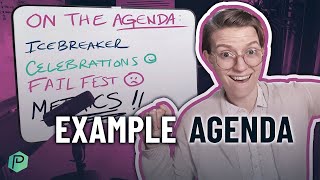
A small business owner walks through their weekly team meeting structure for nine people, covering attendance, icebreakers, celebrations, metrics review, and capacity check-ins. The focus is on what actually works to keep meetings useful and build team culture.
According to the Internet, we're supposed to have team meetings with our team weekly. But according to anyone who has ever worked a corporate job, meetings are the worst. Meetings are a waste of time and meetings are the gateway drug to bureaucracy. So how do we reconcile those two pieces of advice in a world where we need meetings, but meetings are also the devil? What do we do? Well, having experienced and experimented with both extremes here on my own small team, here's what I've come to believe. It's not about the number of meetings or even the name of the meetings or who's in the meetings, although all those things matter. But what really matters most is the contents of the meeting. The difference between a boring, bureaucratic, everyone's multitasking meeting and a fun, exciting, motivating everyone's aligned meeting. The difference between two of those is usually not the people, it's not the facilitator, it's not the mood or the moon or insert other thing here. It's usually the agenda. Yeah, the agenda of our meeting sets the tone for everything. And so what I thought would be kind of fun is to share in this video my current meeting structure for our weekly team meetings, which are department specific. Our team, just for context, is approximately nine people at the time of recording. So we're super tiny. But the way we have been running these meetings has been something I've been iterating for the last two and a half years, really since we started hiring employees for the first time. By no means is what I'm about to share the pretty perfect team meeting agenda. I mean, Google that. I'm sure someone's going to prescribe their crap to you, but all I'm doing by sharing this is just to share what's working for us right now. I fully expect in a year or two I'll come back, make this video again and things will have changed because these are constantly evolving based on our team. But I do hope this will be a helpful example for you. All right, so here we are inside ClickUp, which is where we're managing our meetings. Currently. I've got a demo task mocked up just to show you what one of our meeting agendas look like. The agenda I'm about to show you is for our customer experience team, AKA fulfillment service, whatever you want to call it. But we do use the same agenda for our marketing and growth half of the business as well. The way the meeting goes is very different based on the team members in it because some of our team members are total goofs and other ones are Very serious and mature. The agenda is more or less the same. I'm going to make this full screen here, inside ClickUp and let's just talk through the meeting here. Up at the very top we just have a who's here area. These are just checklist fields where we check off the name of the people who are there each week. This is just useful so we have a reference when we post the notes later on as to who was or wasn't in the room. Not used a lot, but also doesn't take a lot of time. Below that we have a note taker. Now, I know there is a big craze right now around using AI note taking software or just transcription tools to capture notes. I don't really get it. I've used those tools in the past and I just feel like I never read the notes anyway. So what's the point of paying for the software or using up all that data? Like for what? It just seems like digital clutter. So what we do here at ProcessDriven is we have a human note taker. And the only job of that note taker is to capture key decisions or key talking points that were somehow missed when we prepared the agenda. This person's job done right shouldn't take more than a few minutes throughout the meeting. And it's just one singular person who's accountable for capturing action items or making sure that they're captured by others and then posting the notes. Not really intense, not a full secretarial duty by any means. We use the symbol here to tag whoever our note taker is at the beginning of each meeting and it rotates every week excluding. Excluding the facilitator. Below that, we have an icebreaker. Now, I hate the term icebreaker. It just reminds me of summer camp or college orientation. Just like, ah, terrible. However, this icebreaker section has turned out to be a lot of fun. The way we typically do this is we have one person who brings a question for each meeting and we just talk about it. Sometimes it's, you know, what are you gonna do this weekend? Other times it's, what's something funny on your desk? Other times it's what would you be doing in life if you weren't doing this? Usually things to get to know each other on a deeper level. Not so much like awkward, you know, we don't know each other at all kind of icebreakers, but more about just going that layer deeper outside the professional. One thing that's a bit weird about ProcessDriven because we are fully hybrid and remote and Often not working at the same time. We really take our time on this icebreaker portion. Between how's everyone doing? And this icebreaker, we could easily take up 10 to 15 minutes in a meeting. Now, I know, I know as someone who hates meetings, the idea of 15 minutes of the meeting going towards nothing, me in the past probably would have bulked at that. But I gotta say, it is the most productive 15 minutes of every meeting we have. Because in those 15 minutes, you can pick up who's in the right headspace, who's struggling right now, who's in a great mood, who's stressed out about work. You can pick up so much from that, in addition to getting to know your colleagues at a deeper level, that those 10 to 15 minutes, I think, are the most important part of the entire agenda. Not for everybody, but if you're remote, might be a nice way to incorporate a little bit more humanity into the team. That's our icebreaker and our note taker flow. That takes about 10 to 15 minutes. Just going through the icebreaker and just chit chatting about stuff, which is something that we chose to add in and is definitely not for everybody. After the icebreaker, we have celebrations. So the celebration is purposefully happy, gratitude filled, and joyful, because that's kind of our culture. And so if anyone wants to share anything that's happening in a positive way, personally or professionally, this happens here. This could be someone moving house, graduating college, getting their motorcycle license, which I won't shut up about. You know, whatever your thing is that you're celebrating, we throw that in here. Sometimes it's business, but oftentimes it's not. And both of those are perfectly valid here. Below celebrations, we have another form of celebration called Fail Festival. Now, this used to be called Lessons Learned, but we've kind of rebranded it because one of our team members had the idea to do so. Fail Fest is a section all about celebrating challenge, celebrating times you didn't get it right, celebrating times things went wrong. That's part of our core values here at ProcessDriven. But as you'll hear me talk about in this Look Back video, if you haven't already seen that teaching people how to feel comfortable taking risks in a work environment is extremely hard. People are predisposed to playing it safe, trying not to step on any toes, and the result is you get safe and boring work. We're trying to facilitate a culture of taking risks, trying things, doing better, continuous improvement, for lack of a better word. So this is our attempt to institutionalize that this has Been something we've had in the agenda, I would say for about a year now, just a few weeks under the Fail Fest category. But this is a great way for people to share professional or personal challenges they've faced, whether they've overcome them or not. This is great. Some examples of fails that we've had in the past is when social media posts went out on completely the wrong day, emails were sent to the wrong segment, gave out the wrong discount code, or we gave out the wrong information. We forgot to show up for a meeting because we didn't check our calendar. Like you name it, it's happened either personally or professionally. It heads here. Below Fail Fest, we have metrics. And metrics is just where we break down every key metric for the department. And we have people react with an emoji based on their interpretation. Now this something that was relatively new. We only started this about six months ago on the team. But this was kind of born from having a pretty green team and them not quite engaging with their metrics. Business owners out there or leaders will probably understand what I mean by that. The rest of you might think I'm crazy, but essentially we have key metrics here at ProcessDriven. Every person is responsible for anywhere from one to five metrics that they track on a weekly basis. Usually one of them is the gold star metric in some way. But there's other ones that kind of contribute to the overall team success that they are tracking. Well, what we found is that over time, people would be tracking these numbers and just go on autopilot. They wouldn't question, why is it high, why is it low? They wouldn't even notice that it was high or low. They just track the number. And that was especially true back when we used to automate all that tracking. No one would spend the time to analyze it. Data not analyzed is just digital clutter again. So we don't need that. So what we've done is in this agenda, we would actually list out every key metric that is kind of a north star of some kind for the business. Things like dollars of profit, number of refunds, number of testimonials, whatever key numbers are we care about for the given team, we would add here, we'd list off each number and we'd have people react with an emoji based on whether they think it's good, bad or so. So with each reaction, people would also write notes below it. Why is it high? Why is it low? Why is it so so. And what we did with this is we made metrics part of a daily conversation. When it comes to this meeting, this metrics piece usually takes up an additional 10 minutes. We spend a lot of time going through, and me or whoever's facilitating will usually say, oh, okay, email subscribers is up this week. Is it because Layla mentioned that you guys should join our email list on YouTube. Interesting. Okay. Why was it up? Why was it down? Why was it this? Why was it that? And basically what we're trying to do is lead by example of how to be curious and about key metrics. When we started implementing this, the number of questions we would start getting from the team of, how do I find out that? How do I investigate correlation? These conversations were so fruitful that we just kept this as part of the meeting ever since we started it. The best part is because this key metrics thing is just reactions. With emojis, it's super fast for people to fill out for just, you know, five to ten metrics on here and allows us to have a visual indicator of are we winning, losing. So moving on from metrics, we have capacity check in. Capacity check in is just us checking in on human capacity. Now, we use a work management software here at ProcessDriven called ClickUp. We actually also use SmartSuite and a bunch of other tools that all work together. But even with all of the great tools that show you what people are working on and how many tasks they have on their plate in real time, you still don't really know how someone's doing. They could have five tasks but be in a terrible headspace, and so those five tasks feel impossible. Or they could have 10 tasks and be in an amazing headspace with the best caffeine available, and they just fly through it. Number of tasks, time estimates. None of that really tells us how someone's doing perfectly accurately. But if we match that data with asking somebody, hey, how are you doing? The combination of those two things will generally give us a pretty accurate read on who needs help and who doesn't. So inside capacity check in, we have three questions, kind of basic scrum questions, and below it, we have a little bullet for each person's name. Now, I just have mine in this example, but picture everyone's name here. In emojis are words we ask someone to share how they are feeling overall. This could be emotionally, this could be mentally, this could be physically, whatever. For some people, they'll write a paragraph here explaining everything about how they're doing right now. For others, they'll just have a smiley face. The reason we include emojis as an option Here, by the way, is just to keep this agenda easy to fill out and really, really fast. Below that we have how full is your plate? Essentially we just want to know, do you need help with anything? Are you busy? Are you not busy? Do you have time to help out others? Usually folks will respond with great, perfect, 50%, 100%, 200% to just let us know how full their plate is. I know sometimes when I'm swamped, I will just come in here and I will just get a picture of a horse and just say, I've got an entire horse on my plate to say that it's just way too busy right now. Below that we have a question of is there anything standing in your way? The reason for this is just to get clear on what is blocking someone from moving forward so that we can use use it to have a to discuss moment later on in the agenda, which we'll be talking about in a moment. We'll have one of these prompts for each person in the meeting and people will fill it in with either emojis or words for each question below. Capacity check in we have calendar. This is just where we list off upcoming holidays and pto. This is pretty much fixed for the entire year except if someone else has paid time off or there's some special event. So this is just here as a reminder to check the calendar. Can't tell you how many times I've forgotten that there's holidays or things like that. And to help our team out by making sure they don't forget those things. We have this calendar in everyone. We don't talk about it at all unless something's happening that week. But we do have it here, so it's kind of forced to be on your mind. Below that we have a just sayin area. We only use this area if there are, you know, mission critical business announcements that need to be kind of brought up for questions. As I've talked about in this video up here where I talked about all of the different meetings we have at ProcessDriven and what we do with those meetings. We do not have heavy status reports in meetings. Things like, how's the project going? How's that going? We don't do that. We type that out instead. However, the only exception is this little bullet point where we will give broad announcements here only to say, hey, if you have any questions about that, we need to discuss face to face, let's do it during this meeting in the to discuss portion. A great example of a just saying might be hey, we have a new job listing available for a content writer. And we do actually right now. So given that, if anyone has any referrals or any questions about the content writer position, please let me know now. Now just kind of wait. No one has anything. We'll move on. We're almost at the end now. We are at to discuss. This is where the vast majority of the meeting time goes. I would guesstimate about 30 minutes of the meeting is spent here. This is where people bring up discussion points that need to be figured out or solved by the end of the meeting. Usually in each meeting, which we have weekly, there is about two to three discussion points. Things like what happened to that promo code? Why isn't this page working anymore? How do we want to handle people who want this special exception? The reason we only have two to three to discuss per week is because we do a lot of communication asynchronously, meaning just messaging back and forth. That's way more efficient. Saves a lot of time. We only bring things to to discuss when they've been ping ponged back and forth too often via text or if they're just too hard to type out. As you'll see, we once again use emojis to distinguish what needs to be discussed today versus what can wait. And then we just kind of go in order of priority to knock out the whole to discuss list. Very rarely would we get through a to discuss period and not wrap up all the discussion points. And as we go through, we would make notes of the key decisions, add that information into this discussion section, post the notes, and we would move on with a blank slate for the following week. To discuss for us is a lot like the IDS structure you might have heard about in an EOS level 10 meeting. If you don't know what that is, just Google it. It's a very, very structured meeting agenda. You can steal right here is decisions and actions. This is really not an area we talk about at all. This is just a dumping ground for people to keep track of tasks that came up from the meeting. For example, take out the trash might have been discussed in this meeting. Because we use ClickUp, we frequently use the feature of highlighting text and turning it into a task in order to bring that into our to do list. That's all this section is. It's just a note taking area. Now the very last section of this meeting is also not really a meeting agenda. And this is to end the meeting on a high note. Now I think the team created this as a joke just this past week, but it was in here when I went to do this video. So I'm just going to include it frequently. Our meetings have been pretty, like, focused, right? We've had a lot of stuff to go through in decisions and actions. And so at the end of a meeting, I would ask the team, all right, so who's got an inspirational quote or a dad joke to tell me in order to end this meeting? The whole idea being before we could all leave, we had to leave with, like a smile on our face and a good attitude. And so I figured, why not throw a dad joke in there? Well, when I asked that to the team, I kid you not, Monica, who I'm going to call out by name here, when I asked for what inspirational quote they had to end the meeting, her inspirational quote was. Inspirational quote. She literally put the word inspirational quote in quotes. And it has since become a recurring joke on the theme. But it has also made it very clear to me that our team needs to up their. Their joke arsenal. And so I guess now this is part of our weekly meetings here. I believe the one today was. What was it? To be frank, I'd have to change my name. Credit, Montana. Nice one on that one. But, hey, that's how we wrap up our meetings now for the CX team at least to just make sure we're always ending on a high note. Now, this whole meeting that I just ran you through here, this whole agenda runs about 55 to 60 minutes. There are weeks like today where we end at 45 minutes, but most of the time we use the full 60 minutes, even if that just means we spend more time on celebrations, connecting and joking around. I know it's not for everybody, but to me, that's a really important part of culture building. And it's fun, too. You work so hard, you might as well have laughs with the people you work with. Now, if you'd like to get inspired by what other people are up to and other people's agendas and process building geekery things, be sure to join our Facebook group, which I'm mentioning in the description below. Inside that Facebook group, you can connect with other people in our audience and swap notes about topics like this. However, if you're not a Facebooker or if you're just impatient, you can also help us out here by leaving a comment below with your meeting agenda. I'd just love to hear what you have. Maybe some things I could steal for my own agenda here to make this video better for next time. How do you organize your own agenda for your team? Let me know in the comments. And if you don't have a meeting yet, go stalk the comments and get some more inspiration. Either way, thank you guys so much for watching this video. And until next time, enjoy the process. Ooh. And just to end this video like we end every meeting, I'm gonna steal something from Doc Talk here and give you a dad joke. Alright? How do they laugh in Hawaii? With a low. Ha. It's really bad. So good. Alright, bye.










