Who should create business systems and SOPs?
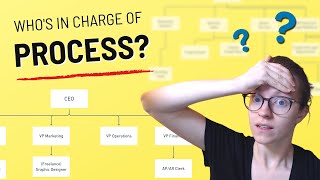
Thomas Frank breaks down who should create business systems and SOPs: owners, managers, and doers all have different roles. The key is mapping processes, equipping people to follow them, and testing what actually works.
Who should be in charge of systemizing a business, of creating a process handbook, a playbook, a series of standard operating procedures that is so clear that anyone could, you know, quit tomorrow and your business would still be okay. Whose job is that? That is what we're going to be talking about today. To start this conversation, I want to really unpack what we mean by building business systems or designing a process. To me, that process includes three main steps, which I've actually outlined in this video over here. But for those of you who haven't watched that yet, feel free to watch that after. The number one step in this process is mapping or defining what exactly is involved. So, for example, here I'm recording a YouTube video. The process of me creating this video of, you know, turning on the lights, of getting everything ready for this, I need to first figure out what exactly is involved in order to systemize this process. There were a few ways to map out a process. You might just wing it and observe yourself. Oh, how do I set up the lights and all that stuff? The second way might be to use a flowchart and actually write down the steps of a given process so you can really think through what you are doing when you may not really be thinking about it. We talk about that in this video up here. But whatever you do, your goal is to define what is happening. Once you map that reality, you are ready to start equipping that process. And to me, that looks like templates, technology, and tools, the things you can do to make that process easier. Easier. So in the example of filming a video like this, I might have a video script ready. So that way I know exactly what I need to do when I'm getting ready to film. That is me systemizing this process. So it's not me just talking to a camera and kind of winging it as I go. Another type of equipment I might employ at this point is a checklist to help me keep track of all the things I need to prepare and test before I hit record. Which reminds me of, you know, check the cameras on, make sure the lights are on, make sure the other light is on, make sure the microphone power is on. And that that has happened before, where I record an entire video without power. Those kinds of check, checklist can be a great way to equip the process as well. Once we do that, we are in the equipping stage. We're making it easier to be done. We are ready for the third stage of the systemization process, which for me is trying. And this is where we actually do the process, observe what's right and wrong about it and figure out ways to make it, well, easier, more human, more enjoyable, more branded. Those three stages are really what we're talking about. When we're talking about defining a process or simply systemizing a business, we're just doing that same thing. This simple process of observing what we're doing, equipping ourselves with tools to make that easier, and then finding ways to make it even better. We're just doing that again and again and again and again to actually systemize a whole business because we have a lot of little things like filming this video that we do to make a business. A business map is the very first piece. I want to talk about ownership. For me, this process is a split ownership between the owner of the business and and the managers of the business. Okay, so inside Clickingup, our learning community, we really visualize this through a exercise we call the process org chart. It's a process I invented here where we describe the operations through the jobs to be done, grouped by objectives to fulfill the purpose of the business. Now, I won't get into the weeds of that here, but for those of you who are clicking at members and are familiar with this idea, the top two layers of your process org chart describe the purpose of your business and the main goals of your business. To me, those are the type of questions that owners and the key, you know, strategic leaders of the business need to be involved in at least defining and making sure they're accurate. Once we get past the purpose and the objectives, we focus on the processes, the core processes that make the business hum. Right? What allows us to accomplish our objective of building amazing content? What are the things that we're doing on an ongoing basis that brings that to life? But note, we're not building any SOPs here. We're really just figuring out what our business is all about. This is the stage where I want leadership really heavily involved. The second step, which is the idea of equipping your processes. This is where I want to see ownership shift a little bit over. To me, this is really one that is a combination of manager and doer responsibility. So the owner's pretty much out of the picture at this point. I really like to see the worker bees leading this whole initiative course. Managers are there for a reason. They're going to cheerlead, they're going to set goals. But SOP creation, template drafting, even automation set up to a degree. I'd like to see the person actually doing the work even if they don't have the Technical know how to set up the ClickUp automation or to use Integromat to make that automated. Amazing thing. Maybe they don't know how to do that, they're just focused on doing their job. But they should be the one directing it.
They should say, hey, Susie, I'm doing this account payable process and it's really manual for me to retype information from QuickBooks into ClickUp. Could you set up a zap for me that makes all the information from QuickBooks create a task in ClickUp?
They're directing the process because it's their job and their lives that they're making easier by doing that. The manager's job in the second step is to support the doer. But the conversations between managers and doers at this point, which again could be the same person, but assuming they're two different, the conversation is going to go something like, what are you doing right now? That is beneath you. Right, like what are you doing right now? That is a waste of your time. Like manual data entry. How can we make that better? What could I be doing? Whether it's resources, time, a consultant I could pair you with, what can I do to make your work more enjoyable for you? The third question might be as simple as what's frustrating you? Sometimes it might be hard for the person who's sowing the weeds to realize where the inefficiencies are. But if you really ask, hey, what's not so great about your day to day work? What's frustrating about that, you know, video production process you're doing every week? The right employees are going to be able to say, hey, honestly, it frustrates me that I have to go back and forth in five different drafts with this other person. I'd rather us just get our stuff together from the get go. So this equip stage is one that is really led by the people doing the work. A lot of the work will be executed by the people doing the work. And the managers are there to help in whatever way is possible. So whether that's prompting them to create SOPs, helping draft some SOPs, matching them with expert outside helpers, buying them a course or a program, enabling that process and really adding fuel to the fire, that is the job of the manager here. But that actual equipping is the charge of the people doing the work. Their job is to make their lives easier and you are here to help them every single step of the way so they can see the ways that they can make their life easier. So the final step of the process which is try. This stage is owned by the manager. So you see how we're all taking our turns here. The manager here is really looking at how things are being done and kind of keeping the feedback loop going between the other stages. It is a cycle and the person that's making sure we keep moving through that cycle quickly and quickly and quickly is the manager. I might observe in our shared inbox in missive that a lot of emails are being rewritten manually. Me as the manager might view that and say, huh? Rather than me going back to the try phase and writing all the sops for people and just saying, here, you have to use these or else. Instead, I'm going to go back to the map stage and I'm going to look at all of the things that our business does and I'm going to ask myself, all right, based on the objective of the business, which is set by the owner, how does this manually writing emails fit in? What department does that fall into? Hmm. Okay. Manually writing emails really helps us with our customer service delivery. That's kind of what we're, we're working on there. That's what the emails are about. Hmm. So what I would do as the manager is look at that map. Then once we've mapped that, I'm going to move into the equip phase and I'm going to have a conversation with my team members and say, hey guys, so I noticed you're writing a lot of emails repetitively. The same email. How does that feel? And most likely, if my team members are being honest, they'll probably say something.
Of like, oh, if my email is so frustrating, I hate it. I spend all day trapped in the inbox. It is so frustrating. I would love for someone else to do this. This is so terrible.
Not basing this at all on real life experience. So then me back as the manager would say, okay, well, I understand why that would be really frustrating. Watching the way things are happening right now, I wonder if we could do a better job of making templates. If we started adding templates into every one of these emails and putting them all in one central template repository, we could probably cut down your email time by a third, maybe even more. Because you and Susie here are both retyping the same emails, which wastes a lot of time. So I would ask them and enable them and say, hey, what do you think about that? Then I kind of back off because it is their job to start taking those steps to make their day to day life easier. I can prompt, I can encourage, I can provide, but it is their job to do that and to draft those. Finally, once those templates are made, I sit back in that try stage again. The next team meeting I might ask, hey, how are those templates working out? Maybe I even make a metric on our key metrics tracker to see how many email templates have we built and how long are we spending on email. Do those things correlate? I am back to the optimization mode in Try until something else catches my eye. Continue moving that cycle along so this was a very long answer to a very short question as to who needs to be in charge of system building. And the short answer is everybody. Everybody needs to be involved in building systems if we want them to be used by everybody and benefit everybody and be relevant to everybody. The owner and the strategic minds of the business are going to be most involved in that maps stage. Then those doers at the equip stage are going to be driving the force forward and finding ways to make their own day easier by asking for help for identifying issues. And then in that try stage, the manager is going to be soliciting feedback, measuring results, start new conversations to keep that cycle continuously improving with each step of the way. Systemization is everybody's job. It benefits everybody if it's done properly. And it should never be this kind of top down prescription of we're going to do it this way because that just doesn't work. So if you are someone who believes that your business could benefit from systemization, if you are looking to help your business go through this feedback cycle and you're trying to figure out how exactly does that look? Where do I start? What processes do I have on my process org chart? What even is a process org chart? I would invite you to check out the free training in the description below this video because it talks about kind of the intro to what a process org chart is and how exactly one could use that, which is what we do inside our membership. Otherwise, thank you guys so much for watching this video. I will see you back here next time for another video about stuff systemizing your business using ClickUp. Until next time. Enjoy the process.










