Why Routines Help You Scale Your Business | Projects vs. Routines, Explained Live
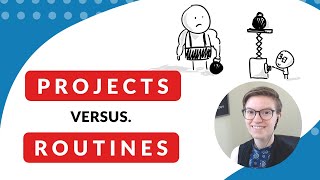
Ashley Schuller explains why routines scale businesses better than projects. Routines are repeatable, documented processes you can delegate or outsource. Projects are custom and creative, requiring specialized skills that don't multiply your capacity.
Hello. Hello everybody. Layla, back with another live. If you are watching this on YouTube, you are watching a replay. A little bit elated. I do repurpose these videos so you can get that content on there so you can't engage and it is a little bit later. So definitely join the Facebook group if you're looking to join the conversation around this. For those of you in the Facebook group, again, comments invited here. So the topic I want to cover today. Oh, I'm going to flip the screen size a little bit. The copy. The topic I want to cover today is first of all, any questions that come up, obviously that is the the big focus. But I figured while we are waiting for some questions come in or if there are no questions this week, I'll talk about something that came up for me this week personally in a consultation. And it's something I talk a lot about. And I don't know if you have this in your industry, but there's things that you just say and you're like, yes, of course, that is just how we think about things. But outside your industry, that's not how. That's not the terms or that's not the phrases that people use. So in this video, I want to talk about projects versus routines because I use this terminology in a consultation and the prospect was kind of like, huh, what? What do you mean by that? And so I want to explain it here in case anyone else is looking for the words to describe this sensation that you know but haven't really thought about in this way. So I took a little bit of time before here to do a little bit of doodling for y', all, as usual. And this is the visual that came to mind for me of projects versus routines. And actually, like in hindsight, I think it's I wish I had this when I was talking to that person earlier this week. But projects are, to me, the custom stuff, the adventure, the exciting part. If you're the entrepreneur in the business, projects are probably what you spend your time thinking about. Routines, on the other hand, tend to be. And I'm going to move that comment just so it doesn't block the thing. Routines, on the other hand, tend to be a little bit more predictable. They're generally something that is known that happens on a repeating cycle or at least happens several times over in a given month or year. And in this video I want to dive into first, defining these a little bit more and second, talk about how exactly how exactly we can use these definitions to actually model our processes accordingly. What's the point of this differentiation, Is it just jargon? You know, I'm not really into just jargon for jargon's sake. So I'll explain kind of why I find this a useful distinction. Distinction. If you're joining me live, please do leave in the comments any examples you have of kind of the stuff that we're talking about today or any other questions that come onto your mind based on this topic. So one of the fun things about this just kind of visual that came to my mind this morning is a roller coaster versus that train ride at the amusement park. I guess I'm really getting ready to get out of the house of all this quarantine stuff. And that's really kind of the difference with routines is the roller coaster, the project stuff is the exciting. It's the adrenaline rush. It is where you're excited to see what happens next and you don't necessarily know what's happening after a certain point in the ride. It's kind of an unexpected twists and turns, projects, AKA custom work or new ventures or new ways or even improvements in some ways or projects. That is the pioneering area which some people are going to instinctually love and some aren't. But either way, it tends to be custom. There's an unknown outcome. You're just kind of going along for the ride routines. It's on a track, right? Just like a train. It is on a track. You hop on. It's pretty low key. You kind of be snoozing in there. You know exactly what's going to happen next. You know the outcome. You're on a set track because you've done this before. Most things start out as projects, just like when you started your business. The stuff that you do now is probably considered a project for you, but it's become a routine as you've gotten more reps in as you know exactly what the twists and turns are going to be. That's a routine I have down here. No, I have down here that package versus custom is another way to think about these routines versus projects. And package services versus custom services is kind of what I mean by that. It's that we are having a productized service where you know exactly what the twists or turns are going to be versus a custom service or custom product where you are taking an order from scratch, you are inventing what that design is going to be or what that project roadmap is going to be every time with a custom proposal that instinctually is going to make it more of a project and less of a routine. I know A lot of the times when we're talking about our services, we are indeed referring to, we call them projects with our clients. But if you have a more productized service, it is more of a routine. So let's just slide over here, but listen to a lot of Goldfinger during quarantine. Maybe some of you have too. And E for Everyone really came into my mind at this point where the routines, because they are known, they've got a set structure, the they're easy for anyone to hop on board. Like just like the train at the theme park, anyone can hop on board a routine and actually help perform those tasks. Or at least, you know, maybe not everyone, but almost anyone in your organization, because they're known, they're fixed, they're repeatable routines. Get it? Whereas, you know, you must be this tall to ride is kind of the motto of roller coasters. And your projects are that way. You need a certain kind of mindset, certain person in your company, usually founder, owner, leader, to be able to handle the project side of things. So scrolling over a little bit, what does this mean for a account like ClickUp, for example? Well, routines and projects can come in different shapes depending on how your space is organized. But the one way I like to think about it is either by having a routines area in your ClickUp where it's literally just all of your recurring tasks which have a set recurring date and SOPs built into them, or they could be built in to your actual area. So if you have social media production, for example, that is going to be a routine and you might have repeating tasks inside that. So what are some examples of routines? And if you are watching this, feel free to chime in some of yours. First of all, all of these things, the first time you do them will not be routines, but over time they should be. And these things include things like sending out holiday cards, running payroll, adulting, things like maintaining your house, cars, insurance and property, price increases, taxes, follow up newsletters. All of this stuff could be an example of a routine task in your business. And hint if any of these ones for you are things that you do regularly, as in more than a few times a year, especially if it's more than a few times a month and you do not have the process documented. Maybe this is your invitation to do that. One of my favorite ones is a price increase or request for reviews, which I don't have on here. But having that be a recurring quarterly task or a recurring after five new clients. Whatever your process is for price increases or asking for reviews that can be a really nice routine to get in the habit of, because if you want to actually do something well, you need to make time to actually do it. So that are some examples of some routines. Adulting has been a big one for me as I'm trying to maintain our property here. We've been doing a little bit more of lists around that. I wrap up with this example here of why the difference between projects and routines are important. When you're in project land, you need this guy, you need lots of power. Whether that's just smarts, whether that's muscle, whether that's creativity, whether that's ingenuity, you need creative people to help you navigate those projects. And not only those people. More expensive and more rare and usually maybe harder to manage. Those people are the only ones that are going to be able to do your project tasks. And that's okay. When you're starting out and you're solopreneur, everything's a project. That's why you are this person. But as you're trying to grow your business, it's hard to find 100 of these people. They don't make a lot of them, and many of them don't want to work for you. They want to work for themselves. So what are your other choices? Well, build more routines. With routines, you can create what I like to call equipment for the task at hand. And it might not be physical equipment like I have visualized here. It might be a checklist, it might be a loom video explaining. It might be something else entirely. But the idea is you're making it easier to do the task. So a lower skill, or in this physical example, a lower muscle person could perform the same task. This example could be social media. The first time you do social media, you probably want to do it on your own. But as you get some reps in, you have your set structure, you have your content pillars. Maybe that's something you then outsource. This all feeds into the belief that you are best outsourcing things that you are already really good at. Outsourcing something you don't yet know. How you're going to do is kind of throwing away your money. Because odds are you'll be hiring a VA who doesn't know your business isn't as passionate about yours as theirs. And even if they're excellent, they're going to be coming over here and trying to create systems. It's going to be inefficient instead. I'm a proponent of delegating things that you've already Got down pat things that you even enjoy, perhaps, that you have a set structure for. For me, that might be soon. It might be YouTube editing. I've got kind of a rhythm down for you. It might be following up with leads or exit interviews with clients or staff, things that you've done quite a lot and you've taken the time to build equipment. What do I mean by equipment here? As the same visual I usually create almost every time here. Oh, you might be checking out, starting to slow down. It could be checklists, it could be videos, kind of walking through how to do it. It could be guidelines, decision trees, flowcharts, different pieces of structure to help the person actually perform the task. Without lots of training, without, you know, 15 years of experience or you know, five years of working in your company, or the knowledge that the founder has just stuck in their head without any of that, how could they do that task? And the answer there is that documentation and video piece. So one of the easiest things any business can do. I don't think I have anything else prepped here. Easiest thing any business can do today to start being a little bit more routine driven is to start writing out your routines. What are they when they come up and I'll close this out just in case it does die. When you are finding yourself stumbled upon a task that you have to do a lot, even if you're not planning to outsource it yet, write it down. Even if you don't write the sop, just write it on a list called routines or in a section where you a recurring due date called pay estimated taxes or performance reviews or I don't know, order new coffee, change the filter, whatever it is, write that down and give yourself a task to start filling in that sop. And over time you've got a task that you know how to do, you've built equipment for, and look, all of a sudden you don't need a Goliath in order to complete that task. Anyone coming into your business with, you know, a few months of working for you could execute that task and execute it correctly without you feeling like you're throwing away your money and time by having someone else do it when it would just be easier to do it yourself. So I know this is a little bit basic for those of you have been around this world longer, but I think the idea of projects versus routines is one that we probably can't talk about enough because it is the key. Oh, there it is. It's almost going. Oh no. It is the key to being able to build A business that you can kind of step away from. That's what you see. A lot of us are moving towards productized services because we're able to make the service itself routine and set and structured and not franchisable, but at least repeatable without a lot of unknowns. We don't need to hire a bunch of goliaths. We can hire people who are willing to grow with us or maybe lower skill at the beginning and teach them what they need to know through our own structure. So that is really the piece here on routines versus projects. And if you have any questions about this, I would love to hear them in the comments below. I try to make these videos a little bit more tangible. I know this one's a little bit more big picture, but when you're thinking about workflow mapping, you know, the whole flowchart process, a lot of the times it's like, well, what do I even process? Because you can, you can get really into the weeds in that. Well, one of the easiest things to start with is just to flowchart your routine and flowchart. Maybe you can skip right to the outline stage and just write the steps in in your routines. I know some of the ClickUp consultants. We are in a group and there's a lot of us who have kind of habits around SOP creation and I think that's a really good habit that all of us could take away. Here is just starting to be more diligent and here we go. Create a routine for creating routines in your business. Maybe it's every Saturday like I know Ashley Schuller does. Maybe it's once a month you have a full day where you block out from client meetings and all you do is work on your own internal systems. Maybe it's every Monday morning for half a day. You as a solopreneur or a team lead, focus on getting more things documented. Maybe you have a team and you can just delegate that to your team and say, hey, I want all of you to spend one hour this week. We're going to do it all together. Even though we're remote, we're going to do a virtual collaboration and we're all going to co work and create documentation. We all know we need to do it. It's just we need a little bit of a kick in the butt to do it. And hopefully this visual helps spell out why routines have a lot of power. Whether you're looking to hire or outsource to a VA or, or, or, or that freedom comes in having the decision and structure made once and then just repeating it rather than having to kind of pioneer the new way to create your newsletter every single week, even though you do it every single week. So yeah, that's it for this one. I know this is a little bit short. I guess this thing didn't die after all. So good timing for me. But I would love to hear any of your comments in your comments in the comments. You know what I mean here. And look, I did a little bit of prep for this one. I would love to hear what routines you have built out in your business. Your suggestions will not only help yourself, you know, really hold yourself accountable and maybe pat yourself on the back for creating these routines, but also help other people kind of shop around. So if you post some routines that have been really helpful to you, I'll do the same. I've already mentioned quite a few here, but more people who add in what their routines are and how they've been helpful to them, the more you guys can swap notes. So you might find that, oh, that's a really good idea. Every quarter let's ask everyone for a review. Or oh, every week check my bank balance for these things. Or do a cash flow projection every month. These kinds of note swapping can be really valuable. So start that off, take two seconds and write a few routines that you use or would like to use that have, that have given a benefit or you think will give a benefit to your business. That's it for this Live. If you have any other questions I didn't cover or you think would be good for another Q and A, leave them below. I will be back next week with another live video topic. Unsure yet. See what strikes me, but your Q and A could probably help guide that a little bit. But otherwise I think that's it for this workflow. Wednesday I will see you guys in the Facebook group or on YouTube if that's where you're watching. And I hope you all have a great day. If you are tired of trying to piece together YouTube videos to figure out how to align your workflows, your processes, and your ClickUp account, well, maybe it's time that we talk. I work one on one with a select group of clients every quarter to help people build out their systems and processes, find out more at ProcessDriven co.










