Why You Need a Mentor for Your Agency with Brent Weaver of uGurus
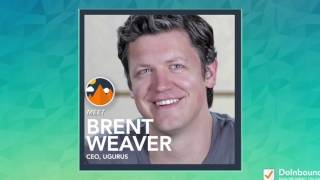
Brent Weaver, CEO of uGurus, explains why agency owners need mentors and accountability. He shares how mentorship helped him grow his own agency and why peer support and coaching are critical for scaling a digital business.
Foreign welcome to Inbound Agency Journey. This is the show where inbound agency leaders share the strategies, shortcomings and successes they've experienced in their journey toward building their dream agency. Now here are your hosts, Andrew and Gray.
Hey, Brent, welcome aboard. Happy to have you here on Inbound Agency Journey. Would you mind kicking us off by just introducing yourself to the audience and giving us kind of your brief background story and how you got to be where you are today?
Sure, Andrew. Thanks for having me on this program and you guys are putting together a really great show and just happy to share my story with your audience. And my name is Brent Weaver and I'm the CEO and co founder of YouGurus. We're an online business school for digital agencies. We help accelerate your success when it comes to marketing, sales and running your business in a way that helps you lead an amazing life. I got to that business by actually having my own agency for 12 years and really struggling for probably about 60% of those years with my business not really getting out of the business. What I wanted, namely the types of clients that we were working with and the amount of money that I was actually depositing in my account at the end of every month was not really where I wanted it to be. I didn't really know how to solve that problem until I really started to build a great network of mentors, consultants, advisors, and other industry peers. It's when I shifted into that mindset of, you know, I can't do this myself. I can't just figure this all out by myself. And into that mindset of I'm going to find the smartest people in this industry to help me build a successful business was really where the shift happened for us. And so from 2007 to 2012, our business pretty much, you know, we'd already been in business for seven years, but from 2007 to 2012, our business pretty much doubled every single year until we sold the agency to about a 14 person staff to another company here in Denver.
That is awesome. I just think that's great that you guys got to that point where you're like, this isn't, you know, it's not living up to the expectation of, like, why we're in business to begin with. I feel like, you know, agencies get really frustrated, but they just kind of like keep churning and they don't take that time to step back and look at the bigger picture and say, what am I actually trying to build here? And without that perspective, you can really go a long time and spend a lot of Time, attention and long hours and everything and build something that you look back on and it doesn't even help you get where you actually wanted to go at the beginning.
And I think, I mean, I don't know how your listeners feel about this, but I did not go to business school. I, you know, did not say to myself when I started the business, oh, I'm going to create a really diverse, cool digital agency. You know, I was building websites, I was doing some digital marketing for some clients, and it started to grow into something bigger and, and I wanted it to grow, but I didn't have a business school background. I didn't have an education in business or marketing or sales. I had never worked for another company before. I didn't have some 30 year corporate tenure of building successful relationships with Fortune 500 companies for some other agency. I didn't have any of that stuff. So I was really creating the business from scratch.
Yeah, I relate to you there. Our story. Gray and I started Guavabox from a college dorm room. So we were jumping right out in there and kind of the same way, like no previous book of business you're coming to the table with, but you learn as you go. And then so you kind of stumbled on this idea of industry peers and saying, you know, I can't build this by myself. What were some of the takeaways that you had when you made that realization, like, tangibly, how was that able to change the way you guys ran the business? And kind of today, how are you using that model to coach up other people and help them change their agencies?
Yeah, so I joined a business accelerator in around 2007, 2008, and I was at this event and we had already kind of had a couple of mentors that were helping us get out of a really sticky situation. But it was when I went to this business accelerator and this guy comes up and starts talking about how to sell effectively. And about the first 10 minutes into his presentation, I'm thinking to myself, dear God, I am selling in a really backwards way. I have no idea what I'm doing. I know at the time I probably had given out. Up to that point, I'd probably pitched a few hundred web projects and I was just watching this guy's talk and was going, man, I just don't know anything about actually how to sell. I've read maybe one or two books or something like that about consultative selling, but I really had never worked with somebody in depth to, to coach me on my habits, my language, my process, the mechanics, and really work with me through that. You can't just read a book once and then hope that you apply that system without some type of accountability and systems to do that. So this guy gives this presentation and I went up to him afterwards and I was like, I want you to help me take everything that you know about sales. And this guy had actually run a sales organization that was doing a little over a million sales calls per year. So he knew he was building some pretty cool systems, understood sales backwards and forward. I was like, I just want you to come in every week for one to two hours and just help me create a rock star sales process. And then a month later I go to this accelerator, type this business accelerator all day kind of retreat again. And then there was somebody that came in and talked about marketing and they were, I'm going, oh my God, I'm just marketing my business like totally the wrong way. And so then I go up to them afterwards and I'm like, hey, I want you to come in and help help me with my business and just come in every week and teach me how to correctly position my agency. Basically I just kept this pattern going. Every time I saw somebody give a talk about things that were going on in my business that were issues. Instead of just taking notes and trying to implement myself, I just changed the dynamic to where I started paying these people to hold me accountable, to work with me every single week until I felt like I had fully integrated what they were talking about. And that method was totally different than what I'd been doing before because before that I was like, I didn't want to spend money in consultants, didn't want to spend money in coaches or courses or any that kind of stuff. I'll just figure this out myself. I'll go to, you know, I'll take some notes and self implement everything. And when I shift that mindset to actually getting these smart people into my business and helping me at a much more detailed hands on level, that really changed the game for us. And some of it's accountability, but some of it's just, you know, your business, everybody's business is a little bit different. So when you got this guy up there giving this keynote of, here's the sales blueprint, 12 step thing, whatever, sometimes it just needs to be tweaked. It was hiring those guys even though it cost me probably a couple hundred thousand dollars over the last, the next few years, we got that money back and then much more.
That's awesome. I think it's cool because entrepreneurs, I think we get this puffed up feeling we need to man up and just buckle down and make things happen, to make change happen. But like investing in this way and investing your time, because you have to learn this, you have to work with this guy to come in and change your processes, but also your money. And like, if you're a growing agency, you know, like, cash flow is king. And to be able to still like invest in this, like, you need to know that you're going to get a high return on the back end of that in order to make it all worth it. But just, it's really cool to see how that played out for you. And you saw kind of a benefit of that. How did that process play out from like a, an ROI standpoint? Was this something that you were able to just kind of continue to build on because you saw immediate success right away, or did it take time for you to kind of learn how best to work with a consultant in a way that can help you get that money back so that you can reinvest it in another initiative?
I mean, we happen to. When I really started that practice of bringing these people in to help, we had some decent amount of work under our belts. We had a few person team, we had referrals and word of mouth that were delivering new opportunities to us all the time. So the cool part about it was, and this is actually a lot of what we teach in our current boot camp is we had some lead flow, which meant that on the sales side, when we brought the consultant in, we actually got to practice a lot of what he was teaching me every week. And I could kind of report back and say, well, hey, this person said this, how should I, how should I, here's how I responded. How should I have responded? Or how do I. How do I get out of the hole that I've dug myself? And so having that lead flow coming through my business and then having a sales coach mentor help me at that time, we saw ROI immediately. And that's one of the things that in our program, when somebody does have lead flow coming through their business, they're an established agency. And then we come in and I teach you the same things that somebody taught me and that we customize and apply to agency businesses. That's why we see such immediate ROI on that type of stuff. Now if you don't have any leads coming in and you hire a sales coach you're actually hiring for, you're getting a consultant for the wrong part of the process, you probably would be better off hiring somebody to help you out with Marketing instead of sales, in that case, definitely.
So, yeah, walk me through that process because, you know, just reviewing kind of the approach that you guys offer to agencies, I think it's really cool how you weave mentors as such a, kind of a cornerstone of that. Can you just kind of walk us through what it looks like to work with you guys and like how you've structured your program based on the lessons that you learned growing a successful agency?
Yeah, so. Well, first of all, I always tell people, you know, between my business partner and I, we have 34 years experience as entrepreneurs and, you know, 24 of those years total are running our agencies. So we took those that. That experience and packed that into essentially a 12 week program. There's 10 weeks of small group meetings, but the entire program from start to finish really takes about 12 weeks. So we took everything that we knew and we put into that program. But you know, we've all taken a course before where it's got all this really great information and we get super excited. We're like, oh my God, this course is going to change my life. I just spent my whole day watching this course and I'm going to change everything about my business. And then you maybe implement one or two things and the next week rolls along and you're like, you get busy and our client calls you or you have a client fire to deal with. And then maybe you only complete that one thing you started last week. And then that second or third week out from whenever you watch that course, it's kind of starting to fizzle. It's starting to fade away in your mind. And so that was the experience that a lot of our customers were having when we were selling just courses. So for the first year of business at Ugurus, we just sold video courses. And then I'd call customers and talk to them three, six, 12 months later and say like, oh, how's it going? And it was like the same story over and over. Well, I implemented that one thing, I implemented this one thing, but they weren't telling me about these like crazy results. So I changed our model and said, look, if we're going to be successful at helping agencies really turn around the issues they're having in their business, we need to put them with real agency mentors that are above the level, basically at the level that they would like to achieve, that have successfully implemented the blueprint that we provide and have been trained on how to be a great coach and mentor. And we basically put you into a group, have you work with the mentor, plus Another eight agency owners. And your mentor is there to lead those group facilitated sessions and also do one on one coaching and mentorship. Because sometimes there are issues that you don't want to bring up in group that you don't want your peers to hear about. Whether that's, you know, I've heard a myriad of things, but I'll give you some generic ones. Like I'm working a lot in my business and my spouse does not approve of what I'm doing and this just might be a topic that they don't want to broach in the group. We have that one on one time to really dig deep with somebody and figure out if there are things that we can help them with experience, share resources, templates, connections with other people in the industry. We're firm believers in the power of our group sessions and the power of the one on one coaching and mentorship. And the content is here's the proven methods, here's the checklist, here's that kind of stuff. But to date, I've seen some people implement our methodology, maybe 70 to 80% in completeness, in everything that we teach them, that they just go crazy and they're all into it. But even then they're maybe implementing 70 or 80% of what we have advocated for. Most people, even when they successfully go through our program, you know, they're implementing that 10, 20 or 30% of what they need to that's going to really help their agency break through the ceiling and get to that next level. And the mentor is there to help you kind of weed out what's relevant for you and what's not relevant for you and then hold you accountable to actually getting that stuff done in your business.
That's really cool because there's, I mean, there's the social component of it there too because you've, you've got someone to look up to, but then you're looking to the left and the right and you know that there's other people there that are trying to achieve the same goals that you are. That's gonna be a really cool dynamic to kind of pull each other through and help each other in that context.
And Andrew, I'm sure you've been in a situation where you know, another agency owner says like, oh, I just want a project with XYZ client, or I just want a project at XYZ Price or whatever. And you just hearing that builds your confidence and makes you think, okay, if they can do that guy over there can do it, or that girl over there can do it, or whatever, you know, I bet. Of course I can do it too. And especially once you get to know those other agency owners, that helps out a lot. And that's the other thing that I'd say is that for the first seven years of my business, I looked at the other agencies in Denver as my competitors, as people that I, you know, was secretly jealous of and was very, you know, I don't know, I just got crazy emotions going. Whenever I'd, like, see their websites or they'd update their brand, I'd be like, oh, like, I'd be like, really? Like mad. Yeah. And I'd see their clients like, oh my God, they got Chipotle as a client. Like, you know, or whatever. Right. Like, I would be very like, I just view them as competition because I think I was trained that in a capitalist market you have competitors and you have to compete against them. And that's, you know, all those movies in the 80s and 90s or whatever just like, kind of created that atmosphere in my head of like, these are my competitors, I need to beat them. But the reality is when I change my mindset from they're my competitors to they're my friends, they're the people that I can learn from. There are other people like me, and we need to work together to further our industry, to further our local market. When I shifted that mindset, that was huge too. So instead of thinking that I had all these trade secrets, which I don't know if it's a public service announcement or not, but there's not a lot of service businesses out there that actually have real trade secrets. I was always scared to talk about that stuff and posturing, whatever. Then I was like, screw it, I'm just going to tell them everything that I know about my business. So I'd start having conference calls with my competitors, these people who had stocked their websites in the middle of the night a year or two before and get all worked up, I just started reaching out to them and saying, hey, Brent, I've got an agency across town, we should have lunch together. Then those lunches turned into lunches where two or three agencies would come and hang out. Then it turned into small get togethers and things like that. We all shared a lot. I'm sure there's a lot of things that we weren't willing to share, but there was times where people were like, hey, I'm really struggling and I need some help. And then other agency owners would jump in and help them figure out what those problems were for them. I think because Humans are very social creatures. We want to help other people in our nature. I think when you shift your mindset from other people in my industry or my competitors to they're my friends or they're people that I can help and help me, that's always a better mindset.
So did this kind of lead to the start of you gurus kind of just doing life this way and then you kind of learned, hey, I love to teach, I love to connect people and help them out there. How did you make the jump after you exited the agency into what you've got now?
So two years before I sold the business, I started to blog about running a digital agency. And it was kind of in this Adobe community of the business Catalyst Content management system, e commerce platform. And so I started to, I created this blog called BCGurus. And I was just literally like blogging about being a business Catalyst agency in the types of things that I was doing to grow our business. I'd carry a camera around with me and I'd throw it on a tripod. So my early videos are like totally atrocious. You know, I'd be like in a hotel room and it looks like I've been kidnapped or something and they're just like, the video is really bad. And I try not to go back and watch that stuff very often. But I started to blog about running an agency and creating these videos and I created an email list and started to email people. And I got this in the mail one day I got this letter. It was a six page letter with a photo of this gentleman and his daughter playing soccer. And this letter basically told me that this guy had really had reached his wit's end. He wasn't able to support his family, his business was failing. Nobody in his life respected him, and he couldn't spend time with his kids, which is ultimately what he wanted to do. And he felt like he really was a failure as a parent and as an entrepreneur. And he stumbled upon our blog and my videos and he had started applying the stuff that we taught. And within three or four months of really consuming our content, consuming our information, he completely turned his business around, tripled his monthly revenue, and it just totally changed the game for him. All of a sudden he had clients that he loved working with. He was actually making enough money to cover all of his expenses every month and then put additional money into retirement and savings and all this kind of stuff. And he was making legitimate money from his business, as he should, as all agency owners should. He was able to then go play Soccer with his daughter. So he was like, he went out of his way to send me this photo and this letter. Right? I don't know about you, but to date, I had never gotten a six page letter from any of my web clients. I had some amazing clients over the time period and had done some really fun and amazing work. But that six page letter really moved me. And then we got a lot more over the next year or so like that. We started just getting more and more of this fan mail in about what we were doing in the agency education space. We were making some decent side money there. It was kind of like we were packaging up our exhaust and selling it out the back of the business, which is what I learned from 37 signals and some of their early books that they had written. It was generating some revenue. And my partner and I just started talking. We're like, you know, like, maybe we should go do this full time. Maybe this is like a whole business. Maybe instead of just doing this on the side, this could be our main thing. So we decided to make that shift in 2012.
That's fantastic. What a cool story to just hear how you just the thing that you were doing on the side in your free time, it's like changing lives and giving that guy more time with his daughter. And really cool that he reached out and shared that with you. That's awesome. One thing that I see popping up a lot when I'm talking with agencies that are kind of at that rock bottom point, they want to change, but they're stuck in their old ways is this issue of time. And I'm already busy, I'm already stressed out. My calendar is already packed. How do I block the time and make the time to really do the things that I need to do to change? Do you guys have any tips or any helpful insights for agencies who find themselves in that place where they feel like they're trapped by time to just escape that and do the work that they need to do on their business.
So we have some tools that we use. So one of the things as our folks that come into our program, as they get into more of our advanced material, we've got some tools that we use from EOS or Entrepreneur Operating System, the book traction. One of the tools that I always have people do is the delegate elevate exercise, which is to write every look at your calendar, look at your hour tracking system or whatever for the last three or four, four months, and basically on a lined sheet of paper, write out everything that you do in the business working on the business or in the business, whatever. If it's like billable work, like, okay, I design websites, do accounting accounts, payable collections calls. As a business owner, everybody kind of has their own eight hats that they wear. But writing out all of the activities that you do in your business is a really good start. So you write out all your activities. And for me, I do this exercise every two or three months. It's something you need to do often to kind of continuously update. So once you've written out all of the things that you've done in your business for the last, let's say four to six months, then what you want to do is you want to separate those tasks into four different buckets or boxes, right? So basically you can take another piece of paper and create like just a basic grid, like draw like a big plus sign on the paper. And on the bottom right is the things that you don't like and you're not good at all, right? And then the thing at the bottom left is the things that you don't like, but you're kind of good at them. Top right is things that you like doing that you're good at. And the top left is things that you love doing that you're good at or great at, rather. And so what? So then you take your sheet of all the activities that you've been doing for the last six months, and you copy those over to the appropriate box. And this exercise is really helpful. And it literally takes. Spend an hour on it, really brainstorm and get everything that you're doing in your business. Because I find in my business, there's those things that I am spending time on that I really don't like doing that suck the life out of me. Maybe it only takes an hour for me to do collections, phone calls, but then it makes me like brain dead for another three hours or something like that, right? Because it's like, not only is this an activity that is. I don't even, I'm not even that great at it, but I also don't like doing it. And so it's something that logically I look at that activity as only taking an hour, but because I don't like doing it, I procrastinate. And it creates this mind share in my head of, God, I got to get to that collection of stuff. God, I got to get to that collection of stuff. It creates that additional noise. And then maybe after I'm done doing it, I'm just really not an effective human being afterwards because it's just something that I really don't like doing. What you end up doing with this exercise is figuring out what you need to either delegate, get rid of in your life, or automate as soon as possible. Everything that's below the line. Anything that you don't like doing, you should really figure out how to get somebody else to do that. Maybe there's somebody else in your team, like, share your delegate, elevate with your team and say, is there anything that is over here in these boxes that anybody else in the company loves doing? It could turn out that there's, you know, my VA goes, oh, collections. I love doing collections. Or she says, you know, oh, that's something I can do, and I'm willing to get paid 25 bucks an hour for it. Sweet, right? Boom. There's one thing that's gotten off my plate now. I might need to go spend an hour or two creating some documentation and, you know, some metrics that I can track so that I can keep somebody else accountable for that. But that exercise is something that I do often, and I would recommend that anybody else do as often as they can, because there's things that you are doing right now that maybe need to get done for your business, but they're not the best use of your time. So what we want to do is help you elevate yourself into the things that you're great at that you love doing, and be ruthlessly honest with yourself about this. So if there's things that come up that you don't like doing, like sales or marketing, these are essential parts of your business. So it might become time for you to either focus on building a system and finding a team to start selling and marketing your business, maybe hiring an agency to market your business for you, even though you're an agency, that's fine. You can do that. Or finding a business partner or whatever it is, finding somebody that can go do that stuff that you don't like doing. I've talked to so many agency owners that actually don't like to really market themselves. If you don't like doing it, find somebody else that does like doing it, get that thing off your plate, free up your time, and also work on scaling that aspect of your business.
That's great. And I really like the point that you said about just being relentlessly honest with yourself. Because if you don't, I mean, if you don't like to market your business, that's not going to change the fact that you do need to market your agency or you're out of business. So it doesn't help you to kind of try to put on rose colored glasses, look at the business as the way you want it to be rather than the way that it is. And I think that that tool and the assessment you just shared was fantastic. One last question for you is around this idea of mentors and connecting with peer groups. If there's someone listening who is intrigued by that idea but has never done something like that before, maybe feels intimidated by something like that, would you have any tips that you would share about how they can connect with people in their local area or even online to help kind of grab some of that external accountability?
Sure. So, I mean, I think finding a mentor is good, but it can kind of be kind of a little bit strange to just email somebody, be like, hey, will you be my mentor? I don't know you. So what we typically recommend if you're, you know, obviously we have programs where it's more of a pay to play arrangement where you can go through our programs and we match you with a mentor and there's very clear rules of engagement there. But if you're just looking for people to give you advice or mentorship, a good place to start is asking for very specific advice, going to them and saying, hey, I see that you're another agency here or you're an agency like us, but you're in a different geographical area and I see that you're super successful. I'd love to get on a call with you and just ask you pick your brain a little bit of what's working and what's not working. That's a really good first step towards having a conversation with somebody, Seeing if there's chemistry. It's kind of like a first date. And then if you guys kick it off, then maybe that turns into something more substantial like an accountability buddy type relationship or a mentor mentee type relationship. But typically something doesn't evolve into a full on mentor relationship until there's really a strong relationship there. We're both sides of that equation are getting something out of it. So if somebody is, you know, a veteran agency owner and they're kind of, you know, they've made a lot of money and they've been successful and they're looking to leave their legacy, looking to help other people, you know, that's a good reason that a mentor would invest time in that relationship. And then obviously from a mentee perspective, you know, you're getting that expert guidance out of that. So it's, it's sometimes a little bit weird to go and ask somebody to Be your mentor. But it's not weird to email somebody and say, hey, I'd like some advice on this. And then the other thing I'd say is probably one of my best mentors for the most years of my life, where I had this really intense mentor mentee relationship, was actually somebody that was in one of the markets that we served. So it wasn't even an agency owner. It was actually somebody that owned a restaurant here in Denver and also had a nonprofit arm. And we just forged a relationship because I helped out his business, kind of got in the door with him, didn't even really realize how influential he was in our community. And we forged a really strong bond over the seven or eight years that we worked together. I helped him with huge nonprofit events. We raised over a million dollars at just a single event. I went to Ethiopia four different times with him. He hooked us up with clients in the nonprofit, probably almost seven figures worth of business in just the nonprofit sector. Hooked us up with introductions to probably 30 or so of the restaurant clients we had over the years, including Breckenridge Brewery, which turned into InBev, Anheuser Busch, InBev or whatever. They're all merged now. So that's a publicly traded company. That was one of our clients. Your mentor. You know, don't just think, oh, I'm an agency owner. I need an agency owner as a mentor. Maybe you serve a market. Maybe you serve the education niche. Maybe you serve the manufacturing niche. It's possible for you to get a mentor in the market you serve that can actually help you, educate you on the market that you're looking to grow in, become your champion in that market, kind of vouch for you with other people in that market, help open doors for you. So that's something that was probably. I mean, that was a huge turning point for our business.
That's really neat. And it's cool that he brings an outside perspective within the industry that you want to grow in, but totally different business model and business type. So you can still get a lot of value from that model. Brent, this has been awesome. Thank you so much for sharing so much. Great stuff. Specifically, I'm so excited you guys are traction fans and you're talking through the EOs, because that's awesome. If anyone, if they're just fired up right now and they want to learn more about the programs you guys offer or kind of the methodology that you walk people through, what's the best place for them to go to learn more?
Yeah, Andrew, I'm happy for any of your if your listeners have listened this far you can shoot me an email Brent B R e n t@ugurus.com and I'm happy to actually give you one of our courses for free. We've got couple courses on our website that we sell for 200 bucks and if you guys are listeners to this podcast I'd be happy to give you one of those courses at no charge and also set up a 60 minute strategy call with you. So just shoot me an email and just say hey was listening to you on the do Inbound podcast or the agency show and I'm happy to get you that course access and that strategy call.
Very cool. Thanks so much man. That's awesome. So guys if you want to take advantage of that just shoot Bren an email and thank him for being on the show here too and sharing all this great advice. This has been awesome and thanks so much man.
All right. Thanks Andrew.










