You're Running Your Business Wrong (and Don't Even Know It)
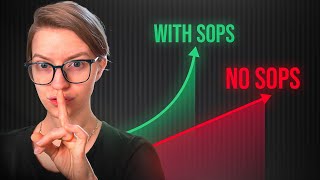
Sam Ovens explains why small business owners resist Standard Operating Procedures and how SOPs actually free up time and mental energy. He uses metaphors to show that systems let you focus on creative work instead of repeating the same tasks.
If you're someone who thinks standard operating.
Procedures are pointless, then what you're really.
Telling me is that the time and attention of the people in your business has no value. You see, SOPs are like recipes. They give you a series of ingredients, they tell you the steps to follow and make it really easy for anyone with reasonable skill to achieve a set outcome. And in my experience, a small business will have anywhere between 200 and 500 of these recipes. That is two Martha Stewart cookbooks. Now, could you just memorize the hundreds of things your business does? You certainly could. But there's a reason why baking and cooking competition shows. When they make people create things without a recipe, they call it a challenge because it makes things needlessly hard. Something you'd only really do for a TV show and not something you'd want to do for any other reason. Because why would you purposely make your life harder? That would be stupid. Because the more effort something requires, yes, you could do it, but it makes the chance of failure much, much higher. And why would you want to do when it comes to the work you do every single day? And this gets us to the heart of why the SOPs are pointless crowd are sadly mistaken. They think SOPs are about taking human creativity ingenuity and limiting it, boxing it up, saying, no, you can't do that, because that's not in the policy. Who would ever say that about following a recipe when you're cooking or baking? You wouldn't. So why would we believe this to be true when it happens in business? Well, I think it's because in some businesses, in some instances, there have been instances of limiting freedoms through standard operating procedures. But in small businesses today, that is a choice you are making. That is not the fault of the tool itself. That's like saying, hey, my food didn't turn out well. All recipes are terrible. Now, let's rewrite this script. I want you to think of SOPs as a way to take human ingenuity like this here, and channeling it. So to give you an example, let's pretend I'm here. This is me, giant ass glasses, right? I am trying to make bread, okay? Without direction and without a recipe. I'm going to start spending my time, my energy, my googling hours, trying to figure out all of the possible things I could need to know about bread. How much flour should I use? How much yeast should I use? What is bread? You know, I have to research all of these things that someone in the past has already figured out, but I don't know the information. So that's where my creativity is going. That is what life is like without an sop. You're resolving problems that other people have already figured out because you don't have a way to reference what their experience was. With an sop, we eliminate all this wasted time and energy and resolving of the same problems, and we focus all of that creative energy into one area that actually benefits from creativity. And newsflash, baking bread and getting the ratios to match. That's not something where we need to be creative and reinvent the wheel. Where we might want to reinvent the wheel and focus our creative energy is how do we braid that bread? What flavors are we going to incorporate? That's where our focus needs to go, not on resolving the problems that people before us have already solved. In this way, using an SOP is like standing on the shoulders of giants, if you've heard that phrase where we're building on the experience and the solutions from the people before us. And this applies to business as well. If I'm starting in a new role and I'm taking over the resolution of support tickets, that's me right here. Without any knowledge, I'm going to be focusing my energy on figuring out what people are asking, making mistakes, making assumptions. I'm just going to be guessing because I've got no context to build on. If you hire me as the person singularly responsible of customer support, you are basically taking your customer support area and making it a toddler again. Because I have zero years of experience in your business before that moment. If you take that same experience and you give me a policy binder, you give me an SOP that explains, hey, here's all of the best practices we've learned over the last 15 years of doing support. If I read that information, I can focus all my energy on the things that I need to focus on, like how can I make what's already working better? Or how can I fix things that aren't working, rather than resolving problems that you've already solved in the 15 years prior. And if that alone wasn't enough to convince you, when you have this kind of funnel in place, what you're getting from this collective knowledge of focusing people's energy. Going back to the bread metaphor, if I was working on my bread recipe, I did it all from scratch and it took me a year to get that recipe down. If I didn't write that down a year or two years later, when I decide to make bread again, I'm going to have to figure it all out again from Scratch. That's exactly. That is exactly what happens in your business when you don't write down what's working and you have to resolve the same problem. Next up, we have consistency. And you might be thinking, well, my business is creative. Why would I need consistency? Well, certain parts of your business, you want to be the same. You want brand consistency. You want consistent quality of customer experience. You want a consistent publishing schedule. The things of your business that need to be the same from time to time. It's a whole lot easier to do when you're not relying on people's improv and memorization to remember what consistent looks like. Now, last up, we have the delegation benefits. When you have this kind of focusing of people's time. Thanks to sops, letting people know where to put their energy, it is a lot easier to swap out who is doing a particular activity. And you might think, oh, my God, this is gonna be one of those things where you're like, we're gonna fire the entire team and delegate it all to virtual assistants. No, because we still need high quality creative focus in these areas. But I have to point out that humans are not permanent fixtures. We're not furniture. Okay, maybe we're like IKEA furniture that we don't. We don't last so long. But humans need to take vacations. Humans get sick. Humans want to change roles. Humans want a promotion. Humans want to change what they do each day. That kind of change is a lot easier to do when all you need to do is say, okay, well, John, you're gonn this SOP instead of Jane. Done. Instead of saying, sorry, Jane, I know you want a promotion, but we can't promote you because no one else knows to do what you do. So you're stuck here forever until you quit. Then we're in even more trouble. But we'll figure that out then that's not a great situation for anybody. So that's why this SOP infrastructure not only helps people who are currently doing the work by saving them time and energy, helping people who are maybe out of the office sick or switching jobs to have that freedom to continue to grow, but also ensuring that the stakeholders, the customers, the audience, the investors, that they get a consistent outcome. They can rely on all of this from a little of this, but to really bring this home, let me tell you a little story. The story is of a woman named Jane who was in charge of scheduling newsletters for her company. When Jane took over, she wanted a way of writing newsletters that could weather any weather. So Jane started recording what to do and do not. She wrote it in a document. It wasn't a lot. Jane called this document her secret, her recipe, her sop. And with its guidance, she made the company's newsletter error free. Jane's secret transformed the newsletter from something that was a bit of a mess to an area that her boss would mention whenever she wanted to impress. But one day, Jane was left with a difficult choice. She had woken up to sick kids, a sick house, and had lost her voice. Jane knew that same day the newsletter had to be sent. But Jane still called in sick because she was physically spent. With Jane out sick, her colleagues stepped in. They followed the SOP and made that newsletter neat as a pin. So if you find yourself questioning SOPs, what do I have to gain? Always remember the story of Jane. I think story time must come to an end because I can already hear the well, that won't work for me objections from our SOPs, our pointless friend.
But we're a team of creatives. SOPs are just going to restrict our creative energy.
Is that right? Well, okay, okay. Let's, let's, let's play this out. Tell me how creative you are with paying your taxes. Creative? Really? Remember, the IRS is listening. Tell me how creative you are with helping people reset their passwords. Tell me how creative you are with proofreading. You coming up with a new grammar rule each time. That sounds thrilling. How about onboarding? Are you just kind of improving each time around giving half the clients this stuff, the other half this stuff? No, you're not. If you have a creative business that's wonderful, that means the things that go into your business up here and the things that flow out down here rely on you having creativity in excess. You need excess creative energy to focus on that work, right? But the machine of your business, the things you need to do. Hate to break it to you, buddy. Whether you're creative agency or not, you've got the same things you need to do to run your business as the accountant down the street. In fact, ask somebody who monetizes. Based on the available creative energy your business has, you actually have a higher incentive than the accountant down the street to make sure your creative juices are not being wasted on these other areas of the business. Do we need to systemize how you come up with the brand concept? Probably not. But can we systemize everything around that so that clear flow of creative energy isn't interrupted and distracted by trying to resolve problems about this stuff? Do we really need to waste our creative energy on figuring out the more Clever way to say here's your password reset. Probably not. At least not every day, right? So in fact, as a creative business, or as someone with a visionary skew, or people who get distracted easily, you actually have a higher value associated with a systemization than the broker down the street, because your creative energy is what you're selling. So if you're wasting that on things that don't require creativity, unlike the accountant, who unfortunately no one's really going to notice that their creative energy is low for the day, it's going to directly impact your value generation. So if you are creative business, that's not an argument to not do standard operating procedures, it's an argument to do it. By the way, if you want some more examples of what these kind of mundane things in your business are, you can find our 109 SOP examples checklist in the description below. Just a long list of areas like this that you'll want to start systemizing.
But even if this is true, SOPs take forever to create. They're so not worth the effort.
Again, we're basing these complaints on facts that aren't really true. It takes me an average of 12 minutes to write an SOP, and I think you can do about the same. You can find out how in this video, or you can watch this other video, which we'll link after that, shows you how to do it with ChatGPT. Depending on whether you prefer to type or talk things out, those videos will be linked above and in the description below. But like, I'm sorry, that's just not true.
Yeah, but I tried this. I stopped my entire business for months and all we did was write down our processes and systems into dusty policy binders and it didn't do anything. It was just a giant waste of money and time.
You. Wait, you. You did what? Okay, I have to draw this. What you just told me is the equivalent to this. Alright, you're over here feeling nostalgic. You are hungry for pancakes and you want to eat ones that are just as good as the way your grandma used to make them when you were a kid. Fine. So you spend $10,000 to have your grandmother's gravestone engraved with the recipe for the pancakes. You waste an entire month's worth of business revenue on that for some reason. And then we're in the future. Now you're in the future. You're in your kitchen, you're making pancakes, and you're sad because the recipe for pancakes is all the way over in the cemetery and you're here in your kitchen, and you're sitting here thinking that the recipe itself is to blame, that recipes just don't work. Is that the right conclusion here? The fact is, it's not the recipe to blame for this grand scheme to not work. It's a bad strategy. That's not the best way to access a recipe in your kitchen. Instead, go with a cookbook and in a business application, set up some kind of digital repository of all your SOPs. If I had to name who's to blame for this grand scheme not quite working, I'm not sure the recipe or Grandma is who I'd be gesturing towards. So let's not take our anger out on old Granny or Granny's handiwork. We need a solid strategy when it comes to how we're writing down sops. If you don't have a good plan of action, you might also be going down this route in some way. I know I use this here as a prop a lot in these videos, but if this is what your policies and procedures actually look like, that's probably not a good thing, because this is certainly not very convenient either. If you want to avoid this nightmare and develop a strategy for building out systems that aren't in the cemetery, you can also work with my team here. We've got info in the description. This is what we've been doing for the last seven years. That way, systemization actually gets you where you need to go.
But if I create SOPs, no one's ever gonna use them. My team hates this stuff.
Yeah, I'm not really buying that. Because human beings, I mean, we are biologically evolved to like things that are easier and better for us, right? We're selfish and so people want to be lazy. And SOPs are tools that allow us to work less hard and get the same result. So if you're experiencing some bad mojo between your people and your SOPs, I mean, there's three things that could be the cause, right? It could be the people. Maybe when someone starts to work at your company, they go through some kind of genetic transformation, and all of a sudden they love to work super hard and they hate things that are easy. But that seems like the least likely cause. So what else could it be? Well, there's two other spots. The most common one, the SOP itself, the resource you've created for one reason or another, is not actually helping somebody be lazier, look better, be more impressive, be more successful. Odds are the SOP that exists is making one of these mistakes that I talk about in the video up Here, and it's not actually helping the person. That's why they're not using it. But if you're listening to this and you're like, no, no, no, my SOPs are amazing. They're super useful. I know that they will help my people look really good at their job while not working as hard. Then the other area we look at is right here. Does the person feel like those sops are for them? Does this person feel like they're an author of those SOPs? Are they being inflicted upon them? Does this person know about the sops? Can the person easily access the sops? That kind of stuff is happening right here. Between the SOP itself and this kind of marketing component of making sure people are aware of the sops, these are the two levers we want to pull if we experience any kind of pushback. Because, yes, it could be a people problem. In my experience, that is much less likely than one of these other two.
But my business is super new. We're still trying to figure out what we're doing. Why should we slow down to write a bunch of SOPs when we don't even know what we're doing yet?
Well, no, because. Well, actually, yes, I'm not used to agreeing with you, but for once I agree with this objection. Even though SOPs are wonderful and can be super helpful for saving your work, you don't want to save your work if you're in an expensive, experimental startup mode where you're still trying to figure out what do you want to do? What do you not want to do? Systemizing at that point will just slow you down. And because you're kind of scrapping things as you go, it's not going to provide a lot of help. But given that, how do you know when the right time is to start building systems? There are a few different ways we could shake it, but for you, I've got a helpful resource. It is a free quiz linked in the description below called the Systemization snapshot. Or when you fill that in, it's going to ask you some questions about your organization and give you a score that looks something like this. This will help you understand how systemized your business is right now. If you receive a score that is single digits or low teens, it's probably a sign to hit pause and circle back to systemization in about six months. If, however, you're in the 20s, 30s, 40, 50, 60s, 70s, if you're in that middle section, that's probably a sign that SOPs are going to really start helping you. But Whenever that time comes, you're going to want to come back to this video, rewatch this, of course, and then move on to this video on the end screen where I share my approach to writing SOPs in minutes instead of hours. So confirm you're ready for SOPs by taking that free quiz in the description below. See you in the next video and enjoy the process. Ouch. That's hot. Ow. Holy hell.










