ZenPilot’s Brand Update with Andrew Dymski
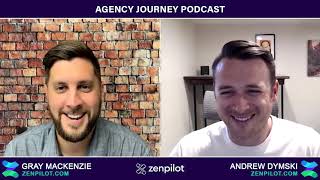
Gray Mackenzie and Andrew Dymski discuss ZenPilot's rebranding and their service model, which helps agencies optimize processes using ClickUp. They cover team roles, growth strategies, and current hiring needs.
Welcome to the Agency Journey podcast, where we connect with agency leaders to uncover the hidden systems and processes that drive their success. Now, let's dive into today's show. All right, welcome into another episode of Agency Journey. This is Gray mackenzie, and guess who's with me this week? We've got my business partner, Andrew Demski. Andrew, welcome aboard.
Hey, Greg. Great to be a guest here on the Agency Journey podcast.
It's been months since we've had you on the podcast, and I feel terrible, but you've gone. You've gone to the dark side. You're behind the scenes on everything. Anyone who's a client who's listening to this, you're like, oh, yeah, Andrew's all I know about Zenpilot. And anyone else who's not working with us yet, they're like, who's this Andrew guy?
That's very true. It's very true.
Well, I'm excited to bring you on and dig into, give people a quick update on the business where we are, some of the things exciting about Zenpilot moving forward. The podcast, I was called Agency Journey, but we're, you know, similar business model in some ways to an agency, but we're not marketing agency. But they get to hear a little bit of our journey, and folks have been listening since the early days back in 2015 and gotten to hear a lot of our journey. So we'll. We'll bring them up to speed on what's going on. Start with the most recent news, which is we just rebranded.
Yes.
You want to lay the context for the rebrand?
Yeah, absolutely. For anyone who remembers, we had a cute little panda as our icon before, and when I told my wife that we were changing the company brand, she was devastated. And she's like, I love the little panda. And she was trying to sell us on keeping the panda. But overall, we wanted. We wanted to have, like, a new feeling to Zen pilot. We wanted to have a vibe that brought a little bit more life, that's what we were going for, than what an illustrated little panda could bring. So we wanted to take on something that was a little bit more of a tech feel. And from our position, we always want to be pushing agencies to try new things and always be kind of on the bleeding edge of what's going on. And so we wanted our brand to reflect that. Um, so it's quite a journey from, like, concepting through to picking the winning design and everything. Um, great. You did a great job. Kind of leading point on who to work with on that. Um, and that was A A journey as well. Like just finding the right. The right partner to help us with the logo side of things. Um, we went back and forth on concepts, but what we landed on internally we really, really liked. It's been cool to hear the feedback so far on what we got there, so it's been good.
Yeah. The panda had such potential. We wanted something that was both playful and professional.
Yeah.
A mascot were on your side type of feel. And I think it wound up just being a little too cartoonish for the feel. I'm sure that logo and brand is one of those things that internally you stress about way more than anybody on the outside until you realize move forward. But it's our business that's a big piece of the value of what we do is how do we feel about what we're doing as well. Yeah. So I'm excited to get the new brand, get the new website out there. We had an outdated website that almost older. So I want to talk a little bit about what our servicing model looks like today. Give people a scoop in kind of the inside or behind the scenes look at how we're serving agencies. What are the. What are the challenges that we're helping them overcome and where are we focused? What does the team look like to support all that?
But I think that the whole branding journey and the website progress, it's the classic story of where you put your time and your energy. For the last year, year plus, we've been laser focused on optimizing our delivery model. And the website has been like it aspired to, mvp. It was very, very light, very, very vague even on what we do and how we do it. But I have enjoyed the process of really iterating on our delivery model first and then worrying about our messaging and our positioning and everything like that afterwards and just put in the customer first. That's been up in the past. I think we have obsessed a little bit about the language and how we want to word everything and the delivery models kind of followed that. And so flipping around this time has been a good experience. Feel like we're kind of in step with what the market's looking for at this point.
Yeah, we have grown. For anyone who doesn't isn't familiar. We've grown a ton over the last 15 months or so. The team, for a long time, you and I were kind of happy doing our thing together. Obviously before that we had a team, but then happy kind of doing our thing is in the consulting space and building super Lean. And as we've looked at what agencies need especially post Covid like there's a lot of folks out there who are. There's never been a better time to grow as an agency. Never been harder to hire. Time is the premium. Money is I think less of a premium than it's been. It's still obviously an important piece of the factor, but there's a lot of folks now who find themselves. I was just telling you that I had this conversation with somebody yesterday again. I've got all this money, I'm making way more money than I ever made before and I've never been this busy and I do not see a path to get out of it. So that ability to come in and help calm the chaos and give back operational control and structure and time the teams is really cool. So we've by nature of what's needed out there gone to ramping up the team as well to service on top of, on top of the expertise that we have. And that has gone really well. So we've grown a lot. So the, all of our marketing is still way behind where we, where we are, but we're much, much closer with the website redesign. So I want to let you kind of walk us through the way that we're servicing agencies now and the core pains that we're solving and then the way that we are solving that.
Yeah. So everything that we're doing right now is focused on getting your agency processes clarified and getting visibility into what your team needs to be what your team is working on. Like what, what's the resource allocation load on the team right now? That's kind of the, the end state that we're trying to get to is get you into a place where you can have visibility as agency leadership, into what's on the team's plate right now, visibility into how much work you're doing for each of your clients and standardizing how, how your team delivers those services. And we're using ClickUp as our primary backend pm. And the journey that we're walking agencies through to get to that outcome starts first with a blueprint. And so this has been like a usually a two week process where we're digging in with an agency to get to know their pains, to get to know their current tech stack, get to know even outside of project management, where have they been, where are they now and where are they trying to go? From a team perspective, a client load perspective, revenue perspective, we want to know kind of the ins and outs of how the agency is wired right now so that we can give the best operational advice moving Forward. So our whole blueprint process is just geared towards helping an agency get the map set up. Essentially, how do we want the project management system to be organized? How do we want to make this like future space look and perform once it's built in, in the wild? So many people start a new software by like just testing it out. They want to open up a space, they want to sign up for a free trial and just start plugging stuff in there. And that works great for a few, few days, a few weeks, because the team is kind of enamored with new features. But after a while it loses its luster because there's just chaos in there and things are kind of disorganized. So just like you should start a marketing campaign with a marketing strategy rather than just, hey, let's jump into HubSpot or WordPress and start building out a site. You should tackle your PM the same way. So we do that blueprint first. And that's been a big step to like get the strategy set and kind of have a clear picture of what we're building before the, the team gets jumped in.
That system design phase is new. To take that and split it off. And we're going very much back to the roots of what we finally figured out at Guava Box. Okay, let's sell a game plan, then sell into that retainer engagement or then sell into that website project. And so this is similar where we're reducing, hey, you don't need to go in and trust us, right? Like, we're gonna go in with a low barrier to entry model that gives us both a chance to vet out what it's like to work with each other. But does the work that you need to do, regardless of how you're gonna implement this, to design what your actual implementation looks like? And that's, that's the piece. Obviously there's outcomes that we're moving towards here with the focus on ClickUp. Like, we're really helping agencies build more productive, profitable and healthy teams by streamlining their operations in ClickUp, by giving them that single source of truth, that clarity for everyone, clarity for the individual contributors, for the team managers, for the leadership team that enables profitable, better decision making and allows you to deliver consistently better work faster as an agency. So that blueprint piece can be in the first piece. Walk us through the average kind of what happens after. I sometimes get like, okay, so we do that. Then are we in a retainer? Are we on our own? Are we working with you guys?
Yeah, so we start with that blueprint that's your strategy phase. We then move into an implementation phase. And so there's a couple different options on how you deliver that implementation. From our side, we wanted to give people options of like we can do it for you. So that, that's going to give you the, the fastest uptime there. We're going to use templates, we're going to interview your team, like we're going to get that, that system built out as fast as possible off of that blueprint model. The second one is we're going to guide you through the process. So your team, you're going to have a core implementation team inside the agency. Our team is going to guide you through a 10 to 12 week process where we're basically your coaches moving through it, teaching you each week, giving you homework each week, following up on that homework. But you're divvying up the work amongst the team and kind of delivering it out together. And we've seen great results in that model because there's, there's great skin in the game on both sides and there's opportunity to ask questions that are kind of unique to the agency, like within the structure of that process. And the third way to move through the implementation is basically a you do it yourself path where since we've been able to do this for hundreds of folks at this point, we've consolidated this down into a proven methodology in training and in template and resource. So we're able to guide through in that way the same process. But it takes a self motivated agency, we could say, to implement that much stuff in that period of time. So those are kind of the three different models that we've played with at this point. Um, and the, the more we focus on the core problem, I think that the more optimized that path becomes. Um, and that's been really cool to see that the more, the more times you run a process and repeat a process from the delivery side of things, the sharper the team gets and the more pointed your advice can be. Sometimes the more opinionated you become and why certain things are set up the way they are. Um, but each, each implementation like you're, you're doing more to solve the problem. Um, which has been a great experience since each, since each process looks the same. Like that's that level of standardization and you go back to our, the old manifesto when you, when we dig into like making the hard decision first and who we want to serve and how we want to serve them, that really sets the table well for this blueprint that is kind of Your foot in the door, get to know each other and then in implementation with varying degrees of touch in terms of how deep you want to go with each other is very, very efficient and very, very profitable for both sides because you're able to get up and running very quickly.
That average in two to three month implementation window for agencies and there's some that take longer, there's some that can move faster, but most folks wind up kind of in that window to make this change. There's a lot of pieces that move into that. But I think the coolest part from my perspective, and we didn't really talk about our roles but I'm going to share how we've divvied up running the company but from my perspective, to see just the work that as a team we keep putting into improving the core asset. There are so many pieces because we're focused on agencies, because we're only servicing on top of ClickUp that just gives us the opportunity to be. We're ClickUp's largest implementation team. Today we get more reps than anyone else we've solved. You know, like if you can't, if we can't do it, there's a good chance it's, it's going to be very, very challenging to do in ClickUp if not impossible.
No, it's impossible. Zimpil can't do it in ClickUp. It's impossible. That's the, that's the team mantra.
So but those reps and then seeing just hundreds of agency processes every week and helping teams improve it and getting the feedback and measuring the data in terms of what that looks like allows us to build these repositories from a training side with our project management certification that we've had thousands of people enroll in and go through on a team training perspective to our templates. Here's what your template looks like for this or hey, you need this functionality and we've got pre built plugins basically now that we install and customize to the specific use case but we're not building from scratch every time. That's been the coolest piece that allows this value to get created. And so I want to share this a so people know what we're up to. But also because I think every agency can take this and apply this in ways internally too. That value that gets created by being able to deliver the desired outcome, the dream outcome that people have with a very, very low risk. There's plenty of freelancers and consultants and folks you can go talk to on the ClickUp side. To go do implementation together and you're just bearing, you gotta be okay with saying, hey, I'm okay taking on higher risk that this isn't the right way, or we tear this down because they don't specialize in agencies or they haven't run this problem before, they haven't worked with a team like this before. But by being focused in that way, having those assets, we're able to deliver a ton of value at a very high level of certainty for folks. And that's feedback that we hear is like, hey, I realized if we get this right, it's worth whatever the investment is to get it right. So the thing to optimize for is like, let's make sure that we go with the highest probability that this is the right way to solve the problem. And going back to hiring, go find who, not how. You don't need to know how to do it all. You need to find the right person to give you that outcome. But that value that gets created, we're able to capture a piece of that. So both the agency gets to create extra value, our client because they don't have to pay full price to develop it all. But we're able to capture extra margin because we can charge for the value, some of the value of that work created instead of just the hours that go into creating that new every time because we're not focused or we're in ClickUp today and teamwork tomorrow. We're working with agencies today and we're working with SaaS, businesses and manufacturers tomorrow. So that's been really neat to see that evolve in part of this. That's the implementation phase. There's a lot of reusable assets and the benchmarking that happens in the blueprint phase, awesome to see. And the data that we've gathered there is insane. But from an implementation perspective, how fast we can get people rolling because of those pre built assets is awesome. And I don't want to cut you off from continuing kind of the third piece of our engagement models beyond the implementation then is the support side. What does that look like?
Yeah, essentially once you have your system set and once you've built out all that you need, you set your system from a strategy side, you build out all that you need from an infrastructure and setting up clients and getting templates set and you've trained the team on how they're meant to engage with that. That's kind of the three legs of the stool that we want to introduce inside of our implementations. When those three things are in place, that Kind of gets the flywheel turning and that's when we get into our ongoing process improvement steps of hey, we need to improve the templates that we started with. We need to add templates that we're missing, we have fixed templates that are broken. We need to engage the team and hear and hear their feedback on how things are going. We need to bring in different areas of the agency that we didn't get to in our initial implementation there. None of this stuff is static and so we want to be your support through that whole process. And we launched our elite support retainer out of this to be a to help you keep the mundane things going like your weekly spot checks, your monthly optimizations. Zenpilot can step in and do those things for your agency so that you keep thinking about what you need to be thinking about. And we can help you stay accountable to the framework that, that you've decided you want to implement there. But in addition to that, as you have ideas, as you have new problems that you're trying to solve or new things you want to bring into ClickUp that might be an external tools now access to our, our add ons, access to our team to help solve those problems and bring those things into your system to be kind of the like the SEAL Team 6 of the ongoing agency ops. Where were your go to there to be that that support? Because not only are your systems not staying static, like they're going to update every time you tweak what you do for a client or whenever Facebook makes a change, your processes need to change there. As a simple example, at the same time you're bringing on new people and ClickUp is changing and like it's the, the stabilizing force to have this, to have a team at your disposal to be able to get in what you need into the system to get consistent reports out of the system and help hold your team accountable to make sure that once they're all set up that everyone's doing their part to make sure that we've got consistent inputs into ClickUp. One of our mantras, if it's not in the system, it didn't happen. So if we're operating under an environment where some people are putting their stuff in, some people aren't, then the data is just useless and it's not helpful for anybody. So if we want it to be, if we want to be able to extract meaningful insights, to make hiring decisions, to make growth decisions, we need to make sure that people are accountable in inputting the right things. That's a Lot of work. There's no way around it. There's a manual step to behavior change, getting the team to adapt to that. And that's one of the ways that we want to support agencies kind of on the back end of an implementation. There is to make this, this, this PM switch. This one's going to be sticky. We're gonna stay here and we're gonna make sure that we get the team to adapt and pick up the healthy habits that they need to do their job well and to service clients well.
That's been super cool to see. Just giving agencies the ability to get back to revenue generating activities what they do best on an ongoing basis. Hey, we'll, you know, we'll give you the, we'll do the reporting for you. We'll go and do the review. You're still going to need to deal with the implications of that. So if you get somebody who consistently won't follow up and won't follow guidelines, ultimately we don't have the authority to fire them for you.
I've had people ask for that service to be added, so that's another conversation we can have. Now if you need Zenval to fire people for you, we can.
Firing as a service. This will be fast, but that's been really cool to see. And on the back end, there's a lot of folks who continue working with us directly out of an implementation. Other folks who go and they're good for three months, six months, good for, good to run for a year, year and a half, whatever. But to have that piece, that's been the piece of the puzzle that's been the most recently added. Even our community, I think, I don't know. I'm sure that there's plenty of other models or other businesses that have that, but just don't see that many in the agency space where it's like it's a paid community but it's only available to customers. If you've gone through this methodology implemented this way, you get access to this community of lead operators.
Yep.
And having those resources now available, obviously there's still tons that we can do to keep building that out and approving that and making it easier and easier. And there's a whole element of automation. We were doing a webinar earlier today. Like I get the process right, first do a bunch of this stuff manually and go automate it. There's so many things that I'm dying to automate, but we just need to keep, keep running and improving it and then we'll slowly start chipping away at automating more and more of this. But that's been really cool to see evolve over the course of this year.
Yeah.
From a role and team perspective, when you share kind of what your role looks like internal, we'll share kind of our division of labor. Talk a little bit about some of the opportunities here at Zenpilot right now.
Yeah. So simply put, Gray takes care of everything pre sale and I take care of everything post sale. So I oversee our client delivery team. On that team. We've got client coaches, we've got ClickUp solution team members, we've got customer support specialists, we've got kind of all hands on deck there to take an agency and walk them through that process. As most small businesses go, I'm not just sitting in that top seat. I sit in the client coach seat at times. I sit in the like the blueprint strategist seat most of the time. So when a, when a new agency comes in, I'm the one kind of building the strategy in the trenches with them and then working with our delivery team to build out that strategy and make sure that all the outcomes that an agency is trying to seek are covered inside that build. And so my day to day is inside, inside agencies of various different niches and verticals and sizes and kind of learning the ins and outs of their challenges and their pains and, and laying kind of the path out to then move them through our proven process with their custom plan in play. And then Gray, on your side, I'll let you take over. Like how do you get people to my door?
Yeah. So we're running, I'm running the growth side of the business and then handling some of the back end ops. But from a growth perspective, we have invested a lot in a couple of things. Obviously over the last six years we invested a lot into content marketing and that's still kind of the main philosophy that drives a lot of what we do is give, be helpful, produce content, share what we're learning, share what we're doing. And a percentage of those people will see that. Hopefully everybody sees it and appreciates it. I realize not everybody is going to appreciate it, but the vast majority of people and we get a ton of that feedback from posts like the definitive guide to ClickUp for agencies and the webinar that we do with ClickUp and other webinars that we've done. So we put a lot into the content side. There's a whole opportunity there to get better and there's a whole marketing role that we're staffing for we'll talk about hiring here in a second. And then obviously the sales side. So the sales team this year has gone from being me to being being me, plus Brandon and John, so plus support staff as well. So we're a team of three and a half, four right now on the growth side, building largely inbound leads the other, the other channel that we've built out and I've put a lot of time into. And this is something for agencies to think through. I know Pete Caputa at Databox has preached a lot about this and. But we've really invested in a lot of relationships and done in a number of cases. I think of like Jeremy Wise at Rise 25 worked with them through a click of implementation. He is an amazing voice on our behalf now in the marketplace. So someone who's gone through, who's experienced the transformation firsthand, but then being able to talk about that and willing to do that, so that's an area that I'm continuing to build out, is how do we be a better partner for those partner channels as well. Pete approaches it largely from a software perspective. How do you be a great partner from a ClickUp side of things? I want to be that partner that's so amazing that when Zeb gets a text from me or gets an email from me. ZEB Evans is CEO at ClickUp. He goes, oh, good, this is from Gray, not the partner that it's. Here's another complaint because there's a bug in the software. There's an issue and some of that is delicate because ultimately we get paid by our customers. So the reality is there's bad news that sometimes has to be delivered to ClickUp or has to be delivered to a partner that you're reliant on. But I think that there's still an opportunity there to build a really strong relationship and strong pipeline, a partnership perspective. So that's kind of on the growth side, what we're focused on. And then from a recruiting perspective, which you and I both spend time on, and that's been a big push here. This year, continues to be a big push. We've got a handful of positions that we're hiring for and I wanted to point people to what those are, kind of give them a quick overview. If you know somebody, if you're listening right now, you know somebody, certainly if you are somebody who's interested, love to hear from you. But if you know someone who might be a good fit, maybe we could start here, Andrew, just with generally the type of people that we're looking for. And then let's talk some specific positions. I can share those. But do you want to talk about what we look for in a pilot?
In a pilot on the Zen Piling crew, we're looking for the entrepreneur, like the person who has a bias for action and is always looking for the next problem to solve. We're looking for someone who's enthusiastic and has kind of a. On a, on a tight team, is a good teammate and is a humble and honest and hard working team member. We're looking for someone that's curious, that cares about clients. Whether you're on the sales and marketing side or you're on the delivery side. You've got to have like a real passion for helping people do their job better. Like just that's the simple cut of it. So a heart for people is really important. There's. But we love that entrepreneur because that kind of covers a lot of the covers a lot of the basis around what do I do when I don't know what to do? Like I'm going to work to solve the problem. Whether that's collaborating with team members, whether that's going out and learning and trial and error on your own. That's what makes our team great right now. And that's what we want to continue to grow into, is those type of selfless, humble folks that work hard to service clients and work hard to help each other do our jobs well. And it's cool when you get people together who share that mindset like it's a fun ride and you get to build really cool things for clients and build really great relationships. We're 100% remote team, but it feels like a family in that sense because we're all united in that pursuit of excellence for our clients and for just our workplace environment together.
Looking for people who are humble and hungry. And I'm always a little bit nervous to say the word hungry or driven or self motivated because I think I and this might just be the types of folks who have been around, especially in the software space too. A lot of times I think that can be a veiled way of saying you're going to come in and work 78 hour weeks. We hope you're really hungry, double hungry in fact. Because we expect you to work nonstop and it's, it's not that I think we've got a bunch of folks who've got young families and yeah, enjoy kind of the flexibility that comes along with, with being a remote team that's working the way that we work with the types of clients that we work with but hungry humble in the sense of we got to solve the problem and if we're wrong in our first attempt, like assume that there's always a better way different things than what we've done it to clients. And it's one of the coolest pieces of feedback. It's clients are like this is mind blowing. This is like level 10 stuff. And in our heads internally it's like this is so far away from where we started but this is so far away from where we're going. There's always that journey of you think this is good now give me three months. And so that mindset and hungry to get to that point of I can see it. I'm chasing that. That future where there's a better way to do it and I'm willing to jump in and do what it takes to get to that point and accelerate that journey as much as we can. So from a growth side I'll start there a couple roles on the sales side, we are looking for folks in the sales role. So that role really looks like an agency advisor. Somebody with strong agency experience who has a heart for. I feel like consultative sales gets overused but for understanding what's the true problem. And really what you're trying to understand is what's the gap between where this agency is and where they want to be. What are the pieces that are needed to solve that gap? Where do we fit into that? And is now. Do we fit into that? A is now the right time? And then did they need our help and do they. And do they want our help?
Yeah.
And bring them through to that point. And so it really is a. It's not a high pressure sales role. It's a. Brandon just had a call with someone who's like this has been so helpful. Your boss needs to give you a raise and leaves of OMA for sales recordings and stuff. And that the feedback when people had such a positive experience talking with you. Yeah, that's encouraging. And if it was just that and there wasn't any revenue to go along with it, well that's not. That's not good enough. Things are there like that should be the way that this goes is we serve people super. You know, sales makes the promise that delivery has to keep and you can't sell beyond what we're doing. You have to be honest with people in the sales process and communicate clearly. But they also set the expectation of what it's going to be like to work with us. We are not going to be. We're going to be punctual and we're going to be detail oriented and we're going to make sure that we get things right in the delivery process. And you're going to get the best advice in terms of how to scale your agency and the right expertise and the right level of service. We're going to reflect that same thing on the sales side, but from marketing. Probably higher priority even right now is this marketing. I don't know what to call this marketing coordinator role. Marketing manager. What you're managing right now is largely me and a few contractors, but to help produce our weekly dispatch, to help make sure the podcast gets out on time to produce new content and then leading some of the channel partnership stuff. If we look at the marketing role, I will probably always have an advantage over a marketing hire in terms of building new channel partnerships because there's an inherent advantage that I think we all need to acknowledge as entrepreneurs that we have where, oh, it's the owner of the business who's reaching out to set this up, deserved or undeserved, that carries a different weight with it. But from a content perspective, I don't have that same content. The information wants to be free and the person who produces that information, that can be better information than I can disseminate even from somebody else. So that marketing role, who's an experienced content marketer who wants to ramp us up significantly from a content perspective is higher on the growth side as well. Talk to us about the We've got a couple exciting roles on the delivery side.
Yeah. So we're looking for additional client coaches which is going to be the role that kind of leads our agencies through our implementation process and then provides that kind of the hands on support after an implementation there. So that's a lot of communication, it's a lot of understanding kind of overall agency processes, how they service clients and the ability to manage their timeline because you're their coach, because you've got to keep them accountable. That's a large part of what we want to provide folks. It's not just a proven process. Not just hey, if you build it, they will come, but give give teams kind of the accountability to get the work done. So that's a role that we're looking for. We're also looking for ClickUp solution engineer positions. If you love ClickUp right now and you're just nerd out inside that platform and you want to take your skills to the next level, contact us and let us know because you got the opportunity to work with us kind of in the Trenches kind of standing on the shoulders of people who've solved some big problems before and want to get better at solving those folks. So those would be the two big positions on the delivery side right now?
Sure. The one, the one other piece to mention as well would be automation engineer. We're super early in putting this one out here, but hiring on kind of automation side, make all these different apps talk to each other and develop internal tooling. So all those are some of, some of the open positions that we have right now and we're recruiting for. If you're interested, you can email me directly raynot.com or you can go to careers.zom and apply for open positions as well. And the last thing that I wanted to throw out was as we're recording this here, middle of September of 2021, we're jumping into what's always the busiest time of year for us, Q4 through the end of Q1, we've got kind of in the past couple years here, a full pipeline, nonstop. But this time of year is always big as people realize, hey, I need to get geared up. I need to get this stuff in place for 2022 and December, like November, December, January, kind of the three highest points there. So I would just encourage you if you're interested in having a conversation with us or you want to get started on it internally, if you're going to tackle it on your own, start thinking about improving the way that your agency operates and get a head start that for 2022. Set yourself up moving into a new year. You're going in with the right framework and the right pieces in place to ramp up from a services side as well as from a sales side. And we've got a number of partners who we work with. If you need help on the sales side, happy to talk to you and make a recommendation. If you need help on. That's the cool thing about being in the agency space here for eight years is you've got a got a well rounded perspective. So if you want to reach out, go to zenpilot.com, click on the book a call link in the header or most of the places throughout the site and you can book a call with us. Happy to chat with you.
Yeah.
Awesome. Anything else from your end, Andrew?
Been fun to be back. Long time gap on the podcast. Hopefully it's not this long for the next one, right? Yeah. So appreciate that. Thank you for the invite here. Grace, man, it's been a pleasure to join you on the Agency Journey podcast.
Awesome. Cool. Well, we'll let everyone get back to it. Appreciate your time. Thanks for joining us this week. Keep on rolling.
Cheers, guys.
Thanks for listening to the Agency Journey podcast. Visit agencyjourneyinsiders.com to join the podcast community and be sure to subscribe for future episodes.










