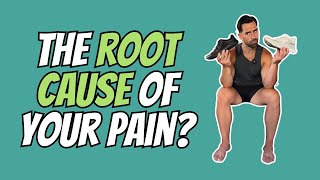
In this instructional video, Glenn Dawson of Reset U Fitness explains how many common pains—knee, hip, and lower‑back—can stem from ankle mobility problems caused by inappropriate footwear. He walks viewers through a quick side‑view squat assessment (with and without heel elevation) to diagnose ankle restriction. Dawson then describes how modern shoe designs—excessive cushioning, elevated heels, and narrow toe boxes—tighten the Achilles tendon, limit toe splay, and diminish sensory feedback, leading to altered biomechanics and joint stress. He recommends a progression of footwear: first switching to neutral, stable shoes with uniform sole thickness and a wider toe box (e.g., Reebok Nano, Nike Metcon), then moving to minimalist or barefoot‑style shoes (e.g., VIVO) that allow natural toe spread and provide ground‑level proprioceptive input. The video concludes with a call to action to replace “puppy shoes” with more functional options and to like, subscribe, and check the description links.
Chapters
In this video, I'm going to show you how your knee pain, lower back pain, hip pain could all be coming from your shoes. Hi, I'm Glenn Dawson with Reset U Fitness, and if you're suffering from pain, pay attention. We're going to do a quick assessment to see where the pain is coming from, and if it is from your ankles, you're going to have to toss these shoes away. So the first thing we're going to do is a quick assessment to see where your pain is coming from. Now at Reset U, we do this weekly with our clients to figure out where their muscular imbalances are. 95% of them have an ankle issue. So I'm going to let you know, this is probably you. It's very simple to do. We're not even going to use a broomstick for it. We're just going to do the squat test from the side. I want you to videotape yourself. Put your hands at 90-degree angles like this. Press them over your head and then squat just like so. Now, most of us are going to squat and hip hinge, bend at the waist, and you're not going to get very deep. That lack of depth shows you that you have either a hip mobility issue, which is going to cause lower back pain and knee pain because there's too much pressure on these joints, or an ankle mobility issue. Now, if that knee doesn't travel over the toes like it's supposed to, or maybe it travels inside the toes, that's going to cause a ton of dysfunctionality in the knee and in the hip. And it all comes from this ankle here. So to figure out if you have that issue, You're just going to do before and after you do your initial test, and then you're going to elevate just your heels with the books like so. Now, when you squat, if it gets better, it's easier for you to squat deep. You don't lean forward as much and you feel like your hips are looser. That means that you are like the 95% of people that we've seen at ResetU that have an ankle mobility issue. Now let's figure out why that is and what shoes are best for you. Now let's talk about the shoes. From a very young age, most of us are put into shoes. Now our feet are like this weird muscle that's supposed to be more like a hand or like a monkey paw that grips the ground and stretches out. And our toes are actually supposed to stretch out too and look kind of like this. Most people's toes don't do that. They're all crunched together because the tip of the shoe is pressed together. And on top of that, it's got so much foam on the bottom. And then the back end of the foam is bigger than the front of the foam. Now, this was popularized in the '60s and '70s, and they're building running shoes and they're like, oh, if we can get them to go push from the front of their toe and make them faster. Because when you sprint, you only use the front of your toe. But then we're walking around in these shoes, moving around in these shoes, or you wear high heels to a dinner, or you wear cowboy boots because you grew up on a ranch like I did. And what that does is it tightens this Achilles tendon because the heel is elevated. Now, once that's tightened, all of the pressure goes to your knees and it shifts everything forward, and then it takes away your hip mobility. All of that just because the shoe is padded. Now, this can cause a ton of different dysfunctionalities, and you may even have somebody tell you you need insoles because you're not stretching in your fascia. It's terrible. So what do I recommend? The first step is you could go to a barefoot shoe. It's very aggressive like this. But what I would recommend, if you have something as puffy, like basically you got like marshmallows on your feet, is go to a more neutral-based shoe. Now, this is a CrossFit shoe, a Reebok Nano. There's Metcons by Nike. There's a ton of them. But the cool part is if you smush both ends, it's relatively the same thickness. So that's the same thickness all the way through. And then the toe box is actually wider. So if you look at the bottom of the shoe, you see how this has more room for your toes to spread. Now that's going to cause stability in your foot and allow your toes to actually grip like they're supposed to. It's also going to increase your deadlift, your squat, everything, and take away a lot of knee pain and lower back pain. Now, once you've done that, the next move would be like this VIVO barefoot shoe, which is basically just some rubber attached to the bottom of your foot, and it's got a wide toe base. Just like so. So this one smooches your toes together. This one allows them to spread apart. That's very, very, very important. And then you also have, because it's such a thin piece of rubber on the bottom, you get neurological feedback to your foot. Imagine if you were like a cheetah and you were trying to learn how to run, but your entire life you had oven mitts on your paws. It's going to be difficult for you to figure out how to, like, place your paw, how to move, how to run. It's the same thing for us. If we're putting huge pads on our feet, we have no neurological feedback. We're not getting any information back from the ground. So you lose a lot of stability. And that's where a lot of knee pain comes from, hip pain, knee injuries. So once you've done this, move your way to this and you'll thank me later in the comments. Section. We've got links to these shoes to help you guys out. Now, if this video brought you value, make sure you like, subscribe, share it. And if you have these puppy shoes, get rid of them.