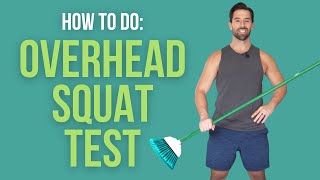
In this promotional instructional video, Glenn Dawson of ResetU Fitness demonstrates a low‑tech, at‑home assessment called the "broomstick squat test" that uses a broomstick and a smartphone video to reveal muscular imbalances and joint friction that cause chronic pain. He walks through the exact recording setup, shows how to interpret front‑ and side‑view squats, and explains how the observed patterns (e.g., shoulder elevation, hip twist, ankle stiffness, quad‑dominance) inform a personalized corrective program. The video intersperses multiple client testimonials—Nanette, Don, Ximena, Amanda, and others—detailing rapid improvements in mobility, weight loss, and pain elimination after 2–6 weeks of the program. Dawson emphasizes that while any therapist could restore joint range, true pain relief requires activating stabilizing muscles, which ResetU addresses through daily mobility, activation, and stability work. The narrative concludes with a call to action, positioning the broomstick test as a simple gateway to lasting pain‑free movement.
Chapters
Glenn Dawson here with Reset U Fitness, and I'm going to show you today how we use this household broomstick from your living room, diagnose your pain, and get rid of the muscular imbalances that are causing it. Just like this.
6 weeks in, like it was gone. I don't even recognize myself. How you got there, I don't get it. I just know that it works. You take an overhead squat video and you're like, oh yeah, your posterior chain's messed up, or your hips are out of alignment, or whatever. You're like, I know how to correct that. Break it back down and then build it back up. For someone to go figure that out on their own, Good luck. I mean, might as well take the shortcut.
I think by 2 weeks in, I knew that it was going to work, that I don't have to go to physical therapy twice a month. I feel like the program has really given me freedom.
4 weeks, you know, I've gone from misaligned and inflexible to aligned and a lot of mobility coming back, starting to be able to do back squats again. And somebody do, you know, 3 reps of squats from the front and the side. That's, that was kind of like voodoo. To me to be able to see that and go, oh, it's this, this, this, this, and this, and this, this, and this. In 4 weeks, you know, I've gone from misaligned and inflexible to aligned and a lot of mobility coming back, starting to be able to do back squats again.
Now, if you have a broomstick and a cell phone, we can literally figure out your muscular imbalances using our broomstick squat test. It's something at ResetU that we've developed over the last 8 years using physical therapists, functional trainers, Certified personal trainers, you name it. We've literally put everything together in this program to make sure that we hit every single detail of your body from this simple test. How do you do it? This is all you do. Take your cell phone and you hit record with your cell phone in portrait mode. That way we can see your whole body. Step back so that you can get your feet into the frame. Put the broomstick, make a 90-degree angles with your arms, put it above your head. Squat 3 times to the front and then 3 to the side. Now, once you've done this, we can literally see every single muscular imbalance from your body and create your program just like we did for Nanette. Now, this first squat on the left is Nanette when she first squatted with us. This is before she lost 100 pounds and gained her mobility. As you can see, her left shoulder is really, really tight. Her right shoulder is elevated. Hips are really tight, which creates a lot of tension on her lower back, and that's where a lot of pain came from. And her knees just don't have the bend that they should as she squats. There's a lot of tension on the knees coming from the ankles as well. Now in this second video, you can see her posture and her overhead is much better. Those— the chest is open, her shoulder stability is much better. There's literally no pain in those shoulders anymore. She can also squat to parallel. Her knees are moving out functioning correctly and there's no knee pain. Not to mention, obviously, the woman has lost a lot of weight. This is what we do in our program every single day.
My first squat. But when I went back and looked, you know, I may not be young, I may not be the perfect body shape, but from where I was to where I am now, it, it's amazing. And being someone that's been big my whole life, looking at someone that is fit and then tell me that they did this or that, sometimes it's like, yeah, sure. But when you see someone that's big and you watch them slowly change, then you can honestly say, hey, that, that could be me. I can't— in pain every day. It's, it's not a life, it's an existence. And now I can—
now this next video is from Don. As he begins to lower in his squat, his ankles come off the ground, so he has a huge ankle mobility issue. You can also visibly tell that the left shoulder is elevated. Both shoulders are pulled forward. And yes, he's wearing jeans doing this. You don't have to wear a special outfit. And his hips don't go below parallel, so he's mostly quad dominant, chest dominant. And all of this is happening at the same time and causing pain in the lower back and the knees and the shoulders and neck. And here's his latest video. As you can see, he can squat all the way down and keep his heels on the ground. So he's able to access his glutes and hamstrings now. On top of that, the lower back pain, the knee pain, all has been shredded away. His upper body posture is much better, and now he's getting cocky, not even having a broomstick. Now, as you can see, this video is not perfect. But it gives us enough info that we can construct his entire program from it.
Like, I knew that you could design diets for people, but I didn't know like, oh, this specific stretch is for your hip because your shit's jacked up. Been more active since then. Most importantly, my back doesn't hurt, so I sleep a lot better. My flexibility and movement has drastically changed. I can dance better, I can live better, I can do anything I want.
This next video is Ximena. As she sets up, you can visibly see her right hip in front of the left hip, which means her pelvis is twisted. She's also very, very tight through the hips, so she leans forward in her squat. Left shoulder is elevated and left hip is elevated. As you go from the side view, you can tell she's got a lot of ankle stiffness as well, so most of her motion is going to the front of her legs, her quads. So she's quad dominant, chest and shoulders are dominant. So we would build a program set up to specifically work on opening those areas open the tight groin and hips and get her to work and access those back muscles and glutes and hamstrings. Here's Amanda now, easily dropping down into her squat. Heels can touch the ground the whole entire time, and now she's using her glutes and hamstrings. With this valuable data, we can easily create a program for her to stabilize her muscles and get rid of the tension in the joints.
If you're— if you're killing yourself and it's not working, Obviously it's not going to start working, so get somebody that can get your results.
Now, if you have a broomstick and a cell phone, that's enough to figure out exactly what muscular imbalances are causing your pain and get rid of it for good. Remember, pain comes from friction in your joints and ligaments. Getting rid of the friction is easy. Any physical therapist or chiropractor can do that just by creating movement in the joint. But the real nitty-gritty comes comes down to activating those muscles and creating stability. And that's what we do in our program. See ya.