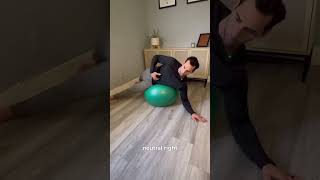
Three moves to level a high hip caused by tight hip flexors or quadratus lumborum. A hip-flexor lunge on a foam roller, oblique crunches on a stability ball, and a pillow under the high hip while you breathe and tighten your abs for 30 to 90 seconds.
Chapters
If you feel like one hip is higher than the other, a lot of times your QL or the muscle behind the hip that's pulling it up could need a good stretch. What I'm going to do is a hip flexor lunge stretch, go into the stretch and then use my foam roller here to kind of balance me and extend my arm up, creating a long line of tissue here and then crescent over just like so. Do this 3 to 5 times till you feel a good stretch. And then on the next exercise, we're going to focus on stability. So this move is an oblique crunch using the ball. You're going to stagger your feet like so. The hip that's on the ball is going to be the hip and the leg that goes forward. Now from here, I'm going to stagger my feet. The bigger the width back and forth, the better you will get for stability. And you want stability. Always put your foot on a wall. Now, from here, I'm going to go to neutral. So neutral would be if my hips were in alignment with my spine. You can use the ground here and post up with your hand if needed. Now I'm going to stretch this top part out over the top of the ball and then flex my core, my abs, and come up to neutral right here and hold back and forth 5 times. Until fatigue. The last way that we're going to stretch out this area is you can use a decorative pillow. I'm going to lay on my hip on top of that pillow just like so, bend my knee up, slide down and lay down. And then from here, all you have to do is breathe. So you're just going to inhale, tighten your abs, exhale, let this hip drop. Do this for 30 to 90 seconds. Either one of these moves will help you drop that hip down on your own without having to go to the chiropractor and have them pull your leg.