Short persuasive speech promoting collective climate action by individuals, communities, businesses, and governments. Recommends phasing out fossil fuels, adopting renewable energy (solar, wind, hydroelectric, geothermal), reducing car dependence, supporting sustainable consumption (reuse, reduce, recycle, buy second‑hand, avoid fast fashion), encouraging youth engagement and STEM/STEAM education, and making climate resources and education accessible to younger audiences.
Chapters
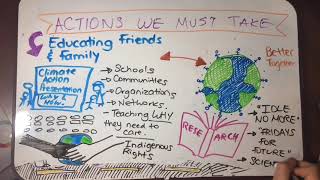
Our Earth is essential to all of us. Individuals, communities and businesses must take action collectively to reduce their emissions and use renewable energy sources. To begin, we must stop the usage of fossil fuels like coal. It is unsustainable, very polluting, often involves poor working conditions and wages. Instead, we need to use renewable energy sources such as solar, wind, hydroelectric and geothermal energy. Tesla is an example of an electric car which is more sustainable. People should be less dependent on cars and instead walk, bike, take public transit, the train, travel by boat or do carpooling if necessary. We need to collaborate with others to promote inclusivity in the climate movement while being positive and resilient in using our voices to stand up for climate action. We need to follow the lead of role models like like Greta Thunberg who have helped organize climate strikes and general awareness of climate change amongst millions of people. Together we are stronger. We also need to urge governments to hold climate investment consultations with youth audiences as well to engage youth in the conversation. Furthermore, we can urge governments to mandate climate education across the country. We need to make resources for taking action more accessible to all, including younger audiences. For example, we should organize events in person and on online platforms. In these events, people educate their friends and family about the importance of climate action. You can host informative events in schools, communities and organizations in your networks. Next, we need to encourage youth to learn and take careers in steam to encourage innovation that can solve issues related to climate change. Important subjects include computer science, math, biology, chemistry and engineering. You can also volunteer with environmental organizations like naturalist clubs, environmental Youth alliances, your school's eco club, your city's green division, your municipal or provincial parks and forestry division and conservation areas or organizations. As individuals, we must reuse, reduce and recycle. Shop second hand only buy if you need to try to produce minimal waste. Use reusable packaging, bamboo utensils, water bottles, metal straws. Buy in bulk and use reusable bags. Don't buy from fast fashion companies that overproduce and sell cheaply made clothes. They often involve child labor and ethical issues and pose large environmental threats as the waste disposal is often unregulated in these countries where clothing is mass manufactured and clothing is the second most polluting industry in China. Dye and runoff often ends up in rivers killing biodiversity in the process. Support circular economy by buying second hand and reusable products. This reduces the carbon footprint of the item and is cheaper than buying new and ensures its reused. Buy food that is in season locally. Support farmers markets. Reduce food waste by eating all your food composting scraps, volunteering at community gardens and growing your own food.