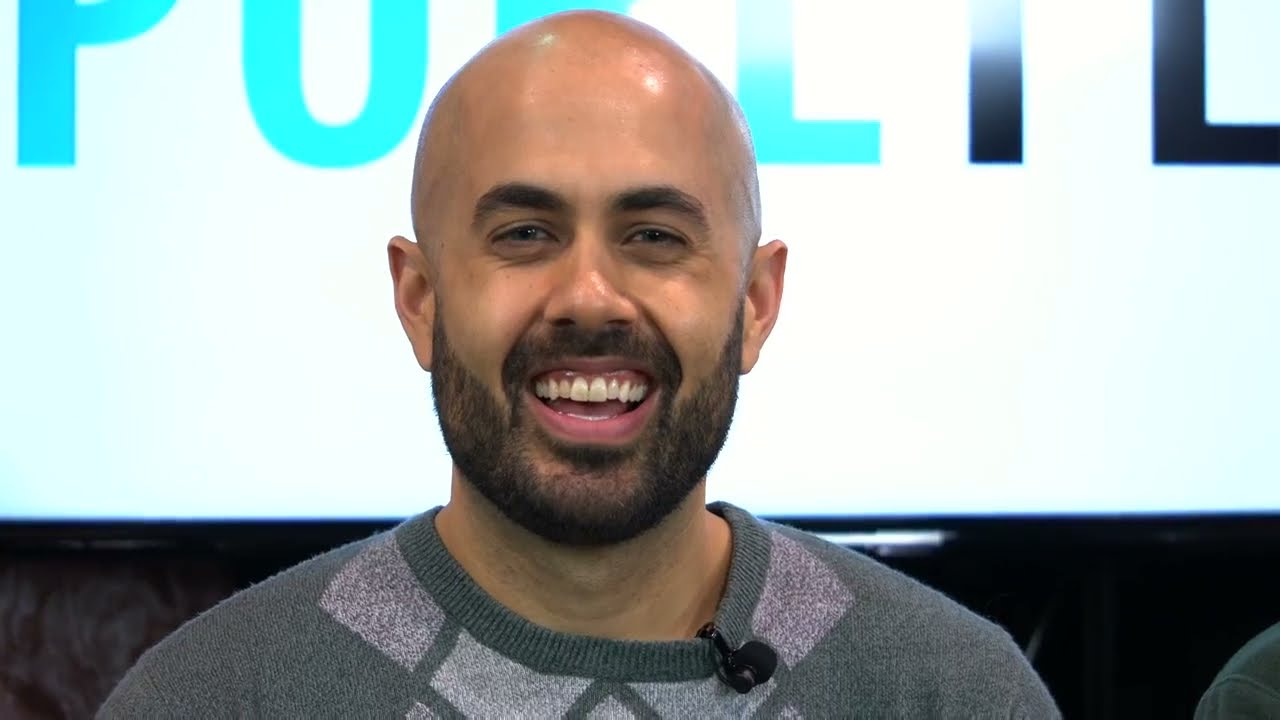
Church Attendance Pure Talk 7 20 2017

In this Pure Talk panel, host Kirsten Haglund brings together Greg Gudorf (CEO of Pureflix), Billy Halliwell (Faithwire senior editor), Lauren McAfee (Hobby Lobby corporate ambassador), and Roxanne Stone (Barna Group researcher) to examine the ongoing decline in U.S. church attendance and related faith habits. Drawing on Barna’s three‑decade research, Roxanne outlines the steady drop in weekly attendance, Bible reading, and affiliation over the past 15‑20 years, noting that while most Americans still self‑identify as Christian, the “unchurched” – especially the “de‑churched” (those who have left a church they once attended) – are growing across all generations, with millennials and Gen Z most affected. The panel identifies two primary reasons people leave: churches feel personally irrelevant and individuals find God elsewhere. Participants discuss solutions: (1) stronger discipleship pathways that move newcomers from conversion to mature, scripture‑driven growth; (2) depoliticized, intellectually honest teaching that tackles tough questions about faith, science, and suffering; and (3) a return to authentic, service‑oriented community life modeled on Jesus’ focus on prayer, healing, and helping others. The conversation also contrasts U.S. trends with lower European attendance, emphasizes the global growth of Christianity elsewhere, and calls for the church to adapt without panic, trusting God’s sovereignty.
Chapters
Hi everyone, I'm Kirsten Haglund and I want to welcome you guys to Pure Talk, which is kind of a new innovative talk show brought to you by Pureflix and Faithwire, where we're going to cover faith and culture and lots of other issues all through a Christian lens. So today I am joined by CEO of Pureflix, Greg Gudorf, as well as Faithwire senior editor, Billy Halliwell, and Hobby Lobby's corporate ambassador, Lauren McAfee. Welcome everyone.
Hey guys.
Hey.
All right, so before we jump into our topic for today, I want to throw it over to Greg, who's going to pray for us before we get started.
Thank you, Kirsten. Lord God, we thank you for the opportunity to come together via technology to discuss matters weighing on our hearts and minds. Please send your spirit to guide our conversations today and to move us all towards action in fulfillment of your will. We ask this in the name of your Son, Jesus. Amen.
Amen.
Amen. Thanks, Greg. So, Billy, I'm gonna start off with you because you've got a special guest that you want to introduce to talk about a really interesting and unique topic today, declining church attendance in America and what that means, and also throw around some ideas about how we can tackle this issue. You know, what are some actual solutions? So Billy, why don't you introduce our special guest?
Sure, sure. So we have Roxanne Stone from the Barna Group who's going to be on with us today. And as you said, Kirsten, it's really a number of issues. It's declining church attendance, it's declining prayer, it's across the board. It's the people who call themselves Christians declining that percentage. So Roxanne, thank you so much for joining us today.
Hi, thanks for having me.
So I wanted to dive in with a few questions here. When I look at this issue and I look at different polling firms, Barna is always the first place I go because you guys have done so much deep work on this. You've really gone in and looked— throughout the year you're releasing great reports, but you've looked at different cohorts, different age groups, and you have so many good numbers. Now I wanted to start, and it's sort of a loaded question, but I think one of the things I hear a lot of people say on this is, "Oh, you know," especially people of faith, "don't worry about those stats and those numbers." This is just nominal, you know, people who call themselves Christians, they're the ones who are dropping off. They're not the real Christians who are dropping off. And I wanted to sort of start there and just sort of ask, you know, what is going on from a 30,000-foot level when we look at statistics surrounding self-described Christians in this country?
Sure, absolutely. Well, to start, I mean, you've already stated like we're sort of seeing over the years a decline in all of these faith habits. And as a research firm, we've sort of specialized in studying religious trends in the US, particularly Christian evangelical ones. And we've really been tracking this for 30, over 30 years. So we can decidedly say yes, there has been a decline over the past 30 years, particularly starting in the last 15 years. And we see that, we see sort of a rise in post-Christian secular thinking, we see a decrease in Bible reading and Bible-mindedness, we see a decrease especially in church attendance, and we do see a decrease in affiliation. But one of the things that I think is important to note is that most, the majority of Americans are still self-IDing as Christian, so they're still sort of claiming that. Now we see those numbers, the nones, the unaffiliated, Those are growing. They're particularly growing among millennials, but they're not growing at the same rate as what you might call a sort of apathetic Christian. So I think it's— I think your point about people sort of saying, well, these were just the nominal Christians, like, you know, it's almost sort of the statement of, well, well, good riddance, they weren't really doing us any good. And every time I hear that, it feels really tragic to me because it's sort of like, well, Who are you building your churches for if it's not to take these people from a place of nominal apathy to a place through discipleship and toward greater commitment? So we shouldn't be like, ah, see you later, who cares? We should be like, oh no, we're losing these people that we're supposed to be discipling. And that's a very, very big deal to me. To sort of use some of the research that we've been doing to respond to that too, one of the things that we track is sort of these— we track sort of the unchurched, like how, you know, how, when people are attending church or not. And we sort of classify that as, have you been to church in the past 6 months? And if people say no, we're classifying them as unchurched. Well, there's sort of a subcategory of unchurched, which we call dechurched. So they haven't been to church in the past 6 months, but they have at some point in their past been affiliated with a church. So that's the majority of the unchurched in America. So we live in a, you know, we live in a nation that has been primarily Christian throughout its history. We're steeped in that. And that hasn't gone away. Like most of the people in America have some church background. And so one of the things that I really like to talk about with people in churches is, you know, there's such a heart among churches for the nonbeliever. Let's go, let's evangelize to the nonbeliever, let's bring in the nonbeliever. But the truth is, the largest mission field in America is not the unbeliever, it's the de-churched. It's the disillusioned, disenfranchised Christian. So mostly who you're going to run into as you're trying to sort of evangelize are people who need to believe in the church again. They need to be wooed back into the church.
In business terms, this would be the equivalent of businesses often focus on getting the new customer in the door and forget the loyal repeat customer and the need to continue to nurture that customer and make sure that they're staying relevant and serving that customer as well. Is that basically the same?
It's exactly the same. It's a very similar term. And I think we get so excited about the new customer, the new believer, but that's not the majority of the people walking the streets in America. And if we aren't able to sort of address the wounding and the baggage that those people have with church and bring them back, like they're not going to raise their kids in church. They're not going to raise their grandkids in church. So Pretty soon we're gonna have a nation of unbelievers. But right now we have a nation of disillusioned Christians.
Are you seeing this mainly among the younger generations? I was curious across generations if you're seeing what your research is showing as far as largest groups that are walking away and if it's mainly seen among the millennial generation or if there is also representation among the older generations as well.
So we're seeing the numbers for the de-churched rise of every single generation. They are the highest among millennials. So, you know, there's certainly, it's certainly happening across the board. And you look at sort of the rise in sort of post-Christian or secular thinking, it's, you know, it's the sort of frog in the kettle, like the nation is sort of becoming, the water is becoming more post-Christian. And so that's affecting every generation. But of course, it's affecting millennials and Gen Z the most because they're the ones who were born into it and raised into do it. So it's important to note that. And one of the things, like Billy said, where he would always get this response, well, they were just nominal Christians. One of the things that I constantly get is I constantly get this question of, hey, well, once they have kids, they'll come back. Once they get married, they'll come back to church because that's what the generations before them did. And I think there's truth in that. I think they will. Some of them. But I also think there's major cultural trends that are impacting that and making their life a lot different. For example, not getting married until much later, not having kids until much later. So instead of going from 18 to 22 not going to church, they're going from 18 to 28 or 30 or 32 or 33. And by that point, you've lived a lot of your life out of the habit of church, out of the habit of thinking about church. It's hard to bring that back in. And you made massive decisions about your life without the influence. Right.
Yeah. So one of the great things about this panel is that we've got a lot of people doing some incredible work throughout the Christian sphere, the corporate world, news, and the media. So we've got a lot of different perspectives here to talk about solutions. So obviously all of us here are Christians, so we want to see people in church, right? So we consider this a problem for which there can be a solution. We have to recognize that a lot of culture doesn't necessarily see this as a problem. So we have to start from that premise. But what are some solutions? And I want to start here, but first want to point out is I was curious, as I am sitting on the other side of the Atlantic Ocean right now, how statistics of church attendance in the United States compare to those over here in the United Kingdom where I am, and Europe generally. In the UK, it's under about 30% actually even believe in a God. Church attendance at Church of England churches in Great Britain dropped under 1 million this past year. In this country, now we have 330 million people in the United States. So church attendance on a Sunday dropping under 1 million is huge. And estimates are about between 1% and 5% of people in continental Europe attend church. And this is obviously the bedrock of the Christian faith coming from Western Europe after the fall of Rome and the rise of the early church. So as much as we, you know, go, oh goodness, our churches are declining in attendance and prayer is declining in attendance, we still are technically the most Christian nation on earth. So we should be incredibly thankful to the Lord for that. One of the things I think— two solutions for me. One is I think that discipleship in our churches is really missing. We're sometimes good at getting people in the door and hitting them with the gospel, so to speak. But if, you know, you get people praying or saying, you know, asking the Lord into their life, etc., but you don't have programs in place, you don't have people in place to come around new believers, to disciple them, to make sure that they're learning and growing in the faith and moving them from a seeker position into someone who's really, you know, reading scripture and is hungering and thirsting for that biblical community and just like wanting to dive into the word. If you don't have that discipleship taking place, you're going to see people leave church. You're going to see this de-church thing happening that Roxanne was talking about. So one thing I think is the church, and not just the church meaning them, but us, because we're part of the church, we need to be more of a part of discipleship and not just about the evangelism. The second thing I think is, especially with millennials, millennials are the most educated generation that exists yet. And they're asking really, really tough and important questions. And the church can't just be content with giving people easy talking points or political talking points. Christianity has become very politicized in this country, and a lot of young people think they have to become a Republican to be a Christian. So depoliticizing the talking points and answering the questions that young people are really asking, the tough questions, which means we have to answer the tough questions. You know, why should I believe in God? Why is there suffering and a good God? You know, do Do science and the Bible agree? Was the earth created in 7 days, or what does a day mean? We have to be able, as Christians, to answer those questions. They ask those questions, and they want to see their faith as not just something that's blind faith, but something that can really be believed in and is really meaningful in our everyday life. So that's a lot, but those are—
No, that was good.
It was a lot of good stuff. I want to piggyback off of that. Before I give my solution, which is not as well thought out as yours, Roxanne, I wanted to ask you, when we talk about the de-churched and the people who have left, have you guys found a lot of data information on the reasons why people are saying they're leaving? Because I think that's an element that would be interesting to know, if we do know.
Yeah, so you find really two main answers rise to the top. There's a lot of other answers, but The two main ones that rise to the top are that it doesn't feel personally relevant to me, and I find God elsewhere. So you have— those are kind of two ways that churches are having a hard time connecting, particularly with, I think, with millennials today.
That's interesting. Yeah, and it is, I mean, like in the social media world of like the look at me, and I don't mean that in a totally negative way, but like the sort of very personal interactions that we're having through technology, There are some changes I think we have to think about in how churches— and some churches have done a good job. I mean, there's Life.Church. There's a number of churches out there that are really trying to adapt to this, and they've had success in doing it in an innovative way. So I guess for my quote-unquote solution, all I would really say is I do feel like there's a real imbalance, and this sort of talks to the political point that you made before, Kirsten, that we have a lot of people talking truth, and we have a lot of other people talking love. I feel like there could be a really good balance of those two that makes people not feel alienated and attacked. I think we need to strike that balance better within the faith. Maybe the public figures who are representing the faith might want to do a better job of that, to not cut people out who you can't even really get to the meat of the message because you've already cut them out and said, "You can't be here. You're not welcome because of whatever issue." I think we can do a better job in that area. Not as good as yours, Kirsten, but— I'll throw that out there.
No, I agree with that.
And I, because I think that the light topical type of teaching is not going to cut it in the rise of a culture that is less friendly towards Christian values and Christian ideals. I think that a solution for churches needs to be that we have really good biblical teaching where we're drawing from the scriptures, but applying that to our daily life and not in a politicized way where we're making everything political, but giving application so that we can see that the relevance of Scripture still is around and still applies today. So that millennials and the next generation, Gen Z, sees the application of Scripture, that it is still valuable and it is still applying today. And I think that that will draw people in in the future.
Loren, I think I'd like to follow on that. You're speaking about going back to the authenticity and really making sure that from a church perspective, we're speaking in that authentic voice. The structure of our churches and the hierarchy and all the long traditions and the like were generally not the focus of Jesus's words and works himself, right? I mean, the man talked about prayer. He talked about healing. He talked about service more than anything else. So maybe a solution is to take that step back and appeal in— and by leading example-wise how we can all come together and be of service and get back to that kind of service hook. If the most important part about participating in your church is you're able to help serve those that you deem in need and can act from your heart, if that's the most important part, rather than being in a certain schedule on a certain day and in a certain look, that's the thing that would let the authenticity and that relevance rise up again. Look, God is big enough, tough enough, and loving enough that this will get solved one way or the other. We just have to figure out how to tune into it, I think.
Yeah, you're so right. And that's such a wonderful word, I think, to focus on— authenticity. And also the sovereignty of God, and that, you know, he is ultimately responsible for bringing people and drawing people to him. And, you know, he has a plan for each nation and each continent, really, in the story of Christianity. And even if we see some of our church membership declining right now, obviously all of us have a part to play in helping to reverse that trend. But look at the way that the church is growing in China. Look at the way that the church is growing in South America and Southeast Asia, in India. I mean, there's a lot, and even in the Middle East, even though sometimes we don't hear about it because a lot of those ministry and organizations, they are afraid of putting their pastors or members of their congregation at risk. I think there's a lot to be praising God for, and we should all, you know, in humility and prayerfully try to serve where we're called with authenticity, as you mentioned, Greg, and faith.
So don't panic is what you're saying. Don't panic.
Don't freak out. Don't panic.
God is good and God is sovereign. Alright, such a great conversation, guys. Thank you so much, Billy, Lauren, Greg, and Roxanne from Barna Group, so much for joining us. Thank you all for tuning in to PureTalk, and we will catch you next time. Ciao, guys.