PureTalk 2017 03 01 Ep2
Raj Nair hosts Greg Gudorf, Billy Hollowell, Lauren Green McAfee, and Ruth Mohlholtra to discuss Christian homeschooling. They address the socialization concern by pointing to co-ops, church, sports, and community service. Panelists recommend connecting with local homeschool communities and using platforms like PureFlix for curriculum support.
Chapters
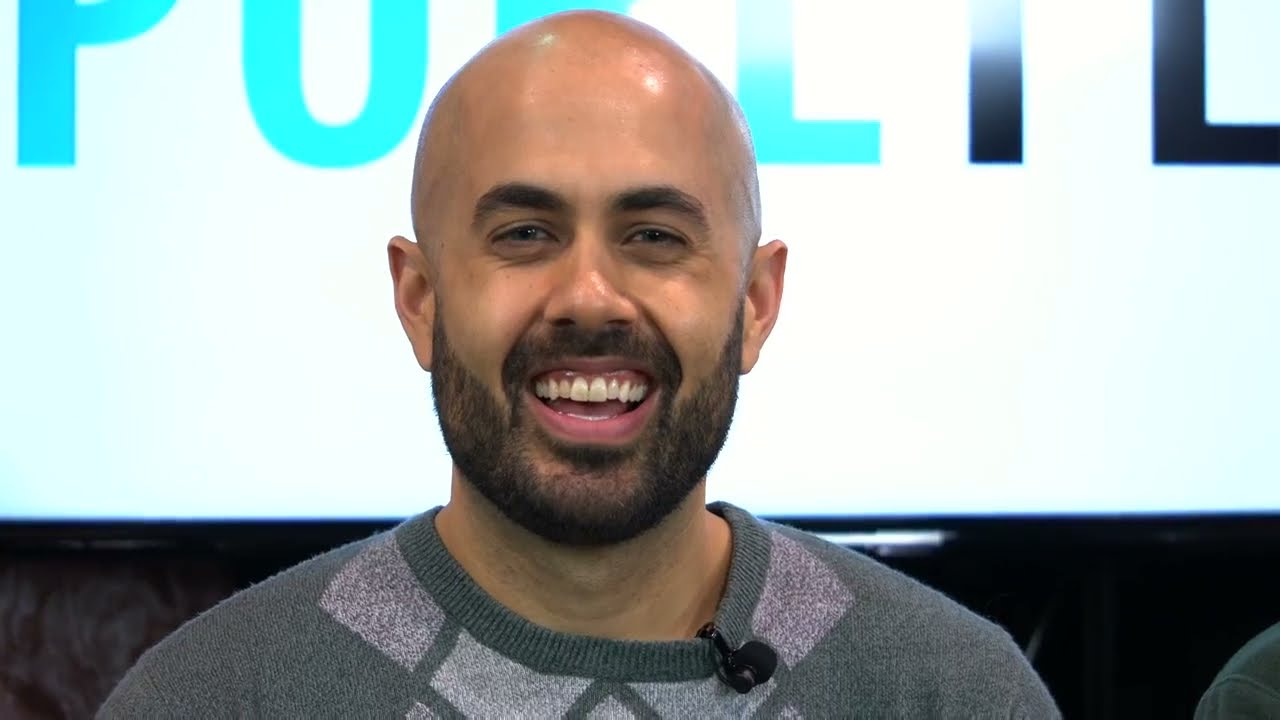
Hey there and welcome to Pure Talk. I'm Raj Nair. Now, what is Pure Talk? Well, it's an innovative talk show where we talk about news, entertainment, culture, but all through the lens of faith. And it's brought to you by Pure Flix and Faithwire. Now we're here in Orlando, Florida, and our topic today is homeschooling. But first, let me introduce to you our awesome panel. Mr. Greg Gudorf, the CEO of PureFlix.com. Billy Hollowell, the senior editor of Faithwire. I'm going to skip her for a reason. Lauren Green McAfee, the corporate ambassador to Hobby Lobby. Lobby and the birthday girl, Miss Ruth Mohlholtra, PR and journalist. So Greg, Pureflix has quite the relationship with homeschoolers.
Yes, we were actually surprised. When we started Pureflix.com, people called it a Netflix for Christians, so we were thinking that was what we were about. But what we found was that parents were saying this is a great resource for homeschooling because we were able to supplement the curriculums that they were running. You're a teacher, your wife's a teacher. How do you think about something like that when you hear that?
You know, I've got a lot of concerns about education, right? So my kid, I have a 4-year-old, she's going into kindergarten and she's going to go to public school. And so, I mean, clearly there are issues with a lot of our public schools. We know this. And luckily we're in a nice town. We've got a, as far as we know, a good public school. But I teach at the college level and I see some of these people coming through and not to disparage, I teach at a wonderful college, just to put that out there. But, you know, there's different levels of students coming in and it shocks me that some of these people have kind of made it that far without somebody saying, you know what, you need to work on that. You need to maybe fine-tune that. So it's— now, I don't know a lot about homeschooling, but I do know that for many people it's a really good option that they feel kind of fills the void of what's not available to them. And I know we have some people here who have some homeschool experience.
Christian experience. Yes.
Yeah, we were both homeschooled. I was homeschooled up until 8th grade and then went to a small private school, and my experience was great. I had a fantastic experience where both of my parents were involved in teaching me. My dad would teach me my math lessons in the morning before going to work, and then my mom would teach me the rest of the subjects. And I had 3 other siblings that were also homeschooled with me at the same time, which was great because I had, you know, other kids to interact with.
You're a little class.
Yeah, you know, we each were in our different grades, but we got to engage with each other. And I had such a great experience that I love advocating for homeschooling and having the ability for parents to make the decision whether they want to homeschool or not. So my parents, with their experience, saw each of us individually and cared for each of us and our— what learning styles we had. So my mom taught me a different way than she taught my youngest sister who had a very different learning style. And you don't get that all the time in some larger school settings. Nothing against public or private schools. I experienced all of them at one point in my life, but I loved that aspect of homeschooling. It worked really well for our family. We had a great co-op that we got to do really fun field trips with and had great exposure to a number of different things through our experience.
Yeah, one of the— oh, go ahead. No, I was just gonna say I was homeschooled from 2nd grade to 9th grade, and one of the biggest blessings blessings in my life. I think one of the biggest reactions I get when people sometimes surprisingly learn that I was homeschooled, they say, "How did it feel when you entered the real world?" Or, you know, "When you got out of the bubble and saw reality?" And I tell them, you know, I experienced more of the real world up close and personal because I was homeschooled and had the opportunity to see firsthand the challenges, the hardships, the rewards, you know, in society, to interact with a cross-section of people, diverse age range, diverse socioeconomic status, you know, as opposed to many of my peers who were, you know, either in public or private school but in very monolithic settings. And it was only when they entered college or the workforce that they actually encountered people with different worldviews or, you know, different challenges. So I think there's a lot of common misconceptions and stereotypes out there that still exist today, but I think we're making progress as, you know, we just share our experiences the joys, and the rewards, I think it's, it's encouraging and hopefully motivates other parents to consider homeschooling their children.
Well, that goes to my question that I would like maybe both of you to answer. How do we, how do you present homeschooling to someone who has that stigma around it? What's your defense, I guess you could say, of kind of getting it to a wider audience and breaking down some of those stereotypes?
You know, I think that it's helpful to understand where those stereotypes are coming from and where the stigma is coming from. So I always like to hear why why people have a negative connotation maybe with homeschooling and hear from their perspective. Then try and help bring into the conversation my perspective because I have had a great experience. That's what I've seen. I've had dozens and hundreds of friends, dozens that I worked with in Oklahoma and then hundreds across the country that have been homeschooled that I've been friends with. They've all had great experiences. So it's trying to understand, maybe they're hearing something that may not shed real light on what homeschooling is actually like. That's where I like to start with people.
Resources from someone like Pureflix or Faithwire? Like, how could we enhance the homeschooling experience?
Yeah, I think absolutely. I think, you know, when I was homeschooled back in the day, my parents started in the early '90s, and it was still a new concept. It was— some of our relatives actually told us, they said, "We think this is just a right-wing Christian money-saving gimmick." That's the terminology they used, and there were not a lot of people doing it, not a lot of resources. The online space still really was not an option. Or hadn't, you know, really been developed, the digital space, in the way it is now. And so I think there's tremendous resources when you look at— you have the opportunity to really zero in on your areas of interest and passion, whether it's history and looking at, you know, great documentaries and films that speak into that, or looking at, you know, some of the scientific discoveries or America's founding. That's a topic that I've always been passionate about, looking at, you know, the founding of our country and the development of our government. And I think there's so much more now, and it would be great to see maybe some of, even some of the existing content maybe packaged in a way, presented in a way that resonates with parents who are, you know, seeking those additional resources for their children to expand their horizons.
In the same way that you don't necessarily have to go into an office every day for work because of online content and online workspaces, in the same way for school. I mean, now that everything's online and you have PureFlix.com, you have all these resources that kind of enhance the experience.
But let's talk about that a bit because that's one of the criticisms sometimes leveled against homeschooling, and that is that a lack of socialization. Now you both kind of touched on it, but can you share some examples on how that happened in your homeschooling experience? How you reached out like that?
They seem pretty socialized. Yeah, no doubt.
I don't know, we're a little shy and antisocial. We don't like to talk to a lot of people. But yeah, I mean, for me, I know my church family played a big role in that. We were very involved in our local church, First Baptist Atlanta, and you know, had a great homeschool community, but also other programs, you know, choir, orchestra, all sorts of music lessons, art lessons, even just being more involved in, you know, some of the theological programming, Bible studies, and things like that. Because I was homeschooled and you have so much more time to tailor, tailor your activities, you know, to fit your schedule, you're able to do more and interact with more people. And like I touched on earlier, from a very young young age, my parents were so intentional about taking my brother and I to experience reality, whether it was volunteering with homeless people in downtown Atlanta or traveling abroad and walking in the slums of Calcutta, India, or Bangkok, Thailand. I mean, I had these— even at 10, 12, 14 years old, was able to meet with people and encounter things that my peers were only— didn't even know existed, whether locally or globally. And so I think I think that played a big part in helping me know how to relate to a cross-section of people, to develop confidence, because you know, you're not one of 20 people in a class where everything is kind of cookie-cutter, but you really do have the opportunity to speak up and hone in on your interests and also to, you know, focus on your challenges and kind of overcome those in an individualized way. Yeah.
Makes sense.
Well, my experience was very similar. There was a co-op in Oklahoma City where I grew up being homeschooled and so I was engaging with other homeschool students all the time, and we had different sports teams. I was a homeschooled cheerleader and played basketball, and I did archery and swim teams. You know, I did all these things where I was getting to interact with people from all over the city, other students that either were or weren't homeschooled, and so I had a great experience and exposure. And then similarly, my church family was— that's how I met my husband, was at church when I was 7 years old, and he went to a public school. And, you know, I had great friends that were in my church community and my homeschool community as well broader through the different activities that we engaged in. So I never experienced that lack of socialization that I think people can come— sometimes think comes with homeschooling.
It's just an assumption.
Yeah. The TBOE, the whole TBOE law thing, which I actually— I'm not— again, I'm not the most knowledgeable about homeschooling because I've never experienced it, but this notion of towns and communities and states wanting to allow homeschoolers to participate in the public school program. So maybe it's athletics or music or specials and a lot of communities are allowing that. I don't know if you guys experienced that or saw that, but I think, I mean, if you're paying taxes, it sort of makes sense to me that you would be allowed to opt in to those programs in the public schools.
Yeah, and I think we're seeing more and more acceptance of that. You know, again, when I was homeschooled, there was this big concern about, you know, even accreditation, and when you apply to college, you have to take all these extra entrance exams and there were so many more hurdles for homeschoolers to overcome, whether participating in current activities or, you know, future education. And I think we're seeing a lot of progress on that. I also think we're seeing research that's coming out now in the last few years that Americans especially are increasingly just operating in very limited circles of interaction, and that's hurting them in the workplace, it's hurting them on a global scale. They're not interacting with, you know, a cross-section of society, and I think homeschooling I think homeschooling is a great antidote to that because— and allowing homeschoolers to participate because you have, you know, urban, suburban, again, a range of experiences, worldviews, socioeconomic status, and I think that can only be healthy for civil society to flourish longer term.
Sounds like you're saying there's division and isolation going on. I don't really feel like that's something I've experienced or seen. No, that's a really good— totally, that's a really good point. Good point, and I feel like allowing them to come in and experience those programs is a really good thing.
It's a win-win situation. I would think it'd be a win for the school too, not just for the homeschool community.
Yeah, no, I agree.
For them to get that talent, and everyone wants more talented football teams and orchestras, you know.
That's why it's called the Tebow Lot. Like, he would have never been who he is had he not— I mean, maybe he would have, but he was able to play at a local, a couple of local high schools, and that's what catapulted him forward. So you think about it that way, and you're like, we would not have Tim Tebow.
Possibly the world would be a darker place.
It would be a much darker place, a much darker place.
I love what you said about different learning styles and kind of tactile learning. I mean, we're what, a mile from Epcot? And to me, I learn a lot more there than I ever— well, I'm not knocking books or anything.
You're obsessed with Epcot. Experimental approach to the period tomorrow.
We took a field trip here.
Yeah, yeah, I think we need to go.
After this, this is keeping, we're going to Epcot. He likes this thing, you know? But no, for me, it's that really cool opportunity to actually to actually touch the thing, to smell the thing, to see it. So not only are there, you know, some stigmas that need to be erased, but there's a lot of benefits that, you know, if you're stuck in a classroom all day long— and again, I was stuck in that classroom, there's nothing wrong with that— but there's a lot of benefits.
Absolutely, yeah. So me and my youngest sister that were homeschooled had very different learning styles. And I mentioned her— there were 4 of us— but I mentioned her specifically because we were probably the most opposite. And I— you could set me in front of my assignment and I could focus and get it done, but my sister had to constantly be reminded. She just has this creativity, and so her mind would go off with these creative ideas of different things she should be doing, and so my mom had to be, you know, much more guiding her to helping her work through her assignments and think of her assignments in different ways. And she saw that in us and that we were each different in that way. And so you wouldn't get that unique personalized interaction if you're in a classroom always where with, you know, a large group of 20 to 50 students and one teacher. So for us, that was a great benefit, and I think that's a really, um, a great thing about homeschooling and should be encouraged, that parents are going to know and care for their students best as they're teaching them.
That's amazing.
I have to ask you though, so I, I can hear the love and, and the care that your parents took in tailoring it for each of the kids, but I grew up in a large family as well. And there were times when I wasn't sure brothers and sisters were going to live throughout the day. How did that happen in a homeschooling environment?
Yeah, no, there was definitely the sibling rivalry happened. But, you know, I am so grateful that my parents allowed us to be together in school where we had to figure out how to engage with each other. I think that that's actually helped us as siblings now being adults be closer. My sisters are my best friends and I love spending time with them. But I think some of that was because we did life together and we weren't going each to our individual ways throughout most of the day in a classroom. We had to figure out how as siblings do— yes, we're going to disagree and we're going to fight and all of the normal sibling arguments, but how do we figure out at the end of the day how to be friends because we're around each other all day. And I think that's really been a benefit to us later in life. And we're all best friends now.
We love it.
That's very neat. That's very neat. You know, Billy, you were talking about what you're seeing as a teacher, right, at the university level, right? What do you think of homeschoolers coming in? Do you think that changes the mix? Does that change the experience?
I had my first homeschooler last semester. It's funny you ask. And it was interesting, and she learned a very different way than other people did, and she brought a whole other perspective in because none of these— I mean, this is New York City, so you've got a few steps. Not that people don't homeschool there, but I'm sure that it's far fewer than in other places.
Classes.
They didn't even know about it, the other students. So she was actually— she did a speech. It was a speech class on what it was like to be homeschooled, and people were really intrigued by it, and it kind of opened their eyes to, okay, there are other choices. Maybe when I have— maybe when they have kids, they can consider this. So look, I think it's a great option. I think we need to give people choice and options, and there aren't enough choices and options. Not that public school isn't good. I went to public school, and Raj did too, because our parents didn't care about us. No, just kidding.
That's a joke.
I went to a great public school. I was lucky, you know.
So, but not everybody does.
So I think We need to have those options.
Sure, and I think one of the things I love most about homeschooling is that it taught me how to think, not just what to think.
Amen.
I wasn't just in a classroom where a teacher was regurgitating information to 20 or 30 students at once in a cookie-cutter manner. My parents really instilled in me how do you analyze, how do you develop, you know, precision, how do you develop intentionality, not just going through life passively taking in information, but intentionally, you know, drilling down into a subject, and that has— it does require a certain level of discipline and self-motivation. But when you think about it, whether you're in college, university setting, or even in the workforce, those are the things that will get you far. Knowing how to think, knowing how to discipline yourself, work hard, focus, sometimes on your own. I think that those are skills that are really incredibly valuable, not just short-term but long-term.
Especially for college.
Especially, you have to be college ready.
Exactly. A, being able to critically think, but B, being able to manage your time.
Exactly.
And I'm not seeing those at all in these safe spaces.
And homeschooling really helps you do that. Yeah, because when, when you're in school and, you know, everything's kind of mapped out for you, you can just kind of passively go through the motions. And homeschooling, you even as a student are really forced to say, how do I manage my time? How do I, you know, divide my responsibilities? And so I think it's excellent life training. Learning beyond the classroom.
The openness to ideas, going back to that, I think it's really interesting because I had shared with you guys before we were recording yesterday that for the first time last semester I had students say to me, "I don't want to sit in on this discussion. I can't handle this. This is too much for me." I said to them, "You're free to leave," because I can't make them stay, "but you are not going to be able to opt out in life. That is not how life works." It shocked me a little bit. I think there's a lot of that going on. Being exposed to that, even though the assumption is that you're not being when you're homeschooled, which I don't think is true, being exposed to those ideas as you were describing, I think is a really important thing.
Absolutely.
Well, kind of wrapping this conversation up, you know, you might have convinced a whole bunch of people to put their kids through homeschooling. Is there a type of family or a type of person, or is this kind of open to anyone? And is there like a first step to actually doing this? I mean, if someone's motivated and inspired by what you guys are saying, now what?
Yeah, I don't think that there has to be one one type of person that can be homeschooled. I think that that's the beauty of it is that it can be broadly— anyone can do it, but it does take a commitment for the parents if they're making that decision. That is going to be a major commitment. You know, I'm so grateful for the commitment my mom and dad made to be willing to invest in the time that it took for them to teach and know what they needed to be teaching us. So it does take a commitment, and I would encourage anyone that's considering it to find other people in their community that are homeschooling and get a feel for what is the homeschooling environment like in that community, because there are a lot of great homeschool communities all over the country, and I think that'd be a great first step.
Yeah, I was gonna say the single best thing you can do is find other parents who are homeschooling. Talk to them about the joys, talk to them about the challenges. There are challenges. It does require a tremendous commitment, like Lauren said, but really get to know how it's working for them, what resources are out there, and I think you'll find tremendous support and a great community there ready to cheer you on.
Awesome. Well, Lauren, Ruth, thank you so much. Billy, Greg, you guys are awesome. And that does about wraps it up for this episode of Pure Talk. Go to PureFlix.com and Faithwire.com for more news and entertainment.