PureTalk 2017 05 05 Ep1 v2
Kirsten Haglund hosts editors Dan Andros and Bailey Halliwell and PureFlix CEO Greg Gudorf to discuss how Christian families choose schools. They cover homeschooling logistics, private versus public options, and the reality that kids spend far more time with screens than parents or church. The panel urges churches to tutor and adopt schools rather than wage legal battles over creationism.
Chapters
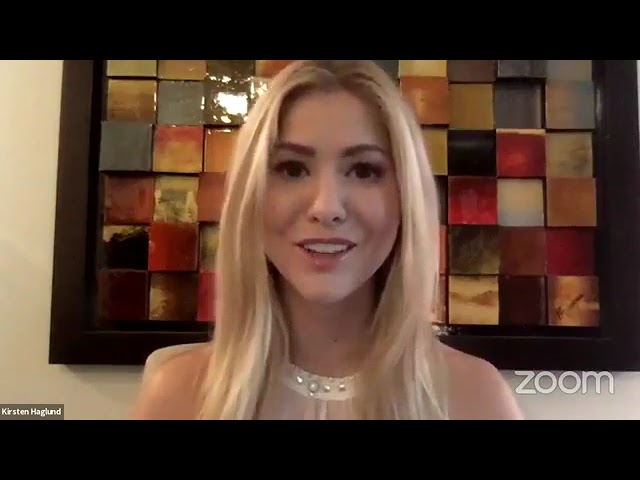
Hi everyone, welcome to Pure Talk. I'm Kirsten Haglund and we've got an innovative new talk show for you brought to you by Faithwire and Pureflix. We're going to discuss all the issues of the day—culture, politics—all through the lens of faith. So joining me on the panel today is Faithwire's managing editor Dan Andros, Faithwire's senior editor Bailey Halliwell, and CEO—digital CEO of Pureflix—Greg Gudorf. So thank you guys so much. We're going to be talking today a little bit about education to start off. And there's a lot of talk in the Christian community about public school or homeschool, prayer in schools, what should be taught, what shouldn't be taught. A lot to dive into here. So a lot, a lot. But, you know, first I'd like to go down the line because obviously this affects our children. I don't have children, so I'm going to be speaking as an outsider here. But can we just go down the line and do you have kids and where are they going to school?
Yeah, I've got 4 kids. And we're actually homeschooling right now. So we're kind of in the midst of the battle. My kids are 12 down to 1. And so we're sort of in the midst of that challenge right now. And we chose to homeschool. And it wasn't an easy choice. And I think a lot of times people can get sort of it has to be one or the other. And I don't happen to believe that. But for us, we just felt like when the kids are so little and they're so impressionable, You only have that time once. And so for us, it was like we wanted that time to be with mom and dad. Because especially when you look at schools now, pre-kindergarten, the kids are going off earlier and earlier. And they're gone for most of the day. So for us, we just felt it was important for mom and dad to be teaching them from a base level. But it's not an easy decision, though, because I don't think— that that's the only way you can go. But for us, it was the right path.
Do you want to send them to school later on? What's the thought on that? Or are they in the house until—
I've made the mistake of mentioning that before, and even as a possibility. And I don't know if that always goes over so well with one of the spouses. They don't want to go? Or they do want to go to public school? Well, no, my wife. My wife, who's doing a fantastic job teaching the kids, I think if you're not careful— Maybe I'm not always wording things so eloquently, but if they take that as a slight, like, "Oh, what am I not doing a good job?" Yeah, yeah, gotcha. But we try to keep that open, right? We're not just making it like we're doing this no matter how horribly it's going or how well it's going. So yeah, we're open to that, but it's not like—
What are the days like? I'm just interested, like, what are the days like? I mean, is it crazy? How does the day go? How do they learn? I'm just curious to know. Like a day in the life of Dan Andrews' kids?
Yes, they're crazy. Um, let's just say it's the days I work from home. Um, sometimes I'm wondering if I need to intervene, uh, out of my office and then head down into the, into the zone that's going on. We have a 1-year-old, and that, that sort of throws a wild card in there. The bigger kids do fine, and they— there's days where they're fighting it and things, but 1-year-olds are so—
like, I don't know, I don't know what you're talking about. They're so, they go through phases.
I think ours right now is in the phase of He's— I don't want to malign him, but I would say he's in sort of a terrorism phase. He's very feisty right now. We're like, wow, this guy woke up and got shot out of a cannon. Look at this guy. He's so upset about everything. But he wants what he wants. If he was here right now, he would be after this phone. Relentless until he got it. So that throws a wild card for my wife, because she's got to sort of keep him occupied and also teach the kids. So it's a challenge. But at the end of the day, we wouldn't trade it. It's fantastic.
Okay, Billy, how about you? How many kids?
So I have 2 kids. Where are they in school? Well, so I have a 4-year-old, and we have had her in a private school. She's in a private Catholic school, and the reason honestly is because it was the cheapest. You know, we were looking at health— at healthcare, at childcare options, $1,600 a month. You know, we found this great school where she could go, so she went to a 3-year-old pre-K program there. Now she's in the 4-year-old pre-K. But next year she'll be in public school, so she'll start kindergarten in our local public school. And, you know, really for us, my wife works, I work, it's more of this is the option that we have and we want to try that out and see how it goes for her. My niece and nephew go to a private school, you know, still, and they'll continue to do that. And so in our family we have a lot of different options. My wife's a public school teacher, so she sees that world, you know, in a different light. And then my 1-year-old, she's just, you know, running around crazy like, you know. You both have 1-year-olds. Yeah, exactly. So it's, you know, I know that story well.
You're making parenthood sound really attractive right now.
It's a lot of fun. It's a lot of work.
It's a lot of fun.
Right, so I'll skip me for a second, and Greg, how about you? I have two kids.
The baby's 25, and the oldest one is 31, so I'm beyond that, right? And I've seen the battles of the 1-year-old and the 2-year-olds. I've also gone through that period where both boys as teenagers, you know, the parent doesn't know a thing. You're just the dumbest thing in the world, but then around 21, 22, they start to come back around, and by the time they're 23, you're having adult conversations with them, and it's like, Let's go to dinner and have a good conversation. You can do that again. So there is hope. It's a circle. You can pull through it as parents.
And now did they go to public school or private school?
They did. We relocated a lot around the country with work, and so they were in public schools. We always tried to make sure there was a solid family foundation behind it, but yep, they worked through the public school system.
Yeah. Now I'll just— what my brother and I did, we went to public school, and my My parents were kind of baby Christians, so to speak, when they were raising us. My mother was raised Catholic, my father was raised Lutheran, and then when they decided to have children, they went back and were like, "Oh, we should probably start going to church again." And so then went to an evangelical covenant church. So totally different from their traditions they were raised in. But we were raised going to church and going to public school. And we had lots of conversations in my family, in my house, all the time. My dad always wanted to be a teacher even though he never was. So he was really into history and politics and what was going on in the world. So we always had conversations about politics and culture, and he educated us very well on having a biblical worldview. And so my husband and I haven't, you know, we're not— kids are a 5-year-out conversation still at this point.
Just remember, you're going to be 5 years older when you're in the 1-year-old war zone. I'm just throwing that out there.
This is true. Every year matters. It does.
But my husband went to Christian school. 3 schools all growing up. Oh, wow. So, you know, we have a little, you know, different perspectives, but I just feel that, you know, I have a very strong faith now, and the Lord used a lot of ups and downs and challenges in my teenage years, but always drew me back to him. And my parents gave me a great foundation, and I was exposed to a lot, but had to really stay strong in my foundation. And I'm very thankful for that, and it's something that I want to give my kids. But, you know, I've got—
you got to negotiate it.
You got to negotiate that with the husband.
It's a challenge. Well, it's a challenge.
And I think one thing to remember too, and when you're choosing this, if you're, you're, if you're at the point of, well, do I do public school or not? Because there's so many negative influences in the public school, and there's challenges, obviously, and negative things about homeschooling as well. But I think the key thing to remember is that it's God who saves, not us. And so I think, you know, at least for my wife and I, like, we're trying to orchestrate things, and, you know, we're trying to set everything up so that they have the best chance of, you know, coming to faith, but you have to remember at least for us, we just reminded ourselves of this the other day. We're like, you know, it's God who saves them. So it's like, you know, you don't want to purposely throw them into the wolves or into a horrible situation, but at the end of the day, you got to have faith and trust that, you know, it's God's the one that's going to bring them in, and so it's not up to you, and you don't have to set everything up perfect, you know, because you're going to mess up no matter which path you take, so.
But that doesn't release you from trying and from worrying and working it, right? So many folks don't take that same involvement, level of involvement, for whatever reason can't be that involved with their children, and the children are left to the school system wherever it goes through, right?
Yeah, and I think, and I think what Kirsten said, what your family dynamic sounded fantastic because you're having those conversations when you came home. Yep. And so I think where you can really fall off and make a poor choice is if You send them out, but then you're also not preparing them, and you're not having these conversations at home, and you're totally leaving the worldview to someone else to teach them. Because they're gonna adopt a worldview, and it's just a matter of which one are they gonna go to.
Well, the challenge is that this has become, I mean, the reality is that when, I'm 33 now, when I was in high school, that wasn't all that long ago, but it's a totally different world now. I feel like there's so much more. So I see both sides, I always see both sides of it, because it's like, yeah, my kid's gonna go to, both of my kids are gonna go to public school, That's what they're gonna be. But the reality is that being a parent, I think, is always difficult. I think it's a lot harder now because you have to explain so much more, right? If your kid comes home and says, my teacher said this, or we're talking about this issue, and this is moving so fast, you then are confronted with, okay, well, I wasn't gonna talk about this for another 5 years, but I have to address it now in a way that my kid understands it. You know, on the flip side, isolating your kid, right? Like, I purposely didn't go to a Christian college. I have nothing wrong with anybody who did. I think it's great for— it wasn't for me. I was used to public school. I wanted to be in an environment that was challenging for me, and it was. You know, so you've gotta not isolate, but you gotta find that balance, right?
And every child is so different too in what they need. You know, I mean, there are some that are much more mature at an earlier age and can handle that, and some that are not. And that's to each parent's discretion to try to figure out what their child needs. But you know what is so interesting, and I even notice, I do a lot of speaking on college campuses and even at high schools. And kids are exposed to so much more, both at Christian and Catholic schools and at public schools, exposed to so much more so much earlier. And I think we forget, like, I don't know, when you think back to the things that you understood at a very young age, I think we understand more than our parents think we do sometimes, or are perceiving a lot more than our parents think we are. And with social media, too, I mean, kids have the world at their fingertips. And so I think sometimes, you know, maybe we postpone. I mean, I want to be talking to my child from a very, very early age of things that they're seeing, things that they're exposed to. I feel like you can never start too early to have those conversations because I remember my brain was working like a crazy person even in kindergarten. I have like very, very vivid memories of things that I saw and right and wrong. And, you know, so I feel like, you know, and especially with social media, We just cannot discount the power and influence that that has, you know, and I think as parents have to be really, really cautious in knowing that influence. Media in general.
Kristen, you're on to it. Media in general is an issue. If you look at the number of hours the child spends to the age of 17 in the digital media world and compare it to the amount of time they spend with their parents— or in church. It's decades worth of time more than they did in in their digital media world. So when you ask who's really teaching our kids, we want to say it's us and then it's the school system and well, you know, the government will help make sure that gets taken care of properly, but the reality is it's the media world.
Yeah, it's so true.
But it's all getting worse. That's not to be giving— the media's gotten worse, Hollywood's— I sound like I'm pitching my book here, but like media, all of it has gotten worse. Humble brag. But this is like because I'm so consumed by this topic, I find it— like being a parent is so much harder because all of that, and then if that's reinforced in public schools, it's a real, like you're up against all those hours of entertainment and fun and media and teachers maybe. So I see that struggle. I get why people homeschool. I get why they go private. I understand that. I also think there's a real mission field out there too. And yeah, you know, what happens if we pull out?
Well, and you know, this is, um, an interesting conversation as well, and one that I think about a lot. More now that we— my husband and I live in a big city, and so you constantly see the inequality between, you know, the schools that the very wealthy send their kids to versus, you know, the public schools here in New York City, which some of them are good, but a lot of them are not. And a lot, especially in low-income and, you know, poorer areas of the city, you know, their parents aren't there to raise them, and so they are just getting the influence of the public education system, which leads me— my heart breaks for that, that they don't have parents there to to be that second level of education and worldview formation. What I think that should do for the church is say, okay, we need to, we need to be in these communities. We need to help. We need to tutor. We need to have a clinic there. We need to serve these communities better and not just retreat to our little, you know, suburbia, you know, people that we're comfortable with. Because if those kids, if those kids aren't being parented by their parents, like, let's go in and help shepherd them. You know, I think that's a call for a mission call for the church. That's, I don't know, it's something I'm really passionate about.
So it's not just the kids. It's not just the kids, sending your kids. It's, yeah, there's an organization that does this where they had churches adopt schools, public schools, and they don't proselytize. I mean, if people want to come outside, they can, but they fix things, they paint things, they fix whatever's broken, they tutor. And you know, they're encouraging churches to go out and adopt a school, even in the suburbs or low-income areas, you know, too, as well.
So, so that's the way it used to be, right? I mean, school was a local thing, a local phenomenon. The parents in the area, the church in the area drove the school system. We've moved away from that with all this growth. So how do we pay attention to that calling and return to that level of service? It's our children. And it's our future.
I mean, that's the thing. And we've talked about this a lot, but like, you know, my philosophical issue, and I was saying this to you before, is like the one thing that would fix schools is the one thing that's not allowed in schools, right? So you have to find a way around that. And I'm not saying I think schools should be, you know, churches. They're not. There has to be that healthy separation, but I think we've separated so much that And some of those morals and values are just completely missing. And there's another set of morals and values that tend to be there.
So there's obviously a lot of issues both in public and in private schools. But, you know, Billy, what is a way that we can start to try to fix this, try to make sure that our kids are getting some kind of presentation of a biblical worldview? You know, how do we go about tackling this?
I think there's a few things. I think teachers should know their rights. I do think there's a lot of sort of scare tactics like, oh, you can never answer a student's question about anything, and you can't participate in out-of-school, like before or after school Bible studies. I mean, look, every student club needs to have an advisor. Why can't that student club also have a teacher advisor? I think people need to know what their rights are. You can't, look, when it comes to proselytizing, the last thing you want is, you know, and I would say, okay, what if a Muslim were doing this, or a Hindu? I think Christians don't ask that question always, of okay, how would I feel if somebody of another faith were coming in and proselytizing? So we have to be careful there. But I think knowing our rights and knowing what we can say, there's a lot more that you can say and do that is within the law. But also churches and outside, as we were talking, outside groups coming in and doing things at the school, tutoring, helping, showing love. It doesn't mean you're gonna go in and proselytize.
Right, right. And just being there in the community to show you're there and there's people that care for you. Right, yeah, exactly. You know, it's so important.
And I think the disposition is important. Like, you've gotta come in with a humble disposition. I think too many times Christians come in with sort of this, this, we're being wronged, even if they are being wronged, like they come in with this fighting attitude and I'm gonna fight back, I'm taking this school back. You know, it used to be Christian at the beginning, they taught Bible in the beginning days, which they did in public schools, but that's just not the way, that's not where the culture is at right now, and you're just gonna create conflict and division. And lawsuits. Yeah, and lawsuits when you come in like that. So I think the things piggybacking off what Billy said is I just think the key key is having a humble disposition and then presenting your position that way.
You know, and this is probably something that we could talk a whole 20 minutes on, but what about, specifically what just came to mind was the creationism versus evolution kind of debate. How do Christians say, do they push harder to say we want our viewpoint represented or do they back off? Appropriate way that Christian parents, I guess, should address this situation in particular?
I do think it's interesting that we have these battles over these optional Bible classes, right? And again, people would say, why not an optional Koran class? And I guess the argument there would be, you know, 70% of the country claims to be Christian, a lot of our laws are based on that sentiment, Judeo-Christian values. Having a class that's optional that isn't a religion class but that teaches the history of that, and that might include why Christians believe what they believe about creation. You know, those classes, I think people could fight for those, and those conversations can happen. I know there are a number of organizations that have tried to get those through, and there's some legal battles. But I don't know, that's a tough one, right? I don't understand why a teacher can't say, and I don't know what the laws are on this, but what, this is what religious people believe about creation. Not everybody believes this theory, because it is the theory of evolution, it's not always taught that way. And we have two different worldviews, and some people believe both, right? So I don't understand why that's even a conflict, to be honest.
I think a lot of times what happens— there just needs to be clarity too. And I think it's perfectly reasonable to push for that. I don't understand. I've never understood why it's, you know, Bill Nye calls it, you know, child abuse to teach creationism. Yeah. And but, but to me, it's a very plausible theory. Like there's only 3 ways the whole world could have began. And it seems like you should teach all 3 of them. You know, it was here all the time or it came out of nothing or someone created it.
You know, I think where we get into trouble is when we try to legislate it. When we try to say you must have X in school. You can't have prayer. You must have prayer. As soon as you do that, you then alienate, right? You start to break it down. So I think the comments we were making about it needs to be supportive, and there as a service to provide, and show by example, lead by example, the Christian example if that's what you believe in, then that's the way to make the points, and to win the game long long term. We can't let— we have to be cautious about what we legislate. You mentioned it before, you strongly legislate for Christian values to be taught in school, and then suddenly, wait a minute, Wiccan's got to be taught in school too, right?
You know, so true.
I mean, I mean, how do you feel when you see— it's, it's a real test when you see them teaching about, uh, Islam. Yeah. And there have been some schools have tried to teach something like, you know, to show like this is a culture.
Yeah.
Well, but there's nothing wrong with like saying, hey, this It's a large population of the world that believe this. And so to me, there's no harm in showing that this exists and teaching about it to some extent. But that's a tough one to look at because then people are really challenged on, well, do I really believe that freedom of teaching all these different things, teaching religion, is okay in the school place?
Or is it just mine that I'm okay with? And there's a point in age where it may be appropriate to have that comparative religion class, right? Or those alternate— classes to explore Christianity, Islam, etc. There's a point in age, right? Right. So it's not a first grader kind of thing, you know. It's not a third grader kind of thing either, you know.
It's— well, and logically it makes sense from an American perspective for Christianity because that's what kind of our country was centered around. Most of the people are Christian, you know, and most people from the beginning were Christian. It wasn't a Christian nation per se, but, um, but that was the sort of the mindset.
It makes sense because of that majority, but Jesus wasn't just one group, right? No. It was an embrace all.
He definitely wasn't American.
He kind of had to be open. Obviously.
What do you mean? But you know what I think is just so wonderful is that having conversations about those things with your children when it is the right time, obviously, introduces them to the fact that they're gonna grow up in a world where people have these different views and hold them very stalwartly. And as a believer, you have to learn how to give and voice your opinion in a way that is compassionate and understanding and yet firm. And what you believe, which is something that's easier said than done. So we're gonna—
I was gonna make another point, but we're gonna wrap it up.
Let's wrap it up. We're gonna wrap it up there. We hope you enjoyed the conversation, and we'll see you next time on PeerTalk.