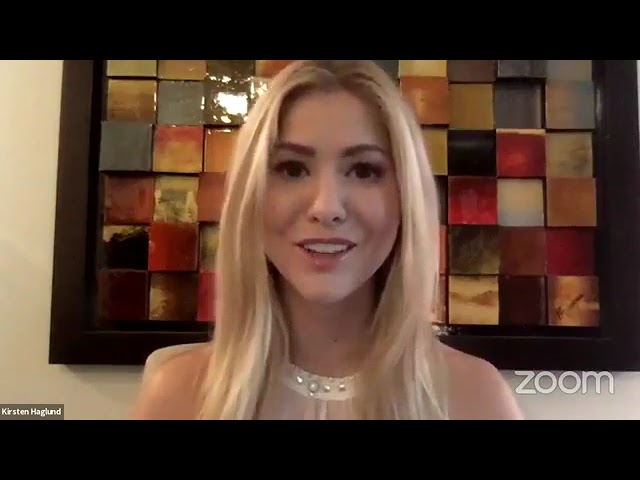
PureTalk 2017 05 05 Ep3 v1

Kirsten Haglund, Billy Halliwell, Greg Gudorf, and Dan Andros discuss how Christians should vote and engage politics. They debate whether character or policy matters more, critique social media's anger-fueling echo chambers, and highlight a church that rescued a Sudanese refugee family as an example of faith in action.
Chapters
Hey everyone, welcome to Pure Talk. I'm Kirsten Haglund and we've got a new innovative talk show for you brought to you by Pureflix and Faithwire. We talk about culture, faith, politics, you name it, we've got it covered, but all through the lens of faith. So joining me here on the panel today is Billy Halliwell, Faithwire's senior editor, Greg Gudorf, CEO of Pureflix.com, and Dan Andros, managing editor at Faithwire. So, all right, let's dive in. We're gonna be talking about culture and politics. You know, simple, easy, not divisive at all. How do Christians, and I think in particular in the political landscape right now, how do we engage with the political conversation and in politics? Billy, go.
Whoa, whoa, okay.
We'll start with you.
I think we need to stop letting politics drive us. I think I've been guilty of this and I still do it sometimes. You start thinking about political ideas, thoughts before you think about where your salvation and your hope lies, and you kind of lead with that and let everything else fall behind instead of sort of saying, "Okay, you know, I'm gonna lead with my faith, and then, you know, maybe I'm gonna have to be critical of the candidate I like or the president I like, or maybe if I don't like that person, I have to have a little more grace and be fair." So I think we could start there, which kind of starts with us, and again, I'm guilty of this all the time, so it's something for me that I continuously need to work on. And then from there, we engage in a calm way, in a peaceful way, because I think a lot of times as Christians, we sort of jump in and we're doing all the yelling and screaming just like everybody else is. There's no difference between us and them, you know, those who aren't believers, let's say.
Yeah, Dan, you made an interesting point earlier about the issue of Christians, in particular with now President Trump, Christians calling people to pray for him and just give him a chance and support him. But that you barely heard that from any Christians with President Obama, right?
Yeah, yeah, and I think it stems, that ties into a little bit what Billy was saying about putting politics first ahead, and I think it's very easy to sort of go through the internet and it becomes almost an echo chamber. You're just looking for the things that resonate with you, and you're sort of, you know, you're repeating those and you're amplifying those, and you kind of just get into a pattern and you sort of lose your empathy gene almost, and your ability to, to think beyond those political walls that we've built up. And I think going forward, and this is one of the things we're trying to do at Faithwire, going forward is to sort of come at these issues with a perspective that the politics aren't the end-all be-all. They're important, but I think if you watch what's happened over, my political sort of activity and following it closely started right in the 2000 election. That was my first as a professional, and I covered that. I was in Florida, which was, quite interesting. Wow, yeah, the hanging chads and all that stuff. So it was pretty wild. But so from being really into it then and seeing, you know, Bush and then, and then, you know, Obama and then now, you know, Trump, I've watched both political parties and it's just the script gets flipped and it's the other side makes the argument they were fighting against the last time. And that happens so often. There are very few people who are actually tied to, you know, tethered to their, their principles. At the core. And like, I feel like those are the people that, that, you know, I think that should be being amplified and elevated and point to. Here's someone that's sticking to a principle and following it over a political party. Because I mean, I just think we're being— I really feel like we're being used and we're being pitted against each other. And it's, it's— and I don't know how intentional it is or it's some big scheme, but I just think it's the easy low-hanging fruit to throw out arguments, you know, it's going to rile up a certain group and it's going to help you get what you want. For a politician. So for us, I think it's trying to move away from that and be able to actually pray for President Obama if you don't like him. Be able to pray for President Trump if you don't like him, but be consistent on it.
Yeah, no, that's such a great point. And you know, Greg, what's interesting about this conversation and about people being used, I feel like evangelicals as a whole have been used by particularly the Republican Party. And I'm saying that as someone who is more center-right, you know, as a conservative, and I like a lot of Republicans,— You have friends who are Republicans, right?— Yeah, I do. I have a Republican friend and a Democratic friend.
Actually, there's a Democratic friend.
I'm just putting them out here on the right and the left. And I did that right, right, again. It took me a long while to learn my right and left. But, you know, what do you think is the relationship between evangelicals as a group and the Republican Party? And is that something that you think has been beneficial? Because you are of a different generation than us, and you saw— No, you're not old. You're just wiser. Oh, there you go. So you experienced the rise of that, you know, moral majority and kind of this conflation of the two. Where do you think we are now? And do you think that was good for evangelicals?
You know, first of all, I think neither party has the right path nowadays, right? I mean, they just— they aren't what they used to be. And they're a lot more similar than not. A lot of people don't like to challenge that one or let that soak in. But I really think we really don't have the two parties anymore. Anymore. We have issues that we call out that each stake out and try to claim as their own. But back to the point of being played, because I think lots of people feel they've been played in this thing. I think it comes down to this core thing about us. We like good, bad, pretty, ugly, fair, not fair, and we—
Republicans, Democrats.
Yep. We love that duality.
Conservatives.
Right?
Yeah.
But Jesus didn't. Play into duality. He said this is "and." It's all created by the Father. So somehow God is in all of this. I think our real challenge in how to respond to the political world is to recognize that it is all God-made. So there must be some reason, some logic, some thinking about it, and we need to look maybe within and figure out how we want to respond to it. Because in the end, we can rant and rave, and social media will reward us with likes.
Yeah.
The only change that can really happen is right here, you know? And I think that's the toughest part about this whole thing when it comes to politics and Christianity.
You know what is something that I feel like I have observed is that a lot of people in the mainstream Christian culture, mainstream evangelical culture, have let the Republican Party platform really dictate their theological priorities. So whereas we are called to be good stewards of the earth, and not to waste, and to care for the environment and steward God's creations. But climate change is not in the Republican wheelhouse, and environmentalism is associated with Greenpeace and all those crazy hippies and stuff. So that is, we're just really, it's not talked about. Rarely ever talked about in sermons, rarely ever talked about among Christian groups. I mean, and I'm a person who loves, I love nature. I want to do things to see, our public parks preserved, have us not waste, have us develop energy technologies that are good for the planet. Like, I want that as a Christian. But that's just an example, I feel, of things that we've let the party platform dictate the messages that we as Christians should also be supporting.
I think sometimes we maybe take things too literally too. Climate change has been going on since day one.
Right, well, I'm not saying like whether it's true or not, I'm just saying like environmental, environmental sources.
But the issue is, again, when we use an issue like that to divide, well, the Republicans don't support this, or the Democrats are the only ones who care about the earth, we suddenly stop a conversation from really happening. Right, and it's ridiculous. Yeah, and part of it is, you know, we have a responsibility to dig into issues and try to understand them, not from headlines, not from tweets, It takes more than 140 characters to really understand something, right? And I think that's something that in this fast-paced media world we tend to go right by. And you know, Trump certainly knows that. Look at all the dang tweets he sends out all the time, right? So he knows we respond to that, but it's not wise.
Can I throw this out, and can we talk about this? Who we end up voting for in an election, how much of an emphasis should Christians place place on that person's moral character. Because, and the reason I want to talk about this is because I grew up in the '90s and Bill Clinton was all over the television screen with what happened in the 1990s. And my parents had to, you know, kind of explain to me what was going on. And the call from the right and the call from Christians was about character. Because, you know, the left said, "It doesn't matter what he did, he's a good president." But Christians said, "No, this is about character and integrity and family values and all of this." And yet we saw something obviously very different with this last election with Donald Trump in 2016. So should we be consistent, like Dan said, about praying for our leaders? How?
Yes.
What do we make our judgment? You know, yes, we should. But then should we be consistent in our judgment of our political leaders and how important moral character is?
Yes, we should.
What should we, how should Christians act in this new normal that we have?
Yeah, well, look, I think in 2016, I mean, I think voters were put in a tough spot. I think they kind of put themselves there. I mean, back to your point about like this ideological, like purity test almost. I mean, Marco Rubio, who I don't agree with every policy he has, but as a Christian, if you watch that man's testimony, which is on YouTube, it's out there, like his full-on, you know, he's done this out in public and it's fantastic. Like this man clearly has a heart for God and has been saved, which is awesome to see. And so, you know, but then what derailed his campaign? He got called Little Marco, Little Marco, and—
And he repeated the same talking point a couple times, which actually was what was the truth. Like, what he was saying was actually a pretty good point, but because he said it the same way 3 times, the media ran with it.
And the immigration thing. He got burned for being on the Gang of Eight, and that just derailed his whole thing, and so we were willing to, you know, just shove him aside, and then, you know, Trump somehow skated through on that. So yeah, but I think, but for as far as the general election goes, I think voters were put sort of in a tough spot, you know, like I know several people, you know, in my family that voted for Trump that didn't, I mean, they definitely didn't love him and were struggling with that moral character issue, but felt, you know, they went with the lesser of two evil things, so it's a tough spot.
And not to insult, 'cause I have a feeling some people here probably did this, but you know, I also think there was an element, I was frustrated with everybody, I mean, that's why I always, I'm like, I'm annoyed with everybody.
Like most Americans, I mean, I think that was really the feeling of most Americans.
And even though I have a lot of friends who I love, and I'm not insulting anybody, who were just like, I can't vote for either of them. I felt like there was this element also of holding a vote up to a place that I didn't quite think it needed to be held up to. Like, I'm going to be held accountable if I vote for Trump or for Hillary. And so I didn't necessarily love that element of it either. I respected it, and I understood it. But for me, it was sort of like, I get too why people didn't think you should vote for either of them. Is our vote that coveted that we're gonna be held accountable for it? You know, are we somehow less—
On Judgment Day.
Right, are we somehow less moral if we choose the lesser of two evils when the reality is one of them was going to win? So, you know, I thought all of it was so interesting, and I think in 20 years we're gonna look back at it and have much more insight and kind of say, wow, that was really strange. And who knows what's gonna happen in 2020, but all of this I think is a sociological experiment in a way that I think will teach us something, but I thought that element was interesting.
And where do we go from here? I'll just throw that out there. Where do we go? Because we had to deal with that during the election, but now that, you know, Trump is in, you know, is it just we go forward and pretend like none of that stuff happened, or should we, you know, if character really does matter, you know, should we, you know, be on that, you know, tightly and closely and call out things? I mean, I just don't know that I'm seeing that happen, you know.
I'm hearing relatives call me who like Trump, and they're just, oh, you know, he could do no wrong. And that's sort of annoying, but then it's annoying on the other side when everything he Everything is horrible, right? But again, where's the grace? Why aren't we leading with the grace?
Yeah, I would ask if the things we've done have gotten us to where we are, will turning the amplitude up on those things get us where we wanna be?
That's a great point.
It's not.
Yeah.
It's gotta come in. There's something about us that loves the idea of a scapegoat, right? And right now, Trump can be a scapegoat for some, Hillary was a scapegoat for others, right? But it goes way back. I mean, we sacrificed humans originally, right? And then we sacrificed animals and the blood, right? We have this thing for scapegoats, and some could argue that Jesus was the ultimate scapegoat. He came to take it all away and make it clean for us, right? But we've fallen right back into our history of looking for scapegoats and someone we can rant and rave about and push it off on. So I think where do we go from here really is the right question. I think the question right behind it is what do we do that's different so we end up in someplace different? Because if we just continue on, we're gonna get the next Trump-Hillary worst case, whatever that might be.
Yeah, and you know, I think the question over what to do now too, there are so many voices in the fray that I almost feel like, I understand the need to call out, the need to express frustration, the need to all of that, like the personal need, But does that really serve the situation, the country, the world, our community? And actions speak louder than words. You know, right after the election, right after Trump was elected, and you know, you heard the, especially there was a lot of fear among, especially millennials, but among the immigrant community and many of those who felt like maybe, you know, their position here wasn't necessarily safe. You know, I thought our job as believers should be, if we wanna show, If we wanna help make the situation better for those people, let's show them love. Let's show them care. Let's reach out to people. Let's be the love that we wanna see that maybe we feel like our president isn't necessarily showing. That's on me to comfort people and to make them feel like they're Americans and help them to feel safe and comfortable here.
And when you multiply that by our churches, the average church in America is actually pretty small, about 70 people. Families, right? But if 70 families, 10%, if they took on 7 other families, should fit within our framework and possibilities. What a difference would be.
And so many great churches do that actually. There was a video on Faithwire which went viral. I mean, do you remember of the refugee who was taken in by that church and supported, and then they were the ones— he was from Africa, or was he—
Sudanese.
Sudanese, and the church brought his his wife and his children over, and they had this— yeah, I remember this moment in the airport.
Man fell to his knees.
Oh my gosh. I mean, I was like, that is Christian love. Like, that's what Christians should be doing. You know, not writing a post on Facebook. You know, what good is— what good really in the world is that going to do?
Like, it doesn't change anything.
Doesn't change anything with your relatives.
Exactly.
You're going to win the argument and then they're going to be converted to Jesus. That's just how it always works. Nobody ever wins a Facebook argument.
That's the worst Oh, nobody.
Or a Twitter argument. And I try to, every once in a while, I'll try to answer someone, and then I end it always with dot dot dot, have a great day, smiley face. That's how I try to show Christian love on my Twitter feed.
It's what you do.
If it always works.
That's what we're afraid of. I do the same thing, but my last thing after the dot dot dot is block.
Right. So this talk about, you know, pray for people, be the change you want to see in your community and so forth. Other political conversations, you know, how involved should we be? Should Christians run for office? You know, should we try to recruit more Christians to run? Should we be focused on legislative victories? What should be the, you know, because Christians have been so involved in politics for the last 25 years.
Can a Christian run for office, win, and via the system still remain true to the their Christian aspect.
Yeah.
In our system today. I don't know. That's a tough one.
I mean, you talk about Marco Rubio.
It's a challenge we have to respond to.
You talk about Marco Rubio. Ben Sasse also, Senator from Nebraska, has his testimony out there. He's a very, very strong Christian. But I don't know. I don't know how these guys do it sometimes because this— we've spoken about— I've lobbied on the Hill several times as a grassroots lobbyist for mental health organizations and and such. And there are some of our congressmen and women who are exceptional. They're interested. They're engaged in their constituents, and they really care. And there are others that won't give you the time of day, and they have lobbyists— paid lobbyists deliver bills to their desk, and they sign them, and they just want to be in power. You know, how does— I don't know. I don't know how a Christian lasts in that environment for very long. I think I would get so cynical.
I think they should step up. I think they should. Yeah, yeah, I think they should. And I think to step up and realize your faith will be challenged because of the new environment and the office itself is really a thing to struggle with. But we should step forward.
Same with Hollywood, you know, all these other arenas. I think politics is a little tougher maybe in some ways because so much more is at stake, but absolutely we have to and we should. I mean, look at, look at our founders. So many of them are people of God, right? And throughout history It's good to have that. You can't compromise in that process. And that's the problem with power.
Yeah.
And money comes compromise.
And I think too, that you can't— I think it's good to learn the mistakes of the past too, and not make your rallying cry, I am the Christian senator, you know, that to kind of do that behind the scenes is probably better. Yeah, live it.
Yeah, we're supposed to be known by that, right? Not what we say, but how we live.
And, you know, I think one more thing that we should touch on too, is I really believe it's important. And not just because You're Pureflix, and you know, we're Faithwire, but for Christians to monitor the types and amount of political news that they consume, because there's so much anger. There is so much anger.
There's not enough anger.
I'm building a wall, a border wall in between. No, but there is just so much anger, and ultimately at the end of the day, that starts to affect your heart.
It really does. It really does.
Even if you say, you know, I'm a Christian, but you listen to people are just so angry and don't even really address the arguments of the other side, but just attack the person.
Let's get you worked up. It's true. It's very sad though, but that's, you know, the reason that happens is— I don't know what's cause and effect, chicken and egg, but like it works. I mean, like you look at these sites and it's like— and I think that's something we as Christians should start, and I'm trying personally to filter out things that I'm seeing. Okay, what is the purpose of this language in this post? Like, you know, you know, so-and-so said something and and then this political guy came up and destroyed him. And it's like, you just like— so that's why you're like— the reason they're getting you to click on something is so you can see this person get quote-unquote destroyed. And that shouldn't be the reason you're looking at something. It's like, you should look at it because it's informative to you. I mean, you might disagree with it, it might be something disturbing, they might have said something or done something that's wrong, but you should not be feasting on these things just to get your jollies from someone getting quote-unquote destroyed. It's like watching the game.
Yeah, clickbait is like lust of the eyes. Don't click, give them money.
And it's really sad, so like we need to exercise self-control as people to say, I'm not going to engage in that. You know, and I actually saw someone post on social the other day, you know, a friend of mine, you know, about some political issue, and they said, you know, I just think that, it was the repeal of the ACA bill that the House put forward, and they reacted to it, and they're on the left side of the spectrum, and they said, you know, I just think the main difference between Democrats and Republicans is that the GOP just don't care about people.
I'm like, you know, like, I'm sure that is.
And it was a list of other things, but I'm like, okay, now that's someone to me that's just been watching those headlines over and over again. And it's like, you might disagree with their policy, but to say we just don't care about people as a Republican, it's just, it's ridiculous.
It doesn't start a conversation. Yeah, we should all be models in the way we consume media and the way that we speak on social media.
And I've been guilty of it. I think we all have of not doing it the right way. We're not, we're certainly not perfect, but you try and you I think when people don't try, they end up posting things like that. I got a tweet today, you know, "24 million Americans are cheering for the deaths of their fellow man." It's like, what? What are you talking about?
No, that's not true.
Let's try to put truth and grace and more beauty out into the world because it certainly needs it. All right, that's all we've got. Culture and politics here on PureTalk. See you next time.