💰 5000 DTV Leads in 12 Months: The £200M Revenue Secrets with Stephen Inala-Reedy
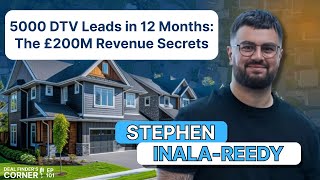
Recorded webinar (Deal Finders Corner) where Stephen Inala-Reedy (founder of a.content.space / The Content Space) explains how he generates direct-to-vendor (DTV) property leads using Meta ads. Covers four pillars (recon/research, personal-brand-led creative, content types, volume vs quality), campaign structure, targeting, budgeting, typical costs and results (≈5,846 DTV leads over 18 months at ~£13/lead), and an offer for a DTV Ads Playbook course (discount code: PROP FILL). Includes audience Q&A on targeting, special ad categories, CRMs and blue tick verification.
Questions this video answers
5,846 leads (≈£13 per lead)
dtvads.com; promo code: PROP FILL (use for £200 off the listed £1,199 price → £999)
Minimum £5/day; most clients spend £30–£50/day (agency-managed clients recommended >£50/day)
Speaker stated approx. £1.50 CPC for Meta and ~£8 CPC for Google search (property keywords)
Chapters
Hello you fantastic lovely people. Welcome to the Deal Finders Corner, your weekly property talk show brought to you by Property Filter, hosted by yours truly, Asif Omar from the Property Filter team. We are the UK's highest rated platform for finding deals and we're on a mission to empower our property investors and deal sourcer members to find 1000 deals this year thanks to the Property Filter blueprint. The purpose with your Dealfinder Corner is to give you more and the best of the available resources. Invite expert guests who will share with the latest and most current strategies, tactics and secrets about what actually works right now in terms of finding and making deals and the reality of systemizing and running a high performance business in property. It is my absolute pleasure to introduce the rather talented Steven Inalaridi on today's Deal Finders Corner. Stephen is the founder of a content space, a specialized marketing, content and production agency dominating the UK property sector. With over 200 million in client revenue generated since 2010, Stephen is the secret weapon behind the most successful property investors lead generation campaigns. So what are we going to learn in this episode? There's a few things. Number one, why the majority of direct to vendor ads in the UK property fail miserably. The 2025 Director Vendor Lead generation strategy explained by Stephen himself. And how you can buy houses for as little. Well, how you can buy houses 20 to 60% below market value and of course followed by an exclusive Q A. So if you have any burning questions then please pop them in the chat and we'll get it to the end. So can we please give a massive, massive, massive, massive property filter welcome to Stephen. Jazz hands everyone. The usual jazz hands. Welcome Stephen. How are we on this rather fine day?
I'm good. Although the northwest of England is experiencing what can only be described as monsoon season at the minute we're getting absolutely pouring rain and then really, really bright sunshine. I've not seen any rainbows, I've not found any gold at the minute. But other than that, yeah, I'm really good. Thank you, Asif.
Yeah, and I've noticed a bit of lightning outside as well. So it's been quite shocking, hasn't it today?
Certainly has. It certainly has.
Would you like to share your slides and go into the presentation for us?
Yeah, let's get going. So I'm going to share this screen.
Share and then we're going to go to presentation mode.
Present. I'm going to move this over here and then I'm going to give you full screen. There we go. We are good to go. Excuse my technophobicness of getting that set up. Boy, we were ready.
Thanks everyone for the warm welcome, and thanks Asif for the introduction as well. This short webinar has been put together for you in order to give you a really good ground in understanding how I've been using Meta to generate director vendor leads every single day for the past sort of 18 months and get really, really hot leads, which Asif mentioned. You know, we've been working with clients and we've been doing this for ourselves to, you know, put offers out and purchase properties, you know, 20 to 60 under market value. But first, a really brief introduction to me. So I'm husband to Kelly and father to Otis who is age six and three quarters. That's my son, not my wife. I've worked with brands, entrepreneurs, startups, bricks and mortar businesses, online coaches, property businesses over the last sort of 20 years or so in and around marketing lead gen, sales gen and that type of thing. Spent with meta around about 50 million in ad spend over the last 12 years or so and generated, as we mentioned before, hundreds of millions in client revenue over that time. I own a software company called Strydust. It's a client management app for the fitness industry. I also do some placements as a fractional CMO for a number of companies. Most recent one is a paddle court installation business based out in the northwest here in Tarpley where we install paddle courts for new clubs and for new ventures. And I also run a content space which is a marketing agency, videography and content agency based in Stockton Heath Village which is where I live, working with a range of businesses but as Asif mentioned, a real focus around property and investors and developers like you guys. And the focus today is how I've been generating direct to vendor leads for as little as £2 a pop over the last 18 months or so. So here's what you will learn during this presentation. How to create ads content so that you can reach a local audience really really easily. How you can set up ads in Meta without a tech headache. So you can generate leads on Autopilot, how you can afford getting poor quality leads so you can finally speak to motivated sellers and the new way to run Meta ads that none of the We Buy any Home guys are actually doing, which is 99.9% of the ads I see in this space at the minute are kind of these nameless, faceless brands. And that's not what's going to work in 2025 and it's not been working for a while. First, a very quick Confession? Yes, I have an advantage over most of you guys when I've been running these campaigns. I've sat in Meta since its inception. We are an agency that's been around for a while and worked with Meta for a long, long time. I get all that. I understand that completely. And I don't take that for granted that I've got a lot of experience in this space. But if you can get results half as good as I have, then surely that would be a win. If you can develop and generate leads for £4 plus a pop, then that's still a whim, right? So I don't think any of that information should be taken for granted. And I'm fully aware of the fact that yes, I do have an advantage, so why should you listen to me? So, as I mentioned before, we were one of the very first Meta certified agencies in the uk.
Actually, we were on the platform before Meta certification was actually a thing. We have what's called a white labeled agency account with Meta, which means we can run over all of our campaigns without fear of being banned. And we get a direct line through to Meta, not to Zuckerberg, unfortunately, but through to someone at Meta if things go wrong.
I've ran paid advertising for well over 10 years now. That's probably a little bit out of date. It's more like 15. And spent my own cash on this. I'm not one of these agencies who's just kind of spent everyone else's cash and not been too bothered about the results. All of the businesses that I've run over the last 15 or so years of being a business owner myself, I spent my own money in Covid. I was spending around about 100 to 150 grand a month of my own cash doing mortgage lead gen. And I still spend really heavily across my software business. Not so much on the agency, but on the software business every single day. So as opposed to just using someone else else's credit card and not being bothered about the results, I've been spending my own money for a long, long time. And then over the last 12 years or so, I've taught around about a thousand business owners how to run their own Meta ads as well. So I think that gives me a little bit of a, an understanding and some knowledge on how we can potentially help you to generate leads for your own business.
It's all well and good for me talking to you about the theory, but I've put all of this information that I'm going to share with you today into practice with my own Money too.
And I've been able to do that for client cash as well. And in the last 18 months I've generated 5,846 director vendor leads at approximately 13 pounds a pop. So that's roughly 75 ish grand spent on just these types of campaigns of, you know, in the last year probably spent 1 or 2 million quids worth of ad spend with just Meta alone.
So there are four major pillars of successful paid advertising.
There's the recon, there's kind of you going and doing some research, understanding who your market is and how to communicate with them effectively. There's the power of pb, which is pretty much the secret sauce, which I'll come on to you in a second. There's the content that you use and then there's this argument versus volume and quality. And these are like the four pillars that I'm going to discuss with you. I'm going to give you a really good kind of overarching, high level view of this because this webinar could be six hours long. I could spend, I could spend unlimited time talking about this because I'm doing it for that long. But we've got a, you know, a stringent amount of time. I want to give you as much value as I can. I'm going to make an offer to you at the end as well and then we've got loads of time for Q A. So I'm going to move through this stuff. If you do get questions, feel free to write them down.
And come back to them at the end when we have time for questions because I'm going to rattle through this content. I'm going to share all of these slides with Asif and the team at Property Filter. So if you want to make notes, of course, feel free, but I will send all of these slides alongside. So if you want to refer back to them, obviously you'll have that, that content as well. But yeah, if you've got any questions or anything you need to ask, feel free to write them down and we'll cover those as and when. So going to jump into the first four of the four pillars if everyone's okay with that. And that is recon or research.
Most people when they run advertising campaigns, and I don't just mean kind of entrepreneurs like you guys in the room, I mean businesses of huge, huge sizes as well, don't do any research. They don't think about who might want that service, they don't think about why they want the service and they don't think about the main reasons why people may not want to pay for that service or maybe have some trepidation about using that service. And I've seen that across businesses or startup businesses like my own. And I've seen it in huge multinational companies who are launching new products who don't do research. And for me that feels like folly. Right? Like why would you spend money, especially from a paid ads perspective on a campaign if you don't know if someone definitely wants what you've got? And why would you spend all the time of building a campaign, filming content, doing all this stuff if you're not going to know whether it's the right thing? So research is really important. So thinking about why potentially someone would sell a property to you direct, why would you be able to get this direct to vendor lead over them going down a more traditional route of sale, whether it be an auction, whether it be just through an estate agent. So thinking and understanding why would they want to go direct to me more than any other option is really important. And why, why do they want that? And so some of the things that we've seen in our campaigns we've been doing especially for the last 12 months or so, lots of portfolio legion so appealing to kind of baby boomers and people who are getting to retirement age who don't necessarily want the hassle of a large portfolio anymore. They want to exit the property market and they've got lots of fear around cgt the, you know, maybe they own the properties in their own name and are kind of a bit stuck. They didn't go down the limited company route when all the legislation was changed. And they're kind of sat there thinking I don't know how to get out. It's a little bit of these golden handcuffs. They've got this great portfolio that they've generated over time but they're going to get hit with this big tax bill. They don't want to leave it as investments. The kids don't want, you know, traditional buy to lets anymore because they don't want the hassle. Maybe they're under rented, lots of these things going around. And the reason that I can talk about that quite confidently is because my mother in law is that person, she is that landlord. She has six properties in Warrington that she's rented out and she, well she's, she's purchased over the last 15 years. They're in her own name and she has all of those fears. So I know that from personal experience and you guys probably know that from working with landlords and working with Director Vendor Opportunities before but we need to then put that into a campaign if we're ever going out to a mass market and most people don't do that. So we need to think about those things before we ever launch a campaign. So answering these questions will start.
Answering these questions right at the start, I should say will enable you to create ad content that resonates. It's really important that we do think about these things in detail. And we think about these things.
Not just from our own opinion. We try and base it on fact as well. Your opinions will be valid, of course, but you know, if you've got a circle of friends who maybe are the type of people that you'd want to attract, if you've worked with someone direct to vendor before and you can reference back a conversation and your knowledge from that, this is going to give you much better grounding for how your campaign structure should look, what your content should look like, and ultimately how well your ads perform as a result. So pillar one is research. It sounds really boring and it is kind of like you. You got to just spend some time thinking really deeply about all the reasons why someone might need, you might want to use your services, might want to go direct to vendor with, or you want to go direct to vendor with them and purchase a house or, or a portfolio. And then all the reasons maybe they don't want to do it. You know, are they worried about taking an offer that's lower the market rate? Which, you know, that's the whole point of us going direct to vendor is to secure something under market rate. Well, if they are worried about that, how do we then convince them that this is the right option? Well, if your house has been on the market for a while, you know, what's the opportunity cost that you've missed there by having that, you know, having those funds tied up in that property, you could have had a different deal, you could have done something different with the money. You know, the fact that you can close out really quickly and, and get people to turned around in four to six weeks, maybe less in some cases, is that a benefit to them because they need the money for something different. You know, they need it for the kids wedding, they need it for another deal that they want to do. So we have to think about all those things and understand what we call pain points. And we understand like the big wins of using someone like you as opposed to going down a traditional route for selling a property. If we can think about those things and do that research now that's going to make our campaign structure and strategy much, much easier. So that's the first pillar is actually just doing boring research. Next up is, as I mentioned before, the power of pb. So direct to vendor lead gen is not new leaflets, letters, some social ads, we see them all the time. Obviously you've got great softwares like Property Filter that help you guys to generate these leads as well. But a lot of the kind of traditional marketing leaflets, letters, social ads all, all make this one mistake is they all try and position themselves as we we buy any home or home buyers uk. None of those businesses are leveraging the one thing that is the most powerful element when it comes to such a big deal as property. You know, most people's property and property portfolios are their biggest investments or their only investments in some cases. Especially for the the boomer landlords that we mentioned previously, it's their only real investment, it's the pension plan and it's a really personal important thing. So.
If you think about it laterally and logically, are you going to trust kind of this nameless, faceless corporation with something so personal as important as your property portfolio, your pension, your retirement plan, or would you rather deal with someone who was leveraging the power of their own personal brand? I see so many property developers, investors who are doing the walk around videos of the lace latest property. They're doing the kind of oh, we just bought this house and look at the state of it and here's what we finished and this is how we've managed to, you know, change this house from a rundown, rundown property into something that is going to house people and solve part of the housing problems that we've got here in the UK and they do a great job of that. But when it comes to marketing and advertising they're a little bit more shy and they don't. But people buy from people. That old adage rings true and it still rings true today and it still rings true in direct to vendor lead gen using meta. Use your personal brand, your local knowledge and your current portfolio to your advantage to create campaigns which really touch on the reasons that people may come to you as opposed to, like we said before, these more traditional routes of selling their property. We've got a client, Matt, who only buys in and around Preston and he has been running campaigns for a really long time in Preston. He's really well known in the area.
And his ads have been there, he creates lots of content there. He does a really good job of becoming like known as the guy in Preston who buys kind of or will at least make an offer on any property that people have got. And that kind of locally famous added really helps him out because you know, anyone in the trades that know about him, they'll always pass him leads, they'll always pass him inquiries as well as the stuff that he's getting from his marketing efforts. So being able to use your own and leverage, leverage your own personal brand in order to become known for the things that you do is going to be really important because ultimately, as I said before, people buy from people. People buy from understanding that you are a real human, not some nameless, faceless corporation who's just going to fire an offer to them. And if you don't want it, okay, never mind, you'll go on to the next person, which might be true, but they trust an individual far more than they do. There's the nameless faceless brand. So the second big pillar there is trying to focus on.
Leveraging your own personal brand or leveraging a personal brand experience, which I'll cover for you in a second. Um, because we have some clients who are behind the scenes, don't want to be known for the property work. They're doing their. They've got a team that develop or they're kind of not on social media and they don't want to be plastered all over Facebook or Instagram, which I understand and completely empathize with as well. So there's a few tactics that we can use in order to still get the result that we want of leveraging a personal brand without necessarily being that individual on the video. So if you're worried about that, if you're thinking, oh Stephen, I don't want to be all over the Internet. Get it. Got it. Understand with his loads of strategies that we can implement that will stop you having to do that but still get the same result. So that's pillar two. Next up is, as we alluded to before, the content and creative we see. So what often kind of these like B roll kind of animated stock image ads that Iran and it's like, you know, this very Americanized person walking around a house. Although this image of Neve, who's one of our spokespeople, looks beautiful and she looks great on, on this shot that we shot in Liverpool a week or so ago. This is actually a person that we know who works as a spokesperson for some of our clients who doesn't, who don't want to be on film. And although the, the video looks great and, and looks really high quality, you know, Neve walked around one of our client properties and presented it and presented their solution. They were looking for director vendor leads but they were also looking for investors. So they wanted to show one of the projects that they finished in Liverpool and how well it had kind of been renovated and, and potentially saw some additional funds from investors there. So. But the chap whose businesses this is doesn't want to be on camera. He doesn't like his accent, he doesn't think it, it'll give the best, best experience to potential investing, the best impression. So we got Neve to come around and do these, these videos instead and um. But the types of content that we're seeing get really, really good results in direct to vendor campaigns right now are really, really kind of leveraging that personal brand as I mentioned before. So walking down the streets where you want to buy houses and speaking to the camera, walking past the properties that you've already purchased and you know, getting shots of them in the state that they are now and then 12 weeks later when they're complete, getting shots of them when they're complete and looking amazing and polished and new and fantastic and then showing the before and after that really works well and is super powerful. And then what we call user generated content. UGC is super powerful. Can you speak to one of the people that you bought a house from and get 15 to 60 seconds from them on video on how the experience was. Sometimes you do it remotely and you never really see that person. That's fine as well. There's a company at the minute advertising in and around the Northwest. The name always escapes me when I'm referencing them, but it's an older chap and he is filming in the kitchen on someone whose property bought and he said he's going to take him down the pub afterwards. And that is like it's not one of our clients. But he does a really good job of showing how he's using the human element and user generated content to really convince other landlords of a similar age to this chat that he's showing. The guy was a retiree and he sold some of his properties because he wanted to move on to a different project. And they're interviewed in the kitchen, really really organic, really, really nice, natural looking video. And he's been running that video for like three months. So I know that it's getting good results because there's no way you would spend money on an ad that wasn't getting your results for three months. You would have turned it off by now. So those are the kind of the, the the content types that we know that get really, really good results. And here's just some examples of it, you know, inside your properties, out on the street, on the, in the properties that you want to purchase. And then, you know, with our clients, we actually film in studio as well to give them a range of different content. And our studio more homely. We've got a couple different scenes in our studio which are very kind of welcoming and look like someone's living room. Those tend to work really well too. So freshening up the content and having different options is a really good way of consistently getting great quality leads. But as I mentioned before, we're closing on 6,000 generated over the last 18 months for clients and for ourselves. So from that perspective, we know that just freshening up content a little bit each time really, really does help with that ongoing lead generation. But there's, there's plenty of, plenty of fish in the sea still. We don't think this market is tapped at all.
So that's pillar three. It's, it's around your content, creative, it's around your strategy, it's around understanding who you want to appeal to, why you want to appeal to them, how you can appeal to them, understanding from the recon that you've done, why they would potentially use you. You know, is it speed, is discretion, is it.
You know, is it creative options of exit for portfolio landlords, lease options, etc. Those are all reasons that people will come to you as opposed to the traditional route. And being able to display that in your content is going to be key and really important as well. And then the final pillar is volume versus quality.
For the campaigns that I've ran, we have captured eight questions. Name, phone, email address, full address of property. Is the house owned by you? How long has it been on the market? Does it need any remedial work? Are they happy for us to make an offer and purchase within four to six weeks? I think was the number. The more questions we asked, the less volume, but does that actually give us higher quality? The argument is yes. When we're looking at portfolio landlords, we're asking.
We'Re asking if the property is tenanted. We're asking some additional questions around their portfolio makeup. We're asking their reasons for them, potentially when to exit so we can discern whether speed or is the most important thing. Most of the time it's like we want the most we can get for our money, which kind of is natural. I'm sure you guys have experienced that as well. And then it's up to our client or the people that are dealing with these leads to kind of.
Explain why they may not be the biggest offer in terms of cash, but there's other benefits to them and their offer and the structure and process that they can offer. So volume versus quality is always an interesting concept.
A lot of time we get clients who are like, I only want leads from ST1 to ST6. Makes sense if that's the only place that they're buying. What you've got to consider is, are the landlords who own Those properties in ST1 to ST6? In our experience? No, that isn't the case. They're a little bit wider, a little bit wider from that. So actually if I just, you know, ran a campaign, it was only in those postcodes which you can go as specific as. You can go as specific as four digits or numerals from the postcode. So for me it'd be WA44. I could go as specific as that, you know, a really, really tight area. But that isn't going to give me a massive amount of bites of the cherry when it comes to running a campaign. So I've got to be careful with how tight that I go, how stringent I go with my targeting to still give me enough volume to make the campaign worthwhile. So not only the questions that you ask will reduce or increase your potential volume, but maybe also impact quality, but also the areas that I target in will have a deep impact on the volume of people who can see my ads, the potential volume of people who can see my ads each day, and then ultimately that will then disseminate down into how many leads I can generate per day, per week, Per month, per year. You know, if I've only got a thousand people in an audience or less than a thousand people in audience, which WA44, I think is less than a thousand. How many of those people are, you know, portfolio landlords? How many of them have got rental properties they want to send? How many have got properties that you want to sell right now and they don't want to go traditional route? Probably a small percentage, right? And if it's a small percentage and my ads being served to them, you know, 10 people might be the, the total, total addressable market for that particular area. So If I got 10 leads from it, the market isn't going to change that much over the course of a week, month, year, you know, a thousand people aren't going to leave and a new 1,000 people aren't all going to come into that postcode in in the space of a week, month or year. So actually my addressable market is really small there. So I need to think about casting a wider net. And that's probably one piece of advice which isn't on the slides that I'll leave you with is kind of casting a wider net is actually a better bet. Lots of you guys, most of the guys that I've worked with in, in this space are quite creative, they're quite well connected and they can find an exit for a property if they get offered it at the right price. You know, anything has got an exit attached to it if it's at the right number. Right. So just because you get one that's kind of outside of your remit, you know, it's not in crew where you're buying or it's not.
It'S not a commercial to resi opportunity or whatever it might be, doesn't mean that you can't find an exit for it. Even if you just source it on and sell it to someone else, there's always going to be an exit for you at some point. So from that perspective, casting a bit of a wider net and then being able to potentially find a home for that inquiry is going to be a better bet than going too tight. So that's your fourth, your fourth core pillar there. So I still truly believe that this is the biggest bluish ocean for direct to vendor right now. Less than 50 people have been through this training so far. Or work with me one to one.
Which I think is a minute number when you think about the amount of people that are subscribed to Property Filter and that are in the networks that we're all friendly with and know and work in. It's a tiny number. I'm actually surprised that a bigger business hasn't cottoned onto this strategy yet and kind of ran it at scale. I haven't seen that in the last 18 months at all. And I think we've got kind of a 24 to 36 month shelf life before it becomes more difficult. I don't think even at that point it becomes impossible, it just becomes more difficult because there's more players in the market. The Meta system is basically an auction system, so. So if more people are creating campaigns of a similar ilk and bidding on it, our numbers will creep up slightly. And we've seen that over the last 18 months we've gone from kind of an average of sort of 4 to 8 pound leads to like more now like 6 to 12 pound leads as an average. And you saw mine Roughly speaking, across all of our campaigns was about £13. The reason ours are a little bit higher is because we've got some very specific campaigns where as I said before, clients are looking for investors, not necessarily properties or they're looking for wealth managers who might have a portfolio of high net worth clients who want to invest in property or be a private investor themselves. So that pushes our average number up slightly but not too much. So yeah, less than 50 people have been through that training or worked for me one to one on direct to vendor lead gen. So I think it represents a real, real blue ocean. If you get a fraction of my results, I think you'll be able to pick up deals that the rest of the market can only dream about. I think, you know, I've got some examples of some clients who work with us and the results they've got, but one that springs to mind is a guy called Matt, the guy from Preston who I mentioned before. He bought four properties in earlier this year within the space of about 30 days running the campaigns, kept two of them, the other two he sold straight back on and made 45 grand in a matter of days from the, the lead being purchased, the conveyancing being done, the, the lead being generated, the conveyance being done, the property purchased and then selling them back on to an investor on the back end. And he probably spent less than a thousand quid on his ads over the course of a few months to make that sort of return from these deals that had fallen on his lap. So those kind of numbers aren't typical, but they are available and they are an opportunity and, and it is a possibility.
So I think, you know, even if you were paying 26 quid a lead instead of the average of 13 that we're paying at the minute, actually, does that still work out? Probably, as long as you've got a propensity to kind of just wait out and keep get generating the leads. If they were costing you 50 quid a lead, would it still work out? I think so. So from that perspective, I think there's a really good opportunity here and I think there's a real blue ocean for right now.
So before I move on, any questions that have cropped up from anything I've said so far, feel free to ask before I move on to kind of the offer that I've got for you. I'll talk to you about that and then we'll go into more wider questions there. But anyone got any questions before I move on there?
So there isn't any questions at the Moment perfect. So we'll take them later.
No problem.
So.
Most of the time when I do this, Let me just go back. Most of the time when I do this presentation, people have heard about it, you sat the computer watching the webinar and you can see that using paid ads could be a great way to get direct to vendor leads. And most of the time people go, right, I just want you to do it for me. Unfortunately, we can't do that. We only work with 10 clients any one time. We're full till at least October, probably looking at the back end of October for new client onboarding at the minute.
But.
We have spoke to the guys at Property Filter and we've got some approved training. And as an approved training provider for you, we've put together what we call the Director Vendor Meta Ads Playbook. So it's the exact system I use to generate direct to vendor leads every single day. I will break down the complete system, walk you through how to install it in your business step by step.
And there's five different modules on there. It will give you.
How to target the ads to the right people using a combination of targeting options. How to budget effectively for your paid ads so you don't waste your money. How to create different ad types using Meta's own internal features. How to create great looking video ads even if you don't want to be on camera yourself. And then I'll walk you through button click step by step on how to create a direct vendor ad so that you can follow along. This program has been updated for September 2025. So it's up to the minute, up to the button. I finished one of the recordings of the last videos on Monday. So from new fresh information, it's as fresh and as up to date as it can be. There are no hidden tricks, there's no additional things. It's just this is everything that we do every single day to run these leads and generate, as I say, 6,000 or so over the last 18 months. And there's loads of other things in there as well. So I mentioned a bit of a few testimonials from the guys we've been working with. Paul, great guy from Grimsby, been running campaigns since November last year. He actually recorded me a really nice video around how he found the program and he said it was by far the best money he'd spent on advertising. I can't rate Steven's support and expertise highly enough, which is always nice to hear Steve in the middle there, who actually came into my studio to see me a Couple of months back, had a little photo with him. He's had lots of success from running paid ads for, for his business. He's getting leads for £4 a pop and that was recently, not kind of a year ago. And then Matt who I mentioned before, four deals for one ad, sold two on and kept two 45 equity game from two offers accepted. So really, really good stuff from people who've used the Playbook to get great results.
So I mentioned some of the other things that we've got. So sometimes people are a bit worried about how am I going to write ad copy, how am I going to write scripts? So, so I've put together custom GPTs and chat GPT prompts and guides for copies and scripts so that you can write all of the things you need for your videos. If you're going to film yourself, it's your own script. So if you're going to hire someone like a spokesperson to do it, you'll have all of that information to hand too. I've got explain explainers on where to source spokespeople from if you've not got access to, you know, paid actors and actresses like I have, then how to source people really, really, really easily and cheaply on the Internet who'll record all the stuff for you remotely and then send it to you and then how to use Canva to create faceless ads to test as well. So lots of really cool bonus stuff as well, not just the button clicks and what have you. So if you implemented everything I've just shared with you, you get amazing results in your, in your business and that's why I think the DTV ads Playbook is kind of the next step for you. Usually any courses that I put together in seller a couple of grand apart but we've got a massive property filter discount for you guys. However, I know because I've sold courses and ran online stuff for years. Most online courses get under a 20 success rate. People buy it, they feel like that's everything they need to do to get success and then they don't implement half of the stuff. I can say this hand on heart, you'll have seen some of the guys on on there who bought the course before. Every single person who has bought the program and then done the work and implemented has got leads through the door and the vast majority, 80% plus have bought houses under market value. 20 to 60% the guys who did everything implemented and the 20% who didn't buy properties under market value still managed to make money from the lead. So Some of the guys that we work with last year and earlier this year, the properties that we getting through weren't perfect for their, for their structure and what they want to do in the business. But they either sourced them on someone else and someone else bought them and they just took a sourcing fee or they pass them on to a friendly estate agent they knew and took an introductionary fee from the estate agent. They still made money from the leads. They didn't lose the money, they still made it. They just maybe didn't buy the houses. So I think that's a pretty good success rate based on the number that I've just told you. Most online courses get under a 20% success rate, so I think that's pretty good. I'm going to guarantee you success anyway and the way that I'm going to do that is a special bonus for four weeks if you join during this month. So we start the calls from next Thursday. I'm going to put on a live call once a week to answer your questions around running ads for direct to vendor leads. I'll review your targeting, your offer, your copy creative, the forms, any follow ups that you're doing, I'll review them live for you. These will be recorded so you can refer back to them when needed. And you also get limited and unlimited and lifetime support from me and my team via email. So again, that's as much as I can do apart from run the ads for you to guarantee success. I'll review everything that you're doing, make sure it's right, change it. If it isn't, do it live in a call with you or do it via email if you want to keep your own security and kind of keep your your campaigns under wraps. So I don't think I can do any more than that. So the burning question is how much? So as I said before, usually all the courses I sell a couple of grand plus any mentoring calls I do like. The live calls would be a couple of hundred quid an hour if you invest in the DTV Ads playbook. Now there's a big property filter discount as I say, usually a couple of grand. It's actually priced on the website at 1199 but if you use the code prop fill, which is my acronym for property filter, you get another 200 quid off. So it's a grand flat. And as I said before, Module 1 how to target Module 2 how to budget Module 3 how to create ads using Meta's internal features so you don't need a website. How to Create great looking video ads. If you don't be on camera walk you step by step how to do it and then how, which is I think the most important module, how to analyze the results and then improve them. Because it's great just getting them running. But if you want to make them better, get better quality leads, we need to figure out how to analyze them as well. So that's me, that's my pitch, that's all that stuff done. Any questions, fire away. I'm a wary of time, so anyone who's got anything to ask, feel free to ask it on campaign structure, any of that type of stuff and I'll be happy to help.
Brilliant presentation. So let's take questions. There isn't any question in the chat box yet, so maybe people are going to be typing them in. But my question for you is in terms of I can see that meta is a big part of what you're doing. What do you think of Google Ads and why do you not really focus on Google Ads?
Great question. The.
Answer'S twofold. Google Ads number one, the real estate that you've got to convince someone to click on your ad as opposed to anyone else's is a headline and about 30 words. Whereas with Meta you have up to 3, 3 to 600 words and video content etc. So the persuasiveness of your ad is much improved when using something like meta that the other thing is meta is what's known as a discoverable platform. So content is presented to people in a feed so that they can discover your content. Whereas Google is a searchable platform. So someone puts in a key phrase to search for something and they find businesses that are linked to the key phrase that they've searched. That means that costs are much, much higher.
Average cost per click. With meta, this is kind of going into some of the course content, but average cost per click for meta is around about 1 pound 50. Average cost per click for Google search for property based search terms will be more like 8 pounds a click between definitely more than 5 on average for like really really good key phrases with high search volume. More long tail phrases, more specific phrases will be less on average. You'll pay much more per click. And then you're relying on your website copy doing a really good job. You're relying on your website looking good. Loading quickly. There's so many other variables that you have to take into account when it comes to Google. Whereas with meta, as I alluded to before, you can actually use meta's own internal features to never have to leave Meta. Never have to send someone to a website, the formals appear within meta and you don't have to worry about any of those other variables. So you can create a great campaign with much better assets which convince someone much more quickly and easily with video content and much more text, and then get the inquiry straight from Meta and they never have to leave. And that's the big win compared to Google and Meta. Don't get me wrong, I've spent probably five or six million quid on Google search over the last ten years or so. When I was running my mortgage lead gen, we were spending hundreds of thousands on meta every single on Google, every single month. And it was a great place for it. But is expensive, right? And with smaller budgets, the average client who works with US spends from £5 anywhere up to about £50 a day, which sounds like a lot of 50 quid a day, but is, you know, quite modest when you think about that, based on the potential of the leads that they could generate and the potential profits that can be made from director vendor sourcing if you're buying 20 to 60 under market value. So actually that's pretty cost effective. Whereas you, you know, a 1500 quid budget on Google would be swallowed up, well, could be swallowed up very easily in a day.
That was going to be one of my questions. What is the average person spending with you? And the other question that I suppose I got, which is related, so what's the average person spending and how long does it take for to see results from it?
Great question. So, yeah, average, you can start from five pounds a day. That's kind of the minimum number with Meta for the types of campaigns I want you to run.
Most clients are spending between 30 and 50 pounds. The guys who are paying us to do it, I always say, look, you need to be spending more than 50 quid or more a day because otherwise it doesn't make sense for you to pay us to do it. You might as well just run it yourself and spend the money on your ad spend. But the guys who've been through the program, yeah, anywhere from kind of 10, 15, 20 up to about 50 quid a day at the top level. How quickly did you get results? Great question. The lovely thing about paid advertising compared to doing a leaflet drop, you know, going and door knocking or whatever it might be, is you can get results very quickly for a very limited amount of spend. If I go and get 10, 000 leaflets printed up and then get someone to go and deliver them, I have to Invest all of that cost up front without any understanding of what potentially what my results are. If I spent 20 quid a day on Facebook ads, I would know within 24 to 48 hours if it's going to work and I can turn them off if they don't. So I haven't invested the 1500 quid, two grand, three grand, four grand. I've invested 20 or 30 quid, 40 quid, 60 quid to know whether my campaign is hitting the right buttons or not. And within the program, what I teach you is to understand what those buttons are that you then need to press in order to fix it if it's not working, as opposed to, ah, my leaflets didn't go very well, I spent all this money, I've got no calls, okay, I have to go and do it again and try and tweak them and hope that I can figure out what the problem was. Paid advertising, no penny of paid advertising is ever wasted if you can analyze why they didn't work and then make changes. And that's why I try and teach in the program. That's why I said that module actually is my favorite one, the KPIs and kind of fixing and analyzing results one. Because actually that's the bit, that's the really important bit is you can launch a campaign. You know, you can just hit boost on a post in Instagram or in Facebook and launch something and get inquiries, but you don't know why it's working. You can't understand why it's working. You don't know what the success was. So it's very difficult then to replicate what I'm trying to give you a repeatable, replicable formula that then you can go, okay, cool. And then the other thing is you can apply that to any other type of business that you run into. I know a lot of people who are in property and buying direct to vendor have other businesses, they have estate agents or letting agents or they have, you know, other companies based around property or something completely different. The skills that you learn in this program can then be used and attributed to other businesses as well. Which I think is a key, valuable thing, but not necessarily something that I market it as Brilliant.
So the next question we've got is from Jason and he's saying, what are the targeting filters you use on your ads to get people or to get people with property other than area? Are there specific interests you also go for as well?
Good question. And without spilling the beans too much, there's lots of layers that we, we add in Again, it comes down to your research and your recon Jason, wasn't it? Is that right?
It was.
It comes down to your research and your recon, Jason. So thinking about the people that you maybe want to work with and the people whose properties you might want to buy, where are they hanging out on the Internet other than meta, where are they going? What are they searching? Who do they use? So again, I always use my mother in law in this example. Like where does she spend her time when it comes to thinking about her property portfolio, her businesses? So she's a massive advocate and fan of Martin Lawrence, the Martin Lewis, sorry, the money saving expert.com guy, because she feels like he gives great advice. He's never really asked her for anything. You know, she pays a subscription through his website for like 15 quid a month. MoneySavingExpert.com Etc. So if that's like the, an archetype kind of celebrity in inverted commas that that type of audience may be attracted to and interested in, well then naturally then maybe Martin Lewis and MoneySavingExpert.com might be a detailed targeting overlay that we add into location. So you've got to think, that's how you got to think. You got to think about it from a wider perspective. Are you looking for, you know, landlords who are small business owners? May. Is the FSB a really good targeting, detailed targeting option to put in Federation of small businesses because that's where they hang out. Are they people who go to BNI networking events? Cool. Then let's add BNI as a filter. You've got to think laterally about these things. And then like I said before, you know, nothing ever fails on, on paid advertising in if you learn from your mistakes and then correct them or learn from what worked and what didn't and correct them. So if you do it and you do that for three days, you spend 60 quid and you get crickets. All right, that isn't working so well. Then we'll change it and try something else. It's all about iteration, it's all about testing. And what might work for me based on my offer, for my clients or for my stuff may not work for you because you're in stains in your advertising and the buyer behavior there is a different. So you've got to be able and be confident in being able to test, understand the data of why something worked or didn't and then make changes to it. And that's where I think the program can help you.
Brilliant. So Jason's got a Follow up, he says, yeah, that makes sense. Do you stack these filters in one ad set or do you create one ad set per searchable area?
Jason's done some ads before. He's. He's an advanced person. That's an advanced question. Great question. So, no, I would never stack detail targeting on top of them on top of each other. I would always. Because you can't test what works if you, if you stack two or three, which one works? You don't know because you got no data to tell you. So I would always separate detail targeting out, same location, same, you know, same age range, et cetera, et cetera. And then I would initially anyway, separate detail targets down in their own ad sets because then that gives you, oh, there's a hot button targeting option here and these ones aren't working. So I'd always separate interest. Stacking is only really available. It's only really advisable when you've got a very, very small catchment area. But it doesn't. And you're just confident that you can just run campaigns. So, yeah, I would never do that. But great question, Jason. And as I say, advanced question in there.
Perfect. So the next one we've got is from Simon. It says with Facebook ads in property, you are in the property category. And he's got two questions. First one is how to target people with those restrictions. So we'll start with that question and then we'll go into the second one.
Yeah. So for the benefits of those people who don't know what Simon, wasn't it, Simon? For the benefits of people who don't know what Simon's talking about, Meta have a couple of what they call special interest categories that they ask you to subscribe to and be marked as when you are advertising. These are actually US options and in US.
Special interest categories, and they're not actually applicable to the uk, although we sometimes get labeled with them. So first answer is, in the vast majority of cases I don't use, I don't apply to the special interest targeting. And that means that the rest of the targeting options are open to me, Simon. But if we're having trouble with a particular campaign that we need to, then you can't do it. You have to just go, age, location and that's it. Age, location, sex, and that, that's it. But in the vast 95% of the campaigns that we're running, unless it's like a, you know, a HMO campaign for vulnerable, you know, vulnerable people or something like that, where there is a specific reason that that would be in the special interest category, then we don't actually tick that box because we're not. If you read the reasons why that special interest category exists, Simon, your campaigns don't actually attribute to those reasons. It's just you get marked with it because you mention around houses, which is annoying. So yeah, that's actually the reason why we don't do that.
Fantastic. And question number two is if we get load of leads, which is of course the objective, do you have a follow up AI system that we can use to go high level, for example?
Very good question. Again a little bit more technical. We do have some things built that we can offer to you in terms of a framework. We don't do custom builds for people, we don't do like snapshots that you can just install yourself, but I can give you a process map of touch points etc, which is in the program that you can then attribute and put into your own go high level system. The reason that we don't build out again for people who don't know Guilevel is like a lead management CRM tool. It's very, very big and there's lots of features and available software features to it and it can be quite. Depending on how people have built out their own version, it can be quite finicky. So we don't do custom builds for that type of stuff just because we've had too many situations where we've installed something that we know works in our build but it doesn't work in someone else's build and it breaks stuff and then we're left liable for fixing it. So we can give you a process map, we can give you some frameworks and then you can just attribute that and build that yourself or get your team to build it.
Fantastic. And then the next question we've got is from Darren and he's talking about what does the blue tick mean in meta? How credible is this when you can just pay monthly?
Great question.
And I guess it depends on why you asked that question, Darren. Right?
I guess it depends on why you ask that question. So my agency Instagram account has a blue tick. I have less than like 2000 followers I think now. Less than, sorry, less than 1200 followers. Like 1050 followers. We're by no means kind of a an influencer or anything like that, but although my little boy yesterday, it was my birthday yesterday, my little boy called me an Instagrammer at dinner yesterday, which made me and my wife absolutely hell with Leicester. So we have a blue tick. The reason the Blue Tick I think is valuable isn't for like positioning with general, the general public. It's actually better for you because it gives you a layer of protection if you're at. If your account gets hacked, it gives you a rep that you can speak to straight away if you've got any problems or if you get banned for any reason. It gives you that layer of protection that otherwise you wouldn't get as a result. And that's where the value is for. I think it cost me 400 quid a year. It's valuable for us because we need an Instagram account, we need a Facebook business page for our business and to manage our clients accounts and what have you. So 400 quid a year to make sure that we don't lose that account and have to set a new one up and go through all that rig and roll of growing it again is worth it to me. So that's where the value is in paying for it. I think from a purely positioning standpoint as like a person of influence. Yeah, it's I think maybe again if I use my mother in law as an example, she may consider it like valuable but for all of us who've got like any modicum of knowledge around social, we know you can just pay 30 quid for it. So it's lost that value. But there's this other layer of value that it offers for you if you are advertising or using it for a marketing purpose, even if you're just posting organically, that's the bit that actually provides the value for you. So yeah, great question but that, that would be my answer.
Brilliant. And the final question, it's a question I ask every guest that we have on here is how can you help our wonderful community members? And how can our wonderful community members help you?
Amazing. So for me just going and following our Instagram account which is a.content.space on Instagram I share value. Everything we put, we try and post daily. Fingers crossed we should post daily. In September I was away for a couple of days so we didn't and it, I beat myself up about it. But I post daily advice on how to film yourself, how to create great content, what your content strategy should look like and how you, how we can help you with your content strategy as well. So even if you just followed us there, there would be you know, daily tips on how to film yourself and do amazing things using so the power of social media. So just go in there. I can definitely help you. Of course we've got programs, we've got Things that we can do, we've got courses etc where we can help you as well. But just that free information I think is really valuable. I would do. I'm biased because it's me saying it, but yeah, I think there's some real value there. And then on a wider scope we have videography services, we film properties for people, we go out on site and do cool things. We're going down to Felixstowe next week to film for Danny and Katie Bloomfield on all of their properties and their direct to vendor campaign. So we do all those cool things as well if you ever wanted help with that side of things. But how you guys can help me is just spread the word. Follow the Instagram account, share anything that you feel that's valuable. Like the old adage of like a share is really valuable to a small business is definitely true. Sharing a story, liking a post, sharing it to your. Your story, sharing it to your feed. Instagram has the repost feature now, which is a great one. You just tap it. Doesn't appear on your feed but just reshares it to all of your audience. Just doing that to our content is hugely appreciated. I hope you got value from today and the, the, the presentation that I gave you. I hope to see some of you in the Direct vendor Playbook course at some point in the future if you want access to it. You've got any questions DM me on Instagram, get in touch with me through my, my email which is stephenontentspace.com More Than Happy to help. But yeah, those are the ways that you can help me and those are the ways that I think I can help all of you guys.
Fantastic. And any final remarks?
No. Very welcoming community. I've been in property and in property communities for about eight years. Presented at the Grosvenor Casino to a property networking event eight years ago. Danny Inman hosted that event. Some of you may have been there at that event eight years ago and that was a little bit different to some of the property filter ones and some of the other networks that I'm now a part of. So very welcoming. I appreciate everyone's questions. There's some great questions there. Final remarks are if you want direct to vendor lead, do you think director vendor lead gen could work for you? As I said before, there's a, there's a window of opportunity. Next 24 to 36 months I think is where it's going to be really straightforward and really easy and then it gets more difficult and if you want to take advantage of it, whether it's with me. Whether it's someone else, I'd urge you to give it a go because I think you'll get some really great results.
Fantastic. So we've just got a final question is from Absolute and it's just what's the link to Steven's DTV course and his Instagram handle? Can you please put the information in the chat? Of course you can put the information in the chat and then what we can also do is once this is done, it's edited, it's recorded, record it and we put it into the community, we can put the details in there as well.
So the website for the course is dtv ads.com yes. I couldn't believe that that website address was available either in 2024. I think I bought it. So just dtv ads.com and then my Instagram is @a.content.
My dyslexia coming out now, can't spot content.
A.Content.Space. but yeah, dtv ads.com for the program, click the link for the buy button and then it asks you for a code and then the code is prop fill p r o p f I.
L 1 l in as well.
Fill.
So that's your discount code for £200 off. Please use it because it's a nightmare having to replump people £200 when they come back from when they, when they've come through Property Filter. So use the code. I have so many people buy the course and don't use the discount code on like you've paid too much money. How do I need now I need to give you a partial refund. So yeah, please use the code if you want to invest and I promise you you will not be disappointed.
Fantastic. Okay, let's wrap things up. So Stephen, thank you so much for joining us today. It's been an absolute pleasure. So who do we have next week? Well, we've got a really interesting one next week. Next week we have Jess Cleary. So Jess is a Nottingham based property sourcer and developer specializing in HMOs and flips. She now sources and sells three to four property deals a month using Property Filter, offering investors a hand free end to end service. Alongside building her own portfolio through jvs, she runs Infinite Creative Agency, helping property pros grow their brand through through content and coaching. And Jess was also recently shortlisted for Young Property Professional of the Year. So you really, really do not want to miss this. But for now all that's left to say is the usual. Visit propertyfilter.co.uk log onto your property Filter account, check out the deal blueprint, define your gold mine area, engage with motivated sellers, assess properties within seconds, load your pipeline, make deals, have an endless supply of deals, join the top 1% and become a high achiever deal finder. So that is me, Asif from Property Filter. Looking forward to seeing you all again next week. But in the meantime, as usual, go and grab them deals. Catch you soon folks. Thanks everyone.
More from Guillaume



🎯How Sourcers Can Turn Dead Leads Into Paid Deals at Auction with Dewi Davies


🛜 Connect AI to Your Email, Calendar and Deals (Watch It Go to Work) with Guillaume Black

⚙️ Stop Drowning in AI Tools, The Only 3 Things That Actually Matter with Guillaume Black

⚙️ Work Less, Earn More: The Tools That Save Property Pros Time and Money with Chris Kirkwood

🏠Exempt Accommodation or Supported Living? Understand The Best Strategies Working Now w/ Nisha Patel


📈 Unlock 100% Funding: Finance Your Next Property Deal Without Cash Out of Pocket w/ Kirsty Rogers
