✨ When You Feel Like Quitting: How Top Property Investors Push Through with Matt and Nic Reeves
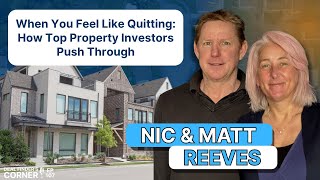
YouTube interview (Dec 29, 2025) hosted by Guillaume Black with Matt and Nicola Reeves (Bristol). The couple combine planning and design experience to focus on flips and planning-led value (including assisted sales and JV builds). Key takeaways: find a strategy that fits your passion/skills; build deep local agent relationships (12–18 months); use targeted filters (no-chain, probate) and follow-up (4-letter campaign); aim for ~5 viewings/week and expect ~1-in-20 conversions; finance via remortgage, private investors, bridging or 50/50 JVs; focus within ~45 minutes drive. They emphasise listening to vendors, rapport-first meetings, and persistence when deals fall through.
Questions this video answers
December 29, 2025
About 5 viewings/week
Approximately 1 in 20
About 12–18 months
~30–45 minutes drive
Chapters
Welcome everyone to today's did find a corner. So this is your weekly props talk show brought to you by proptyfilter, hosted by myself, Guillaume Black, your favorite Frenchman. You know, the CEO and co founder at PropertyFilter, the UK's highest rated platform to find deals. And as you know, we're on a mission to empower our property investor and deal sourcer members to find another thousand deals thanks to the Property Filter blueprint, you know. So more than 3,250 offers accepted this year alone. It's growing months on month, which is really, really great to see. The purpose with the defined corner is to give you more and the best of the available resources by inviting expert guests who will share with you the latest and most current strategies, tactics and secrets about what actually works right now in terms of finding and making deals and the reality of systemizing and running a high performance business in property. So today it really is my pleasure to introduce my good friends Matt and Nick Reeves all the way down from Bristol on today's different corner. So Matt and Nick are husband and wife property investment team based in Bristol and they they combine 15 years of experience with design and planning expertise. So I'm sure there's a story here. You tell us. You know, Nick spent five years with Bristol City Council in the planning department, 10 years handling planning applications for architect, architects and love conversion companies. And Matt has 8 years experience designing love conversion. So I'd like to know more about this story here. You know, did she refuse it and then you had to, you know, sort this out somehow and they train with Progressive Property Property Investor Network on Simon's Mastermind and I'll focus on flips, planning gains, assisted sales, lease options and really leveraging the experience they've gained through their career in planning to identify and unlock lots of value in property. So really, really excited to have you guys on today's final corner. So we're going to talk about how you can bring whatever your personal skill is into your property business, why you want to trust your guts and instinct a lot more than following everyone else's strategy and on its truth about some mistakes, setbacks and moments you want to give up and how you can go and push through and how you can choose the right strategy that is right for you if you want to go full time together with full time work and family life and the importance of doing things the right way. Because when you buy cheap, you buy twice and our shortcuts seem stunting but cost you more in the long run. So very much looking forward to hearing more about the stories and the story inside the stories there. So please join me to welcome Mr. Matt and Mrs. Nick Reeves and today the final caller. Welcome to you guys.
Thank you, Guill. Thank you. You really appreciate you asking us on. So we just, we're just doing our own thing and kind of getting on with it and we don't often blow our own trumpet, so to speak. So appreciate you shining a little bit of a spotlight on us. So really appreciate that.
Yeah, absolutely.
Okay. You're most welcome. You are extraordinary people. So I want to, you know, I think you are stories and, you know, experience worth sharing. So that's, that's really what this is all about. So tell, tell us, tell us more about all of this.
Wow. Where should we start?
Well, yeah, I mean, I think we both come from really, really different backgrounds and my. My background's in banking and accountancy. Nicholas has kind of always been retail. A. And we met when we were both living in the Caribbean. I. I was.
Okay. Okay, so nothing to do with you putting through a really rubbish planning application.
And that all came at a later date? Yeah, so. So we met when we were both living in the Caribbean, came back to England for family reasons. Nicola went back into retail. I started at that point getting involved and interested in property, but of kind of a really low level. I was running a business that did roofing and to some extent building loft conversions. And then quite by chance, Nicola was offered a position with this firm of architects. Oh, sorry.
Yeah, I was. I was actually working for Mothercare. I was an assistant manager at Mothercare. And retail is horrible, basically. Retail, it's so many hours a week, you don't get much paper, you don't get much thank for it. So with two really young kids, I looked for something else. And the job I looked for was at Bristol City Council because I knew I'd never have to work bank holidays. I knew I'd have never have to work weekends. I knew I'd never have to work overtime. And I got a job at Bristol City Council and they put me in their planning and building regs department and I knew nothing. I knew absolutely nothing. But I was there for five years. I.
So are you telling us that this is how, you know, the planning departments feel? Their, you know, sort of PACE workers, you know? No, I was many people who knew.
Nothing extra service, to be fair.
I'll tell you what, DM sometimes when you have to deal with planning departments these days, that is the impression you get. Yeah.
Yeah.
I'm sure all developers have Been through that. Frustrations of planning applications and things taking a lot longer and seemingly senseless decisions coming back. So yeah, it's something that I think we all deal with, but no, go on.
Yeah, so I got a job in customer services in planning and building regs. But because you're the one answering the phone, you need to know everything. So I was taught all pd. I was taught about building rags, I was taught everything because, yeah, you have to know it to be able to advise people. So I did that for five years and, and got a lot of knowledge and realized and you know, and saw it both sides. I saw it from the planning department side and the people who are calling in and one of the architects used to phone in regularly. I was talking to him one day on the phone and I asked him how busy he was and he went, oh, I'm just so busy, I can't cope. And I went, you need somebody like me working for you. Just a passing comment. He phoned me up the next day because he actually designed our loft for us and said, do you want a job? It's yours if you want it. So for the last 10 years I've. I didn't work for him, but also for a loft conversion company. I do Matt's applications. We do applications for people in the property community. There's quite a few people in Bristol based in Bristol and we've done designs for them, we've put certificates in for them, we've put planning applications in for them. So it's just grown and grown, which led us to think this, this is the kind of thing we should be doing for ourselves and not for other people.
Oh, I see. So you start to, you were like serving over like investors, developers and then you're like, wait a minute.
Exactly. Yeah, exactly that. So we thought, you know what, let's put our knowledge to good use hopefully. But we wanted to do things the right way, so which is why we both went and did training. Matt did training initially, then I joined him and, and then I found Pin and did the mastermind and that to that was just life changing for me. So.
Yeah, yeah, yeah, you could do a lot worse than doing Simon's mastermind.
Yeah, he's not a bad man to know, let's put it that way.
Yeah, yeah. All right, great. And so then what? From then, from then, like. So what's been the, like your focus and the thing you are interested in property. How did you sort of, you know, get things moving?
Well, to be honest, to start with, we were doing like everybody we were doing all the things we were told, sending out the letters, doing loads of viewings and stuff. And everybody was saying, do HMOs, do HMOs. But to be honest to us, it's. HMOs have never appealed to us for whatever reasons. So it felt like we were going against what we believed in to be doing hmo. So I'll be honest, it took us quite a while to decide actually what we wanted to do. We, we had the golden penny thing, you know, oh, try a bit of that, try a bit of this. And, and just felt, to be honest, like headless chickens, that we weren't really getting anywhere. And then you go down the, oh my God, I don't know why we're even bothering. And then you go back up the other side and think, yeah, it's all good. So we kind of.
Clarity is very much overrated. You know, there's so many ways of making money in property. People get distracted, you know, go from one thing to another. It's quite hard if you, if you're not helped early on with like the clarity bits or if you are lucky to, you know, stumble across the thing that fits you to start with. But the majority of people don't.
Right.
So I think most people, a lot of people on the call will recognize themselves with that, you know.
Yeah, I think that's absolutely true. Guillain. There's, you know, there are buzzwords that have been around for a while and HMOs was very much the go to strategy for a while and SA was the go to strategy and we kind of bounced around and we were looking at opportunities for both of these ways into the property business and neither really appealed to us. And I think we just got to a point where we felt if we go down this route, we're always going to be doing something that our heart's not in for whatever reason, you know, it's personal reasons. With HMOs, we just didn't really feel comfortable trying to make that the strategy that was going to work for us. And it did take us a while to realize, to come to the conclusion that actually what we love doing most and what we're best at is finding properties that are completely run down, where there's an opportunity to add value and do the brr, but just do it by selling. Just buy and sell. And better yet, if you can do it as an assisted sell using that creative strategy technique, then you can make similar profits but with a minimal outlay up front, you know, no real risk. To your own capital. So that's what we've, we've focused on since. And people say to us, how many properties do you actually own? And the truth is we don't ever own anything more than one or two at a time. So we're not landlords at all, are we? We don't have any properties that we rent out other than maybe a short term while we're, while we're just waiting to get it sold. Yeah. It maybe flies in the face of a lot of what we're taught that you need to be holding property and renting it out. It's just a strategy that works for us. As you say, there's different ways of being successful.
It's very interesting. It's almost like the property communities out there were almost setting you back because they confuse you more than anything because you were not able to go straight to the thing you were in flow. So we see this a lot basically around the education space and quite broadly, you know, people, you know, selling courses and things like that is they serve a lot people who want to replace their, you know, like replace their income or. And so there's a lot of focus on the, on the sort of HMOs or the essays and things like that. And, and these people forget. And I think, I think there's a lot of romanticism in, in that came from the literature. You know, the rich dad, poor dad, the Kiyosaki, you.
Yeah.
You know, you work once and it's passive income forever, which is not true.
Right. Yeah.
And then people learn to hate their job and want to, you know, replace their income. When really, like you guys, the best, the best vehicle to grow your wealth is to grow your potential.
Yeah.
And then there's nothing wrong with like sort of, you know, having your cash flow being sorted already. The best next vehicle is to go and grow your pot, you know, and then, you know, most people don't realize this and they think that this romanticism that we need, we absolutely need to go and, and do certain strategies. And another thing on that is, is sometimes, you know, this whole industry feeds off our lack of clarity. If we don't know really what we, you know, with visceral clarity, what we want property to do for us. It's very easy to jump from one shiny penny, one silver bullet from another, you know, because it's thrown on us like that, you know, and the truth is, doesn't work. If your strategy is not aligned with your, your life goals, your flow, you're really going to struggle. So, yeah, and we see this, you know, it's quite, it's quite, it's quite common, this. So fair play to you guys to actually relatively quickly figure out what was right for you and then doubling down on it. So.
Yeah, and obviously, and planning gain is obviously something we're really focusing on and because of our background, we are lucky that we can like recognize places that.
Identify opportunities that maybe other people don't see.
Yeah.
Or possibly they see, but they don't recognize. Just not how easy it is going to be to get planning, uplift, but the fact that it can be achieved. And all right, you have to put a little bit of work in, but ultimately the rewards are worth it.
Yeah, definitely, definitely.
Sorry, go on.
I was gonna say you're true dealmakers in that sense that you, you can see the opportunities of account and you are able to offer solutions to vendors that are quite unique, you know, with this expertise, you know, and sometimes again, people, people are trying to, you know, like push a square peg in a round hole, you know, where it's, it's about, you know, forcing the strategy into the, you know, the mouth of the vendor whilst really, they don't really, they're not really interested, you know, so. And so. And also from, from that, that point, one, one other thing I would say is people label strategies in different ways. So I think because we call add value. Brr. You know, you know, people think you always need to do works to add value and as you said, business have different angles. Yes. Doing the works, but also all the, the paperwork exercise for planning and, and other things, you know. So do you want to tell us a bit more about the type of projects, you know, how you find them and how does it look like for you?
Well, the one we're wearing at the moment, it's probably as good an example.
As any, isn't it?
Yeah, it's probably a good example as any. We were, we identified the property quite, quite a while ago, didn't we? 18 months ago.
18 months ago, yeah.
And we tried to get it off market, if truth be told.
And didn't get anywhere?
No, we didn't get anywhere. So we.
What do you mean? So he was with an agent but you wanted to work?
No.
Basically what happened, the lady put a post in a local Facebook group and said, does anyone, can anyone recommend any estate agents in this area? And Matt messaged her and said, why are you looking to sell a house? We're looking to buy. Because she, she had a real dislike of estate agents. All right, so we tried to Negotiate a deal with her off market and for whatever reason it didn't work out. But we had a feeling that she would put it on the market. We just, just had a feeling. So we watched it, we, we kind of had it as an off market property on property filter and then we just kept watching and watching and watching and she put it on the market for a lot more than, a lot.
More than we'd agreed with, a lot.
More than we'd agreed to.
We were trying to agree with her a lot more than we felt it was worth.
Yeah.
And it went on the market and almost as soon as we saw it come on on property filter, as our notification told us, then we were straight on to the estate agent. It was dealing and we, we happen to know reasonably well we've spent quite a lot of time and effort in building relationships with maybe only two or three local agents, but it does pay dividends. And this agent was really, really helpful. He got us interview it almost immediately. He did tell us that there were other purchasers who were interested and in fact we lost it first time. Didn't somebody else bought it?
Somebody else bought it for asking price. But, but again we were tracking it on property field. So we knew the minute it had fallen through we were back on the phone to him and we said, can we get in and have a look? And he got us in 8 o' clock the next morning. And by Monday we'd got our offer.
In and considerably less than we'd offered off market. And she accepted it.
She accepted it. So she wanted, I'll be honest, she wanted 375, we got it for 300. So because we off we said we could move quickly. We were cash buyers but we knew the value was in the planning game. To the side.
Yeah, so. So the house itself is just a regular semi detached Property, probably only 5 minutes walk from where we live, but it sits on quite a big corner plot and we saw that other houses within the area that were in a similar situation had all had new builds built to the side. So we just thought, well, there's got to be an opportunity to do exactly the same on this house. And when you buy stuff up front like this, you are taking a little bit of a punt that planning permission will be approved. But we'd spoken to a planning consultant, you know, everything moved really, really quickly. We spoke to a planning consultant, we had a chat with the architect that Nick works for and everyone felt that there was a really good chance that planning permission would be approved. So we bit the bullet Went ahead, put the planning application in as soon as we were able to. Planning took 16 weeks to come through, but it's been granted. So we've got planning permission to do a complete new build attached to the existing property. And at the same time we've developed the existing property, we got planning permission for a big infill extension at the back, ground floor only. And, yeah, that's where we're at at the moment. The. The existing house is 99 finished and we'll start on the new build at some point either side of Christmas, I would imagine.
You will develop the. You will develop the plot next door.
Yeah, yeah. We had a couple of builders that were interested in buying the plot once planning permission had been secured. But as much for the excitement of going through the build process as the increased profits that we will make out of it, we decided we're going to undertake the build ourselves.
That's a really important point there. So some people underrate the learning and the experience. So people obsess about strategies but never learn the skill. And you learn by doing, you know, there's no shortcut, you know, so, so, so it seems like you're going to make a profit from it anyway, but also you're doing it because, you know, like, now you know how to do the old project A to Z and you'll be able to do even more. And all the learning you'll get from there will compound into even more deals.
After that, you know, so, yeah, absolutely. In terms of profit, it's. It's almost conceivable that we won't make at least six figures on this. We'd have to have an absolute disaster not to make six figures on it. But we both said that even if we, you know, even if we don't make anywhere near that, it will be. The learning experience is the real value to this one. It'd be disappointing if we are. If we only break even. In fact, it's inconceivable that we'll only break even. But it is the experience and the learning process and knowing all the pitfalls and the challenges so that when we go again, we're just better prepared. Yeah.
And can you tell. So this one was a straight purchase. Can you tell more about how you go about offering the flip versus assisted sale, or do you, like, position the two together or do you go around positioning the assisted sale solution to the vendors you speak with?
I think this comes down to what you've taught in training sessions, Guillaume, that it's always about ensuring there's A win win situation. So we would never ever go straight in and offer an assisted sell unless we've had a conversation with the owners beforehand. And, and it seems like they might be receptive to the idea. So it's always a little bit of a fact finding exercise wherever possible. Direct a vendor if you can, but through the estate agent if you can't. And to be honest, when we go direct to vendor, when we talk to people that, and it's an off market opportunity, we don't very often talk about the house for the first couple of meetings. It's all a little bit of rapport building, finding out what their pain point is, finding out what solutions they're looking for themselves. And if an assisted sale fits, then obviously you pitch an assisted sale in terms of pitching one against the other. It just comes down to the price difference, is that if we can buy this in the traditional fashion, we can move quickly, but we can only offer you X. Or if you're prepared to wait six to nine months, give us control of the property during that period, then we can offer you Y. And Y is invariably a lot bigger.
Than X. Yeah, but on our current one, we knew we wanted it and we offered her and we told her if we, that's why we got it so low, because we told her we could move quickly and we didn't, we didn't want to do anything creative with this one, did we?
Well, as much as anything, we knew from when we were talking to her 18 months ago that she wasn't really receptive to the idea of anything other than just a straight sell.
Yeah.
And it's pointless trying to force something down somebody's throat because all you're going to do is end up turning them off completely. So you sit there and you listen to what they're saying and if it sounds as if they might be up for something a bit creative, then you pitch it. But if they're quite obviously saying, look, I just want a traditional sell, I'm not interested in anything else, then you work your numbers based on a traditional purchase and if it stacks, you go ahead. That's kind of the way we work.
Yeah, yeah.
Cool, cool.
That said, I would always prefer to do it creatively if we can. Or always.
Yeah, yeah, it's really, it's really interesting. So I, I take a lot of takeaway from here. So from what we've talked so far. So first is really you, you filter through the hype of property communities around replacing one's incomes and stuff like that and, and, and really Understood with a lot of clarity what were you, where were you in flow? Where were, where is it that you can, you know, the best engine to create well for you was to go around a profit player and flipping properties on a mixture of straightforward purchases and assisted sale offers. And then with that really understanding the game of adding value. So not just limited to the refurb, but matching the refurb and development and planning gains again, working with your strengths and then yeah, basically growing your pot here. What would you say, you know, for, you know, people who are a bit lost with like sort of their strategies and what should they look into? And we talked a bit about your own skill and what you can, you can bring to your property career is that you have some comments or some word of advice for people who are like, okay, I'm just trying to figure out what to do and it's a bit, it's all a bit overwhelming. How do I go about making this.
Work well, having, having a good power team around you? I know everybody talks about the power team but making connections with, trying to establish relationships with local agents. We've, we've worked long and hard trying to establish relationships with our local independent agents and it's taken a long time for him to, you know, we actually went out for a drink with him last night because we can now message him WhatsApp him go, you know, Tom, what's going on at the moment? Oh, let's meet up, shall we and see. And he, he now brings stuff to us. It may not be suitable or he might have only heard a whisper of something going to be happening. But it's so important making those relationships and being honest with people as well. Do you know what I mean? We try to be as honest as we can. We try to do the right thing by people as well. Always if somebody wants a bit of advice from us, we're more than happy to give it. Obviously we don't want people taking the Michael, you know, because we still have to earn, earn some money for ourselves and, but we are, we're more than happy and, and we believe we're a big believer in doing the right things and eventually it all comes back around to you anyway. So that's, that's me especially that's, I'm a big believer in that.
I, I think in terms of newbies trying to decide what their strategy is for us. Gim. We were in the fortunate position where we were already involved in planning permission and building regs and permitted development. So we had a really good understanding of that. And moving into flips and assisted sales where you're targeting planning games. Just a natural progression. For anybody else, I would say that the most important thing is to follow something that you're actually passionate about. It's very, very difficult to work in any industry, property or whatever, if you don't actually enjoy what you're doing. And just because somebody says, oh, the best strategy to get into is serviced accommodation. As an example. If you've got no real passion for serviced accommodation yourself, I think you're only ever going to create a job and I don't think you'll be as successful as you could be if you find something that you genuinely want to be doing.
Yeah.
And I think that comes back to.
This clarity of your skill with half your budget, half the experience, but double the passion will just outwork you every day. Right. So absolutely.
Yeah.
Yeah. Because you want to be doing it. You want to be, you know, doing it. You feel passionate, like you say being in your flow and then you, yeah, it makes such a difference. Whereas if you're banging your head against a brick wall going, yeah, I'll do this because I think it's the best way to make money. Everybody's saying what everybody's telling me to do. And so you, yeah, we, we trust our guts a lot and coming back to that and obviously everybody always has an issue trying to raise money and find investors and that. And we've, we've all been there, you know, you've putting yourself out there telling everyone what you do. We've actually walked away from, from dealing with an investor because it didn't feel right. And he had all the money for a deal for us, every penny. And we discussed it and said we just, it just didn't feel right. So, you know, it's got to be right. It's got to be right on every.
Level and it's being true to yourself. Yeah, yeah, for us it was, it was about the passion gear. You know, nothing excites me more than taking a really, really run down house and making it look beautiful. Nothing excites me more than that. I absolutely love it.
And I'm a planning geek. I'm a real nerd.
Right. Yeah, yeah.
So, yeah, once you're in your flow, it's, it's great, it's great. So.
But yeah, that would be my one piece of advice is, is find a strategy that actually stokes a little bit of passion within you and, and you'll almost certainly find that you, you make more of a success than that than you do just by following what other people tell you you should be doing.
Yeah.
Because there's more than one way of making money in profit in property.
Yeah.
Yeah. Awesome. And around you said about going around and building relationship with agents. So we have people coming to our world all the time and say, oh, you know, I can't do deals with agents, you know, I. I need to go direct to vendor. I'm like, okay, that's interesting. So how many offers have you put through agents this year? You know, And I go, oh, well, you know, I've had frequent sessions the last three weeks. You know, that's my property experience summed up, you know, so you're like, okay, you've not really done enough of it, but for you guys. So how did you go around building those relationships? Did you come to them with a specific properties you were looking at, or it was just like spontaneous walking into the office, introducing yourselves. And then how did you target who to invest the relationship with and who just to not waste your time with?
I think with estate agents, the initial contact is always on a viewing. So we'd find a property we were interested in, variably find it on property filter, arrange to go out and view it and just get chatting to the agent while we're there. Very often you find that you're dealing with one of the office juniors who's just helping with viewings. So you ask, would it be possible to arrange a meeting with the branch manager or a senior negotiator? And it just comes down to talking to people. As I say, we often have conversations that should be about property, where we don't mention property at all. So we do spend a lot of time building rapport, getting people to know us, like us and trust us. And on the back of that, the, the property deals, or at least the potential property deals that they just seem to flow. But it's not easy. It took us between 12 and 18 months, I would say.
Yeah.
For a couple of estate agents to. To really start trusting us and to start passing us stuff before they pass it to anybody else, you know, almost to get in their little black book as far as which agents to go for. I think that if you're going to try and build a relationship with an estate agent, you're far better off targeting the small independents, somebody where they can make a decision within the branch as opposed to having to refer to a head office that might be up in London, might be Birmingham, might be wherever. But you need to be speaking with a decision maker.
Yeah, the big chain agents, we don't even bother now. We'll go out and do viewings, we'll put our offer in and we know full well it's no point even mentioning anything else because they are just, they're just hard work, to be honest. You know, if you say to them, oh, we might be able to offer more, they come back and say, well, no, I just want what your cash offer is and do you need to see our mortgage advisor? That's what they always say. And you go, no, thank you. So, you know, so the independence. If you've got an independent and to be fair, you only need one or two. You don't need a dozen estate agents, you just need one. We've got one who will always phone us up now and a second one who's thereabouts, you know, and it's. And it. But yeah, like Matt said, 12 to 18 months it took to establish that and also to actually prove that you, your money's where your mouth is kind of thing, because it's all very well putting in loads and loads of offers and then, and then you get one accepted and then you back out or whatever.
We.
If you see it through to fruition and they prove, and then you show them what you're doing. In this case, we've got planning drawings, we've got planning permission, we got there and they go, yeah, these two do actually. They are actually doing what they're saying. They are actually what it is.
Everybody talks about. No, like in trust. But I think there's a fourth thing and that's credible. You have to prove that you're credible.
Yeah.
And if you can prove that to an estate agent, you know, prove it to them once and you haven't got them in your pocket. I'm not saying that, but they're certainly going to work with you going forward.
Yeah, definitely.
Yeah. Yeah. Most people think the offer is about the number, but it's not, you know, it's about all the, all this world you create around them, the credibility you build. It's about them believing that you're actually going to do the stuff because they, they see more time wasters all day long than you can imagine. So they, they'll be skeptical and, you know, so it's quite normal. You've been taking words out of my mouth, you know, you know, we talk about property being simple but not easy. You know, how it's, you know, it's not get rich quick, but get rich for sure and. Or you have to spend 12, 18 months to go of effort and continuing through it. To build a relationship. And I often talk about, oh, you know, it's simple but not easy. But it's as simple as finding motivated sellers, starting conversations, offering them options. Which is like all the stuff you've been saying just now, you know. So yeah, so here we go. You know, it's not just this crazy French guy talking about it, you know, doing six figure deals, you know, telling you, telling you ideas, you know, so.
Yeah, and it is, it is perseverance. We've, we've been where everyone has. We got to a point where we wanted to give up. We, we found a really good deal. We found it on property filter. It was about to go through exchange and completion and we lost it at the last minute, you know, and at that point we thought we felt like giving up, you know, and you have to pick yourself back up, you have to give yourself a couple days and then you have to go again. And you know, it's all part of the fun, is it, it's just a game, isn't it? And you've got to play it like that. But yeah, we've, we've wanted to give up. Don't, don't get me wrong, we haven't. It's not been all.
You want, you want to talk more a bit about that for some people who are. Because exactly as you said, you know, you go through phases where you get excited and then, and then it gets hard and you want to give up, you know, so we all go through these cycles and sometimes multiple times. So do you want to tell us a bit more about sort of your experience there and, and then what got you like reconnected back into it and we kick the wagons again and going for it again?
Yeah, well we had, we, we, we're quite niche with the places we look for on property and property feel is brilliant for that because we can put in exactly what we're looking for and then we don't bother with any of the nonsense. So we tend to look for. We love probate properties. We love no chain. We love flicking through and seeing that there's potential, there's work there that might have not been touched for 30, 40 years.
Do you tend to use the keywords there? What filters do you use for these for you guys?
We always use no chain. We'll also look for cash buyers but we prefer no chain because chances are they're pro. Going to be pro. You, you can as soon as you look at them, you know they're a probate property to be there. I also take that a Step further and I look at the probate register and I, I love looking at that and I found so much And I then can write to the executors of.
The property on the Estate Gazette.
Is that. No, it's on the government website. It's. There's a probate and will search. You have to pay for it. It's. It's only £1 50. It's not exactly a lot and you have to be a bit of a detective to work out because if it's somebody called say I'll look on 192 to niche down to find out the name of the person who used to live there and then I'll go on to a probate search. But if you've got somebody called John Smith in Bristol, believe me, you're not going to find their probate very quickly.
You'll have problem finding my, my executor when I die. Right?
Yeah, exactly. You'll be easy to find. So. But yeah, so we kind of. We kind of niched down on that so we might not do hundreds and hundreds of viewings a week but the ones we do we know already we've pre qualified them bas, haven't we together?
Yeah, to some extent.
So we, we were watching, we were watching a property and it had been on the market for 12 months and it hadn't.
It.
It dropped once and it hadn't budged did it. So we went out, we made. We had a view in with things or the estate agent and because to be fair because there's two of us, it's kind of like good cop bad cop. When we go out Matt will do all the. Oh, that needs doing. That's the. There's a crack in the wall, there's all this. Where else I'll talk to the agent and go oh you, you're really busy at the moment. Have you got many things, you know, oh, who used to live in this house kind of thing. Is it a probate property kind of thing? And so I'll do the like the warm and fuzzy side and Matt will do the. All the negotiation and the monies and the numbers and stuff.
Do you tend to swap roles? Sometimes because I used I with my property business partner sometimes with the like resonate differently with different people and sometimes like the person will hate me because I'm like the bloody foreigner, you know and the next time they love me because they love France. Yeah, whatever. Right. So we would swap roles, you know. So do you tend to do the same or you're quite you know, sort of.
I don't think we're fixed. You know, we're both quite open and chatty people. Yeah, I take a lot of my clues from what I see in the house. So if you walk around and you see golf clubs in a corner or you see pictures of cars on the walls and you immediately pick up on that kind of thing and I'd be straight away trying to build rapport based on that. Nicola maybe is just a nicer person than me and can talk about anything and everything. But yeah, I wouldn't say that. Nicola only ever talks to the, to the people and I focus on the, on the problems with the property and work on the numbers. We, we do swap and change, don't we, a little bit. And again it. Matching yourself to the person you're in front of.
Yeah.
So, yeah, it's a terrible thing to say in, in the, in the 2020s, but there's still an element of sexism. So some people might not take Nicola credibly and at that point, you know, I'd kind of take over completely. It's not an ideal situation. Of course it's not, but it's a fact of the world. Particularly if you're dealing with older, older vendors.
Oh yeah, they never talk to me.
Or you're dealing with somebody and you start talking about the building issues, they just assume, well, young lady don't know what she's talking about here. So I, I pick up the conversation. So no, definitely there's, there's no fixed. You're, you're going to talk about this and I'm going to talk about that. That we've decided before we walk through the door. You, you just mirror the body language and one or other of us will pick up on it, pick up the signals.
Yeah, you mentioned, you mentioned on the, what you were talking about your late. The, the, the, this flip project around how you had a few meetings before you even really started talking about the property. And I think most people are, you know, like obsessed about the nuts and bolts and the property thing and, and I think it's a mistake because it's very much a people business. It's not about the numbers. It's about you want them to, you know, like only want to sell to you is the reality. And as a framework to share on, on viewings, I used to try to be quite diligent with this. So 70% of my time and focus would be exactly as you said about the pictures on the wall, the holidays, the cats, you know, like the, the the context about, you know, about just the, you know, them living the property in their lives. 20 of the time would be about what's happening after they sell. So are they moving other places? Are they gonna. So what's the old scenario? And then only 10 was around, you know, you know all this boiler and you know, the nuts and bolts of the property. Right. So because it doesn't really matter at the end, you know, you have, you can move the needle on the offer price by tenfold just by the rapport building in the front end.
Right.
So yeah, yeah, definitely, definitely. We find that really important.
Absolutely. I don't think we've ever gone in with a 70, 20, 10 framework in mind, but I would say that that's exactly the way we work.
Yeah.
Is that by far the biggest chunk of time is just spent talking to people? Yeah, yeah. Trying to build rapport, trying to get them to know I can trust you. So this is what it comes down to. Yeah. As you say, ultimately it's a property business, but it's a people or it's a property industry, but it's a people business.
Yeah. And if you, if you're chatting to people, especially some of the younger agents that tend to show you around, if you're having a nice little chat with them, sometimes they'll let things slip that they're not supposed to, like what other office they've had and then they'll look at you and go, oh, I wasn't meant to tell you that. And I said, you didn't tell me anything. I didn't hear a word. But again, it's building that rapport, building a bit of a relationship with them, having, you know, a bit of a laugh or whatever. And yeah, and it does work. And then we know as we've left what the other offers are so we can work our offer.
Yeah.
And then I'm sure your man you took for drinks yesterday is just going to tell you everything. Right. So it's just the power of this rapport building. And I think with agency, the relationships you build is they compound. You know, as you said, it took you 12, 18 months to crack, make, make it to their little black books. But now, you know, your first of the, your first, first refusal on a lot of stuff, you know, so it works really well. Some question from Lee around your fact finding meetings. So that was when you talk about, when you're having those conversations with the vendors and what sort of format do you follow? There are some items you want to particularly know and learn about. Are there some Questions you've got on the back of your mind that you want to ask or how much of this is scripted and what are you trying to learn from the different meetings.
When we first started, and obviously we've done training and they talk about scripts and that, but don't ever read from a script. We were, we were probably rubbish when we first started doing it because we were like, don't know what to say. So we find the whole conversation. We, we've. To be fair, we don't really talk about the property. Obviously, if somebody's arranged to meet us to discuss, we'll take them for coffee or whatever. And sometimes we don't even talk about the property at all, do it?
Well, we don't know. But I think Lee's question is, what are we trying to find out when we go in? And I would say that we've always got kind of an objective in mind when we go in. We always know that we want to get answers to whatever the questions that in our mind are. So, for example, you mentioned what, what are you going to do with the proceeds when you sell this? What are your future plans? So we'd always try and have an idea of why it is that they need the money. I think that's probably the most important thing. Is it what, what you're going to be doing, what you're going to do.
When you go in on, are they motivated?
Yeah, it's a conversation and a chat and just trying to find out what their pain point is. I think that would be the big thing, is we go in there and we say to ourselves, right, what we want to come out from today is we want to find out exactly why it is that they're desperate to sell. And that is often for completely different reasons. You can speak to one vendor and you'll get totally different feedback from another vendor. So it's about listening more than it is about talking about. Yeah, it's maybe using loaded questions to try and get the answers you want, but I think that you get the answer.
Some examples of questions of loaded questions you ask.
Well, I think just that. That simple one is, what are your plans going forward? Yeah, you know, are you. Do you need the money from this house? Or where are you moving to? But rather than Satan, do you need the money? I'd say, where are you planning to move after you go from here? And you'll get an answer either, well, you know, we need the money and we've looked at a house 500 yards down the road, or actually, we don't need the money. We're going to go and buy a place in Spain at some point in the future. So it's asking those loaded questions, but in a way that it comes across conversationally. I think. So, yeah. I wouldn't say, what are your plans for the money once you get the sale? It would be, you know, where do you go from here? What's your next step in life? Almost? And just, just kind of bring it down to a really one to one personal, personal level.
Sometimes it's as simple as why did you, why did you want to meet with us? You know, because often if we've gone and tried to contact landlords or whatever and we've sent them a letter and they're the ones who's picked up the phone to us, so we say, yeah, would you like to meet for coffee? We just say, what made you pick the phone up? You know, because there's obviously some reason there for them to do so.
Yeah.
Because if not they'd have put the letter right in the recycling.
I've used questions like, you know, almost a little bit of flattery. We went into a houses where there wasn't an opportunity to do it up, but they wanted to sell. So we're thinking, all right, well we'll just see what it's all about. So you go in and you look around, you go, my God, this house is absolutely gorgeous. Why are you thinking of moving? Why do you want to move out of here? And, and you've, you've buttered them up and fluffed their ego a little bit and you'd be surprised how much people open up when, when they think that. Yeah, actually this lad's genuinely interested in what I'm all about, not just coming in with a low ball offer.
Yeah, yeah. And we make that clear to people up front. We'll say to them, we're not making you an offer today. When, you know, we.
Well, we. Yeah, we do. If they say to us, you know, what sort of number are you thinking? And we. And I'd normally say to them, look, I haven't even seen the house yet. I don't think we're going to be making you an offer on the first visit. Why don't we just get together, have a bit of a chat and see if there's any opportunity to help each other and leave it as open as that. And if they say. Well, I say worst case scenario is going to cost you 15 minutes and a cup of coffee.
Yeah, yeah.
Best case scenario, we might be able to find something that Works for both of us. But as I say, I would, I would always just try and keep it as, as personable and as friendly as possible for certainly the first meeting.
Awesome. And you mentioned about being really strict with your criteria, or not strict but like specific about your criteria. So what do you say is your sort of how many viewings you go about, how many conversations you have for how many offers and then how many of these convert into the projects, you know, and deals on the other side?
So when, when we're absolutely in the flow, which we're not at the minute because we're so tied up with this project we're doing, we aim to view five different houses a week. Whether that's off market or, or through estate agents, we will offer on absolutely everything.
Okay.
And we would hope to get one in 20.
Okay. So like one, like, I don't know.
If, if, if for other people that's overly optimistic or a little bit pessimistic. But it's just the number that we say if we get 1 in 20, then that's, you know, that's not a bad about ratio, is it? But yeah, five viewings a week offer on absolutely everything.
And follow up.
And follow up.
Yeah, follow up, follow up, follow up. It's so important, especially at the moment.
Follow up. A note today may well become a yes in three months time.
Yeah. And withdrawn properties at the moment, they're quite right for writing to and trying to contact them because, yeah, we've had quite a few conversations with people I've written to because I've seen they've, we've drawn the, the. I know they're landlords. We've obviously we, we've got a copy of the HMO register. But in Bristol it's not just HMOs because we've got mandatory and selective licensing in Bristol. So we've got seven and a half thousand landlords on the agent on the list.
So yeah, you see them withdrawn in like your criteria on property, they turn red and you see, okay, they, they don't want to sell anymore, they're giving up on the sale. And what do you say when you write to them?
What did you like to say?
I noticed. I know, basically I've noticed you withdrawn your, your property from the market. Very frustrating at the moment, all the changes coming in because obviously at that point I realized they're a landlord because I've checked them on the list. There might be something we can do to offer something different. If you've been listed with an agent, obviously we will Honor the agents fees, blah, blah, blah. So it's. It's basically like that. Like there's something else we can do. We're not estate agents. I also put in the letter that there were a local couple.
Our letters are quite personable as well, Guillaume. If you see a property that's been withdrawn, the letter would be quite empathetic. And we would say things like, it must be really, really frustrating for you. We can see it's been on the market for a while, and if you're not getting offers or viewings, even I can understand this must be very frustrating. And perhaps this is the reason why you've decided the property is not selling at the minute. We would be interested in. But we leave it quite open. We would be interested in a conversation because we are looking for properties such as this in this area.
Yeah.
If you feel that you'd like to have a conversation, then, you know, get in touch, confirm. It's always going to be no obligation, completely confidential, at a time and place to suit them, and just try and make them feel as comfortable as possible. And nine times out of 10, you'll get nowhere with it. But if you get that one out of 10, it's always worth it.
Yeah.
Okay. So you get like, 10 response. You tend to follow up on the letters or just turn the one off.
Yeah, no, absolutely, absolutely. We do a campaign of four letters, and if we get nothing after the fourth letter, then we kind of.
I'm wondering which button you click. Yeah, that's awesome. That's great. And then. And obviously, so that this is exactly what you said. And most people don't realize when the phone rings, you know, like, they've called you. You know, they've. They've, you know, they've clicked, you know, like what. There's a reason, you know, so, like, you should have the. Not the upper end because it's not like a fight, you know, but. But obviously they are reaching out to you, which is very, very powerful, you know, so.
Yeah, and that's why it's so important when you speak to them, just to listen to. Listen to what they're saying. Because. Yeah, you've got to remember that they've picked the phone up to you, that. That your letter has obviously resonated with them in some way. They're obviously frustrated. We're trying to sell it through an agent and. Yeah. And just listen to what they have to say. It's really important to listen.
There's a question here asking how far from where you live do you tend to Invest or reach out to people.
Within no more than 45 minutes drive, probably.
Yeah.
We live in Bristol and we've never, never even looked at properties that are outside of Bristol. So if we can drive there in 30 minutes, 45 minutes, perfect. If it's anything more than that, then we just wouldn't be interested.
Yeah. There's enough deals around where you are. Right. So there's no point, you know.
Well, Bristol's a big enough city that there's plenty of deals to be found. You just have to go, no, you don't. You don't find the deal game, do you? Make a deal.
You make a deal, yeah.
Oh, sorry.
We do listen to what you say occasionally.
Obviously we've done each other for quite a long time now. You guys do really well, so that's great. All right, cool. So I'm looking at the notes here, some questions. I think we covered pretty much everything. So Julie's asking, do you self fund your deals or do you Bridge Finance or JV Partners or how do you go about funding your flips?
A little bit of combination of everything.
Yeah.
It's the honest answer. I would absolutely love to say that we don't put any of our own money into our deals, but we do.
Yeah.
We. I don't. I don't know if it's a cardinal sin, but we remortgaged our own property, released the equity and that was a big war chest to get us going. But we've borrowed money from private investors, we've borrowed money from friends and family and we've used bridging finance. So, you know, genuinely a combination of all three.
Yeah.
Would you be open to like. Like getting someone to put all the money into the projects and you like profit, profit share or stuff like that?
Yeah, absolutely. Yeah, absolutely. I mean, it's the same with everything. As long as there's a win win for everybody, then why not? I'm. We're not so precious about our deals that we don't want to share them because, I mean, what's that stupid African FR that if you go with somebody else, you go a lot further than if you go alone. So, yeah, I. I think JVs are a fantastic way forward. I would always prefer, if possible, to work just with pure cash investors because it gives us 100% control of the decision making. Whereas a JV partner will invariably want to put their two pennyworth in to some extent. But that's not to say that JV partnerships don't work. We're in one at the minute, aren't we? Straight 50, 50 partnership. So yeah, we've done all three. Private finance, personal money, bridging, JVs4 actually.
Yeah, yeah, cool. Yeah. And what's next for you guys? Is it more of this strategy or do you plan to deploy the pots you grow into like your own properties you hold or what you want to do? Because you said that we're not landlords, we just, we just.
Well, we're not landlords and it's not really excited us up until this point. I don't think we'll ever be HMO landlords and I'm not convinced we'll ever run serviced accommodation. What we would really like to do, and this comes back back to the passion thing again, is we would love to be doing single lets to first time buyers. So our dream strategy is that tenant buyer where you're helping somebody that is, you know, the same age as our kids. And this is where it all comes from. We've got kids that are either, either side of 20 years of age. We know they're not getting on the property ladder without any help and therefore there's going to be any number of other kids the same age or in the same situation. So we would love to be able to help them onto that property ladder. That first step, using the tenant buyer strategy. But the problem is in Bristol is that single lets don't stack very easily unless you're able to put a big chunk of your own money in and not rely on 75% borrowing from the bank. So our kind of three to five year plan is to build up a war chest continuum with flips and assisted sales wherever possible and to be able to buy properties at maybe 50 to 65% gearing and pass them on as single lets. We do want the passive income, of course we do because we're not getting any younger. But it's just a way of making it work, doing something that we're actually passionate about.
Yeah, yeah, you understand that you need to grow your product before you can deploy it into stuff that's actually, you know, more passive. You know, most people get into property for that end goal but the problem is they go into the strategies that are like super noisy and you know, takes over their lives and then you replace sometimes a good job with a poor job, you know. So yeah, I think it takes a lot of clarity, like you've had to go and realize, okay, you need to grow our pot and grow that to be able to deploy it later. And then you've got a five year, you know, roadmap in front of you. You know, most people just want to be a millionaire by the next 90 days, you know, because it's fashionable to be, you know, an influencer on Instagram, you know. I don't know.
Yeah, exactly, exactly.
So there's one question from Thomas and after I'll ask you for closing sentiments. So what have you got an experience of GBing with, with developers? I'm. I'm thinking here, you mean like, like a contractor or builder and what's been lessons you've learned from that or, or and if not, what is your experience with the JV computers? Thomas. Yeah, yeah.
So dealing with contractors and develop and builders. Is that the question?
I think the question from Thomas is have you in your. Have you JV with contractors, you know, so builders.
That's a really good question because up until now, no, but we're almost certainly going to do a straight 5050 JV with our current builder on the next project. Yeah.
Okay. How is that structure? So you basically it's actual cost and then you share the whatever profits on top.
Well, on this one he's got a plot of land already but he's got no knowledge whatsoever of how to get planning permission for it. So I think that was his primary motivation is that he thinks we can help with that and you know, obviously we can and I think on this occasion he's looking for us to, to help with the funding and it'll build it at cost, but it will be a straight 50, 50 split of the profits at the back end.
Yeah, yeah. And then just on the nuts and bolts of it. So because most people think they need to be, you know, like JV or co owner, co directors of companies. Is it on a structure like this or is it profit share that sits in some, you know, in an SPV somewhere or is it structured?
Yeah, the way you said it then, profit share sitting in an spv. Yeah, yeah, yeah.
This is one with the most security. Okay. Yeah, yeah, awesome, thanks. That was really, really great. We covered some really interesting grounds here. So starting with clarity on how, you know, you don't want to let yourself distracted by the heights of the strategies that sell well. You know, the, the strategies are so like entry level strategies where you don't need the, you don't need money to start, but you create a lot of noise and, and then you realize very quickly you are not passionate about managing people in HMOs and essays, but how actually growing your pot was actually the fastest vehicle to achieve your end goals, you know, and you've had this long term sort of five year vision there. You've brought your skill and your experience from outside property to make this work. And also your experience of planning which was really interesting. You've made it really clear for all of us about, you know, that it's, it's a people business. It's a numbers game. It takes a while to build a rapport and you have to invest. You know, you said yourself 12, 18 months to make it to the little black books of, of agents. Starting from the viewings and the properties you've you find on prop filter and how now you've got like special relationships with them and they bring you, bring you deals. We talked about different ways you structure your, your deals with different ways of funding. Yeah, that was really, really cool and eye opening I think for a lot of people get a bit confused by where to start, etc. And I was like super, super cool, you know, so really grateful for, for the share and it's so awesome myself personally knowing you for a good while now and you've been super helpful to us as well to see how you're doing well and six figure deals, you know, it's, it's so cool, you know. So thanks so much for the share and have you got any sort of closing sentiments, you know, for, for us, for the community and any takeaways we can go and ponder on?
I'd always say trust your gut, you know, try and do the right thing by people. Yeah. And, and if it doesn't feel right, probably it isn't. So that would be my sentiments on it.
Yeah. Much the same for me. Be true to yourself. Recognize that this isn't going to give you instant success. It can be a bit of a slog. It can be really, really demoralizing at times when you're putting in hours, particularly if you're still in a force full time job and you're trying to do this as a side hustle to a point where you, you know, you're doing more property and less of your own job and one takes over. Getting to that stage can take a long time and it can be really, really demoralizing. Really hard work and you will feel like giving up, but the important thing is just to keep putting one foot in front of the next and just keep going. Yeah. As you say, Guillaume, it's not, it's not rocket science, but it's not easy. It does take a lot of effort. Yeah. And it will reward you in the end.
Yeah, definitely.
Yeah. It's very much a game of the ones who win at this game are the ones who stay in the game and there's more people quitting than, you know, keeping up with with it when it's hard to actually power through at the end. So thank you so much for the share. You know, I think this is going to be a great episode. We're going to share left, right and center with people who are a bit confused about what they are trying to do. Anyone who we don't have the eyes open to this, the profit play that you are playing, you know, like multiplying and growing your pots, which I think is the underrated strategy. Most people think there's this romanticism of going full time in property, replacing one's income whilst really they should keep the good balance, the good income, the good job, you know, rather than trading it with a poor one. And the best vehicle for them is to go and, and the leverage like you have on a few hours a week of growing that pot, you know, like six figure deal, one after the other. So fair play to you. Thanks so much for sharing and thank you so much for joining. It's been a long time coming. I really appreciate your time.
You're welcome. Thank you, thank you.
Really appreciate you asking us.
Thank you. Thank you very much. Thank you everyone. And this is us. So yeah, thanks for joining us today. Thank you Mat and Nick. So we are here until next week. So in the meantime up onto props filter, find your next and many deals, have an endless supply of deals and make the most of this property opportunity. There's plenty, plenty of deals to remain before, before Christmas. You need to be part of those conversations as this guy said. You know, it's as simple as you know, finding the motivated seller, starting the conversations, figure out what problems they have, offering them options and following up, you know, like they're literally taking the, the words out of my mouth. So come and do what these guys are doing and, and, and then you'll be the next one I interview on this. Thanks so much. Have a great, great day. Great. End of the week and soon.
Thank you.
More from Guillaume



🎯How Sourcers Can Turn Dead Leads Into Paid Deals at Auction with Dewi Davies


🛜 Connect AI to Your Email, Calendar and Deals (Watch It Go to Work) with Guillaume Black

⚙️ Stop Drowning in AI Tools, The Only 3 Things That Actually Matter with Guillaume Black

⚙️ Work Less, Earn More: The Tools That Save Property Pros Time and Money with Chris Kirkwood

🏠Exempt Accommodation or Supported Living? Understand The Best Strategies Working Now w/ Nisha Patel


📈 Unlock 100% Funding: Finance Your Next Property Deal Without Cash Out of Pocket w/ Kirsty Rogers
