A Career in Journalism | David Brooks | Talks at Google
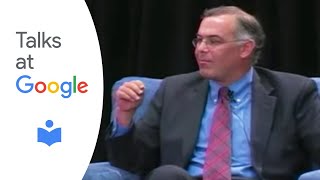
David Brooks discusses his books on American culture and class, from Bobos in Paradise to suburban life. He argues early childhood development and social skills, tested in the marshmallow experiment, shape long-term outcomes more than most people realize. Brooks also addresses Iraq policy, inequality, and what neuroscience reveals about how we actually behave.
Chapters
Whichever side you prefer. The.
I suppose I should be in red. Red. America, blue america.
I've been a fan of David Brooks writing for many years, and he. He's here in town for a series of public appearances, and we invited him to come by to see Google, meet some of you all and get a sense of what Google's all about. So we have, I think, a great privilege here to talk to him and find out a little bit about what he thinks about the world. So welcome to Google.
Thank you. I feel like I've been in Google for about four years now.
So David came, I think, to general light by writing this book called Bobos in Paradise. Folks here know about it. Yes, yes. Do you realize you are one? So I will. And then his second book is called On Paradise Drive, and both of which I will read from, and then maybe we'll talk a little bit about public affairs and some of the things you're really working on now. I wanted to start with the definition of the term bobo. The intangible world of information merges with the material world of money. And new phrases that combine the two, such as intellectual capital and culture industry come into vogue. So the people who thrive in this period are the ones who can turn ideas and emotions into products. These are highly educated folks who have one foot in the bohemian world of creativity and another foot in the bourgeois realm of ambition and worldly success. The members of the new information age elite are bourgeois bohemians, or to take the first two letters of each word, they are bobos. These bobos define our age. They are the new establishment. Their hybrid culture is the atmosphere we all breathe. Their status codes now govern social life. Their moral codes give structure to our personal lives. Whenever we educated elites settle, we make life more interesting, diverse and edifying. So are we bobos? Are you a bobo? And most importantly, am I one?
I know about us and me. I am, despite the tie. I think you are, despite the loafers.
They're not that bad.
Yeah, No. I first noticed this. I served abroad in Europe in the first half of the 90s, and I came back and found a different culture, partly the Silicon Valley culture, but partly the culture of upscale America. And the way I described it in the beginning of that book was to describe the New York Times wedding page. And I don't know if you guys see that, but the wedding page in the 1950s didn't list which jobs people had. It listed what family, what year their family came over in the Mayflower. And it was the Throgmortons marrying the Pinker, Snickles, and all these old families. And then when you came back and saw the New York Times, today devotees call it the mergers and acquisitions page because you'll see it's like Harvard marries Yale. A Fulbright scholar marries a Rhodes scholar. A summa cum laude marries another. Summa cum laude. I say summa cum laude, never marries a Magnum cum laude because the tensions would be too great in such a relationship. And it was really a new meritocratic class. A class of people who made it not by the base of their bloodlines, but on the basis of their brains. And that was very different. In 1950, 90% of the people who applied to Harvard got in. And they did it because the only people who applied were the throgmortons of the world. And by 1960, they changed their admissions criteria and the admissions criteria changed all of society. So that by 1960, the person who was the median student at Harvard in 1950, by 1960 that person was at the bottom of the class. And they'd admitted smart people who were good at taking tests. And so you got this rise of this, this group of people who were incredibly smart, but who were dissidents from the world of finance and the world of corporate republicanism. And so when they became rich as the information age took off, they wanted to buy Great harvest bread, they wanted the lattes, they wanted to show that they were not sellouts. And so they were people with 60s values and 90s money.
So in your next book, and by the way, this book is absolutely hilarious, in your next book entitled On Paradise Drive, David starts by literally in the car driving through the neighborhoods from an urban setting and goes out and he eventually ends up at a Trader Joe's. So this is what he writes, and this is in a section entitled Professional Zones. Trader Joe's is for people who wouldn't dream of buying an avocado salad that didn't take a position on offshore drilling or whey based protein bar that wasn't fully committed to campaign finance reform. Someday somebody will build a right wing Trader Joe's with faith based chewing tobacco, rice pilaf grown by school voucher funded Mormon agricultural academies, and a meat section that's a bowl of cartridges and a sign reading say go ahead, kill it yourself. You get the impression at Trader Joe's, he goes on to write that every cashier is on temporary furlough from Amnesty International, that the Chipotle total pauper hummus was mixed by pluralistic Muslims committed to equal rights for women, that the Irish soda bread was Baked by the indigenous U2 groupies marching in Belfast for Protestant Catholic reconciliation. The folks at Trader Joe's confront higher moral problems such as snacks. Everyone knows that snack food is morally suspect since it contributes to the obesity of the American public. So he imagines a child coming in saying, mom, I want a snack that will prevent colorectal cancer. Which of course is provided by Trader Joe's. These are inner ring restaurant packed suburban town centers that have performed the neat trick of becoming nearly suburban while still making it nearly impossible to park. I read this and I thought, this is Palo Alto. This is where we live. This is what is happening around us. What does this say? This seems to be the description of a lot of the people who we hire and we deal with. Is this right?
I naturally think so. I actually did a fair bit of research in Palo Alto. One of the bits of research was at the Restoration Hardware downtown. And I actually spent a fair bit of time at the corporate headquarters in Corto Madera, Marin County. And there was a woman following around another woman in the Restoration Hardware. The woman doing the following seemed homeless. And she was following her around saying, you rich bitch. And she was cursing at her. And the other woman was very distraught that she was being cursed at for being rich. And she was sitting down on peasant furniture and it had the throw rug from a long dead Peruvian burrow. And she felt she was enlightened and she was being attacked for being rich. And this was part of a new upscale culture. And in this book, what I tried to do is describe the inner more socially liberal and more democratic culture of places like Palo Alto. And I tried to compare it to the outer ring suburbs, which tend to be more Republican. And so I try to compare, say, the Restoration Hardwares of the world to the Walmarts of the world. And there are political consultants who think you can describe what party a person's going to vote for by asking this question, do you live closer to a Starbucks or a Walmart? And then I try to contrast this culture with the Walmart culture, the Costco culture, which is a culture of immense size. I'm sure you've all been in Costco's with the 30 pound bags of Tater Tots, the packages with 150 razors. I always say, you go to Costco and you go, who comes here shopping for condoms? Because the quantities are so massive. A lot of optimistic people in the world. But nonetheless, this is the contrast between sort of inner ring, highly affluent, highly educated suburbs and the much more middle class or upper middle Class outer ring suburbs, which are incredibly Republican. As you probably know, Bush carried 98 out of the hundred fastest growing counties in the country in the last election. Whereas the inner ring suburbs, even though they might be affluent, are becoming incredibly Democratic, including the one we're sitting in.
Your most recent book you talked about these, what you called exerbia, which was this group of sort of homogeneous, but communities that are between the suburbs that seem to have people who don't fit these other profiles. Can you talk a little bit about why they're different from. From the other, these completely outer ring cities that seem to have grown up in the last 10 years?
Well, in the interest he sees between the Palo Altos and the fast growing, like Mesa, Arizona is a fast growing suburb outside of Phoenix. More people live in Mesa now than live in Cincinnati, St. Louis or Atlanta. And 10 years ago nobody lived in Mesa. Now there are 600,000 people. It's as if God just came down and put in food courts and then the people just flocked in after that. And so you got these two fast growing regions and then in the middle you get these immigrant zones. And I think that might be what you're talking to about. There are now 35 million foreign born people living in the United States, more than has ever lived here before. And typically in a suburban landscape, they tend to live in little industrial zones or work in industrial zones in between, and they create their own institutions. Where I live, there's a field where on Saturday Mexican Americans play soccer and on Sundays Nigerians play soccer. And I don't know how it got established that Saturday was for Mexicans and Sunday was for Nigerians, but it did. And you get these little institutions growing up which these 35 million Americans are creating. And I will say as a member of the media, this is the part of the country we cover least. There is no lifestyle magazine for immigrant communities. There are no reporters who cover this area. Somehow you have the sense the world's being created in these areas, but there's very little marketing done, very little research being done and it's just sort of happening under the radar screen.
In your book you talk about the exurbia area and you describe it in a way that doesn't sound very interesting to me. Right? Pretty isolated, brand new developments, no trees, just shopping centers, sort of car drive culture. From your perspective and perhaps a bias as well, lacking in a lot of the diversity that these more established communities have, they are also primarily Republican, conservative and so forth. Is that the reason the red states overwhelmed the blue states or Is there another reason?
Yeah, if you look at the core of the Republican Party right now, it's the outer ring suburbs. And I knew the Republicans were going to do well in 04 when I heard a Republican consultant describing how they were going to reach these people in the far flung suburbs. They're very hard to reach. They've just moved in three years before. They have really very few civic institutions. The social life is very fragile, but the two places they go are churches and health clubs. And I overheard a Republican consultant telling me that we're taking out ads in little TV screen on the Stairmasters. And when I heard them, oh, they're cluing in because that is one place you can reach these people. And the reason people move to these fast growing places is obviously the lower mortgages. But basically they've divorced their old suburb, often in places around like San Jose because they couldn't afford it, because they felt it was getting disorderly and they wanted a wholesome place to raise their kids. It's the wholesomeness that a lot of us feel is a little boring is exactly what they want. It's an intense search for order and a place where they can feel trustworthy and they can trust people around them. I call them Mayberries with blackberries because they have these Leave it to Beaver demographics. They're incredibly low divorce rates, incredibly high levels of income equality, very few rich people, very few poor people. And it really is a Mayberry culture with SUVs, basically.
That's amazing. Now, what's interesting to me in looking at your work is you've done a lot of different things. And when I first learned about you, it was pretty clear to me that you were a neoconservative. You were not another one of the sort of liberal intelligentsia that writes a lot. And it's interesting to see. Do you see yourself as a neoconservative today, writing for the New York Times?
I call myself the conservative at the New York Times, which is like being the Chief Rabbi of Mecca. It's a small little community I'm catering to. But I'm a conservative of some sort. I'm sort of a McCain, Giuliani, Teddy.
Roosevelt conservative because when I actually read your articles, they sound awfully centrist Democratic to me. In particular, you point out, for example, that even Republicans care about global warming.
That's from you.
So how do you define. How do you see the evolution of the Republican Party as a political institution versus the conservative movement, which you're one of the early drivers of? I think.
Yeah, Well, a lot has happened in the last four years to shake people up. I grew up, I mean it should be fair. I grew up in Greenwich Village with hippie parents. My parents took me to a BN in 1965 where people threw their wallets into a garbage can, a burning garbage can to throw, demonstrate their liberation from material things. And I saw as a five year old, a five dollar bill floating out of this burning garbage can. And I ran into it and ran the $5 bill, which was my first move over to the right and I sort of stayed there. But nonetheless, I worked at National Review, I worked at the Hoover Institution here. I worked at the Washington Times, I worked at the Wall Street Journal. You name a right wing place I've been there. And nonetheless, what's happened over the last few years is that the meaning of conservatism has lost any coherence. Basically a lot of people look at the Bush administration for example, which has raised domestic spending not only faster than Bill Clinton, but faster than lbj. They look at the aggressive war in Iraq. They look at a lot of things the administration has done and they think I'm conservative. They're conservative. But how come my conservatism is so much different than theirs? And my conservatism has always been what I think of as a lost tradition in American politics. And it's a tradition that starts with Alexander Hamilton. Hamilton decided to create a country where young ambitious strivers would look like, could feel at home. A country of young ambitious social mobility. Because he, as a young man, just very quickly, Alexander Hamilton. I'm going to get the ages slightly wrong, but you'll get his life story. When he was 12, his mother died in the bed he was sleeping in. He was then adopted by his grandfather who died within three months. He was then adopted by an uncle who committed suicide. He was then adopted or befriended by somebody else, another grandparent who died. Then the court took away all his property. Between the ages of 12, 12 and 14, essentially everyone he'd ever known and loved was dead and he was left alone. By age 20, he had come to the United or come to America. The colonies had become George Washington's chief of staff. By 30, he'd written the Federalist Papers. By 40, he had retired as the most successful treasury secretary in US history. So this is a guy for whom social mobility was, was the core of his life. And he wanted to create a country filled with people who would, wanted to build a country where that kind of social mobility would be enhanced. And he created this political tradition which existed in the Whig Party, which existed in Abraham Lincoln and really died out with Teddy Roosevelt, which is sort of progressive, very pro capitalist tradition. And it died out in the 20s as we got this big argument over big government in the form of socialism and miniscule government in the form of laissez faire libertarianism. And that was the big debate in the 20th century. Big government or very small government. And Hamilton sat crosswise to that tradition. He believed in limited but energetic government to encourage social mobility. And I think that tradition exists in the form of McCain and Giuliani and some centrist Democrats, but it no longer has a political party. And in my travels I've sort of always come back to that tradition. So I think I've been consistent. It's just that my tradition has no party anymore. And it puts me far to the right of some Democratic positions on the size of government or on trade, but it puts me to the left of the Republican Party when they're talking about reducing the size of government to nothing. And so I think there are a lot of people stuck in this tradition, and I now call it the McCain Lieberman party. And I think it's due for a revival. Actually.
I wanted to get a sense of your view, and I understand that although you see yourself as a conservative, that does not necessarily mean that you're a huge supporter of the current presidency. By There's a this week, for example, there's an article in the Atlantic Monthly about a writer who has great criticisms of the President and he reduces his criticisms to as bad as Nixon. So it's a pretty bad criticism. And he claims there are four errors that the President is making that are fundamentally difficult to fix as opposed to the normal errors of government. The first is the fiscal mess and that the tax cuts, which benefited a small number of people, plus the economics of the baby boom generation and the loss of labor relative to retiring people creates this huge structural problem over 20 years. The second one is the Iraq mess. You were actually a pretty big supporter of the Iraq war and invasion, which has not gone so well. And it's not obvious, at least to me, how one gets out of that. The third one was that the style by which America is now treating its allies has created international tensions by virtue of the sort of the unilateral nature of our actions. And the fourth one, which this particular writer is most upset about is the terrorism war and its extralegal status, in particular the lack of trials and so forth. To what degree do you agree with those criticisms, disagree with those Criticisms or state them in your own terms.
I agree with a fair number of them. I, as you can imagine, I supported McCain earlier and then when Bush ran, he seemed to run as a conservative who did believe in this limited but energetic tradition, if you remember, compassionate conservatism. It was an attempt to reject outright the conservatism of Tom delay. And if any of you are from Texas, you know, the Bush family and the Delays are opposites. It was an attempt to reject the sort of negativism of the sort of extreme individualism of the DeLay Republicans. And it was an attempt to build conservatism that would actually positively address problems like poverty and education. And so I sort of warmed to Bush, though well aware of his personal limitations. And so. Well, let me actually talk about the personal limitations. I just had this interview with him last week and they're uppermost in my mind. I supported the war in Iraq because I thought we faced an extremist ideology, which Bush did. I thought the only way to undermine that ideology was to A defeat it militarily and so humiliate it, and B, to introduce some sense of normal political pluralism into the Middle East. And I thought that was possible in Iraq, and I still think it was possible in Iraq, and that if we hadn't screwed up the management of it, Iraq could be a decent society. For example, the sectarian killing we're seeing in Iraq was not dominant in Iraqi society three years ago. It grew up because essentially we left a country with no police force for two years and let all the criminals out of jail. And then there were some bad guys who came in to try to create a civil war and succeeded. So in other words, I don't think the original idea was wrong. I think the operation of it was wrong. But where, and this is fresh from my interview with him last week, where I think I should have thought more carefully, was in Bush's management style. And he is a guy, as I was reminded again last night last week, who relates to ideas at an emotional level in a long term sense. I don't know if you guys still do it, but when I did a lot of reporting out here, every company had a big ambitious mission statement. Bush is all mission statement. He does not relate to ideas. He does not relate to statecraft. Statecraft is the relation of means to ends. Statecraft is knowing what you have in your quiver and how to use it. He's fantastic on mission and goals, and I agreed with his goals, but he was uninterested and still a little unengaged. And even in our conversation three years after the fact that last week, there was an unwillingness to grapple with a lot of the things that have caused a lot of us to have second and third and millionth thoughts about it. So one of the things I just come away with is the incredible importance of having someone who not only is smart or not, but has a kind of mental toughness, but also the flexibility to adapt. And Bush didn't. And so I think the conception of the Iraq war, the decision to try to introduce democracy into the region, was the right one. It was the inability. It was the inability to see that people in Iraq are not like us and the inability to go in there with the sort of troops you need to preserve this sort of social order. And once that happened, we've sort of been trailing behind ever since. I can go into some of the other things. I mean, just very quickly on the entitlements, it obviously is the big mess that is going to confront us for the next 30 years domestically in the overriding domestic issue. But Bush at least tried to reform Social Security, which was the first step. I give him credit for at least trying. And so I still have some harboring sympathy for the guy and what he was trying to do in government. But again, it was the inability to relate ends to means that caused failures on the domestic front and tragically on the foreign front.
Do you have a view of what we should do for these situations? If you were elected president and were in charge now and you had 100 days to do all your policy, what would you in fact do? As opposed to say, well, I mean.
The tough one is Iraq. And I don't know what we should do there. I think if we leave, Iran will emerge as the global hegemonic power, and that would just be a catastrophe for the world. You will essentially have terrorist armies with oil. If we stay, we continue to lose Americans. And that's hard to justify itself. I still think it's worthwhile to stay in the Iraqis or in the government, firmly believe that eventually they're going to get this civil war under control. And so I still think that's the right thing to do. As for what I would do if I were elected president, I have a lot of ideas. A lot of them would have to do with widening inequality. When I look at the country, you're.
Making it less wide, right?
Yes. I'm returning to my Republican roots and trying to increase. Trying to. And to me, the tragedy is not only that incomes are growing wider, which is well established. It's socially we're getting much more, much further apart. In 1964, rich families and poor families were basically the same. They had the same divorce rates, all sorts of same patterns of behavior. That's no longer the case. Now, a college educated family has half a divorce rate, that's half of a high school educated family. Much higher obesity, much higher smoking, and most tragically, if you ask about social indicators like do you trust people around you? Do you have ambitions for yourself? People with college degrees have much different rates of social trust, much different attitudes than people with high school educations. So it's not only income gaps we're seeing opening up, which I think are tolerable if we had mobility, it's behavioral gaps, and most importantly, it's mentality gaps. And that's new in American history. And the reason I think it's coming up is in part in this room that we are creating an inherited meritocracy where highly educated people are becoming fantastically good at passing their advantages down to their kids. And you get this repetitive cycle. And just one statistic to illustrate this. If you are born into a family making $96,000 a year, your odds of completing college are 1 in 2. If you're born into a family making $50,000 a year, your odds are 1 in 10. If you're born into a Family making $36,000 a year, your odds Are 1 in 17. So as we've made society more fair and opened up opportunities for people, we've reduced the barriers for people of different genders and people of different ethnicities. But what matters a lot more is what family you got born into. And a lot of this goes back to the first three years of life. One experiment which I find fascinating, it's a famous classic experiment, has to do with a guy named Walter Mischel, who was at Berkeley, who's now at Columbia. He put 4 year olds in a room, gave him a marshmallow, put the marshmallow on the table, said, you can eat this marshmallow now or I'll come back in 10 minutes. And if you haven't eaten the marshmallow, I'll give you two marshmallows. And it turns out no 4 year old can resist a marshmallow for 10 minutes. Nonetheless, some of them can wait longer than others. And so he showed me the videotapes of these experiments. And you literally see kids trying not to eat the marshmallow, banging their heads against the table, covering their eyes. There was one experiment he showed me where they didn't Use a marshmallow. They used an Oreo. And you see a kid carefully lifting up the Oreo, licking out the middle, putting it back. I told him, this guy obviously grew up to be a politician, great. But nonetheless, the kids who were able to resist seven or eight minutes had very high rates of college completion 20 years later. The kids who could not resist more than three minutes had very high incarceration rates 20 years later. This is by age three. So what I'm saying is that a lot of what's happening in society is some kids growing up in homes where people read to them, where you have really mental strategies put in your brain by age 3 or by age 9 months, which teach self control, which teach a certain way of being in the world. And the kids who are grow up in that sort of home do phenomenally well. The kids who do not grow up in that sort of home by age 3 have incredibly diminished life chances. And so if I were president, I'd do a lot of things to try to address that problem. And some of it would just be preschool, some of it would be parental education and marriage support, some would be child tax credits. So people under a certain income have less economic stress in the home. There's a whole raft of things I could talk about, but that problem strikes me as. And again, it's not just income inequality, it's attitudinal. That strikes me as a core issue I would focus on.
So I have one final question. We'll get questions from the audience. Your Sunday column must have generated an enormous amount of male on the.
I hid it from my wife. It's about the female brain between the.
Differences between the male and the female brain. I'll let you describe what you learned and you can describe the reaction.
Well, one of the. Just to introduce and buffer one of the things I've learned over the past five years, I've tried to do a lot of research into brain chemistry and things like that, simply because the thing I've learned most in the four years, and this grows out of a rock more than anything, is that most of the policy errors I see made grow out of a wrong conception of human nature. It seems to me in the 90s we had a conception of human nature that people were basically self interested creatures who could be counted on to behave in rational ways. And I no longer think that's true. You know, a couple quick stories. I was in Africa at an AIDS hospital. There were 848 women being treated for HIV. And the hospital is making a big effort to get the men to come in to get treated. And so they spent a year trying to get the women to bring their male partners in to get treated. Of those 848 women, eight were successful in bringing their male partners in to get treated. So these men were going to die because they refused to go to hospital. A second quick story, and this has to do with politics. You would think as people got more educated, they would become more independent voters, they'd make up their mind independently. The exact opposite is true. The more educated a voter is, the less likely that voter is to switch parties from race to race or from election to election. Because as voters get more educated, they get more ideological and more tribal. And seems to me, domestically and internationally, we've seen this expansion of tribalism. And so this has led this thinking, what are human beings really like? Has led me to this brain research. And the brain research essentially gives you a vision of life, that we are in profound ways shaped by anatomy, hormonal reactions, which were determined over millennia while we were hunters and gatherers. And we now live in a very different kind of society. But the effects of those evolutions when we were hunters and gatherers have big effects on the way we act and live today. And one of those effects is that male brains at a very early age are different than female brains. We all start out with female brains or with something that looks like female brain. But then about eight weeks into our infant or our pregnancy, during, while we're in the womb, testosterone watches over the male brain, killing communication centers and increasing aggression in sex centers. And actually, my favorite part of this book, I couldn't get into the column. When a man looks at a. They do brain scans of men looking at nightmares or having nightmares, extreme panic. And then they do brain scans of men as people are describing their unhappy emotions. And the brain scans look the same when people are describing their emotions. It's raw panic. But basically, this woman who lives here in San Francisco is a neuroscientist, and she describes all the research into brain, male and female brain differences. And girl babies or girl infants look, look back at their mother. I think it was 12 times more frequently than male babies. Girl infants are much better at picking up facial cues. They're much better at hearing different tones and voices. And so from there, you get differences, genuine differences in how men and women communicate. And of course, these are averages, and there's massive overlap. And I shouldn't need to say that in this kind of audience, but nonetheless, I think it's true. And what struck me, the Reason I wrote the column is when you begin to describe male and female brain differences. In New York and Washington, where I was telling these stories, everyone I spoke to said, yeah, it's true. It's obvious. Men and women are very different. My boy and my girl are very different. And 15 years ago, that wouldn't have been socially acceptable to say. And I think we are returning because of advances in neuroscience, because of studies which show big differences between. Between men and women. We're returning to an understanding of the brain, which on the one hand sort of reinforces a few stereotypes, but on the other hand leads you to what I think of as a more intelligent depiction of what human beings are really like and how they're going to react in certain situations, which is the key to good policy.
And my sense is that a lot of your future work is going to be about how people work and what their policy should be as you cross between the political world and the social.
Well, if I, for example, had a foundation, I would think about trying to get neuroscientists together with people in the policy.
And that's a good lead in to the fact that you're here today and tomorrow to talk to the World Affairs Council and involved in some philanthropic work as well. Let's get some questions or comments from the audience who would like to begin.
So, thanks for your talk. On the question of inequality, can't you argue that the equality that we see is a result of the Second World War and the huge social transformations, and that there was a period of equal inequality, perhaps greater in the time of plutocracy, not meritocracy, at the end of the 1800s? Are there parallels there?
Yeah, that's absolutely true. There was much wider inequality at the end of the 18th century. In the beginning of the 20th century or the 19th century? No, end of the 19th. Be beginning of the 20th. Much greater inequality. And more striking is that the rich people of their era were not making their money in wages. They were making their money from assets, from property. They were from interest. Whereas rich people today are making their money in wages. And one of the results of that is there's a lot less resentment toward rich people than there was 100 years ago, because we're not resenting these spoiled heirs who are building big mansions. People look at rich people like Bill Gates, and they think, well, at least he earned it. There's also an equal sense of that someday I'm going to be able to get rich, too. My favorite polling result of the 2000 election, Al Gore was making a Big fuss about Bush's tax cut, which would hurt the top 1%. And Time magazine asked people, are you in the top 1% of earners? And 19% of Americans say they're in the top 1%. And 30% expect to be someday. So the upshot of that is to translate from real income inequality into political effects of inequality is very tricky. People do not vote and are much, much less likely to vote these days than before before, based on their earnings. Just one more statistic. As you get older, as you get richer, you do tend to get more Republican. But for whites, the income level, which is the tipping point, at which point whites are mostly Republican, is 23,700 a year, very low. But that's because the relationship isn't as great as it used to be, because the class consciousness is not as great as it used to be in the 100 years ago. Go ahead.
So in domestic politics, I'm curious, in conservatism, there used to be this idea of tangling with reality as being one of the highest duties of conservatism. And there's this other older idea in conservatism about social contract. And what I'm curious about is do you see any inkling of that in the current sort of administration? And why is nobody arguing for progressive policies based on social contract? And there's a certain traditional conservative value on maintaining order, maintaining decorum, because it's self preserving. And I'm curious if you see any sort of trend back toward this more centrist, more pragmatic way of looking at the universe.
Well, I think all along the conservatives and Republicans have always especially put great emphasis on the family, which they see as the great moral and economic unit, which, you know, when you have a rise of people born and growing up in single parent homes, you're just going to have tremendous inequality as a result of that. So conservatives do emphasize that, I think, where conservatism has changed. And again, this is the history of the Republican Party, it was through since Barry Goldwater. It had all these different factions. You had social conservatives, you had hawks who were anti communists, you had libertarians, you had business types. The one thing that unified the entire conservative movement was suspicion or hostility of government. Whether it was gun people, whether it was abortion people, whether it was entrepreneurs, they all disliked government. And so as conservatism moved, really went through an exodus story from the wilderness to the halls of power in 94 under Gingrich, the one thing they all had in common was we should reduce the size and influence of government. And I came to Washington in 95 in the middle of the government shutdown. And if you remember that, I think it was In March of 95 or February, somewhere around there. I well remember the fax machines at that point, our mode of communication. The Republicans were saying, the people are with us. They are happy. We've shut down the government. They'll support us. Turns out the American people weren't with them. In that case, they abandoned the government shutdown Within a few months. They were appropriating more money to the Department of Education, which they had earlier tried to abolish. They were appropriating more money to it than Bill Clinton ever thought to ask for. So what the government shutdown of 95 did was it robbed conservatism of its core unifying principle, reduce the size of government. And ever since then, in my view, conservatives have lacked a governing philosophy, a set of priorities, a set of principles, a set of things where we know what to do with government. Bush, as I said, tried with compassionate conservatism to come up with a set of priorities that didn't last, or 9, 11 happened anyway. It wasn't developed. And as a result, what you had is a form of government which has nothing to do with conservatism, but which has to do with normal partisanship. Parties try to buy votes with money. And so what's happened to the Republican Congress is that they tried to use money to buy votes In 95, when Gingrich came in, there were 5,000 earmarks in the budget in that year. Earmarks are little pork barrel items that are shoved in by 10 years later. There were not 5,000 earmarks in the budget. There were 14,000 earmarks in the budget last year. I think they got up to about 28,000 earmarks. More pork barrel projects, more spending. A loss of focus and a loss of governing philosophy, which had to do with the core erosion of that one unifying principle. I think it's tremendously important that parties and movements have at their core a sense of we do this, we don't do that. And once conservatism lost its sense, it really lost touch with its core principles. And I will say a lot of Republicans in the House know that. I was at a debate. I had earlier said on TV that I thought the Republicans deserved to lose the House in this election. So I was in talking to 25 or so Republican members of the House, and one of the leaders came in to justify why they should win the election. He was mad at me, and we were having a Back and forth on what the Republican Congress had achieved or not achieved. And there was a lady from Kentucky, a member of the House who was I think in her 60s, though I didn't really know her. And in the middle of it she said, we suck. We suck. We deserve to lose. We suck. You don't sort of expect this from 60 year old members of Congress, but a lot of them feel that way. And so I think that's what's been lost. Not the replacement of, of one ideology for another, just the loss of an ideology which guided people and brought them into politics, which didn't hold up in power.
Hi, I hesitate to go from the sublime to the ridiculous, but I'm interested in the marshmallows. You talked about how there were some children who just couldn't put off enjoying the marshmallow or the Oreo and that there were other children who just had to have it right away. And that this ability to exercise the self control had a great correlation with success later in life. And I may have got you wrong, but I thought that you sort of implied that there was a socioeconomic correlation, that children from like more educated and well to do homes were more likely to eat that marshmallow. And I wondered if that was in fact the case.
People from more highly educated homes and more affluent homes were more likely to delay eating the marshmallow. And my theory for that is, and not mine, but the scientist's theory is that people from less well educated homes were more likely. Kids from those homes were more likely to have grown up in disorganized homes where there was no sense in thinking about the long term because the life was so disjointed. Long term payoffs. So they were more short term oriented. That's one theory. There are other theories that have to do with verbal abilities and the main strategy. Remember that when kids didn't eat the marshmallow, it was not because they had iron willpower and said no, I'm not eating that marshmallow. It's because they had the tools to distract themselves from the marshmallow. And they instinctively, instinctively knew if I don't want to eat that marshmallow, I better think about something else.
Do you remember how strong the correlation was in those cases?
Well, I know overall between the long to the 20 years out. Those correlations.
No, no, no, not that correlation, the other one. Between the, between socioeconomic status and the ability to hold off on the marshmallow.
I don't know off the top of my head, but if you, if you.
I Shall look it up.
Okay, but if you, if you, you talk to.
We do have this information in Google.
Yeah, sure. Tell me where you have it.
This is a very famous time to find it, Eric.
Okay, we have a wireless network. Somebody here will look it up. Thank you.
Hello. I have a question. What is your opinion about the follow up of the Katrina disaster? Well, I was at the time appalled by it. The one time. A lot of my friends hate Bush with a passion and seem to only want to read or write articles on how much they hate him. I've never had that emotion toward him. But the one time I did was right after Katrina. And I think the non response is explained again. It's relationship between means and ends. It's the desire to do something about the people who are living in New Orleans and the willingness to commit money and, and Bush did commit money, but the unwillingness to do what I think should have been done. And I wrote this at the time for terrible reasons. God gave us this experiment where something was wiped clean. And it seems to me it was a moment for experimentation into certain sorts of programs that could have helped the lives of the people who were forced out of New Orleans, the poor people. And the thing that I thought was most important to do at the time was cultural integration. There was an experiment done in Chicago called Gattreau Experiment. They took people from a terribly poor section of south and west side of Chicago, moved them out to the suburbs and surrounded them essentially with middle class people. The adults to whom that was done, their lives actually weren't changed as much as you would think. The students who went to high school, middle class high schools, the girls in particular were essentially surrounded by people who expected to go to college. And so those girls who were moved out of Chicago to the suburbs had much higher college attendance rates than comparable girls back in their old neighborhoods in Chicago, the boys, it was no different. But nonetheless you began to see what cultural integration could do if you surround people with a different set of peers, with different expectations, maybe with different life skills of how to apply to college, how to look for financial aid. It seems to me we could take a lot of the people who were in New Orleans, maybe give them vouchers or whatever was necessary, or try experiments to culturally integrate people who are stuck in areas where there was no cultural integration. I thought you could really see if that would work. And none of that kind of experiment was tried. And so to me that was the great loss of the inability to follow up on Katrina.
Okay, thank you.
Thanks.
Go ahead.
Hi. So you talked about Hamiltonian ideals of fostering an environment where energetic people can succeed. And you also raised the concern about widening gaps, not only financial, but also in attitudes and so on, and where, I guess, parents pass on certain properties to their children. I was wondering about your thoughts on the extent to which these two issues might be related and connected.
Well, the problem is that when a lot of progressive ideas were founded, there was an assumption about human beings that, that if you gave them resources, they could take advantage of those resources and succeed. And I think that was prevailing in the 1930s and it was prevailing in the 1960s to me. And the reason I'm more conservative than liberal is I don't think it's prevailing today. Now, I think we do a reasonably good job of giving people access to things that will help them get ahead, but because of the homes they were raised in, because of the different skills you need, I think it's. They're much less able to take advantage of those opportunities. So in this country, we do a fantastic job of getting people into college. The problem is not getting people into college. The problem is getting people to graduate from college. And they don't graduate from college for a lot of reasons. One, they're not academically prepared. A lot of people enter college with an 8th grade education. They get to their first math class or their first writing assignment and they just get wiped out. But another reason they don't graduate from college is because they don't have certain motivations, they don't have social skills. I met a woman who works in Providence, Rhode island, tries to get kids from underprivileged backgrounds to graduate from college. She works with 200 kids a year. If she can get two or three to graduate, that's a good year for her. And a lot of it you say, well, why can't they do it? She says, well, if you were at a college or community college and somebody lost your transcript, you would have a sense of where to go. But they don't have these social skills. They don't have ideas of how organizations work. So they just say, to hell with it, I'm out of here. And so there are all these invisible social skills. The University of North Carolina takes incoming freshmen and offers them the chance at take a seminar on how to eat at a restaurant. Because they've never eaten at a restaurant. They don't know how to do it. Again, an invisible skill. There are subliminal talents that people from certain backgrounds have and people from without, from disorganized homes don't have and to me, a lot of the problems with liberal domestic policy is it assumes if you give people money, then you will have given them access. And so we've spent a billion dollars or a trillion dollars on Title 1, which is supposed to narrow the gap between African Americans and whites. We've spent a trillion dollars. That gap hasn't narrowed a bit. We've quadrupled spending on education, and at the same time, our educational results are stagnant at best. And to me, it's the unwillingness to look beyond money, to look at human capital, these subliminal talents that. That to me, is so frustrating about a lot of the policies that the Democratic Party promotes. Just finally, Hillary Clinton just had a scheme to help kids get through college by giving tax credits to people who are going to college. Well, we've had many, many tax credit schemes, but if you don't have the academic skills, you don't have the motivation, you don't have the social skills, you're not going to get through college. And all the tax credits in the world so far have not improved college completion a bit. And so that's essentially why I believe in active government. But I don't believe in the simple idea that appropriation solved the problem. I think you have to go deeper into human nature.
Let's have our final question from the.
Creator of Google News question about foreign policy. I think it was John Quincy Adams who said something about America will not go abroad to kill monsters. We will lead by example and we will not impose our philosophy in other countries. But, you know, World War II and the Marshall Plan success changed our attitudes. I mean, the average American started to believe that intervention can sometimes be good. We can go abroad, we can do a world of good. And that was used very successfully to justify both Vietnam and Iraq, because a rosy picture was painted of as to what the future is going to be for Vietnamese and for the Iraqis. And unfortunately, both experiments failed. So what lesson is the average American going to take from this? Is it going to be possible to ever have a war in the future where we believe that America is actually going to succeed in letting people manage their own future? Because these two recent experiments, I think, are going to cloud our perception. So what do you think future foreign policy is going to be like?
Well, I don't think you'd disagree with me if I say those were two experiments. But they were not the only two experiments that the U.S. was military active in Japan, in Western Europe, in the former Soviet Union and Kosovo and Bosnia. And those experiments had happier outcomes and one of the things we have seen over the last really five, 30 years is this democratic tide sweeping the country. There were, I think, 10 democracies in 1910. Now there are about 200 of some form. They're not perfect like ours, but this has been a great moment of human advance. And so that democratic tide is something real. Now, the failure in Vietnam and the failure in Iraq came out of. Well, they're different, but in some ways related. The most obvious way they're related is the inability to know how to fight an insurgency war and frankly, the failure to remember what we learned at the end of Vietnam, which is you don't kill the enemy, you protect the civilians. And we never adopted that until really the last year or so. And then, well, just to move forward, I think, I'm afraid the lesson we're learning, a number of lessons. If you look at American public opinion, you do not see rising isolationism. People know that there never has been a moment when a country the size of America has been disengaged from the world. So there's no sense that we should disengage. There is a sense, there is a great sense. Doubt that we can do anything. Doubt that we can do anything. Whether it's in Iraq or Darfur or anywhere else, there is a great loss of consciousness, confidence in our ability to do things successfully. The second thing is a revival of what I've called dumbed down Huntingtonianism. Samuel Huntington was a great. Is a great political scientist at Harvard, wrote a book called Clash of Civilizations in which he said, the Islamic world is one civilization, we're another. We'll never understand each other. Let's just not get involved with those people. And really, it's a form of cultural determinism. I've emphasized culture here, but I don't think we're determined by culture. But he said, you know, we're in different civilizations, we should just reduce contact. And if you look at public opinion, what you've seen is the emergence of a bunch of people who have said, looked at the beheadings in Iraq and said, those people are screwed up. Let's just get out of there. And so there has been a withdrawal to that extent. But to me, the big effect is the loss of confidence in institutions. And that's going to. I don't care whether you're a Democrat or Republican. That's going to hamper the ability to do anything for a long time.
So let me ask the final question. So since I'm an avid reader of your books, tell us what the next book is about?
Well, I now have a job where I write these 750 word things, but.
There are these book leaves from the New York Times.
Yeah, well, I mean, the next book, if I get a chance to do it, is to write a book on a little things I've been talking about, which is sort of a biography of human flourishing. To go. Go back to the marshmallow thing. What does it take at each age to flourish? Because I think we've taken this for granted. I talked about these subliminal talents people have. How are they developed? How do we know the brain is able to form certain habits and not form certain others? And how does that relate to policy making? Because I do think it is these subliminal abilities that we pick up that matter more or almost as much as raw iq. We all know the power of iq, but it's other talents that matter as much. I mean, some people have gotten to the Oval Office without necessarily having the highest IQs in the world. So if I write another book, it'll be that. No more making fun of Starbucks.
I really appreciate you coming by for the tour and to visit the folks at Google. Congratulations on your great success and, and I know you have a packed schedule, so we'll let you go on to your next event here in California. So thank you very much. Very good.
Sa.
More from Guy


Cheryl Strauss Einhorn | The Human Edge: Smarter Decisions in the Age of AI | Talks at Google



Rachel Glennerster | Innovation and the Center for Global Development | Talks at Google

Rebecca Winthrop | Rethinking the Purpose of Education in the Age of AI | Talks at Google

Dr. Robert Wachter | A Giant Leap: How AI Is Transforming Healthcare... | Talks at Google



