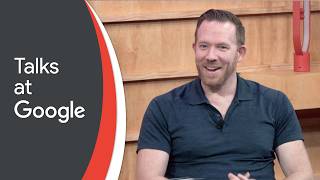
Jeff Kinney | Diary of a Wimpy Kid: Partypooper | Talks at Google

In this Talks at Google interview, author Jeff Kinney discusses the origins of his humor, his creative workflow, and the business side of his Diary of a Wimpy Kid franchise. He recalls a pivotal 5th‑grade teacher who taught him the difference between laughing with and at people, which sparked his drive to become funny. Kinney explains that he writes in massive volume—historically 700 jokes per book, now up to 2,000—using a Freewrite for distraction‑free drafting and a Wacom tablet for illustrations. He keeps early drafts private, sharing only with his wife, editor, and a few staff, and deliberately avoids most feedback, especially from kids, to preserve his vision. When faced with negative online reactions, he chooses not to engage. Kinney describes his disciplined routine: meditation, yoga, exercise, then timed writing sessions (about 2.5–3 hours) after which he stops to avoid fatigue. He contrasts his late‑adopted routine with his earlier chaotic lifestyle and notes how this structure enabled him to tackle ambitious goals like writing two screenplays and two books in a year. He finds screenwriting more fluid than novel writing, enjoying the rapid dialogue that actors will perform. Kinney recounts his early cautious career path—maintaining a day job in software while writing at night—and how he transitioned fully to writing after his tech job was sold. He shares personal habits such as quitting video games to become a creator, working long hours, and viewing his work as a privilege to serve millions of readers. Kinney’s illustration process relies on digital tablets, allowing easy scaling and revisions, and his storytelling starts with ideas and themes (e.g., birthdays, bullying) rather than a fixed plot, trusting that the narrative emerges from the joke volume. He emphasizes universal appeal, adapting drawings for different cultures, and ensuring readers see themselves in Greg Heffley. Inspiration comes from unconventional places like cemeteries, travel (e.g., Iceland, Puerto Rico), and varied environments. He also details cover design breakthroughs, such as the "fight or flight" concept. Finally, he outlines his editing method: highlight jokes that work and discard the rest, iterating until the book feels cohesive.
Chapters
Hello everyone.
Welcome. Excited to have you here today. Thanks for coming.
I'm excited to be here in front of this big screen.
Look at how big it is. It's just a huge screen. OK, I thought that we would start with rapid-fire questions.
OK, let's do it.
You ready? This is our warm-up, just to get everybody on the same page. OK, great. Ice cream or cake?
Oh, ice cream.
Elevators or escalators?
Escalators.
Interesting. Reading or writing?
Writing.
Mm.
For me.
What's your favorite day of the week?
Friday, of course.
Friday. It's a good day.
Maybe Thursday. It's like a bonus weekend day.
It's leading you to the Friday. That's right. That's right. What do you think is the best age?
The best age. Hmm. 5th grade was the best for me. Yeah. So I'll tell you why later.
Okay. Oh, okay. I'll take note of that. Pasta or pizza?
I'm gonna go with pizza.
Yeah, a little less controversial than pasta, perhaps. Yeah. Okay, and then a favorite kind of sandwich?
Favorite kind? I'm gonna go with, I'm gonna go with, I'm trying to be exciting here. I'm gonna go with peanut butter and hot honey.
Whoa, peanut butter and hot honey. I'll answer that one too. I'm gonna go with ice cream, ice cream sandwich.
Alright, okay.
I think that's a pretty good call.
I wish I thought of that. You had more time to prepare.
You can use that next time. Yeah, I was ready to go. I was ready to go. Well, we are so excited to have you here today, and as I was coming in, I was talking to a bunch of kids who are like, "Oh my God," like you're the biggest celebrity. Just do incredible work here. So can you tell us, since there are so many kids here today, when you were a kid, what did you want to be when you grew up? Did you know you'd be doing this?
Well, thank you for leading me right into the 5th grade question. Yes. When I was in 5th grade, I had a teacher named Mrs. Norton. She was probably in her 60s. She probably didn't have a lot of things in common with a boy in 5th grade. But what she noticed was I was trying to be funny. She noticed I was trying to be funny in class. I was trying to be funny putting on like a show, like a talent show kind of a thing. And she, she could tell I was trying to be funny, but she knew I wasn't good enough. And, and she gave me constructive criticism. She said, maybe you should try it like this. And one time we were rehearsing for a, a play, and it was ridiculous. We were dressed in a giant snake costume, which is a whole thing. And she walks in the room, she said, "There's a difference between laughing with and laughing at." And then she walked out of the room. And she left me to think about that. And she was right. If we did this thing with the giant snake costume, people are going to laugh at us. And I needed to figure out a way to get people to laugh with us, right? So I really needed to learn how to get better at comedy. And that's when I started to try to get better at comedy was in the 5th grade.
Oh, wow. That is fascinating. So you talked about this early example of a teacher giving you some feedback, you know, what might work and what might not work. Tell us more about that. When you are writing something, how do you get input from other people? What does that look like?
I don't often actually get a lot of feedback at all, believe it or not. When I write a book, I keep it all to myself because I don't wanna share it with anybody, because what I really wanna do is get a finished product. It's like, sort of like baking cookies. You don't wanna keep having people try it out as you're baking. You want them to enjoy the finished product. So I really keep it to myself. And then I put it out there, I share it with my wife, my editor, a few of my staffers. They tell me what they think of it. And believe it or not, I almost never get feedback from kids.
Wow, that's wild.
Isn't that crazy?
That is crazy.
Because what I do is we go on a tour, both in the US and all over the world, and it's like a show. It's like we get up on stage, we do skits, funny things, and then we move on to the next city. And so I don't actually often get a chance to interact with kids, believe it or not.
So after you've written this book, you probably feel really good about it, you're showing it to only a few people. Do you ever get feedback that hurts your feelings? Like, what do you do if someone doesn't like it? What does that sound like?
It's funny because all authors would do this, is that you would, you would release a book and then you'd go online and see how people reacted to the book. And yeah, sometimes some of the is negative, I've really learned not to read the feedback. I've really learned to just write the book, put it out in the world, and then let people chew over it, let people debate it. I don't try to get involved in the debate. I do my best as a creator, as an artist. I put my stuff out there, and I hope that people enjoy it.
Oh, I love that. You keep your sanity.
I do.
Yes, I think that's great.
Yeah.
You also mentioned that even starting when you were really young, you were trying to be funny. You're trying to figure out ways to be funny. And just one of your books has hundreds of jokes. The amount of jokes in a single book is crazy. Have you ever counted?
No, but right now it's probably— well, yeah, it used to be, I think I would write 700 jokes per book. And now I write probably more like 2,000 jokes per book.
That's crazy. OK, so how do you do that? Now how do you know how to be funny? What does that sound like?
It's funny. For me, it's a grind, right? So it's like a lot of output, which means a lot of typing. You saw that I was carrying around this little miniature typewriter with me.
Yeah, that looked cool.
It's called a Freewrite, and it's not connected to the internet, so I'm not distracted by anything, and I just put out volume, which means, if you're a kid listening right now, it's just like I put out a lot of stuff, and a lot of it isn't very good, right? Most of the stuff I can't use, but every so often something peeks through and something works, and so if you're reading my next book in a few months, which is called Fight or Flight, there's gonna be a section where Greg is keeping track of all the bullies, right? He knows what, where they all are. He knows their territories. And I wrote that just a few minutes ago in the other room. So I'm always writing. I'm always generating ideas. Yeah, that's how, that's how up to the, you know, sounds like we were a part of the process. It is true. Yes, it is.
See ourselves in the book.
It's true.
So what do you do when you're not feeling funny?
You have to keep writing even when you're not feeling funny. I just listened to an interview for, by somebody who worked worked for The Daily Show, and his point was you need to know how to be funny even if things aren't going well in your life. You know, I've been working on these books since 1998, and I've been published for about 20 years, and so a lot has happened in the world, a lot has happened in my life, right? And sad things, of course, my dog died last year, which was really sad, but I have to have this system that allows me to keep grinding away and then producing funny stuff no matter what, how I feel.
Mm-hmm, yeah, that makes sense. Do you have any routine, like when you're gonna start writing, or do you just write wherever you are whenever it is?
I'm in a routine right now where I put writing above everything else except for, like, I do some exercise, and then the first thing that I do is I start writing. And I sit down in a room, and I'll just start typing away like a madman for like 3 hours straight. Oh, wow. And then what writing comedy is like, it's sort of like like, let's say I had a dumbbell and I picked it up and I started to do bicep curls, right? Eventually, your muscle's gonna get tired and you can't keep doing it. So you have to know as a comedy writer when your muscle is going to get tired. And for me, it's about 2.5 hours. The jokes start trickling out then, and I know it's time to quit for the day. I might come back to it, but usually about 2.5 hours is as much as I can write comedy.
Oh yeah, that's good to know. For me, lifting weights, it's pretty quick. It's like, you know, 5 minutes or less, and I'm like, I'm done with this. This is too much work. Absolutely. I mean, it sounds like a routine is very important to your process though.
Yeah. And what's funny is that my routine is something— I'm 55 now, I think. I have to ask my wife, but I think I'm 55 and I've only started to develop a routine only just now in my life. My father growing up, he had gone— he had been in the military and everything was routine for him. Like his watch. Like he would wake me up at the same exact minute every single day. He'd say the same thing. His life was full of routine. Like he would iron his shirts the night before. He'd put his juice in the car for his ride to work. He'd fill up the gas tank. And I realized that I really thrive on chaos, right? Non-routine. And so my whole life up to this point, I've been sort of living randomly. I go to bed at different times, I do strange things, and only recently I've— and then I've been successful with the book, so I figure this is the way to go, this is what makes me work. But the truth is, is that I've been missing the routine. I rejected the routine, and I'm doing much better now. I'm much more efficient now that I have routines. And this year, when I came into this year, I said, I have to do something really tough this year. I have to write 2 screenplays, so 2 movies and 2 books, right? And I've never had the discipline to do something like that. And so I start now every day with meditation and yoga. I can't believe I'm saying this. And then exercise, and then I work. And I've never worked so efficiently as right now.
I love that. I love a routine. Like, I'm more like your dad. I love a structure. I love a timeline. So That really speaks to my soul. That sounds amazing.
I'm learning.
So you talked about also writing screenplays, which has been so fun for us as consumers of the things you create. Tell us about that process. Is it really different than writing a book?
Writing a screenplay is super fun. If any of you kids ever want to be creators, think about writing a screenplay, because when you're writing a screenplay, there's something about it that operates at the speed of thought. When I'm writing a book, it's really slow. It's like a total grind. It's really, really hard to squeeze out a page. But when you're writing dialogue for a screenplay, you're having the characters talk to each other, and it just flies out of— off of your fingers, and it's really, really exciting, especially knowing that these things that you write are going to be read by actors. You know, they're going to be said and acted out, and the power that you get from writing a screenplay. Let's say I start off a screenplay and I say, "A snowy neighborhood, kids are playing in the snow, building snowmen, etc." And instantly, I've just created a world that one day a bunch of animators, a lot of animators, are gonna have to put together. And I've done it with just a sentence or two. So that's really, really exciting. So I really like screenwriting more than anything.
Yeah, I mean, it sounds amazing and so cool to get to see the process, like the ideas coming out of your head and then see it on the big screen when it's done. Must be incredibly cool.
It's exciting. And it's really funny, like a secret of Hollywood is that when you're doing animation, everybody, all the actors are in like voice recording booths somewhere in the world, usually in Hollywood. So they're in a booth recording your lines and then you could be anywhere. So one time I was— do you know who Ed Asner is? He was Carl in Up, right? Carl, the old man in the movie Up. And one for this movie, Rodrick Rules, he was Grandpa, Greg's grandfather. And I'll never forget, like, I wrote his lines and then I was in an airport and I was running to my plane with an earbud in my ear listening to Ed Asner read my lines. And then if I needed to make an adjustment, I would type on my, you know, on my phone, text the director who would tell Ed Asner how to read the new line or what the new line was. And then he'd say it just like that. And it was, it was instant and it was just incredible.
Incredibly cool. And also, like, were you late for your flight?
Like, I made the flight.
Yeah. The routine person in me is like, you should be sitting with snacks ready. That sounds stressful. But, but that it's that chaos that kind of fuels your process. It's pretty cool.
It did then. Now I arrive at the airport 3 hours early because I almost missed a flight to India. And that, that, that taught me something.
Now you know. Yeah, it's really cool. And we'll talk more about the movies as well. But before we do that, let's go back to being a kid for a minute. I've heard you say that you were not the best student. You weren't the best athlete. So what would you say to kids that are maybe feeling like the wimpy kid in their class today?
I never said I wasn't the best student or athlete. Those were your words. Oh, I mean, look at me, right? Oh, no, I'm kidding. I'm kidding. No, I was— you know what? I was a smart kid, but I think I had attention issues. I still do. So like when a teacher was talking, I had to be drawing, right? Because that was the way I listen. And sometimes teachers would see me and they would think I wasn't paying attention.
Yeah.
But that was how I paid attention. Yeah, I was a mediocre athlete, I would say. I felt like sort of like an observer. Like I felt like an adult trapped in a kid's body, which is a weird thing to say, but I have it. One of my first jokes in Diary of a Wimpy Kid is that Greg says, I, you know, one day I'll be rich and famous, but for now I'm stuck in middle school with a bunch of morons, right? And that's how I felt like as a kid. And maybe that's a rude thing to say, I could take that one back, but that how I felt was that I wasn't a real person in this situation. I was an adult trapped in the kid's body in a way. And so it helped I think probably a lot of writers feel this way, is that you feel like you're watching everything happen around you. You don't feel like you're actually an actor in that play.
You're the narrator, maybe.
Yes, exactly. So I— of course, then you're observing a lot, and then later on when you're a grown-up, you can write about it.
Yeah, so cool. When I was a kid, I really struggled in school, and I particularly struggled with reading. Like, not a good reader. And books like these that incorporated illustrations and different ways of engaging with the text really helped me learn to love reading. It was a big change for me. Can you talk a little bit about how you decide where there should be drawings and where they should be worked into the stories?
So usually in a book, an illustrated book for kids, the illustration reinforces the drawing, which means that somebody says, "There was a house on a hill with trees in front of it," and then you just see a picture of that very thing. I like to do things a little bit differently. I like for the picture to deliver the joke, right? So I like to walk the reader up to the joke, and then the picture actually delivers the joke. So if you took the pictures out of my book, the books wouldn't really make a lot of sense. So I like that better. That's the most sophisticated way to write. And sometimes the pictures subvert the joke, right? So that's a little bit harder to explain, but sometimes Greg will say something and then the picture will tell a little bit of a different story. And I think that's the really sweet spot for me as a writer. And I'll give you an idea of what, like, a subversion means, right? So there's this thing called cognitive dissonance, which is a very grown-up term.
It's a big term.
But it kind of causes you a little bit of confusion, and that confusion is what the funny thing is. So for example, in one of my first books, Greg Heffley, he does something bad. He's gonna get in trouble for it. It's about the worms, if you guys know, in Rowley. And his mother says, Greg, I'm not gonna ask you about what happened, but I need you to do the right thing, right? And then Greg decides that the right thing to do is to let his friend Rowley take the fall for his crime. And for Greg, this makes sense because he's like, I did the right thing for me, right? And then there's this picture of Greg and his mom celebrating with an ice cream, right? Which is really, that causes a lot of dissonance because a kid is saying, No, no, this is wrong, right? But that's where the humor is. The joke is that Greg did the wrong thing, but he thinks he did the right thing. So that's what cognitive dissonance is.
Yeah, and it is funny. I mean, that's a great example. Yeah, it's very funny. Talking about Greg's maybe like bad behavior, if we want to call it that, I had a question for you about that. I was wondering if Greg could invent his own holiday so that he could get a day off school.
Mm, that's a good question.
What holiday do you think he would choose?
Oh boy, that's a good question. That's a really good question. I think I just wrote a joke about this, not just in the other room, but there was— I was thinking that Greg in this next book is really tracking where the bullies are and how they move and when they show up for school. So whatever day all the bullies were in school, Greg wants to be out of school. I think I'd go with that. That's a bully-free— Yeah, bully-free Friday.
There's a holiday that we could all share.
That's right.
Not have to work or go to school. Sounds perfect. Yeah.
I like it.
Yeah. Yeah, BFF, Bully Free Friday. Smart. You can use that.
Yeah, do I owe you money?
That's amazing. I love that. So you talked a little bit about this process of writing a screenplay versus writing a book. How has it been to see your work turned into movies? Did you always know that was gonna happen?
Yeah, at first it was really scary because the movie thing happened really fast. Like, I wrote, now I'm 20 books in. Right, but at that time, my second book had just come out.
Oh, it was early.
And so like Hollywood came calling and they wanted to buy, you know, Diary of a Wimpy Kid, and I wasn't ready. I was scared. And then that happened really fast. And then I'll never forget sitting in the theater and the 20th Century Fox logo comes on and the trumpets blare. And I just felt nervous because I felt like this is really different. A book is really different than a movie. And at a movie, you pay money to sit in a seat and be entertained, right? That's really different than a book. And I thought, all these people in this theater paid money to be entertained, and so I hope we do the job. So it's a little scary.
It is scary, and you did do the job.
Thank you very much.
Yeah, it's a great movie. So, you know, you talked about being scared in that moment, and I feel like I talk to people a lot who are not able to take this next step, do the next action, because they feel scared. It's like overwhelming. So what did you do in that scenario or others when you feel scared to still make yourself do that next step?
So I did that next step very, very slowly. So I used to be a computer programmer. I worked as a medical software engineer and a game developer and some other things. And I didn't ever take a big leap to do Diary of a Wimpy Kid. I worked on it at night, right? So I kept my day job. So I never took that big risk. A lot of artists tell a story about how they take a big risk, how they quit everything and they chase their dream. Not me. I played it really safe, kept my day job, and even after "Diary of a Wimpy Kid" came out and the following books came out, I kept my day job for 10 more years.
Wow. Yeah. That's crazy.
Yeah. And I only stopped because things at the job changed. They sold the company. But I really played it very, very safe. I didn't take a big risk.
Wow. I mean, it's really interesting to hear about how this was kind of a creative outlet for you in the evenings or when you weren't working.
Yeah. Yeah. You know what's, what's funny about that is that at the time I was playing a lot of video games. I was in my 20s and there were a lot of video games. Adults, you'll remember Doom and Quake and games like that and these strategy games. And they, they took up a lot of my time. I really enjoyed it. But there's nothing that makes time go by faster than a video game. And I remember it would be all of a sudden 1 in the morning and I'm like, oh my gosh, I have to wake up at 6:30 to go to work and now I'm tired. But I love playing video games. But this one day I had this idea, which is that in life, generally speaking, you're either a consumer or a creator. You're either the chef making the food or you're the person enjoying the meal. right? And I decided that I wanted to be a creator. And so I stopped. I stopped playing video games, which I'm sure a lot of kids won't like to hear, but that was what allowed me to have the time to be a creator, right? And then I got pulled back in, in Fortnite about 10 years ago.
Yeah, so now you're back. You're right. Oh, thank goodness. That's good. But what an interesting shift to make there. Now, when you are not writing or doing work for the books, what is your creative outlet? Do you do something Anything else? Anything new?
My life has changed in a way, is that the thing I like to do most is to work. And I sort of work like I breathe. It's kind of hard to explain, but if I'm on vacation, yes, I'll go off and throw the Frisbee with the kids. But then when that's over, then I actually just like to work. It's like my way of being. And I think that part of that is because I like doing what I'm doing. But part of it is really a privilege, right? Because I'm very lucky. A lot of writers work very hard to break in, and I worked hard to break in too. And now that I've got my seat at the table, I realize it's such a privilege that whatever I write in that room over there is going to be read by millions of kids around the world. And so that's— I try to always honor that privilege. I try to, to never take my foot off the gas. I wanna do my best possible job for those kids and honor, honor their readership, really. So I take it seriously.
Yeah. I mean, it is, from afar, it felt like you had the dream job. So that makes sense to me that it's just really fun to do this kind of work, even though sometimes it's a grind, as you said.
Yeah. It is a grind, but it's, and it's not that fun to do the work, honestly. It's, like, hard, and I'm on deadline. These days, I'm drawing 16 hours a day, which is, does a number on you. But it's, but like I said, but it's such a privilege that I, that I, you know, I always respect that.
Yeah. Okay. So you're drawing a lot every day, it sounds like. Tell us about your drawing process. Are you using paper and pencils? What does that look like?
No, I— the reason I couldn't be a real cartoonist to begin with, I wanted to be a newspaper cartoonist like Charles Schulz or Bill Watterson, was that I couldn't really control —like, once I put that pen onto the page, it didn't exactly do what I had in mind to do, right? So I couldn't match that up. So when the computers came along with the drawing tablets and things like that, and you can zoom way in, now I can actually make what's on the page or what's on the computer screen look like what's in my head. So I use a computer. I use a giant Wacom tablet and sometimes a small Wacom tablet. And I do all my drawings in that way.
That's really cool. And I can imagine it makes it easier for you to change them as you go.
It does, yeah. Sometimes, like, if I was, let's say sometimes I'm like, well, this character should just be bigger, right? So I can scale the character up, right? It's very easy to do. If I was doing pen and ink, pencil and paper, if that character was too small, I'd be like, that's okay, I'm just gonna leave that character just like that, because the idea of making a change that big would be very difficult. So the computer is a tool, just like a word processor is a tool for writing.
Yeah, absolutely. Do the drawings ever fuel the text, or is it always text first, drawing second?
It's always idea first. So I write, like I said, sometimes as many as 2,000 jokes in a book, and when I come up with those ideas, I have the idea in my head, right? So for example, I came up with an idea today that all the bullies, Basically, all the weaker kids, the targets of the bullies, create this bully alert system where they make bird noises, right? And the bird noises, like, tell the other weakling kids kind of that the bully is coming, right? Smart. Right?
It feels like we could use that.
It does, I think. But then I thought, OK, well, Fregley would just make, like, owl noises randomly. Fregley's this strange kind of character in the book. And I'm thinking he— He wouldn't be part of the bully warning system. He just makes owl noises. So I'm thinking of a picture— Unrelated. Right. So I'm thinking of a picture of Rowley in a tree making owl noises while all the bullies stand beneath him, you know, looking up at him. And I was thinking, okay, that's the image. And it's going to be the last thing that I do. So I have to write the story, I have to do the sketches, and then inking that drawing will be the last thing I do. So it starts off with a drawing, an idea, and then it ends with the drawing.
Oh, OK. That's so fascinating. And you talked about it starts with this idea. When you go to begin a new project, a book or screenplay, do you know where it's going? Do you have a sense of the whole arc? Or are you kind of finding it as you go?
I don't usually. I have a theme. So for example, I see that a lot of the kids in the audience have Party Pooper. And I had this idea of a birthday, right? Every kid has a birthday. Everybody knows what that's like. And so that's a very rich theme. Theme. I can write about cakes and candles and presents and all these things, surprise parties, everything, but I don't know where it's going. And sometimes I get really scared because I get to about 80% of my writing and I'm like, I don't have the plot yet. And then all of a sudden it'll come because I always lead with the jokes. It's all about the jokes for me. So then, but the plot always comes. And the idea of the Three-Eyed Theeble, which if you kids have read the book, you know what that's about. That came towards the end. So I always feel lucky that it comes.
Wow, so you really have to trust your process. It'll come.
Yeah, because I put out so much volume. I write so much, so many jokes that there's something in there. There's a story in there. Yeah, absolutely.
That's really interesting to hear about. Kind of crazy. I'm wondering, you know, you're talking about so many things that I've heard kids say feel really relevant and timely to their lives. But you're not in school, you're not experiencing these things right now. How do you make sure that what you're writing is going to connect with your audience?
Yeah, I do worry about this because I had, you know, I was a kid growing up, of course, and then I had kids and now they're in their 20s, right? And I'm like, what do I need to do here? Do I need to go substitute teacher at a school? Another job. But mostly I'm relying on my memory and my imagination now.
How have you found your characters have evolved over all of these, you know, 20+ books?
I think in a way they haven't evolved at all, and that's part of the trick, right? Is that if you watch a sitcom, which is like a comedy show on TV, like a half-hour show on Nickelodeon or the Disney Channel, you'll notice that the characters don't change much. In a way, they could change within an episode, and at the beginning of the next episode, they're just how they were. And that's what's really fun about cartoon characters is that they stay the same. Like, if you read a Harry Potter book— and I met a kid today who was reading Harry Potter when he was younger— as soon as Harry, like, ages one year, in a way, you know that the story has to end, right? Because he is going to get older, and then by the time he's 18, you know, he'll graduate from Hogwarts or however that works. And you know that that story has to end, whereas with a cartoon character, The story can't end, right? Donald Duck is always the same. Bart Simpson is always the same. That's the magic of cartoon characters. The world changes a lot, but cartoon characters don't.
Oh, wow. I bet that that's really helpful when you're writing so many books that you can have a lot of the things that stay the same.
It is. It's fun. And maybe Greg's changed in some ways that I don't really detect, but I think that more or less he's the same character.
Yeah, that's amazing. Can we talk for a minute about your covers? 'Cause I know for a lot of kids, particularly if they're in the library, that they're gonna look for the COVID first. How do you decide, or is it you, I don't know, what you're gonna put on the COVID how you're gonna draw people into a story?
Yeah, it starts with a theme, like I said, so birthday, and I was on the road, I was touring, and then I had that idea of Greg like sort of popping out of his cake. And that, like, that breakthrough moment always comes at some point. And last year, it came when I was driving in towards Munich for some reason. And I had this idea of I wanted to do a book about, like, bullying or about fighting or, you know, there's like, this is part of childhood is being scared, you know, being scared of something. And I was like, how do I write a funny book about this? Because I don't wanna write I don't want a book that if you look at it, it seems like violent or something. I want it to feel funny. And so I thought, OK, I want to use the word fight in this story. And I was like, fight, how am I going to put that word in there? And then I thought, fight or flight. OK, so fight or flight, for any kid that doesn't know what that means, it's nice that it rhymes. But what it means is that in the animal kingdom, for example, if an animal is cornered, it has to decide, is it going to fight its way out of this, or is it going to try to get away? And I thought, okay, Greg, if this was Greg, he's gonna choose to get away, right? So there's an animal that's associated with being a coward, which is a chicken, right? And so I thought, okay, Greg is, uh, I'll put him in a chicken suit with boxing gloves because that actually says fight or flight, right? It's like a choice between the two things. And so that's how I came up with that idea.
And there's always like a breakthrough like that. It's so fun. It makes me think about where you draw inspiration from, right? Because you've talked about how ideas come to you or they evolve as you're you're working. Um, are there sources or places you go when you want to see other people be funny or see these experiences in the animal kingdom, if you will, that give you inspiration?
I've tried just about everything over my whole life, and I found that the best place for me to write is in the cemetery, which I'm sure is a little shocking, but it has more. It happened during COVID when my kids were both home. They were both doing remote schooling. They were allowed and I couldn't be home, right? And I couldn't be in the office with other workers because, you know, we couldn't be around each other. So I drove to the cemetery, my local cemetery, and it was cold. I remember I had a blanket. I had some Oreo Double Stuf cookies. The best ones, yeah, smart. And Starburst jelly beans, which I'm, you know, breakfast of champions. And that was my fuel, and I would write. You know, in the cemetery for a few hours a day. And I've done that for every book since then. And that was what, 2020?
Wow, that's wild. Yes.
That's a very fun fact. If you want to find me on a Tuesday afternoon, come to the Plainville Cemetery.
Probably in the cemetery. That's amazing. That is so interesting to think about how different environments give us inspiration and also maybe different foods too. Sounds like candy might fuel you a little bit. True, true.
One time I realized, I was like, I need this kind of crazy thing. I need to be around other people, right? Because I want to be— I don't want to feel lonely when I'm writing. I would need to be around other people, but I don't want them to speak English because if I hear them, if I hear them talking, I'll listen to their conversation. So I need people but not English. And so one time I was— I went to the airport. I was like, I've got to go somewhere to write. I'm in trouble here. It was actually right around Mother's Day, so right around this time of year. I was like, I need to write fast. And so I decided I was going to go to Puerto Rico, right? So I drove to the airport and decided that morning— yes, well, that afternoon. It was after a Mother's Day celebration. Oh wow. Okay. So from my mother's house, I drove to the airport. I was like, I've got to get a plane ticket to Puerto Rico. And on my way there, and I had I packed shorts and things like that. And on my way there, I was like, I'm gonna go to Iceland, right? Pivot. So I changed my mind. I showed up in Iceland with no hotel and, you know, some bathing suit or something like that. And that's where I wrote, I think it was like the 5th or 6th book. Did you meet your deadline? I did. I met my deadline. Yeah. And all you needed was a plane ticket. That's right. And I just sat in a restaurant and there were people all around speaking Icelandic, I think. And I couldn't understand a word they said.
Perfect. Busy, but you couldn't understand it. Oh, wow. That is incredible. And really fun. How have you found travel influences your writing? Because you've brought up a couple different places you've been as you do these book tours and seeing different experiences. Does that impact how you write?
What's really impacted the way that I think about my books is going to different countries. So I've been to 42 different countries now. And I've been just about everywhere. And what I've realized is that kids in China, in New Zealand, in Brazil, they see Greg Heffley as like a friend or a neighbor. And I think that when I started off writing these books, I was thinking that Greg was, you know, an average American kid. And I've realized over time that the books work much better if he just seems like a kid, you know. And so, I've sort of changed over time. So, I'm trying to write about the things that we all share in common. We all have of parents and teachers and bullies and pets and homework and all these things, right? And I'm trying to write about those things, because I think the most important thing for a reader is to see themselves in the pages of a book, right? Is that when you see yourself in the pages of a book, there's something very powerful about that. And not every kid gets to see themselves in the pages of a book, but I think that we're really working on that. So now a lot of kids, like get to, get to see their reality reflected back to them.
So it's more a universal story.
I try to make it more of a universal story now.
That makes a lot of sense, I think, and especially because you have such a broad audience. Yeah. Yeah.
So it's going to be published in, I think, 73 or 74 languages this year. So it's really exciting.
Do you ever change the drawings when it's going to different countries or are they always the same?
Yeah, every so often we'll change a drawing or tweak a drawing if it's not going to work in a certain culture. So, yeah, we have to be very respectful of everybody's culture, and so I think we've done that over time.
Oh, wow, that's really cool. So you've talked about how all of these ideas come to you, and at first, it's just about output. Get 'em out, type 'em, get everything out there. You write so many jokes at a time. How do you go through the process of then removing things, deciding what shouldn't stay in a book or how things should change? What does the iteration process look like?
Yeah, so if I look over a paragraph of something I've written, I already know what's gonna be a joke, you know, so I— It's sort of just highlighting the stuff that works and then ignoring everything else.
Oh, okay. Wow. It's that simple, huh? Yeah, that's how it works. Yeah, that's amazing. Well, thank you everybody for coming today. Thank you, Jeff. Thank you. So great.
More from Guy


Cheryl Strauss Einhorn | The Human Edge: Smarter Decisions in the Age of AI | Talks at Google



Rachel Glennerster | Innovation and the Center for Global Development | Talks at Google

Rebecca Winthrop | Rethinking the Purpose of Education in the Age of AI | Talks at Google

Dr. Robert Wachter | A Giant Leap: How AI Is Transforming Healthcare... | Talks at Google



Nelson Dellis | Everyday Genius: Hacks to Boost Your Memory, Focus... | Talks at Google