Nelson Dellis | Everyday Genius: Hacks to Boost Your Memory, Focus... | Talks at Google
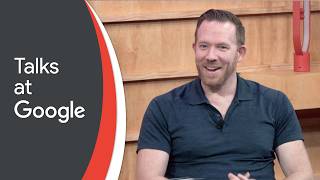
Memory champion Nelson Dellis demonstrates his technique for recalling a 30-digit number using vivid, bizarre imagery placed in a mental hotel in Kathmandu. His grandmother's Alzheimer's diagnosis inspired him to compete in memory championships, and he argues memory can be trained at any age, even in people in their 80s. He warns that true multitaskers are rare, around 2.5%, and cautions against over-relying on AI despite its usefulness.
Chapters
Nelson, please take a seat. Welcome to Google New York. Nelson, I don't know if you've been to Google offices before.
No, first time.
Good. You don't have to anymore. You've been to the best. So you're done. Done. But welcome to Google. I do love this building. This is the old Port Authority building. It's a 2.9 million square feet. To give you an idea, that's more than the square footage of the Empire State Building. And this building was actually consecrated on October 3rd, 1932. Do you know what day of the week that was?
October 3rd, 1932. Hold on, let me figure it out. I think it's a Monday.
That's right. All right.
He got it.
All right. So this is one of the many tricks you can learn by reading Nelson's book. And we're going to have some fun with you, Nelson, today. We're going to do a bunch of these different things. One other date, if you can help me out with.
Okay, sure.
What day of the week was, you know, we're coming up on 250 years of America, so I want to choose an older date. So what date, what day of the week was September 5th, 1752?
1752, let's see, was it a Tuesday?
So technically it was a Tuesday, but technically also in your book you said the day didn't exist.
Oh, that's right.
Yeah, yeah, yeah. So— Yeah, yeah.
That's true.
So do you want to explain why the day didn't exist?
Yeah, because they switched the calendar that was being used to Gregorian. So there was a time— depends where you were— where they skipped a bunch of days. And it was suddenly later in the year. And people had to adjust so that they were all kind of on the same calendar.
Yeah.
Thank you for catching me on that.
So we lost 11 days. But it was funny, because Google also said it was a Tuesday. And I was like, ah, stupid Google. You know? Yeah, yeah.
Most people, when you're trying to figure out dates, it's got to match to some calendar out there. So it doesn't make sense.
Yeah, no, no. Fair enough. Fair enough. So Nelson, I wanted to start off by showing off your prowess for a bit.
OK.
So what I'm going to do is there are a few confidence monitors here that we've turned off. So just so you know, Nelson can't see any of this. I'm going to read out a set of numbers to Nelson. Nelson has not seen these numbers. I have 30 integers I'm reading out to him. If we can go ahead and get the presentation up so you can throw those 30 integers behind me. Nelson, don't look.
And if I could ask, if you just say them at one digit per second.
Yeah, I'll say them about one digit per second. And then I'm gonna ask you to read them back to me. So simple exercise, all right? You ready?
Mm-hmm.
Okay. 7, 0, 4, 9, 3, 2, 1. 8, 5, 1, 6, 4, 0, 9, 2, 7, 5, 3, 8, 1, 6, 2, 4, 0, 9, 7, 5, 3, 8, 1, 6.
All right, let me go over to my head. Say them one more time fast, just to make sure I have it all.
Sure. 7, 0, 4, 9, 3, 2, 8, 5, 1, 6, 4, 0, 9, 2, 7, 5, 3, 8, 1, 6, 2, 4, 0, 9, 7, 5, 3816.
All right, so we have 704932851640— was it 9275?
Yes.
Okay, 38162409753816.
I mean, come on.
Let me do it backwards too.
No, shut up. Yeah, yeah, yeah.
All right. So 6, 1, 8-3-5-7-9-0-4-2-6-1-8-3-5-7-2-9-0-4-6-1-5-8-2-3-9-4-0-7. All right, all right.
You're not worthy. All right, so you have to tell me a little bit about this skill set because, you know, I read your book, I learned about your memory palaces, But for those of you who haven't read the book yet, can you explain what a memory palace is? 'Cause I thought this was all made up when I watched Sherlock Holmes, and apparently it's a real thing.
They do take liberties with it for the show, for the sake of entertainment, but it, yes, it is a true thing. It actually works. Everybody can tap into this and use it. And what it's really taking advantage of is how our brains like to work, which, first of all, there's this image component to it where you're visualizing things, and we remember things when we picture them in terms of associative images. And then in terms of how to keep things straight, we need to have some way of organizing the information. So the structure of these memory palaces is what keeps that order. So how I can do those numbers forwards or backwards, it doesn't matter, 'cause I have them laid out in this palace. And what a memory palace is, is mental thought of a place that you know very well. I guess they had palaces back in the day, but you can use your apartment. Your New York one-bedroom apartment or whatever you have, and you just imagine a walk through it and imagine the images for the things you're trying to memorize along the way. Then when you want to recall it, you just walk back through that same pathway, and if you did it the right way, you can pick back up the pieces and convert it back. For the numbers, every 2 digits I think of a— I have an image associated with it. I chose a memory palace. When I do a demonstration like this, I think of a specific hotel I stayed in when I traveled to Kathmandu for the first time in my life. This was back in 2011. And I'm mentally going through this hotel, placing the images. So the first two were 7049. That to me is Goku from Dragon Ball Z catching a football in front of the entrance to this hotel. And then I walk in, I'm at the lobby front desk, and there's Charlie Brown eating a sandwich. That's 3, 2, 8, 5. Across from that, there's a couch there. Listen, this place might be totally different now, but in my head, this is what I remember. Arnold Schwarzenegger is memorizing cards, 1, 6, 4, 0, and so on and so on. And then if I'm going reverse, Arnold Schwarzenegger memorizing cards is just 0, 4, 6, 1 instead of 1, 6, 4, 0. So that's the idea. And you don't have to do it just for numbers. It can be applied to anything.
It's an incredible skill to even be able to remember that, 'cause if you just asked me, I think I heard Goku throwing a football.
Catching a football.
Catching a football. Okay, see what I mean? Like, my memory's not that good.
Yeah, but you remember that. You remember the first 4 digits.
Yeah, yeah, yeah, all right. And you know, I think it was interesting in your book, you talked about the more ridiculous these examples are, the more they stick. Do we understand, like, why that is so?
Yeah, I mean, we— that's true. So part of the technique when visualizing information is to make it as out of the ordinary as possible, as associated to things that we feel and can sense using all of our senses. That's the stuff that sticks. And that's just what our brains are designed to do. I mean, if you think about what are the most memorable moments in your life or the things that you tend to remember, it's usually tied to things that are emotionally powerful, whether positive or negative, things where you were using all of your senses. And so tapping into that, that's what makes it stand out from the noise, from everything else. If everything was exactly the same, we wouldn't remember it.
You know, it's a— I don't want to give away too much of the book, but I will let people read this on their own. There's a reason I will never forget the meaning of the word syzygy because of you. And so with that, I want to switch over to why you got into this. So you had an experience with your grandmother as she was going through Alzheimer's that made you decide you wanted to become better about your memory. Can you talk about that for a bit?
Yeah, so to preface everything, I didn't have a good memory to start. Through school, I was average in terms of being able to remember things. I wouldn't say I had any inkling that I was going to be a memory champion at all. I would have probably laughed at that if somebody was telling my future. But my grandmother, I watched her struggle with Alzheimer's for years. And eventually she lost the battle due to complications in 2009. And that really struck a chord with me. I'd never lost anybody close to me. And watching her lose her memory was just wild to watch. It affected her, obviously, but it affected the whole family around us. And there were some moments where she'd forget who I was. When I was right in front of her. And I couldn't fathom how the mind could just lose that. She was such a storyteller in our family and knew all these details and cared so much about those kind of little things and there she was not remembering me. So it led me down a rabbit hole of learning about memory and I'd often find these little sidebars about people with phenomenal prodigious memories in history and then these memory competitions would pop up and I was fascinated by that, thinking it was for the elite few who have naturally good memories or autistic savants, people with photographic memories, all that. But it turned out to be that normal people who just train their memories were competing and winning these competitions and setting incredible, mind-bending results that supposedly everybody could learn. And so that pulled me in, and I started learning and training. The techniques.
So because this is a room of Googlers, I have to ask, have any of you competed or been to a memory competition? Out of curiosity, any hands? All right, shockingly zero hands.
That's okay.
So can you walk us through what a memory competition looks like or feels? 'Cause actually, interestingly, I had to read your book and then I had to watch a few of your videos to get a better feel for what a memory competition means, right?
Yeah, it's hard to imagine— well, maybe it's not that hard to imagine. It's people memorizing. We're looking— it looks like people taking a test competitively. There's been versions of competitions that they try to make it more stage-friendly, audience-friendly. But effectively, yeah, we have to memorize things. So it's usually some event or discipline that you have to memorize for a certain amount of time. And there's a certain amount of information. And whoever can memorize the most accurately, the fastest at times, wins. And we're memorizing things like strings of numbers, decks of playing cards, names and faces. We get these pictures of random people and names, first and last names, poems, lists of words, things like that. So—
Well, so along that line, one of the Guinness World Records you hold is around pi. Is that correct?
Yes. It's not a Guinness record. It was a record I attempted. It's just its own standalone record because it's so—
Niche.
Obscure niche, yeah. Because most people, when they memorize pi or do a record with pi, they're reciting pi. And I think the record's— official record's 70,030 digits. There's an unofficial record of just over 100,000. But anyways, so this record is not that, but it's, I think, maybe harder. But basically, you have 10,000 digits that you memorize. It's called a matrix. Test. And basically every— it's split up into chunks of 5, and the judges in this attempt will ask you at random 50 of those chunks anywhere in the 10,000, and you have to say as fast as you can the next 5 and the previous 5 for each of those chunks. And the score is the— obviously you have to get them all right, um, and the time that you did it in.
I, I have an honest question for you. You started this journey in your 20s. Right?
Yeah, mid-20s.
I don't like to admit my age, but I'm in my 40s now. Is it really possible that my memory can get better at this age? Because like there's a lot of like conflicting research about whether my, you know, neuroplasticity has ended or whether I can still learn. Yeah.
And I'm sure there's some, some truth to that, definitely. But as a memory expert, someone who trains people of all ages these techniques, Everybody can do it. Everybody can improve it. I have a client right now who's pushing 80, and he didn't know how to do this before, and he was struggling with his memory, and it's completely switched. All his doctors are asking, what did you do? Because you couldn't do this before. He was failing some of those cognitive tests that they have him do at that age to test if he has some cognitive issues, but he's acing them now and some. So, and just my experience with different people in different stages of life. Anybody can learn these techniques and improve it. So yeah, the brain is very plastic. Obviously, the raw processing speed that somebody has in their 20s versus their 40s and 60s and 80s will differ. We're aging. But these techniques are so powerful that they can help your memory significantly.
Yeah. So you're here at Google. We're an internet tech company. I don't think I've seen anyone write down notes in years. You know, with their hand. And yet one of the things you talk about in your book is that writing by hand, you tend to remember much better than typing out. And you know, my kid's in school. He's 12. He's in 6th grade. He's using Chromebooks for his notes right now. What is it about the physical act of writing that creates those kind of neuronal connections in a way that we remember it so much better?
[Speaker:GUY_WAKAKI] Yeah, I mean, there's a few things going on. —excuse me— when we're more present in the moment doing something where it's involving our mind and our physical body, there's just more input to remember. That's why there's a whole chapter about reading and remembering more. And I talk about how ideally physical reading is a lot more memorable than on your Kindle or even audiobook. And partly because you're more intentional. You're paying more attention because you're a part of the process. Versus more passively interacting with the information. So that's a big part of it. You know, we're— it's hard though, right? Because in this day and age, we have these tools that just make it easier. You can have these AI tools just summarize everything for you. Yep. Right. But I feel like— and I know it's more time-consuming and maybe less helpful to have to lug a book around with you or to bring your notebook instead of just typing it on your computer or have something summarize it for you. But it's letting our brains become lazy, you know, and when you don't use your brain— I know it's cliché to say that— you lose it, right? So part of that very intentional interactive element is what makes things stick longer. It also makes you more present, more focused, which also enhances memory.
It was fascinating to also see the research that shows that when you set your mind to something, when you have that personal interest, you're more likely to learn it than when it's a chore, right? And that's an interesting concept of how sometimes we have to fool ourselves to say, this is what I want to do to be able to do it, but how that, there's some truth behind that statement also, right? So it was very fascinating to read that research in your book also.
Yeah, making it more intentional, right? Like saying, I'm gonna take this book and read it, I'm gonna write these notes down. Even if it's something that you're not that interested in, But the fact that you're telling yourself and actively doing that does heighten how much more interesting it becomes to you.
For me, it was very helpful to have a due date by which I had to finish the book. I'm familiar with that too. So we talked a bit about Google itself and the ability to summarize. Why is memory still so important in an era of Google Search and of AI summarization?
Yeah, a lot of people will ask me that, like, why? Why bother memorizing anymore? You have these tools that you can just look up what you need. You can Google search. I'm here at Google. I always say that. I talk about Google or AI tools, but here I am.
There's a big logo behind you. Yes.
But I'm not denying these tools are immensely useful and that you shouldn't use them. But I think there's a step to be taken before blindly using them nowadays, especially because at least right now, we have the choice to use our minds and also the tools. I don't know if the future will give us that choice, right? Maybe we don't have that choice in a crazy future, but I encourage people to use their minds first and then, or use the tools out there as kind of a sparring partner or some way to reinforce the information that you came up with or tried to come up with yourself. I think there's more power in that, in strengthening your mind than just letting it figure it out all for you. And I think that's super important as these tools get more developed. We're gonna use our brains less and less, so they will atrophy. We will lose certain skills that maybe we wanna keep. And if you argue, well, maybe why do we need to keep those skills? I would argue that it's the very thing that makes us human. Memory is such a human thing. And if we don't know how to use our memories or we forget, and maybe it leads to other cognitive situations where we forget more of our lives. I don't want to lose that part of who I am.
Well, I don't know if this is true for you, but for example, the more and more I use Google Maps for navigation, the less and less I actually know how to get somewhere when my phone dies. Yeah. You know, like, it's like simple local travel even, where like there are times where I'm like, oh man, like, I completely forgot how to get from A to B because I'm so conditioned now to use, you know, the system to tell me how to go and where to turn and so on and so forth. So there is some conditioning where we give up a certain amount of autonomy and then kind of lose that ability, I do feel, over time.
Would you agree? Yeah, yeah. I think right back to when I first moved upstate where I live now from Florida. It's my wife's area, she was born there, and, you know, we would drive to her in-laws once a week. And they're about 30 minutes away. And it's all these little winding roads. And I don't know how to get there without a map. But one time I was like, I should know how to get there without a map. And so I tried. And I made some mistakes. I did have to kind of reference sometimes to get myself back on course. But it took one time of me actually sitting there trying to figure it out to— now I have it. And it made me realize, oh, we have that power. I forgot. I used to know.
You can just recall it when you need to.
Yeah, when you make that effort. And I think that's the way to use— tech, especially now, is you can have it there. It's so helpful, right? If you get lost in a dangerous part of town, like you need to know where you should be going, right? But in a lot of cases, you could be trying on your own and strengthening your mind and getting better at your own personal mental navigation. So I think the interplay of the two is super important.
Do you use AI tools yourself on a day-to-day basis?
I do, but more, as I said before, like a coach or a sparring partner. So let's say there's an article I gotta read and maybe I don't have the time to, I will still read it. And even if I just try to speed read it or try to go through it quickly as like a light perusing just to kind of get the general gist of it and then ask it to summarize it for me, it being some kind of AI tool, that's way better than just having it summarize it for you, right? But in most cases, I will try to read something and then have it quiz me or ask me questions about it, have a conversation with it. I'll tell it things that I remembered, and maybe it'll bounce back things that came into play because I said that. So I think that's the way to use it, and that's how I try to use it as much.
I will tell you, I tried to use it to spar with you just now. So I asked it specifically how to mess with you on these challenges, and it did tell me when you do the pi challenge to not I'll give you the 5 points.
Thank you. Another reason not to use those.
And then it told me, which is good, right? But then it also told me which ones to use, but then I was smart enough to double-check, and those numbers didn't exist in the first 1,000 digits of pi. You have to be careful with that. So it hallucinated the numbers along the way for me. And so, you know, a little bit of both there, you know, where I was like, oh, you're so smart, oh, you're still so dumb.
When I was writing my book, you know, I, for sources, I knew certain, there were some sources that I knew that I wanted to, some studies that I wanted to mention and cite. And then I was, you know, I'd ask like, are there other studies that are similar to this? And they'd show me a bunch and, you know, I would double check. I was like, are these real papers? Yes, they were. And then the citation, like I don't, I'm not a, I don't know the MLA citation. So I had it help me come up with the citation format. And my editor at one point sent me like, this is the wrong paper. This is not correct. I'm like, I've triple checked these. And then of course, I looked it up. It was the right paper, just the wrong year, the wrong journal page, something like that, which I didn't— I should have checked. I did, so it's all correct in the book. But it told me many times that it was correct. And then I told it, no, this is incorrect. And they're like, oh yeah, sorry, this is incorrect. I made that up. What? Good lesson learned there.
Good lesson to learn along the way. So, you know, multitasking doesn't work. You talk about it a lot in your book. It seems to work when the two tasks you're doing are using different pieces of your brain. So, for example, running on a treadmill while trying to memorize numbers works. Sure. But trying to memorize numbers while trying to watch a documentary on— And remember what you watched. —trying to learn and remember both at the same time doesn't work, right? Yeah, yeah, yeah. And yet every one of our user interfaces are designed to be interrupt-driven and multitasking, right? Like, and the more we design these interfaces, like now in my notification screen, I can respond to a WhatsApp message and like, you know, like it's like more and more embedded that I can multitask in my day-to-day process. Why do you think our systems are moving towards more multitasking and shorter attention span when we know this is not how our brains work? Evolutionarily created.
Yeah, yeah. Well, I'm not convinced that people are aware that that's not how our brains work. And it might be because I think we get confused when we are multitasking because we confuse productivity with just busyness, right? You're working on multiple things, so it feels like you're getting more done, but when in reality, you're making incrementally less— well, not incrementally less. A lot less progress in each of those versus working on one completely instead of multiple at the same time. So the thing you brought up is this idea of there's multitasking, which we can all multitask. We can do different things. It's just how well are you doing them. And really what's happening underneath the surface is our minds are switching back and forth. And every time you switch back and forth, there's it's called task switching. There is a cognitive cost because when you come back to the other task, your brain has to reload and build out the context in which it had just a moment ago before it switched to that other task. So we can do it. We just think we're better than we are. Most people think, I'm a great multitasker. It could be cases where they're dual tasking, which is what you said, where you're doing two different things that don't require the same kind of mental capacity. Walking on a treadmill while having a conversation on the phone, something like that. But yeah, there are some small segments of the population that supposedly are supertaskers. But the chances of that are slim that you are one of those.
Yeah, I heard it's 2.5% is what you said in your book are these supertaskers. My question for you is, how do I know I'm not one of them? I feel like you probably have a good idea.
But you could test it, right? You'd have to test. As I said, everybody can multitask, but you gotta measure, is the performance dropping when you're doing another task? So you could do something simple as maybe you set a timer and memorize X amount of words, see how long that takes you and how accurate you are, and then do some multiplication or math problems and see how accurate you are there, and then try to do it at the same time and see if the scores differ. If there's a drastic— try to do them at the same time. So memorizing while somebody's feeding you some multiplication problems or simple math problems. Feeling that, thinking about that, I already feel like I'd lose a lot of my ability to do that. But if you can maintain probably the same or close to the same scores, then you're probably a supertasker.
I probably have one of the most important questions we're going to ask here today, which is, why can I remember all the lyrics to B.I.G.'s "Hypnotize" from 2000? But I can't remember like my calendar for the day, right? Like, so what is it that makes certain things stick in my memory so well? Like, I can remember scenes from like TV shows. I watched TGIF as a kid growing up. But like, you know, you ask me to remember like a specific, you know, document I wrote 4 weeks ago. And if it weren't for search, I'd be a mess.
Yeah. Yeah. On the surface, it's attention and interest. It plays a huge part of it. But I'm sure you want to be interested in remembering your calendar or this meeting that you're in, but also context too. I mean, back when you were watching TGI Friday, or TGIF, or whatever, you were at a certain age. You probably had less on your mind. And this was probably something— your highlight of the week, in a way that— Maybe nowadays there isn't something so grand and a highlight of your week. So that plays into it too. It made it such a special thing. And maybe at the time, that was like one of the first kind of shows you watched. Maybe it was around your family, and that made it even more emotionally impactful, right? Is your calendar that way? Probably not, right? But memory techniques are all about trying to emulate that for everything, which is hard. But that's where the practice in memory techniques come, and just trying to make things tap into emotion, sensory data, movement. All of these things together make a visual pop and make it more memorable.
So I have some personal questions for you. You're married. You have 4 kids. Yeah. Here's the first challenge.
Your 4 children's names? Oh, Axel, Lincoln, Wyatt, Sophia.
OK, good job, good job. I can get that. That's a good one, because this is live streamed, you know? So you want to be careful. Yeah. An honest question for you. When you're yelling at them, do you use the wrong name?
Oh, all the time. Yeah. Thank God. Yeah, I'm normal. It's not just me. I'm normal. It baffles my mind. As a memory champion, I don't understand how that can happen. You know, because, and it's every time, especially when I'm like flustered and trying to tell the person, the person, the one kid what to do something. I'll say everybody's name, even the dog's name before I say their name.
The dog name was just to neg them, right? Maybe. Yeah, okay. But yeah. Do you forget items, places? Like, do you know where you put your wallet and keys every day?
Yeah, I mean, it does happen that I will misplace something, but rarely. My wife is probably the one to ask that question. Okay. There's stories of me, you know, having been sent to the grocery store to get like 2 items, and I come back with 1. So I can be very aloof and forgetful, but it's more I just wasn't paying attention. I've been telling my wife, if she had just given me like a list of 100 things, I would remember them all.
But yeah. Yeah, my dad would often say this to us when he would not remember something we told him. He would respond with, did you get my attention before telling me? It used to drive me up the wall. Now I use it on my children. All right, you have a certain— you had the last chapter of your book.
Oh yeah.
Which I thought was fascinating. I did not see coming at all, just to be clear, right? And so let me set it up for you by— because I didn't know where it was going, because you start off by talking about how you're non-religious. I'm like, where is this going, you know? And then you talk about this ability to intuit or to be almost a psychic. About what's happening around you, and you kind of believe that this is actually a thing that is out there and that's truthful. And so I wanted you to talk about it, and I did love the fact that, you know, like, because you exactly saw my reaction, which is I started reading and you said, look, if you don't want to read this, just skip to the end and pretend the book ended. I was like, okay, now I got to keep reading. And it was fascinating to read, actually. It was fascinating to read some of the skills behind this. But tell me more about this, about what you believe to to be true and where you've seen it in action.
Yeah, and I only believe it, to the extent that I believe it, because I kind of fell into it and through trial and error started to see things that indicated to me that there's something there. I don't want to say like I'm blindly believing it. I was very skeptical going into it. And I talk about the story in the book, how it happened to fall into my lap. But if I can share, just because it gives a little more context, In the memory world, we have all sorts of forums and Facebook groups. And there was this message on a Facebook group, maybe 6 years ago, where somebody said, "Opportunity for memory athlete to work X amount of hours." Very vague, nothing indicating that it had anything to do with this. But anyways, I always throw my hat in the ring because I'm curious what people would monetize memory techniques for. So they reached out to me. We had a call, and I get on the call, and the guy first asks me, "Do you know what remote viewing is?" I truly did not. I said, "I don't know. Is that where you watch— is that like streaming or something?
You watch something remotely on your TV?" "No." If I can interrupt for those Stranger Things fans, that's what remote viewing is, right? Yes, yes, yes.
He said, "No, no. There's There was this program called Stargate back in the '70s, '80s, '90s. It's now declassified. You can actually look this up on the CIA website, information about it. But basically they trained psychics to be able to intuit things remotely. So during the Cold War, for example, they could look into silos in Russia and see what was there. Or they've located downed crafts in the desert. Missing children, things like that. Remote viewing is just the named protocol for this ability. Apparently, everybody can learn it. These people came to me and said, "OK, we think that people who have better visual abilities—" Memory athletes are great at visualizing, not pronouncing. So they wanted to work with us and see if we had better results at remote viewing. Now, it's a small effect. When people think, "Oh, he's psychic," or, "He's talking about being psychic," maybe, yes. I hate that word because it sounds so out there, but I think intuition is a better way to put it. I think everybody can relate to that, where you maybe have a gut feeling about something and you're right. Something feels off and you're right, or you listen to that, or you think about someone synchronicities happen, right? They call you, or you know it's them before they pick up. And maybe some of that's coincidence, but maybe something else is going on. Maybe you're picking up on other cues, and that's what we label intuition, right? So remote viewing is basically a step-by-step process to tap into that and to glean information about things that are not readily available around you via the traditional senses.
Well, Nelson, I want to thank you so much for your time. For those of you who If you haven't yet, please get Everyday Genius: Hacks to Boost Your Memory, Focus, Problem Solving, and Much More. You can also follow Nelson @nelsondelis on YouTube.
Yeah, just search my name.
And he's got a lot of fun YouTube videos there. So I wanna thank everyone for coming today. Thank you. And thank you, Nelson, for joining us.
Thank you, Pranav.
More from Guy


Cheryl Strauss Einhorn | The Human Edge: Smarter Decisions in the Age of AI | Talks at Google



Rachel Glennerster | Innovation and the Center for Global Development | Talks at Google

Rebecca Winthrop | Rethinking the Purpose of Education in the Age of AI | Talks at Google

Dr. Robert Wachter | A Giant Leap: How AI Is Transforming Healthcare... | Talks at Google



