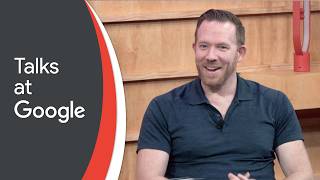
Olajuwon Ajanaku | Eastside Golf | Talks at Google

Olajuwon Ajanaku founded Eastside Golf in 2019 to make golf more inclusive and culturally resonant. Chris Paul wearing an Eastside sweatshirt during the NBA lockout went viral. The brand has since partnered with Nike, Jordan Brand, and the PGA, with stores now in Detroit, Tokyo, and Atlanta.
Chapters
Today we have a special guest here. We have Olajuwon Ajanaku. He's a professional golfer, entrepreneur, and the founder of Eastside Golf. Eastside Golf is a globally recognized lifestyle and golf apparel brand that is redefining the culture and image of the game. He's a native to east of Atlanta. Olajuwon began playing golf in high school and went on to earn golf scholarship to Morehouse College. And at Morehouse, he helped win its first ever national championship in 2010. And after graduating Morehouse College, he pursued professional golf, but then transitioned to a career in commercial finance. While working, Olajuwon's passion to be part of golf never left. So in 2019, he founded Eastside Golf from his one-bedroom apartment. With a vision of honoring the traditions of golf while making the sport more inclusive, authentic, and culturally connected. What began as a grassroots idea quickly grew into one of the most influential brands in modern golf. Under Olajuwon's leadership, Eastside Golf has partnered with major brands, including Nike, the Jordan Brand, Beats by Dre, Mercedes-Benz, Bridgestone Golf, and the PGA of America. Olajuwon has created— his creative direction on 15 golf shoe collaborations with Nike and the Jordan Brand. and helped launch Jordan Golf. Eastside Golf products are now carried in major retailers such as Nordstrom's, Dick's Sporting Goods, Golf Galaxy, PGA Tour Superstore, and other stores. The brand has expanded internationally with retail locations both in Detroit and Tokyo. And the brand has been featured in NBA 2K and the Hulu documentary series. Today, Elijah Juan leads global expansion of Eastside Golf and has resumed professional golf career. Through his vision, leadership, and commitment to representation, he has helped create new pathways into the game while inspiring a new generation of golfers around the world. Welcome, Elijah Juan.
Appreciate you. Yes, sir.
So thank you, thank you for being here. We've had many conversations up to this point. There's a lot of preparation that we had to do, but we got to this point, so this is great. Um, starting off Um, we, in our pre-event conversations, realized you're not just from East Atlanta. You're really from Decatur, Ellenwood, pretty much down the street from where I grew up.
Yeah.
And in that area, knowing that area very well, you can go a mile in any direction and you can find a basketball court. If you work a little bit harder, you can play recreational baseball, you can play recreational football. But given that influence, And given you're not a small guy, what led you to pursue golf?
Yeah. So been playing golf since I was 6 years old, all the way through middle school, high school. But the things that I learned from the game, I mean, so many hours just being spent out on the golf course. And I'd say patience, perseverance, judgment, honesty, all the things that you need in life. That's what I was learning from. from golf. But then on top of that, let's say during the summer, being 15, 16 years old, and let's say it's a Tuesday, Wednesday at noon or 1:00 PM, I'm going to play some golf during the summer. I'm out of school. But it's crazy, while I'm out there, all these guys are out there, sometimes women as well, but all these honestly diverse guys are out on the golf course.
Mm-hmm.
But I'm like, dang, they supposed to be at work. What they doing out here?
Uh-huh.
But it's doctors, entrepreneurs, judges, all of these people that work for themselves. And these were the people that I was learning from. My dad was in my life up until, I would say, continuously 9th grade. But these are the men that I was learning from through high school and college. What should I be majoring in in college? What should I really focus on? You know, even I heard one time if you major in accounting, you'll be able to do anything in business. So I majored in accounting, you know. So, uh, but learning from people on the golf course and from the actual game, that's what I, I fell in love with it. It did so much just for me and my confidence and who I am as a person.
Yeah, so it shaped you significantly as a person.
For sure.
Nice, nice. So we have a lot of golfers in the room and probably online. And since you're a professional golfer, what's your— what's the strongest aspect to your game? And then what are you still working on to kind of take you to the next level in your professional career?
I would say strongest aspect of my game is driving the ball. I just had a driving competition with Bryson DeChambeau down at DJ Khaled's event. It's been about 7 months. We were down at Miami Beach Golf Club. But we had about 50 people watching us. I posted the video. He didn't really like it, but he hit it, you know, he's talking, chirping. He hit it about 350.
Yeah.
And then everybody was just like, well, let's see what you're going to do. And I hit it about 380.
Ah.
Passed him. So, but he was, you know, definitely shocked and surprised and was like, you need to keep this going. But definitely driving the ball, definitely advantage I have, but As anybody else, I say short game, touch. You know, that's what I'm always working on, just trying to get that ball as close to the hole as I can, if not in. So from the side of the green or anywhere within, I'd say, 30 or 40 yards.
Got it. Got it. And he didn't send like a cease and desist letter or anything?
No, he didn't say anything. I just, I started tagging Google and just like, hey guys, hey, I need to work with you.
What's going on? Somebody is trying to get another sponsorship. All right, so when reviewing your history, you have a lot of connections to golf. You talked about you've been playing childhood, you matriculated, you played in high school, you played in college, now you play professionally. Where I feel like there's a disconnect is your experience in design. Like, right now you're the creative director and founder of Eastside Golf, and before then you actually designed the logo The Eastside Golf logo. Was there any kind of impetus points in earlier life where you got into design that we don't know right now?
Yeah, it's crazy. So many things. I've been designing shoes since I was about 7 or 8 years old. It was just a hobby. I mean, I had a— got a notebook that's 300, 400 different designs, and I even printed out Air Force Ones that were blank, and I would take the most multicolored colored pencil box that I could find from Michaels.
Yeah.
Go to work naming every different shoe, telling a story, and was doing this at 7, 8 years old. It was because I just loved to do it, you know. Um, and then on top of that, you know, my mom had 2, 3 jobs growing up, so sometimes we have to go to Goodwill to get some of my clothes. But being resourceful and being creative, uh, finding things that we that spoke to me, just that I would find, and at the flea markets. I mean, I'm learning from some of these guys. They go to New York, they buy fabrics, they buy all of these pieces, bring it back down to Atlanta. And I'm learning the thread counts, the GSMs, from a flea market. And then on top of that, putting the colors together. So many times I would be out on the golf course, I'm like, why does everybody look the same? You know, like, why can't we look the same as we dress outside the golf course?
Yeah.
Here at the golf course. So I literally started wearing pieces that people usually don't— it doesn't say golf shirt, it just says lifestyle polo or something like that. I'm starting to wear those polos to the golf course. A little hot. They ain't made for golf, but I'm starting to wear those polos to the golf course. So after just doing that continuously, after years and years of not seeing what I wanted, in the game and just being creative on my own, that's where it came from. And even designing the shoes that I've done with Nike and Jordan Brand. One thing we didn't talk about was at the beginning, after the first shoe that I came out with Jordan Brand, I told Nike for the next 5 years what the next 5 shoes would be. It's a story about myself going from the first shoe just being about the logo to the next collection being our Red Clay collection.
Yeah.
I literally had to take the MARTA bus only once or twice to the golf course. But by the time I get to the bus stop, it's red clay mud splattered all over my shoes.
Yeah.
Get to the golf course, walking 36 holes. By the time I get done, it's red clay mud on my shoes, my shirt, my hat. But it shows grit, determination that I'm here to get it out the mud. And that was the catalyst for that collaboration. And then going on to our 1961 Change collection is green. Talking about when the Caucasian-only clause was lifted from the PGA of America, talking with the PGA about this. So being purposeful with all of our collaborations and designs. Then from there, going to our Everyone's Game, which we're bringing everybody together. And this is a game that they should be taking upon themselves to take on. And then going to our Take Flight, which is light blue, which talks about— I mean, this is you starting your golf journey, taking flight into your golf journey. And then finally, the shoes that haven't come out yet, they're sitting out on the table, but the Zero Gravity collection. So literally, I'm not sure if everybody's seen, but it starts with dirt and then it's grass, which is green, 1961.
Mmhmm.
Then we're bringing everybody onto the grass. And then from there, we're taking flight, which is light blue. And then the next shoes, which are black, Zero Gravity into space. So, I mean, telling that entire story, I told them that 5 years ago and here we are. And they believed in it and they saw the vision.
Yeah, I saw the documentary. They were trying to replicate the color of the clay for the shoes and they talked about that process. So earlier when you started your design career going to the Goodwill or whatever to design your own shoes, did you make any sales then?
Uh, no, no, uh, no sales. I wasn't, I wasn't creating anything. I didn't know what I could do with it. Yeah, I was just always into design. I was always into clothes. I would window shop so much, you know, and just picking up pieces and just learning about them and ask as many questions to some of the people, employees that work at Nordstrom or Macy's. And sometimes they ain't know, they were just like, you gonna buy it or not? You know, so, but just learning as much as I can and asking so many questions to honestly people that sold clothes. Like I said, the flea market, that was actually my biggest kind of push for design. Yeah.
Really?
Yeah, there was one off Memorial Drive called Value Mall, and then there's, uh, one off Glenwood. I cannot remember the name of it, but then—
Glenwood Flea Market.
Glenwood Flea Market. And then there's one in the Swats that I used to go to as well.
So excellent, excellent. All right, it's like moving on away from golf and more so to the design aspect. Um, the logo— you describe the logo as being authentic. What's it? Being authentic, redefining norms and recreating traditions, or challenging norms and recreating traditions. And when looking at the logo, first thing comes to mind, you ever had any apprehensions on using such a bold logo in a more conventional perception that's usually used in golf? And you ever have any concerns of others Being apathetic to the brand because it's such a bold logo?
I never had any apprehensions. I never had any apprehensions because this is what I saw growing up playing golf. I mean, I grew up off Boulder Crest Road in Ellenwood at a golf course and also on the West Side, Johnny White, Alfred Tubbs Holmes, Brown's Mill. You know, this is where I grew up playing golf. So this is what I saw. growing up. So it's crazy when the logo got out there, they were just like, what are these guys trying to prove? Or what are these guys trying to do? I'm just being myself. Like, this literally— the logo is me.
Yeah.
Like, I mean, I don't know. I wasn't trying to, you know, really switch up anything at first. That's not what it was about. It was about me turning pro in golf, me just sticking to what I know, being myself. Sometimes I wear a chain around my neck while I'm playing golf. When I'm swinging through and hitting it 380, the chain kind of comes from under there.
Yeah.
You know, that's literally where it came from. But as time went on, man, I mean, diversity and entrepreneurship and all of these different things that I would say you see in corporate America that matter and just in world that matters, it started to be important to what we do. But it came natural and I didn't have to fake it. I didn't have to be something else. What do they say? Code switch a little bit? I don't have to do any of that because you see the logo. It's no shade to any other brands, but it's not just one color, a logo.
Yeah.
This is a multicolored logo. And at the end of the day, if we break it all the way down, it is a Black man playing golf or a diverse man playing golf. But He has on jeans, sweatshirt, and a chain, but as he would have on outside the golf course, but he's enjoying the game that he loves. So hopefully so many more people that look different or just look like themselves are doing what they love, but just being themselves. That's what this logo is.
Mm-hmm.
And that's what Eastside Golf is. So now I'm, you know, being able to design shoes, but turning pro, I have, Q School later this year in September. You know, being able to strive to become a professional golfer, but still, you know, being myself and showing the world how powerful it is to be themselves. That's what's missing from a lot of things.
Yeah.
Being yourself. Like, everybody thinks you need to be something else where to grow, it's really missing you. So that's what I'm doing for golf.
That's a really important message, especially in the world that we live in, especially in the corporate environment where a lot of times we have to come with a mask on and you have I have to be someone different. But your motto, your mantra is just be yourself and it'll take you where you want to go.
For sure. I mean, me being in commercial finance for 7, 8 years, I was a regional sales manager for a bank, and I can't tell you how many times, like, I thought being something different was going to get me to sell. And once I just started going, what's going on, man? Like, how you doing? How's the kids? You know? Sometimes it came down to the color of my skin. Like, some of these guys wouldn't even shake my hand. But then it's so crazy. Well, let's get together and play some golf.
Yeah.
And they're just like, you play golf? And I'm just like, yeah, let's get out there and play some golf. Let's see, you know, let me ask some more questions.
Yeah.
We'll get out there and all of a sudden I shoot 71, 72. And there are other— I have other competitors, like I had other competitors like Navistar, Or Daimler Finance, and they would give me the deal just because I played golf and my rate was higher.
Yeah.
It'd be 0.5 basis points higher and they're still giving me the deal just because I play golf, who I am, and all the things that I can speak to. So.
That's a message right there, 'cause it's not always about the numbers. It's about the connection and the network that you build.
Absolutely.
Very good. Speaking of networking connection, You've had commercial success up to this point and your networks have expanded and you have prominent names in your network now, such as like Chris Paul, Daymond John, CeCe Sabathia, and of course Michael Jordan and many others. With the meaning of your brand being authentic, how do you keep true to that mantra and still resonate with the people that you're trying to bring into the game of golf? Or get— become included in the game of golf as well?
I mean, golf kind of brings everybody back down to earth, you know? Like, you think you're doing something and then you go out there and you shank 10 of 10 balls. You like, I ain't got nothing going on, you know? So, but I mean, golf is a part of that. I was raised by the best mom. You know, everybody got great moms. I was raised by the best mom. Just teaching me about myself. Man, it's— where could I start? I used to go to an elementary school called Imhotep Center of Education or Imhotep Academy. And it's nothing— instead of saying the— and it's nothing against it— instead of saying the Pledge of Allegiance every morning, we sang Lift Every Voice and Sing.
Mm-hmm.
You know? So a lot of things that I grew up with that are intact from an early age, That's what I believe in. And, you know, like taking into my mind that so many people came before me to get this done. I mean, how can I— and gave up so much for me to be here. How can I feel too much of myself? I know what I'm doing it for. Like, I don't even feel like I'm putting in enough work now, you know? I mean, everybody can attest to this on the front row.
Mmhmm.
I don't even feel like I'm putting in enough work now. It's just, I mean, I want it so bad and I want so many more people and diverse people to take the game up. Because at the end of the day, whatever you do with your life, golf will help you. I mean, I don't even— I don't care what you do. If you play golf, it will definitely— you can add an exponent next to what you do. That's exactly how it is.
It's because it's like just a challenging game and then navigating through that.
Yeah.
You can Relate that to other aspects of life?
Absolutely. And just being around, I would say, like-minded people. Like I said, I'm going to play golf at— going to hit balls at 1 PM on a Wednesday. This is what I do sometimes, like, just during the week.
Yeah.
And I meet Charles.
Yeah.
You know, so it's just— I mean, like-minded people are just around all the time when it comes to golf. And like I said, what are they doing out here at 1 PM during the week? So I need to know this person, or I know Or I need to know this person.
I'm sure they were working at the same time.
My bad, Charles. Oh, great.
Um, tell us more about the story when Eastside Golf really got its name. As far as I know, it's pretty much Chris Paul when he wore the sweatshirt during the NBA lockout. But if I'm, if I'm mistaken, please clarify. But yeah, I'll let you tell the story.
Yeah. So, we went up to— we were going to Whistling Straits in Wisconsin. And this was the— we were about 2 years. I was about 2 years in the business, 2 years and some change. And then, there was a fatality by a cop in Wisconsin.
Yeah.
And during that time, there was a boycott in the NBA bubble. And the NBPA president was Chris Paul and Russell Westbrook. at the time. And we walk into this hotel that we're checking into and we look up, just, we haven't even checked in yet. We got all our bags in our hand. We look up at the TV in the lobby and it's on C-SPAN. And it's literally Chris Paul with the Eastside Golf hat, sweatshirt, this sweatshirt. He had Eastside Golf, I think shorts or something, Nike shorts. We didn't have shorts at the time.
Right.
Then some Nike socks and some Dior 1s, Dior Jordans. But, from there, that was like our more introduction to the world. So many people started hitting us up saying, do you guys have investment? Who is the logo? What are you guys trying to do? What are you trying to prove? One thing about the logo, it always incites a reaction from anybody.
Yeah.
Whether they love it or whether they hate it, it always incites a reaction. So, I knew that we could move forward from there. Seeing that on C-SPAN, then it was on CNN, then it was on all of these news channels. Chris Paul with his sweatshirt on, that's where, I mean, we kind of basically like took off.
Uh-huh.
You know, way more people knew who we were and knew what we stood for. You know, for him to wear that during that moment, I mean, it gave so much credibility to what we do, but honestly what we stand for.
Yeah.
And that's doing the right thing. If you do the right thing on the front end, on the back end, you don't really have to worry about nothing. You can look in the mirror at the end of the day. So here we are.
So timing, the timing of it just worked out perfectly.
Absolutely.
Where Eastside Golf is today, you've accomplished a lot and hit some milestones. But what's ahead of Eastside Golf? What's the next milestone you want to hit? And where do you see Eastside Golf 10 years from now? Hmm.
I would say, and we've started talking to the city of Atlanta about this, but a golf course, you know, why not build a golf course in the city of Atlanta? There are, there's enough land here and there for a 9-hole or 18-hole championship golf course to be built. So something along the lines of that. We just, so June 1st, my birthday, is now considered Eastside Golf Day for the city of Atlanta. So next year, hopefully we'll have like a— in continuous years ahead, there'll be an Eastside Golf Festival for Eastside Golf Day, probably a week or something for the city of Atlanta. Maybe have Google to come out.
Yeah.
And I'm signed— so I'm also signed by Mercedes-Benz USA. I'm an ambassador and also Travel and Leisure. So having them to come out and help as well and I say lastly, something evergreen for the city of Atlanta with golf. So having— right now we do community days, which I have set up all around the nation. So we've done them all the way from Pebble Beach, where I had a pop-up, all the way to Memphis during the FedEx St. Jude, and here at Charlie Yates Golf Course. But there's been so many more. community days that we've had. So really building that out to where it could be something that the entire nation takes advantage of, where we buy out the golf course for a day. And from 9 to 5 or 10 to 5, we have free golf tee times. So now people that think golf is expensive or think golf might be something they can't afford, now you can come out, enjoy it. Now you can come out and see a bucket of balls cost $10 where you thought it cost $50.
Yeah.
And just play the game. Take advantage of it. And like I said, when we have these community days, I'm inviting out so many more people from around my circle and then inviting out the other circle that I have as far as celebrities, as far as C-suite execs, and also political figures and bringing them together. But they're meeting through the game of golf. That's just how powerful it is. So continuously doing that for the city of Atlanta. and across the nation. I mean, and building something evergreen, I would say, with Google. But building something everlasting that can be— that everybody could take advantage of. That's the goal here. That's the goal here. So even to that point, so we have a store at Detroit Airport, have a store in Tokyo, Japan. And now I get to announce we have a store that we're about to open at Phipps Plaza. I'd say in about another month and a half to 2 months. So yeah, it's—
Why Tokyo? Did you see a lot of interest in the brand in Tokyo, or it's just a hub where people travel through?
A lot of interest from the brand. I mean, people were spending more on shipping than the actual product to ship it to Tokyo.
Really?
Yeah. But I mean, when this sweatshirt came out, about a fourth of the orders were from Tokyo. The sweatshirt was ¥100 and $100 about 5 years ago.
Yeah.
And they were spending $150, $200 on shipping to get the sweatshirt in Tokyo. So I was just like, yeah, we need a store there. If they, if they want it that bad, we, we got something for them.
So. Excellent. That's excellent. Before, um, right before when we were just talking, you explained how important a story is. A lot of times when we buy shoes, you will instantly think it's just a clothing item I'm putting on my feet. But what really sold Eastside Golf and sponsorships that you mentioned, it was the story. Like, tell us more about implementing that story into the pitch. Yeah.
Anytime you are about to— you feel want to go into your career and do something great, you have to start at the bottom. You have to have building blocks. So my building blocks, it was one point I wanted to be a CNA, so I used to work At a retirement home. I wanted to be a— no, I didn't want to be a CNA. I wanted to be a medical doctor, but I knew the only way to get there was to start as a CNA. So, start from the bottom, bedside, all of those type things. Some things happened. Took me— I was just like, I'm not doing that anymore. But, I always knew that. Same thing with golf, and I learned it from golf. The only way to get better, you have to know the basics.
Mm-hmm.
How are you going to want to hit all these flop shots and 380 drives if you don't even know how to hold the club? You know, like the basics. So it's the same thing with this, starting from literally, I would say, all of these things just that I learned from all of these different jobs. Another one that I had, I used to sell DirecTV at Sam's Club out in Stone Mountain. You were one of those guys. Yeah, I was. Hey, who's the cable provider? Get away from me.
Yeah, yeah. Hey, who's the cable provider?
Yeah, it was just continuously. It was continuously. But that taught me perseverance.
Yeah.
That taught me sales. That taught me sales was nothing but numbers. At the end of the day, the more you ask, the more yeses you're going to get eventually. That's how I could go out and pitch Eastside Golf 300 times, 300 nos. I pitched it to some people that had to circle the block and come back around. Hey, I'm interested. I'm like, well, the price kind of went up, but yeah, I'm interested. But, all of these different— I'll keep going. Enterprise Rent-A-Car, I was an assistant manager, so manager trainee program. The same thing with corporate America, I was a business development manager and then finally got a promotion to regional sales manager for the bank. Then, was about to get a promotion to VP of sales, but I couldn't see myself doing that. I just wanted to turn pro in golf. Whatever that took to do that, I was willing to do it.
Right.
But, all of those jobs, helped me to where I am now.
Mm-hmm.
Those building blocks are the things that I learned that, I mean, you can't sometimes teach. You have to just go through it. You have to pay your dues, as everybody in this room knows. And eventually you will come out on top. But it's that story from all of those things that helped me get to where I am, talking about perseverance, talking about What am I willing to do to turn pro? You've seen so many players become owners, but you've never seen an owner become a player.
Yeah.
You know, like I literally had to use this to become pro and not just physical and brute force and practicing all day. I had to use this to start a business to get to where I wanted to be. So sometimes it's just different routes for, for a lot of different people. But as long as you don't give up, Yeah. There's a chance that it will happen. Yeah.
That's fascinating. That's a fascinating story because like you said, you became— you were having struggles becoming pro or getting the sponsorship to go pro. So you started the brand with the intentions on, hey, I'm just going to sponsor myself. And now you're back into— Yeah.
Q School. So Q School, by the way, is qualifying school for Korn Ferry Tour. Korn Ferry Tour is like the G League for the PGA Tour. So I'm going for Korn Ferry. Uh, status this year. Yeah, I'm excited.
Next thing you know, we'll see you in Augusta.
Let's do it.
Yeah. All right, with that Google sponsorship, by the way.
There we go. Come on, gotta plug it.
You always hear that golf requires a great deal of mental focus. What are your swing thoughts or thoughts throughout a competitive round that keep you locked in?
Um, I'll give 3. I'll give 3. Deep breaths.
Okay.
It's gonna be okay. I promise it's gonna be okay, you know. So deep breaths. You got another shot at it, you know. You either gonna drop one or you're gonna have to re-tee, but deep breaths, you know. Take your time. Um, another one is keeping my— since I'm right-handed, keeping my right elbow tucked the entire swing on every shot. Keep this thing tucked. If it flares out, You don't know where this ball is about to go. So keeping this elbow tucked. And then, why are you doing this? Like, why are you— like, at the end of the day, if you feel like— there was a couple of times it was 115 degrees, 110 degrees out on the golf course. I'm like, damn, why am I doing this? You know, like, golly. You know, I'm wanting to withdraw from the tournament, but— I mean, how bad do you want it? You know, and why are you doing this? I want to do this because this is my life goal. This is my dream. You know, I'm willing to do anything to become a professional golfer. Like, literally, I've showed that. Willing to do anything. The shoes are just a byproduct of what I'm here to do, you know. So, and the brand, it's a byproduct of what I'm here to do and what it truly stands for to wear Eastside Golf. So it's just, yeah, the why. It's always a thing that kind of pops into my head and it gets me back focused pretty quick.
That's good, that's good. And it's so relatable. You could translate that to anything you're doing in life.
Absolutely.
I feel like I find myself asking those questions. Yeah. All right, um, you recently shot a course record at the Grand Over Resort and Golf Club on the East Course, a 63 on the par 72. Very impressive. What did the flow state feel like? How often does your game peak like that?
Flow state feels like having fun, enjoying what I'm doing. I'm around people that want to be around me. Flow state feels like, man, this is what I'm called to do. I'm not even asking why during those moments. I'm just doing it. You know, I forgot the second half of the question.
It was—
Oh, and how often does your game peak like that? It doesn't peak 63 all the time, but I say 67, 68, 69, it definitely gets there. But making almost 4 or 5 extra birdies, it definitely feels like I done made all of them. I still ain't made all of them, but definitely shooting 63, it makes you feel like, I mean, you're making everything. The hole goes from being like this to, you know, being like this. So I'd say that, that is my maybe 5th time shooting something that low in the 60s. I have the course record over at Sugar Creek with 61 as well, where I grew up playing as well. So yeah, I mean, it just takes time being able to breathe and just taking every shot and focusing on that one shot. That's the, that's the way to do it. You can't focus on the next shot. You ain't got there yet.
Yeah. Why you—
Why you worried about that? You still standing over the ball. You worried about the putt. And then that's how you hit it off somewhere else, because you're not even on the green. You got to focus on where you're at and get that done. Get that job done. And then you can move on to the next.
Yeah, that's such a good message. Focus on the next step. First off, I want to thank everybody for joining online and in the room. Thank you for supporting Talks at Google in Atlanta. And definitely thank you, Olajuwon, for sharing your wisdom and your journey with us today.
Appreciate y'all for having me.
More from Guy


Cheryl Strauss Einhorn | The Human Edge: Smarter Decisions in the Age of AI | Talks at Google


Rachel Glennerster | Innovation and the Center for Global Development | Talks at Google

Rebecca Winthrop | Rethinking the Purpose of Education in the Age of AI | Talks at Google

Dr. Robert Wachter | A Giant Leap: How AI Is Transforming Healthcare... | Talks at Google




Nelson Dellis | Everyday Genius: Hacks to Boost Your Memory, Focus... | Talks at Google