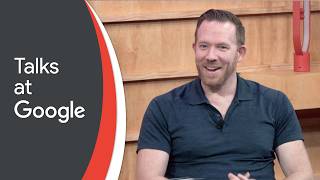
Dr. Deepika Chopra | The Power of Real Optimism | Talks at Google

In this Talk at Google, Dr. Deepika Chopra discusses her book on "real optimism," exploring how neuroscience and ancient wisdom intersect to foster resilience and purposeful living. She explains the concept of ikigai as a purpose-finding practice, distinguishes real optimism from toxic positivity, and emphasizes that optimism is rooted in resilience, curiosity, and realistic appraisal of setbacks rather than blind positivity. Dr. Chopra shares personal stories, including her child's rare illness, illustrating how she moved from rumination to agency using small regulation techniques, calendar tracking, and a mindset shift inspired by a movie line, "the future's none of your business." She critiques the cultural myth of balance, proposing instead a seasonal, choice‑driven approach that acknowledges trade‑offs and empowers decision‑making. Practical tools are offered: cognitive flexibility through scenario planning, sensory‑based visualization, and the "ta‑da list" (a nightly log of accomplishments) to boost self‑efficacy. The conversation also covers optimism’s role in learning versus survival, expectations versus disappointment, and how elite athletes use mental rehearsal to prepare for both success and setbacks. Throughout, Dr. Chopra blends scientific insights, ancient practices, and personal anecdotes to provide actionable strategies for cultivating real optimism.
Chapters
In your book and in your bio, um, you mentioned you work at the intersection of science and soul. How do you marry rigorous neuroscience with the more abstract concept of ancient wisdom?
Yeah, well, I think that it's important to note that so much of what I talk about and what we will find out what optimism is, is about safety and regulation of the nervous system. And so much of the ancient practices really just got that. Like, a lot of the practices, um, are very regulating, and to be in a regulated form of mind is actually a very complex part of the brain. And so, um, I'm really drawn by some of the ancient wisdom and practices that I've learned, mainly from my own background in Eastern philosophy, but, um, and a lot of it actually from a random brief stint in my 20s that I spent in Japan.
Okay.
Um, there is a practice that I actually run with a lot of my corporate clients called ikigai, and it comes from— has anyone heard of ikigai? Yeah. It comes from Okinawa and it's a very ancient practice on how to find your purpose. And so there's, I think we can learn a lot from what people were doing a very long time ago. And I think there needs, soul needs to be brought back to the conversation because, you know, like the book, it's very grounded in science and there's a lot of practical tools that are like, like you mentioned, from neuroscience, from behavioral science, but at the heart of it, the book is deeply human. And there's memoir personally, there's client stories, and I think that we can't really deal with this stuff without talking about soul as well.
Yep, so it's a nice complementary, it's not an opposition to neuroscience.
No.
Yeah, okay, wonderful. Who here has heard the term toxic positivity? It is something that has made its way into our vernacular, and I think as I read this book, it was really interesting to hear Dr. Chopra's view on optimism versus positivity and, you know, real optimism versus blind optimism. So I'm curious if you can kind of provide some color on that topic a little bit.
Yeah, so I think that what I've gathered from my own experience before I started studying this and this like very niche, um, sort of lane on optimism. And what I've gathered from so many people around is that we have completely misunderstood the idea of optimism. I think most of us have thought that optimism was really deeply related, if not synonymous, to positivity. And when I'm a visual person, and so when I would think of an optimist or, you know, before I was doing this work, and when I think of what other people think of an optimist, I think of this, like, image of a person skipping through, like, a poppy field, singing blissfully, and, like, never experiencing setback or struggle, and just looking at the world through rose-colored glasses and being surrounded by millions of cups of half glass full of water. And always just, like, the silver lining's just there. You know, and, you know, one of my favorite stereotypes about an optimist, because I felt this way before too, that I still get, like, I mean, if you read some of the comments on some of the news articles that have just come out about the book, there's so many people that are like, I could never be an optimist, I'm a realist. And they sort of pin optimism and realism as mutually exclusive. And I was so intrigued to find when I was doing this work and how I define what I call real optimism, that a real optimist is someone who is so grounded in reality. And it is someone who is mindfully aware, really keenly aware of the roadblocks and the setbacks and the less than ideal situations that all of us go through because none of us are immune to struggle as humans. But the caveat is a real optimist sees those setbacks as something that is temporary and something that they have the ability to overcome, even if they don't know how or when, but they know that they will overcome it. And that is much more based on personal historical resiliency. So everybody out there, like, you have already persevered through your hardest and darkest days. And in doing so, in those moments and that journey, that is where optimism is cultivated, not necessarily in those poppy fields. Those are nice too, but optimism is really cultivated there in that perseverance. And so real optimism is much more related to resiliency than it is to positivity. And I would even throw in curiosity. And so it's— Being aware of your current circumstance and the season of life you're in and really validating that, like, this sucks right now if it's something bad. Not trying to say, you know, everything happens for a reason, although that is a nice thing to say, but that actually can really push into toxic positivity. It's this sucks right now, but at the very same time, and knowing how you authentically feel, having this curiosity there, this like small seed of curiosity of, and I wonder how it will change. Not committing yet. You don't have to commit to, and it's going to be so much better, or I know exactly how it's going to turn out. I think a lot of people think optimism is about certainty, but really it's about interpreting circumstances and interpreting stress and setback. And so it's much more, uh, closely related to resiliency and curiosity. And I would say on the topic of toxic positivity, I always like to add that I think that when we sort of engage in language or behavior that is considered toxic positivity with ourselves or with other people around us, and we can all get caught up on this, it— and you'll see why it's a very human response. I think it, for the most time, I would say comes from a good intention. And I think where it comes from is we are social creatures, we are all empathic creatures as humans, and when someone is sitting across from us and having a tough time and going through a setback or a struggle, we— our first response is we want them to feel better.
Right.
Like, I want to fix this for you. I don't like seeing you cry or upset. And so the first part is just because we're empathic and we actually want this person to feel better. And the second part, I think, is it really draws upon our own discomfort with uncomfortable feelings. If you're feeling this way, and you're really upset, and you're crying, or you're full of rage or grief, we as social creatures start to like come up with, when's the last time I felt this way? Or let me put myself in your shoes. And then we're uncomfortable, and we don't want, 'cause most of us do not sit with uncomfortable feelings, even though that is a practice that is highly recommended. And so I think toxic positivity, we fall into that trap often. And it comes from a good intention, but at the very best, it is not useful. And at the very worst, it can be very detrimental. So it can signal to yourself or the person that you're sitting with, and a lot of times it's with our children. We don't love seeing them upset, obviously, but it signals there's no space or room for these kind of feelings.
Yep.
There's only space for when you feel good. And if you come to me with fear or shame or guilt or anger or grief or worry, you know, sadness, any of these, I'm so uncomfortable by it, I'm gonna shut it down and I'm gonna tell you something out of good intention like, well, everything happens for a reason, or it could be worse. You know, this other person here has it so much worse, so you should feel lucky. Which then shuts the person down, they feel dismissed and they are not gonna come back to you again. And if enough people do that, they have no one to go to and they are social creatures too. So when you look at it that way, I think I would say, you know, the good majority of people that come to us seeking help, they're not actually coming to us seeking a problem to be solved or something to be squashed. A lot of times they're just coming to us to listen and to hold space for an uncomfortable feeling.
Yeah, so well said. I'm a huge fan of real talk, and I feel like once you can kind of break down those barriers and role model it, you have such different conversations that is so welcome today. And I think something else you said, you know, about the poppy field and then otherwise, like—
By the way, I love poppies. I do too.
And they're the state flower. Yeah, so great. But anecdotally, some of the most optimistic people I know have been through the hardest setbacks. So, you know, obviously anecdotal, but it definitely validates that. Just to expand on the notion of optimism. So I was kind of like thinking about the through line of this book, which was so eloquently written. And the through line I picked up on is that optimism is essential for growing and pessimism is essential for surviving. And we talked about it beforehand. We agree that that is a through line. So I think about this in my own life and my own approach to both surviving and thriving, I guess, or growing and surviving and how we kind of balance that dynamic. Can you talk a little bit more about optimism's contribution to learning, growing, especially as an adult today?
Yeah, I really— I like how you put that. And I would say, again, I think we have these labels that we throw out that we've sort of learned, and we love to sort of like find a way to put things and emotions and circumstances into a box. Um, I think what we need is real optimism, which includes what I think you're thinking the pessimism pieces for the growth. But I wouldn't label it as pessimism. Pessimism really looks more like interpreting a circumstance as permanent, personal, and pervasive. And so this thing just went wrong. It's always gonna be this way. And now when this went wrong in this aspect of my life, I bet these other aspects are gonna follow suit and also be wrong. And then you know what? This went wrong because I did it. It was something I did. So now it's personal, it's permanent, and it's pervasive. Someone that is more, you know, leaning towards the real optimistic mindset might see that same setback as this is a setback. This is not what I had in mind. This is not what I wanted. This is not what I worked for, but this is temporary. And there might be a whole host of reasons why this occurred. And I might not be the only one that can take agency for it. Either— sure, here's my part in it, but there might be these other external circumstances too that are adding to this. And I'm gonna let this stay in its lane. This didn't work out, but this means— this doesn't mean much else about my identity, or let alone all these other aspects of my life. And so when we're looking at it that way, I still think real optimism is what the through line is, but that includes, and I think this is the part when we've been defining optimism incorrectly, I think most people think, again, optimism is about knowing with certainty that something's gonna go the way you want it to go and it will all work out and it will all be excellent. And I think that's the part we're missing. Optimism doesn't promise that. It doesn't promise certainty. It just promises that whatever comes your way, you will meet it because you have the tools and you believe in your skills because you've been, working hard because by the way, another myth is that optimism is a personality trait when in fact we know optimism is much more a psychological learned skill. And thank goodness because I am not the most optimistic person. In fact, in my like small microcosm of family, I lean way more pessimistic, which my whole family thinks it's really funny that I specialize in optimism and you throw it at me, which by the way is very toxic positivity. In my face all the time, like when I'm going through struggle, like, "Shouldn't you be able to just get through this?" Don't you— like, "You study optimism, for God's sakes." And I'm like, that's exactly why I know I don't know if I'm gonna get through this. I know I'm gonna get through this, I don't know how. But I think I will. And I think that's the part where we're missing what is the promise of optimism. It's how you— it's more about— it's less the stressor and the setback, and more your interpretation of it. And we can all exercise that muscle. It is a muscle. It is a practice. And, you know, from an evolutionary standpoint, we were all actually programmed and predisposed to be more pessimistic. And that's because a very, very long time ago, our ancestors who were running away from saber-toothed tigers, you know, they imagined the worst-case scenario. They prepared for it. And they survived, and then they passed that on and so on. But in, in the past, our worst-case scenario planning for this saber-toothed tiger was maybe like once a week or once every 10 days. In the modern day, we unfortunately have the idea of threat almost the entire part of our waking, and a lot of times sleeping, like minutes of our day. It's, it's It's constant with the type of world that we live in today. And so constantly and chronically imagining worst-case scenario is not helpful. It doesn't help us thrive. It doesn't help us survive. But what I think the flip is also not great. Like, real optimism also includes preparing for scenarios that don't go your way. And so I would say to that, you know, a lot of us are plagued with uncertainty right now. You know, I think that it's a pretty fair statement to say that globally and collectively, we are all feeling the sentiment of just uncertainty and heaviness. And we can all call out probably 10 reasons why. You know, there's conflict, there's technology that's moving faster than we can even think about, there's job security issues, there's, you know, we can name it. And we know everyone's problems and everyone's hardship, all at once from everywhere. Our news cycle is 24/7, like all of it. Our brains and our nervous systems were not actually made to be equipped to deal with it in this way. And so what I would say to that is if you have a worst-case scenario, with uncertainty, the way our brain works is if we cannot predict what comes next, our brain starts to fill in those gaps with worst-case scenario planning. That is not because you're negative. That's because your brain's doing what it's supposed to do. It's protective. But we don't wanna live in chronic worst-case scenario. And so what the challenge is, when I have a worst-case scenario thought come to my mind, which by the way is a lot of the times, I'm just gonna be honest, I challenge myself now to not throw it away and say, well, that's silly. Like, you know, I think we can do that or people can say that to laugh at us. Like I give my passwords to my cousin every time I take a flight. I mean, my husband looks at me like I'm, Yeah. You know, like, "Oh, you're doing the password thing again." And so I allow my brain to sort of go there now. And it's okay. That's my worst case scenario, like, thought process that's coming out. And then I literally plan for it because that's what the brain does. It starts to give me ideas of what to do. And giving my passwords to my cousin seems to be one of the big forefront ones. And then I challenge myself and I say, "All right, that is a possibility." It sounds like the worst case scenario. It is a possibility. It could happen. But what is the best case scenario? And then from that, like, what are 3 more neutral scenarios? What are 5 scenarios that can happen from this one circumstance or one thing that's gonna occur? Even, and this is the part that's big, even if I don't believe in the probability of the other 4, the fact that I am exercising my cognitive flexibility to come up with more than one scenario or outcome is also optimism.
Very well said. I also feel like those are really good tools that we can use right now. So I'm excited to put those into practice. I think a good segue actually, so you had a personal experience with the words, the end is none of your business. And I think at that moment it sort of changed your mindset in terms of how you think about controlling or having control over the situation and how you think about optimism. So can you go into that for the audience?
Yeah. So, hmm, when I was writing this book, I was like maybe 2 months in. I had already sold the manuscript and I was writing the manuscript to the publisher. And out of nowhere, like most horrific things that happen, my 2-and-a-half-year-old at the time, my son, was diagnosed with a very rare, serious medical illness. I think the rate, the incident rate was 2 in a million. And the doctor said it was just chalked to bad luck. And hearing that as a parent, like it was unacceptable. Like bad luck? I mean, I'm a data person. And then like 2 in a million? So it leveled us. We had a year and a half of treatment ahead of us. I mean, our lives were completely changed. I— it was a full-time job, obviously. I was at the darkest and least optimistic time in my whole life. I could not focus on anything other than ruminating over why is this happening to us? Why is this happening to my angel 2-and-a-half-year-old child? Because He's 2 and a half and he's pure. And how could this horrible thing happen to us? We're good people. And I was so ruminated on that idea of why us? Why is this happening to us? I was so full of rage. And I really had nowhere to go because there is no answer to that since basically the answer to that was bad luck. And so we had a year and a half of treatment ahead of us. And, you know, I think for the first few months I was really emotionally paralyzed. I didn't eat, I didn't sleep. I just went through the motions and the motions were very difficult. And then I remember like reading something I had written in, you know, I stopped completely, by the way, I called the editor. I was like, I don't think I can write this book because how can I write this book right now? I'm not optimistic whatsoever. And I've been in other, I always started the book off in my least optimistic phase, which I thought was the worst ever. It was when I was pregnant, by the way. But I could have never imagined something even more horrific could happen. And I remember the piece of science of your brain does not prioritize growth or happiness. It prioritizes safety. And if there was ever a time that I was feeling unsafe, it was then. I was unsafe in my own body. I felt like I could not provide safety for my family. And I started to just do these like very small 30-second like regulating, trick my body into feeling safe even though my mind felt opposite. And it didn't take the circumstance away, it didn't do anything different, but it kind of softened the rage. And I remember having this like thought that came to my mind really quickly and it just was, why not us? Why not anyone? And like I said, it was not a positive thought. I mean, there's something kind of morbid in that, but it took away the rage and it actually like somehow again softened that and I was able to move from rumination into I still hate this, this is the worst thing ever, but what's my next step? And then I was able to say, okay, I know we've been at this for 2 months. This hospital bag needs to be packed this way. I need to get this specific shirt. I know the snacks he likes and I was able to just focus on my next steps So rumination to agency. But as we moved along, one of the things I did right away was I had a calendar, and this is what helped me. I didn't, you know, the whole circumstance is not temporary, but this 1.5 years of treatment was temporary. It was long, 1.5 years, but it had an end date. And so I started marking off the treatment dates, and I like the first treatment, I already knew what the ending was a year and a half later. And as I approached that year and a half, I think we had like one treatment left, and I saw it on the calendar, I thought I was gonna feel so much relief. I thought, okay, here's the end of this. I'm gonna feel so much better. And I was shocked and in complete awe to find I was at the most anxious and the most unsafe and the most not okay that I had felt the whole way through. And I realized, I think it was because I hated Tuesdays. Tuesdays were our treatment day at CHLA, but at least I knew I was doing something. I was seeing the doctors, we were doing the treatment, the treatment was awful, it was painful, it was horrible, but we were on it and we had something to do. And all of a sudden when that last treatment day came up, I was filled and plagued with this anxiety and uncertainty because I was supposed to just go into the world with now my 4-year-old and just manage myself and just, you know, how do I know? Is it back? Is it not back? Are we doing anything to combat it? And I remember my husband was out of town and I put on a movie. I don't know, Netflix did that thing where it was just like, we think you'll like this movie. It is not a movie I recommend for any— it's not highly acclaimed, but it did change my life. So it was this movie that was, I would say, silly. It was a silly movie, a great movie to watch when your husband's out of town and you are searching. And I think I had done enough tools that I was open to receive. And I think that is the interesting part. You never know where you are going to get this aha moment and this like just deliverance of something that can change your life if you're doing the tools and if you're open and if you feel safe. And so it was a movie with Zac Efron. It was a movie with Zac Efron and Nicole Kidman. Has anyone seen this movie called A Family Affair?
Yes.
Okay. I'm not going to go into the whole premise because whatever, but I have to tell you a little bit about it. So Nicole Kidman is this older woman, and she starts dating her daughter's boss, who's Zac Efron, who's like a playboy actor. So she's sitting across from Kathy Bates on a sofa, and they're having this nice moment, motherly advice. And Kathy Bates looks at her— this is what I heard. This is what I received. I'm putting that out there. Kathy Bates in my mind, reached out to Nicole Kidman and said, "Hey, kid, the future's none of your fucking business." I was like on the edge of my seat and I was like, "Ugh, we have been paralyzed living for a year and a half. We've done nothing. We've celebrated nothing. We've gone nowhere. He wasn't allowed to go to school. We couldn't take a vacation. I couldn't allow a fever to come in." And I have multiple children. I turned 40 during this time. I didn't celebrate it. We had another baby. We did not celebrate it. Like everything was, we were paralyzed. And in that moment I was like, I don't want to live paralyzed anymore. And once he gets his port taken out, and this was gonna be in the very near future, and there were some trips we had planned, in my mind I was like, I could sit here and be plagued with, oh my goodness, I don't even have data to tell me if this treatment did what it's supposed to do or not because this is so rare. I don't know anything about his future, but when we take this out, he will go back to school and he will be like all the other kids and he can play baseball and I'm not gonna make myself worried over it. And I don't wanna put that onto my child who hopefully has his life ahead of him. And so the future's not my business. My business is if another hard thing comes my way, and it might, and it breaks me like this did, and it might, I will meet it where it's at because now I know so deeply in my body that myself and my family, we can do hard things. And so that movie, and by the way, when I was researching the dialogue for the book, she didn't say that. I think she said something like, the future is none of your business. Oh no, she said the end is none of your business. And I really heard it like, and I still hear, I hear Kathy Bates' voice in my head every morning. Telling me, the future's none of your fucking business, kid. And so you never know where you're gonna get that, you know, that piece of aha that you were open to receive because you did the work to get there. And now that is just part of my optimism story and my resilience story. And again, I don't know what the future holds. Yeah, but I know I'll meet it.
I love that you were liberated by Kathy Bates.
Yes.
Um, amazing. And I will say, I don't know if this part of your book was this is not supposed to be funny, but when you talked about throwing up while pregnant and having severe morning sickness while helping a client do like a visualization exercise—
I ruined that for her.
I was driving and like just started laughing out loud. So I'm sorry. I know that was horrible, but I love how you had some light there.
It's funny now.
It's funny now.
Which is also part of the work.
Yes. Yes.
Okay.
So you say you can have it all, just not all at once. And it resonated with me so, so deeply. I personally struggle with it and I'm— I don't know everyone in this room, but I will go out on a limb and say we are filled with a room of overachievers who actually really want to do it all really well and all at the same time. So you've talked about ikigai, but can you talk about some other practices and how we sort of like dimensionalize that concept?
Yeah, well, I guess I'll just first go out and say I do not believe in the word nor the idea of balance. I think we have been sold this, like, arbitrary idea. Like, does anyone know what balance is? Like, if you had to really define it, like, anyone— does anyone have, like, the magical definition of what balance actually is? If you had to, like, measure it, define it, you better not raise your hands. Good, no one did. Just kidding. Um, the point is we don't know what that is, so we're always striving for this, like, ideal balance. And I think You know, a lot of this was when I was pregnant. I think we were in this culture, especially for women at the time, that was just like, you know, the boss girl, the boss babe, and everyone's like doing the most amazing things, but they're also like at soccer practice and they're also like pregnant with their second and they're like skipping through the poppy fields. They're definitely not throwing up and having hyperemesis gravidarum like I did, which I won't bore you with, but I threw up 35 times a day every day. You know, it's just this idea that I so badly wanted to be the mom that I thought I was gonna be. And I think partly I had this, like, really terrible pregnancy. So when my first son finally came, I felt, like, really protective over our relationship. And I only fed him. I was— I needed to be the first person he saw when he woke up and the first person he saw before he went to bed. And obviously this was not sustainable. Also, my work was starting to pick up a lot after I became a mom. And I had more clarity on like what I actually wanted to say and do and what my expertise was after I became a mom. And so I tried to juggle many different things and I disappointed many people. I showed up to a conference with my shirt half-buttoned 'cause I had just fed my child 'cause I had to run back after my talk to feed him and then come back for the networking piece of it. Across town, which I highly do not recommend. And by the way, he does not remember me doing that, even though I remind him every single day. So, you know, I think this idea of balance is complete BS, and it's not about this ideal, you can have it all if you just have the perfect balance. I think we have to be real and understand that making a choice is an empowered thing. You make a choice of where you wanna be and what you wanna do if you can, if you have the privilege to make a choice. Sometimes we do not have the privilege to make choices that we wanna make, but whatever the choices we make, we go into it, there are always consequences. And so if I was traveling for work, I really wanted to be there. This is what I love doing. I'm passionate about it. I would love for my career to grow, but at the same time, I missed, you know, my book launch day. My book signing in LA was the same day my 8-year-old son pitched his first real game of baseball on the mound. And this was a big deal. Not only was I not there, but my husband came to my book signing. So neither of his parents were there and he cried. And I felt so much guilt. But I think we all can experience this not having to be a parent. But I think for me, being a parent was like the way it really became crystal. There are many moments in life where we want to be at two different places at the exact same time, and we cannot. And so I don't look at balance anymore. I look at trying to make an empowered decision and a choice and knowing that that comes with pros and cons. And so my eyes are open to the consequence. It's open to what I'm getting from it and what I'm missing from it. And when I started looking at it in that way, yes, I'm still losing some of the things that I, I wanna do, but I'm more focused on this idea of self-efficacy and mastery and empowerment because I've made this decision and I know what I'm missing. And next time I might make a different decision and I'm at the game but I've missed, you know, something to do with work. And I just think we should think about boundaries and not balance.
Okay, so you said what I'm getting from it and what I'm giving to it.
What I'm getting from it and what I'm what I'm losing.
What I'm losing.
By what I'm getting, by what I'm doing.
Consequences and benefits.
Exactly. And I think we don't think about these things in that way. We just— I would rather think about them in this, you know, really constructive way that's measurable than like, well, if I just had better balance, if I just balanced it, I could have had it all. I could have literally been— somehow I could have changed his baseball game, I could have changed my signing, By the way, I couldn't have changed either, but I don't know what someone's supposed to do in their head if they just are going through the world being told that if they just balanced it the right way, they would've been able to do it all. We can, we can have the things we want, but not all at once. And maybe it's, I'm a big believer in this idea of seasons. There are different seasons in our life. I would love to go to Japan right now. I really would. But my 2-year-old is not gonna be great on the plane and I'm not into that. Right now. So this is not our season for Japan.
Love that.
But I can't wait for when it is.
I'm gonna miss my daughter's talent show tomorrow, but it's a 2-minute Macarena session, and I did go to her 20-minute musical yesterday. So I feel like those were the consequences and benefits that I feel comfortable with.
We could all do the Macarena right now.
It still is a thing, everybody. Wow.
Going strong. Yes.
Okay. What would you like to say about expect disappointment and you won't be disappointed? I personally feel optimism sometimes lets one down at the very end, while it would be kind of like being let down slow if they saw it coming and weren't too optimistic about it.
Ooh, this is such a good, good question. I actually feel if you expect disappointment, you most likely will be disappointed. So the brain actually prepares you for what you expect to happen. If you, if your brain, let me ask, let me ask you guys something. How many of you guys want to win the lottery? Like if given the chance, would you wanna win the lottery? Yeah, sure. Why not? Right. Okay. How many of you guys bought a lotto ticket this morning? Right. That is not surprising to me. But by the way, you guys, if you wanna win the lottery, you have to buy a lotto ticket. I don't know if anyone's told you that, but your brain does not start turning on the prefrontal cortex part of it, where it is problem solving, coming up with solutions, unless it thinks that an outcome that you are planning for is a real possibility, because it's got a lot of stuff to do, and that's a good thing. So if your brain— like, a lot of people talk about this idea of manifest— manifestation and like really focusing on what you want. It's great to know what you want, but I think this piece is missing where We don't always get what we want, but we most always get what we expect to happen. And so the real work lies in what's your expectation. Now, do I believe that we need to always expect the best case scenario is going to occur? No. But I don't think if you, if you are always expecting disappointment, disappointment because you don't want to be let down, you will most likely always get the disappointment. And you are not putting yourself out there to then have your brain be able to come on with the solutions and the problem solving and the perspective shifting it needs to take action to materialize the thing that you do want to happen because you're too scared. And so when, when you don't allow for that, you're not putting yourself in that position, you will be disappointed because you won't get it. And so real optimism, and the piece that I think is missing on both ends, is when I do visual imagery work with people, which is a huge part of this, sensory-based visual imagery and visualization, but from a science-based perspective, people in like the manifesting world are always really confused when I'm like, okay, cool, we've now, you know, dreamt up and visualized the outcome that you want, but we're also gonna now visualize and, you know, think about and prepare for what could go wrong in that situation. And a great example of that are from elite athletes. A lot of this work that I draw upon for visual imagery and sensory-based visualization comes from sports psychology and from mental rehearsal. And so I actually was on this project for Colgate once, and we were doing this Gen Z optimism project, and Michael Phelps was on it as well. And, you know, I don't know if you guys remember, but he had a race at— at some point that he couldn't see. He was like blind 'cause his goggles were like messed up. And he still won because not only did he mentally rehearse and prepare for, you know, the outcome of like visualizing winning the race, but he visualized different things that could go wrong that could inhibit him from it and how he would actually react to it. So he had already visualized swimming blind too and practiced for it. So I think that I would say accept, expect disappointment and expect the scenario going your way and being pleasantly surprised. Expect both and prepare for both and put out there in your mind cognitively and be flexible all the different scenarios like we talked about from the start. Okay, so all of you guys, Tonight, I would urge everybody in this room to keep something that I call a ta-da list. So I know we're all familiar with the idea of a to-do list, right? Everyone knows what a to-do— I don't have to remind anybody what a to-do list is because the way our brain works are it— your brain focuses on the things that are unfinished, that, um, need fixing, and that didn't, didn't turn out the way that you wanted. And so that is like a to-do list, it will focus on that. But what we are not good at, our brains are not good at just intrinsically is focusing on the things that you are good at or that you've handled or that you've accomplished. And first of all, please do not make a to-do list before you go to sleep. Like that is not, we don't want that time of the day making a to-do list, like going to bed focusing on all the things that are unfinished and left open. So that you can still have a to-do list, but make that earlier in the day. So all you do is write down tonight— promise me you guys will do this, promise— um, 3 to 5 things that you've handled today. That's it. Just jot them down. It could be small, it could be big. It could be like, I fed my dog. I just said that because I heard the dog. It could be, I drank water. It could be, I, you know, took a shower. It could be something bigger, you know, I got this deal done, whatever it is, 3 to 5 things specific, small or big, that you've handled, you've accomplished, that you've actually done that day. And you will be so surprised at how much you're doing that you are not focused on. And what this does is it is increasing self-efficacy and self-mastery and self-esteem, all the things we need to increase our resiliency and our optimism.
So thank you so much. Dr. Deepika Chopra. This has been a pleasure. I think everyone in the audience really benefited from this conversation, and they will also get a copy of this book, which I am so excited for you because it both brings you up a level and then gives you practical tools. So thank you, thank you.
Thanks for having me.
Thanks, everybody.
More from Guy


Cheryl Strauss Einhorn | The Human Edge: Smarter Decisions in the Age of AI | Talks at Google



Rachel Glennerster | Innovation and the Center for Global Development | Talks at Google

Rebecca Winthrop | Rethinking the Purpose of Education in the Age of AI | Talks at Google

Dr. Robert Wachter | A Giant Leap: How AI Is Transforming Healthcare... | Talks at Google



Nelson Dellis | Everyday Genius: Hacks to Boost Your Memory, Focus... | Talks at Google