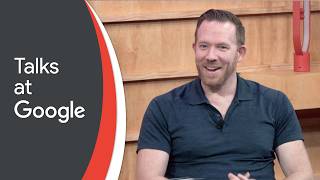
Dr. Robert Wachter | A Giant Leap: How AI Is Transforming Healthcare... | Talks at Google

Dr. Robert Wachter, chair of medicine at UCSF, explains how generative AI is solving healthcare's biggest problems: only half of evidence-based treatments reach patients, medical errors kill 50,000-100,000 yearly, and a third of spending goes to paperwork. AI scribes and tools like ChatGPT can summarize patient records, reduce documentation burden, and free clinicians to focus on care, but only if doctors remain the final decision-maker.
Chapters
Hi, for those of you who I don't know, my name's Michael Howell. I'm Google's Chief Health Officer, and I'm really excited to welcome Bob Wachter today. I've known Bob for going on a decade probably now, and like everyone in healthcare, I've known of his work for a lot longer than that. Bob is— and I'm going to read some of this so I don't mess it up. Bob is a professor of medicine and chair of the Department of Medicine at the University of California, San Francisco, one of the best places in the world. And on these lists of most influential people in health care, modern health care, he's always on the list, sometimes at the top, sometimes not at the top, but always on the list. He's an elected member of the National Academy of Medicine. For those of you who have worked as hospitalists, he coined that term in the way-back times and helped create the idea of the field. And then he's author of 5 books, I think?
A couple of textbooks and 4 trade books, lay-oriented books.
Including a book that we'll talk a little bit about today, but it's not the focus, called The Digital Doctor. And today what we're gonna talk about is his latest book called A Giant Leap: How AI is Transforming Healthcare and What That Means for Our Future. So Bob, thank you for coming.
Thank you, Michael. Oh, a joy to be here, really, really wonderful.
Our audience has a wide variety of folks, so some people who've worked as clinicians in healthcare and some who haven't. And so what I want to start with is helping to set some context, and I'm actually going to read a quote quote from the book, which I really quite like, and then I'll ask you to expand on it. Okay. So you wrote— I won't do this as nicely as you did in the audiobook, but I'll try. Don't get me wrong, US healthcare delivers miracles every day, particularly when it comes to cutting-edge and intensive care, things like transplants, cancer immunotherapy, and gene editing. And the people who work in healthcare, both clinicians and non-clinicians, are generally caring, dedicated, and well-trained. But the healthcare system itself is a headache wrapped in red tape inside the nightmare that Franz Kafka himself might have dreamed up while on hold with the insurance company. It's a system in desperate need of transformation. So tell us what made you write that and expand on it a little bit.
What made me write that mostly is my wife, who's an author and journalist. Kafka is her favorite author, so I needed to get some Kafka in.
Okay.
I thought that one of the central tensions of the moment and of the book was why we need this so desperately in healthcare.
Yeah.
And when I talk about this, sometimes I make this point. The day before ChatGPT came out, so November 29th, 2022, when I was doing a Google search, I wasn't sitting there saying, Google's not very good. I wish something was better. In fact, I couldn't imagine anything being better than a Google search. That's what search was, right? You put in a thing and you get a bunch of links and it's fine. Then I use GPT and said, oh, this way of doing search is better. But I don't know anybody who's not psychotic who on November 29th, 2022 said the healthcare system is just perfect. It is lacking and wanting in almost every dimension, in quality, and you've been an international leader in understanding and how to measure quality, in safety, in convenience, in equity, access. And obviously cost. And so part of the point I wanted to make there was that it's not really the fault of— that people are not good enough. I mean, there are slackers as there are in every field, but generally people who go into healthcare are going for the right reason, are well trained, the docs, the nurses, et cetera, the pharmacists. And yet the system does not deliver on anything that people need it to deliver on. And so in some ways, I use Biden's old quote in the book a lot, "Don't compare me to the Almighty, compare me to the alternative." And the alternative is not good. And therefore, I have a belief that an acceptance of the status quo, which is sort of what we accept every day. We say, well, let's go really slow with this AI thing. It's a little scary.
Yeah.
Is not a neutral position. It's a negative position. And then that quote was sort of a riff on Churchill. It was, you know, whatever he said, an enigma and a puzzle and whatever. Thank you for pulling it out. I kind of enjoyed writing that.
Yeah. It's, you know, sometimes you read a book and you're like, yeah, writing, writing, writing. And you're like, oh. They cared about this sentence. Andy, I could tell you cared about that sentence. Tell us some of the numbers and statistics that underlie that sentiment of— Google is a company built on math, and some of the numbers are quite shocking.
Yeah. Well, it's quality. I mean, the best studies of this say that we deliver evidence-based therapy, where we know the right thing to do, we deliver it. About half the time. Yeah. Patients get it far less than that. So even when we deliver it, it may be that they sort of didn't understand why they needed a medicine or couldn't afford their medicine or lost their insurance or changed their insurance, et cetera. So even in times where we know the right thing to do, we get it wrong a lot. The average time from knowing the right thing to do to implementing that thing is 17 years. Patient safety. Depending on the study you read, we kill from medical mistakes somewhere between 50,000 to 100,000 people a year to maybe more than that, maybe a couple hundred thousand people a year. And the analogy that launched the patient safety movement was it's the equivalent of a large airplane crashing every day, which if happened 2 days in a row, we would shut down the entire air traffic system until we figured out how to fix it. Measured, I mean, access. Anybody try to get a primary care doctor lately? Even if you have resources, even if you have good insurance, try to find a primary care doctor, try to find a mental health professional. It seems like the only people who are satisfied with primary care are people who either are doctors in concierge practices or patients in concierge practices who have taken an extra $5,000 or $10,000 or $20,000 or $30,000 and infused into the system. So the doctor has a reasonable patient panel. Measures of equity are fairly terrible. So you clearly get healthcare that is not as good, and your longevity is decades shorter if you're poor and you're from a minority group than if you're wealthy and you're white. And cost. So this year, the cost of healthcare in the United States will be about $6 trillion. That's about 20% of our gross domestic product. You might say that's okay as long as we're getting a really good product for it, but we're not. And what you see is those costs now are being increasingly pushed down to people themselves who have to pay out of pocket or don't have insurance. And so really on every measure of the things we care about— quality, safety, access, equity, convenience— I mean, think about the inconvenience of trying to make an appointment and deal with insurance companies and deal with authorizations. I mean, the whole thing is a mess. And so that is part of what left me optimistic about AI in healthcare. Kind of worried about it in the rest of our lives. But in healthcare, I think we start from such a baseline, which is sort of a perverse way to become optimistic. But we start at a baseline that really is unacceptable at every level. And I think there's massive room for improvement. Oh, and I guess the final statistic, which is important because some of the early AI tools really are designed to deal with the paperwork. That the best estimates are about one-third of the dollars that we're spending on healthcare are on administrative tasks, paperwork, fax— I mean, we are still using fax machines. We finally have kind of ditched the beepers about 10 years after the drug dealers did. So, you know, a third of the costs are in administrative back and forth that probably add next to no value for patients. So on every dimension— it's hard to look at a dimension that you'd say, "Oh, I'm satisfied with it." But the point I wanted to make in the quote partly is if you were anywhere in the world and you needed a lung transplant, you'd probably come here.
Yes.
I mean, the high-end stuff we do, we do really, really well. But the basic blocking and tackling, which really is much more going to determine how long you live and how well you live, we do really poorly in.
Yeah, we see these two things that we have to hold in our mind at the same time, right? We have We used to have wards full of people dying of complications of HIV.
Mm-hmm.
You know, people awaiting transplant from hep C, and now we have these things that seem almost miraculous in curing them. Yeah. And also, you can't get a primary care appointment. Americans spend more on healthcare than on food or on housing, and city after city and county after county are laying off teachers because of healthcare costs.
Correct.
Correct. So those two things I think set the context for discussion. So then one of your chapters is about the history of computers in healthcare. And so take us through the EHR, pagers, fax machines. Take us briefly through that so that people have the context of where we are now.
Well, it's got two dimensions. I'll do it quickly. One dimension is the digitization of healthcare, which really didn't happen until 2010 or so, about 20 years after most other industries computerized. On their own— finance, travel, retail. And yet in 2008, fewer than 1 in 10 American hospitals had an electronic health record, which means that the way— when I saw a patient and I spoke to the patient and did a physical exam, I scribbled down on a piece of paper and I scribbled a prescription, indecipherable, led to lots of medical mistakes. And if I needed to send it to somebody, it was through a fax machine. And there was one copy of the chart, which meant that anybody who needed to see the patient's record needed to get that binder. And finally, around 2008, 2009, we all implemented electronic health records. These are big enterprise software systems in which all of our information is stored. And the only reason we did that really was that we were bribed by the federal government, which gave us $30 billion of incentive payments to do it. And if we didn't do it, they were going to start dinging us on our payments. And the only reason that happened was the Great Recession, and there was $700 billion of stimulus money that was being distributed, and some smart health policy types got $30 billion for digitization. So the last book I wrote, which is called The Digital Doctor, was really about medicine going from paper to digital. And this is a very sunny, optimistic book. That was a really grumpy— because it went really badly.
Yeah, that was actually going to be my next question is, In reading this book, what is the right way to say this? As you know, I'm an intensive care doc, right? And we're not natively that optimistic.
You see a lot of people die on your watch.
I mean, you get to save people, right? But also, literally every day is someone's worst day of their life. And so we're not natively optimistic. And a couple years ago, I started having this feeling inside. And I was like, what is this feeling? Feeling, and I think it was optimism. Right, right.
This could be better.
And you come across in this as, to me, as optimistic as opposed to The Digital Doctor, which is not very optimistic. And is that the right reading?
Yes.
Yeah. Tell us why.
The reason is The Digital Doctor, I decided to read it because this movement from paper to digital, which I had been so optimistic about—
You were very optimistic.
Because the 20 years before, I'd been studying medical mistakes. And I saw the number of medical mistakes that really was because this piece of data, like the patient has a lung nodule that needs to be worked up, got lost in the fax machine.
And wait, let me— there's a thing you write about here, which I just want the non-clinicians to know, or the younger clinicians who've only practiced on the EHR, about a doctor writes an order in a chart.
Right.
And then how do people know to do anything with that?
In the old days?
In the old days.
Oh, yeah. Well, because the chart had a little wheel on the side that had red, yellow— Plastic wheel you turned. Little plastic wheel, and you turned it from I forget whether it was green to red or red to green, but you turned it a notch or two so that it signaled to a nurse or a clerk that there was an order to be taken off. Then they opened up the paper chart and saw the order and pulled out a piece of paper behind the order.
There's triplicate.
Triplicate with carbon paper. This is actually very funny for those who watched The Pit, because one of the things that happened on The Pit last year was one day they had to shut the computers off because of a hacking thing, and they pulled out those triplicate papers. And the young docs are sitting there writing with felt-tip pens. And the old nurses, the I've-seen-everything nurses, were saying, "Don't you realize that a felt-tip pen will not produce the triplicate? It doesn't go through to the third layer." But yes, a triplicate, you tore off the third thing, you took that, and you stuck it either in a fax machine, to go to the pharmacy, which might be 10 floors away, or you stuck it in a pneumatic tube, which is this little glass or plastic tube that you then stuck into this big sucking thing that took this tube down to the pharmacy. I mean, just unbelievable.
And so you thought putting that in the computer would make it better.
How could it not make it better, right? How could this not be our savior? It gets rid of handwriting. It means the chart becomes ubiquitous. That the primary care doctor and the intensivist can see the chart at the same time. Theoretically, at some point— and it happened a few years later— the patient could see it at the same time. You get rid of handwriting, and you now have a mechanism to allow for not a 17-year lag between the evidence and the right thing to do, but you could basically embed that in the electronic record and provide what's known as computerized decision support, give people the information they need to do the right thing at the right time. So I came into it super optimistic. And the reason I wrote the book was everybody I spoke to hated their electronic health record. And they all had explanations for why it was no good that all struck me as being maybe a little right, but probably not completely right. This was built for the chief financial officer who doesn't know anything about medicine and blah, blah, or the companies are stupid or whatever. So I thought I needed to understand this better. My wife, who writes for the New York Times, is a very accomplished journalist. When I started to write it, I was going to write it on stuff I knew, and she says, "You have to do this journalistically." And I said, "What does that mean?" She says, "You're going to have to go out and talk to people." And I said, "I hate people." She said, "I'm well aware of that." But actually, I mean, I loved that. It was just wonderful to then go out and try to talk to everybody I could talk to and understand what had gone off the rails. This book, My wife said to me 2 years ago, you know, this whole new AI thing, it seems like it's hot. You should write a book about this. It should be like a sequel to your last one. I said, no, honey, I think that— I think the thing's moving so fast that by the time it comes out, it's out of date and there's a new tool and whatever. And she said, okay. And then I got called by my publisher like a month later. She said, you should write a book about this. And I said, oh, that's a great idea. Totally pissed my wife off. But what that forced me to do was sort of helicopter up 10,000 feet and say, I'm not going to write a book about Gemini 1.3 that's out of date with Gemini 1.4. But what are the big cosmic issues that arise when this comes out? I didn't come into it super optimistic. But I came into it feeling like the EHR, the electronic health record, did not deliver on the promise. And at the end of "The Digital Doctor," I have a chapter— people said to me, who was your ghostwriter for this chapter? This one chapter says, oh, it's all going to work out. I said, no, I can actually see what I came to believe that I misunderstood is I thought the electronic health record was the answer. And the electronic health record was the foundation. We needed it. We needed the data to be in digital form. I was on Google Health's advisory board in 2006, where Google was going to conquer health care because Google's Google. And we understand how important it is. And half of our searches are health care. We're going to do it. And a year and a half into it, Eric Schmidt came in and to our advisory board he says, we're taking down Google Health. I hope this doesn't happen this time. We're taking down Google Health. This is too hard for us. So it was clear to me that it couldn't be solved until the record was electronic, was digital. But just doing that was not the answer. And part of it was a huge amount of our information is not structured. I talk to a patient, you talk to a patient. Yeah. That history I put down now, I type into a record. The patient's past record, which 1 out of 5 patients has a medical record longer than Moby Dick. So longer than 600 pages if you've forgotten your classics. That's all mostly written notes. The medical literature is mostly written. It's not in computable form until we had LLMs and generative AI. I didn't come into this optimistic. I did the same thing as I did with Digital Doctor. I interviewed about 110 people. And as I spoke to them, light bulbs went off and said, oh, this is how this solves this problem. This is how this solves this problem. This is how we make computerized decision support real. This is how we take away the— when I'm talking to a patient, I no longer have my head down on the chart typing away. But I can actually look at the patient in the eye and sort of recreate the humanism of medicine. So I came to optimistic sort of not because I wanted to, but I'm with you, it was more fun to feel that way than to feel the normal grumpy, hopeless, like why does this thing suck so badly way.
And so one of the areas you talk about, you have a case study about NYU, right? And you and I have both been to med school, we've trained a lot of people, and you have some family members who are training. Yeah, right.
Yeah. And so daughter and son-in-law who is following in Michael's footsteps doing pulmonary critical care.
So it's a great, it's a great other kind of general medicine.
Yes, exactly.
And so, you know, so you've thought about training a lot. Tell us how you think about how AI should impact education of, let's say, clinicians, not only doctors. And then, you know, what did you learn from NYU?
Yeah, the reason I went to NYU, part of what I did, I interviewed a lot of people, but also decided to make a few visits to places that I thought were ahead of the curve. Mayo for kind of just the general way they're approaching AI. And NYU struck me as the place that had thought most deeply about digital data and AI meets medical education. It was really quite instructive. What I learned from them, first of all, it's hard. Second is that some of the issues they're facing are generic issues in education, which is if people have access to these really smart tools, does that make them smarter or dumber? And I think the emerging data is it makes them dumber. And so you have to be sort of careful and thoughtful about how much you expose them to tools, which is an interesting governance problem that academic medical centers are facing. Because academic medical centers are very funny animals. You know, I've— I say to people all the time, you know, the law schools don't run law firms, the business schools don't run businesses, but we have this thing in medicine, UCSF, Stanford, you know, NYU, do a huge amount of research, do a huge amount of education and run a health system at the same time. And so as you're making a decision about which AI tools to deploy, the normal course of things would be, if this thing is good for patients or good for our business, there's a return on investment, all that stuff, yes, let's deploy it. And then nobody thinks about, do we want to deploy that with our trainees, or do we want them to learn how to write a note before they use an AI scribe, or how to review a chart before they use an AI chart summarizing tool? So those are tensions that we have to think through. I mean, to me, the most interesting thing in medical education, though, is there are parts of it that are very clear and one part that I think is really tricky. The parts that are super clear is they need to learn about these tools. When they're trustworthy, when they're not, how to be the human in the loop. I mean, the conundrum that I— it's one of the central themes of the book, I think— is that if the AI tools were right 50% of the time, they'd be worthless. If it's making a diagnosis, scribing a note, you'd have to— you couldn't trust anything. You have to do all the work yourself. Why bother? If it's right 100% of the time, then it's fantastic, and you actually don't want a human in the loop because all the human can do is screw things up. It's not fantastic because I'm not sure what any of us are doing for a living, but that's a different set of problems. But for the foreseeable future, the AI will be right often enough to be useful and wrong often enough that you do want a human to be the final arbiter, particularly in high-stakes decisions that can be life and death, like in the ICU. So what does it mean to be that human in the loop? Now, part of that is sort of training to understand that the AI is not perfect. Part of it is something that we're going to try to train, but I think is almost futile, which is when you think about the things that humans stink at, I would say remaining eternally vigilant when you've come to trust a technology tool would be pretty high on the list.
Yeah.
You can't train someone to pay attention on the 40th time if it's been right 39 times in a row. Humans will not do that. That's a different set of issues. But I think the biggest issue is how much of the essence of diagnosis do we need to train our medical students or residents. And there's a school of thought out there that why bother because you use Amy. I mean, it feels like I don't need to know anything anymore. I just communicate with this tool and it's smarter than any primary care doctor. I think that's wrong and we, I think, generally in medicine think that that's wrong, that there is something quite important about knowing enough to know the right questions to ask, Knowing enough to take what often is the case, which is you have 200 pieces of data about a patient, and you and I and any of the docs in the audience can just instinctively say, oh, and this is a 72-year-old man with CLL who comes in with a fever and a white count of 12 and a creatinine of 1.7 and an AST of 32. I mean, there's no way that a novice knows of those 200 facts what are the salient ones that you put in. And then on the back end, you look at the response of the bot, and I and you can look at it and say, this thing, really smart. I hadn't thought of that. This thing, no, that's stupid, that makes no sense at all. So I think we'd be making a massive error for now in taking too much of sort of the cognitive work of medicine off the plate. Do they need to memorize 15 different anti-seizure drugs? I don't think so. I think there are some of the memorization tasks. I chaired a conference for the Macy Foundation last year on med ed and AI. And I asked— these were kind of world experts on all of this— I asked them, like, can we take anything off the curriculum?— and the docs in the audience will appreciate this, it was consensus on one thing and that was of course the Krebs cycle, this biochemical pathway that we all learn and we all have PTSD about learning. And that's it.
So—
and I guess I would say one more thing. One of the things I've learned in my research and talking to some of the folks here and I remember talking to Peter Lee about this at Microsoft, he said you really have to understand— and it's not instinctive— that expert uses of tools are fundamentally different than novice uses of tools.
Say more about that.
It's partly what I just said before, which is that experts know what to put in and experts know how to interpret the results. Some of the things that we're finding that are really quite interesting is a number of studies have come out recently looking at patient uses of various chatbots. Most of it's been GPT. I don't remember seeing a Gemini study, but I'm guessing it's the same. But one particularly persuasive study out of Oxford last year had— what they did was they created a prompt where there's a right answer. And here's an example, and the docs will know this. Patient wakes up in the morning and has the worst headache of her life. The diagnosis is subarachnoid hemorrhage. Got to be a bleeding in and around the brain. That's like— it's a term of art. Worst headache of your life. What should the patient do? Go to the ER. Do not pass go, right to the ER. Then when they put it into the AI tool, that's what the AI tool said. They gave those prompts to patients and said, now you interact with GPT. Let's see how it goes. The patients took the prompt which said you woke up today with the worst headache in your life. The patient said, I woke up today and had a really bad headache. The prompt, of course, sycophantically says, oh, I'm so sorry to hear that. You should rest. Take some Tylenol. And it gave precisely the wrong answer. Because the patient had no idea that the worst headache of your life is fundamentally different than I have a bad headache. And that stuff is marbled through medicine where the interpretive layer of what the expert does with this huge corpus of data is important. Will it be forever? I don't know. Forever is a really long time. Looking at some of the tools you guys are developing, I'm guessing over time Some of the things that we think young trainees need to learn may not be so anymore. But I think for the time being, it would be a mistake to take too much off the plate in that area because then the medical students remain novices, and the novices don't do well with these tools.
Yeah. It's a— you go back and read some medical education papers from the '50s into the '60s, and some of the things that they deeply believed were really important for general training that, you know, internists should of course be able to do an emergency thoracotomy for open-heart massage.
Sure. That means cutting open your chest and being able to like stick your hand in to squeeze the heart, right?
Maybe not. So let's—
And I'd say the same thing has happened with the physical exam. I mean, you've been out of the training world for a while, but they are not as good at it as they were, which the geezers like me lament, but they say we use portable ultrasound and it's better than me, like, you know, I remember going to the I studied in Britain for a while. And they're like back there behind the patient and listening with the lungs, take a deep breath, and the hands are doing this. And I'm like, get an X-ray. Can't we just get a chest X-ray? It's fine. So yeah, every generation laments the loss of tools. And this issue of deskilling I think is really very interesting because some— you can be romantic about deskilling. See, they're not learning this thing. And I was really good at that thing. And they're not. And every generation thinks the generation to follow are slackers anyway, so there's that. But I've de-skilled on reading maps, and it's all of your fault. I mean, Google Maps is perfect. And I guess if the electrical grid went out, I'd be in trouble. But I de-skilled on memorization. I mean, I don't remember my wife's cell phone number. If I lost my phone, I might never see her again. But it's like, it's fine. Some de-skilling is OK. But there's a real tension for trainees in medicine because if they de-skill on something that still is important or is important in certain contexts, they may go to a place that doesn't have all the tools. But you're right, over time, this thing that we thought was actually an essential part of training probably won't be.
Yeah, we have to discover that over time. Yeah. So let's, let's lens up from training and talk about health and healthcare. And where are a few areas that you think are likely to get meaningfully better? And then the flip side of that is like, where are some watch-out areas for us be careful about?
Meaningfully better, I think, is already happening.
Yes.
I mean, when I'm on clinical service now, I use an AI scribe, which I like. It's quite good, not perfect. I still do read the note to be sure that it got it right. It mostly does. But it has liberated me to look a patient in the eye and give the patient the sense that I'm actually paying attention, which they did not have before that. I'm now using a tool, as I said, if you have a patient's past medical record is 700 pages long, The idea that I can read that in the 3 minutes I have to do it is impossible. And so that's quite useful. We're using tools to create our bills to send to the insurance companies. Is that good or bad? I don't know, but healthcare organizations are spending money for these tools, are gonna look for what the return on investment is, and if it helps me produce a better bill that I send to Aetna or United, that's one of the payoffs. Virtually all of us are using a tool called Open Evidence, which just emerged over the last couple of years. It's essentially GPT or Gemini, but built for doctors and using the medical literature rather than the entire internet as its corpus. It is really quite good. I can't prove, and I don't think I've seen any literature saying that it's improving patients' longevity or quality of care. But I think all of us really feel, and the numbers of the uses are skyrocketing, that it is now a really useful tool in my pocket that is substantially better than anything I had before. And the way I use it— I was saying to Michael before— is we have a thing in medicine we call the curbside consult. So there's a real consult. I need a cardiologist to see the patient because the patient needs a cardiac catheterization. They need to go and see the patient, read the chart, and write a note or type a note. That's a thing. But as a generalist practicing in the hospital, I'd say 20 times in the morning on rounds, I will say, here's a problem— patient's a liver problem, a kidney problem, an infection, a cancer— where I think I know the right answer, but I'm not entirely sure. And there's somebody in the building who knows the answer better than I do, but they happen not to be in front of me. And if I run into them in the cafeteria, I say, you know, Emma, can I run this case by you real quick? I don't need a consult consult. I just blah blah. It takes 30 seconds. I've now— that is my curbside consult. I now take out my phone and do that with Open Evidence in a way that I wouldn't have done before.
And pull the thread on that for a minute of what is it that you think gives you that value? Is it that the answers are written differently? Is it that it only references peer-reviewed literature?
Like, what do you think it is? The main things that it— let's compare it to UpToDate, which was the tool of the last generation. That replaced textbooks, which totally pissed me off. I wrote a textbook on hospital medicine 25 years ago, really proud of it, took me 2 years, it was fantastic, I loved that thing. And 6 months after it came out, or Up to Date came out about the day it came out, 6 months after it came out, I went into the residents' library and there was a copy of my book, 6 months later. And I opened the book and it had that crack in the spine.
Like the spine is perfect.
That you never, no one had ever opened the book. So that was the last generation. Yeah. What open evidence and to that Gemini can do and OpenGPT can do and Claude can do. I think the most important thing is I can give it a case. I could give up to date. I have a patient with pulmonary embolism. What's the right dose of apixaban? You know, what's the most common cause of sepsis in patients who are immunosuppressed? What I could not do is I have a 72-year-old patient with CLL with a fever and a white count of blah, blah, blah. You could not speak to it as you would to a curbside consultant. You now can. The answers it gives generally are, I think, quite good and generally correct and generally trustworthy. And they give you all of the references from whence the answers came. And what they are doing is mining not the entire internet, which includes, of course, Reddit and The Onion. But they're mining what's on PubMed, the medical literature. They have deals with several of the major medical publishers. They have deals with a lot of the specialty societies. So they're mining specialty guidelines. So on the input, I think the input side is as important as the output side. In the input side, there was no tool up until LLMs that could allow you to put in what you need. I sometimes need just the answer to a simple question. But more often, I need an answer to this really complex mix of things. Couldn't do that before. That was partly why on November 29th, 2022, when I used it, it was like, wow, you can put into a totality—
Oh, that's a different—
Yeah, it's different than anything we've ever had before. It's that and then that the outputs are relatively trustworthy.
Great. Where do we need to be careful? Where are the watchouts?
This human-AI dyad is really tricky. You can create a system where the humans are reviewing the note, reviewing the AI suggesting diagnoses, and the humans are the final arbiters for reasons of malpractice and billing and all that kind of stuff. But— and you think that you've created a safe system, and I think you've not. So trying to— when you study these tools, and then there's the messiness of healthcare that, you know, when you study how it does with a written prompt or an actor reading in I came, I have a terrible headache today. That is very different than the mess that healthcare is, the distractions, the patients haven't read the textbook and have 37 different things wrong with them, or don't have insurance and don't understand English or whatever it is. So healthcare is messy, it's complicated. And so we may believe the tools are better than they are just from studying artificial versions of it. But in some ways more importantly, we've created the system where the AI is not the final arbiter. It's not acting autonomously. It's not my Waymo. Yet. The human is going to weigh in. And yet that system is fraught. The humans will be asleep at the switch if they've come to trust the tool. Periodically, the humans will screw things up. The AI was more likely right than they are, and therefore you don't want the human in the loop. The AI gives no signal yet— maybe you're working on this— of how confident it is. Maybe if I knew it was really confident, I'd trust it more. And if it's less The AI acts human. I have my other favorite line in the book, I have to say, is we tend to trust people more than we trust pieces of technology generally. And this is the first time— in other words, we trust whos more than we trust whats. And this is a what that acts like a who. And therefore, we will tend to give it undue amounts of trust. So trying to figure out what that dyad is and how that works. The other two areas I'd say, that I'm quite worried about. Job replacement is going to be the dominant issue of our day. So will clinicians and will everybody else welcome it into health care when they worry about it taking their job? The point I make in the book is I think it's not going to take many jobs of clinicians for a while. I think there's so much unmet need that even if it makes us 50% more productive, there's still plenty of work to do. And the example there is in radiology where Jeff Hinton, In 2016, famously or infamously said we should stop training any radiologists anymore. We clearly have enough because it's clear in 5 years we won't need any. And applications for radiology residencies tanked for a couple of years. And then the med students woke up one day and said, oh, actually there are tons of jobs and they make a good income. And they skyrocketed. And I asked a few kind of world experts in AI and radiology, what did he get wrong? Obviously, he's a brilliant guy. And the answer was he thought radiology was like differentiating a cocker spaniel from a cinnamon Danish on a Google image. It turns out to be far more complex. And so— but there will be this tension. And what I hear in healthcare organizations is happy talk. It's like no one's losing their job. You know, maybe we're going to grow jobs less than we did before. But there's just a huge amount of anxiety that's going to— and a lot of healthcare is unionized. Those labor relationship pieces I think are going to be important to understand and play out. But the most important thing I think is that decision support, and by that I don't just mean open evidence in my pocket. I mean eventually, whether you guys develop it or someone else or Epic does, eventually it's going to be crazy that I'm saying into my phone, this is a 72-year-old guy with CLL and a white count of so-and-so. When all of that information is in the medical record. So eventually the medical record will suggest diagnoses in real time, will suggest tests in real time, will suggest treatments in real time, and all I have to do is click. There, if I start turning my brain off, there's a problem. And I think in some ways, maybe the biggest problem of all, people think often there is a right answer in medicine.
Yeah.
There sometimes is, but often there isn't. There are some really tricky values that underlie the decision you make. I have a new chemotherapy or a new immunotherapy that will prolong patients' lives on average by 6 months. That new pancreatic cancer study that came out last week, it's fantastic. You know, horrible, horrible cancer and will cost a quarter of a million dollars and has a pretty high incidence of side effects. Does the AI recommend it or not? Does it, does it say you could use it? And here are the cost-quality tradeoffs. Or the cost-risk, you know, risk-benefit tradeoff. There's just a lot of judgment that underlies the right thing to do. But as AI gets better and better and gets embedded in our processes, it will probably be expected to have an answer. And that will sort of, that will obscure a lot of judgment, ethics, quality, cost tradeoffs that are underlying it. I guess one more area that I'm worried about is, as you guys know more than anyone, patients are using things all the time.
Yeah, I wanted to ask you that. We talked mainly about doctors.
Yeah, and we already talked a little bit about how fraught that is. I think it's net positive. I think that democratization of care is good, that patients, the more access to information they have, probably the better. But the tools have to walk them through in a different way that they have to walk us through. Patient says, "I woke up today with a headache," before it even thinks about giving an answer, it needs to ask the 5 questions that we would ask.
Yeah.
And get those answers. And to the extent that it can, it needs to understand the context of the patient. Does the patient have a history of headaches, or is the patient on immunosuppressives, or has the patient traveled recently? All that stuff has to be kind of deeply embedded in the tool. And the final thing about patients using it is we're beginning to see the conflict that, of course, is inevitable when a patient comes into the doctor's office and has done the Gemini search and has lots to say about what they think the right thing to do is, some of which is really smart and accurate, some of which may be something the doctor doesn't know, but some of which is not right. I mean, a lot of these tools think there's an epidemic of porphyria, like everybody— I mean, like a really rare diagnosis, but it's on a list of things that it could be. You know, in the old days, this was unhealthy. That you had this hierarchy of the doctor knows this and the patient knows this, and so— but the relationship at least is clear. And now all of that has to get renegotiated.
Yeah, and I think, you know, we have this document called "10 Things We Know to Be True," and the first thing on that is focus on the user and all else will follow. And what you're saying is the users are different.
Very different.
And so it makes sense.
Yeah. And I have to say, both of us were just at a conference that was being run by Mayo. One of the more interesting lines I heard in the book was when I was talking to the CEO of the Mayo Clinic, Gianrico Farrugia, and I said, you know, you have the best brand in healthcare, you're really the only international brand in healthcare, you must be really worried about going too fast and screwing up and everybody's going to be watching you like a hawk and it's going to be an international headline when something bad happens at Mayo with AI. And he said, I'm quite convinced that the risk of going too fast is less than the risk of going too slow. I think that's right. It's where we started. It's because the status quo is unacceptable.
Yeah, the status quo is a problem. Thank you for spending some time with us. Thank you for the book.
It's a joy.
Really appreciate it.
Thank you, Michael. It's a great pleasure.
Thanks. Thanks, everybody.
More from Guy


Cheryl Strauss Einhorn | The Human Edge: Smarter Decisions in the Age of AI | Talks at Google



Rachel Glennerster | Innovation and the Center for Global Development | Talks at Google

Rebecca Winthrop | Rethinking the Purpose of Education in the Age of AI | Talks at Google




Nelson Dellis | Everyday Genius: Hacks to Boost Your Memory, Focus... | Talks at Google