A Life Decoded | J. Craig Venter | Talks at Google
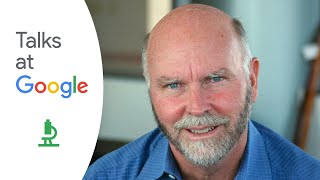
J. Craig Venter discusses his book A Life Decoded, covering his role in sequencing the human genome at Celera, his ocean microbiome surveys, and synthetic genomics work that aims to design and boot new chromosomes. He explores applications in medicine, biofuels, and addresses ethics around genetic privacy and dual-use risks.
Chapters
Well, hello everyone and thank you all very much for coming. We have a very special guest with us today as part of the Authors at Google program. It's quite an honor to have Mr. Craig Venner visit us here at Google. Craig is arguably one of the leading scientists of the 21st century and a true pioneer in the field of genomic research. Today he's here to speak with us about his just released book, A Life, My Genome, my life. In 1991, he formed his own nonprofit genomics research center where he sequenced the first genome in history in 1995. In 1998, he announced that he would successfully sequence the human genome years earlier and for far less money than the government sponsored Human Genome Project would, a prediction he would fulfill in 2001. We're thrilled and honored to have him come and speak with us today. Craig will be speaking and then taking any questions you might have. And just as a quick reminder, if you have any questions or comments, please use the microphones we have set up over here and over here. And that being said, let's all please welcome Craig Bender to Google today.
Thank you very much. Well, thank you. It's nice to be here today. It's starting to snow back east, so it's great to be in a much warmer climate. In fact, I grew up in the San Francisco Bay area, so I did a a book signing in San Mateo on Friday and people I haven't seen since 1964 appeared at my book signing. So it was a fun event. Well, let me tell you a little bit about the book. It's sort of four stories in one. It's a true biography, talking about how I was a horrible student here in the Bay Area, preferring to build boats or take part in swimming or surfing even though the water is only 50 degrees off the coast. Anything was more interesting to me than the educational system. As a result, I barely graduated from high school. I got a D minus instead of an F in a government class because I knew the instructor was a very right wing character who. So 1964, it's before probably many of you existed. But I wrote this paper, why Barry Goldwater should be President, and this guy liked it so much he graduated me. So even though I didn't think Barry Goldwater should be president, I left home at 17. I moved to Southern California to take up a surfing career to be drafted six months later off my surfboard. I guess there was a reason you had to be in school because that's the only way you got a deferment from the Military. As a result, I ended up in the medical corps treating infectious disease and then ended up in Vietnam as a corpsman. So. So that's sort of where my science career picks up from there. It's also a, it's a sailing biography. I talk about my history in sailing actually starting in Vietnam. I had a 19 foot Lightning sailboat that I sailed off the coast up and down during the war. I had. The only lightning with bullet holes in the sail is how he described it. And I got the sailboat in an unusual fashion. I did a surgical procedure for a guy to help him out of a bind. One of the guys associated with the harbor master's office in Da Nang, this was 1967, to put it in context, went on RR in Bangkok and woke up the first morning with some tattoos he didn't have the night before. And the tattoos, he had the name Mary tattooed across his fingers. And. And three months later he was on his way to Hawaii on the second R&R to meet his wife, who I'm sure you can guess name was not Mary. So he was very anxious to have his tattoos removed. But in a war zone, all surgery like that is considered elective surgery. So he was turned down, but I felt sorry for him and I removed his tattoos and did skin grafts for him. And so he went to Hawaii as a war hero with wounds instead of being a casualty of going there. He was so grateful. He asked me if I knew how to sail and I of course said yes even though I didn't. And he gave me a 19 foot lightning and I used to sail that up and down the coast. I always took two or three Marines with me as crew with their M16s because we got shot at all the time. But it was a great diversion and I've been sailing ever since. And this cumulated a couple years ago where I combined science and sailing around the world on I have a hundred foot sloop source or two where we took samples from the ocean every 200 miles using the shotgun sequencing method that I developed for sequencing the human genome. It's also a, it's a genome biography. There's, there's boxes throughout the text describing what I found in my genetic code. Trying to put some of that in context. For example, most people think in a pretty linear fashion with genetics and genomics. And I try to point out with these examples that nothing works in a linear fashion. And an example that I use is eye color. Most of you have asked questions about whether you inherited your eye color from your parents and you assume that's a pretty simple trait. Looking at my genetic code, there's not 100% determination that I would have blue eyes. Multiple genes and multiple cell types are involved and it's only a statistical probability. And that's one of the messages in the book about determining the genetic code and, and trying to interpret it. So if something that we consider a simple trait like eye color is not 100% certain, just think of complex traits like personality, behavior, intelligence are certainly not going to be single gene alleles. It's a science biography in the sense of picking up. After getting out of Vietnam, I started over at a junior college actually in the Bay area, the College of San Mateo, and then transferred down to UC San Diego. My plan was to go to medical school. So I was taking pre med classes and I was introduced to high end science as an undergraduate. I was invited to do some experiments and I was actually given my own research lab. And my contention is most people study in science and medicine something that they can relate to. So I decided to study adrenaline because I was really into the actions of adrenaline. I kind of enjoyed them and they helped me out of a few binds on more than one occasion. So I was studying individual heart cells in culture and you may not know this, but if you digest the heart with enzymes down to single cells, each one of those cells beats just like the heart does. And if you add adrenaline to them, they start beating harder and faster. So in the, this was the early 1970s. It was really cool watching this. And I assume the answer was known how this works. So I just, I asked a few people, turned out nobody knew how adrenaline worked. And I did just some clever experiments at the time and published my first paper as an undergraduate. And I became totally hooked on science and forgot about going to medical school and started wandering down this road in science. I spent the first 10 years trying to purify the adrenaline receptor from heart and from human brain. Only in the mid-80s to shift into molecular biology is the only way to truly understand the process. And that's when the first discussions about the genome project took place. And I got immediately fascinated by this goal of sequencing all the genes in the genome. It taken me 10 years to get one human gene. And at the rate science was moving, it was going to be a century or two before we knew the whole set. So the notion of doing it all in 20 years, even if it was billions of dollars, seemed pretty cool. And I started down this route and came up with some new ideas that put me in conflict with this Massive federal program. And fortunately, I was given the opportunity. A company in the Bay Area, Applied Biosystems. I got this call from them. They said they had $300 million they were willing to give me to sequence the human genome and was I interested. I actually thought it was a crank call. And I hung up on them. Fortunately, they called back a couple of times more. And the requirement was that we start a new company, Celera Genomics, to sequence the genome. It turned out, as some of you heard, this created a competition that got some people angry with me for doing something in nine months that the government wanted to take 15 years to do. And that's. The book deals with a lot of this. That the politics of science, what happens with large budgets and trying to interpret information. It led to the crash of the stock market after the. I was pleased it was called the Internet bubble, but it was basically based on something President Clinton said and Prime Minister Blair said. I was actually worried it was going to be something I said. I thanked the guy recently in England who wrote the text that caused the markets to crash, and I thanked him for making me a millionaire. And he got really flustered. And I said, well, I started as a billionaire and you helped me lose it all. But that happened to many people. A half a trillion dollars went out of biotech in two days. And that led President Clinton to push for a truce in the genome wars and the genome announcement in 2000. The last chapter of the book looks forward to what we've been doing in the environment with sequencing around the world, showing that every 200 miles, 85% of the biology is totally unique. And then how we're using these millions of new genes for this new field that I'm calling synthetic genomics. So for the last 15 years, we've been digitizing the genetic code as we sequence a genome. We go from the most analog world of biology into the digital world of the computer. And now we're in the situation where we can go from that digital world and write the genetic code for the first time, develop new chromosomes and try and boot those up to create new species. So there's sort of two parts to this. One is, can you write the genetic code in large enough pieces? And we're close to proving that you can make large chromosomes, even from bacteria, totally from going. Starting with what's on the computer in designing even the genetic code. The real question for me is, how do you boot up a new chromosome? So many of you write software. Software development is very similar to writing the genetic code. It's pretty easy for you to boot up your software in terms of DNA is an inert chemical. We did this first with a virus where we made a 5,000 base pair genome for a virus called Phi X174. And we injected that DNA into the bacteria coli. And a short while later, the bacteria started using that new piece of DNA to build a virus particle, which then in turn killed the cell. So I argue this is a case where the software actually builds its own hardware. So all we have to do is be able to get in and boot up the software that we create and it builds the hardware around it. We published what I consider the key paper on this just a short while ago, where we transplanted a chromosome. So we isolated the genome from one species and purified it and injected that into another cell. Before we did that, we added a few extra genes to that chromosome so we could select for it. And within a short while, the identity of the cell we transplanted the chromosome into completely changed. So all the characteristics of that species were lost and it converted into the new species based on the chromosome we put in. So that takes us into life really being programmable, definable. And that's what we're working on now. We're trying to define cells that can make fuel. We have a number of new fuels that we think are better than ethanol or butanol, a new potential green jet fuel, all that can be made biologically. And so we're working on designing chromosomes around these processes. This is going to, I think, as more and more people start to do this, once we get the first synthetic cell totally booted up, I think it's going to change the conception, literally and figuratively, of life how we envision it. The fact that we can start in a digital world and recreate it and define new life is going to hopefully have a powerful impact on society. The biggest issue that we have, in my view, is the billions of tons of carbon we're putting in our atmosphere each year. I have a slide I use in my lectures. We've had to change that slide three times this year because the rate of carbon going into the atmosphere is accelerating faster than anybody expected. And we just can't keep doing that. So we need to come up with alternatives for burning oil and coal. And we're working on some based on this new technology. So that's sort of a quick overview. Why don't I stop there and I'd be happy to take any questions you guys have. Thank you very much. So I'm always trying to develop A more concrete understanding of how all this detailed understanding of the genome is going to help us. I wonder if you can point to what are your favorites, sort of especially in the world where it's already having some effect on our ability to cure things, where actually knowing the details of the genetic code lets us do things we wouldn't be able to do otherwise. It's a great question, it's probably the most important one. But we're very early in this process. So we're trying to set up over this next decade to do 10,000 human genomes. So if you imagine 10,000 complete genetic codes with all the phenotypic information we can get about any one person from personality profiles, intelligence tests, medical records, complete cell phenotypic descriptions, and doing that 10,000 times and doing all the comparisons, then we'll know how to actually answer that question a lot better than we do now. I found a lot of fun things and not so fun things in my genome, but we don't really know how to interpret them yet. Some in the scientific literature have argued there's a modification of a dopamine gene that affects high risk behavior. My staff was very disappointed when their first look I didn't have this high risk gene, but they went back and found with a little bit more complete analysis that I'm a heterozygote for this high risk allele. To me, it's kind of silly to think that any complex behavior, particularly risk taking behavior, could be ascribed for by a single gene. So those are sort of in there for fun. At the same time, I knew some of my genomic history. My father died at a young age from cardiovascular disease and I found all kinds of changes in my genome associated with that risk for heart disease. But that's probably the most preventable disease that's out there. I started changing my diet, started taking a statin. Statins are sort of the first of drugs in a preventative medicine paradigm. So I think they're a hint of what happens in the future. The biggest surprise on that front was I'm a heterozygote for risk for Alzheimer's disease, but there's no history of Alzheimer's disease in my family. But what we do know is that people that smoke have 10 times the risk of late onset dementias that people that don't. So maybe it's from having these risk genes and a behavioral pattern changes things. But I just came from 23andMe, they got some pretty exciting analyses, they're setting up over there of genomes, but we need these large data sets to really intelligently interpret it. So ask me in a few years and hopefully there'll be better answers or you can get yours done at the same time. And so we're trying to push that envelope. I'm part of the XPRIZE Foundation. We had a fundraiser, I think, in this very room not too long ago. We have a $10 million prize for whoever comes up with new technology that enables us to sequence genomes very rapidly for on the order of $1,000. So in this company, you guys don't need $10 million so much, but others might. And if you know, anybody who wants to make a quick $10 million, tell them to invent some technology for us. Yes, sir.
So I recently read an article about.
How some surprisingly large percentage of the cells in the human body are actually bacterial cells that aren't our genes at all.
How will this affect genetics in human biology? No, it's an important question. So we applied these same techniques to the ocean. We applied them to the human gut, to the oral cavity. And we have 100 trillion human cells in our body, and we have at least that many bacterial and viral cells. And these play a very important role. So now with mass specs, you can measure all the chemicals in the bloodstream, and we as a species produce around 25 different chemical compounds. But after you guys eat lunch, if we were to take a blood sample and look at all the chemicals, and there'd be 5,000 or more chemicals there. Most people think this notion you are what you eat, well, it's not quite so clear because a great percentage of those chemicals are bacterial metabolites from what you just ate. So it's not so much we are what we eat, we are what we feed our bacteria, and we are more what they feed us. So, you know, our biology is very complex. We're in a microbial world. Just in this short time you guys are here, you've all breathed in at least 5 to 10,000 bacteria of different types, 10 times that many viruses. We are, you know, it's a key part of our biology and our metabolism. So I think the future is as we try to understand diets, we have to understand all this information and that chemical metabolism. Yes, sir. If you don't mind, I'd like to ask two very different questions. One would be personal. I'm curious what got you interested in science after what you describe as a fairly lackluster and not interested in such high school career. And the other would be what some of the long term effects of being able to Easily create new genes, new chromosomes and turn them on and off are potentially very dangerous as well as very good. And what safeguards do you prepare, propose or suggest for that sort of scenario? So the first question, basically after getting drafted, I had a choice of sort of any career in the Navy I wanted because I did well on their intelligence test. And I found for every school I thought about going into electrical engineering or nuclear engineering, you had to extend your enlistment for an equal time of these schools. And there was only one school you didn't have to do that with, and that was corpsman school. They didn't tell you that half the people died in Vietnam that got sent there as corpsman, so they didn't have to worry about re enlistments. But I always sort of had an interest in medicine peripherally, so I thought it would be interesting and I got just really fascinated with it. I learned very quickly in military medicine you can do whatever your skill set allows. So I was doing spinal taps and liver biopsies and assisting on major operations and treating diseases as a 19 year old because they don't worry about the legal system there. And that was pretty fascinating. And then being sent to Vietnam, I learned that knowledge was truly power. The more knowledge I had, the more lives I could save, the more I could do. And that really turned my view around. I was also the doctor for a village and an orphanage, which was incredibly satisfying work applying the knowledge I had. As you know, then a 20 turning 21 in Vietnam, I decided that I had to come back to get an education. The irony was I had to go through 12 years of education to get back what I was doing in Vietnam. But along the way I was introduced to high end science and I got so turned on to making breakthroughs and discovering facts about life that I gave up on medicine as a direct route. The second question is much more complicated in terms of any new technology, including what you guys do, can be used for harm in the world. And that's one of the big debates in terms of privacy of information. The worry is with synthetic genomics that people can make things that are harmful to others. Fortunately, not too many people are motivated to do that. And right now it takes a special skill set to design and make organisms. It may not be so complicated in the future. This is one of the rare areas of science where we ask the ethical questions before we did the first experiment and had a complex review that in fact involved most major religions, a lot of lay groups, et cetera, and the only concern is the potential for biological warfare. But that's now considered dual use. Research is the term that gets applied to this. Basically any new finding in science, particularly biology, has that potential. The real answer is that we need new vaccines, new antivirals, new antibiotics. And if we had an arsenal of those, there is no threat of biological warfare. But there's other procedures. We just recommended in a report we published that companies that make the DNA segments should screen, be forced to screen those against human pathogens, for example. And those rules are being considered right now. Thank you. Okay. Yes, sir.
So you mentioned. I guess one of the things you need right now are larger data sets. And in the context of predictive medicine, what do you think of coming up with incentives that go along? I mean, somebody is not going to volunteer to become part of a study where they may. It may turn out that they have a predisposition for heart disease or some sort of disease and there's no treatment available for them. Or they, they're afraid they won't be able to get insurance if they participate in that fashion. So somehow coupling the notion of guaranteed insurance with participation in the types of studies that you might recruit people for in order to get this data.
You'Re mixing a lot of complex things together. I'm not in a position to guarantee anybody insurance. But there's. Fortunately, you're not right. There are a very large number of people that want to volunteer to do this and have their genomes on the Internet. Mine is on the Internet trying to show that there is nothing to fear from seeing your genetic code and interpreting it. But there are concerns about employers using this information. And there's been a bill pending in Congress for almost a decade now, Genetic Non Discrimination Bill. It passed the Senate. It has a couple hundred co sponsors in the House, but the Republicans keep blocking it from coming up for a vote. Insurance companies. We actually want insurance companies to use this information. We want them to understand that it's far cheaper to prevent diseases than it is to treat them after they occur. And if you have life insurance, you know that life insurance companies have been always using genetic information. They take your family history, they measure your blood pressure, they measure your cholesterol. So there's not really an issue. You're absolutely right, though. If we had universal health insurance, that's something this nation needs to go to no matter what. We have 50 million people with no health care coverage, whether or not they get their genome sequenced. Yes, ma'. Am.
Can I just one. Follow on to that? Just. James Watson did not want his APOE status on the web so here's a scientist.
Well, you've seen his life and you can understand why.
No, but what can you explain that? Why do you think he wouldn't.
He's messing with people's minds. He likes to do that.
You think that's all it is?
Yeah, he's 80 years old. What does he have to fear, you know?
Well, he has to fear he's not.
Going to die from a childhood disease.
No, he's jeopardizing his credibility. Like, he doesn't want people to think that his ideas about science are influenced by.
Well, he jeopardizes credibility much more with what he says than anything in his journal. Thanks. Yes, ma'. Am.
I have a couple of questions. The first one is about introns. When you program, so to speak, with the chromosomes, do you take into account what you do with the introns? Is anything known about them? Are they. Part of the.
Introns are the spacers within genes. But bacterial genomes are basically 95% genes encoding regions. There are no introns. So it's very easy to do this with microbes. Trying to synthesize a human genome is virtually impossible at the moment, or even any single cell. Eukaryotes are much more complex than bacteria. So bacterial genes are pretty easy to do. They're roughly 900 to 1,000 letters in length, and there are no introns with them. So it makes it a lot easier to program.
Okay, second question is a little bit more personal. What I see now is when you have sequences, let's say, BRCA1, BRCA2, breast cancer genes, I see a lot of women, I mean, I'm one, fortunately, don't have the BRCA1, BRCA2 mutation, but I do have the HER2NEU mutation, that being a beneficiary of the Herceptin. But I see women now taking those. Let's say they're positive for either one. Go ahead and take steps to go get bilateral mastectomies and all those things just with a. To me, I feel it's a partial information. There's not a total, you know, is that something that's going to affect them? Possibly, yes. But are there other things in play that might come up in the future? What's your view on how. My question would be, how close are we to say that would be a good step to take?
So it's a great question. And it's the BRCA1 and BRCA2 genes are sort of my favorite whipping genes. For the very reason you state. I think a lot of women are given Just blatantly wrong information being told. If they have the mutations in those genes, they have greater than a 90% chance of getting breast cancer. They don't. There's only a very rare group of women. It's a very small percentage of breast cancer cancers. And those women already know they have a huge family history. Their sisters, their aunts, their mothers, their grandmothers all had breast cancer. That's where some of the data is meaningful. Applying to the broader population, there's now a half dozen you mentioned, you know, another one, genes now associated with breast cancer. By the time we Finish analyzing this 10,000 genomes, I'm predicting that number is going to be on the order of 50 or more genes. So you're right. It's partial information. It can be useful in terms of extra things to watch out for, but it's not a deterministic finding. I can totally understand women wanting to have mastectomies. You know, all of us want to use knowledge to have more control of our own lives, and I think genetics can help us do that in the future. But we need the complete picture. We don't just. Just need companies selling one or two gene tests and trying to provide that interpretation. What I'm hearing more and more from women that don't have the changes in BRCA 1 and bracket 2, and they sort of feel that they've been misled on that front as well. So we have a challenge to interpret this information not only at a basic science level, but as soon as physicians try to explain this to patients, when most of them don't understand it themselves, we have real problems. So it's, you know, we need to change the baseline of education. We need to change the baseline of data so we have clear statistics of what to tell people when they have those changes and when they don't. It's still early because we're still at the earliest stage answering to the first question of how to interpret the human genome. You know, everybody talked about it was a genome race. I argued it was a race to the starting line. We just crossed that starting line in September with the first diploid genome. So I totally agree with your outlook. It's very refreshing, and hopefully we can spread that amongst the medical community.
Right. And my personal thing is education. I guess that's where I feel there's a big bridge to be a big gap to be bridged between what's out there and what actions women are taking based on partial information. Thank you.
Yes, sir. Hey.
Hello. It's my understanding that genetics is kind of in the same boat as neurology.
Where we understand things pretty well at.
The micro level, but not so well.
At the systems level. Where are we in terms of understanding.
End to end causation versus just doing.
Statistical analysis on what we find?
Well, I mean, you have to narrow that down to a specific trait or disease that you're talking about to answer that question. I mean, so in some cases we clearly know changes in the genetic code and what they change at the system's level and what diseases they'll cause or not cause. Do we know that for the majority of genome information? No. So, you know, it's like all the other answers. We're at an early stage in that analysis. The genetic code is only one component. People are very excited because we can measure the genetic code right now. But I think as we do this analysis on 10,000 people, we'll have a clearer idea of what is truly genetic and what's environmental. But the environment is so many different things, including just randomness. That's why identical twins don't have the same fingerprints and the same bodies. As we go from one cell to 100 trillion cells, each division, there's random stochastic events that change the outcome.
Thanks.
Okay.
Hello, Dr. Venter. So you've been a scientist and you've also been an entrepreneur. So my question for you is, what advice do you have for the next generation of biotech entrepreneurs?
Make sure you have something that works, number one. You know, so much of biotechnology was based on people's hope or hype for ideas versus real ones. Then it's like the rest of the world. I mean, what we're trying to do right now in new fuels. I mean, fuels are a trillion dollar market, but it's not clear, even with a new green fuel, how to get it entered into the market the right way. And so there's challenges with every area. Most people think of biotechnology as developing pharmaceutics, even the biggest pharmaceutical companies. It's Russell. Out of 10 drugs going into clinical trials, one will work. So you have to be ready to deal with those long odds. Hopefully it's not going to be that bad with the environment, new fuels.
Thank you.
Okay.
Hello.
Yeah, I have a few questions, so if nobody else has questions, if you don't mind, I'd like to ask all three. The first question was, roughly a year and a half ago, Dr. Watson came and gave a presentation about more we learn about genome. We learn a lot more about ourselves. And some of this knowledge may affect our society in certain ways that we're not prepared for, for instance, if we, the more we learn about people, maybe people aren't created equally and that some people, their voting for instance, may be handicapped in some way that they're not able to understand the ballots. Other people are able to understand and can be manipulated. This led to a discussion with my roommate who feels that there's certain knowledge that shouldn't be, that society is not ready to attain. That science has advanced much further than what society can really understand. So in this recent Watson debacle about certain races having certain mental capacity than others, he said that when somebody proposed like why isn't there a study that just kind of figures out the IQ or tries to do some reasonable metric across peoples to figure out whether peoples or genetics have some implement impact on our intelligence. And he said we're just not ready for that. And that study should not be done nor published. I was wondering what you think about that.
It's a complex set of issues. But I mean what Watson said, that basically all blacks have inferior intelligence to Caucasians as well. There's no scientific basis for that whatsoever. You know why he said it? You know, I keep getting asked, is he a racist? I have no idea where he is. It doesn't matter. He says things like this all the time. And it's equally damaging that he says them whether he believes them or not. There's no evidence for it whatsoever. And the reason you can't do those studies, you know, intelligence is not something you can measure with an IQ test. You know, everybody in this room has a different type of intelligence. How many types there are, we don't know. And reducing complex human behavior, whether it's trying to reduce it to single genes or simplistic tests are not adequate substitutes for real knowledge. I think society is ready for the information. You know, everybody wants to, whether it's TV shows and radio shows, want to dumb down things for their audiences. I think people are very reasonable. You give them facts and real information, they're able to cope with it. Some of the assumptions that you're referring to are basically racist assumptions. We're not all created equal. I learned that the hard way when I was in competitive swimming. I was 16 years old and I had to swim against Mark spitz, who was 12 years old at the time and swam circles around me. You know, I trained hard. You know, he was clearly had a better physique for swimming. You know, it depends on what trait you pick. But one thing is absolutely certain. You know, race is a social concept. It's not a Scientific concept and it's a social concept that some people keep trying to apply onto science and it doesn't work. It doesn't stop them from trying. They keep trying harder. And there will not be a correlation between skin color and disease, skin color and intelligence, skin color and almost any trait you pick, we will find changes in our genomes. That puts us all in unique categories. People argue that, you know, there's a drug on the market for African Americans because they have a higher incident of hypertension than Caucasians. But guess what, high percentage of Caucasians also get hypertension and they're going to have the same genetic basis for that hypertension. So I think we need to change the way we deal with these issues in society and not approach it in a racist basis. Trying to apply social concepts that don't apply to science. Yes.
Hi.
We hear a lot about global warming and peak oil and these kinds of.
Things that are fairly depressing. And from what I heard you say in your overview, it sounded like you had a lot of optimism for genetics and genetic engineering in this area of energy, et cetera.
Just wondering if you could focus a.
Little bit on those topics.
Well, I'm an optimist and it's what our teams are working on and so by definition we're optimistic about it. The volume though is a real issue. 30 billion barrels of oil a year and that was in 2003. I deal with big numbers all the time. That's a mind boggling amount of oil that we use. And to think that there's any one substitute for it. There's not going to be one. But what we're thinking of, instead of having five oil refineries and a huge distribution system, maybe in a country this size we'll have 100,000 to a million biological refineries that can either take sunlight or sugar and make a renewable fuel from it, you know, that's the hope. But that's a long way from experiments in a lab to. That's a much bigger social change than the previous speaker was asking for. I know the science can produce the cells that make clean fuel on a renewable basis. That's only part of the equation. So it's like, can we do it on the scale that's really needed?
Do you get the feeling that we have sort of a kind of a clicking talk, sorry, a ticking clock and.
You know that there's a certain amount.
Of time that we have to figure this out?
Yeah, I absolutely feel that way. The trouble is we don't know what that time frame is. I mean, the worrisome thing. So I have a slide on the amount of carbon going into the atmosphere that I changed this year from 3.1 billion tons to 3.5 billion tons to two weeks ago to 4.1 billion tons. Tons. And this is accelerating. Some people think with India and China coming online, that could be 20 billion tons and not so many years. We're playing Russian roulette with our planet and there's going to be some stage where there's a critical level that we can't recover from. I don't want to do that experiment. You know, I would rather we do everything we can to change things as soon as possible. Some people, actually the pessimists, argue that trains already left the station. We're going down that route and we can't stop it now. I'm hopeful that we can.
Great. Well, thank you.
Yes, ma'. Am.
I was wondering what your either your opinion or what science, the current science, is saying about so called junk DNA. Because when I studied it a few years ago, I think they said something like 70% of DNA is totally unused and it's just, you know, remnants building up. Just junk, basically. Do you think that's true or do.
You have any studies? No, it's one of my favorite questions because it shows truly how ignorant the scientific community is. So when it was first discovered that only a few percentage of our genome codes for proteins, some geniuses decided the rest must be junk. I always found Sydney Brenner's attitude towards this much more refreshing. He said there was a difference between junk and rubbish. Rubbish you throw out junk you store in your attic. But all the major breakthroughs have been happening in the junk DNA realm. That's where the inhibitory RNAs were found. That's where the ability to open up the chromatin for gene expression, all the regulation is going to be found there. So I think we're going to be making discoveries in the junk for 100 years. And it's sad that it got labeled that just because of our ignorance.
Yeah, I don't understand how that label could even propagate or even be taught in, you know, institutions of higher learning. Because it's like we just learned what the genome was and then people were saying it's just junk. It seemed kind of odd.
Well, it's progressing. So in 2000, the notion was that we all had exactly the same sets of genes. And the differences in all humanity was point mutations in 1 out of 1000 letters of the genetic code. So the first diploid Genome that we just published in September in fact shows that all of us differ by at least 1 to 2% from each other. Which, to put that in context, we thought we differed from chimpanzees by 1.27%. So the fact that we differ by as much as 2% from each other is a huge difference. Fortunately, the chimpanzee number also changed or we really have some explaining to do. That's more like 5 to 6% different now. And because of all these differences, I'm actually relieved. I didn't see how we could explain human biology based on that. But you know, don't attribute too much intelligence to the scientific community or any other community. It's, you know, they're humans like anybody else that keep wanting to overly simplify everything. I mean, when we first sequenced the genome, people were hoping that there would be a gene for every trait, that biology would be this nice linear function. I was hoping it wouldn't because we'd be pretty dumb species in the end if that was the case. So, you know, getting new ideas into the scientific community is really hard. I mean that's, that's a lot of what my book deals with, of how I had to fight that just for ideas for technology of getting the genome sequenced, let alone how to interpret it and think about this. So it's a challenge that is progressing much more slowly than I would have hoped. And you know, I wish you were right, you know, education systems wouldn't be teaching this stuff, but thanks. Yes, sir.
As a self professed bad student, how do you feel like the educational system failed you? And what do you think should be done to improve it? Especially since we need more scientists, more people to.
Well, in fact, I've argued that I've been a successful scientist because I avoided the educational system. I didn't have creativity drilled out of me. We have a system, you know, when you design things on scales of societies, you want something simplistic and reproducible. So we have a system that's largely based on rote memorization versus understanding. In the New York Times science section a few weeks ago, there was an experimental school described for science education and Virginia where they try and teach science as problem solving versus memorization. You know, with Google searches, we don't need memorization anymore. I mean, it's, you know, we can look things up. Using the information to solve problems is what's really lacking. The question is how do you standardize that? How do you standardize teaching problem solving versus here's the standardized test you memorize these facts and regurgitate them. It is a problem. But I think one good thing about our education system, in my case, when I was ready to come back into it, I was able to do that. And it's a welcoming system. I think the community college system is phenomenal and you can get a good education when you're ready for it. Yes, sir. I have a couple of questions about the current research that's going on in genomics, or however you want to call it. How well do you think the current stuff that we think we know is going to stand up and where should we be doing more research, in your opinion?
Where?
We're kind of light on it right now. It's hard for me to describe the entire field of research, but what we need is a lot more real scientific data looking at the genome as a whole, not looking at one gene at a time. You know, it's like, you know, whether it's Google or anything else, trying to take one small component and describing the whole organization based on that component. That's what's been happening in genetics. So we have to have this holistic approach of looking at the entire picture and understanding complex variation across large populations. We can only do that with a lot of information, a lot of computing. You know, hopefully we're trying to drive that. Hopefully others will as well. Is there something in current scientific policy in the United States that's preventing that or is it just a matter of people? Yeah, we fund science in the most dismal fashion in this country. The so called peer review process guarantees mediocrity is not quite the right term, but it encourages lack of invention, discourages new ideas. The government wants to fund things that are safe. So most scientists have their ideas already proven before they can get them funded. It's the opposite of what you do if you're trying to encourage innovation. I argue the American public should be really outraged that there's not 10 to 100 times as many breakthroughs. Thank you. We have time for like three or four more questions.
So it's a thank you for coming to Google.
Thank you.
I wanted to ask you, you mentioned earlier that you thought the main concern with this technology was that it would be used for warfare. But I was wondering if you could talk a little bit about the possible ethical concerns regarding choice of children based on genetic defects. As we learn more and more about things that are probabilistic in their nature, such as the proclivity to developmental diseases or likelihood of having early onset of some kind of degenerative disease. I'd also like you to talk about possible increases in equity in health care as people are able to use this technology to, say, potentially extend their lifespan or improve their performance. Do you see those things happening? What do you think are the ethical considerations that we should be taking into account when you make decisions about those policies? And do you think we're making those choices well today or considering those problems?
Anything else?
Nope.
That's a big bill to fill. So, you know, as more and more can get predicted, people, people will have more and more choices. We have a complex society when it comes to people making abortion decisions. You can make that decision totally out of convenience. But if you're doing it based on some information of not wanting certain traits, you fall into this evil category. We have to come to grips with that. You know, diseases like Trisomy 21, so called down syndrome, through pre screening is largely preventable. But some people argue that, you know, you know, there should be more down syndrome children and you should go ahead. You know, I think these have to come down to individual choices. Just like, you know, taking pregnancy to term as an individual choice right now in this country. Hopefully it will remain that, you know, if we can get people much better information. You know, the tools are used in some phenomenal ways. You know, pre implantation diagnostic screening has allowed couples to have children that are normal relative to having severe degenerative disorders. I think that's a great use of science. Some people think that's, you know, making immoral decisions. You know, so it's. I'm not one to ascribe morals to you. I think we need to develop them as a society. I think the more individual choice we have, the happier I am. I think I only answered about one tenth of your questions, but it's, you know, I think, and you know, these debates and discussions are important, ongoing discussion. The trouble is now in this country with, for example, stem cells, we've had certain people's religious choices drive what can be done in research with federal funding in this country. I think that's immoral in my view. So I'd like to see that go in a different direction. But, you know, it's. Well, probably I should quit or I'll get in trouble like Watson does.
So.
Yes, sir? What are your thoughts on epigenomics? So it's a question, I guess there was a good film on television about epigenetic effects because I'm getting this. It was a National Geographic film.
Was it?
I saw it on Nova. Okay, so it seems to help to define it for people. So a lot of people think the genetic code is the be end all and end all of everything. It's a linear code that most of the changes, most of the complexity in our lives comes after that genetic code. So some epigenetic events are things like imprinting, where the traits you inherit from one parent take a disproportionate role, or a trait you inherit from the other. Some people think this is due to DNA methylation. There's all kinds of things that affect gene expression. We're at the early stage of understanding these events. They're clearly critical, including the randomness that's part of human life.
Okay.
Yes, sir. I have no question, but would just.
Like to thank you for coming to Google today.
Sorry?
I just wanted to thank you for coming to Google today.
Oh, thank you very much. I'm pleased to be here. These were great questions, and, you know, I'm finding audiences everywhere in the world, whether they're scientific or not, have the same questions. So scientists that work in this field don't have a different set. You know, it's new information to all of us, and it is a challenge. But thank you for having me here.
More from Guy


Cheryl Strauss Einhorn | The Human Edge: Smarter Decisions in the Age of AI | Talks at Google



Rachel Glennerster | Innovation and the Center for Global Development | Talks at Google

Rebecca Winthrop | Rethinking the Purpose of Education in the Age of AI | Talks at Google

Dr. Robert Wachter | A Giant Leap: How AI Is Transforming Healthcare... | Talks at Google



