A Visual Guide to Lunar Movement with Stephen Wolfram
10 Apr 2024 · 1 min
0:55
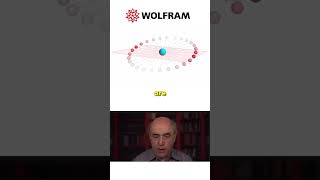
Stephen Wolfram visualizes the Moon's orbit around Earth, showing how its path tilts relative to the ecliptic plane. Red dots mark where the Moon crosses this plane. Solar eclipses happen only when the Moon sits in the ecliptic plane and passes between Earth and the Sun.
Chapters
More from Guy


youtube.com
Cheryl Strauss Einhorn | The Human Edge: Smarter Decisions in the Age of AI | Talks at Google
2w ago



youtube.com
Rachel Glennerster | Innovation and the Center for Global Development | Talks at Google
2mo ago

youtube.com
Rebecca Winthrop | Rethinking the Purpose of Education in the Age of AI | Talks at Google
2mo ago

youtube.com
Dr. Robert Wachter | A Giant Leap: How AI Is Transforming Healthcare... | Talks at Google
3mo ago



See all content
