America in the Middle East 1776 to the Present | Michael Oren | Talks at Google
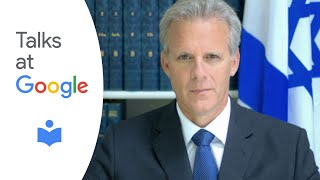
Transcript of a public lecture (Talks at Google) by historian Michael Oren summarizing 230 years of U.S. involvement with the Middle East. Oren organizes the narrative around three recurring themes—power (military/economic/diplomatic engagement), faith (Protestant restorationism and missionary activity), and fantasy (romanticized American images of the region)—and ties historical episodes (Barbary Wars, missionaries, 19th‑century colonies, World War I decisions, 1948 recognition of Israel, Cold War zigzags, post‑1979 interventions, Iraq 2003) to contemporary policy questions; the talk ends with audience Q&A about public ignorance, education, and expertise.
Chapters
The many books written about England's relationship to the Middle east seem to be a given. Michael Warren was surprised to find that there lacked a detailed account of America's relationship with the Middle East. He explores that relationship starting in 1776 and into the present with his newest book, Power, Faith and Fantasy. This newest book, as with his previous book, Six Days of War, achieved New York Times Best seller status, among other recognitions. In addition to his nonfiction, Orin has also published works of fiction. For example, Sand Devil, which I think a few of you got some of.
Those copies here today.
So I'd like everyone to join me in welcoming Michael Oren.
Thank you, thank you. Good afternoon everybody. What a great delight it is to be the most overdressed man in the room today. Really.
Thank you.
Say nothing about the oldest man in the room. One thing that never appears on my resume when they introduce me is the fact that for a very short period in the mid-90s, I was the CEO of a high tech company. How this happened, a tragic tale, actually, really a tragic tale. I was an advisor to the government of Israel, to the Prime Minister, Prime Minister Yitzhak Rabin. And you will recall that in November 1995, Rabin was assassinated. And basically the next day Shimon Peres, who replaced him, came in and fired all of his advisors, such as the Life of Government and was without a job. I had a friend who had established Israel's largest software development company. And the mean age in the software development company was about 21 and a half. Nobody had any sort of managerial experience. They figured I'd been a government advisor. I had a PhD. Why don't you come in as a middle level manager? What did I know about computers? It had this little button on the side. You turn it on and electricity goes on. That's what I knew about computers at the time. I had typed at least my MA thesis, not quite my PhD thesis on a manual typewriter. Remember those things? Belongs to the museum of Dead Noises, that clacking and the clinging. And so I came into this high tech company. I was the only person there, certainly with gray hair, certainly without red or blue plastic glasses. And what happened in the 90s? There was this tremendous surge of high tech development in Israel. It's being replicated to a large degree today. And high tech was a 24 hour, seven day a week workload. Of course, it's not like this for you. You guys get regular vacations, right? And I found myself there would be some vice president who had a nervous breakdown, a president who would be fired. And to my abject horror, I found myself being sucked up the managerial ladder. And every day I'd walk into the office like this, with one hand over my eye to see what sign was on my door. Because one day I walked in and it said, vice President. Next day it said, associated Vice President. Then it said, like his Excellency the Super Vice President. One day, the ultimate nightmare. I walk in and find myself the CEO of Israel's largest software development plant, about which I know nothing. You've all had dreams like this about the math test you didn't study for. This was the reality. Fortunately, fortunately, the people who owned this company out of Cambridge, Massachusetts had the good sense to sell the company within about a year and it relocated to India. I got what they called a golden parachute and I was able to write that Sand Devil book. There you have it. So something good came out of it. But I learned a little bit more about computers than how you turn on the switch. But had the company succeeded, who knows? I wouldn't have gone back to history writing and you wouldn't be sitting here listening to me talking about the extraordinary legacy of America's involvement in the Middle East. So to begin that subject today, we're going to begin with fiction or seeming fiction, imagination more than history. I'm going to ask you to imagine a situation. A situation in which you, every single one of you, is a high ranking American diplomat who has been assigned by the government of the United States to undertake a very delicate negotiations with a representative of an Arab nation that has declared war against the United States. And you are to be sent overseas to some undisclosed location in Europe. You're to convinced this Arab emissary that America doesn't want to go to war. And so you leave the United States, you travel to this undisclosed European location, you meet with the Arab diplomat and you tell him in no uncertain terms, the people of the United States do not want war with your nation. They do not want war with any country in the Middle East. Americans merely want to conduct their trade freely in this crucial area without fear of attack, of plundering. You make your case fervidly. And once you have, imagine that this Arab emissary then turns to you and says, no, we want war with you. We have this book, he says, it's called the Quran. And this book tells us that as good Muslims, we have to wage a holy war against all infidel states. The United States is an infidel state, therefore we must wage war against you. We must enslave you, your citizens, and our holy book tells us that if any of us are killed in the process of conducting this war, that we will alight immediately to paradise. So imagine you've heard this response from the Middle Eastern emissary. What then is your recommendation to the US Government? Well, if your recommendation is that the United States has no choice but to defend itself from a Middle Eastern threat, the United States has no choice but, but to go to war in the Middle East. If that's your recommendation, then it will have echoed the recommendation of the first high ranking American dignitary to be sent by the US Government to conduct precisely such a negotiation with a Middle Eastern emissary. And his name was Thomas Jefferson. And the month was March and The year was 1795. And America was at war de facto with the so called Barbary States. Four North African states, Tripoli, what is today Libya, Algiers and contemporary Algeria, Tunis, today's Tunisia and Morocco. The Barbary States, which were pirate states, they made their living by sending pirate ships out into the Mediterranean to plunder cargoes, enslave crews, hold them for ransom. Now America's relationship with the Barbary States were very, very complicated. Morocco claimed to have been the first foreign nation to recognize America's independence back in December 1777. The second treaty ever signed by the independent United States after the Franco American Treaty was the Morocco American Treaty. And you can see a facsimile of the treaty in the book that has the signature of Thomas Jefferson, of John Adams, and below that a signature in Arabic of the Ottoman Sultan and the Muslim date. America's second treaty ever signed has a Muslim date on it in Arabic. So very, very complicated relationships. But after 1783, after America had achieved its independence from Britain, the Barbary pirates began to attack Americans commercial ships in the Mediterranean. And these attacks posed a mortal threat to the American economy. About 20% of America's commerce was went through the Mediterranean en route to the Middle East. America was a seafaring nation, heavily dependent on its foreign trade, with a deep foreign debt. And so these attacks were threatening to undermine this fragile American economy. That was only the beginning of the bad news. Things got worse. America had managed to emerge from the Revolutionary War without a single gunboat, intact. All of them had been sunk, sold off, captured, no navy. And to make matters worse, America had no means of even creating a navy. Because you remember From American History 101, there was no central government back then. The 13 states were united under the Articles of Confederation. No central government, no presidency, no means of creating taxes, generating taxes to even create a navy. So American commercial vessels are literally defenseless in the water in, in the face of this mortal Middle Eastern threat. So many Americans concluded that the only way to get out of this bind was to follow the age old European custom of paying off the pirates. They called it, rather euphemistically paying tribute. Many Americans thought, just pay them off. And by parts of the 1790s, America was paying about one fifth of its federal revenue in pirates bribery to Middle Eastern pirates. They were really breaking what remained of the American treasury. There was one American leader who was adamant about this, who thought, no, we shouldn't be paying off the pirates, we should be fighting the pirates. And his name was Thomas Jefferson. Jefferson believed that America could not sign any treaty with the Barbary leadership because they weren't democratic and if there was a coup there, the next leader would come along and break the treaty. He thought that by buying off the pirates you'd only be provoking them to, to perpetuate more piracy against you. And Jefferson also thought Americans were different than Europeans. He said the Americans had a different temper, he called it, than the Europeans and would not abide by blackmail. But Jefferson remained very much in the minority. Majority of Americans, certainly by the 1780s, thought that it was very dangerous for America to get bogged down in a distant, bloody, potentially open ended war in the faraway Middle East. Today, more than 220 years later, Americans are grappling with some of these same issues in the Middle East. Should they try to negotiate with their adversaries in the area? Should they try to conciliate them, or should they confront them and potentially, if they can, should they crush them. I think that many people in this country today, perhaps you included, would be surprised to hear that not just Thomas Jefferson, John Adams, but also Andrew Jackson, Abraham Lincoln, had important Middle Eastern policy. You know, Thomas Jefferson, he entered the White House in 1801, made a list of his foreign policy priorities, and he listed relations with the Middle east as his number one priority. You might be surprised to hear that Lincoln, one of the assassins implicated in the Lincoln assassination plot, managed to escape to and was arrested in Egypt. That during the civil war, 500 Egyptian soldiers fought on North American soil during the Civil War. You'd probably be pretty astonished to hear that the original lyrics to the Star Spangled Banner spoke of humbled Muslims bowing down to the victorious flag of the United States. No kidding. Imagine standing up and saying that before ball games. Rather politically incorrect. And that the original Statue of Liberty showed A veiled Arab woman holding a torch. I imagine you'd be surprised to hear all this because, frankly, once upon a time, I would have been surprised to hear any of this. Once upon a time. I, like most people living in the country, believe that America's involvement in the Middle east began sometime in the aftermath of World War II, with America's dependence on Middle Eastern sources of oil, America's involvement in the Arab Israeli conflict, the Cold War in the Middle east, all this. That's where it began. And it never occurred to me that America's involvement in the Middle east began 200 years before that, until one day, and this is getting to be a long time ago, too, when I was a graduate student in Arab history and I was listening to a lecture by one of my professors on the emergence of modern Egypt in the 19th century, and he happened to mention, parenthetically, that in the 1860s, a group of Confederate and Union veterans, the Civil War, went to Egypt to help modernize the Egyptian army. And while they were there, they found that most of the Egyptian army was illiterate. So they began to build literacy schools for Egyptian soldiers. And the next day, when the schools opened, the Egyptian soldiers brought their kids. So these veterans of Vicksburg and Gettysburg got into the business of teaching literacy to Egyptian school children. And while they were at it, they said, well, we might as well impart some American ideas to these children. So they began to teach them civic virtues, as they were called back then, and patriotism and democracy. Americans teaching democracy in the Middle east in the 1860s. And I thought this was just fascinating. And so I left the class, went running off to the library, and to my frustration, I found that there were a great number of books about Britain in the Middle east, about France in the Middle east, but there was no comprehensive history about America in the Middle East. And if you flash forward some years to the aftermath of 9 11, suddenly the absence of an historical context in which Americans who were being asked to make some very faithful decisions about their future in the Middle east, the absence of that context became particularly glaring. So one day I was sitting with my editor on the Upper west side, and he leaned across the table and he said, okay, Michael, what is the one book about the modern Middle east that hasn't been written yet, but which absolutely has to be written? I didn't hesitate a nanosecond. I said, america in the Middle East. And he turned over the napkin, took out a pen, started writing an outline that actually became the outline of the book. Wonderful. But then my problems began. My previous book, some of you may know, was about the 1967 Six Day War. I wrote about 400 pages, about six days of history. Now I was contracting to write a book about 230 years of history. And how was I supposed to get a handle on this massive amount of material? And it occurred to me that the only way I could begin to cope with this vast material was to identify the underlying themes which somehow bound together this long and disparate narrative. And the first theme that I identified as the theme, I think, that would come to your minds most quickly as well. It's the theme of power. And by power, we mean the pursuit of America's vital interests in the Middle east by the application of power, whether it be military power, diplomatic power, economic power. Power certainly described the relationship that existed between the Middle east and the United States in the 1780s in the face of the Barbary pirates threat. By May of 1787, there was 127American hostages in the Middle East. Imagine that. Imagine if there were 127American hostages in the Middle east today. America was facing a hostage crisis in the Middle East. Again, no navy, no means of combating it. And in May 1787, when the delegates from the various states converged in Philadelphia to discuss whether to create a central government under a constitution, this Barbary pirate issue loomed large indeed. And if you go into the ratification debates surrounding the Constitution, you'll find representatives from maritime New England, which had extensive commercial interest, with the Middle east getting up and saying, if we don't have a Constitution, we can't have a central government. If we don't have a central government, we can't have a navy. If we don't have a navy, the Barbary pirates are going to kill our economy and we'll die as a nation. But these arguments weren't exclusive to New England. You go further south, you go to Georgia, the Carolinas, you have representatives to the ratification debates saying, if we don't have a Constitution, we can't have a central government. We don't have a central government, we can't have a navy, we don't have a navy. We're going to have algerines, as they were called back then, Algerines landing on the shores of Georgia and Carolina, and they're going to be kidnapping our sons and daughters and we'll die as a nation. And so, by marshaling this Middle Eastern threat, pro federalist forces managed to promulgate and ratify a constitution. 1789. Five years later, Congress passes A bill signed into law by George Washington allocating $666,000.43 for the creation of the U.S. navy. And the bill says that the Navy is being constructed excusably exclusively for fighting in the Middle East. That's what it's about. And America makes the Navy and America goes to war in the Middle East. The Barbary War is America's first foreign engagement. Military engagement. America's longest foreign military engagement with many setbacks. It's not until 1805 that a group of US Marines leaves a band of mercenaries 500 miles across the Libyan desert to attack TR Tripoli from behind. That's the stanza of to the Shores of Tripoli in the Marine anthem. Everyone sing it right now. Not till 1815 does Stephen Decatur, for whom about 27 towns and cities in this country are named. This is why they're named for him. He sails a fleet into Algiers and Tripoli harbor and he vanquishes these pirates at Cannon Point, 1815. So America learns some of its first and hardest lessons in power from the Middle East. It is in response to this mortal Middle Eastern threat that these 13 formally disparate states unite under a central government. They truly become a United States, a singular, as opposed to a plural noun. That threat from the Middle east forces these states to create naval power for the first time and for the first time to project that power thousands of miles from America's shores. And in creating a navy, not to rule the waves, but to free the waves, America opened the sea lanes to the Middle east to the agents of American faith. Now, faith in the American context is a huge dimension, a huge theme, and it has two sides. It's very complicated. Faith in America means first and foremost the Christian Protestant faith of the Puritans. We'll talk more about that in a second. It is the faith of a. Of a people who come from England and conceive of themselves as the new Israel and create a new promised land here. And it's the faith of a Puritan group that is going to create a country that's going to bring liberty not just for its own inhabitants, but freedom for all of mankind. It's going to be a city on a hill, a beacon to all of the world. This is the Puritan American. And here is the faith for the. On the Christian side, the Protestant Christian side. We have to go back and understand who the Puritans were. Puritans were a dissenting Protestant sect in 17th century England. They suffered terribly at the hands of the ruling Church of England. And in an attempt to find a model that would enable them to cope with their suffering. They looked back into their Bible. They looked into the New Testament. They didn't find the model. They looked back further into those books of the Bible that had been sort of systematically downplayed by Christianity throughout previous 1600 years. They looked back into what they called the Old Testament. And there they found something remarkable. They found a God who spoke directly to his people in their language. And he promised them, to rescue them from exile, to restore them to their promised land. And the Puritans read this story and they loved this story. They embraced it. They became the new Jews and England became the new Egypt. They escaped Egypt, England. They escaped across the Atlantic Ocean, which was like the Sinai for them, and they landed in this new world not far from here. And this was the new Promised land. They immediately posed the map, imposed the map of the old Promised Land on the new promised land. That's why you have all these biblical Hebrew city names. Here you know your Bethlehems and your Bethels and your Jericho's and your Sharons. Here, your New Canaan's, your from Connecticut. They made Hebrew a mandatory language at their universities. James Madison was a Hebrew major at Princeton. He failed. He had to do an extra year. No kidding. I was teaching at Yale last semester. You know, you walk in every day. There's that Hebrew emblem put there by Ezra stiles in the 1770s because Ezra Stiles spoke fluent Hebrew. Amazing. It's so closely identified where the founding father generations was. This biblical Hebrew narrative that at the conclusion of the American Revolution, there was a debate over what was going to be the seal of the United States. And a group of American leaders said, well, we really should have this bald eagle clutching 13 arrows in its talon, one for each state. But another group of prominent Americans said, no, we really should have Moses leading the children of Israel out of bondage into the promised land. And there was this heated debate in Congress over what was going to be the Great Seal of the United States. And America came this close to having Moses as its national symbol. Missed out, got the eagle. But the people who designers of the Moses symbols were Thomas Jefferson and Benjamin Franklin, how closely identified they were with that biblical narrative. Now, for certain Puritans and their descendants, the fact that they were the new Jews meant that they had some kind of kinship connection with the old Jews. They were mishpocha, as it were, and didn't mean they actually liked their mishpocha, but they had a connection with them and also meant since they were inhabiting the new Promised Land. They had a connection with the old Promised Land, then known as Palestine, part of the Ottoman Empire. And these Americans concluded that to be good Christians, to be good Americans, it was their divinely ordained duty to help those old Jews get back to their old Promised Land and recreate the Jewish state. Thus was born the notion of restorationism, which was just a fabulously prominent idea in colonial America, 19th century America, well into 20 and 21st century America, as we'll hear. Restorationism. You have John Adams, the second president of the United States, saying it was his most fervid wish that 100,000 Jewish soldiers as well disciplined as the French army, that's the French army back in 1798, would march back into Palestine and recreate it as a Jewish kingdom. You have Abraham Lincoln in 1863 saying he recognized that restoring the Jews to their ancient homeland was a dream that was cherished by a great many Americans. And that he, Lincoln, would personally pledge to see that dream become a reality after America had restored its unity after the Civil War. Perhaps the greatest single expression of this restorationist idea appears in a book published in 1844 called Visions of the Valley. Big thick gray book, and it calls for the US Navy to return to the Middle east, not to fight the Barbary pirates this time, but to detach Palestine physically from the Ottoman Empire and to give it to the Jews as a state. And Visions of the Valley becomes an antebellum bestseller. Sells 1 million copies. And the author of this book is the chairman of the Hebrew Language department of New York University, and his name is Professor George Bush. And two days in the genealogy room of the Library of Congress enabled me to ascertain that Professor George Bush, 1844, Visions of the Valley, is a forebearer of two American presidents of the same name. Now, for some Americans merely dreaming of this restored Jewish state and visioning it was insufficient. Starting in the 1830s, groups of Americans picked up and moved to the Middle east to create colonies there, including a great number of American women. You should know Clorinda Miner of Philadelphia, Harriet Livermore of Philadelphia, pick up to create colonies in Palestine dedicated to teaching the Jews how to farm. These American Christians were also good Jeffersonians. Jefferson believed that the basis of any viable modern state is an agrarian economy. That the Jews had been exiled from the land for 2,000 years. They had forgotten how to farm. Therefore, these Americans concluded it was their divinely ordained duty to reacquaint these Jews with agrarian life. And so they went off to Palestine and they found out Very quickly that the Jews did not want to learn how to farm, certainly not from them. And the colonies suffered terribly from starvation and depredation, exposure. But still they came. Waves of these people came. In 1855, Philip Dixon left Groton, Massachusetts with his wife and twin daughters. And they moved to an abandoned hillside outside of Jaffa that they rather optimistically christened Mount Hope. And the Dixon daughters marry two German Lutheran preachers who are also brothers, Johann and Frederick Gross Steinbeck. And together, the Dixons and the Gross Steinbeck set out to teach the Jews how to farm. Jewish Jews of Jaffa don't want to learn how to farm. And the Dickson family is attacked all the time. This colony is attacked by Bedouin bandits who like, almost like Fort Apache, they had rifles. They were shooting them, fighting them off. But still, still groups of these people continue to come. Ten years later, 1867, George Adams from Indian River, Maine leaves Maine with 156 of his followers. Artisans, merchants, they move to another hillside outside of Jaffa to teach the Jews how to farm. The Adams colony. And the Jews don't want to learn how to farm. And they catch the plague. And they died by the dozens. And that was a failure too. And yet the failure of these attempts by American Christians to help recreate the Jewish state did not discourage the restorationist movement back home at all. On the contrary, it just seemed to get bigger and bigger, and it spurred in a completely different movement of Americans to the Middle east. And that was the missionary movement. America's first two missionaries to the Middle east were named Pliny Parsons and Levi Fisk. Pliny Fisk and Levi Parsons got to get that right. And they gave Fisk and Parsons gave their departing sermon at Old South Church. I'm sure you've been on your tourist types too. Boston, Old south church on October 31, 1818. And they set out their goals, what they're going to accomplish in the Middle East. First goal, get the Jews to reassemble in Palestine, create a state, and then the Jews will convert unmasked to congregationalist Protestantism. Failing that, Fisk and Parsons would try to convert the Arab Muslims. So Fisk and Parsons leave for the Middle East. They quickly ascertain that the Jews do not want to in gather under their auspices, do not want to become congregationalists. And when they try to convert the Arab Muslims, they learn that proselytizing is a capital offense under the Ottoman law, and they're liable to lose their heads. So out of a sense of frustration, Fisk and Parsons turned to building schools. They build the first modern elementary schools in what is today Lebanon and Syria. And waves of missionaries come after them. And by the 1866, by the 1860s, these schools are evolving into the Middle East's first Western style universities, what will become the American University of Beirut, the American University of Cairo. And through these institutions, these missionaries switch to that other civic side of American faith. They are no longer teaching the gospel of Christianity, but they say themselves, we are teaching the gospel of Americanism, patriotism, civic virtues and democracy in the 1860s. And the missionaries and their descendants get intimately involved in promoting an entirely new identity in the Middle East. A second secular nationalist identity, Arab nationalism, in which Muslims, Christians, even Jews can participate. No religious component to it. And they become so deeply identified with this Arab nationalist movement promoting Arab independence first from Ottoman rule after World War I, from European colonial rule. And many of these missionaries send their kids to Princeton. And from Princeton they go right into the State Department. They become the Arabists of the State Department. That's why the State Department department was so closely aligned with the Arab nationalist movement. To the degree that Arab nationalism after World War I becomes incompatible with the goals of restorationism, which is already being called by its modern name, Zionism, then the American Christian proponents of recreated Jewish state are coming up against opposition from other American Christians who oppose a recreated Jewish state. And that tension continues to this very day, though I wouldn't recommend it. If you look at Jimmy Carter's recent book, you'll see a person who comes out of a Christian worldview who has grave reservations about the state of Israel and its policies. And he calls himself an evangelical Christian, whereas most evangelical Christians in this country are very pro Israel indeed. What's interesting for me about Carter's book and the response to it as a historian is that whether it's Carter or other evangelical Christians, they're all coming out of the same faith guided American approach to involvement in the Middle East. And finally we come to the third and most controversial and most elusive of these themes. And that's the thing of fantasy. And by fantasy I mean the highly romanticized, exoticized, eroticized image of the Middle East. It's the image of, you know, of flying carpets orbiting minarets, of genies emanating out of bottles of veiled but available harem girls. Very important one. These were the image of the Middle east, these mystical romantic images of the Middle east that were so powerful that they influenced America's first explorer to the Middle east to pick up, actually to run away from Dartmouth College with a Dartmouth dropout and to leave for the Middle east in 1788. His name was John Ledyard. He was actually a good friend of Thomas Jefferson and he had a very lively correspondence going with Jefferson about his travels to the Middle East. Through his letters, we actually get a window of what the Middle east looked like to an American in 1788, and it doesn't look so good. Ledyard complains about everything, about the disease, the poverty, complains about mistreatment of women, becomes a whole theme in Americans observations of the Middle East. He has nothing good to say about the Middle east except for one thing. Ledyard looks out into the desert and he sees Bedouin on camels on horseback. And he says, well, these Bedouin are just like our frontiersmen in western Pennsylvania and Ohio because they love liberty, they hate being fettered by an oppressive government, and unfortunately, these particular frontiersmen are languishing under an Ottoman tyranny. But he speculated, Ledyard speculated, if some Western power, like the United States would come along and remove that tyranny, then these liberty loving nomads of the desert would rise up and embrace American style Democracy. Sound familiar? 1788. Now, many of America's myths about the Middle east can be traced back to one book. It was the second most popular book on the American colonial bookshelf after the Bible. Though you probably didn't display it alongside the Bible. The book was 1001 Arabian Nights. Everybody read in quiet while the lights were low, because even by 21st century standards, it's rather pornographic. I mean, you know, the popular version, you know, Sinbad the Sailor and Ali Baba and Scheherazade, storytelling for their life. Those are the sort of the anodyne parts of it. But people had no sources of information on the Middle East. Not like they could pick up a newspaper or open a computer. This was it. And they read 1001 Nights and they thought this is what the Middle east really looked like. And so many of them were literally aroused to leave America and to travel thousands of miles at great peril to the Middle East. By the middle of the 18th, middle of the 19th century, Americans have surpassed the British as the greatest number of tourists in the Middle East. They've snatched up all the good hotel rooms in Damascus and they are coming in droves. And among these Americans coming are some of America's future men, great men of letters. In 1855, a struggling novelist whose previous novel, Moby Dick, had sold a disappointing 3,000 copies, decides to go to the Middle east in search of a new, exciting travel novel. 1855. Herman Melville packs two shirts and a toothbrush and goes off to the Middle East. He keeps a diary. If you ever have a chance to read this diary, it's fabulous, it's possible postmodern, borderline hallucinogenic. Fabulous diary. What he has to say about the Middle east is nothing good. It doesn't bear any resemblance to 1001 Nights. Just devastating portrait of the Middle East. He comes back even more depressed than when he left. But it discourages. Nobody waves. And waves of these people go. Frederick Douglass goes. Ralph waldo Emerson goes. 1867, aspiring humorist from Park Slope, California, gets on a steamship, the Quaker City, because he's got a contract to publish his collected dispatches from the Middle East. And he publishes them under the omnibus title of Innocents Abroad, using for the first time his new pen name, Mark Twain and Mark Twain. The Middle east makes Mark Twain. Innocence abroad becomes the second largest selling book of the second half of the 19th century, after the Bible in America. And it has nothing good to say about the Middle east. This devastating portrait value. The Middle east has a devastating portrait about Americans in the Middle East. He talks about American vandals running around with sledgehammers and knocking off pieces of pyramids to take home as souvenirs even back then. But still, waves of these Americans keep on coming, goaded by these Middle Eastern fantasies. And by the 20th century, these middle Eastern fantasies are being appropriated by the burgeoning Hollywood industry. And some of Hollywood's first blockbuster films are Middle Eastern fantasies. Who has seen the Sheikh of Araby with Rudolph Valentino? Who's heard the hit song of that same year, 1921, on the Sheik of Araby, My heart belongs to thee at night when you're asleep into your tent I creep Middle Eastern fantasy. And it goes on the Middle East. By the 50s, they're making Sinbad the Sailor and a lot of Scheherazades. And then you get the Indiana Jones and the Hidalgos and the Sahara's some really bad movies. Those of us who grew up with that dream of genie, that was it, you know, Master, master, literally. It's a Middle Eastern fantasy. I actually show it in my class. Everyone thinks it's funny, but it's true. Middle Eastern fantasy. And the fantasies of the Middle east were so deeply ingrained in the American imagination that I really wonder whether on 9 11, 2001, there wasn't a certain segment of the American population who were flummoxed to see that these very romantic barobe figures left their camels left Their palm trees on their oases to come to the United States and to hijack major airliners and to crash them into the World Trade center in the Pentagon. Power, faith and fantasy. These were the three themes that I identified in America's 230 year involvement in the Middle East. Very often they appear as separate, very easily readily identifiable themes. The Barbary pirates, the missionaries, Mark Twain, Sheikh of Arabi, power of faith and fantasy. But more often than not they're engaged in some type of dynamic interplay with one another, if not opposition to one another. For example, faith meets up with fantasy in 1856 when Herman Melville visits the Dixon Gross Steinbeck Colony. And there's a great section in his diary where he describes the misery in this colony, the mud. There's a whole dialogue between him and Mr. Dixon and where he makes fun of Mr. Dixon. A month later, the Dixon colony is again attacked by bandits. This time they break into the compound, they knocked Philip Dixon on the head, mortally. He dies. He's actually buried across the street from where I live in Jerusalem at the American Protestant cemetery. You can visit him any Friday morning. His wife and twin daughters are brutally raped, horribly raped. Frederick Gross Steinbeck is shot in the groin and dies an agonizing death. And the only person to escape, according to consular records, is Johann Gross Steinbeck, who at this point moves to California to prospect for gold and Americanizes his name. Melville goes home and writes a 26,000 line poem called Clarol, which I don't recommend, where he alludes to the rape of the Dixon colony. But there's a rather more august treatment of that horrific event. Another great work of American literature, East of Eden, an allusion to the rape scene that was written by Johann Gross Steinbeck's grandson, John Steinbeck iii, whose grandfather had lunch with Herman Melville in Palestine in 1856 on an American colony dedicated to recreating a Jewish state. Here's where faith met up with fantasy. Faith met up with fantasy again when the Quaker City carrying the soon to be famous Mark Twain evacuates from the shores of Jaffa the 47 survivors of the George Adams colony. And the only non caustic passage in Innocence Abroad is when Twain just describes the misery of these people and there was just nothing to joke about how miserable there was. Fantasy met up with faith. Power met up with faith in 1903 when Teddy Roosevelt sends the US fleet into Beirut harbor to threaten the Ottoman authorities there, whom Roosevelt was accusing of mistreating the missionaries. Faith trumped power in 1917 when Woodrow Wilson had to decide whether to bring American forces into the war in the Middle East. Remember history, April 1917, when America goes to war against Germany and Austria, Hungary, the Central Powers, but there was a third central power was the Ottomans and the British and the French were fighting there. The question is whether America would fight there. And Woodrow Wilson, who the president was the grandson and son of Presbyterian ministers, was, was very close to the missionaries. And the missionaries came to him and said, Mr. President, if you go to war against the Turks, the Turks are going to do to our missionaries what they're doing to the Armenians. They're massacring them. So Woodrow Wilson never went to war in the Middle East. Perhaps the most fateful single decision ever taken by an American president. Because at the end of World War I, there was a million British soldiers in the Middle east and several hundred thousand French soldiers in the Middle east, not one American soldier in the Middle East. And guess which countries got to draw the post World War I map? The Middle east, not the United States. And then faith truly trounced power. In 1948, 1948, after the UN had determined to divide Palestine into a Jewish state, into an Arab State, on May 14, 1948, the Jewish State was set to come into being, declare its independence. On May 12, 1948, there was a meeting in the White House between the President and his Secretary of State. Secretary of State was George Marshall, the most revered American of his generation. He said to the President, Mr. President, you recognize this Jewish state? There's going to be a world catastrophe. The Arabs are going to cut off oil to the West, Europe's going to fall to communism. American troops are going to have to intervene in Palestine to save the Jews there from massacre. And Marshall put a little kicker on the end. He says, Mr. President, if you recognize the Jewish state, I, George Marshall, will not vote for you in the 1948 presidential elections. Imagine, like Condi saying that today the President is Harry Truman. Harry Truman, who had a strict Baptist upbringing. He had memorized the Bible by age 14, had been a member of a restorationist group called the American Christian Committee for Palestine. He listens to this analysis by Marshall. He says thank you, and he proceeds to shut himself up in the White House for the next 48 hours. He was an avid diarist to him, and he wrote nothing in his diary was. We don't know what went through his head. All we know is that at 6:11pm on May 14, 11 minutes after Israel declared its independence, Harry Truman made the United States the first nation on earth to Recognize the recreated Jewish state. Amazing. Why did he do such a thing? Why would he do such a thing? We don't know because he wrote nothing in his diary. But we do know is several weeks later, there was a delegation of dignitaries visiting the White House. They ran smack into Harry Truman in the hall. Truman was introduced to them as the president who had helped create the Jewish state. And Truman got insulted. Helped create the Jewish state? He said, what do you mean, helped create the Jewish state? I'm Cyrus. He said, I'm Cyrus. You can always tell who knows their Bible here. They'll laugh. Anybody know your Bible? Cyrus, of course, being the ancient Persian king who restored the Jews to their holy land. I'm Cyrus. That's the way Truman saw himself since 1948 there. 1948 was really the watershed year in America's foreign policy, not only because of America's involvement in the Arab Israeli conflict. It was also the year. The year that America woke up and found itself. It was very dependent on Middle Eastern oil. It was the coming of the Cold war to the Middle East. But I think more significantly still, it was the year in which America began to replace Britain and France as the preeminent Western power in the Middle east and so became the heir to about a thousand years of antagonism between the Middle east and the West. America became, for all intents and purposes, the West. And consequently, American leaders had to labor very often not successfully, to try to reconcile these competing impetuses of power, faith, and fantasy. And what you get is a lot of zigzagging. You get the eisenhower administration in 1953 joining with the British to oust a popular Iranian prime minister, a nationalist, Mohammad Mossadegh, who had gotten a little bit too close to the Soviets in the Cold War. So the Americans the thoughts, so they kicked him out. The same Eisenhower administration turns around three years later and goes against the British and against the French to save another prominent Middle Eastern nationalist leader, Nasser, who had also gotten very close to the Soviets in the Cold War. Go figure that one out. American presidents are very supportive of the state of Israel, but at other times, they put tremendous pressure on Israeli leaders to relinquish territories that those Israeli leaders didn't want to relinquish. Sometimes they impose arms embargoes on the Jewish state. American forces. American forces often battle. The Libyans, the Syrians, the Iranians. Right. But people forget that America also played a pivotal role in assuring the independence of Iran, Syria, and Libya. Ronald Reagan. My favorite zigzag. Ronald Reagan. The mid-1980s gave missiles to the Iranians in order to induce them to take fewer American casualties than hostages in Lebanon, therefore violating the Thomas Jefferson's first rule in the Barbary Wars. You know, you give them more. The more you pay them off, the more piracy you're going to get. Since 1979. Since 1979, American forces have been engaged militarily, almost uninterruptedly somewhere in the Middle East. We're almost at a 30 year war in the Middle East. And those of us of a certain age will remember back in this late 70s and 80s when the American uniforms were sort of the, the green stripes of Vietnam. Now those same uniforms are the tawny Arabian browns. I'm always astonished to go through airports in Cincinnati and see the colors of my hometown on American servicemen and women. Today, in 2003, March 2003, America invaded Iraq. And for one glimmering moment, it seemed it was all going to come together. Here were the purveyors of American power, the American military patrolling the streets of Baghdad, the fabled capital of a thousand and one nights. And they were there imparting ideas of American democracy to a population that seemed at that time just desperate to rise up and embrace it. And that moment has proven tragically fleeting today. Still, American leaders are going to have to labor monumentally to try to reconcile the pursuit of their vital interests in the Middle East. And they are vital while upholding the basic tenets of their American faith, all the while learning to distinguish between myth and reality in the Middle East. None of these tasks are easy. Power. America will have to continue to project power in the Middle East. America cannot detach from the Middle East. This isn't Vietnam. You cannot go home. Very simple reason that the Middle east is not going to detach from you. And you will be engaged militarily in the Middle east for a while to come. But one would hope you do it in a more efficacious and intelligent and prudent way. Understanding all the time that while power is important, power cannot achieve all of America's ends in the Middle East. Understanding that America has to uphold its faith, its democratic values, but also understanding that there's a limit to which these ideas can be transplantable to the Middle East. That Middle Easterns have a different concept of liberty, different concepts of freedom and democracy, and distinguishing myth from reality, that is really the hard. That's the hard task asking the questions which I very rarely see Americans addressing. The question of whether American forces are going to have to remain in Iraq for 2 years, 3 years, 20 years, 30 years. Who's really talking about that today? Understanding the ability of America to bring about an Israeli Palestinian reconciliation where you have weak leaders both in Israel and among the Palestinians. And the most difficult question of all, facing up to the possible ramifications of a nuclear Iran, not only for America's allies in the Middle east, but also for Europeans and ultimately for Americans themselves. These are the hard questions that America is going to have to address. And the really bad news, the terrible news, is that there are no answers in my book. You're on your own. The there are no answers in the book. The purpose of the book was, first of all to share with you my fascination with this topic. And it never ceases. I could sit down and write this book from page one again. It's just so ineffably exciting to talk about why the original lyrics of the Star Spangled Banner were Muslims bowing down to the victorious flag of the United States, however politically incorrect it is, why the original Lady Liberty, why was a veiled Arab woman holding a torch and is no longer all of that. You can get the answers to this if you read the book. But far more importantly, more critically, the book aspired to create a context, a context of the past in which Americans who are still confronting the most fateful decisions in the Middle East, a context of the past in which all of us can begin to chart our future. Thank you all. So two things. Questions, if you have them, and water, if you have it. Not necessarily in that order. I'll take virtual water.
How about I start with a question while you get your water? Do you want to get your water first? So first of all, thank you for coming here. I think that's a fabulous context that you set for us. Why do you think it is that as a country who values kind of regurgitating history so much? I mean, you can't flip through the channels of any cable without finding a World War II documentary or a movie about the Wild West. We're so fascinated with our own history. Why is it that we have such a, such a short term memory when it comes to things around the Middle East? I mean, forget the dozen examples you gave that go back hundreds of years. If you just think about the fact that we supported the mujahideen who eventually became Al Qaeda and Osama bin and so on, and supported Saddam Hussein. But four years ago, when we were deciding to go to war, few Americans, if you said, by the way, we were friends with Saddam Hussein, they would actually remember that. Why is it that we have Such a limited context, even going back to recent. Do you believe it?
My knee jerk reaction would be, say, because of computer technology, but I should. No, it's not so much that we have short memories, it's that we have very selective memories. Now you mentioned the History Channel. History Channel is showing you again and again the fall of Stalingrad and Gettysburg. We have memories about certain things. And American historical memory is very much focused on internal American politics. The battle over slavery, women's suffrage, the Depression. The home front of World War II is less concerned with America's foreign affairs in general. And when it does focus on American foreign affairs, it's almost invariably toward the west dealing with Europe, sometimes with South America, on rare occasions with the Soviet Union during the Cold War. But how much do you see about America's relationship with China on those same tokens or America's relationship with America's, with Japan? It's not surprising to me that Americans were generally ignorant or purblind toward their relationship with the Middle East. And this is coming at a time it just became increasingly insufferable, certainly inexplicable that Americans who were so deeply engaged in the Middle East. The Middle east impacts your life. I can show you on the front page of a paper every day. Three quarters of your news somehow relates to America's embalming and Middle east, where Arabic words, in many cases rather obscure Arabic words, have entered the American parlance. I mean, most of you, if I say Wahhabi, will know what I'm talking about. If I say jihad, you know what I'm talking about, or mujahideen, which you just used and you assume we use that word. If you had used that word 10, 15 years ago, everyone look at you and say, what is that? Or even knowing that there is such a thing as a Shiite and a Sunni and the Malaysia has become much different. So really from my mind, the ignorance, the lack of awareness of America's amazing legacy in the Middle east became unsustainable after 9, 11. And that's what I work to try to create. And we're trying to get a documentary series made on this for the History Channel, if I can make. Plug it. Yes. So you talk a lot about.
You give this impression that for the entire history of the Middle east we, or the entire history of our relationship with the Middle east, that our relationship has been defined by ignorance and not being able to distinguish between myth or reality. And basically it's been a ridiculous relationship. So my question is, are there any parts of the government now or in the past that have ever had a good grasp on a relationship with the Middle east, even just, you know, a small department and something that we can use in an example of what could be.
I can think of individual examples. But in general America has not been well informed by the Middle east, even from its so called experts. Here's the example of 1940. I gave you a very brief example in 1948. The assessment, excuse me, that the Arabs were going to cut off oil to the west if the United States recognized Israel, that Europe would fall to the communists, that American forces would have to intervene in Palestine to save the Jews. There would was an unanimous conclusion. Of the entire foreign policy making establishment, the Pentagon, the Defense Department, the State Department, there was not one single dissenting voice to that estimate. And it was completely 100% wrong. None of those things happened. And you say to yourself, well if they can't get something basic like that wrong, amazing. So I can pick out individuals who understood things. My favorite and anyone wants to write a good book is a book dying, crying out to be written about William Yale. William Yale, a 1914 graduate of the school of the same name become bums off to the Middle East. He put pair of brass knuckles into his, into his pocket and he went off to the Middle East. He learned Turkish, learned Arabic and gets hired by the oil company which are just starting to proliferate. But when World War I breaks out, the State Department takes him on as an Arabist. And William Yale writes a report in which he says that any attempt to create a Jewish state in Palestine can only be implemented by force on the edge of bayonets. And that a Jewish state in Palestine will generate 100 years of conflict, at least very prescient. The same William Yale is assigned by Woodrow Wilson to be the advisor of an American commission, the King Kraine Commission sent to the Middle east in 1919 to ascertain the possibility of the future of the Middle East. And then I'm going to get to the end of this. Just interesting. The King Crane Commission comes back with a report that says the United States must never, never support Zionism. Must never support the creation of a Jewish state. It's bad news. It's going to create war. There's one dissenting voice, it's William Yale. What does he say? Yes, Zionism, Jewish state will create tension in the Middle East. War in the Middle East. But, but he says you could take Jews from 70 nations in the world and stick them in Palestine and they will make you a country. They'll, they'll build their own institutions, their own army, their own roads. The Palestinian Arabs are not yet a people. And if you do try to make that state, you'll have to spend all of your energy trying to make the Arabs into a people before they can sustain a state. Look what's going on in Iraq. There is somebody who understood the Middle east in a way that I've rarely encountered among American Middle Eastern experts. There's Ransom. P.S. nobody listened to him.
I had a question for you. You were talking about the lack of education when it came to almost anything Arabic. We don't get much information from our schools and we're not taught anything about it. I mean, with the occasional thing, book of fiction like Dune or something like that, where you see a very, very large Arabic influence. You said yourself you were surprised in multiple steps. What is it that we need to do to get some of this non fantasy information out to our people so that they can make a more intelligent decision? Because at the moment they're not and they haven't been.
America has to invest very heavily in education about the Middle east right now. Language teachers in general, but Arabic teachers in particular cannot get tenure at most American universities. So there's always this turnover of Arabic instructors. Any of you ever try to take Arabic here? The state of Arabic education in this country is just abysmal. That's true of all Middle Eastern languages, just abysmal. I speak, you know, because I'm a dual national and I spend part of my time in Israel. I'll tell you that the average Israeli platoon, not a company, a platoon, has two fluent Arabic speakers in it. American brigades are luckily if they have one Arabic speaker in it. How do you fight a war like that in the Middle East? I don't know. You're literally flying blind. You just. It's investing resources which are actually crucial. But the problems are much more fundamental and visceral than that. This country going back to Puritan times, to colonial times, has a deep animus toward Islam. Just does. You could read the sermons of Cotton Mather and Jonathan Edwards and they're Islam bashing. John Quincy Adams in the 1820s writes a 40 page essay against Islam. Guy never met a Muslim in his life. Now where does all this come from? It comes from a tradition. The Puritans came from Europe. They brought their anti Muslim attitudes with them. Keep in mind, you know, 1683, while people are busy building Boston, the Ottomans are still laying siege to Vienna. It's not as if this is a remote threat. And what you have in this country is a tendency to dismiss Islam and Islamic civilization as serious forces in the region. And I was just having a conversation last night with some policy types, referring to an article that appeared in the New York Times several weeks ago by two experts on Iran after the publication of the National Intelligence Estimate. And they were saying, you see, according to the National Estimate, Intelligence Estimate shows that the Iranians are logical, that they will respond to stimulus and that what America has to do is, is to respond to the Iranians legitimate interest to allay their fears and we can turn a new page in our relationships with the Iranians. We can start a new era. Missing from this entire article is the word Islam. It's as if, ah, all this talk about the Hidden Imam, all this talk about orthodoxy and the Islamic Republic in Iran is just, it's just for show. It's not serious. We don't have to address it. Until Americans face up to the fact that Islam is a powerful force. Islam has powerful and positive messages to its followers and will be a determinate, if not decisive factor in Middle Eastern politics. We're going to be surprised. We have to educate ourselves in that way too.
We'll go ahead and finish up here and like to thank again Michael Warren for coming to give a talk. And if you'd like your book signed, we'll set up here the front table if folks want to come on up.
And get a book signing.
Thank you again for coming.
Thank you, guys.
More from Guy


Cheryl Strauss Einhorn | The Human Edge: Smarter Decisions in the Age of AI | Talks at Google



Rachel Glennerster | Innovation and the Center for Global Development | Talks at Google

Rebecca Winthrop | Rethinking the Purpose of Education in the Age of AI | Talks at Google

Dr. Robert Wachter | A Giant Leap: How AI Is Transforming Healthcare... | Talks at Google



