Anas Bukhash | Perspective of an Interviewer from the Arab World | Talks at Google
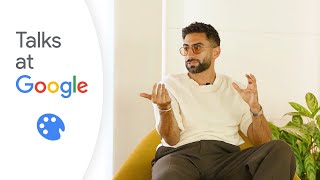
This content was created by Guy Kawasaki. This content was uploaded by Guy Kawasaki. This is a YouTube video titled "Anas Bukhash | Perspective of an Interviewer from the Arab World | Talks at Google" created on January 10, 2025. It features a conversation between Joyce and Anas Bukhash during a Talks at Google session in the Dubai office. Anas Bukhash, a well-known Emirati entrepreneur and interviewer, discusses his approach to interviewing, the success of his show AB Talks, and his views on storytelling and social media. The session includes a Q&A with Googlers, covering topics like love, success, and the impact of social media.
Chapters
Hello, everybody. Good afternoon, Anas.
Hi.
Or should I call you Ab?
As long as you don't say anus, we're okay. Yeah, I feel weird when somebody says, yeah, yeah, we'll.
We'll speak to Anas, I guess. It is my absolute pleasure to welcome you to our Talks at Google session here. From the Dubai office, we are joined by, as you can see, a large group of Googlers that are based here in the Dubai office, but also virtually from our offices across Riyadh, Cairo, Doha, Kuwait, as well as as far as the UK and the US as well, eager Googlers to join the session. So welcome again. It is our absolute pleasure.
Thank you. I hope this is your nice breakup from work today.
A nice break and then straight home. So for those of you here, most probably everybody knows Anas, but nonetheless, I will do an introduction. Anas Bakhash, also known as ab, is a pioneering Emirati entrepreneur and interviewer. He is well known for being the host of AB Talks, an interview show that started on YouTube. So a proud moment for us here at Google and YouTube and shameless plug. Please subscribe to Anas's show if you haven't already. And Anas has interviewed top celebrities, the who's who in film, in sports, in business, and more. I believe more than 200 guests that you have interviewed and counting. AB Talks is the first show of its kind in the MENA region. And I'm sure the numbers probably have changed since I last got them. It has more than 10 million subscribers.
Subscribers, not 10 million on YouTube. On YouTube overall, overall, I don't want people to think we fake the number.
1 billion YouTube impressions. Is that right? And 14 million hours of total watch time, that's. That's really impressive. What's mostly special in my view is that Ene's approach in his interviews is reveals his guest's human side. You make them feel relatable to a powerful audience that is curious and eager to discover the human side of everyone. In your own words, I'm going to quote you before we move on to the questions. As you've said that challenging the status quo comes naturally to you. And in your own words, you say, I consciously break traditional codes to bring human courage to the fore. Through honesty and clear intention, I strive to stimulate thoughts and conversation to drive a deeper understanding of subjects that most people tend to shy away from. You have also said, everyone has a story, everyone wants to be seen, and everyone wants to be heard. And so, Anas, my first question to.
You is, by the way, I don't know the questions.
Yes, that's a very good disclaimer. Anas refused to see the questions in advance.
Yeah, I don't like that.
Raw and unfiltered. My first question to you is Anas, have you told your story and do you feel seen? Do you feel heard?
No, I don't. I think I've told fragments of my story. I doubt anybody can tell really their full story. Even on AB talks when people say there's it's probably 10% of their and it's very one sided and it's one hour or two hours so I can't summarize a human life and in two hours. But if it's about me, I think there are fragments of me that have been told but never my full story if that matters. And do I feel heard or seen? I think alhamdulillah to a good degree. I am fortunate that I get to give insight or my point of view on things. But I really try not to talk too much on my show because it's not supposed to be about me. The spotlight is that person in front of me and a lot of requests are like do an interview with yourself on the show. And I refuse that that would be interesting even if it is. But I think it's very self conceded. It's not supposed to be about me. I can give 2 cents here and there and hopefully some added value. But it's always been like my studio is white on purpose. There's no product placement, there's no furniture because the highlight of that canvas, the artwork is the guest. And you'll see that the camera is 90% on the guest as much as possible because I don't need flowers and designs to make it's them, it's their story. So I tend to shy away a.
Bit there I'm going to get and we have a lot of questions from the room about your show specifically and how you manage it. But before in true Google fashion, we love our icebreaker questions. Okay, so are you ready? Right, very quickly, something about Anas that we cannot find in a Google search or on social media. We're going to censor that. Right.
I swear a lot by the way, so I'll try to be careful. You know, a nice stat by the way. Apparently people who swear are more honest. Just saying. So people who never swear in front of you, question mark what cannot be found. It's difficult. I think a lot can be found online but man, I don't know like a lot of people don't know that I like I used to do photography and I really like, you know, the war photography and the photojournalism. I love that and portraiture. But there is a plan to Mike. I might do a gallery of my old photos when I used to live or not live, visit the developing countries. So I'm thinking of doing an exhibition that maybe it's still online but not so obvious.
That's a fun fact. Now we have the scoop. You love to work out. You also do the sauna. We all follow your social media.
I was in the sauna earlier.
If you were to pick one over the other sauna or working out every.
Day or sauna every day or working out every day. Of course, working out.
You love your workout.
Yeah, I'll be 20 kilos if I'm in the sauna every day. But it's great. It's a big nice habit, I think.
Yes. A sports that you cannot live without.
Football.
The best interview you ever did. And I know I'm putting you on the spot with this one.
Everybody asks me this question. The answer is always the same. I honestly don't have a favorite. I have a bunch of ones that I really respected and appreciated. But it's like asking me to choose between my kids, you know, it's difficult to say. And I really don't have an objective answer. I can say that was great, this was great. But when you have over 200, how can I objectively say one?
I had to try, right?
Yeah.
And I won't ask you about your kids. So we don't need to answer that one. If you were to host a dinner with three figures in history.
In history. Okay. In dead or alive, it doesn't matter.
Who would you pick and why?
This answer changes. Maya, Angelou, Madali, maybe Muhammad Ali. I like him, but I'm really. I have three seats. But Maya for sure. And I think she was way ahead of her time. And I can't believe, like it would have been such a pleasure just to sit and talk to a brain like that. So Nawal Maya, maybe Muhammad Ali. I think the prophet Muhammad would be so interesting. A lot of the prophets would be interesting, you know, just to sit with them. And. Yeah, I think that's a nice table.
I think so. I'd like to be a fly on that wall, as they would say.
Maybe Dave Chappelle. Just to change the mood.
Yeah. To lighten it up finally from the rapid fire questions I have to ask that.
I'm generally good, but I have. It's like I feel in this period that every Good step I take. There are two steps back. You know, you hire a great new team member to resign, you get a really good RFP that you look and you lose or you have two other issues with other clients. So it's a bit of that period. But at the same time, I like to look at it as a positive thing. I feel a lot of the companies I have are now shedding their skin and we're really revamping and we're choosing a new direction, a new kind of ethos and energy. So it's challenging, you know, when you try to add people, but then some people leave or it's a bit tricky, but it's that kind of period. So there's a lot of challenges to deal with. But I take it with a pinch.
Of positivity, which is a great pivot to my next question. A lot. Everyone here, we all know your show, we're big fans of your show. What in your mind makes your special that people that you interview connect with.
So much, why the show is special? You know, when, when people ask you or, or me or anybody or what's the secret to your success? Or first, the first question is, what is success to you? That's the actual question. Because if somebody says, how are you successful? Who said I'm successful according to what criteria? And did you ask me, do I feel successful according to my criteria? Well, it's obvious that you think I'm successful because I'm popular. But is that success? Well, it is for some. So I think the first question is success. It's very subjective. Somebody's success is to have their kids safe and their family and they have a nice home. They finish work at 4:30, which is impossible in Dubai. Oh, you know, that's their success. And you have no right to say, oh, that's a boring life. No, for them, this is success. So that's the first question. And for, for me, if I have to answer the general idea of if we consider abtok successful, I think it's always a multitude of things that have to happen at the same time. It's very delusional to say, yeah, I worked so hard and you know, and this is why I'm successful. Nobody. If somebody is really objective, it's not that. Because if you lived in a certain period of time or a certain country, no matter how hard you work, you'd still not make it. So there are so many variables for success, for something to happen, for you to be working here. There are probably a thousand decisions that have happened in your Life, all of you. So it's not like, yeah, I applied and they accepted me. That's one. That's really one who received your cv. What did you think of their cv? Because if you had the wrong person looking at your cv, probably he doesn't like you and he's biased and he just rejected you. So there's a lot of reasons for AB talks, but I think we came at the time in 2018. The reason I did AB talks was I used to do TV and a lot of things bothered me. When I used to do tv. It was very superficial. It was lame questions. It was, let's take a break. And I'm like, I just started to, okay, take a break. Don't ask this question, read from the teleprompter, don't swear, no emotions. And I'm. And I felt it's not real. And I used to have these really top people coming on the show and they're like, yeah, the interview, six to seven minutes. I'm like, what do you mean? This is a human. If we sit six hours, we will not have enough. So that really bothered me. And the one that stuck in my mind is the late Sameer Ghana. He came on a wheelchair and it was such a privilege to have somebody who's been such a big part of art in the Arab world, a comedian, a witty human. And they're like, yeah, and it's seven minutes. I'm like, what do you mean, seven minutes? And it's lame questions. What's your favorite role? What do you want to do? I'm sure he's like, you know, so then when you get that. I think a lot of the entrepreneurs take something, a negative experience and then they try to find a solution. So I said, well, the moment I have some camera people somewhere in my agency, I'm going to create a show. And it will be no limits on time, no limits on questions, no ads, no stops, swear, cry, laugh, just go all out. So this is in 2018, and I started that way. I got a footballer that's very popular in the Gulf and he's a dear friend, like a young brother. And I told him, I want to get to know you as a person. I don't want to talk about football. You're known for football, but that's one part of you I want to know about you. And that flew because again, we talk about the different variables. You're at a time that nobody's doing that kind of interview. Now people are doing it more. So there's a good thing that content is now more deep. Even TV is doing now shows that a bit more raw. So alhamdulillah, that's a positive thing. So I think a lot of the team being in Dubai, having my address book, getting people to trust me and if I now come to me, if I sit down and I truly listen to you and your body doesn't feel, wow, this guy is really judging me. That's already a plus. If you think, okay, every time I tell him something vulnerable, he's not. I don't feel judgment subconsciously. So when you're listening properly, when you're not judging, I think you can go a long way and that is energy. And that is because I can say I don't judge you, but you know I'm judging you and you feel it. So the less you judge, I don't think nobody judges zero, but I think the less you judge, the more people.
Are, the more people are open.
It's like our parents. Joyce, you go to your parent when you're eight and you say, baba or mom, I did this. And they're like, or they. And you're like, okay, last time, you're not gonna tell them again because you were judged. What if you say and he's like, okay, why did you do it, Harry, what happened? I did it because 1, 2, 3, okay, how can we not do it again? That's a very different approach. And you will go back to your parent the next time because they didn't bash your shame you Absolutely. I think that's the idea.
So my follow up question to that is twofold. One is, you have this approach, right? And you say it yourself in your own words to listening. You allow the person to come forward to share. Has that ever made any of your guests almost uncomfortable to share? And second, when you are putting your show together, how do you go about choosing the people to feature on your show? Do you have certain criteria that you have?
So the first question is, I think maybe some people with the awkward silence, they'll feel uncomfortable. And I'm pretty good at making it awkward. But it's good to be a bit uncomfortable because the other person feels they need to fill the gap. So. And usually when you sit with therapists, I never did it because therapists do it. I just did it because I know if I just stay, it's like, you know this idea that the ratio, you have two ears and one mouth. And I always say, and it's listen double or triple. Sometimes even before I go into an interview, I'm like, I Can't swear.
You can. It's all censored anyway.
Shut the fuck up. Don't talk. Learn not to talk. Learn not to talk. Like, I actually tell myself, listen more. And sometimes, you know, Joyce, I sit there and, you know, because our ego and our mind wants to pitch in, right? So let's say somebody says something so interesting, and I'm like, yeah, I have something I want to, like, contribute. But I'm like, anas. Like, I tell myself. And that moment, Sometimes in that 30 seconds, they say something so magical, I'm like, thank God I didn't speak. So it's okay to be uncomfortable a bit, and I don't mind doing it.
What's the saying? There's growth and discomfort. We only. Muscle grows under tension and pressure. In the same way the human mind.
Correct.
That's really powerful.
And the second question.
And the second. How do you pick your guests?
Diversity is number one. So it's a human show. So if it's a human show, I need different colors, different religions, different nationalities, different genres. So that's very important. Secondly, popularity is always a plus. So we became also very popular, because when you have a popular person and you show a different side to them, people. People want to watch. But then I always wanted to start with the. With the celebrities. And then I said, when we're big enough, we really build our name, our responsibilities to get the untold stories. So we have a series on YouTube called Abtok's Untold Stories. This is for the not famous people, but with a crazy story. So it was always about, I like this idea. So you take. We take a celebrity and we bring them down to earth, and we take somebody who's down to earth and we make them a celebrity. So that was the idea. And we've had crazy stories like. And what people don't understand is the untold stories are harder to choose because you have to verify the story. Somebody can make up a completely bullshit story, of course. How do you authenticate it? They can say, you know, I've been to. I've done chemo 20 times. How do you know?
How do you do it?
So we have to. We get two signatures. The guardian. It could be a parent, it could be a spouse. They have to sign that it's all authenticated. They have to send us medical reports. If it's a medical condition, it's celebrity. You can check quickly if their story is legit, it's all over. But with the Untold Stories, it's harder, but it's very raw. Like, when you get the right one, it can even do better than the celebrity one. And we've had some crazy ones. Like there was one, she got married and on the honeymoon her husband drowned in front of her. So. So she said, I went from the happiest period of my life to the worst period. He's dead and I don't know how to take him back home to bury him because I'm in a foreign country. So that is one story. There is a lady who went through six miscarriages and then a kid with special needs and her husband died while she was. And you're just sitting there and thinking, how can a human heart really take that? Much like one of your kids dies, you're done, you know, one person. And these people are just so strong. And I keep remembering them more than the. Maybe some of the celebrities, you know, they're authentic stories. Very wrong.
Which takes me to my question. There's a lot of profound psychology being in the interviewer seats. You take in a lot of stories from other people. We were talking about this now earlier you said something interesting about compartmentalizing. Tell us more about that. How do you, how do you deal with it? You've interviewed more than 200 people with all of them with powerful stories. How does that impact you?
I don't know. If I go crazy one day, maybe that will explain it. But I think a lot of it is not. I can't give myself credit for because I think it just, it's naturally in me, like I'm wired that way. But I also think this might sound weird, but I hope I clarify it. It's very self centered. If I start to cry in the interview and I'll explain why. I had a guest recently who was a doctor, I'm not gonna say I just told you behind the camera, but it's a, it's an interview that's coming soon. I'll just tell you a snippet. It's a doctor that was one month on Gaza, the stories. And he said something interesting because I told him you are used to being in an operating room and it's safe in a safe hospital, in a safe environment, your family's okay back home in your house, you're not worried. Like you don't have all these stresses. You just go, you do your hand sanitizer, you put your hand. You're perfect. So you actually are focused as a doctor. How can you be a doctor and be focused in these circumstances, which is war and bomb. And he's like, we. He said the introductory session. When they arrived at the hospital in Gaza, the main doctor told them, listen, keep your emotions outside the hospital because your tears are not healing the patient. Your tears are making you shake while you're doing a surgery so you can some the point. This is a very extreme example. But my point is if now I'll go back to maybe a lame example. That's not. That's the extreme example. This is a simplistic example. If I'm in an interview and you start to cry and I start to cry now, who do like, you're like, okay, shit, I'm crying now he's crying. Who's supposed to cry? And I said, it's okay, I didn't mean to hurt you. And it becomes about me now. That's why I said the self centered. I made it about me involuntarily. But if I am your rock, I am your support. When you go to a doctor or a therapist and you complain to them, if they break down, you're like, shit, okay, why did I call this? But he's crying more than me. But if he's as neutral and composed and really giving you sound ears and sound advice, it's about you. You feel better. And he's objective, he can feel bad after. And, and I think that's the role of a good interviewer. It's not about you. You listen, you compartmentalize. You're supposed to. So my mother's the opposite. My mother is a huge empath. She's like, she needs a break after two, three big episodes. She probably run to body for two weeks. For me, I haven't stopped in five years. I think we haven't stopped releasing one episode at least once a week.
Wow.
So I'm still not crazy. So I think. But the difference between me and her, I think I'm a sympathetic more and she's more empathetic. I can take a back seat and look at you and listen to you, but I'm not immersed in you and in your emotions. And I think that's healthy because I understand. But I'm not feeling fully the emotions you're feeling or to a heavy degree. So you can still rely on me. You're like, oh, wow, okay, I can keep talking. He's not crumbling.
And you mentioned something about you've interviewed your mother. I met her and she's an absolute legend. And you've also done a show with her during Ramadan on where you and her were talking about just life. How was that experience for you?
It was very natural because we do it even without the camera on and off camp. 90% of what you saw is one take. So the. The big production is there and they're like, oh, we'll take. And it will take three. I'm like, it will not take three hours. Just switch it on and it's the one take. Because we do it. Our relationship is actually like that. We tackle topics, we debate, we discuss life, values and all of that. So the only difference there's the recording. It's very natural. If these are the episodes, what.
Definitely it's lovely seeing your relationship with your mother also on social media and the connection that you share. We're going to start taking some questions from the room. I have one last question. It's a bit of a pivot from what we've been talking about, and it's more on the role of social media at a time that we're in today. You're calling for your show and you were telling me earlier that you want to raise the voices from the region. And you are an Arab trying to reach a wide Arab audience, whether it's from the region or internationally. Do you think today Arab voices are being heard on storytelling platforms such as social.
I would say it's not bad, but I wouldn't say it's great. Thankfully, social media allows people to be journalists or to share their stories. I think that has changed the world. Literally, it has changed the world. Before, we were so controlled by the few outlets around the world that are the sources of information. So if you have a source somewhere in the world that's not reliable, where's the accountability? They're telling you, oh, if you drink this, you're gonna get this disease. But how do you verify that? And that's what suddenly goes across the whole nation. So now social media has opened that. But the other challenge is you have information pollution, which is too much information. You don't know what to believe. Should I eat quinoa or not? Should I sauna 50 minutes or 25? Like, it's so many debates and you have to overcheck. But I'd rather this than the other. But back to your question. I think social media has played a huge role on talents in the region, on voices and opinions and changing stigmas and changing stereotypes. But I think we still have a huge responsibility to. And this is what I really feel, whether it's music, whether it's just an Arabic story, and I would love to see movies produced by Arab characters. We have crazy stories, like really good historical stories, but there's no great Movies about them or documentaries. I would love to see that.
Thank you for sharing that. If you were to give a tip to the room here, you're all about encouraging people to tell their stories. What would you tell them? How would they. How would each person here can share their story?
Why would they. Like, what would they tell them? It's too generous.
Come on your show. Perhaps.
But, like, what's the question? What if somebody doesn't want to tell their story? You know, so, okay, I actually have an angle on this. Sometimes when I really hear a good story and I'm trying to convince them to come, but they could be introverts or shy or whatever, I tell them you're selfish.
Wow, that's harsh.
And I'll tell you why. And I do think there's a selfish point of view. It's not just because I want to say something like that. It's if I have a great story that I know can touch a few people, I'm not gonna go with the limit. Oh, if I changed one life. I don't like when people say that. If I change one life, it's more than enough. No, change a thousand. Don't say one. So if you know that your story, no matter how simplistic you think it is or not traumatic, it doesn't have to be a dramatic story. It's a story. You have to respect that your story is a story. It's an experience of this life. And if you think that your story actually might help a few people and you're intentionally choosing not to share it, you're selfish. So whether on a podcast, whether on your own pages, whether in a text, whether it's a book, whether it's a forum, whether it's a tweet, I think don't be selfish with your experience. Not. It's just mine. I love my privacy. Sure, keep your privacy. But if you can share something that you know, somebody's feeling alone or feeling lonely, and they need to know that there's somebody like them somewhere, then you should. I think you should share part of yourself.
That's a great way to end our discussion, Anas. Together, everybody, like you said, everybody wants to be seen, everybody wants to be heard. And so that's a great way. Let's jump into questions. I know there's a lot of eager Googlers here, so let's kick it off. If you could also just quickly introduce yourself. Yeah. Thank you. Joyce. Hi, Anas. I'm Diala. Nice to meet you. My question was actually answered by you from Joyce, but I have a question that came in from my colleague Dina, who's on a business trip, but she was so keen to still get her question through. So she said, I'm curious, was there ever a guest you reached out to where you thought, there's no way they'll say yes. But then they did. Who was it and what made them so special?
I'm a bit delusional because I think I can get anybody as long as they're alive, but it will just take time. So I have that belief that even if they say no today, after tomorrow, this year, I think as long as we keep working hard as a show, eventually, if they're healthy and alive, we will probably get them. There are people who passed away, you know, God rest their soul. And I would have loved to have them. And some of them I was so close to, but I never was in a hurry because I'm like, I'll catch them. And then they passed away, which is some of the few regrets. But do some of them turn up sooner? Yes. Like Zlatan. I met him twice in my life. The day I talked to him at F1, and in the same month we shot. It was the most random thing because you meet people, you introduce your team, and you're like, ah, let them talk. And it can take six months, it can take whatever, right? But we. It's a funny story. So I've said it a few times, and I think you're bored by hearing it. My manager hates it by now, but he was with me. So we go into the F1 in Jeddah, and it's the most bizarre. Every time I remember it, it happened. So it's the afternoon. You know, when you sleep in the afternoon, you have these weird dreams. This is. And I'll tell you why. So we go into this, like, lounge of the F1. I walk in and it's a lounge where a lot of the tour, the tourism people bring the VIPs or the celebrities to promote, you know, the F1. So I'm walking and as soon as you. There's like a gypsum wall here, and then you pass it, and then you see a sofa, and, you know, people are randomly there. So I look at the sofa, I see Zlatan and I see Hasbullah. You have a guy that's this big and you have a guy that's what, nearly 2 meters? And I'm like. Like for a moment. It's really weird. Like, it's a weird combo. How did these two humans sit on one sofa? So it Was. I'm usually not very impulsive, but I. I was in this moment. And so I looked at him like, I need to talk to you. And Zatan goes, what did I do? And then I'm like, finish your conversation and I'll come back to you. Because he was talking. And I go back and I do my elevator pitch in 60 seconds. And I said, I would love to get your manager. Let them talk to my manager. And he's like, okay. And then two weeks, three weeks later, they say he's coming to Dubai for the horse race World cup, and he wants to do your podcast, and he's not a person. And. And his friend told me, by the way, he doesn't do anything for free. He only gets paid to do interviews. I like. It's okay. I'll try. I don't pay guests, but we'll try. And it was Patrice Evra. So he was also in the Jeddah Lounge. He looks at Zlatan. He says, by the way, go on his show. I was there. And it's a good show. So it was a nice testimonial. I don't like halas. If he's only about money, we will not get him right. So three weeks or two weeks, they message us he's coming, so he comes, we do the interview. So the turnaround was so quick. And after the interview, he's like, do you know why I came on your show? It's because of the way you approached me. It was different. And you were very raw and very honest. And I understand a human like Zlatan. Zlatan is very misunderstood, by the way. People think he's arrogant. He's not. He's playful. He's like Aulad Al Fareej. And he's from the neighborhood, you know, from the hood. We get each other. And even his manager called me after. He's like, all reporters don't know how to deal with Zlatan, but you knew how to play along. So he's witty. I hit back, he hits back. It's like ping pong. It's a fun interview, but that's one of the few that the turnaround was surprising. Bill Gates took two years, maybe Sadhguru, a year and a half. Like, some people take long, but I have a long breath. So I'll wait. I'll wait and wait and until it happens.
Great. Thank you. Let's take another question. Anna. Hello, I'm Anna. Thank you for this amazing conversation. Very heartwarming. I wanted to ask you the question. You talk a lot about Love. You ask a lot about love and what was the most inspiring and the most not disappointing, but not disappointing, maybe.
Answer for you about love?
Yes. So the best answer about love and.
The most disappointing best answer. I don't specifically Anna remember the best answer, but I know the general idea. I like when people speak about how love. One person said that if you. Because he. We're talking about how marriages stay for a long time. He said if you consciously keep falling in love with the new version of the person, you stay married. But both of you have to fall in love with each other over and over again. Because Ana, 10 years ago is very different. Five years, maybe two months ago, you know, so you need to always fall in love with each other. And I love that idea. I like when people answer it around respect, values and trust. I think love is. I think love has been cheapened. You know, the word love has been cheapened so much and overused that it doesn't have so much value as it used to maybe 20, 30 years ago. Now it's like, hello, hi baake. Love you, bye. It's just so like casual and I don't like it. I like when love is really meant. If you tell somebody, by the way, I really love you, they should feel it in their bones that day. They know it's really coming out of true emotion. So those are some of the nice answers. You know, when people talk about selflessness rather than selfishness, the worst answer, I'm not going to say who, but somebody said it's a chemical reaction. I'm like, really?
Yeah.
And you said something. Oh, so it's true. It is a chemical reaction on our brain. But I just found it so dry. Personally, you know, I respect that he, it's his opinion, but it's not an answer I would like to like to hear because I think then everything we can say about chemical reactions in our body, everything. But it's not as bland as that. There's a lot of beauty to love.
I'm going to. I'll take a question from the Dory or Googlers who couldn't be with us today. So there's Sabrina from Dublin asking you, hey Anas, I'm curious about a couple of things. Is there anything new you're working on at the moment that you can share? And if not, what's your main focus right now? And so that's three questions, Sabrina, but okay, when you're not working, what do you enjoy doing?
So the first question about what else we're doing, we're working a lot on the new series abtoks Music. And I've always been a musical person that has a bad voice. So I wanted to do something in music and I don't like auto tune. If you ever hear me singing, then you know I'm using auto tune. I'm not doing that. But I always wanted to do something with music and to hopefully start to get the talents in the region, to give them a YouTube platform to sing and to show their talent. So we started that. I think we have eight volumes out. Something that we're starting soon is abtok's business. Because not everybody cares about a celebrity and their human story. But sometimes we want to learn from the top CEOs around the world how they hire, how they fire, how they interview. What's a good question to ask in an interview? So we want to tap into that. I think the idea is to cater to all kinds of people. Even the person like, who cares about this actor? You have something for them. And if somebody doesn't like that but likes music. So maybe in the future we do health. I think that's a good sector. Maybe art. We'll see. But if I keep talking, my team will kill me. So I think it's enough load already with what we're doing. And the second question, what do I do when I'm not working? This is a difficult question because I work a lot. Everybody is used to getting voice notes from me at 2am and 3am But I love family. I'm lucky that my family are my friends. I don't have many friends. I have one best friend from 24 years. I like food. I like watching football. The team that always, you know, depresses me. But I love it. It's Arsenal. Yeah. I like going sometimes, you know, I like board games. I like. I like people like, I. I don't like nightclubs. I don't like loud places. I like a place where the music is just right that we can actually like. You don't have to be like, huh? And nobody understands anybody. Everybody's just sign language. And they're like, good time, good. I hate that. And I don't like these, you know, just networking events where it doesn't go a bit deep. Like, oh, you saw the humidity all the last week. It was online. Who cares? I think that's not the conversation.
And as you're the furthest person from doing small talk, when you asked about the real, how are you really doing? Yeah, you don't do small talk. Let's take another question from the room. When you first started your channel, what's your name? My name is Dina. Hi. I'm on the YouTube team, by the way.
We need to talk.
Yeah, so we need to talk. I have a question. So when you first started your channel, did you face, like, imposter syndrome? And like, how did you have that belief that you're going to get those guests that you really wanted, even though you weren't, you know, offering them money and you were still starting? You didn't have that reach?
I never got imposter syndrome in my life. And I'm not bragging. I just. I just didn't get it. And I know a lot of achievers get it. And I don't think it's necessarily a fully bad thing. If it's very high, I think it's bad because you don't know your worth. If it's a little, I think it's good. It keeps you on edge and you want to always improve. So to start with, the thing is, we started in a very weird time, and I have a YouTube story, but it's not a positive one. I don't know if I should say it, but it's not bad. I'll just say one person, when we were talking and I suggested the idea of AB talks at that time, I completely understand the point of view. That person said, don't bother with long form. Like, it's. Your concept is nice, but nobody's gonna watch, you know, 90 minutes or two hours. This is 2000, maybe 18. And I'm like, no, I'm stubborn. So I'm like, I want to do it. And it's. And I did it. So the thing is, that's the funny thing. A lot of times people tell me not to do something, but I. If I'm really. I have this divine belief that it could be. And it's what I love to do, and I want to do it well, I still do it, even if people tell me not to. So we started then Alhamdulillah. You know, it really worked out. And that is proof that content is king. Any human, no matter how much ADHD ADD they have, if you give them the right piece of content, they're going to watch it. Even in a busy world, you want to watch it, you'd at least save it as watch later, you'll watch half an hour at a time. So that's what pushes you in the end, you need to just give people something valuable. And it was surprising even to me, that I posted, I was telling you about AM Saad's episode few days ago. First 24 hours, 70,000 views, which is not bad. I sleep, I wake up. 700,000 views, 10 times. One of the biggest jumps I've seen. And I'm like, it's three hours. But YouTube realized, you know, people are getting so much value out of this. Let's push it more. And it's flying. It's one of the most viral ones we've had recently, so content is king. Did I answer your question? I hope so.
Another question that we have here in light, and this is also from the Dubai office. In light of the recent tragic events in the region, disconnecting from the news can feel like a luxury that we cannot afford. How do you stay informed without becoming overwhelmed? And how do you maintain your empathy without sacrificing your own well being? And I think that part. You've also answered that earlier.
I think a lot of it has to do with discipline. You know, if you. There's one thing that all of us can do. The next time you get into an elevator, watch your hand go to your pocket, watch involuntarily and watch everybody, they can't stand two seconds of awkwardness. As soon as the door closes, everybody goes. Everybody has their phone. It's very strange. So what I do and I just sit there like this in an elevator. You see me just watching people and it's funny that they don't realize what they just did. The next time you watch a football game, I do it. A lot of us do it. It's a two screen syndrome, right? You sit there as soon as the football goes out of bounds, you check your phone. We can't even stay 10 seconds without being entertained. It's so messed up. So but the moment now that I said that the next time you're an elevator, you're going to think about it. Maybe the next time you're watching a football match, you're like, and I said that I will preach. And then you're like, not now watch. Enjoy the documentary. Enjoy the game. And I do that so often that I have to discipline myself. Just enjoy the episode. Not Love is Blind, but enjoy, enjoy the episode. So focus. I actually, I have fun watching Love is Blind. It's one of those lame things that you just make fun of people. So and sometimes you need to watch something like that, you know, but generally not to get too immersed. I think why I said discipline because if I only check news, I'll be depressed. I need to be informed. I need the reliable sources and I need to say, okay, Anas, you being sad is not helping anybody. What can you do? Can you share it on your story? Can you send charity? Can you send funds? Can you raise awareness? That's the point. What can you do to actually do something about it? Rather than just gloom and be upset and in your room and you're crying, okay, you're crying, boo hoo. But what are you doing to help? It could be literally 0.001%, but it's something. And I think once you do that, you feel a certain sense of responsibility.
Let's take another question from the room.
Hi, my name is Zane Zain's here and I have a quick question. I know in one of your red carpet interviews questions they asked you where did the famous question came from? How are you really doing? And you mentioned about Jim Carrey and the story. So I would like you to please talk about that. But also my question is why did that sentence resonate with you? And when you ask the person, we all hear how lovely you like to hear from the guests, their stories and whatnot. But what does it mean to you, to Anas? It's a good question. So they, yeah, they asked me how did I come up with what now is considered a signature question? How are you really doing? And it was, it's a funny story is many years ago I said, and Jim Carrey has a great mind. You know, he was on a red carpet and one of the red carpet interviewers asked, said, hi Jim. And he's like, hi, how are you? So the host said, I'm fabulous or great something. And then he goes, no, no, no, really. And he goes, I'm really tired. So that was such a light bulb moment, you know. And the funny thing, you know, Zain, is most people, you know why they answer alhamdulillah? Because they know you don't care. Because most people actually don't really. People usually go to the office, ah, Khbar, all good, good. Nobody cares. Even some people don't even listen to your answer because we are so immersed in our own self centered, egoistic cocoon, we don't care. And if you say not so good and he's like, oh shit, okay, what's wrong, Zen? And he doesn't want to even ask. But now you push the button and he has to, you know, be nice. But it's sad also that we can't have 60 seconds to ask the cashier at the supermarket or the waiter who's been waiting at you at the restaurant for two hours and you didn't Even look at his face. So I think when I saw that, I'm like, that's so true. So to counter this defense mechanism of no vulnerability is you ask really? So when somebody tells you go to call your dad or your mom or your relative. Hi, Baba, how are you? I'm good. Habib Hamdullah, how are you? You're like, no, Baba, really? I called you to actually check how is your week? And then he will take a moment to reflect. His first auto answer is, I'm okay. So that's why it inspired me a lot. Such a simple word. If you just add it, the person actually has to be like, okay, one second, let me, let me actually. Because I didn't even ask myself the second question you said is why does it mean Because I think it's difficult to answer like straight because you're making me think before AB talks. So why this is a story that maybe people don't know before. Why is AB talks with the hashtag? So the hashtag started when I started these videos I used to do on Instagram where it's called AB Questions. If you ever search AB Questions on Instagram, you see hundreds of videos before AB talks. And it was these questions that I could literally be thinking arranged marriage is better or love marriages, right? And I'll literally go on Instagram and I'll ask it and I'll put AB questions. So it's a. The tag AB questions meant it's my questions to you and me questioning something about life. So I would ask that kids using iPads, is that good or bad? So I'll ask it. You know, anything that a lot of us think about but nobody's talking about. I would put it under this hashtag. Then when AB talks came, I built on the hashtag and I said, okay, let's do. It's a digital show. Let's just change AB Questions to AB Talks. So it's AB talks with Zane. So there's a little twist, a smart twist there. AB talks with X, AB talks with whatever. And that was how the hashtag came. But to go more specific to your question, I think it started with me questioning things and it always bothered me that social media content was very superficial and lame. So there's a lot of people that were giving them the platform that are honestly not worthy of it. They're causing teenage boys and girls to feel insecure. They're causing a 16 year old to go get injections and plastic surgeries. What are we teaching all of these kids when we talk about lame things? Oh, what car do you have? Which T shirt are you wearing? Which bag do you have? Is this what we are going to be in this world? This is what matters to my kids. And your kids, they grow up thinking, I don't have enough. This person has a better. This. This person has a better. That this person has the man of her dreams. This person. And. But we don't know. We don't even know what they have behind the scenes. So I think generally it just bothered me the level of superficialism in the world. And I said we need to connect. Me, you, all of us, we talk. When I look at you, I talk to you, I'm with you. I'm not like shoe guilt and I'm not even with you. And these things always bothered me. So I said, this is a nice way to kick off an interview. Straight away, you go personal. Really. How are you doing? Long answer. But I hope I answered beautiful. Thank you. Thank you.
I'll take one more question from the dory, one more question from the room, and then we'll have time to close. And the question is here. Hi, Anas, I would have loved. This is Sarah from Munich. I would have loved to meet you in person, but Munich isn't quite close. But unfortunately your show hosted many of the people. We look up to Japan at some point to maybe connect people together as mentors and mentees, to support someone to progress their passion. It's a nice idea.
I never thought of that, honestly. But when some people reach out to us and we think it's a good connection, it's not a formal thing, but I don't mind. I've always been a connector in my life. That's how I did Bukash Brothers is just because I knew influencers and celebrities and I knew the brands. I just connected people to. To do campaigns and things. So if a connection can help. Absolutely, why not? And some of these people would like to help, you know, so you can do that.
One more question from. So the second Dwasta is here. Marwa, I know we talked about this before Ennas. So we talked about if I was you in an interview, I'll definitely cry. With so many people, how do you really hold off your emotions and what do you do afterwards? Because I know you're taking a lot of these traumatized moments when you do the discussions. What happens really after I have dinner.
But I'll try to be a bit more serious about it. I don't. Again, I think I don't want to take credit as if I learned the Skill. I think a lot of it is just in the way my brain works. I can distance myself from the emotion not so far that I'm cold stone, but also not so close that I am dying in the emotions with the other person. And I think that's one of the reasons I became a good interviewer before. I really like to have as much as possible. It's nearly not always possible, but I really try to have a calm day. So you know when you watch like the NBA or the football, how the players, before they get into the game, they're listening to music, they're chilling in the locker room, they're talking to their family or kids, they want to have a very easygoing day before the game. I apply the same level of professionalism to AB talks because I cancel a lot of my meetings. I do some of them on video because if I go to my guests drained or stressed, I feel I've done a disservice to them and to everybody watching. It's not their problem that I had two annoying HR meetings. It's not their problem. So I need to give them the best answer I can. I owe it to them. I owe it to the show. I owe it to every human that's going to watch it. So I take it with a very high level of responsibility. I usually hide in the bathroom before the interview to meditate or just to literally Zen myself. Like really just slow down. So I don't like to see the guest other than two minutes. 90% of the guests I've never met before the show. Never. Like it's the first time I see them on the seat and I don't talk to them much before. So I go, I say hi. They have their coffee and we shoot. So I like to be as Zen as possible. Really calm, compose. I listen to my music. And after, it's usually we debrief right after with the team to see how did the episode go and all of that. And I eat and I try to just go home. And sometimes I'll go for a walk or I'll watch something lame on the Kafkalas. I've had enough deep compress. I want something silly now. But I don't do something necessary to decompress. I think generally. And this might help you generally my life. I design it in a way that I give everything its portion. So there is a portion that has to be for you. You can say, I love paddle, I love reading. So make sure you make sure you put it in your calendar and you don't Compromise it. If you like calling your sister, make sure it's in your calendar. I'm a calendar person and Google Calendar, by the way, so I don't compromise my kids time. Never compromise training. Not compromise. Everybody knows these are the pillars. And when you do that, I think you're quite an aligned human. You're balanced, you're not too stressed and feeling guilty because you didn't see your kids for three weeks, and now you're stressed and annoyed and you're trying to do your job. So even at people here, if you don't do that, you're not giving your job and your family and yourselves the fair attention and things can wait. Make sure you take care of yourself, because if you. You can say, anas, I have so much work. You don't understand. No, I understand. But if you're sick, all of this stops. If you get a bad illness, all of this stops. You're useless. You're useless to your family, you're useless to yourself. And that's the last thing you want to lose. So don't compromise your health. La, mental health, physical health. You. You cherish them, like really protect them. It's the most important thing.
I'll have the last question. It's a good one. And I'm biased because it's coming from my colleague Dalia, who's sitting right there.
Okay.
And it's. It's our closing question. I think it's. It's relevant to the times and to our audience. As an Arab, what's the biggest message or life lesson you would pass on to your son? And what about to the other young people from the region who are feeling the weight of everything that's going on at this time?
You know what I want our kids to believe in, that they shouldn't be so taken aback, and they see the west as this way better thing than themselves. I don't mean to differentiate. I think the world has human beings. All human beings go to the bathroom, all human beings eat, all human beings want love, all human beings. So it's. If you just go with the factor of human beings, we're technically the same. Even the most popular person that you're so inspired by feel sad, sometimes depressed, he gets his heart broken, or she. Again, I say the bathroom because it's a funny example, but it's the truth. They're not aliens, they're not superb, they get sick. So I think we grew up with this idea that Hollywood and the Western world and even the sports in the west is much better than ours. Their Talents are better, but then a bit and a bit, we start to see examples of even Arabs that can go to the global level. Muhammad Salah is today one of the best footballers in the world. Alhamdulillah. That shows that we have also some talent, by the way. So I think it's very healthy when we see artists and poets and diplomats and scientists that I want our kids to know that you're enough. Don't be insecure because they just market themselves better. We're learning to market ourselves more and just to have the belief that as long as you're human, it's an equal playing field. You just work hard and you can achieve and you don't need to be insecure about it. Yeah, I think so. I hope so.
That was a great answer, Anas. And with that, in closing, I'll just say that this was an excellent interview. I can see a lot of heads nodding here in the room. I love to close by recapping a few things that I will take as takeaways from this. And as you have told us, that we all need to listen more than we speak. You have told us that everybody's equal. You know, there are no differences between us here and in the West. We talked about going into the bathrooms and locking ourselves to meditating and to check ourselves if we're going to pull up the phone every time we're in an elevator. So we're going to have that voice in our heads. And then I think finally, and most importantly, is that each and every one of us here has a story to tell. So thank you for that.
More from Guy


Cheryl Strauss Einhorn | The Human Edge: Smarter Decisions in the Age of AI | Talks at Google



Rachel Glennerster | Innovation and the Center for Global Development | Talks at Google

Rebecca Winthrop | Rethinking the Purpose of Education in the Age of AI | Talks at Google

Dr. Robert Wachter | A Giant Leap: How AI Is Transforming Healthcare... | Talks at Google



