Annie & Kerry Xu | Badminton: Twin Sisters Represent USA at Paris Olympics 2024 | Talks at Google
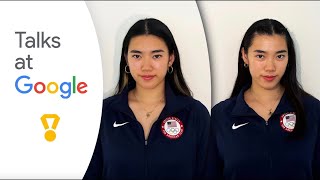
Interview with twin sisters Annie and Kerry Xu about their badminton journeys and representing the USA at the Paris 2024 Olympics. They discuss early exposure to sports, junior and international competition experience, balancing college and work with training, the decision to return to full-time training to pursue Olympic qualification, their daily training routines and recovery, memorable Olympic moments, challenges facing US badminton (limited national support and sponsorship), and plans to promote the sport through clinics and social media.
Chapters
Hey, welcome to talks at Google. My name is Sridevi Maharaj. I'm an engineer at YouTube Shorts. And today we have very unique guests. Twin sisters who are professional badminton players. Hailing from California, Annie and Kerry Shu. They are the first twins to represent USA in Summer Olympics since 1996. They're ranked number one in women's doubles in USA and in Pan America, and number 28 in the world. Please welcome Annie and Kerry Shum. Well, we're really excited to have you here, Annie and Kerry, and to hear more about your story and journey. You're back from the Paris Summer Olympics for a couple of months now, and you're probably settling back into your Bay Area life. Could you tell us a little bit about what you've been up to recently?
Yeah. So, first off, thank you so much for inviting both of us here. It's such a great opportunity and we're really happy to be here. And we've been. You're right. We've been back home for about, like, two to three months now and kind of transitioning back into everyday life. Me personally, I've gone back to work at my previous job that I was at before we decided to go for Olympics. And so really transitioning back into daily life. Obviously, badminton still is a part of our lives and we're still training, but, yeah, we have work now, too.
Is it similar for you?
Yeah. So I'm also in the process of transitioning back. As Carrie mentioned, it's been a few months, and we've been trying to maintain our training so that if in the future we want to pursue any tournament schedules, we can do that.
But we want to keep our body.
In a healthy space where we can, you know, play and return back to, like, competitions without, you know, putting an excessive burden on our bodies.
So, yeah, yeah, I want to go back to the very beginning of your journeys. How did you first get into badminton?
I would say so, like, in 2020, 2021 time frame, we kind of took a break from badminton during, like, the quarantine and, like, the pandemic, and we were working full time and we had been keeping up with badminton, like tournaments, like, kind of in the background more as, like, entertainment just to watch. But then we had talked to each other and was like, oh, I kind of miss, like, you know, playing badminton competitively, just being in that space where badminton was a constant in our lives. And so we kind of talked to each other while we were working and kind of decided at one point that it was something that we wanted to pursue the Olympic Games was always, you know, a goal of ours, like, growing up in, like, badminton. And so, you know, we had that talk, and then we both decided that it was worth a try and that we would regret it if we didn't. So then, yeah, we took the leap of faith and decided to pursue it.
How about as kids when you were really young, do you remember your first moment stepping on court or what made you decide to train?
Yeah, we actually remember that moment quite vividly. As kids, our parents highly encouraged us to try out various different types of sports. From a very young age, we were doing a lot. We were in ice skating classes. We were in dance lessons. We took swimming lessons as well. I think at that point in our lives, around 2008 was when we first got into badminton. At the time, we just finished ice skating lessons, and our parents were like, you can pick up a new sport if you like, and kind of gave us, like, various options, took us around to the facilities to try to figure out which one we wanted. And I think Annie and I both decided that badminton was a sport we were interested in. And so our parents enrolled us in lessons. And I still remember, like, that first lesson me and Annie went in together. We were, like, kind of scared because we were just eight years old, but quickly learned to love the sport and love training with our coach. So just kind of, like, naturally it progressed into playing junior tournaments. And then now, like, beyond that.
Yeah, I see a lot of juniors in the Bay Area training, and they have a very intense training schedule. So what was your training schedule like as a junior?
I would say as a junior, we started out with. In the beginning, it was, like, one lesson during the week, and that was, like, roughly during middle school. And then as we progressed further and, like, started junior badminton tournaments, we started to take more lessons during the week, and that looked like three to four times per week. And these were group lessons. So we would go to class and train with other kids our age and kind of, you know, spar with them. And this usually took place in the evening time. So we would go to school, try to finish homework after we got back from classes, and then go to badminton training at night to kind of, you.
Know, decompress, have fun.
And at the time, we weren't thinking too much. We were just enjoying training with all of our friends and coaches. And so we did that for, like, from middle school to high school, probably trained about three times a week. And both days during the weekend, Saturday and Sundays would be days that we would be training.
Did doubles, sort of naturally Lend to you because you're twins and sisters. Did you ever try mixed or singles?
Yeah.
So as juniors, we definitely played all three.
I think in the US It's a.
Very natural course to play all three in junior tournaments to kind of figure.
Out which one you like better or.
Because you're young, you have the stamina, you can enjoy all three. But for me and Annie personally, we always focused on singles and women's doubles specifically. We didn't play mix too often because in junior tournaments, our parents actually challenged us. They were like, oh, you can play higher in age groups. So when we're like, 14 years old, our parents are like, why don't you try U19, which is the highest age bracket, and challenge, like, you know, some of the older kids, some of the better kids. So because of that, like, because we were a lot younger than our opponents, we would just focus on two because we didn't have enough stamina. And I think over the course of time, we participated in various international tournaments as well, in singles and women's doubles. And we saw better results in women's doubles, and we liked it better. So very naturally, that was the event that we decided to specialize in. And also, because we're twins and best friends, it was very easy to enjoy it together. It's kind of of like we win together, we lose together.
There's no like, as in singles.
Like, you know, sometimes I would win, sometimes I would lose. And the other way for Annie.
Yeah, that's. That's a very beautiful thought. So you mentioned playing international players. Was this as a junior as well?
Yeah, I think in juniors, the international.
Events that we did play were like.
Pan Am juniors, where we traveled to Pan America and kind of played against countries in that space.
Space.
But in terms of, like, very international, I think we only partook in, like, two events, and both were, like, team tournaments, so nothing like at the individual stage. We did compete at those events with players a lot older than us, so they were kind of there to guide us in the very beginning when we were being introduced to, like, the global stage. And I think the two tournaments that.
We went to were the Uber Cups.
In 2016 in China and then the Suderman cup in Australia in 2017. So both were when we were in high school.
Wow. Nice. What was it like when you competed against players from conventionally strong badminton nations like China or Japan? Did first of all, did this happen as juniors, or did it happen later when you went probably. And what was your mindset like facing these players for the first time?
Yeah, so from like a junior age, we played Pan Am juniors a lot, which was kind of, you know, in north and South America. The only junior tournament that we played at the international level was World Juniors in 2014 in Malaysia. And in women's doubles, actually, we did face a pair from China. And from a very young age, like, they have, like China's system for badminton is very different. Their training program, where all of your athletes are very different. So it's always a challenge when we're playing Asian players. But yeah, kind of like going into the world stage and during Olympic qualification of the period when we were playing Asian players, it was definitely tough. But I think Annie and I always remind each other before going into one of those matches to first of all, have fun, to have a challenging mentality. No one's expecting us to defeat world number one or world number seven, but to learn like we wanted to learn from them and try to adapt equally as quickly as them. Because I think specifically China, they're extremely tough to play against because they have power, they have skill, and they're very adaptable. And in the world stage, I think it's decently common maybe to see a pair that's more strong in terms of power or they are more skillful players. And it's kind of rare to see players be equally as good in both. And on top of that, be very adaptable to your strategy. And so me and Annie talk a lot, we strategize a lot on court, but at the end of the day, we're going in kind of like with an underdog mentality and wanting to challenge them, to give them a hard time. Like, if they're, if we're going to win points, they're going to have to.
Work hard to get them.
When you went to Berkeley, I understand you completely stopped badminton during that period. Did you play at all or was your racket packed away?
Yeah, during our time at Berkeley, we actually did still play badminton, but it was very recreational. So how Berkeley badminton works is that there is a club, but it's not like a collegiate level club. And so people do it like on the side recreationally, like after classes and whatnot. And so during those four years we were part of the badminton team at Cal. And so we would go to open gym during like Tuesdays and Thursdays. Whenever we had time in our schedules when, you know, we didn't have, like evening classes, we would try to go exercise and play badminton with friends. But the level of play in college, it's very different than on the Competitive scene, because you're playing with people who are new to the sport and you're kind of looking to meet new people. Some are, like, from, you know, international. They're at Berkeley, studying abroad. And so you're meeting a lot of new people. And you're using badminton as, like, a.
Way to meet new people and make.
Friends as opposed to, you know, going there and getting in, like, really intense, like, games. You're more so just, like, looking to have fun and, like, mingle with, like, various different majors of people. And so during those four years, our stamina, skill, and, like, power, everything kind of wasn't at the highest that it could be. And we were more so just looking to play recreationally with friends.
Yeah. Kind of adding on top of Annie's statement, in Berkeley, it was very difficult because badminton players don't get the benefits of a student athlete. So I know for various other sports, you know, if you're a student athlete, your cap is like, say, eight units per semester or something like that. But for us, it was still the traditional 16 units. And so it was very difficult to find free time to consistently show up to Open Gym to prioritize badminton over your course load. And also, in the beginning, we were trying to BART to our training facility in South San Francisco, but it was taking up the majority of our time on one day. So we would leave at like, 7am and then we would get back at, like, 4pm and be so exhausted we couldn't even study. So ultimately, it was very difficult to hold up. We were still trying. But then the pandemic hit, and it gave everyone a very good reason to just stay indoors and not really do anything. So that's like, kind of like the progression of our college badminton career into, like, Covid.
You graduated during COVID is that correct?
Yes.
So after graduating, you started working, and then at some point, I think about two years before the Olympics, you made the decision to train full time. At what point did you know that you wanted to go back to playing professionally? And what point did you know that you wanted to try to qualify for Olympics? What was the thought process?
Yeah, so I think in our hearts, Annie and I always knew that we wanted to try out for the Olympic dream. We were just trying to figure out, in terms of timing, which time would be the right time for us to try. And initially we were actually considering Tokyo 2020 in college, but due to our course load and the major that we wanted to declare, figured it wasn't the right time, and taking a gap year would be very Very difficult for us to progress, like, educationally. So we decided to pass up 2020 Tokyo, the Olympic qualification. We didn't even try then, but, like heading into the Paris 2024 cycle. As you said, we were working in the very beginning after graduating college in Covid. And at the time we were very busy transitioning to working lifestyle, also like a work from home lifestyle. And so time kind of passed by very quickly in the pandemic, kind of like without us really knowing or deciding. But ultimately, when it was two years out from Paris, we were working, busy season. And I think both of us could feel the other person wanting to get back into badminton. And so I remember we had this conversation where me and Annie were working, and then we took a break and then we're like watching a badminton vlog or like a badminton tournament. And then we were like, wow, this, this could be us, you know, do you want to try? Because if we want to try, we could try to ask our company for, you know, a leave or we can quit to try to chase the stream. And I think ultimately Annie and I decided that that was something we still wanted to do before it was too late. And it was very difficult coming back from athletic hiatus, starting from basically nothing, no training for two to three years. And so it's hard on our body. And I'm very glad that we came back the time that we did.
Yeah. And kind of like adding on to that, a large kind of idea that propelled us into pursuing like full time badminton was this idea of regret. And we had talked, Carrie and I had talked extensively about if we didn't pursue or even try to go for Olympics, would it be something that we regretted later on in life when our bodies could no longer support the physical intensity of the sport? And we agreed that it would be something that we regretted. And so we didn't want to have that feeling of regret. And so we decided to put all of our stones in one place and fully take a leave from work so that we can focus completely on badminton. And even if we didn't make it, at least we tried. And that was very important for us to be able to, you know, have that peace of mind that we at least decided to do something about this one dream that we had and something that we're really passionate about.
Could you tell us more about how you spent your days training, like, what was a typical one to two days, like, when you were 100% time training.
During, like the competition process?
Like in a week, we probably trained.
On court, like four to five days and then maybe off court like one day.
And then we took one day of rest just to, you know, mentally and physically reset because it was very demanding when you're like always trying to analyze.
Badminton or always trying to be in.
A space where you're thinking about badminton.
So we took one day out of.
The week to try to just take.
Our minds off badminton and do something.
That we like, like spending time with family or spending time with friends just to kind of reset our bodies and our minds. And encore trainings usually looked like in the morning we would have a session from like maybe 9:30am to like 12 noontime. And then we would take lunch and then have a little bit of break. And then in the afternoon we go back to the courts and have another session, maybe from like 3:30 to like 5 or 6pm and then we would go home and maybe do some badminton mash analysis on the side or just, you know, talk about strategy with each other on the drive back. And so we did that like maybe three days out of the week. And then for off court sessions, we would go to the gym and do a mixture of like weights and cardio and like stamina training, just stuff that we could do and try to fit it into our schedule on our own time. And so that would probably look like a morning session from like 9 to like 11 and then take a lunch break and then in the afternoon decide, you know, like, what is something else we need to work on and try to go like step by step. So like after each tournament we kind of do an analysis and talk to each other and try to figure out where can we improve. Because also along the process, our coaches weren't able to always be with us because they also had coaching on the side. And so we had to take the initiative to like, think about what we needed to improve upon and try to like, develop programs to try to tackle those things. And so we would always kind of talk about what we needed to work on and kind of tailor our like week of training plans to tackle those areas.
Yeah, kind of to round up what Annie is saying. That's like when we have a full week at home just dedicated to training. But oftentimes because we were on back to back tours abroad, like playing different tournaments per week, we didn't have a full week at a time. So whatever we did have, if we had three days, we would try to tailor what we thought our bodies needed, whether that's skill or endurance. So we would kind of mix and match the types of trainings we think we need.
Depending on where we were in the tournament cycle.
You mentioned also, like, taking that day off to relax your mind and your bodies. What do you do in that time? And I think I read in another interview that you also do bead making or jewelry making. Sorry.
Yeah.
Whenever we take, like, one day off, we want to take our minds completely off from badminton. So there's a lot of ways Annie and I enjoy our time. Like, we like to binge watch shows, and also, like, jewelry making was a part of that. So there was a time when Annie and I would, you know, buy a bunch of different beads and chains and just hand make our own necklaces. It took away from the stress, and it allowed us to kind of just dive into a different world, like a creative world. And so that was very cool.
Yeah. Some other, like, hobbies that we took up on the side, like, during these day offs, include, like, scrapbooking. So that was kind of important for us because during our journey, our parents were incredibly supportive of us pursuing the Olympics. And so even though they weren't able.
To go to all the different places.
With us, like, we would try to collect, like, postcards or just, like, small mementos from places that we traveled to and, like, kind of create, like, a scrapbooking page for, like, each tournament that we went to or each, like, country that we visited during, like, the qualification process and sort of, like, write down our thoughts during the time or, like, what the country was like, and just new experiences that we've gotten to experience on the tournament. And so that was pretty fun for us because it was a nice way to relax and look back at, like, our experiences, not so much tied into, like, badminton, but, like, whenever we travel to, like, other countries, we like to explore locally as well, just to get a sense of what life is like there.
Once you qualified, how did you feel and how did the training change, if at all.
You want to go?
Annie Kerry.
Okay.
I think once we found out, the first emotion that we felt was extreme joy and followed by a sense of relief because the one year span was taking a toll mentally. And it was just very hard to keep that type of lifestyle and that type of intensity up. And so I think both Annie and I felt a strong release of we made it. And at the time, we found out, like, in the middle of a tournament. And so we were extremely happy. And the first thing we wanted to do was call our mom and dad and tell them, like, we made it, and tell all of our loved ones, our coaches, the good news. And to your point, like, after we found out we made it. I think training became, like, we had, like, a new sense of, you know, urgency or, like, excitement. And so training was definitely, like, increased intensity, and we found a lot of new ways to look at badminton.
Yeah. I would also say, like, after we qualified, like, we finally got, like, probably, like months, like two months, like, all together just to practice and to train. Because during the qualification process, a lot of the times that we do train, we only get, like, three days in between tournaments, and then we'd have to fly out again. And so it was nice to have, like, two months just of continuous training so that you can really develop a plan and, like, not really rush your body to improve on something. And while there is a sense of urgency, like, yes, I do want to improve this particular skill, it was more, like, so more relaxed, I would say, because the goal was just to perform our best at the Olympics. And so there was less pressure in that sense because we weren't like, okay, we have five days to improve this particular skill before our next tournament. And I think in terms of that, I found training more fun and rewarding when we were preparing for the Olympic Games. And so there was new ways that we could practice skills that we had never tried before because we wouldn't know if it worked. And it was just probably more experimentation with our drills and the types of training that we were doing, and definitely more fun. So it was very enjoyable.
What is a memorable experience or a favorite memory you have of the Olympics? And I'd like to hear from each of you. So maybe Annie first.
Yeah, I would say the most memorable for me was probably there's two. The first one being the first match of badminton that we played and, like, actually stepped on court. When I saw, like, the audience and, like, the stadium was packed, I was like, wow, this is, like, so different than, like, the typical, like, tournaments that we would go to during the qualification process, because the stadium was actually packed, and it was probably. It sat up to, like, 8,000 people, I think. And so that moment when you walked on court and you were competing at the Olympic Games with, like, the rings on the mats, it was very, like. I want to say, like, shocking, but, like, very, very exciting and, like, almost emotional to be able to have that moment and share it with my sister. And then the second most memorable thing was probably the Team USA welcome experience, where you got your fittings for, like, opening and closing ceremony with Ralph Lauren, and then you got your media set and, like, podiums that fitted for, like, Nike. And so each booth had its Own experience. And it was very, very exciting to see, like, the lengths that Team USA went to to kind of honor their players and, like, their Olympians. So, yeah, definitely. Very memorable.
Yeah.
And we are definitely twins because we have, like, the same exact memories or, like, favorite moments from Olympics. But kind of, for me, like, the. The welcome experience was magnified because previously, like, we follow a lot of badminton friends, and some of them went to Tokyo. I remember seeing a snippet of someone who was showing us their name on the mirror when they qualified, and I remember thinking, wow, that was so cool. How cool would it be if I were to have my name on a mirror? And so when we went into welcome experience and in the Nike part of it, where you got into your own dressing room and then your name would flash up on the mirror along with the U.S. the Olympic signs and all of the Nike symbols, that was when I was having a very emotional moment, because I was like, wow, four years ago, this was me sitting on a phone watching someone else go through this very exciting moment. And now I'm here living it myself. And so that is a moment I will never forget for the rest of my life. And then also the second one, like Annie said, playing your first match, I remember right before we walked on for the very first time, because they had let you know that once you set foot and you play your first match is when you can be officially called an Olympian. And so I remember going through all of those motions backstage when we were waiting to walk on court, hearing the thumps of the stadium above us and hearing the cheers, the crazy amount of cheers from, like, 8,000 people above us. I remember I was very emotional, and I was about to cry, thinking, like, oh, wow, we fulfilled this dream. But then, like, you know, like, getting to speak with Annie, like, preparing ourselves, being like, wow, like, we achieved this dream, let's continue and, like, fight our best and give every single point our very best. And so that those two moments were very, very special to me.
Having gone through this journey. If you look back now, I'd like to get your perspective on a couple of things. What were some of the challenges you faced? You did mention a couple earlier in the conversation, so maybe if you can walk us through those again in more detail, challenges you faced in qualifying and playing professionally that are maybe unique to us badminton players.
Yeah.
So the first and the kind of biggest challenge that we face is that USA badminton is not like, a national sport. So there's no national team, there's no team behind the team. There's no support staff. And for all of the like, making itineraries, booking flights, those are all on the players. So we have to figure all of that out. And having to do that on top of being a full time athlete is very difficult. So also needing to come up with our own personalized plan and where to improve. So for teams or players who are part of a national team, there's kind of like a head coach, right, who sits behind your matches, studies your opponents, tells you strategy, and then also after the game is there to summarize where you could approve and also just areas that you could work on strengths and weaknesses. But for us, it was very all on our heads. So we would have to look back our own own match, do analyses and then try to figure out where to improve from there.
Yeah, and I would say like another really big challenge that we faced was that because badminton isn't as well known in the States like there, there are a lot less sponsors willing to sponsor badminton athletes. And so all of the athletes from the USA who try to pursue Olympic qualification have to take on like a financial burden. And so they have to take on the task to try to look for a sponsor and if they can't, to try to of, you know, set up a GoFundMe page to get those finances so that you can focus all of your attention on training, competing and just being in the space, the mental space to give each tournament your best. And yeah, that I would say that's a challenge that's quite specific to badminton in the US Because a lot of other countries, like badminton is more popular there. And so sponsors are a little bit easier for them to find. And they do have like national training centers and teams to try to set up their training programs and guide them along the qualification process.
One last question before we wrap up. You mentioned that you want to spend your time now promoting the sport. So what are some of your projects or plans to do this? Maybe you can both go. Carrie first.
Yeah, so we kind of have two ideas for how to go about this. The first is it's very important to us to try to inspire the younger generation with badminton. So in the past something that we have done is open like a clinic, a free clinic that offers kind of lessons to children looking to get into badminton or who maybe started badminton and kind of want to go down our journey to kind of give them that background and also like inspire them to love badminton, like we love badminton. And then the second aspect is kind of to help promote badminton and to help it reach a wider audience. Through our social media platforms. So really utilizing our social media accounts to post badminton content or to allow other people to see the lives of a professional badminton athlete.
Yeah. And probably just to add on to that last point about promoting badminton, you.
Know, we're trying to talk about our.
Experiences and like, badminton to anyone around us who might be interested in learning about the sport because a lot of people, like, they don't think about badminton when trying to put their children into a new sport. And so just having. Putting ourselves out there to try to explain more about what badminton is like, what the process to qualify is, because a lot of people are interested in knowing how, you know, you might pursue, like, a profession in badminton and how, like, all those guidelines and rules work within badminton.
Yeah. Thank you so much, Ni and Carrie, for joining us today. Really enjoyed chatting with you and I hope that a lot of people are inspired from your story. Thank you.
Thank you so much. Yeah, thank you so much for having us.
More from Guy


Cheryl Strauss Einhorn | The Human Edge: Smarter Decisions in the Age of AI | Talks at Google



Rachel Glennerster | Innovation and the Center for Global Development | Talks at Google

Rebecca Winthrop | Rethinking the Purpose of Education in the Age of AI | Talks at Google

Dr. Robert Wachter | A Giant Leap: How AI Is Transforming Healthcare... | Talks at Google



