Antarctica: The Global Warning | Sebastian Copeland | Talks at Google
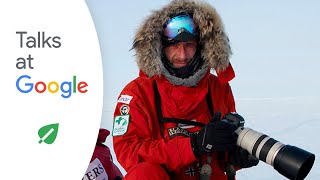
Transcript of a Talks at Google presentation by photographer and activist Sebastian Copeland. Copeland shows images from Antarctica and explains how climate change (melting ice, ocean warming and acidification, persistent organic pollutants) is affecting ecosystems and indigenous peoples (Inuit), threatening sea-level rise and global stability. He frames the crisis as both scientific and moral, urges individual behavioral change and grassroots advocacy, and answers audience questions about personal carbon footprints and practical actions.
Chapters
Thank you everyone for coming. Our guest today is visiting us as part of the Authors at Google program. But based on his professional accomplishments, it wouldn't be 100% accurate to call him, refer to him as just an author. Sebastian Copeland has distinguished himself as a photographer, an activist and an author, among other things. And to give just the briefest of biographical sketches. Mr. Copland is a man of many talents, renowned for his work as an authority photographer, author and activist, which I already said, sorry. He was a graduate from UCLA Film school and became a fine arts photographer and director of a number of award winning television commercials and music videos. He's also won awards, international photography awards for his images. His acclaimed images from Antarctic the Global Warming, which is a copy of the book that many of you have. Mr. Copeland's photographs have appeared in a number of publications worldwide, including gq, Cosmopolitan and Vanity Fair. And there were a bunch of other ones that I decided not to list. To keep it short, he's noteworthy as a leading force behind the intersection of environmental issues and celebrity activism. Excuse me. In addition, Mr. Copeland serves on the Board of Directors of Global Green USA. And you can visit this not now@globalgreen.org, which is an affiliate of Mikhail Gorbachev's Green Cross International, if anyone's heard of this. But rather than have me go on and on, I'd much rather. I'm sure we're all much more interested in hearing this from the aunt himself. So please welcome me in joining. Welcoming Sebastian Copeland to Google.
Thank you very much. Thank you very much and thanks for coming here. I feel very honored to be at Google today. Very impressed with the campus. I. It's nice to see that you guys can take a break from eating because with all the eating facilities here, it's pretty extraordinary. No, but Google is obviously a very progressive campus and it's really an honor to be participating to this program. I would like to start with a. I'm going to show you a few of the images that I have from Antarctica and it'll give you a little bit of a sense of what I've experienced down there. And then I'll go into a talk a little bit about the nature of what it is that I do. So let me start with music. It's. It's sa. There's a little delay and that's our last image here. So anyway, that gives you a little bit of an idea of some of the experience that I had shooting in Antarctica as I was presented by Tyler earlier. I'm a bit primarily a Photographer and I've been an environmental activist for a little over a decade. And my introduction to this landscape came in 2005 when I actually traveled to the Arctic in the north on behalf of Global Green, the organization I work with. Global Green was founded by President Gorbachev. It's a organization NGO who focuses on, on climate change, access to water and non proliferation of WMDs in the US we are particularly active in the, in the Climate change awareness platform. And in 2005 I was part of an initiative which I led to the Arctic to raise awareness on the plight of the Inuit and to give a face to climate change. And when I traveled up there, I had spoke with Sheila Watklutye, who's the international chair of the Inwit Circumpolar Conference. And she represents the sort of the overall governing body of the Inuit. And she shared with me that babies there had been diagnosed with certain types of illness which were very unusual for, for this indigenous group of people who primarily live from the hunt. And the babies were traced with POP poisoning, which is persistent organic pollutants. And persistent organic pollutants like heavy metal are found in. We find that in industrial wastewater runoffs and fertilizer runoffs, which we know in the US and in other industrial countries are used. They contaminate the land which eventually make their way into the rivers and they get absorbed by little fish. Pops are insoluble carcinogens. They're very difficult to break down and little fish get contaminated with it and make their way into the ocean and get eaten by larger fish who swim their way or get taken into the Gulf Stream and eventually make their way into the Arctic where seals eat them, where eventually the Inuit kill the seals and the mothers eat them and eventually poison their babies through their milk feeding. So this was a disturbing story, but why is it relevant to a climate change debate is because of the relationship of cause and effect that something that could happen so remotely thousands of miles away would have such a negative impact on a, on such a remote culture. On the issue of climate change, the receding ice, as I know most of you have heard, is impacting the ecosystem there. And it's impacting the nature of the Inuit's ability to maintain their culture. They're primarily a hunting culture, have been for literally for about a thousand years. And in the last 50 years they've gone from the Ice Age, essentially living in igloos, to the Space Age, where now they have access to Internet technology and whatnot. It's affecting them as a Culture, admittedly, but really the most profound change is that all the while they've been introduced to modern technology, they're still very much by tradition and by spirituality, a hunting tribe. And the hunt is migrating further north because of receding ice we've all heard about, the polar bears are disappearing, their numbers are dwindling. In the last 15 years, actually in the last 10 years alone, the numbers have dropped by 21%. They've been placed, or at least recommended to be placed on the endangered species list and whatnot. This is all indicative of the climate change that we're aware of. And we may perceive the loss of a quaint, holistic and sustainable culture like the Inuit as the price of doing business. But really what seems to be what could be perceived as a sentimental tale is in fact a cautionary one. Because if the Inuit are the first one to go, they certainly won't be the last. We have across the world in various environments like the South Pacific, with Tuvalu among others, small, low elevation island nations whose survival on their land is being jeopardized by the slow rising of the ocean level. They eventually, they're very low elevation, they sit on coral beds. And the various independent nations have been forced to evacuate and have applied for asylum because their land simply is disappearing to rising ocean levels. And this again, much like the Inuit, something that is happening remotely and as is the case with the most issues pertaining to the loss and the detrimental effect of climate change, this first impacts societies who typically have the least to do with why this is happening in the first place. And with that, I'm also thinking of the Sahel and different places in Africa who are exposed to drought and who will, according to the UN predictions, and it's the ipcc, the interpanel Climate change program, are predicted to, you know, predicting in excess of 70 million refugees in Africa in the next 50 to 70 years or so because of drought. And clearly these regions, Africa, some areas of East Asia, Inuit and whatnot, have very little to do with why they are forced to evacuate their land. This has primarily to do with industrial nations. The US is in a very interesting situation in the fact that they have. America has a tremendous position to play in this. I mean, 5% of the world's population, 25% of its CO2 emissions, we consume in excess of 20 million barrels of oil, 20.7 million barrels of oil a day. Our closest competitor is China, but China only consumes 8.5 million barrels a day for a population that is much vaster. Of course, the projection, the Demographic projections and the growth of demand on fossil fuel and energy is creating some graphs that are pretty daunting to examine. We're looking at an increase of about 70% of the energy use within the next 35 years or so. And clearly all this points to one area, is that we need to change our perception of what energy is and our relationship to energy to give a brief overview which perhaps is redundant. I was discussing earlier, giving lectures a year ago and giving lectures today being such a completely different landscape, because thanks to two fundamental events that have shaped our awareness. One being Katrina a couple of years ago, and in response to Katrina, the interest, interest in climate, which was polarized with Inconvenient Truth and educated so many people in the issues that we're now discussing. The good news about it is that if you're sitting here today and the reason why there is an interest in this platform is because we're out of the tree hugging business and we're now confronted with the fact that this is a real issue, that ultimately this is perhaps the greatest issue facing the planet today because its consequences are so deep. It's not simply an issue of the Sahel and an issue of Tuvalu, an issue of the Inuit. It really impacts our economies and by that it impacts the geopolitical balance of the planet. And it is responsible for a vast array of different conflicts which are spanned from both the drought and the non distribution of water as a result of receding glaciers and whatnot. Or simple issues of where to secure energy and who's going to have access to the growing demand diminishing supplies. But growing demand of fossil fuels and the tensions that we all know can ensue as a result of that. The Arctic and Antarctica as Inconvenient Truth has made so brilliantly clear, have a profound relationship to the climate balance of the planet. They are like the air conditioners of the world in some ways and in Greenland and in the Arctic, outside of the fact that the most daunting of, of realization, you know, seeing that computer models projected that the Arctic would most likely be gone in the summers of 2050. And on those computer models have been revised and they're constantly being revised. And scientists are confounded by how quickly, by the speed of rate of change and how it is so difficult for us to really predict accurately. But one thing we know is that typically things accelerate instead of slowing down. And projections that were already intimidating to examine are now becoming even more so because the projection for the Arctic, the disappearance of the summer ice cap in the Arctic is now projected for around 2035. The way that this affects, in fact it impacts and affects the climate is just to give a very brief overview is that the frozen ice is typically made of fresh water. Salt water has a greater mass. The two do not mix. The Gulf Stream is the great regulator of climate, bringing in cool water to the tropics and cooling down the tropics and bringing in hot water to the northern hemisphere hemisphere, so keeping temperate weather in areas like Europe and northern Europe and whatnot. The problem with the Gulf Stream and the mixing of non mixing of fresh water with salt water is that the Gulf Stream is slowing down. And in doing so, it is outside of the very simple fact that it's no longer acting as a conveyor belt for its own ecosystem. It is warming up the water in the tropics, which is responsible for high winds and things of that nature, and it is cooling down the northern part of the hemisphere. This of course, has a tremendous consequence in as far as the tropics for storms and whatnot. As we've seen, the increased numbers of storms that are reaching record numbers. I mean, last year or the year before, I think, think it was we run out of letters in the Alphabet, as I'm sure some of you will recall. And so, you know, this has a profound sort of consequence on our life. The oceans themselves, it is another scary realization. But to understand that 80% of the excess heat is being absorbed by the oceans. The ocean also absorbs the excess CO2 in large portion and in doing so it increases its acid content. And this is not, by the way, this sort of abstract conversation. These are, this is pure empirical science. I mean, we know that the ocean acidity level is 0.1 ph level higher than it was 100 years ago, which has an acid content that is. And that has a profound effect on the calcium carbonate skeleton and shellfish, on the plankton life and whatnot. So corals and shellfish basically, and plankton, the base of the food chain, is being impacted by this phenomenon. And this goes, you know, we also have, of course, issues of overfishing, you know, and the depletion of the oceans from commercial fishing and whatnot. The Arctic and Antarctica also have a profound impact on our existences or at least the future of our lives. Because the Greenland ice shelves and the West Antarctica peninsula have glaciers which if they were to break down and destabilize and break into the ocean, would raise the ocean level by figures that could be extremely unnerving at the low estimate. We're talking about 3.5ft over the next century, at the high estimate, in excess of 20ft, there is about 100 foot of coastal area that is lost for each foot of rise. And so, needless to say, the low rise coastal areas, as you've probably heard, but like New Orleans and Florida and like the Netherlands and, you know, Manhattan, blah, blah, blah, all of these areas are jeopardized by these actions. This is sort of like the brief overview of what we all know to be the consequences of climate change. With glaciers disappearing as well, that is very important. The Himalayan glaciers, for instance, provide 50% of water to 40% of the world's population. When we see what displacement of population happen in New Orleans with 100,000 people and the chaos that ensued, you can imagine with 80% of the world's population living in coastal areas and looking at literally hundreds of millions of people being displaced over the next century, what potential for chaos and social instability this represents. Why is it important to go through all this process of repeating this information that we all read at different times in the newspaper? It's really to remind us of the importance that each and every one of us has to play in how to curtail this problem. We have been conditioned essentially for the last 200 or 300 years or so, essentially since the age of the Enlightenment. Age of the Enlightenment brought us science and empiricism and reason. And with it came the sense that humans were essentially at the top of the pecking order, that we were the biggest game in town. And with this realization, which figures in our intellectual evolution as a milestone, because before that, much of our life, although it took us 150,000 years to get to today, but most of that time was really used surviving, more or less. It's living according to the cycle of nature. Getting up in the morning with the light, going to bed at sundown, and living according to what crop was available and doing a little irrigation here and irrigation there, but primarily just a local survival existence. And with the advent of science and the development of various technologies, we've basically facilitated our existence to where the convenience of technology brought us into a state of both complacence relative to the environment that we exist in, and really laziness with respect to the impact that we had on it. Because though it is very important, it's a very important aspect of our evolution, it is also only one stage in this growth, this spiritual growth that we have as a species. We are today at, at what I consider the dawn of a new awareness. And it is not a trippy or hippie kind of concept. It is just that we are being forced into a certain type of realization. And that realization is that the way in which we are growing is not sustainable. We are growing exponentially too fast for the planet to be able to replenish our needs. And we live within a very limited sphere. This is. There's no place else to go. I mean, at least at this stage there isn't. And there are no other resources than the ones that we have right here. Our general assumption is conditioned by the fact that we tend to think that other people will take care of this problem for us. And what I want to discuss today, and the reason I went through this lengthy introduction is really to put place the onus on a self examination what role that we each have to play in trying to reshape our sensibility and have a conscious awareness of the impact that we have in our lives daily. To make a market transformation towards a sustainable economy is a very daunting task. It involves individuals and involves businesses, and most importantly, it involves governments. But the first thing that it does involve is individuals because that is the common root of those three groups. We all need to start to examine the nature of our daily impact, what our footprint is and how to begin to really just look and examine what our daily activities, what role those daily activities play in shaping our psychology in order to be able to start a dialogue that will take us into the new economy and into an ability to be. To survive at the rate of growth that we have and to start to impact our footprint. And you know, I started doing this process myself a few years ago and it's something that I still do on a daily basis. And it's extraordinary because when you start looking at what we do and the waste that we generate, you can't help but be disappointed in your performance. I mean, I'm disappointed in my performance and I live and breathe this stuff every day. But it's extraordinary. I mean, I don't know if any of you have seen the 11th hour, which is which I highly recommend if you haven't. It's a movie that is a sort of a, I guess would be a companion piece to Inconvenient Truth, but there's a point that's being made in that movie and that is that it takes 32 truckloads of waste to produce one truckload of produce or of goods in the industrial world. That to me is extraordinary. I mean, how did we get from being a holistic society living from land to producing 32 times the amount of Waste that we need. We've been conditioned to think that way because of the convenience of technology and of science and of transportation and all of that which has progressively taken us into a. An area of quality of life, alleged quality of life, and taking us away from the consequences of what we do. I read a statistic once, and I can't remember what that number is exactly, but it was something like. There was something like 2 million tons of landfill plastic generated from. From shopping bags every month. Just shopping bag alone. This is matter that doesn't go anywhere. It'll be there for, you know, for thousands and thousands of years. The reason I bring this up, the plastic bag is because this is part of my own personal thinking, is every time I go to. I literally happens, every time I go shopping, I go into the store. And I've been doing this for years, by the way. I go into the store and then I immediately walk out back to my car to get my bag because I'm using a tote bag. Just because it's one way to start to generate a thought of impacting not just yourself and the fact that you won't bring bags back into your house, that'll go straight into the recycle bin, that's still going to generate some CO2 to discard and whatnot, but also to impact the store owners as well. And what I mean by that is that every single action, if you can start to focus on one action that you take in your daily lives and really start to focus on changing, beginning a shift, a transformational shift in your daily behaviors, you'll be amazed that once you do one, how easy it is to do two. And don't get me wrong, it's not easy to do one, which doesn't make the second one easy. It's just. It's easier. But when you start to do that, you really begin to start thinking that way. And in thinking that way and in walking around, you know, turning lights off in your. In your household. There was a time when we lived according to. I mean, thanks to candle lighting, you know, And I can assure you that during those days, it didn't matter if you were royalty. The likelihood of having candles burning during the day is fairly low. I mean, the simple logic of, you know, putting the candle out when it was daylight was dictated by sheer economy. I mean, how many candles would you burn? And now we have this apparent notion that a light switch is, you know, is different than a candlelight, but it's not. I mean, other than the fact that incrementally it doesn't cost anything near the same, but it requires a, you know, an energy output which ultimately in most of the world, and although we have some renewable programs around here, but generally speaking, it's either going to be burning other fossil fuels, you know, I mean, other oil or natural gas or whatnot. So just that sheer sort of thought alone is when we were conditioned to think that every light in a house is just a sort of a natural light. Right. That we have. And the reality is it's not. It's not because it doesn't generate so much energy for that one light bulb, but it's not because that light bulb is symbolic of a thought process. And if you start to think that way in terms of analyzing and doing a self analysis of every single activities that you have, whether or not you impact and whether or not you change them, but if you can simply start a process of thinking of what that represents, then you'll be amazed to see how it actually has a transformational impact on your existence. And if it does have a transformational impact on the existence, then the likelihood of having a transformational effect on, eventually I will say that word right, transformational effect on other people is increased, if only because other people will, you know, they may in the beginning make fun of you and then, and eventually because you're coming from a place of conviction, eventually it will impact their lives. And this is important why? Because we will not be able to convince business leaders or political leaders in time to make a difference unless we ourselves take charge of that. I mean, the reality is, you know, elected officials are interested in one thing primarily, you know, without being too cynical, but it's to be reelected. And the way that they get reelected is because they somehow serve their constituents and their business leaders. And business leaders will essentially affect the laws of, you know, of demand. If there is a demand for a certain type of market, they will serve that market. And really the issue is for us to generate that kind of interest. But you cannot look at the daunting task of a sustainable economy and think, you know, I have. I'm going to help change that. Because the likelihood of you writing your congressional leaders and your, you know, your various local and local district and national representatives are not very high. The truth of the matter is most likely what's going to happen is that you'll think, as I do often, that somebody else will, will do that for me and I'll commit to what it is that I can do. And I know that the one thing that I can do is to just Change little things in my life. And when I start to change, I started changing little things in my life. I started actually writing my business leaders. It became that sort of progression and eventually that shift started taking place in my own existence and I became more active and more dynamic and I became more of an advocate. And not to say that that was ever the end goal. The end goal was simply for me to understand the onus of responsibility that I had on the planet. We are growing at a rate that is unsustainable. You know, if you look at the historical rate of growth of greenhouse gases and CO2 emissions in the world, we started pre industrial levels at 280 parts per million. We're growing at a rate of about 2 parts per million a year. And the cryptic tipping point that people talk about is around 550 parts per million. So pre industrial, 280. Today we're between, depending on what source you look at and if somebody can tell me, because we can see, the rates will be between between 383 parts to 400 where we are today. And so 280, 400 today, and 550 is our cryptic tipping point. And we're growing at an exponential rate where our projected energy use for the next 50 years will be 70% greater than they are today. The cryptic tipping point means basically that things go into such a havoc that people, people will be forced to migrate north because it'll be too hot to live in the tropics. There won't be enough resources to feed them. People will fight for land. There will be widespread famine, there will be widespread strife and fighting. There will be most likely nuclear explosions going off to reduce the numbers and whatnot. And this is truly where we are headed. I mean, this is simply a math issue and this is not a doomsday announcement is just simply like this is where we're headed. I mean, it doesn't take a genius to figure out that this is where it's all leading. And we can all act like bovines and go to the slaughterhouse thinking that at some point the cow in front of us is going to be the last one to go through. But the reality is it's not. This is where we're headed. And we're spending all this money educating our children because we want them to have a great quality of life. So we're investing in education, we're investing in, in programs for them to have a great life and whatnot. And at the same time what we're doing is sabotaging their Future, because we're, generally speaking, inactive about our own responsibility relative to that future. So really, in closing, what I would like to say today is that is, try if you can, to go through the first half an hour or hour of your day and try and examine everything that you do during that day and progressively trying to grow that to say, an hour and eventually try to go through your entire day understanding how much waste you're generating and try to reduce what that number is, how much energy you're using, and try and reduce what that number is and try to share your. Whatever it is that you have in order to limit the impact that it has. Because in doing so, so you will begin a shift in your mental approach of what your personal and individual responsibility is. After that, the reality is we will begin a shift towards the business leaders. Some of these factors are so absurd. I mean, we have an economy right now that subsides luxury SUVs in the same way that it does. You get tax cuts for luxury SUVs in the same way that you do for forklift renewable energies, get half the subsidies that the fossil fuel energy do now. Why is that? Because in the old economy, people have made a lot of money and it's the most natural thing in the world for them to want to keep making all of that money. And until somebody. There's a real movement behind it that changes that, business leaders will keep being susceptible to listening to these lobbies and nothing will change. So the real change begins with all of us and the examination of what we can all individually do. And that's really what the thought that I want to leave you with. I mean, it's too daunting to look at the whole picture. Just looking at that one part is what's going to help us get over this hurdle and really fulfill the promise, the spiritual promise that we have as a species and get us into the next stage of our intellectual and spiritual evolution. So that was about it. And if you guys have any questions, by all means, feel free. No question. I think this is good. They won't need for a microphone. I think we're. We're all good. Great. Well, listen, thanks for coming. Oh, no, there's one here. Okay. Hi.
Thank you for coming. And I have a question. Where I can get the statistical information, how much you speak closer to the mic.
I'm sorry?
Where we can get statistical information, how much waste we produce daily, how much carbon emissions? Because all the statistics I hear about the countries is. Makes like less relevant to my personal contribution.
Okay, well, there are A variety of different websites out there that you can, I think the question is basically how can you examine what your carbon imprint is daily? Is that right? Yeah. So there are different websites out there. There's one which I'm particularly fond of, but it's called greenman.com. so if you go to greenman.com I think it gives you a variety of different charts and you also have the option to offset. But there are different ways of calculating how much, you know, what mileage you drive and how many hours, how many rooms you have and whatnot. And so you can see what your personal carbon output is. It's interesting to note that in America, individual households. Oh actually, I'm sorry, each individual produces about 15 tons of, of carbon a day. And you know, in Europe that number is about half. And in Africa, you know, the average in Africa is of course well under half a ton a day. So we generate a lot of carbon emissions. And it's actually a great question, but to ask this because in going to a site like this you really start to understand that what each one of these activities are and how you can start to shift towards a more sustainable existence.
Are you aware of any citizen or social initiatives for people in any particular region or city to maybe observe a zero impact day where they try and minimize or.
I'm sorry, I couldn't hear. Could you say that one more time?
Are you aware of any initiatives in any area, particularly of the US for people to observe a zero impact or low impact day where they try and minimize their impact on the environment? Are you aware of any such, aware.
Of an initiative that, that, that promotes a zero impact existence?
Zero impact or low impact for a day or a month or a week?
I see what you mean. That's a good question. No, I'm not aware of that type of initiative, which is not to say that it doesn't exist, but I'm not aware of that specifically, but it would be a good one to start. I would like to actually use just that window for one moment to give you a sense of what my personal relationship to the environment and to the, to Global Green especially is. I started as a concerned citizen and I was just a lover of nature and I was a donor to a variety of different environmental organizations by just signing checks and I would sign checks for, you know, to save the whales or to combat clear cutting and things of that nature. And eventually I wanted to get more involved and I was fortunate enough to meet the President CEO of Global Green here and we became friends and whatnot. And I wanted to get more involved, and I was a photographer and whatnot. And I said, I'd like to be able to contribute and to help this cause. And he said, well, you know, it'd be great. Maybe you could come and, you know, shoot people at our events and whatnot. And I thought, you know, I'm not a paparazzi photographer. And I, you know, I'm sure you can find a photographer for that, can go click. I really want to do something else. And he's saying, well, you know, anyway, the bottom line is he didn't have anything to tell me. And so I basically started initiatives on my own in order to serve that organization. And what you've just described, for instance, is an interesting platform because, as I said, there may well be an event of that nature somewhere, but I'm not sure. But it was really the impetus that I brought into my own personal desire to make a difference that got me started in the environmental advocacy world. It was just in thinking of things like that and going, I can do a fundraiser. I know enough people with money, or I can do an advocacy evening at my house and discuss certain things, or bring in somebody who knows better than I do and whatnot. And this was progressively how we started doing this. And now I create events. And we've got a variety of different initiatives around the country which were generated specifically from that kind of grassroots mentality. And as I made this sort of impetus on the onus of individual responsibility for a sustainable existence, it's really because I really fundamentally believe that we are all advocates waiting to come out. I mean, we all have strong opinions on everything. And the truth of the matter is that if there's really one opinion that we should have a strong vision about, it should be our ability to survive on this planet, or at the very least, for our children to be able to survive on this planet. So to really turn to your point. Point, you know, I'm not sure about that one, but why don't you start it? You had one? I think.
So. My local power company, Silicon Valley Power, they offer this program where I can get my electricity for slightly more. A couple of pennies more per kilowatt hour. And then these are. This electricity comes from sustainable sources, wind or whatever. Is this sort of like a sort of major contributor or a major thing that would offset my carbon contribution to the world, or is this an easy way to pay to get over some guilt?
That's a great question. It is definitely a great thing to do. I highly encourage, if your power provider is Giving you the option to go green. And even if it costs a little bit more money, of course I encourage that. I mean in California, when we have as much sun as we do, and in some areas of the northern California, as much wind as there is here, it seems amoral not to be tapping into this, these natural resources and lower the greenhouse gas emissions from power generation. So definitely it helps. It helps because it begins you to think that way. What doesn't help is if you start to think that way and then decide, hey, I did my part and then never think about having to do something else again. So as a step towards starting something. Absolutely. And I encourage all of you by the way, to do it. If you haven't so already.
Having walked through our Google campus and seeing all the amenities that we have, what are we doing right and what are we doing wrong? Obviously we have those to go boxes that are made with recycled materials but on the flip side we use them at a very high rate and they've actually made steps to actually put them behind the counter so we're not as easily accessible for us. So what is your opinion on that?
Well, I had only so far a very limited tour of the campus. So we're planning to go and do this tour. More of it after this talk here. But I did have enough of a tour to see the organic garden that's down there. I've seen the recycled bins that were around and it's. What's evident is that Google has been very good in its desire to promote a message of awareness and I can see that represented in those various ways. I don't know whether you're equipped with solar here. Are you fantastic. Do you generate 100% of power from solar or 30%? Right. It's a series of big buildings here. But that's already fantastic. I mean it's clear that, you know that the leaders and decision makers of this organization have a vested interest in it obviously what with their desire to create plug and play. I mean plug and play vehicles. Yeah. That is hybrid plug ins and the general sensibility that they are displaying here. I wish I could give you more as far as it, but I've only seen so far the recycled bins and then the organic garden and now happen to know that you get 30% of your power through solar. So that itself is I think as a, you know, as part of a breakthrough thinking for a corporate leader. Yeah.
Hi. So I'm trying to understand what you see is the biggest problem that we face. So I'm going to Face this question this way. If you find a genie, an environmental genie, and a genie lets you solve one environmental problem, what would the problem be?
One environmental problem. Boy, get rid of humans.
Besides that.
Yeah, I mean, listen, we are the ones who are responsible in our spiritual growth, which I find that we're still very immature spiritual beings. We haven't been around for all that long and I guess that gives us some measure of excuse. The real issue is that we may not be along for all that much longer. So it's perhaps time for us to reconsider what that is. But in our consideration of, in our assessment of spirituality, it seems like a great omission. But to include the environment that feeds us as part of our thinking. When we look at the overriding spiritual principles of this planet, which tend to be very good ones, but they're still limited in scope because primarily what they tend to do is all the way they address the world. They don't address the, the world as a sort of great synergic relationship to humanity. They just tend to really prop up humans as being the, you know, the driving force behind this sort of spiritual existence and whatnot. And the reality is, I think that there's a greater mission and I think that there's also a consciousness that is taking place. I mean, we see that even the religious right is taking a leadership role in environmental awareness and trying to really to drive a sense of responsibility and accountability within their followers. And I think that that's really a great thing. I think that's the beginning of a certain type of thinking that should be the overriding principle of all spiritual beings. So if we had the genie coming out of the bottle and saying, what could you do different? I would say at the root of societies is a sense of spiritual connectivity and reshape what that means in order include the nature of responsibility and accountability to the overriding principle of existence, which includes the planet.
Could you just quickly share some really easy tips that we could do to change our lives that would help better the Earth?
Well, I'm going to tell you the easiest tip of all is gonna go to globalgreen.org and there's no shortage of good information on that. But you can go there and find, I think there's a page on it that gives you 10 easy ways or whatnot. I mean, the obvious ones are replace the, if you're using traditional bulbs, replace that with the energy efficient fluorescent, which are great, by the way. And incidentally, if some of you feel. I'm a photographer, so I'm Very sensitive to light. And I found that some of those had cast a greenish hue, whatnot. That wasn't exactly what I liked. And so, you know, get some photographic gel and you can have some very light amber gel. You tape that around your bulb and there you have it. I mean, that's certainly one way to do it. Those bulbs last 100 times longer and by virtue of that they consume less. You know, there's the simple things. Take, you know, your showers to generate hot water and whatnot. That generates energy. So take, don't take as long a shower as you normally would. If you go to the supermarket, engage yourself not to use their bags and engage the markets themselves to do something about that. Eat less meat. Meat generates a lot of CO2, not just from the methane that it releases either from them or from you, but from just the raising of the cows. And that means the transport of grain and whatnot and all that is generated and then the slaughtering, the transport of the meat distribution, the refrigeration in which it's kept, all of that stuff factors into what the carbon imprint of meat is. So I say this because sometimes people go eat less meat and they're like, why not broccoli then? But I mean, try to eat from local farmers for the same reasons the transport would be reduced. If it's local organic farmers, it won't be such great trucking and whatnot. Transportation, I mean, issues like that. If you have an old vehicle, first of all, make sure your tires are inflated properly because it'll save you miles. And in doing so, with gas mileage, that is, I'm sorry, in doing so, it'll put less carbon out. If you don't have energy saving vehicle, you know, start thinking about getting that. Start thinking about not keeping the lights on in your house all the time. Use natural light or turn the lights off when you leave the room. I mean, those are. There's an endless sort of amount of information that you can find if you are curious about it. And trust me, at some point, oh, there's one or so. My friend wrote a book called the Green Book. The Green Book, I highly recommend that. It's a little book that's full of incredibly useful tips. I think it's only five bucks or something, it's not that expensive and it's a really good little item. So yeah, the Green Book would be a nice way to go. And Otherwise I really. Globalgreen.org, if you go in there, I think there's one about lifestyle or something and you'll find some tips on that. Hi. Hi.
I totally agree with you about starting locally and making change towards being more energy efficient, but I question if that's the most efficient way of doing things in a faster way. I mean, you mentioned one of your statements during your speech was saying that it's faster to convince us than to convince government for CEOs of large corporations. But I feel that one decision, one good decision made by one of those guys will probably make a much wider effect than trying to convince or change the consciousness of Streamline America or the hundreds of millions of people in the third world that are trying just to make ends meet. And they don't really care how they make that happen. So anyway, it's just a thought that I. Yeah, yeah, I question that myself. I mean, I drive with my crews and I do something, but I feel like even if I do that, I'm not really. It's not such a big deal. It's like a drop in the bucket. Right?
Sure. I mean, listen, that's always a very, you know, very common examination is how can one plastic bag from the supermarket going to impact the size of what it is that we're discussing? And the reality is it will because a transformational shift towards the realities and the targets that we need to accomplish is. Will take massive amounts of commitment from everyone. And it has to start somewhere. And the only place that you can have an impact impact right now is in what you do. And with that in mind, as I said before, this is a movement where are. You know, we had the age of energy and we had the age of enlightenment and we had all these. We are today at the dawn of the age of the environment. And if we, this is how we have to think. So if you do one thing, the likelihood is you're going to do a second one and then you'll do a third one and somebody will see you do that and they'll start to do something as well. And this is how change happens. Right now that's all you can do because you can either sit back and say, you know, it's too big a problem. And 10 years from now, I can guarantee you that the problem will still be there, but it'll be exponentially greater. And you'll go, oh my God, it's kind of like real estate, you know, I wish I bought that house 15 years ago. It was 200,000 then, it's 800,000 today. And you go, Ah, but it's $800,000 today. I can't buy it. And then 20 years from now, I go, my God, this house is $5 million. I could have bought it for $800,000. It's the same principle. I mean, the reality is this problem will grow and grow. It's not going away. This is not. You know, we're conditioned to think that there's this great sort of overriding authority that's going to take care of these problems. But the reality as it's not. I mean, powerful lobbies right now. ExxonMobil makes the same amount of money yearly as the totality of all car manufacturers in the world. Just to give you an idea of how powerful these guys are. And if you're a politician and you want to be reelected, the two overriding principles here is what you can stand, constituents want and who's willing to pay in order to keep things as they are. But if you stay down there and go, this is too big a problem, I can't do anything, then these guys are always going to win it. And in building this mass of support and awareness and action from this end here, this is how we're going to start to tip the balance in and to be able to interest the government, to support and promote renewable energy based businesses and to try to start this transformational shift towards a sustainable economy.
Sebastian, it's delightful having you. Thank you for coming.
Thank you very much, guys.
More from Guy


Cheryl Strauss Einhorn | The Human Edge: Smarter Decisions in the Age of AI | Talks at Google



Rachel Glennerster | Innovation and the Center for Global Development | Talks at Google

Rebecca Winthrop | Rethinking the Purpose of Education in the Age of AI | Talks at Google

Dr. Robert Wachter | A Giant Leap: How AI Is Transforming Healthcare... | Talks at Google



