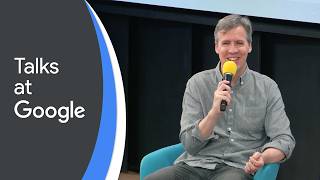
benny blanco | F*ck Failure | Talks at Google

In a Talks at Google session, music producer and author Benny Blanco discusses his new book Fuck Failure and shares how embracing public failure has shaped his 20‑year career producing chart‑topping hits. He opens with a humorous backstage mishap (using a desktop as a DJ setup that blew out onstage) and expands into broader themes: the mental baggage that makes people fear judgment, the importance of declaring oneself a “failure” to drop that baggage, and the need for a psychologically safe creative environment. Blanco explains his “3‑legged stool” model for balancing work, health, and relationships, and describes daily routines that keep him grounded amid the chaos of ideas that never see the light of day. He offers blunt, actionable advice—“Shut up and relax,” “Don’t be a dick”—and talks about delegating, trusting collaborators, and learning to lead. The conversation also covers how to handle success without boredom, the value of a grace period after setbacks, and real‑world tactics for turning failure into forward momentum. Throughout, Blanco’s candid, informal tone encourages Googlers and creatives to experiment, fail publicly, and keep iterating.
Chapters
Thank you all for being here. We are closing our laptops and stepping away from our desks because our guest today has spent the last 20 years proving that you can't build anything legendary if you're terrified of making a mess. If you've listened to any music in the last 2 decades, this man has been the soundtrack to your life. As the producer behind over 30 number one hits, He has shaped the sound of an entire generation, collaborating with everyone from Justin Bieber and Rihanna to SZA and Halsey. He's also a 2-time New York Times bestselling author, a culinary force of nature, and a host who famously brings his barefoot, unfiltered energy to viral podcasts. But today we're not here to talk about his perfect track record. We're here to talk about the exact opposite, the art of fucking up. In his brilliant, hilarious new book, Fuck Failure, he makes a radical case for something we talk about a lot at Google, but rarely put into practice, embracing the messy, unpolished path to breakthrough ideas. He's the ultimate proof that sometimes you have to fail better to win bigger. Googlers, please help me welcome Benny Blanco. Thank you. With his own cookie. Oh my God. Hold on. Take your time. Benny, welcome to Google. Thank you so much for joining us.
They really treat you well over here.
They really do. You see why I've worked here for 10 years?
Hello. Oh. Hello. Yeah, I guess I'll use this thing. Hi, guys.
Well, thanks again for joining us, Benny.
Find Google. OK, hold on.
Perfect.
All right.
Take a bite whenever you need.
I will.
So yeah, this book really resonated with me, both as someone who's worked in the music industry for over a decade, but also working at a massive tech company where there's a very real fear of failure. So I just first want to say thank you for making us feel a little less alone in that fear. Um, we're gonna get started with a few icebreakers.
Okay.
Um, as someone who works—
I should laugh at everything I say. Okay, sorry. Okay, okay.
So as someone who's worked in the trenches of live music, both on YouTube and in real life, I've seen every possible logistical failure thrown at artists and their crews. What's one of your favorite onstage or backstage disaster moments? At a concert that turned into an unforgettable memory?
That was kind of weird, when you guys called me up and I had a cookie in my hand. I don't think that was the worst. One time, I was playing with this band on— I think it was on Warped Tour a long time ago, 303. And I was like the DJ. And I didn't have any money or anything, so I brought an actual desktop on stage. That was my DJ setup.
Like a Mac?
Yeah, like a Mac. And it was plugged in to just like— no special equipment. It was just plugged into the regular headphone jack. And the guy was super drunk who was playing guitar, and he went like this and hit down, and it completely pulled my entire setup out of the speakers. And so then all the guys— it was like 2 guitar sounds, and all the background music stopped. And then I didn't know how to get it back up, so I had to restart it. And it restarted in front of like 20,000 people, and it was like, ooh.
Oh my god.
I thought that sucked. That wasn't cool.
OK, so you open this book by practically challenging the reader to say out loud, I am a failure. If you had this whole room of hyper-ambitious Google employees stand up and chant that right now, what piece of mental baggage do you hope that we'd all drop on the floor?
I think, like, growing up— actually, I can't speak for anyone else, but I can speak for myself. Growing up, I was taught this thing where it was like, you have to go to school, you have to do well in school, you have to graduate, you have to go to college, you have to get like this job, you have to do all these things. And really, my mom was just like scared and doing whatever her scared mother taught her, whatever her scared mother taught her. And like, I just think— A, we're scared to start somewhere because we're embarrassed maybe about what our peers are gonna think. It's hard to start posting online and your friends are seeing it and it's like 3 views, or you start a live and the only person who's in it is your best friend and they get off as quick as they can.
You feel kind of cringe.
Yeah, it's just like, it's definitely not easy. It's not easy to put yourself out there, but like, who gives a fuck? Like, just do it. It doesn't matter. If you have like an idea you want to do and you want to quit tomorrow, then quit tomorrow and start it. But if you want to keep working—
After everyone gets up and leaves.
Yeah. If you want to keep working at Google, that's amazing too. It's like, I just think Whenever I have like a little voice in the back of my head, I try to listen to it and at least just try to move it forward. And I fail most of the time. Most of the things you— most of the things I do in a day will never see the light of day. I'd say like song-wise, 95% of the songs I make will never make it past like my little trash can on the bottom of the screen. Like most ideas I have for like books or for cookbooks or for television shows never see the light of day, but it only takes like one little idea and that gets you forward. And for me, the thing that's crazy is I just want people to start because When I was a kid, I was like, oh, I'm gonna be the biggest rapper in the world. Like, there's never gonna be a bigger rapper than me. I will be the biggest. Very soon after, I realized I will not be the biggest rapper in the world, but I landed somewhere pretty cool. Like, I get to do like the things I love. So it's like, even if you're trying to do something, like if you told me today, you were like, yo, I wanna be on the Lakers, I'd be like, probably not gonna happen. I haven't seen you in the gym, but— I wanna be. I'm pretty sure it's not gonna happen. for you. But I'd still be like, fuck yeah, you do that. Because if you do that, no, you're not going to be on the Lakers, but maybe you'll be on like the sports management side, or you'll be like an announcer, or you'll be like that guy who like stretches the guy's massive legs or something. Like, you could be one of those. You could be that leg stretcher.
I'm adding that to my list.
Yeah, yeah, exactly. Um, I guess I answered the question.
You did, perfectly. So last icebreaker. You spent decades mastering the art of the 3-minute pop hook, where every second counts. How did you get into writing full-length books, and what was the hardest part about sitting down with a blank page as opposed to a keyboard or a soundboard?
It's all the same thing. It's all daunting. Nobody's like, yay! You might be like that for the first day, and then you're like, wait. What? Like, I love my job as a musician. I love my job as an author, as a, you know, whatever I'm doing. But just like any other job, there's days you wake up and it fucking sucks. Like, it's like, you're like, why? What? Why am I doing this? And I think I decided to write this book though, And when I decide something, I just have to do it. Once I put it out there, I have to do it, or I can't be a liar. So I always try to just, if I have an idea for something, I start telling all my friends like it's already happened. And then what am I supposed to do, go back to my friends and be like, remember that thing I was talking about for 9 months? Not happening. It's just like, no, you gotta just do it. So a lot of times I'm just And I'm telling everyone I believe in myself and believe that I'm going to get there, but I might not totally in that moment. But as long as I'm keeping pushing myself forward, then—
A little manifestation?
Yeah, something's going to work out, I hope. And then occasionally it doesn't. And nobody's looking to see if your shit doesn't work out. And if they do, they're an asshole and you shouldn't be friends with them anyway. Like if one of your friends is like, hey, remember that thing? You remember that thing you said you were gonna do, and you failed miserably at it? No, I'd be like, fuck you.
So now for a bit of a deeper dive into Fuck Failure.
Okay.
Brilliant title, by the way. You write that nobody's keeping a scorecard on your life except you. In high-performing cultures like tech and music, people obsess over metrics and avoid making public mistakes. How did you personally unlearn the fear of being seen failing publicly?
I think I just did it. What else am I going to do? I want so badly to create things, and I can't let someone else's opinion force me not to do what I want to do. I'm supposed to just create a thing and just leave it in my room and not show anyone? For me, when I make— let's say I make a song. The first thing I do is the same thing I did when I was 13 years old. I call up my friends, and I play it for them over the phone, and I'm like, dude, and then we're like, dancing, or they're like, that song sucks, and I'm like, okay. But hopefully they're like dancing and we're sharing this experience together. So it's like, to me, there's also nothing better than when I can do something creative and it's changing how somebody else feels. Like when someone walks up to me, this lady walked up to me 2 days ago and she was like, I've been a doctor for 30 years. I read your book and I quit, and I'm opening up a bakery. And I was like, holy shit, maybe don't quit. I was like, is your food even good? No, but she was like, I just needed to switch my shit up. She was like, I don't even care if it fails. I just need to do something. That's
some real power you hold.
Yeah, no, so I love doing stuff like that. And for me, it's like, You look at— it's just never too late to start and to get where you want to go. Some of the most successful people didn't start doing what they're doing for so long. Bill Withers didn't even know he could sing. He made a song for the first time when he was like 42. There's so many stories and people, and it was funny. I just interviewed, for my podcast, I just interviewed Mel Robbins. And she was just like— I do too. She was just like, my life fucking sucked every day, and I was living a shitty existence, and now I'm huge, and it didn't happen until I was in my 50s. She was like, I spent 50-plus years getting nowhere and being so upset and angry at everyone else, and then I just realized I had to do something for myself. And then she did it, and then it happened for her. And it's like, that's fucking cool. So like, it's like, we don't realize how powerful we can be as like people. Like, the mind is so powerful. We are so powerful. We are so strong. We can do anything we fucking want, almost. You like Not the Lakers, but you can do something cool. So I urge you.
OK. I'm going to go try out for the Lakers after this.
You should.
So your book also unapologetically has very direct chapter titles, like Shut Up and Relax, and my favorite, Don't Be a Dick.
Yeah.
When someone's in the middle of a high-stakes failure or spiral, what does shutting up or relaxing actually look like in practice?
It's just like this. If I know that I did everything I possibly could to try to make something succeed, and success isn't— I want to take it back. Success isn't always monetary or becoming a doctor. Success can be like, holy shit, I got my son to eat vegetables today. Success can be like, wow, I told my partner that they looked beautiful today, and I saw it really change their entire confidence, emotion for that week. These things aren't— success means so many different things. Yeah, cool, becoming a doctor and making a bunch of money is cool, but also reconnecting with your father or mother and being able to understand where they were coming from when you were a kid and And you have a powerful moment in your life. That can be success, too. And so back to— now we're to where we were saying. But for me, it's like— the question was, what the hell
was it? What is shutting up and relaxing like when you fail? Oh,
yeah.
How do you tactically—
How do I do it?
This is a failure. I'm going to live in the moment now.
I'm just like, bro, there's tomorrow. Like tomorrow, and I'm gonna get up. Like sometimes when something fails, it's like, okay, today we're allowed to mope. Like we can mope a little bit. We can be upset. We can try not to take it out on yourself too much, but like, okay, we can like sit and wrap ourselves up in that blanket and like shovel ice cream into our mouth for a day and like call our mom and cry. That's fine. But tomorrow we're gonna take a shower, we're gonna, I don't know, do whatever the fuck you do to make yourself feel good. And then you're gonna get up and you're gonna do it again. And maybe you're doing that same thing again and you have a little bit of knowledge of how you can approach it differently. Maybe you're doing something differently. But it's like, yeah, what are we gonna do? What, I'm supposed to sit here and be sad about something for the rest of my life? No. I'm trying to change my life. I'm not trying to live in this shitty reality I created yesterday. Like, it's like, okay, let's, let's see what we can do. Let's roll the dice again and see what happens this time.
Yeah, so you kind of give yourself a little bit of a grace period and then—
Yeah, of course.
Pick yourself up and get your ass back to work.
I think so.
Yeah, I love it. Um, so one of your superpowers as a producer is pulling the best out of people, you've said. So you often say— well, you just said this— 95% of what you write in the studio is garbage and doesn't see the light of day, but it's the 5% that actually changes the world.
Of course.
So when working with huge stars like SZA or Justin Bieber, how do you make the room safe enough for people to throw out terrible ideas without feeling judged?
Basically, you have to be— and this is in your guys' jobs as well. This is in anyone's job. You walk into a room, whoever you are within that room, you are essentially their therapist, okay? That's your job. Let's say you're meeting someone new, 'cause a lot of times in the studio, sometimes it's people I've never met before. So I have 5 hours to meet them, disarm them, have to get them to tell me their deepest, darkest secret, then have to convince them to tell the rest of the world their deepest, darkest secret, and like— make it feel like they don't hate me along the way. Yeah, and it's just about like, I think in any situation, it doesn't matter what your job is, doesn't matter, your job is to make the people you are in the room with feel comfortable, heard. Like, yeah, of course sometimes someone says a fucking stupid idea and you know it's the stupidest idea in the room, but you're not gonna be like, no, like right then, no, you like let them get their idea out because if you're like shitting their idea right away, they're not going to want to bring ideas to the table from then on, because they're like, oh, this person just like shits on everything I say. You can shit on it later, but like maybe like wait for them to do it. And you might surprise yourself that like if you hold back and someone says it's a bad idea, then someone else says another idea, then that idea would have never happened if you like shit on that person's idea. So don't shit on people's dreams.
That should have been a chapter.
It'd be nice. I know, shit.
This is one of my favorite questions. So embracing failure means making weird stuff. What's the most absurd beat or concept you've ever made that every artist rejected, but in your heart of hearts, you still believe it's a misunderstood masterpiece?
Oh my god. I'm trying to convince people to do things that are insane at all times. And most of them, they are right to not want these things. But that's like when you're in a room, and you're throwing out creative ideas, the stupidest ideas are usually the ones that spark something amazing. So many times in my life, a song has started out as a joke, where we're just joking and saying the most vulgar, terrible words, and then it kind of morphs into real words. And it's like, yeah, I've had songs. I had a song that we— I'll never say what actual song it is, but I had a song that started literally— and it's a hit song. It started because we watched a YouTube video where a kid was farting, and it was on a beat. And then we sampled that and then made a song around it, and then obviously took it out afterwards. But there's a song that exists that's like a Big hit song that was made on the concept of a child farting. It's like no idea is too stupid.
I'm going to need to know that after this.
Yeah, I might have to tell you.
What is the single worst piece of career or creative advice you were given that you had to completely discard?
Coming up, seeing how people in high places treated other people, and I was like, oh, I don't want to do that. Oh, when I have my own company, I'm not going to do that to people. I'm not going to say that thing, or, wow, why did that person do— it was more like unspoken advice that they didn't even know they were giving me, just being in the room with people. When you're like, man, you really didn't have to treat that person like that.
Yeah, I've experienced the same thing quite a bit in this industry. If a Googler launches a feature or pitches an idea on Monday that completely crashes and burns, What's the first thing they should go do at lunch afterwards?
When I was younger, I'd never worked a corporate job, but I did work as an intern at a studio. And this was back in the day when you could be treated terribly. I actually cleaned toilets, and they didn't even have stuff to clean the toilets with. I was using a towel. It was disgusting. But 25, 30 years ago, it didn't matter. I remember the only time someone listened to my idea is if I presented it in such a unique way that was so different than anyone else. I remember I did a presentation where I rapped my whole pitch, and it was the only time anyone listened to what I had to say. Yeah. But now I'm going to answer the question about what you do when you— I mean, if it sucks, go to lunch and be like, OK, why didn't they choose it? Because sometimes the person's right, and your idea sucks. And you have to be able to— in music, it's called an A&R. It's artist and repertoire. And every label has an A&R. And the A&R's job is to pick out the good songs, pick the right people to work with the other people, pick the right producers. And I always used to think, like, oh, they're wrong, they're wrong, they're wrong. Sometimes they were wrong, but sometimes they were right. So first you have to identify, does my idea kind of suck, or is it good? And should I keep pushing this against the wall? And then you can sit there and you can be like, OK, that sucked. But I'm going to— What, you're just never going to say an idea again? No, you've got to go back and you've got to say the ideas, and maybe you toughen Fuck that one. Like, I've had song ideas where I've had a song, and I made it 8 years before it wound up coming out, because I kept pushing it to people. Like, I had number 1 songs in my life where I've given them to every artist, nobody cared, nobody cared, and it's all about the right timing and the right place. Like, sometimes your idea or your idea, it's just not the right time for that, and it's like, okay, well— Yeah. I'm gonna bring— I'm gonna tuck this back, and I'm gonna look at it again in a few months, and I'm like, okay, this is a fucking good idea. So then you're gonna try to bring it up again. I don't know, I hope that helped.
100%. But so in creative work, people only see the applause, not the months of silence when an idea gets no reaction. So when you're putting in work and hearing crickets, what practical routines keep you from second-guessing yourself?
I really am not caring what anyone else is saying around me when I'm making— I try— I also try not to, like, let's say I'm making an album, I try not to play anyone the music because if someone's like listening and even like their like head or like eye movements can make me like say— I like don't want any— I don't want to even have that in my head. Like my mom will be like, she'll be like, oh, what are you working on, hon? I want to hear it. And I'm like, oh, I did this like amazing song. And then she's like, oh my God, play it. And then I play it and like the second I start playing it, she's like, What do you want to have for dinner today? And I'm like, what the fuck? What? So when you're deep in something and you're trying to create something, sometimes people aren't on that same wavelength that you're trying to talk to. So it's also just like how you show someone. And just like, same as showing someone an idea. Maybe you're not showing them— you also have to read a room sometimes. Like running up to someone as they're leaving for the day and being like, hey, I got this really good idea. You gotta wait until, especially in the studio, with artists, sometimes I won't even show them a song because I don't think they might be in a mood that day. The vibe's not right. And I'm like, okay, I'll just wait till the next day to show it. And I've tucked songs, tucked ideas, and it's like reading the room is so important. And what do I do to keep myself— I try to keep a pretty routine day. I'm like a structure type of person, so it like helps me like, uh, just keep going. So it's like, okay, every day I wake up, I do this, I do that. Like, I try to keep a structure because if I don't, I'll fully go insane.
Um, on your book you mention, uh, the 3-legged stool.
Yeah.
And I wanted to ask, is there— was there a specific moment where you were so focused on work that you realized that you needed the 2 other legs of that stool?
Yeah, blew my life up when I was like 20. So things happened for me really early, and I don't think people are supposed to get that type of success when they're really young, and I don't think my brain was fully developed for it. And then by the time I was 20, I just couldn't do it anymore, and I lost my mind, fully lost my mind, and had to get help. I'm very open about it, so it's not a thing. I think anyone should be open about— therapy's dope, all that. Everything's dope. If you need help, if you need medicine, you should take medicine. You don't need medicine. If you wanna do yoga instead, you can do that. Do whatever the fuck you want to make you feel like you can keep going. And I think I was too focused on my work, and I wasn't putting any energy, not only like family and loved ones and health, I was just like not, I never did, I wasn't taking any time to do anything that made me feel good as like a person. I was always so scared my time was going to run out, and I just had to do this. I got to keep going and do this because I'm not going to be able to do it. And it's cool to do that when you're pushing yourself to do it, but out of fear, it's not the right thing. And yeah, I feel like there were a few years of my life where I was like, damn, I should— it was a great thing to happen because it made me realize it and I straightened it out. But yeah, it's okay to get help if you're feeling like that. It's okay to take a step back and be like, okay, maybe I'm spending too much time with my family and I need to spend a little more on work, or maybe I'm partying a little too much. Maybe I'm working way too fucking hard. And you just have to check yourself. I think you should do— I always do a temp check every 6 months. And at the end of the year, I always make a list of the things I wanna do next year, how I'm gonna do those things. And there's always a section that's like, what vacation am I gonna take that year? What's a new activity or hobby I'm gonna learn how to do? And just as much as what's this business I'm gonna start? 'Cause it can't all be that. If it's all that, you need to have experience and life and fun. Yeah. Your kids need to love you. And it's like, you got to water all the plants. OK.
Question over here?
I got one.
Hi.
Hi. How do you decide when to do something yourself to better your own skills versus rely on other people and get them to kind of do the things for you to help collaborate and create?
Oh my God, I'm always relying on other people. Everyone is better than me.
But how do you decide that? Well,
I suck at everything, so it's very easy.
I don't believe that.
No, no, no. How do you decide? It's kind of obvious. Ego's at the door, first of all. So it's like, if I'm making a— let's say I'm making a computer program tomorrow, and this guy's like, hey, I can help you engineer. I'm not going to be like, pfft. Let me take it from here, buddy. No, I'm gonna be like, this guy's way fucking better than me. I don't even know how to get the crosswalk thing right. So you have to check yourself a little, and you have to say, OK, is this something that I'm really the best at in this situation, or is this something that maybe I can delegate? Delegating is one of the hardest things I had to learn, but once I learned how to do— I used to When I first got my manager, and he would send an email, I would make him send me every email before he sent it out to make sure it was right. What? Yeah, it was insane. I mean, I was 15 years old, but it's like, you have to let go sometimes. And it's trial and error. Sometimes you let go, and you're like, wow, that person did a worse job than what I could do. But it's like, OK, at least I learned that for the next time. I'm putting a little bookmark there. there. And you just, you know, A, it's trial and error. It's checking yourself, and it's learning how to be a leader. Like, learning to be a leader is tough. Like, sometimes it might look like I didn't do anything in the room, but like, I put both those people together, knew those people were gonna work well together, knew when to step in at that moment, you know. And sometimes you're completely wrong, and it all burns to the ground, and that's okay too.
That's a really good answer. Thank you.
Hey, Benny, how's it going? Fellow ADD kid also. You've had a lot of number one hits. I'm curious, does it ever— does it hit the same each time, or does the success get boring? Because I know for me, sometimes success gets boring.
He's out here for—
The ADD part. Wow.
No, no, no, no. No, I understand what he's saying. Really? I wish— and this is in my book, and this is like a thing that I tell people all the time, because I have a lot of younger people signed to me that are getting successful, or they become massively successful. And I always tell people to bask in the glory a little bit, because I had— a problem doing that. If you asked me, where were you when your first song was on the radio? I have no idea. Where were you when you had your first number one? No idea. Where were you when you got your first Grammy? No idea. I don't know any of those things unless there was a picture attached to it, and that sucks. And I used to be so focused on what was happening next, and I used to think it was not cool or something to— I don't even know what my brain was thinking, but someone would be like, oh my God, your song went number 1, that's so cool. And I'd be like, yeah. And I'm like, what? That's like all you ever wanted to do when you were a kid. I will tell you, there is getting what you want, getting a number 1 or getting like— this book got on the New York Times bestseller list, and I remember someone said, are you so happy? And now I try to really bask in those glories. And they said, are you so happy? And I said, honestly, I just feel relieved. And then they were like, what do you mean relieved? And I said, well, I put in all this work. So if I put in all this work and killed myself getting there, and it didn't happen, I'd be like, oh, bummer. But now it happened, so I'm like, I don't even care about the stat, I just care that the thing happened. thing I set out to do happened, so I'm just like, and I'm like relieved. But does it get boring? I think what I do for myself is anytime, not talking about the accolades, but anytime I start doing something and I start to get that sense of boredom, whether it's successful or not, I always try to do something else. It's like for me, I always try to do something different to keep it fresh. I always try to hop into a new genre while still doing that thing that people like and people wanna hear. And I think it's natural to feel that even if you don't have ADD. If you've been doing the same thing over and over again, like you, I don't know why I'm using making your kids lunch, but if you make your kids lunch and you know this PB&J is always gonna fucking slap and they're gonna eat the shit out of this every time. You know, I would be like, ugh, I gotta make something. Let me try making them something else, and if it doesn't work, I'll go back to the PB&J, but let me like at least try to like switch it up. So I always just try to make things harder on myself, in a good way, in like a creative way.
Thanks, Benny.
Yes.
Thank you so much.
Oh, we're done.
No, well, Benny, just in closing, thank you again so much for stopping by the Google office in Playa Vista to share your words of wisdom. I hope a lot of you have a new outlook on failure, and this was such a real treat. Let's have another round of applause for Benny Blanco. Thank you.
More from Guy

Cheryl Strauss Einhorn | The Human Edge: Smarter Decisions in the Age of AI | Talks at Google

Rachel Glennerster | Innovation and the Center for Global Development | Talks at Google
Rebecca Winthrop | Rethinking the Purpose of Education in the Age of AI | Talks at Google

Dr. Robert Wachter | A Giant Leap: How AI Is Transforming Healthcare... | Talks at Google