Bones Brains and DNA | Patricia Wynne | Talks at Google
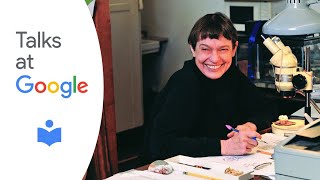
Patricia Wynne, a long-time scientific illustrator at the American Museum of Natural History, gives a Talks at Google presentation about creating the children's book Bones, Brains and DNA and her broader museum work. She describes her freelance role drawing bones, microscoped specimens (bat skulls, mice), dioramas and exhibit reconstructions, and collaborating with scientists (Ian Tattersall, Rob Desalle) to translate anthropology, paleontology and genomics for a general audience. Wynne outlines the book design process (sketches, FPO layouts, photos, 9×11 format), summarizes key content (DNA structure and sequencing, species genome comparisons, Neanderthal DNA, endocasts for brain inference, tools and artifacts such as Lucy), and closes with audience Q&A about illustration vs photography, career choices, and output.
Questions this video answers
November 2006
9 by 11 inches
Since 1974
Chimpanzee is 99% like humans (and bacteria ~7% similar)
Chapters
The authors at Google, and Google itself, is proud to present scientific illustrator, Ms. Patricia Wynn. She comes to us from the American Museum of Natural History, one of my favorite places to go in the city to talk about her book, Bones, Brains and DNA. Her illustrations have appeared in such books as When Dinosaurs Walked, Life in the Leaf Litter, Access Nature, and the Pine Tree Book. Patricia's art has also been displayed at the Chicago Art Institute, Carnegie Mellon Institute, Columbia University, Bronx Zoo and the New York Aquarium. Based on the new hall of Human Origins in the American Museum of Natural History, which opened In November of 2006, Bones, Brains and DNA will take us to the cutting edge of science, exploring and examining the tools by which we study our origins. Ms. Patricia Wynn also resides in New York city. Let's give Ms. Patricia Wynn a warm Google welcome.
Thank. Well, I'm very glad to be here. It's really nice of you to invite me. And I'm going to give you the whirlwind tour of making bones, brains and DNA. But not if I don't get the clicker. Okay. So I have been an artist of various things my entire life. This is me and I'm in the backyard. And my mother took my picture through the kitchen window. She claims I did my first drawing at one year of age on the wallpaper behind my crib. I can't vouch for this. This is in Illinois, outside Chicago. It's now a compl, but it was a farm, so there it is. So, okay, I'll give you some idea of what I draw when I am not drawing bones, brains or DNA. And these I did for myself. I love to draw animals. I have always loved to draw animals. And basically, I guess it's a reasonable thing that I ended up doing science illustration because I like it so much. So I ended up working at the American Museum of Natural History, which is a really good fit. When I was in Chicago, I always wanted to work for the Field Museum, but they wouldn't hire me. So there we go. So I'm using this. I work for them as a freelancer. So I basically go when there's a bone to draw. I draw mostly bones. Now, you probably think of the museum as a place where you see these beautiful dioramas. This is the watering hole at Akeley, which is one of my absolute favorites. If you haven't seen it, you gotta go see it. You gotta get a piece of paper, you have to sit down in front of it and you have to draw it. That's really how you appreciate it. Or rose center. I'VE drawn this thing, too, but it's really easy. You just draw circles. Or Petunia, who is our most grand celeb. The person who cleaned her 20 years ago, gave her the name Petunia. So I still call her Petunia. I think it fits her. The newly redone hall of Ocean Life with our famous whale. I have a whale story to tell you. When this whale was put up on the ceiling, and it's held by a little point right up there, I suppose I could do this. Let's see if that works. I don't know how to do that. Okay. When it was put on the ceiling, it was hanging by one long steel nail. The guy who was in charge of it, who was the head mammalogist at the time, refused to sit in the table underneath it. When the banquet happened, he wasn't so sure the nail would work. The nail works. You don't have to worry. So what I do is I sit in front of microscopes and draw incredibly small specimens. A typical bat skull is the size of a big green pea. So I really do need my microscope. So this is actually my door sign. Patricia Wynn drawing Microscop. And this is the Department of Mammalogy, where I work up on the fifth floor, which is the private research section of the museum, where they hide all the scientists and all the artists and all the bones. And this is the doorway going down the hallway to my office, which wasn't pretty enough for me to photograph. I draw bats, lots of bats. I draw bees, not so many. And I draw dinosaurs, feathered now, all the time. And I draw a gazillion mice. I have drawn mice from every country in the world and every continent but the Antarctic. And I may get one of those if I'm patient. So this, actually, to gross you out, if you don't mind, is a dead specimen in the upper left hand corner of a single species of mouse just recently identified. And this is his portrait when I finished him. And so that's how it was published in the scientific journal. I draw for these incredibly boring little journals which are published by scientists and never see the light of day. Other than that, if 10 people want it, I'm really, really lucky. So fame and fortune is not placed in these journals. But they're interesting. I recommend them. So I draw lots of mice. So I was very excited when I was approached by a publisher to be the artist of a children's book on the whole of human origins. For one thing, I knew a little bit about human origins, less than I thought. But I did know something. And secondly, I knew all the people who were upstairs working frantically away on getting this ready, and I knew they were really working hard. So it was exciting to be a part of it. So I was really excited. I would get to see neat places like the genetics lab, which takes a good photograph, lots of color. I would get to go to the anthropology lab, which is basically all in browns, but that's Neanderthal in the back. That's the largest complete Neanderthal specimen yet assembled. And next to him is one of us, or my favorite place in anthropology where they reconstruct the heads. Now, have any of you heard about this little hobbit person they found in the Indonesian archipelago? Okay, this is going to be her, the little one. She hasn't got her fur yet. She's not finished, but there she is, and I think she's adorable. I get to work with interesting people. I get to work with Ian Tattersall, who is an anthropologist and an expert in ancient humans. I get to work with Rob Desale, who is a crazy geneticist and is a darling. They both have favorite animals, which I have included. Ian's is a lemur, and Rob's is a fruit fly. Somehow that's fitting. And so I get to think a lot about bones, brains and DNA. This was, by the way, my cover for the book. As you can see, you can't have everything. And I actually do know something about ancient man. I had just done this chart for an adult book, and it was a revised version of how old we think humans are. And they, by the way, have gone back 3 million years from when basically most of us were in school studying them now, almost six and a half million years old, which is incredible. So I thought, oh, God, this is going to be a snap. I'm home free. And then I got to thinking about it. Now, you should know that I have authors here. I'm not the author, I'm just the artist. But I was actually in charge of keeping them on track because neither one of them had ever done a children's book before. They both had just done adult books. They actually had done very few books for the trade, which means for the real people. So they started telling me what they wanted and what was going to be in the hall. And they said, there's going to be a lot of emphasis on other scientific disciplines which feed into this old person thing, anthropology, paleontology, evolution, who. There was going to be a lot of things on DNA. We're going to have to talk about where DNA comes from. How do you code DNA? What does the DNA look like? There was going to be something on what left over of human people, what kind of remains, paintings, beads, tools, bones, whatever. And there was going to be things on genomics. We were going to talk about what genomics is. How do you read genomics, blah, blah, blah. There's the lab, hard working person. And we were going to talk about how you reconstruct what these ancient people look like. Because of course they don't come back and tell you what they look like. You have to infer this from the data. And the data basically is Bones. That's why Frederica is here. She wants to tell you about that later. She will. Okay. But the problem was the hall wasn't open and I didn't have access to the hall. And the scientists who were telling me about the hole were basically running back upstairs from the unfinished hall and saying, and they're going to do this too. I thought, oh great, I don't have a clue what's going on down here. So I actually freaked out. And then I thought, well, there's those mice that I always do. So maybe what I should do if I'm having trouble finding my way around, is have a guide. The guide I forgot. And you will notice nowhere in this book do we tell you which of these mouse is named Wallace and which of these mouse is named Darwin. We forgot. So we had a party like this when the book rolled and Rob Desall, one of the authors, took a vote who's who. So I'm happy to tell you the brown mouse is Wallace and the gray mouse is Darwin. So now you know. You make a note of that. You may need it later. Okay. Then I made a sketch because the authors didn't know what the book was going to look like. We knew it was going to be a 9 by 11 book. That's all we knew. So I made this sketch and I left a hole for them to talk in. I'm always very generous to my authors that way. I give them places to write. And I said, do you think you can do it? They looked at it and they were 150 words per page. They're used to getting as much as they want, you understand? So they said, we'll give it a try. And then I sent this to my publisher who said, that's the stiffest thing I've ever seen. So obviously it didn't go very well with everybody. So I tried something else. So I collected all kinds of information. I started laying out what's called an FPO layout, fixed place only. That's right. Soar and I took pictures all over the museum. It's an easier way to do a layout. Didn't know if it would work. Numbered them for files because everything went in electronically. There is no hard board of this book. Tried the same thing for that. Look at. I have text from the authors. This is so helpful when you actually have text. Another one, another one. Okay. So then I get busy. I draw and I draw and I draw and I draw. This book up here, which you may want to see later, is full of sketches in which I tried to figure out what are Wallace and Darwin going to look like? Are they going to have clothes on? Are they going to wear little lab coats? Are they going to be bigger or little than each other? These are earth shaking decisions made by scientists every day. So I did that and then I started collecting photographs. Now that's great because the museum has thousands of photographs. All you have to do is find the appropriate person in audiovisual and say what photographs do you have today? And you can get them. So that was really easy. I collected all these photographs and then I started laying out the book. So what I'm going to do with our little bit of time and then I'm going to let you ask any questions you want because that's probably the best way to do it is tell you some of the things Wallace and Darwin did to walk you through this very complicated subject. And it is an extremely complicated subject for the reason we were talking about. It covers so many different areas. So here's Wallace and Darwin and they're basically introducing you to the question of what is science? You have no idea how confused people are by this tiny little phrase, what is science? Science is absolutely nothing that is totally known. And every one of you in this room has a chance to find out something about science that's unknown because there is so much unknown. And the authors wanted to stress that in the beginning. They wanted to use an example, Darwin. You all know Darwin and his little finches. And the reason they wanted to do that is because from looking at these little birds like we all do every day, he concluded a theory which changed science. So it's not that you have to have big machinery, you just have to have a good mind and a good eye, like an artist. Then I thought, well, let's try anthropology. Since we got to do it, let's do the holes. So I went through and picked out things from the holes and the author had a space in which to talk. Why anthropology is so important in the study of ancient man. How do we know how they behave? We know how they behave by watching how we behave. And they behave very similarly to us, but in a different environment. They did not have this nice room with five screens and pink chairs that didn't have that. So they behave differently because of that, but otherwise the same. We want to talk about evolution. To give you some idea of the complications of books, Outfits charge a lot for pictures. You probably know that because you're in a very wide field here. So rather than pay $150,000 for the rights to use the watercolor of Darwin from England, I forged it, which is perfectly legal. So that's my forgery. I want you to know that I'm also a forger. It's my alternative career. If this one falls through, this is the neatest thing in the world. And it doesn't read. And I'm heartbroken about this. But when you go to the exhibition, you will see that they have done it eight feet high. I did not have eight feet on my page. This is the genome of life on Earth as we currently know it. Every single species we know is listed on here and its relationship to every other single species of Earth. This is a very neat wheel, so I really recommend you look at it somewhere you can read it. And then there's the DNA lab, which I had a lot of fun photographing. I ran around photographing colorful things. Didn't know clue what I was doing. And so Wallace and Darwin are looking through the door at the DNA lab where Shauna's trying not to giggle while I take her picture. This experiment in the book, if you do it, you'll make your own DNA. And that is really neat because you think to make DNA you have to have a big lab like Shauna's working in. No, you just need glass, vinegar, and I think it's detergent. It's in the book. Rob made it for me and that's his photograph of his conclusion. So it does work then. I wanted to explain, or excuse me, Wallace and Darwin wanted to explain where DNA comes from, because I think you got to start with the real stuff. So basically, we took DNA out of the eye. And Wallace and Darwin showed you that an eye comes out of a human and there's the inside of the eye. And the eye has tissue within it. The tissue has cells, the cells have nucleus, the nucleus have chromosomes. There's chromosomal lighting. The chromosome is made up of DNA and DNA is made up of the code of life. So at least we got some groundwork here. There used to be a professor at the University of Illinois who said start with the groundworth. Everything else will take care of itself. This is actually the lab at the amnh. They have three sequencers. I'd never met a sequencer and I seen them run, which is really, really neat. And a genome is nothing in the world but the Alphabet organized according to the chromosomes of an individual species. This is our genome. It's read out this way. Before computers got fast, this was impossible. And now that computers are fast, they're fixing the genome of new species virtually every day. It's really amazing. Does anybody know what rafflesia is? That big old stinky plant that from Asia. It's about six feet across, it has no stem, it has no leaves and it blooms once every year. Anyway, this plant, Rafflesia just got its genome named and they find out it's related to pineapples. Which is good because they couldn't tell. This is a comparison of the mouse, the chimpanzee and the human chromosomes. The point of this is how incredibly similar they are. And up in here we see, it's better seen in the book, how much of the chromosomes in each of these species are like ours. Chimpanzee is 99% like ours. Even bacteria is 7% like ours. So we really are very, very much alike. Here's the hall. Starting to talk about the hall. I had to put this together because there was no hall. So I did a lot of photoshopping to get this together. Basically the mouse are talking about it. This is my favorite photograph in the book because this pebbly landscape here turns out to be old devised floor. And those funny looking rocks are all human tools. You can see why people debated whether or not a tool was actually an accident or a real tool. Because when you see them, especially when you see them in the photograph in the book, they just look like pebbles. And they turn out to actually be worked artifacts, which is wild. And then I actually had my chance to reproduce human beings as I thought they looked. And the mice are back there too, because it's their job. These are photographs from the hall before it was redone because as I told you, I had no access to the rehall. It's much nicer now. You're going to love it. And I did not have access to this diorama. There is now a diorama. So I recreated it from the descriptions of my authors. You have to think on your feet. These are two extremely old skeletons. Lucy. Everybody heard of Lucy. She's our most famous artifact. Lucy is in the hall to be looked at. And that's Lucy on the right. This is Neanderthal. And now we can compare Neanderthal and Homo sapiens because we have a complete skeleton which is very, very good. This is a musical instrument that was played before Neanderthal, at the time of Neanderthal, which is really interesting. Neanderthal tool. Nice tool. Okay, now, did you know they've actually done the DNA of Neanderthal man? So questions about whether Homo sapiens us are related to Neanderthal are actually on their way to being solved. Now, how did they do this? They took an old bone that wasn't completely fossilized, they cored it, they put the tissue through a centrifuge, they took the material out of the centrifuge, they did electrophoresis, and they ended up with Neanderthal DNA incomplete. It's a little bit like Jurassic Park. However, we can do a lot more with tracing our own history, because our own history isn't. You can see this is a proof. See how it drizzles right off the page? This is just a proof. It doesn't drizzle off the page in your book. By looking at why chromosomes and mitochondrial DNA, you can actually tell how we traveled around the world, why chromosomes are how men traveled in DNA. Mitochondrial DNA is how females traveled, which oddly enough doesn't exactly match. There must be a story in there somewhere. Tools, very important. These are called endocasts. This is what. That's why she came. Let me get her to work here. Okay. If you take the inside of a skull, the impression that it has in the inside of everybody's skull, including yours and mine, is of a brain. It's our brain. So to tell how big the brains are in ancient humans, they simply pour a plastic material inside of the brain case and they come out with these incredible renditions of ancient human brain. Compare them. So they know which part of the human brain grew faster. That is, did we speak more quickly than we looked? Did we hear better than we spoke? That's all reflected on the skull. So they're very neat things. That's why brains are in the title. And of course, my favorite, they were artists. And I don't have to say anything more about that because they were superb artists. And in the end is the future. And this is where you all come in because there's so much to be learned and we need lots of new scientists, we need lots of women scientists, we need lots of bright, open minded scientists. And I hope you will all do that for a living. This is how big Lucy is compared to a six year old girl that's actually one of my author's children. So that's what this is. And what are we going to look like from the future? Ian said make us look like that. I don't know if we're going to look like that, but that was Ian's idea. My idea was the flying mouse and the rest of it's up to you. So that's how we did it. And hope you like it and go see the hall. It's bigger. So thank you. Any questions? No questions. I've worked at the museum since 1974. However long that is, it's a long time. That's right. So I did. I just finished two books with the museum scientist on rare species meerkats, which you probably all saw on the Discovery Channel. And the smallest bat in the world which is so secretive they won't even tell you what cave it lives in. Its little body is like that. Yes. Do I. I make all the illustrations and all the books I'm associated with. Yeah. Yeah. Yes. I'm sorry. I have always wanted to be an artist. I have never wanted to be anything else. I'd love to write my own books because my second love is writing. The only thing that ever. What almost got me out of art was I took an Egyptology class once when I was 19 and thought, the hell with art, I'm going to Egyptology. But I didn't. So. Yes. What do you think about when it's appropriate or useful to use a photograph? It's a very good question. And it actually has relatively clear cut divisions. It depends on what you want to do. In terms of science. You use a photograph when you wish to represent the species. In more general. Where'd it go in more general terms? Let me see if I can find you one here. I can't, obviously. Let's say you wanted to do a skull. Of course there's no photographs in here. Why would there be photographs in here? Okay. In more general comparative terms, if in fact what you want to do is get the details so that a person who lives 10,000 miles away can look at the details and compare it to the skull that's on his or her desk, then a drawing is better because there's no blur. You absolutely have to put the edge exactly where it is. There's no blur step. The field is basically. I have no problems with depth of field. I draw depth of field all the way up and down the skull. The photograph can only take one depth of field. As far as maps are concerned. I love the new photographic maps. If it were me, I would be using them. But I still get hired to do maps. It basically is your intent, what you want the viewer to see. And I've been asked for probably the last 15 years isn't, aren't you being put out of business by computer photography? The answer is no. I haven't ever even felt it, so obviously not yet. Yes. Have I what. I've always wanted to be an author and an illustrator. Yeah, it's true. But I'm not an author. I got to admit it. I can't write as well as I can draw. Yes. How many pictures have I drawn? You know, I once tried to figure that out. I stopped thinking about it at 20,000. I thought, I haven't got a life. There's so a lot. A really, really, really, really lot. I think I'm going to become my own encyclopedia and put them all on the web so we can use them. There's too many. Yes. In your book are most of the pictures. Pictures or drawings. It's 50. 50 in this book. This is actually the first book I ever did where it was 50. 50. Generally speaking, my books are 100% art. But the publisher asked me if I would like to work as the designer using photographs in this book as well. And I love to learn things and I thought, let's give it a shot. And I really enjoyed it. I'm going to do it again. I liked it also. It's less work for me. Anything else? Thank you. Loved it. Great. If you want to come see the sketchbook, it's up here.
More from Guy


Cheryl Strauss Einhorn | The Human Edge: Smarter Decisions in the Age of AI | Talks at Google



Rachel Glennerster | Innovation and the Center for Global Development | Talks at Google

Rebecca Winthrop | Rethinking the Purpose of Education in the Age of AI | Talks at Google

Dr. Robert Wachter | A Giant Leap: How AI Is Transforming Healthcare... | Talks at Google



