Breaking Back: How I Lost Everything and Won Back My Life | James Blake | Talks at Google
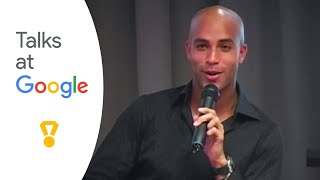
James Blake discusses his memoir about a 2004 neck fracture, his father's death, and shingles that nearly ended his tennis career. He explains how these setbacks reshaped his priorities and ultimately improved his game, with Q&A on coaching, technology in tennis, and life after the sport.
Chapters
Hey, everyone, thanks for coming. This is part of the Authors at Google Series program and we're fortunate to have James Blake here, professional Tennis Player number 12 in the world, joining us today. He's out here this week playing at the SAP Open out here in San Jose, and he's coming off a victory last night over an ex Stanford player. Not only that, he's just coming off a finals appearance at the Delray beach tournament and just that's off the heels off a quarter final appearance at the Australian Open where he ran into Roger Federer, of course. So we're pleased to have James here. Many of you guys I know come to some of these events where we invite a lot of prominent authors who've recently published books to come and talk to us. This is a little bit unique. We haven't traditionally had a lot of professional athletes who've come and given us talk. And I think one of the unique aspects about James Book, as someone who's read his book, is that it's actually a book that really transcends beyond just the sports world. You know, I think, you know, in a recent interview, somebody asked James, you know, why he didn't wait until his career was over to write this book. And I think one of his answers was it wasn't really a way. This book wasn't designed to like, look back at his career as a professional tennis player as much as it was to look back at a year in his life where he had a lot of adversity and how he used kind of the foundations of family and friends in his life to kind of come back and succeed in his career. And I think it's something that if you read it, you don't really have to be a tennis fan, much less a sports fan. It's something that you can actually apply to kind of anything in your life and any career that you have. And I think it's one of the unique things about this book, which actually reached number 15 on the new York Times bestseller list last year. His tennis accomplishments are a long list. He's got 10 career singles ATP titles, five career ATP doubles titles. He's currently number 12 in the world. He's reached number four in the world as late as last year when he reached the Masters cup final. He's coming off his last, most probably one of his proudest accomplishments, I think he will tell you, is winning the US Davis cup, which the team won this last December. So he's now a US Davis cup champion. And. He's also in the Grand Slam tournaments where you probably caught him on tv. His two quarter final appearances at the US Open, and of course, the memorable, which I know James is pretty much tired of talking about, but if you guys have questions about that, it's always this kind of one match a lot of people look back to, but. And he's, as I mentioned, has quarterfinal appearance in the Australian Open. So we are pleased to have James here today. And without further ado, let me welcome him to the podium.
Play this one or this one. Thanks. Thanks everyone for coming. It's an honor to be here at Google, one of the, I guess, the cutting edge company in the world. So I'm a little overwhelmed since I am like you say, you don't have too many professional athletes here. I'm much more comfortable with a racket in my hand than a microphone, so bear with me. But I guess what I was told is come here and talk a little bit about myself, which sometimes a little uncomfortable, but I'll do my best. The reason I wrote this book, like he said, wasn't exactly to speak to tennis fans. In fact, the person I wrote it with, Andrew Friedman, who in my opinion, did a great job, wanted to make it a little bit more about tennis because that's what he knew of me. That's what he thought I wanted to convey to people. It was about my tennis accomplishments, about everything I had done on the court, and that's what people see. Every time I'm on tv, you could see two hours of me playing tennis, but you don't get to know the person. And what I wanted to do with this book was let people know a little bit more about the person inside and in tennis. I think that's something that really makes a difference to fans, is if they really know the person out there. Sometimes they feel like they get a little taste of their emotions on the court. You can tell a guy like Pete Sampras is very calm and reserved out there. You can tell a guy like Murat Safin is a little more emotional. And for me, I don't know if I expressed my true feelings as much out on the court. So I wanted people to know what I've been going through in life. And it kind of all hit me at once in 2004, before that, my career, a lot of people probably wouldn't have even wanted to know that much about me. I hadn't had as much success to write about or to even fill a pamphlet, much less a book. I was most likely more known for my hair. And one match against Leighton Hewitt in 2001 than anything else. So in 2004, I felt like I was making a lot of progress on the tennis court. And it kind of came to a screeching halt when I hit a net post in Rome. And I guess I don't know if I want to give away the whole book in front of. I don't know how many people of you have read it and how many haven't, but I had some tough times in 2004, and it started with fracturing a vertebrae in my neck in a practice in Rome in May. And that coincided with the time I was dealing with my father's illness. He had a form of stomach cancer that had spread to his lungs, and we had gotten a pretty grim diagnosis from the doctors. And at that time, he was a very proud man and made sure that I was doing what I loved and doing what I needed to do to further my career. And he made sure I was traveling to Europe, I was playing all the tournts I needed to play. And I know he would have been too proud to tell me to come home when he was getting worse and worse. At that time, it kind of reinforced my belief that everything happens for a reason. That I got hurt at that time in Rome when I hadn't ever really had an injury like that in my career. And it forced me to come home right away. And I spent that six weeks was the last six weeks of my father's life, and I got to spend that with him. And that time was something I couldn't have asked for more. I cherish that to this day. The fact that I had time when I was recovering and that meant I was at home a lot, just spending time with him, whether it was sitting on the bed watching tv, watching Wimbledon go by, watching the French Open, go by, watching any other kind of sports event and just sitting there talking. And that was something that was. It was overwhelming to be around him and to know that it was nearing the end. And I don't know if there's any other better gift you can get than time. And having that time with him was the greatest time I could have and also the most painful time to know that it was ending. Obviously you can tell I had a very close relationship with my father, but a lot of that went unsaid and. And we had that time to say all the things that we had been feeling. And when that finally came to an end, it was a weird situation where I was recovering and he was regressing. And as I was finally fully recovered was around July 3rd when he passed away. And he told me the week before, he said, absolutely, under no condition are you to miss the tournament that I was scheduled to come back for. That was in Newport, Rhode Island. And he said, no matter what happens, you're going to play. My brother at the time was still playing on tour, and he was going to go play as well, and he wouldn't let us stay home. And I went and I played. And at times, somewhat through tears, I played my first round and won. And again, things happening for a reason. My body still wasn't ready, and I was injured a little and started feeling a little sick in my next round match. And it made it easy for me to get out of there and come home and be around for the services and be with my family and be close to all of them at that time. And after that, I felt a little more sick and a little more sick and woke up one morning and I couldn't move my face. And that was a little scary. And luckily the doctor had given me his home phone number. I called him and he said, get to the emergency room immediately. And I found out I had shingles, and it attacked a nerve in my face. And when I got there, they said, that's about the worst thing you could get because affects your balance, your hearing, your taste and your sight. And it was. A lot of people won't believe me or don't believe me, but it was much more painful than breaking my neck to have shingles when it affects your facial nerve. And that was a lot scarier as well, because I went to doctors and specialists and everyone I could find, and all of them said, there's no formula. There's no way to tell you if you'll be back in six months or four years, or if the nerve actually died and it'll never come back. So at that point, I had to come to terms with the possibility that my career was over and find a way to possibly be happy without tennis. And that was an amazing experience for me because my friends were around. My friends made me smile, even though half my face wasn't working, the other half was smiling. They were there to play cards with me, to watch movies with me, to take me out, drag me out when I probably didn't want to be seen at that time. And I thank them so much for that because they're all around me now at the good times, when I'm celebrating U.S. open victories or Davis cup triumphs or anything like that. They're around me, and I know they'll be there in the hard times. Too. And that made such a difference to me. And I think that was one of the biggest reasons I was back in six or eight months, which they said was about the quickest I could have possibly recovered from that illness. And before I knew it, I was back on tour and I had a whole new attitude, and I was so much more relaxed on the court when I was younger, I put so much pressure on myself every time I lost a match, it would affect me for weeks. And now I knew I had friends and I had family that were going to love me whether I ever won a tennis match again. And just letting that go and being able to be out there and just caring about the match and being a competitor, but also knowing that it is still a game and there are more important things in life has helped me become, in my opinion, a much better player. My ranking has shown that. My results have shown that. I think when I got hurt in 2004, I had one title. Since then, I've got. I've gotten nine more and reached number four in the world and done. All the stuff that Andrew Friedman wanted to talk about was all the tennis stuff that I'm happy to talk about, but it really wasn't as important as my friends were and my father was, and how much I want to talk about that. And I wanted to talk about the relationships that I had and how lucky I am, not just because I talk about all the time how lucky I am to be living my dream, to be playing a sport for a living. You know, it's. It's a joke. Anyone who makes it like it's tough or makes it like it's harder than it really is is crazy. We get paid to play a game that I enjoyed as a kid, that I enjoy still, and I absolutely love it. But I also know I'm even luckier to have the friends that I do and have the family that I do. And it made it so that I know whether or not I had to put on a suit and tie and go to work every day or do anything else in the real world, as long as I had those friends, I was going to be happy. And there's really no substitute for that. And I've had some successes, especially the Davis cup, like you talked about, and, you know, those thrills are so high, but it still, in my opinion, doesn't compare to the friends I have. So that's why I wanted to write the book, was to show that while I'm out there, while I'm showing my personality on the court, a little Bit I'm not out there alone. I'm out there with friends. And I wanted to give credit to all them and also to give a ton of credit to my dad for making me the person that I am. And to let people know the story behind the guy you might see on TV just for a couple hours at a time. And to make it feel like, you know, that person out there. And the people who read my book and when I hear them come up, when I see them come up to me and tell me they read my book, it means so much, so much more to me. And I know that they know a lot more about me than someone who just said they've seen me play or they've watched a certain match of mine. And to know that people are at times inspired by the book or they just have something they can relate to. Not many people, I don't think in here can relate to playing in front of 20,000 people at the US Open and dealing with the pressure of a break point or anything like that in a fifth set. But there's a ton of people just in this room, I'm sure that can relate to illness in the family, to injuries, to health problems, to things like that. And I want to let people know that just because you see someone on TV doesn't mean they're immune to those kind of situations, to those real life dramas and how they deal with them and how I dealt with them. Not necessarily how everyone else does, but how I dealt with them. And hopefully that can be use to anyone else that's in that situation that might not have the opportunity to write a book and tell people about it. So I was really proud to do that. And I think from now forever, I'll appreciate when people do come up to me and tell me they read the book and it meant a lot to them because they relate to it in a certain way, whether it's just through one family thing, through one health thing, anything like that. If they relate to it, it really means a lot to me. And that's why I'm so proud. I'm an author and it's a little shocking that at 28 years old I have a book about my life. But I'm really proud of it and happy I went through that whole experience. That's it.
We'll do Q and A. And you can just stand up here with my son.
Chair. All right, I'm going to sit over here.
Why don't we start Q and A. So. So. And you could just. If you have a question, you could just start, like, get by the microphone and we could just line up there while we're waiting for some people to get up there. Why don't I just kind of throw out the first question? James, were you surprised at how well received your book, how your book was well received out there and it did so well in terms of the New York Times bestseller and things like that?
Yeah, a little bit. I had obviously never been through this situation before or knew what to expect, but I had been told by every publisher that tennis books generally don't do very well. And for some reason, they didn't listen to me when I say it's not. It isn't really a tennis book. It's more about my life. It's not. It's not just tennis scores or updates or anything like that. It's really a book about my life. But they were also skeptical because I couldn't do a normal book tour. The normal book tour is so many cities and so many days, and you have to keep going and going and doing the. All the shows, the Lettermans, the Lenos and all those kind of things. And I really didn't have the time to do that because I was busy trying to play tennis, too. So I think they were really skeptical. And all the people at the publishing company were so happy when they saw the results. I think they expected the worst. And as it started happening, they were really excited, and I was happy that it made them so happy, too. Hey, how's it going? Good, thanks. Really enjoy watching you play. Thanks. So you are in People's Sexiest Man Alive. And I just wanted. That's not the question I expected from you. Well, the reason I'm asking is, do you have to lobby for that or, you know, because. Should I put in a good word for you? I would love that. Yeah. I actually generally have to lobby against it because I get made fun of so much in the locker room for that. But it's something. Another thing I never really expected growing up, since I was about 5ft tall with a back brace in high school, I didn't think I'd ever be in People magazine for anything. So the first time I was, I thought it was a joke. And since then, now I just try to hide them. And like I said, I get made fun of a lot in the locker room. Andy Roddick is merciless. Don't listen to whatever anyone else says. But it's something that I just laugh at because some people take it really seriously. And I am not one of those people because I know I honestly think of myself as the five foot tall kid with the back bracelet. Had plenty of girls that were friends, but not a lot of girlfriends. And so I don't take that stuff too seriously. Great, thanks.
So at last year's U.S. open, your brother got a lot of airtime.
He did.
What's your relationship with your brother?
He's unbelievable. He's a big brother that I couldn't ask for anymore. He's someone that I look up to, literally and figuratively. He's about the nice guy. I think one of his friends in high school described him best. He's the kind of person you love to hate, but he's too nice to because he's. Everything comes easy to him. He went through high school, I honestly don't think. I saw him carry a book once through high school and had straight A's. Then he went to Harvard, got good grades, barely did any work. Tennis came easy to him. You know, just one of those guys. It seems like everything comes so easy. But he'll also, if he's got a coat on and you're cold, he's going to give it to you. If he's got, if he's got money in his pocket, he'll give it to you. Anything he has, he'll give away to help out a friend or anyone else. And so you just can't, you can't be angry at him for being, for everything coming that easy. And now he travels with me once in a while. He lives with me down in Tampa. And he, I don't know, he enjoys the good life he gets. I think this week, last week he was with me in Delray Beach. This week, I think he decided to go back to Tampa, work on the golf game. Really needs to rest a little more. And he's not sure he's got a couple options. A couple people invite him to some parties out in Las Vegas. So I'm actually almost at the point where I want to hate him, but he's too great a guy. And you want to. I just absolutely want the best for him. And I know once he does actually set his mind to something, he'll be impressive in whatever it is he does. But he's only 31, so he'll figure it out one of these days. Hey, I really enjoy watching you play as well. And when I do watch you play, the one thing the commentators are always.
On about is records in five set matches. Was wondering if you could a little bit talk about how the rhythm of a match goes. You know, you finish three Sets that might have been the end, but now you go the fourth, the fifth, and.
Maybe some specifics about some of yours.
Which have been just amazing dramatic performances.
Yeah, well, and then I wanted to.
Know if Djokovic does you at all.
I don't think he does. I've seen a couple people do some impersonations of me, and I never realized how foolish I looked out there, I guess. But I always think they're funny. And five setters are rough. It's what you train for. It's what you put in the long hours on the track, on the field, doing tons of sprints and everything for. So you feel okay to continue after that. I'm sure the commentators talked about my bad record in five setters for many years before this. So I think a lot of that was just coincidence. You know, it's like one of those baseball statistics where they have every different statistic in the world, and I think some of them are just random. You know, a guy's batting.323 on Tuesdays in April when it's a full moon. And I mean, I think those are just sometimes they're a little random. And my early matches, one of them was against Layton when my body just gave out. I was still young and I wasn't ready for a five setter in the heat against a player of his caliber and ended up getting heat stroke basically out there. And then I had another tough one with him where I think it was the year he made it to the finals of the US Open again. And he beat me by one break in the fifth set. And then my match with Agassi was just. Obviously could have gone either way, you know, a point here and there, but you don't really think about going five sets at the beginning of the match. I always treat every match like a sprint. You know, they could end up being a marathon. But you try to win every point you can at the beginning, give every bit of effort you can right at the beginning to get a lead and build a lead, and then, you know, even as long as they are, you don't worry about the ups and downs and you know there's going to be plenty of them and hope you're on an upswing at the end. And luckily, the last few five setters I've had, I've had better results and. And I never thought it was going to be an issue. I know I'm physically able to compete for five sets and pretty sure I have it. I feel like I have it mentally to deal with whatever pressure comes in that fifth set and then you just got to deal with being a little sore the next day. But that's a welcome relief when you win a five setter.
Thanks.
Hi, James. Congratulations again on the Davis cup win. It was definitely a pleasure to watch. Thanks. Good to see you guys come through. So, actually, in your book you mentioned that you're in favor of allowing coaching in professional tennis, and I was just kind of curious if you could talk a little more about that and maybe how you think that would impact the game. Well, I think one thing that. Well, first of all, I'm in favor of trying it. I'd like to see how it works, because the way things are, I don't see a problem with trying anything, with trying something new, because it might infuse a little more life into it, get a little more media attention and. And if you put coaches out there, I think you're going to get a few more personalities. There's some personalities out on tour that you don't really see out on the court. You know, I think Marty Fish, I don't know if any of you guys know him, he's one of the funniest guys you'll ever meet in the locker room. I mean, he can make anyone laugh. People that barely speak English, he's cracking them up. And then he goes out on the court and he's really serious and he's very competitive. He's getting down on himself sometimes, and even in his press conferences, you don't see it that much. So I think maybe if you put a coach out there, there's a ton of personalities there that you might get a chance to see. If they put a mic on them, you can hear what they're doing, you can hear what they're saying. You can hear exactly how pros go through it. I think sometimes you hear commentators talking about what they think players should do, and I don't want to pick on any of them specifically, but a lot of times they don't know what they're talking about. But if you hear a coach, you'll understand. And I think that'd be funny too, because a commentator might say one thing, he'll go down to the coach, and the coach might say the exact opposite. And then you could laugh at the commentator for being wrong. But I just think you're going to put more personalities out there so the fans can see that they can maybe learn a little more about the game. As to how players are adjusting what they're doing. If their opponent's giving them trouble, how they maintain their focus and when they're winning and deal with whatever ups and downs are going to come. And also, I think it's unfortunately somewhat prevalent that there's coaching that already goes on on tour. I've seen it so many times where if a guy's on the same size as coach, they're, you know, they're covering their mouth, they're. They're saying something, they're giving them signals. And I just figure you might as well level the playing field when half the tour is already getting coached. And my. My coach, Brian Barker, is about the most moral guy in the world, and he would never even think about saying anything besides, let's go, James, or Come on, James. So no Williams whiteboard? No, he doesn't have the Williams whiteboard. But. So I figure you might as well just level the playing field because the umpires never do anything about coaching, and it's pretty, Pretty obvious at times. And so I figure you might as well just level the playing field and see how that works. Instead of having it be a little bit. A little underhanded and somewhat getting around the rules, just let them be out there. And I think you still have to go out and execute the shots. It's not like a coach is going to go out there and win a match for you, and even my coach will admit to that. It's the players that are out there that are doing the work. And so no matter how brilliant a coach is, they can't go out there and win a match for you. So I don't think it's going to change who's number one in the world, who's number two in the world, or anything like that. I think it's just going to maybe add to the level of the game. Thanks. No problem. Hey, I just had a. Maybe.
It's a really weird question, but just in general, I've watched tennis for a.
While, I grew up playing tennis, and.
I actually really hate the fact that they've implemented this new spot shot, like automated telling whether or not it's in or out. You get three challenges, or in a tiebreaker, you get an extra one.
I just kind of wanted to get.
A sense of your opinion of it and just sort of, if people on the tour talk about it, if everybody.
Hates it, if some people like it.
Some people don't, how exactly, if they.
Took a vote or how exactly that.
Was implemented and you know what your opinion was.
Yeah, Again, I was happy to see them trying things. I'm definitely in favor of attempting things and hearing what the fans think. And you're actually one of the few that say they don't like it. From what I've heard from most fans, they seem to like it as they're showing it on the big screen. The whole crowd, you always hear them go, ooh. So it seems like they're into it, but in terms of. As a player, we've dealt with human error for so long that that's part of the game, that if we were to go back to that, I wouldn't have a problem with it. But it is a little bit of a nice safety net when you're in a big point, and especially in a tiebreaker or something, and a point that could change the outcome of the match, really, because so many of these matches come down to one or two points. And if you get a bad call, you know, you can be at peace. You know, peace of mind. If you just get it, put it up on the screen, okay, it was definitely out. You move on. You don't need to think about, well, if I had gotten that point, if the umpire had it wrong, and you can. You can be a little bit more at peace and not worry about it. So as a player, I like it. I know Roger definitely does not like it. He's spoken out about it many times. But I've always said, if it's. I think we should leave it up to the fans. For us, we can deal with human error. I like it, but I'm not tied to it. I'm not married to it, really. I think if the fans don't like it, if they start saying, we really think it would be back to. We want to get it back to having human error and seeing the players explode at the umpires and bring back John McEnroe and that kind of stuff, then that's fine with me. I got no problem with that. You cannot be serious.
I think I'm just so used to focusing on when I'm not being a professional player, having the other person actually.
Making the call on the other side. So I think in professional tennis, I always really liked that they actually had line judges and just. I like it, too. Hi, James. Thanks for coming out. It's been interesting in recent elections how politicians have used the Internet to get out to their supporters. I wonder if professional athletes. Are you guys thinking about ways that you can use the Internet to reach out to your fan base? I mean, through blogs and things like that? Do you think that's important or you think you should just focus on winning your matches? Well, first focus has got to be winning matches because no one's going to care what you have to say if you're ranked 200 in the world. But then once you do that, if you have the time to get out there on the Internet. Once this whole MySpace phenomenon happened, I heard about a few of the athletes that would get on there. And I think the Bryan brothers were one of the ones that I noticed the most. They got out there and they had all their Olympic pictures and Davis got pictures and all those things out there on the MySpace page. They had just legions of fans writing into them all the time. I never actually did that, but they got a lot of positive feedback from it. And I think having the blogs, I have a personal website and I think having those, it gives fans a chance to interact a little bit. I get a bunch of fan mail there and I try to respond to as much of it as I can. And I think that is important and it gives people a little bit of a sense of getting to know you and of course feeling like they're in touch with you. And there's a new website that I actually just recently heard about called Yard Barkers where they've got a ton of athletes from different, from different sports. And they'll write little blogs about what's going on in their lives, what's going on on the circuit or, you know, on the tour and the basketball court, on the soccer field, whatever. And I actually like that idea a lot with the fact that people can. Any sports fan can get on there and find out about all the different sports. So then it might get a little bit of a crossover. Someone that's normally a soccer fan might see something interesting that I was writing, you know, pick up a little something and become a tennis fan. Someone's a tennis fan might become a football fan because, you know, Donovan McNabb wrote something on there and you get a sense of if you can hear from a bunch of different pro athletes from all sports, I think that's something that would be really good. That's great. And just a follow up question, I think that was a good idea about allowing coaching to make it more interesting for the fans at home watching on tv. Do you have any other ideas for making it more interesting to watch on tv or do you feel like it's fine how it is or. I think there's, there's some changes that could be made. The one thing I would do if I was, if I had complete control over it would be to shorten the season. I think the amount of time Once the US Opens over, it seems like a lot of the fan base kind of feels like the year should be over. And then there's, we've got about six more tournaments indoors and in Europe when it doesn't seem like people understand that those torrents are still important. And I really don't think they should be that important because people should be winding down. And I get jealous when I talk to other athletes that have real off seasons where they, you know, I'm back on the court in my off season after about a week or two weeks off and I'll get back at the same time and I'll be working out next to a baseball player and say, yeah, I just had two months off, I was traveling and makes me want to hate them, thinking I played the wrong sport. But to have a real off season would make a big difference in the amount of injuries, I think the length of our careers. And so I would shorten the season. It would also make the matches, each match a little more important because, you know, you only have a certain amount of time to gain however many points you need. Yeah, it seems like with Davis cup it goes out throughout the whole year. It'd almost be fun if they did it in like a two week stretch where you played all in a row. And that's something we suggested to the ITF so many times that they don't even listen anymore. They don't listen to the players. They think the system is fine the way it is. And I don't think they care that our bodies are breaking down a little sooner than they should. Thanks. Hi, nice to meet you. I have three little boys at home who are passionate tennis players and are really excited that you're here today. So it's great. And I wanted to ask you if you could talk a little bit about your experience as a kid, sort of growing up with a lot of tennis, obviously. And if you ever felt then, or maybe looking back now that you missed out on something because you focused so much on that. No, I tried to have as normal of a childhood as I could. It was at times tough. But I didn't go to the tennis academies or anything like that. I didn't spend six hours a day on the court. I didn't do anything crazy like that. Went to normal public school, would play for an hour after school, an hour and a half, maybe sometimes play at tournaments once in a while on the weekend. And as I got a little older, I started sacrificing a little more. Missing a few parties here and there late in High school, going to tournaments, traveling in the summer, a little bit to tournaments. But I really did my best. You know, I went to prom, I did the, you know, partying a little bit in high school with the friends and. And of course, my schoolwork, that wasn't even an option. My parents made sure that the schoolwork was done before the tennis. So I tried to have as normal of a child as I could. And any sacrifices I made were something I wanted to do. And I feel like it makes me appreciate some of the things I've gotten now and some of the. Some of the things I've achieved. So much more special because I knew I sacrificed a few things. I couldn't be completely a normal high school kid that would stay up late every night and not get enough rest and go out and party as much as they did or anything like that. So. But I didn't want to do that. That wasn't exactly what was for me. So I knew how much I wanted to improve at tennis. I knew I wanted to get better and see how good I could be, whether that was to get a scholarship to college or just to be, maybe to be an all American in college, anything like that, or even just to play in the top six on my college team, whatever that was. I wanted to see how good I could be. And it turned out I got to be a little better than I ever expected. So that was a nice bonus. But I really just wanted to see how good I could. And even if I hadn't had the success I've had, it would have been worth whatever sacrifices I made. I still got to do a lot of normal things. I still got to go to college for two years and really appreciated that and have friends from college that I still stay very close to. And so I got to meet a million new people and so many more opportunities open through tennis that I never would have regretted any of it. Great. Thanks. No problem.
Hi, James. You probably don't remember me. I was about a year behind you in the Fairfield Public Schools. I was just going to say.
I have to say I do remember.
A particular evening when you turned in a truly dominant performance in the team dodgeball fourth grade versus fifth grade at Stratfield School. But as the fourth grader, one of.
My crowning moments, we weren't particularly happy.
About the whole fourth grade versus fifth grade dynamic, but it seemed doubly unfair that we were going up against you. I guess you sort of just answered my question I was going to ask. So it was clear to us that something strange was going on. We wanted to know at what point you sort of realized that sports is. Being a professional athlete is something that I could actually do for.
I probably didn't realize it because, as you remember in that fourth grade, fifth grade matchup, I was probably smaller than most of the fourth graders. I was not exactly a giant when I was growing up, and I finally grew between my junior and senior years. So when I grew, that's when I started having a lot more success. I think by then I got to be number one in the country, in the usta. And before that, I never even thought that would be possible or anything like that. But still then I was pretty green and had no idea what to expect. I had agents talking to me and I really didn't understand why. And then I went to play in the Junior US Open, which I never thought they would have given me the chance to do, and was winning matches there. And I came pretty close to winning a match in the actual qualifying of the US Open. And to me, it was still all just fun, and I didn't think much of it. I planned on going to college for four years and trying the tour after that. When I finally realized, like, it was a possibility was when I played. I played a Futures Tournament, which is like the real minor leagues of tennis. And I played it over my Christmas break in my sophomore year of college. And so I was still dealing with finals and going to school and traveling down there. And I thought, okay, this will be fun. Maybe I'll get a match or two in and see how good these guys are. And I ended up winning the tournament. And when I did that, I thought, okay, maybe these guys are all trying to do this for a living. And I actually won the tournament. So maybe there is a chance that if I were to put my. Put all my eggs into this basket, really try go after it and finish with school and concentrate just on tennis, that I'll have a chance to make this a career. But. But it didn't happen until late for me because I had, like I said, normal public high school and Fairville High and everything, and felt like I was just a normal kid, except for in that dodgeball when I was. I also did pretty well in the badminton tournament. I don't remember that in high school, so I felt pretty good about those, but I didn't know if that was going to translate into being a pro athlete. Good to see you again. Hi. Hi.
Hi. Thanks for coming. So at Google, we always ask these kind of offhanded questions, such as, you know, if you were a serial.
What would you be?
So I figured I had to bring that aspect and ask you if you could play anyone on the tennis court. You know, dead, alive, pro player, not who would it be and why?
A tennis player or just any person?
Pretty much just any person. You said you're close to your family. You know, it could be anything.
Let's see. Probably when I was growing up, I absolutely idolized, as I'm sure a million people did, Michael Jordan. So for me to go out there and see how athletic, how he could translate his athleticism on a basketball court to a tennis court and just get to hang out with him, basically, and maybe even be able to say I beat him at something. I wouldn't say in tennis. I would just say I beat Michael Jordan. I think that would be something that I'd be pretty happy about.
You should welcome him. He's already gone to baseball, so, you know. Thank you.
No problem.
Hi, James.
Thanks for coming. Pleasure. You alluded to this earlier in another.
Question when you said that the season is really long and fitness is really important. I know some players even travel with conditioning coaches as well.
I mean, I was just wondering if you could talk a little about fitness and how you train, how you select.
Tournaments that you want to participate in, that kind of thing.
Okay. Well, yeah, I travel with a conditioning coach a decent amount of time as well. He's actually here in San Jose with me. But we do a ton of stuff. Off season is the only chance we get to really build up as much strength as we possibly can, because the rest of the year you end up somewhat breaking down your body every match you play. You don't get the chance to do a lot of lifting, to do a lot of stuff, because you want to be prepared for each match as far as which ones we play. The schedule somewhat dictates that you have to play the four Grand Slams. There's nine of these, what's called Master Series tournaments that you have to play. And then after that, you pick the tournaments that you want to play you feel like will prepare you best for the others. And also for me, I like playing the ones in the States. It's just for me, it's easier. I end up usually having friends in whatever area I go to and getting to catch up with other people. And I tend to do better the ones in the States, too. They're on the hard courts. I mean, I'm probably never going to go play the South American clay court swing because I just don't think I'd succeed As much so, I play the ones I think I have the best chance of doing well at. And for me, a lot of times now, it's the ones that I think I will have the most fun at. And it used to be at times some people play just the ones they can get into, depending on their ranking. Luckily, now I can get into whichever ones, but it's just a matter of which ones I think I have the best chance of doing well at.
Thank you.
No problem. Thanks for coming. My daughters would have loved to be here, but I would love to see more doubles coverage on tv and also I'd love to see more of the top players play doubles, just as a way to make doubles play more popular. What are your thoughts? Well, I think the Bryans are doing a great job publicizing doubles. They've been on an unbelievable campaign. They work so hard, actually, even in the off season, doing little exhibitions, doing charity events, doing everything they can to promote doubles. And I think they're incredibly exciting when they play. I've seen them so many times in Davis Cup. Now, to get the top players, singles players, to play doubles is going to be somewhat tough because, like I said, the schedule is so long to play even more matches and add those on, it can sometimes take away from your ability to have as much success on the singles court, which is what most of the guys are really competing for. So it's tough. I play doubles once in a while. I think it's a lot of fun and sometimes an easier way to get to practice instead of getting out on the practice court. And I just don't know exactly how they would get a lot more singles players to play doubles outside of raising the prize money a whole lot. But I don't think that even that you can throw as much money as you want at Roger Federer and he's probably not going to play. But I think in terms of getting more exposure, I think the Tennis Channel is starting to cover it a little bit more. But I don't know why it really doesn't get more coverage, because I've heard some sort of stats where 70% of the players that play tennis play doubles. So I would think they'd be even more interested in it. But I think it's tough without the real name players. People don't want to go see Simon Asplin and Julian Noel or people that no one would know go play doubles instead of. They'd much rather go. They might be better doubles players, but they would still rather watch Roger Federer and Rafael Nadal play doubles. Okay.
Oh, no, 4:30, sorry. We want to leave a few minutes for James to sign a few books. So if you have a question, feel free to try to catch them at the end. But let's try to make this the last question here.
Oh, I had two. Better make it a good one.
Firstly, I saw you playing that epic five setter in Melbourne last month, so congratulations. That was great.
Thanks.
I guess my more interesting question was Mark Philippus has just had his reality romance show last year.
So we're going to start and end with these kind of questions.
All right, what's next, James, for you?
Not a reality romance show. That is definitely not next for me. Mark's a great guy. I heard he made the right choice, but I can't see myself doing anything like that. I know when I'm done playing, I'm gonna take a little time away and probably hang out with my brother a lot, play a little golf, relax for six months and feel like I can kind of decompress after all the traveling I've been doing on tour and everything like that. And, and then I'd like to go back and finish school. I've got two years left at Harvard. They take you back anytime. So I'd like to go back and finish and then figure out in those two years exactly what I want to do the rest of my life. Those two years. I'll study something a little more interesting than economics, like I was doing there. Maybe political science, maybe African American studies, sociology, I don't know. Something that I'd be a little more interested in and figure out if there's anything else that I'm as interested in as tennis and, and I definitely want to get out of the tennis world for a little while and then see if I want to get back in and do any commentary or Davis cup coaching or anything like that. But I want to get out of it for a little while. And that all could be dictated by my situation. If I, you know, married, kids, then from what I hear, you don't have the say at that point. So, I mean, all this may go out the window. If my wife says no, we're moving to another country and. And you're going to work in the fields or something, then that's, you know, then apparently that's what I'm going to do. So we'll see.
Thanks. Have a big round of applause for James, A couple really quick announcements. If James can stick around for a few minutes, we'll just have him sign a few books outside or just table set up out there and I know Bill Rapp, the tournament director for the SAP Open. He was supposed to be here and he's not able to make it. So I'll give a plug for the SAP Open going on right now. I think James will be playing tomorrow night. Did you know who yet?
Yeah, I play Jesse Levine.
All right, so young American Jesse Levine. And so he's. We're hoping for a James Andy Roddick final this Sunday. That'll be nice to see. So I want to thank James again. I also want to thank a few other people behind the scenes. His longtime agent, Carlos Fleming, who really helped put this together. He's not here today, but Brian Edwards, also, another representative from IMG has made it out. We want to thank him for coming. I also want to thank a few people behind the scenes that really helped make this happen. Tyler Shores, who's the coordinator for the Authors at Google program. I also want to thank a lot of the other kind of hardcore tennis players and fans here at Google. Adam Lewis, who helped coordinate Amelia Anderson, Brandon Badger, and Lauren Barnica, who also helped organize this event. So thanks a lot, guys. And if you can get your book signed by James, right outside in front. Thanks.
More from Guy


Cheryl Strauss Einhorn | The Human Edge: Smarter Decisions in the Age of AI | Talks at Google



Rachel Glennerster | Innovation and the Center for Global Development | Talks at Google

Rebecca Winthrop | Rethinking the Purpose of Education in the Age of AI | Talks at Google

Dr. Robert Wachter | A Giant Leap: How AI Is Transforming Healthcare... | Talks at Google



