Broadway's Buena Vista Social Club | Talks at Google
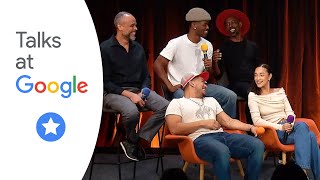
This Talks at Google session (host Patricia Paraja) features cast members from the Broadway musical Buena Vista Social Club. The event includes a brief performance, a moderated discussion about the cast's personal and musical backgrounds, rehearsal and research methods (including consulting Cuban musicians), reflections on authenticity and representation, choreography and dance training, backstage camaraderie, and an audience Q&A addressing touring plans and what in the show is factual vs. dramatized.
Chapters
Hello everyone. Welcome. Welcome to talks at Google. I am Patricia Paraja. I am the senior director of global growth marketing in our subscription and customer growth team here in New York City. It is the tail end of Hispanic Heritage month and this year our theme at Google is Fortaleza. Courage and resilience is something that we all want to celebrate and I cannot think of a better way than to host the cast of the Tony award winning Broadway musical Buenavista Social Club. It is inspired by true events and it tells the origin story of the iconic Cuban band of the same name. And its second centers on these legendary artists who created the Grammy award winning album in 1997. So quickly, show of hands. How many of you have already seen it? Are planning on seeing it. Okay. Quite a few of you. Great. So for those who haven't yet, it is a music filled journey. It's with world class Afro Cuban band. It's a sensational cast and what's so interesting is it transports you to Havana, Cuba. It takes place in two timelines. The 1950s before the Cuban Revolution and then the 90s. During the recording session, the show highlights the musicians personal journeys, their cultural heritage and the enduring love and power of music. I actually had the privilege of seeing the band perform in 1999 when they were actually touring the United States. So this is a full circle moment for me. Okay, so before we get started, a couple reminders. One, we are going to take audience questions. We have a dory but we also have live mics. So get your questions ready and then in just a few minutes we're going to sit down with a few of the cast including Mel Seme who plays Ibrahim Reinardo Batista Sterling who plays Ruben, Issa Antonetti, the young Omara Devonte Moody, Young Kompai and Wesley Ray Young Ibrahim. Before we sit down with the cast, we have a treat for you guys. First Mel and Wesley are gonna perform Murmucho from the musical. And then immediately after we're gonna get a sneak peek of the award winning choreography from from Que Bueno Baila outed. Take it away.
Sam.
Sa.
Thank you.
Sam.
I don't know if you saw when you were performing the little like beat in the audience. Everyone was swaying. I gotta say I saw this. I saw you guys perform two weeks ago. You got three standing ovations, two during the performance and one after. And I don't know if that's normal for most performances but everyone was trying their best not to stand up and dance. It was pure joy. So I'd love to get started. Because music is such a central, obviously, theme of this musical. How did this Cuban music play a role in your upbringing? Just talk a little bit about the importance of this type of music, and we can start with Issa and go around.
So I grew up with Hispanic music. With Latino music, it was in my bones since the moment I was born, because my father, he directs a band for where I grew up, and my mom used to sing with it. He plays the piano. And that band consists of all of my family, if not all of my family in there. So I've been surrounded with this music for a very, very long time.
So I actually didn't grow up with this Cuban music. My mom is my cuello rpero. I heard that. But I mean, it was always. There was always music of all kinds, you know, and we listened to mostly like salsa. Salsa and cumbia, but it was never, like, a lot of the Cuban stuff. So I didn't come to it until later when I actually auditioned way back a couple years ago for one of the workshops. And then I was just, like, enraptured. I was like, okay, I'm obsessed.
I learned everything has a way of doing that, right?
Yeah.
It just makes you happy and it embraces you warmly and so openly. So that's how I came to this.
Yes, I could say that in a way. Thank you. In a way, I'm in existence because of Cuban music, because of the fact that my grandfather, even if we all from Puerto Rico, he will say that I'm Puerto Rican, but in music, I'm Cuban. And there's a specific song. There's a bolero called Convergencia, and that's the bolero that my grandfather made my grandmother fall in love with.
Ah.
So that's why I say because of Cuban music, probably I'm here. If it wasn't for my grandfather, probably I wouldn't be here.
For me. So I am not Latino. I'm Jamaican, Bahamian, Afro Caribbean, But I grew up in Miami.
Miami. Shout out.
So that alone just, you know. Yeah, close enough, you know, Right. Right across the road.
So.
But just.
Yeah, I was always engulfed in the culture and, you know, the similarities in culture and music between, like, reggaeton and dancehall and reggae, just the similarities between that just made me instantly fall in love with the music when I was growing up and then reintroduced to it with this show. And I've been a part of it since January. We started rehearsals, and from that point on, I just, you know, couldn't stop listening to it. I'm always listening to some good old Cuban Latin. Latin music.
Latin chips gets in your blood.
Yeah. So happy to be here. Thank you for being here. Born and raised in Cuba and so, yeah, it's kind of like in my genes. I wasn't really aware of how ingrained this music was in my system until it started to become popular in the 2000s. And I was kind of like. I walked away from the music for a while and coming back to it, I just realized how much it's part of me. I knew all the songs before I even came in to be a part of the musical. So, yeah, it's pretty much the music that I grew up listening to.
Great. So let's stay with you, Mel, if you don't mind. How did you guys come to this project? Because as I mentioned in my introduction, it's back in the 40s and 50s, was the actual Buena Vista Club. Then in the 90s it was the Grammy Award winning record. And now obviously the musical. So at what point were you introduced to it or was it just auditioning for this project?
I actually received a very weird email through my website once because I haven't been playing Cuban music in a while and I met some guys from California and we put together a pretty cool band, folk electronic music band. We play a lot of festivals and we tour a lot. And so my Cuban music was a little bit in my back pocket for a while. So when I got this email when I visited the club in New York, musical. I gotta say, I'm not probably culturally, I'm not a big fan of musicals. I've never seen one. And so when I saw the musical attached to it, I've only seen the movies, you know, like La La Land and stuff like that. And I'm like, what does that, how does that relate to Buena Vista? Which is something so authentic and so grassroots. And I felt a little bit, I don't know, I wasn't sure. And I showed it to my wife and they wanted me to send them a video and I'm like, I don't know. I got this email and she's like, let's just send them the video right now. And then that was kind of like this. When the seed was planted, they, you know, answered right away. They invited me for a workshop. And then I meet, you know, I met all the people who were part of.
You were skeptical because you being from Cuba, you knew this was like an iconic legendary club. And you're like, how is it going to translate?
What are these New Yorkers are going to do. Gonna do with my things. I was very kind of, like, curious. I don't want to be a part of it if they're just gonna do some La La Land with this. And so. But lucky for us, it's. You know, they've. You know, they were working on it for, you know, for years, I think, like, for six, seven years prior to contacting me. And, you know, there have been so much research and, you know, when I met them personally and I met the people who were gonna be part of the thing, I'm like, this is incredible. I think this is great. I need to put everything aside and be a part of this.
Great.
Oh, for me, Yeah. I was brought up for the Broadway run. I didn't know too much about it. I was summer of last year, and I was just chilling at home, and I got a DM from Tara Rubin casting, and they just asked me to audition. I was like, yeah. I didn't know what for. They were just like, come audition for an original Broadway show. And I said, absolutely. And it turned out to be this musical. And I saw it was in Spanish, I was like, oh, okay.
Yeah. But growing up in Miami, you kind of, like, just.
Exactly. But I'm not even gonna lie to you. I am not as proficient as I want to, but, you know, I can get around.
So.
I just grew up around Cubans everywhere I looked. I went to school in South Miami. So, yeah, I feel like I'm Cuban by association. Osmosis. Yes. Osmosis is in my blood. But, yeah, I was. Basically, all it took was a DM for me.
Amazing.
Hi, Nadibel.
Yeah, I got. Somebody got in touch with me. I think it was through email or through text, one of those two or both.
So I saw.
And I was like, we would like to know if you're interested to be part of Broadway Buena Vista Social Club musical. And I was like, that sounds like my. Like, my ground. Yes. I mean, man, send me in, whatever. Yeah, absolutely. And it has been, like, I always say, every day it has been the best job I ever had.
But you knew about it before, right? Having.
Oh, yeah, yeah, yeah.
I knew about it because. Well, I'm a musician myself, and when the CD. When the actual CD came out in 97, and I saw it, and I turn around and I looked the name of the songs. A year before, I was already starting as a musician. And when I saw Cuarto de Tula. Oh, I know that song. And. And then I didn't know how big this record will.
Will.
Will get.
Yeah.
You know, and he reached to so many people worldwide, and, well, here we are now, 30 something years after later, and I'm in a musical CD that I was looking in the back, and I was like, oh, I know that song.
And now you're singing it.
So I got an audition request through my agent, 20, in, like, 2022, for one of the workshops that I was, like, unavailable for, and then got one in 2023, spring of 23, to do just one of the workshops, which is R and D. It's like research and development for a musical. So then I booked one of them, actually as a different character, and so helped kind of, like, develop it at one of the earlier stages. And then they wanted me to do another workshop and then, like, off Broadway, but I was also unavailable and then came back around and for a different character. And they're like, yeah, like. And this character was like, oh, I kind of, you know, this one seems a little.
Right.
This one seems a little more like something that I can do. So. And then had an audition, went in, and it was just. It felt like a little bit of a formality. I'm not gonna lie. I saw them. They're just sitting there like, hey, good to see you. And I was so nervous. I was, like, the most nervous I'd ever been because I kind of felt like it was, like, mine to lose a little bit. So I'm just like, guys, I'm so sorry.
I'm so sorry.
They're like, it's okay. It's okay. And then the music supervisor's like, we have to get something on. We have to get something down. But, like, you know, just. You'll get it. And I was like, why? Why are you talking in the future tense, Dean? And then after that, my agent was like, an hour later, they're like, you're on a stronghold. Next day, they're like, congratulations, you're going to Broadway.
I like the playing Unavail. I like the unavailable. You play a little hard to get, and then they come after you. I love it. Issa.
So I. I mean, I've been like, everyone else here. Well, mostly everyone else here that I've been just auditioning for things in my life, and that's just how the grind works. And so I was actually in college, and I. Last year and last summer, and I was just auditioning for things, and then this had come up, and I sent in a tape, as most people do now, and I, you know, just put it on the back burner and was just like, okay, that's That's. That's done. Like, I enjoyed singing in Spanish. Like, and then the next week, it was. I was going out of the country, and they were like, we want to see you in. And I was like, also kind of this unavailable thing where I was like, ooh, I really want to do this. But I'm like, can we make something work? They made something work with me. And then again, went out of the country, enjoyed a little summer vacation, and then I came back, and they were like, okay, we're doing in person auditions. And they had. And they were. I was grateful enough that they could fly me out to New York. And I did the auditions for two days. And just, like, the final. Just for this one character, the final auditions. And then the next day, I got in at 2am back to home, and I was sleeping, and I woke up at 10am to a call from my manager saying, hi, you don't have to do that other audition that we had that we have you doing, because you got this one. And I was like, slay. It was amazing. It was like, I woke up, like, drool everywhere.
So a lot of you. This is your Broadway debut. The majority of you. All of you. All of you. I've done a lot of homework. Yes, all of you. Broadway debut. Amazing. So just talk a little bit about kind of what you thought it was gonna be like and what it's really like now that you guys are all, I see your face. We. Anyone can kick us off.
I was reluctant to do it because I'm not American. So Broadway has always been something that sounds more like Steve Jobs, like Hollywood, like something that is familiar but foreign. And so, you know, I was touring. I was doing.
You mean Sundar, right? Sundar Pichai.
Right. And so when I got the. When I kind of, like, you know, did the. When they called me for Broadway because we did a off Broadway run that was like, three months at the Atlantic Theater close to here. And it was amazing. But it was like, I've never done theater before, so I did that, and it was cool. And I'm like, this is great. I'm back to touring. And so then they called me for the Broadway opportunity, and I called my band mates. They're all from California, and, like, I have this Broadway thing. But actually, something really cool happened to us. We were able to license one of our songs for Grey's Anatomy. And so this year was like. Was gonna be, like, a cool year for us. And I'm like, I got this call to go to Broadway, but, you know, Next year, it looks so great for us. And they, you know, the three of them call me back and they're like, you're fucking out of your mind.
If you take it. Take it.
What are you talking about? Like, we have so many things planned out.
I'm not.
I'm not, you know, I'm not doing. You're doing it. So one of my bandmates, dad called me. He's a judge in California. He's like, mel, I don't know how much they're gonna pay you. You have to do it. So I was reluctant a little bit because I already kind of, like, saw, like, how the theater was. But then when I came to the Broadway thing, I'm so grateful they pushed me to do it because I've learned so much and my whole life has changed completely.
I bet anyone else expectations of what you thought it was gonna be versus what it is, It's exhausting. I can imagine.
Well, I relate a little bit to what he said before. I just was hoping that it will not become a.
Like you said, like a la la.
But it has been a magnificent experience, in my opinion. I mean, it's. It has gone beyond my expectations. Working in it and the way how it has been, you know, like the final product, you know, and it's just great to see the reaction of people when they see it. They come, like, with this light in their face and their eyes and people crying. It's not very good. It's not very great. How can I say it? It's a very great. It's that satisfaction to see people like that.
Yep.
Yeah.
Just actually piggybacking off of that. I thought it was gonna be just like, growing up. Growing up, it was always. Broadway is like, you do your job and you go. So I didn't think it would be as fulfilling as. And I didn't know that. Similar to my. I didn't think it would be an authentic thing. Cause I'm like, they got me. I'm not even Latino. Why they got me in here. They probably got a bunch of, like, fake, like, people that look at. So I'm like. I had all of these preconceived notions of, like, it's not gonna be what it is. And again, I met the people, and then I was like, oh, all these people are insanely talented, very nice people. And then the people that come to see the show, Latino or not, they just love the show. So it's just so fulfilling to see that and meeting them at stage door. And some people have such a Deep connection to this story and whether it's them that left or their family that left. And I've had people that dance with Omara and her sister and the Tropicana. It's really cool to meet these people.
The woman sitting next to me was crying the entire time. And she looked. I looked at her, and I kept giving her Kleenex, because I'm a mom, so I have Kleenex in my bags. And she was like, these are tears of joy. And I was like, oh, really? It touches so many people because it's part of their history and their heritage.
You all.
Or do you want to move on? Okay, let's move on. So for those who haven't seen it, there's a really interesting tension because it takes place, as I mentioned, in these two timelines. And in the 50s, you have this backdrop of this leading up to the Cuban revolution, but you also have this vibrancy of the music. So for those of you who played the young characters, that's Issa, Devon and Wesley. Knowing that your characters were going through or living in this period, how did you go about preparing for it? Did you want to learn more about the context of the 50s in Cuba? What was your process of figuring out kind of their state of mind?
I think it was very helpful to have people who lived and live in Cuba with us in this experience. I'm specifically thinking of Davido Kendo. He is. He's our, like, one of our featured guitarists. Like, he's. But he's so much more than that. He's amazing. He's worked with the act, like, with the real Compa y Segundo, and he. I mean, I remember being in rehearsals, and we would just sit with the music, and. Because this is an original Broadway show, like, we're like a new one. We're making, you know, changes to the songs that. To make it more theater, to make it whatever, just to make it more authentic to us and to our voices. And he was explaining specifically for me, Omara, and just how she's got this, like, she's known as the Queen of feeling, and she has got this deep, like, deepness to her voice. And that he was like, take that with you wherever, like, wherever you can in any place of the song. Like, try and find that. And that was important to me because I was like that at the end of the day, that is why she stayed. This music and the people that she loves, this is why she stayed in Cuba. And so it was nice to hear from him about what was going on from an actual one on one experience compared to doing as much research as I can. And I feel like I was grateful to have him still grateful to have him in this experience.
You got it firsthand. I would have been like, tell me all the stories, tell me everything.
The rehearsals were so. They were long. And we. You were like, okay, you're done with music.
And I was like, no, yeah, I want to stay. Amazing.
Yeah.
So it was a combination of watching every single YouTube video that exists about the history of Cuba and shout out, well done. And also like, you know, going down the Wikipedia rabbit holes and all the articles, just reading, reading, watching videos, watching interviews and then. And having the confirmation and also the access to the people in the room who are actually there and who have this connection. Davido Kendo lived around the corner from Compay Segundo. And so not only was he instrumental. In orchestrating the music, like orchestrating the show, but also kind of giving us personal anecdotes, but because he had such a heated relationship with the person that I'm portraying, you know, it was getting that confirmation. He's like, you know, he's like, no, that's compai.
That one.
Good job, good job. And I'm like, okay, you're just getting that confirmation at the same time. And you know, as we're learning the music, as we're learning the music, it's kind of. I'm like indirectly learning from the person that I'm portraying, which was like kind of cool, but also kind of like meta and ha and just like really cool and really special. So it was just a combination of all those things, you know, just the. In person and literally I could, I'm an expert on the Cuban revolution at this point.
Yeah. So all of those, all of those things. And just we, during the rehearsal process we had the 90s cast would have their table work and table sessions and talking about the history and how we're going to convey all of these crazy things of like the Cuban regime and like, how are we gonna melt that into this two hour show? So the 90s cast had one and the 50s cast also did. And we talked a lot about, specifically for me, how we're going to convey like, you know, the elements of racial discrimination in Cuba and like how it plays not even just here, but also in Cuba and in the 50s at that, when, you know, the revolution was going on and expressing those beautiful themes of, you know, Afro Cubanism that Ibrahim very strongly stood for. Like Bruka Maniwa talks about, you know, the slaves that Came through and the trans during the transatlantic slave trade and all these crazy themes. And just. So I did a lot of research on what it was and talked to Sahim and talked to David. And then also a beautiful part too in the show is I do a bata section which is like. Like for Ogun, which is like an African God. And we do a lot of. We did a lot of research on that and a lot of the musicians are initiated into that religion and I got to learn a lot. I also studied a lot of it being in Miami and Ailey, which is probably, I think, a question for later. But yeah, I did a lot of research on that and got to work. A lot of my artistic expression, I think in this show is with the music and the dancing, specifically the dancing. So we did a lot of research.
To talk a little bit about that. You're right. It is a follow up question. Talk a little bit about your dance, your extensive kind of training and how choreography kind of played a story element in this in the musical.
Yeah, absolutely. So my background in dance was in Afro Caribbean movements. I studied that in Miami with a guy named Peter London. He is pretty much my dance teacher from when I was 15 years old. And he was Martha Graham, principal dancer Alvin Ailey. He's from Trinidad and Tobago. And I learned a lot about the deities and African gods and how that was expressed through dance. Like we would have. They would have different parties and things celebrating the gods and thanking the gods. So a lot of it was based around that. And then two years ago in the summer, I studied at Ailey School. And it was kind of the technical side of it and it really helped because, yes, it's great to have the technique, but also with this authentic and grounded type of dance, you really have to just be connected in any way possible. So a lot of it was just sitting down and learning from Peter and just, you know, he was very big on the divine center and connecting yourself and connecting your chakras too, the higher power, whatever it is. And it goes far beyond like belief. It's really cool. And belief in spirituality, but it's really cool to connect the dancing to. It's almost like you're being, for lack of a better word, possessed by this beautiful art. So it was really cool to tap that into on a Broadway commercial stage. Yeah.
So moving to the. The folks who portrayed your characters in the 90s. I don't like to say the older versions because it's not.
You're not less young.
The less young versions. The rebirth of the Bueno Vista Social Club. It really did become a global phenomenon. You both, even on this panel, spoke about the responsibility and the weight of making sure that it was authentic, making sure that you were representing the legends appropriately. Did you feel that weight and how did you do that day in and day out, you know, knowing your history and talk a little bit about the importance of where you come from in your history.
You gotta catch me off guard like that.
You guys. We sent you these questions.
And I took em.
These aren't gachas.
Go ahead.
Yeah, I think it's a responsibility because for some people, this is part of their lives, right? And it's also part of my life. Like, this character used to be my childhood musical hero, Ibrahim, and I've been in touch with his son. And at first it felt a little bit like a weight on my shoulder because I'm not an actor. So I felt like I had to fake something. I had to impersonate something that I am not.
This is your Broadway debut and your acting debut.
Yes.
That is incredible. You guys. Wait till you see him on stage. That's incredible.
So something that really helped me was that I'm. I'm so lucky that my life resembles a little bit of points of contact with the Ibrahim Ferreira's life. So I grew up in Cuba, graduated from music university. I started playing in symphonic orchestras and jazz groups. And I was kind of like in the chic environment of musicians, where you're like, all right, you're gonna be performing and whatever. Anyway, I ended up working in Switzerland for a bit and then in Denmark for a bit. And I went to Spain on holidays, and my working visa was about to expire, so I went to the Cuban consulate and they took my passport and they banned my entrance to Cuba for five years. And so in order to survive, I had to busk and I had to play in bars for food. And then fast forward in time, here I am on Broadway, and I feel like Ibrahim Frederick was a little bit like that in the 50s. He was, like, playing, performing in these different places. And then the revolution happened. All of that changed. He was busking and shoe shining in the street. And then there was a rebirth of his musicianship and his life through the Buena vista in the 90s. And so what I realized and what my coaches helped me realize was, like, I didn't have to fake anything. I didn't have to impersonate anything. I could just, like, use my experiences and the things that I have gone through as the support for the script. And so that really Made it so much more valuable for me to pay homage to their memory and to what they did to the world. Because their lives are basically an inspiration or a resemblance of what my own life has been.
Hey, Naruto, do you want to talk a little bit about. You have an extensive jazz background and you are like an ambassadorship. You go around and teach and play jazz. Is it similar in that now you're like the ambassador for this cultural movement that is Cuban music.
Yeah, not necessarily jazz ambassador, but to be specific, I. I was a member of Lincoln Center. Yes, Ambassador. So I did like a trip twice with them. The first was in Latin America and the Caribbean and the second one was North Africa, Central Africa. So last on Ambassador. Let me see. I feel like right now in this show we are being ambassadors ourselves.
Exactly.
Even if we don't have to travel, people are come to us to see us. The other thing is that, well, there are also plans of having this show for next as a tour.
Is that right? That was one of the questions. So you are planning on taking this?
I don't know if we're going, but the tourists.
The tour is going. Okay.
So that's another way of being basically ambassadors of this story, if we can put it like that.
You know, spread the joy. Spread the joy. So you guys all. We had a chance to hang out backstage and there was clearly a connection with all of you. And it sounds like you just started working together in January. What? And the representation, the Buena Vita Social Club, also has this deep rooted friendship. What do you guys do backstage? What's your kind of like routine? I see some smiles, like, how do you have this connection? It seems very organic, very natural. Do you guys hang out outside? I mean, it's so grueling, the hours that you have to maintain. So you spend a lot of time together, I would imagine.
I know many of the musicians. Sorry, I know many of the musicians because I'm a musician myself. So each time they bring another musician. Ah, how you doing? And all that. And most of the time they can tell you, me and some of them be driving crazy people, you know, practicing on stage. Because we'll be practicing also with the.
Drums and all of that.
So that's one of the things that, you know, some people be doing exercise or calling or warming up on stage. You know, things like that that you do when you're on a stage.
You were saying, well, when you do a show like this, your time is vastly compounded with each other. And so, yes, you say only since January, but like the Mileage that comes from the hours and hours that you spend with each other, having to be vulnerable to multiple extents, that it really just compounds the time and it compresses the time. And so you kind of get the same. Like, if you think about a regular friendship that you have, right? If you were really to put in the number of hours, 100 hours over maybe, like, several months, we could do 100 hours in two weeks. And so that alone is just. It gives you the opportunity to really connect and also see when somebody's frustrated. But it all happens very, very, very quickly at the same time, I think, throughout our entire building and just what the show is. We all kind of understand that, like, there's very, very, very, very, very, like, minuscule drama, at least, that I'm privy to in the building. And I think we all just kind of come to it with the respect and the humility that this is so much bigger than all of us and that we really are making history as the first Afro Latino show on Broadway. This is the first year that two Latino shows have been on Broadway at the same time ever. And so this is the first time a show has been on Broadway where all of the music is exclusively in Spanish. And so there is a legacy that we're kind of building and a history that we're making that kind of garners this respect from all of us. And at the same time, it's so much fun. Like, it's just fun. The music makes you happy. And so even when we're waking up early and it's cold outside and we're going into rehearsal, you know, we walk in and there's. The music is playing. There's, like, smiles going and, like, you're like. You still got crust in your eyes, just trying to get the coffee to hit your cerebellum as fast as possible. And you're just like, oh, man. There's just a warmth that just melts you and defrosts you and opens you to that camaraderie. And it's a social club. Yeah, it's a social. It opens you to this experience of building this beautiful thing together and appreciating everybody else's gifts that they have to bring to it. And it's just a celebration.
And.
And at the end of the day, it's a celebration every day. And even when you're not having the best day, we're on stage and it's, you know, those first moments where you go. And it kind of, like, it just kicks up this dust, this kicks up this Dust, you know, from the ground, and it's like, ah. And then we're just, like, breathing in it, and we're there together.
It's amazing. I love that.
It's great to love your job.
Yeah, you guys are lucky. Simply put, we are gonna open up to the audience questions. There's two mics if you wanna line up. And while we're getting folks to line up, we have something called Adori. So we're also streaming this, so those. Cause as you know, we have offices all over. All over the world, and so people submit their questions. So I'll read the first one before we go to our live audience. The show is the most vibrant and beautiful Broadway show I've ever seen. Any plans to tour nationally? Thank you for blessing us with so much Latin greatness.
Yes.
So you mentioned there's a plan to tour nationally.
Yeah, there's a plan to tour, I think, next fall. And we'll see what happens, because it's going really well on Broadway right now. So maybe we'll have to clone the company so that we can send a company out and still be able to perform here on Broadway.
That's usually what happens when it's successful. It's like, okay, then you have another company. And then, you know, like, Hamilton had, like, 15 tours going out at the same time. You know, they did it too fast. But, you know, a lot of these shows, like, MJ has, like, five companies out right now. North American, Germany, London. London's about to close. Australia, but Australia is gonna be the. You know, so you kind of just. You build this thing, and it's. It becomes a machine, unfortunately. Unfortunately. But then you. And unfortunately. And then, yeah, you just kind of, like, plug it, and you kind of recreate this thing, and it becomes another extension of the show. But, you know, they still want to make that Broadway money.
This is the original. You guys come see it as well.
As the touring company. So, you know.
Great. We have a question over here.
Yeah, I was able to see it in the Atlantic, and then I've seen it a couple times on Broadway. And so as an audience member, it's been interesting to see, like, there's a pivotal scene that used to be a dance, and now it's a conversation. So it was interesting to see all of those changes.
Thank you for coming so many times.
Yeah, well, I'm Cuban, so it's kind of like a requisite whenever our family's in town. But would love to hear from the perspective of the two folks who were in the Atlantic, what is it like transferring from Off Broadway to on Broadway with all of these changes to something you did day in and day out for three months.
Yeah, it was interesting because actually the Atlantic was. It felt like a complete show. And so when it transferred to Broadway. And Broadway needs to be really compact. And in terms of, like, the production itself, the dimension of this, it was 200 seats in the Atlantic is 1200 seats on Broadway. And so, yeah, there was some adjustment. There was a little bit of a. Something that felt a little bit like a grind because we were attached. I mean, maybe me personally, because I'm not really a theater person, and there were some moments in the Atlantic version that were so, oh, my God, is that gonna go? But then, you know, when the thing was complete and we started trying it in front of the audiences and everything felt so in flow and beautiful, I think it grew. It became a more complex and compact kind of art form.
Awesome. Thank you.
And then one more question from the Dory. I love the performance. I understand that this is an amalgam of a true and embellished stories. What is true and what is embellished? I really want to know.
This is actually kind of fun. So from what I know of, we, like, a lot of the ages are, you know, are kind of are different. Like, we've got the, like, 50s cast, and you assume they're around the same age, and in real life they're not. Like, compais. Segundo is.
He was.
He was 50.
He was.
He was born in 1902.
When I think he met Omara as, like. As someone who's like, in her. Like, in her, like, younger, like, 20s or something. And so, like, that's something that when I think about it, I'm like, oh, like, you know, it just. It takes me out because I have to just, like, remember. I'm like, okay. We're like, this is the. This is like, this is embellished at the end of the day. And then one of my favorite things is that the romance between Ibrahim and Omara is not real. So, I mean, I'm sure there's like, there's love there, of course, but, like. Like, I would hope so, but it's like, it's not as like. Like, it's not as emotional as that and Islamic as, you know, as real as, like, we're making it. I don't think there was any kiss, you know, during. In the real life. So that's. I think that's very fun because I'm like, this is something that I get to like, make true in my story as this character.
Ruben and Kampai didn't meet until they made the album. Like, in the show, we're kind of portrayed as, like, you know, bestie, besties. But, like, when we. They didn't meet until they made the album. That was, like, the first time that they had met. I don't think did like, I. They didn't ive also, she didn't die. They took a picture. Like, Omara posted a picture, like, a couple months ago of, like, them together. I think she recently passed.
No.
Yeah, like, no. No either.
I did.
Oh, I did.
They weren't estranged.
Yeah, they were.
They weren't estranged and they were together. Like, they post. She posted a picture of her and her sister before she passed.
Wow. Tension for Broadway.
You know, they have to theatricize. And Omara is also, like, like, very, very, very warm and flirty and, like, so soft. So that is, like, yeah, very different as well.
Very different.
I love it.
One more question over here.
Hi, my name is Maya. I had the privilege of bringing my dad to see this show in February, and he loved it. And apparently I gave him cool credit or because he told all of his friends about it. It was before it got even bigger. So I got that cool credit. So my question is, I have only recently. Recently become a theater fan. And from an outside observer, it just seems like it's an art form that is deeply collaborative and requires so much trust and vulnerability. And I'm so curious if you can provide, like, a peek behind the curtain on what that process looks like and what learnings could be applied to other work types where you're building trust. So are there any, like, exercises or things that really helped you bond as a. As a unit? And that could be applied to.
Great question for Googlers here. Great question.
I guess it's like, kind of like when you go on your first day of school that you don't know anyone. You start slowly knowing people and knowing the cliques here and there. And then anybody else would like to add something.
I remember during rehearsals, we had a lot of time set aside to just sit in a circle and do little cute little bonding exercises of, like. We had a couple of questions and we all put it on. We put our answers on this little card, and then we threw it in the hat, and we would guess. Somebody would go in the middle and pick a random one up and be like, whose is this? And then all the way until everybody was done. So we had stuff like that set aside to connect us, and we Also, very early on, we established that while this is a very intimate and beautiful story, this is also, at the end of the day, we are work family, because family, you know, family, you know, if y' all get in a tussle, whatever, you're gonna make up and it's fine. But, like, we were like, hey, if I don't get my check on Thursday.
You know what I'm saying?
So we established that very early on, and there was a. There was a lot of. I guess a lot opened up in that, like I say that to say. So we established the relationship very early on, and we all understood what it. And we also also obviously do care about one another, so we. We set a lot of time aside to get to know each other and, you know, establish that relationship of like, hey, we're cool, but this is a work thing, a work family, and you know what I'm saying? But we. We come. We come above that in a sense, when we. When we establish that. And it's all in good fun.
So, yeah, I think. Oh, sorry, do I. I was, like, checking behind me to see if you were gonna answer. I think along with that, yes, there are those group exercises that can help you especially establish that trust or just get to know people a lot easier. I think that at the end of the day, who you put out there, who you put out into the world, is what you're gonna try and receive back. And I feel like if you. You don't, there's no need to be an open book to share. If that's your thing, that's my thing, then please do that and just be confident in that. Because I feel like the more that I have shared something with someone that I feel comfortable to share, I find that they feel a little bit more open and inclined to do the same thing. And I know we learned that, but in this process, you're going to be spending so much time with these people, it's so, like, it's sometimes easy to let that guard down, to, like, trust that they'll take care of you and you'll take care of them on stage, off stage, and of course, there are boundaries. And when that happens, you. You get there. But if you're. If you're putting that good energy out yourself, not to sound, you know, but like, if you're putting that out there yourself like it is, you're bound to find that. And so to have that trust in yourself at the end of the day that you're going to. That you're confident in yourself and that you're going to make the friends that, you know, you. You want. Then I feel like that's what's created that for me. And this might inner circle, if you will.
Theater is a very vulnerable thing. Acting is a very vulnerable thing. Being human is a very vulnerable thing. And so I think I. Every show process is different. I think I have done a little more experience with just a bunch of different shows. And you have to be very attentional about creating a space where people feel like they are allowed to be vulnerable and you're allowed to also be closed. But I think what happens is. And what Sahim was so good about and what I've had other directors. Yes, the exercises. There are ways to kind of. Of put play into how you're approaching that experience. Because we have this standardized, these formalized things. Okay, we're gonna do this and this thing. But I think a lot of times play is vulnerable, but play is fun, and play is how you learn quicker. That's how you are more open. The brain scans that show how the quickest way to learn is through play, because it's not a formalized thing and it's not compartmentalized. And so what happens, I find that could translate to many different workspaces, is fostering a space where people feel like they can be vulnerable, but they also feel like they don't have to be, and they feel like they can come to it where they are, and people respect what that space is and say, you know what? I'll see you when you're ready for me. Or like, I got you as well, you know, and like, whatever you're doing, we're doing this together and we got it.
I love that. And that's in life. That's in life. Right? We're going to take one more question. Are we at time? We're going to take two more questions. Great. Go ahead.
Hi.
Thanks for coming today. Love the show. I saw it right before I went to Cuba for the first time this year. So you guys got me in the mood. The whole party scene and all that on stage is wonderful. My question for you is that I noticed that this production has the band on stage and performing with all the actors.
Right.
It's all kind of mixed in. It's a little bit different from some of the other shows where the band is in an orchestra pit, hidden. How's the experience different as far as, like, as a performer on stage?
It's perfect. I love, love having them on the stage with me, although sometimes I feel like I can't break character. And look at them. But sometimes they'll do, like, they'll do something amazing in their solo or something like that. And I'll be like, woo, that's amazing. But I can't do that on stage. So just to have that authenticity every night, it's perfect for me. I couldn't ask for anything better, especially for my Broadway debut.
Yeah, I think one of the things that's very special about this show is that it's a mix between an actual play and a concert. Because there's no, like, musical dialogues. I was waiting for you. Right. So I really love the fact that the band is there for you guys to experience that concert. And then the play has all the weight and the drama and the, you know, the funny parts and all of that. So I feel it's a very beautiful combination of those two things.
Show is about the music. So they really were intentional about highlighting that. And we were just, yeah, there's like story in between it, but the show is about the music at the end of the day. And so that was integral. And also, these are not like, you know, regular union musicians. These are ACU musicians. That's not like, you know, Jeremy from Des Moines, who is like. But sorry, no offense to any Iowans out there, but. But no, like, it's, it's. It's real. Like they're like. Some of them would be like, I would never done this if I was in a page. You know, they're honestly. And they're also part. They're characters in the story as well. So it's, I think, the most integral part of the show.
Do you guys know. Actually, the question before was exactly that. Do you know the story of how they assembled the musicians on the stage?
I don't think that's a question for us, but. Because we're not. I mean, like I said before, I'm a musician myself. And David is the one that I have to say thanks because he also recommended me for this and he recommended me as a singer and musician. Somehow I end up acting. I did it before when I was a teenager. So getting the band together, I guess that was a process. Of all the people that are not.
In this, it was Juan demarcos. Juan de Marcos was.
Juan de Marcos exactly.
Handpicked everybody, he called it. Between him and Davido, Kendo and Chacho, but he handpicked everybody, he called them. It was like, yeah, I mean, but.
Juan de Marcos is the original producer of the Buena Vista Social Club album from the 90s, the Grammy Award.
That makes sense.
So he's, like, a little bit of a Godfather of the show.
Yeah. And he, like. And he is the reason why a lot of all of this Cuban Latin jazz music is still prominent today, because he is the, like, safekeeper of it all, and he's the reason why it's still going.
And.
Yeah, the fact that he, like, you.
Guys are also the reason why it's still going. It's true. It's. You are sharing this to the rest of the world. We're gonna take one more question, and we're gonna wrap.
Hi.
So, first of all, thank you so much for coming to our company. I'm Karen, and I'm a dancer, not an actor. And today I've heard a lot about vulnerability on the theater stage or backstage. And unfortunately, or fortunately, I'm only familiar with vulnerability in a dance company. So my question is, for those who have experience in both, how does that vulnerability differ, if any, between a theater company and a dance company?
I think, yeah, for theater, I think it's a little less on the nose, and I think that dance does something that theater cannot, and vice versa. I think dance is a very physical thing. So a lot of things, like, when you're mad, it's more here, and you're like, you know, and you can obviously implement that in your dance. Like, whatever the emotion is, whatever the feeling is for the dance and, like, dance company, it's. Yeah, but there's just a certain. There's a certain breath. Different breath and a different vibe that comes with theater. A lot of it is more internalized, whereas I think confrontational versus internal dance is more confrontational. And it speaks on so many. And so does theater. But I just think that they have different. They have different, I guess, alleyways into the same deal. Like, I kind of equate it with. I kind of talked about this in class the other day. I equate dance with, like, Malcolm X and theater with Martin Luther King. Like, Martin Luther King used his words and uplifted the community with his speeches, with his words. And Malcolm X was a lot more about physical force and getting what he wanted. So I guess dance kind of has that effect. It's all for the same cause, but just different avenues. Thank you. That's the word. I like that.
Yeah.
I hope that helped.
The last dory question is not a question. It's a statement. But I do want to read it out loud. I just want to say that I was in attendance of your performance in July, and it felt so magical to be in a room with so many of the Latin community of all generations, dancing to the happy songs, wiping away tears to the heartfelt songs. It did not feel like just a Broadway musical. It felt like a cultural connector and celebration. So thank you for this beautiful performance. I want to encourage every single one of you to go see this. To go see it again. To go see it again. It is a joyous event. I want to thank Issa and Devon and Reinardo and Wes and Mel for visiting us here in our Google offices and sharing your talent with the world. And I lastly just want to say representation matters, especially for this generation that can see themselves in you on the stage. So thank you for what you do. We celebrate you. We're so grateful for you.
Thank you.
Thank you.
Thank you, guys. Thank you for doing this.
Having this conversation in a place like Google, which in so many people's eyes, people who want a better world and all that, see, like, these huge corporations as the devil. It's so great to plant a seed of conversations like this about inclusiveness and art and vulnerability. I think this is something great that you guys are doing here. So we appreciate that that.
More from Guy


Cheryl Strauss Einhorn | The Human Edge: Smarter Decisions in the Age of AI | Talks at Google



Rachel Glennerster | Innovation and the Center for Global Development | Talks at Google

Rebecca Winthrop | Rethinking the Purpose of Education in the Age of AI | Talks at Google

Dr. Robert Wachter | A Giant Leap: How AI Is Transforming Healthcare... | Talks at Google



