Broadway's Stranger Things | Talks at Google
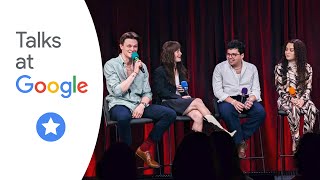
Cast members from Stranger Things: The First Shadow discuss bringing the Netflix hit to Broadway, including how they approached iconic characters and a new one called Patti/Paddy. They share audition stories, the show's immersive effects, and how audiences have responded to the West End production adapted for Broadway's larger scale.
Chapters
The perfect house for the perfect family. This is gonna be a fresh start for all of us.
If you start to get upset, just take a deep breath and say to yourselves, I'm Henry Cre. I'm normal.
It's not real.
I'm normal.
It's not real.
I'm normal.
I know you think you're bad. You can fight it.
It's not normal. You can't outrun the shadow, Henry. It's not real.
You are the shadow. I'm henry creel.
So, ladies and gentlemen, before we get started, allow me to go. Today we will have Gabrielle Neville, Allison J. Burke Swanson and Juan Carlos, who will be discussing with us Broadway's Stranger Things, the first shadow. This is a global phenomenon that comes to life on stage in an award winning, jaw dropping spectacle. The play focuses on the Creole family, specifically on Henry Creel, and it walks us through how they move over to Hawkins, Indiana, and how he goes through his transformative years as a teenager, eventually putting him on the path to become one of the main villains of the show. Vecna. Now, I'm going to pause for a quick second. How many of you all watched the show? Raise your hands. Okay, for those of you that didn't, you're going to get a lot of spoilers coming through soon, right? But the show also allows us to explore some of the early versions of some of the most iconic characters in the show. For example, we have Grace Maldonado, Jim Hopper and Bob Newby as we get to see their high school versions and how they slowly start to brush against some of the supernatural forces that we'll come to see later in the show themselves. The show astonished the West End over in London winning the Olivier Award for best entertainment, the what's Onstage award for best new play, the Critics Circle Theater award for Best Designer, among many others. And critics are hailing it as a game changing experience that makes the unimaginable real and takes theater to the next dimension. Now, I want to put this down for a moment and I had a chance to see the play actually on Saturday.
And.
And do you guys mind if I take you through a really quick scene for a moment? Can we play the imagination game for a moment? Okay. It's Saturday. I'm sitting, I want to say about 20 rows back, right? I'm sitting in the row. All of a sudden the show starts in there we are on the deck of a navy ship, the US Is currently at war, and we're trying to figure out what is going to be our weapon in this War scientists discover that if we use enough energy, we could perhaps even if just momentarily, make the ship invisible. Such a weapon would be incredible for us to have. And so we watch as this energy machine powers up. And all of a sudden, we're still on the ship, but the ship is elsewhere. We see as fog rolls over the stage and it comes into the crowd. I start to smell a little bit of sulfur in the air. And then as I look to my right. Guys, look to your right, please. As I look to my right. Oh, well, I guess my right. Guys, look this way. As I look to my right, and then I look to my left, I start to see in the aisles, sort of soldiers coming up with guns. They're all getting ready. They feel this sort of tension. Something is out there. We don't know where we are. One by one, we watch as creatures begin to devour these soldiers, eventually bringing the ship back into its original world. For many, this was a horrifying experience that resulted in many deaths. For some, it was kind of a success, actually, because for a moment, the ship was invisible. We couldn't see it. But for those that know the darker truth, it wasn't that the ship was invisible, but rather the ship had gone somewhere. But where? And what did it bring back with it? That, ladies and gentlemen, happens within just the 10 first minutes of this mind blowing spectacle. To call this a play feels like far too small of a word. And I've been struggling to figure out what to call it. But lucky for me, I don't have to figure that word out because I have some of the cast members who are going to help me figure the words. And over the Next, say, about 50 minutes that we have. Ladies and gentlemen, are you ready to welcome them onto stage? Please put your hands together as we bring up Gabrielle Navia, Alison J. Burke Swanson, and Juan Carlos. Please come on up, everyone. You guys can make more noise for them. Ladies and gentlemen. Come on. Amazing. How y' all feeling?
Good.
We gotta get you on payroll, man. That's a good one, guys.
I do birthday parties and bat mitzvahs, right? But going from there. Okay, so we had a chance to send over some of the questions in advance a little bit. And my favorite one that I love to ask everyone real quick is walk me through a recent obsession or a rabbit hole that you, as the individual, not as your character, have had recently. And this is mainly because I just like to know that stars are also wondering the same thing we are. Why don't you kick us off?
Who wants to Go first. Oh, you want me to go first? A recent obsession of mine has been the New York City food. I moved here from Los Angeles and you know, hot take. I think New York has better food than la.
Not hot take, it is.
I mean, you know, we've got the bagels, the pizza, the Italian food. I have been scrolling on TikTok trying to find all of my favorite spots. Right now it's Jupiter and Rockefeller Center. So that's my latest obsession.
Yeah, well, when. When I think about rabbit holes in Google, I think about like when I have my ear hurts slightly and I like looking up what are my symptoms and then I find I'm gonna like die in three days. I'm like, no disease from like Madagascar.
Or something where it's like I've never been there, but I think I have.
Exactly the Mayo Clinic. Rabbit holes. It's like I could either have a sinus infant infection that goes away in a week, or I'm. I'm just a goner. There's no in between. So maybe that's my rabbit hole that I go down way too often.
Self diagnosis.
Yeah, self diagnosis.
From one hypochondriac to another.
There we go. There we go.
Definitely another. My. My rabbit hole recently has been just an obsession with mustard. Different types of mustard. Yeah. Currently on like the, the hot Chinese mustard train. So that's. That's a fun. That's a fun little one.
I love that.
I love that.
What's up?
I've been coming to terms that I'm becoming more and more. I've spent years receiving my mother's love through gifts that she buys on Instagram. And it's usually these things that don't actually work or are gonna disintegrate in the wash within a year. And I have now gotten got by Instagram ads twice within the span of this process, which is not a great sign for me. I've bought and glorified paper towels, paper towels for my face. And I just bought remineralizing gum, which maybe it's doing something for my mouth. It seems like a cool company, I don't know. But the taste wears away within 30 seconds.
I suddenly realize I haven't called my mom today. Okay, cool, right? My inception. Fun fact. What do you think is the most stolen item from the Frankfurt airport First class lounge for Lufthansa? First class lounge of Lufthansa at Frankfurt Airport. The number one stolen thing when I ask people this question is like art vases, whatever. No, it's little rubber duckies. So somewhere in the world, there are incredibly affluent individuals who can afford to fly first class. Lufthansa. Often they have their Byzantine Empire sort of statue, their basquat over here, and then rubber duckies from Lufthansa. Lufthansa found many years ago when they created the lounge, they put little rubber duckies as decoration. People kept taking them as mementos. And Sulfthansa since then has started coming out with custom versions for, like, your birthdays or unique events. But I love the idea that there's just a bunch of duckies out there that people really obsess over.
I think that's really beautiful because I think it's that thing of like, what is the. What was the original. The first person to steal the ducky? What was the idea? It was like, maybe I can't get the piece of art off the wall, but I can get that there's some little, like, Mission Impossible moment of everybody getting that little.
Forget a Stranger Things prequel. We need a rubber ducky.
Let's unpack that, please.
The rest of the entire conversation is about rubber duckies from now on.
Right?
But no, please. Speaking of sort of the first. Right. Walk me through that first moment that Stranger Things, the universe got you. What was that point that made you feel like, you know what, I want to be a part of this universe. And then we'll talk a little bit more about the play itself. But I'm talking about the show and the universe there. Anyone want to take this first?
Yeah. So I started watching the series when I was probably, like 12 or 13. And that was the first time that I really saw young actors spearhead an epic show. And I think as a creative, it was really inspiring for me to see young kids be the lead of such a profound television show. That was unique. It was kind of like the Goonies, kind of like that old 80s vibe. But it was something new and it was something fresh. And specifically seeing Millie Bobby Brown be the superhero, be, you know, the kick butt girly, it was truly something that grasped me as a young kid. And then as I got older, just kind of watching the exponential growth from season one to season four and not knowing what these kids probably went through. You know, it's kind of like the Friends effect of they're probably the only ones that understand each other and understand what they all went through as they reached that superstardom. And, you know, when I was 12 or 13, it was just the fact of having young kids lead an epic story.
Yeah.
They often talk about, actually, I think some of the pains of growing up right, is being overly sexualized when they were younger or down to the parts of like, I think one of the actors, I forget who it was, one of them mentioned it was the first time they'd ever kissed someone and then struggled into that. Right. But having that be on set in front of all these strangers, it can be a little intimidating, right?
Yeah, for sure.
Yeah. I. I love the show. Right. When it came out as well, I was like 14. I was so into those Spielberg films of the 80s and night, like Jurassic Park, E.T. close Encounters of the Third Kind, which is such an inspiration for the series, the Duffer Brothers say. And you can feel that. And I love that. It's a story of kind of outcasts coming together like unlikely friendships. Like, here are these nerds that play Dungeons and Dragons and here's Steve, the cool guy, but he's kind of an outcast too, because he's mysterious. No one really knows him. So they kind of. They kind of come together in that way. And. And our play is very similar in that same sense. But I've been a fan since so long, and I think being a part of this process, I almost forgot I was a fan because it's the work we're doing, you know, day in, day out. And then what, two days ago, the season five trailer comes out. And I'm watching it and I'm like, I'm so hyped. I totally remembered. I was a fan. I was like, this is awesome. I remember when it's funny playing Bob too, because when I. When season two comes out and Bob comes on screen, I'm like, that's Doug from 50 First Dates. That's my favorite movie. I'm a huge fan. I'm like geeking out that I get to be right next to a screen that says right now.
I love that. We'll print that out. We'll give it to you as you walk.
Appreciate it. Appreciate it. Yeah, I don't have a printer, you know.
Apologies. If I can apologize for a moment. I didn't actually introduce properly their characters either. Right. So some of these characters you will recognize from the show because they play the earlier versions, the teenage versions of them. Right. We have Alison J. Playing Joyce Maldonado.
Right.
The kick ass. Oh, I don't know if I'm allowed to. Yes, please. No, no, please. Round of applause. There we have, of course, Juan Carlos playing Bob the brain newbie. There we go. We have Burke Swanson playing James Hopper, and he insists you don't call him Jr. But for the sake, we are James Hopper Jr. And then finally, a bit of a maybe less familiar face for many of you, unless you've been really keeping up with the lore, is Gabriel Nivea playing Paddy Newby, who is. I don't really think. We don't get to really experience her in the show itself as much as we do in the play. Hopefully, maybe we'll see her in season five.
Right.
But come on. As sort of an extra character, who is the sister or the adopted sister, and I'm not gonna give anything else beyond that of Bob Newby. And we see her play a very interesting role and perhaps one of the lead roles here in the.
The lead role that is hero right here, folks.
That's sweet.
That's sweet.
Yes. But continuing with that, tell me your Stranger Things sort of hook.
Well, my Stranger Things hook is very different than the first two hooks because my hook was Stephen Daldry and our phenomenal director of this production. I had never watched the show before. I auditioned for the workshop.
Tmz.
Where were you from three years ago? Yeah, I'm just. I gotta tell you the truth. I'm not gonna make up some weird thing. So, yeah, three years ago, I had an audition for, like, an untitled Stephen Daldry project. A reading, a workshop for Netflix. And at that time, I did not know they would not tell us what it was, but his name on that thing, like, he is seriously, like, maybe my favorite director in the world. The Hours is my favorite movie. And so just seeing that and being like, okay, maybe there's some odd chance I can meet this man and be in a room with him.
Yeah.
And through months of process, three years ago, it then showed itself as the workshop for the show for Stranger Things. And I did that for a week in Los Angeles, and that was where the show got greenlit to then move to London. And then we're back now we're here on Broadway. But let me clarify. I have completely watched the show and done major research, and I'm deeply like in the world now with all of the rest of the normal people like here. Like, all of us. So that's my story of Stranger Things. So Stephen Daldry was really the one that brought me into this. Yeah.
So for you all, the journey started three years ago, then.
No.
Just for you. Okay, got it, got it, got it.
Okay.
So you had a head start to watch the show by the time you.
I got time to watch it.
There you go.
I got time. Yeah.
When did. How long ago did you all get involved?
Actually, a Year ago. Yesterday was my final callback and it was kind of. It was a really serendipitous moment because I was on vocal rest yesterday for Patty to gear up for the week, and I was going through my camera roll and I was like, wow, if this girl only knew. Yeah, it was a seven hour callback where I lost my voice at the end of it. So it's funny to kind of be in the same place a year later doing the same thing.
Yeah, I love that. And then I want to touch on how you all learned about your characters and who you're going to play. But before we do that, please give me your hook.
I think the hook was honestly my sister, we had started watching back in, what was it, 2016 when the show kicked off. And my sister and I, she's probably a better binger than I am. I like taking it in little chunks that like, Sunday night television was my perfect timeline. But so we watched one episode a night, pitch a dark on the couch, you know, and really taking it in. And what was so fun about the moments of watching it with my sister Emma was that we spent the entire next day coming up with different theories and what could this lore mean? And what was this going on? And what I found is that every single time I meet somebody who has gone through this show, it inspires the same thing. And there's a really beautiful element of community not only within Hawkins, in the sense that there's so many within the TV show specifically. There's so many socioeconomic differences between folks and how it's expressed and how they're dealing with it, but it is still a community, trying to figure it out together. And I feel like it evokes the same thing. When people come and see our show. You're sitting next to somebody who you don't know, but you do know because of the love and the passion that you're about to experience, even if it's the first time seeing the show. And I think that element to me is the thing that continues to amp it up. That trailer the other day, it was exactly like Juan, where I just had sort of forgotten what we are really a part of. And I was going through the YouTube comments underneath, and it's people just feeling like not only did the people they're watching on TV grow up, but we are growing up with them. I mean, it's a decade, almost a decade now since this story began. And that's. It's like that Marvel moment where it's hard to really fathom how much energy you have given to watching characters grow up, and the fact that we can do that together in very trying times is pretty beautiful.
And also, there's been so many people that I've met, like, we've all met at the stage door now who have come to the show, not having watched the TV show, actually heard about Stranger Things, of course, and now have come back and been like, I'm already on season four. I'm already on season three. Like, updating me along the way. And I was like, I feel similar to you guys. I'm caught up now with you guys. But it is amazing because you can come in from all different angles of, like, deep, deep fandom, you know, comment fandom. Watching everything from day one or not having seen anything at all and then been immersed so deeply into the world because of this play that it's gotten you to come back. Some people have come, like, 20 times. We have some people that are like, this is my 18th show. This is my 19th show. This is my. Because they want to be a part.
Of the community at that point.
Yeah, exactly.
No, it really feels like they are almost virtually in the cast at this point.
But.
Yeah.
Resident of Hawkins.
Resident of Hawkins. There you go. So it was actually similar. I got to see the show with my sister, who had never seen Stranger Things before. I kept trying to. She's not a very horror person at all.
Right.
And then after the show, literally on the ride home, she was like, shut up. I'm on Netflix right now. And I was like, okay, Right.
Did we scare her?
You guys did not care.
Sorry about that.
You did scare her. And it was. It was really, really good, y'. All, the special effects, and we're going to talk about this in a few moments, were just boggling. Right? And your ability to be able to maintain your character while sort of navigating that entire dance, just mind blowing.
Right?
But before we got into that. Now walk me through a little bit of, okay, you are in the universe. You're excited. You're getting a chance to go and audition. When you find out that, okay, this is who the character you are playing is, the phone call you got at that moment, how does it feel? Are you stepping into someone you already know, or do you feel like you're meeting someone for the first time? Because now, for the first time, you're not only judging their actions, but you're justifying them. Any of you?
Yeah. So when I got the call, this was the first time that I had ever broken down crying after I heard I got a job Because Stranger Things was such a huge part of my life, and all of a sudden, now I was thrust into the universe. But it was also a lot of pressure because Patty Newby is a new character. She's not in the series. And as a longtime fan, I remember being the feelings that I had when Max came into the series or when Robin came into the series. It's kind of like, okay, prove it, kid. And I knew that people were gonna have those feelings about Patti. So it was a scary, daunting moment. And it felt like I was stepping into someone that I didn't know. It was also a lot of pressure for me, undue pressure that I put on myself of someone has already played Patti. So I wasn't too sure how to approach it, like, if there was a right or wrong way. Of course, art is subjective, and there isn't a right or wrong way. But for a long time, I felt that I had to live up to some sort of expectation that others had. But Stephen, Justin, and Kate, our creatives, truly just gave me the creative license to build Patti from the ground up and tailor her to who I am as a creative. And I think that over the course of. From January, starting the rehearsal process to now on our 50th show, I've had the opportunity to learn Patti and find who she is. And I'm still learning, and we're still trying to find different nuances, but it's been a beautiful journey from that first day to now.
I love that crazy journey. Mine was a little different. I. I had my whole audition process was the week before the first rehearsal.
No way.
Yeah. And I was living in LA. I had about 20 bucks to my name. Broke actor. I literally was, like, shopping at the Dollar Slice Pizza every day. I was in a hostel. Netflix upgraded me to a hotel eventually, which is. But, yeah. And I had no time to. To think about the pressure of that. Of. Of playing Bob, of being in this series, that. In this universe of a series that I've loved and followed my whole life. So I just had to dive headfirst and at that moment, because I had no time to overthink it, actually, I think I preferred doing it that way. I just was. What were my immediate connections to Bob? I think his. His earnestness. He. He. He. His strength and optimism at a world that is constantly putting him down. To constantly choose to view it in a positive way and believe that people are truly good. Every time I feel like I'm a little.
That is you.
Every time I feel a little lost from Bob there's this. There's a scene in season two where he's having a lunch break with Choice and they're talking about, you know, her kid being bullied. And he goes, you know, I was bullied in high school. I just, I really never got why they did that. He truly couldn't fathom that someone could choose to be mean.
Yeah.
And that sort of love in his heart is what I try to connect to every day. Especially at this point where he's like this young 14, 15 year old boy who's awkward, he's bullied, he's not as mature as we see him in the series. He still has a lot of insecurities and his arc is kind of trying to figure out what do I need to focus on, Do I need to take care of my family? Do I want to find the girl, do I want to get a cool friend? You know, so he doesn't have his priorities aligned. But despite that, at his core, he still has that good and love at his heart.
Yeah.
And it's interesting because in the show we hear how Bob Newby was the original creator of the AV Club or. Yeah, the AV Club. And so in the play you actually get to see him in action and you've got all this old timey tech.
Yeah.
So cool.
It's my favorite part. There's one part of the show I come out with like my mobile AV cart that's like on me, like a backpack in my front and. Yeah, man. I mean, I've told this story a few times, but when season one came out, I asked my mom, I was like, can you get me something? Stranger things for Christmas. And she gave me a Hawkins AV Club shirt.
No way.
Now I'm the guy who created the. It's just. It's been a bizarre journey. Yeah. This is not expected at all.
Justice for Bob.
Justice for Bob. There we go. Justice for Bob. And you did do him justice.
Right.
His character was cut short, I think, in the show, but you really brought it to life in a unique way. So thank you for that. Tossing it to you.
I genuinely feel like there's maybe not bigger shoes than Winona Ryder's shoes. So let's start by admitting that. And then secondly, I feel like to acknowledge that and then to enter into that world and honor who that person is. I had an amazing acting teacher once who said like. And it doesn't, it doesn't matter if you're like looking at a very iconic character or one that's not been created before, but if you have the words on a page. Look at the words and what are the adjectives that you're getting from the words that this person is speaking? So you're not judging them. You're looking at just what the text says, and taking a look at that and going like, okay, ambitious, headstrong, tenacious, right? Like, you're writing down what's coming to mind just with those words. And so that was something that I really did early on with Joyce. And then the second step to that is, like, once you look at kind of the document of words, than going like, which do I relate to? Which do I feel like is me? And so that exercise was extremely helpful for me. And honestly, most of it was like, me, me. I was like, yeah, yeah, yeah, yeah, yeah, yeah. I feel like this person. And so a lot of the. The pressure, which was diminished, honestly, immediately. Even as I was describing, like, meeting Steven three years ago, once I got the job and I was in la, he was like, do you know why you got this job? And I was like, no, ripping the vape. I was like, no, Stephen. And he was like, you're her soul. Like, you're who she is. And he just encouraged. He said, like, all I encourage you to do is bring out every color of who you are. And so that took away so much pressure from the great. Right, the great Winona. But also, at the same time, her incredible bible of work has been something my entire life. I've watched and, like, felt very similar to that type of girl in high school, that type of outspoken girl who is, like, weird and kind of loud and, like, punished for that, but also has something to say. And is. Is often, like, her indignance can be standoffish, but at the same time, it's for the heart of, like, a larger thing in all of her movies, if you follow her characters. So I felt quickly within, working in the room with all of you guys and our incredible creative team, like, celebrate who you are. You're already her. You're already her. You're already him. You're already him. And that felt so easeful and so simple. Instead of being like, oh, God, do I. Does she move this way? Does she talk? You know, it's like you can be bogged down by that and lose yourself so quickly, but then you can layer back on, like, watching moments of the two of them together, the two of us together, and be like, oh, I'm gonna take that mannerism. I'm gonna take that. The way he says Joyce to me is like, that's David.
I hear it every time, too.
I'm like, oh, my God, David Harbour.
Are you in the crowd right now?
What is that?
Yeah, but really. So that's where I began with her, and that's where I am now. But there's. There has been so much freedom in this project that has really surprised me, coming into a world this big and this massive.
So, yeah, you know, when she went like, you are him. You are her, I was like, she's gonna point at me. I was like, I'm ready, Broadway. Right? But you are him.
You too, babe.
But I love that idea. I think even that point of growing up from your childhood, right? It's like. It's weird how often things that we're bullied for or maybe outcasted for when we're young, or the things we're ridiculed for are the things we're often applauded for as we get older. And so that person who is told, you're too loud, you're too dramatic, you're.
Too much, you're too much my entire.
Life, and now it's, wow, you're doing so much right now.
It's. You're doing so much. You're too much to. You're doing so much.
But tossing it over to you. Walk me through what it was like to find out that you were gonna play this iconic character. I've never seen a character more happy and reluctant to be a parent before.
Right, yeah. Yeah.
I think that the dichotomy of Hopper as someone who is incredibly, almost belligerent in his willingness to sacrifice himself for his people and what he believes to be right, and also his willingness to sacrifice himself as a cost of that, I think, is something that we really get to explore within this in a very different way. I mean, this is 30 years prior to Vietnam, to New York cop, to losing a kid. There's so many things in Hopper's life that have not occurred yet in this moment. When he's in high school, he's just got a bad relationship with his dad that's abusive, and he's trying to get out of Hawkins, you know. But at that moment, we see the seeds that David harbor so beautifully expresses as he's continuing to work through that 30 year arc. And so it's such an honor just to be able to help plant those seeds and sort of collaborate from afar in a very unique experience. I mean, we do have to recognize that this is never before happened in Broadway history. You gotta recognize that a TV show that is one of the biggest IPs of the streaming era is simultaneously telling a story in a completely different medium. You know, Marvel's been trying to do it with TV shows and with, you know, in their film work, but this is the first time that we have entered into the theater space. And not just. This isn't a retelling of season one. This is not even really a prequel. It is an origin story that is completely unique to this story. If you want to understand season five, you. To see this show, if you want to have that full appreciation, and if you haven't seen the show, this is where you should start, because this is the very beginning. And so from all of that angle, it just really comes down to, you know, what Allison was talking about, which is the room, you know, Stephen Daldry, Justin Martin, our two co directors, Kay Tree Fry, who's been writing on the show since season two, one of the producers, she was writing season five at the same time, to be frank with you. I had many conversations with Justin that I had no idea who the hell Hopper was. I had no idea what. Who I was to that place. I was just playing George McFly. You know, everybody's most awkward dad, you know, like, you know, so I.
You can't just drop that. So for those of you that aren't familiar, you have also played in Back to Future. Back to the Future. Sorry. And we'll touch on that a little bit later.
Right, sure.
That's. Yeah, playing.
I was doing the first national tour for the musical, but they're. They seemingly are very different characters. But what you come back to the middle of it is that sense of just expressing love and how do they express it? And, you know, I gotta really give kudos to our writer, Kate. It got to the point where she essentially rewrote this entire script for us. For us, which, as an actor is just one of the biggest blessings you can have. And her willingness to continue to explore those characters, to continue to mine for what they could be with the people who are, you know, taking them on was such a gift. And at that point, really, you just have to surrender to it all. You know, get the. How he says Joyce down, get the way that he holds himself, get his attitude down, and then trust that the work is happening and that the collaboration that happens on stage with these incredible people is going to activate it every single time.
I hate when we go to him because he gets me all emotional, man. Like, your answer is always so beautiful.
You are.
You.
You are an accent. See, Mom?
But going from there, right? So I think you kind of touched on It. Especially with, sorry, James Hopper, we tend to see this when they're younger. Sorry. During the show, we tend to see him sort of in his own right. Like, he is a character. He is the police chief. It's kind of a given. Right. In the show. I made the joke earlier that Junior. Right. So throughout the show, you notice that they start to play on that dynamic between his father, who is the current police chief at the time, and how he wants to be nothing like his father whatsoever. And then you slowly start to see him go down that path.
He's completely like his father.
Yeah, right.
And so that distinction of don't call me Junior ends up becoming actually a really funny sort of pivotal sort of trope that we come back to over and over again. But talking about the tropes, right? So you all have a little bit of a difficult role. Patty Newby, you get to kind of design her completely. Right. For the rest of you, however, you have a little bit of a difficult role where not only do we have the adult characters in the show, but we have, of course, the London version of how this is run.
Right.
So on both ends, you're constantly being compared to. To not only, oh, but that's not how he really is, like in the show or that's not how they do that, blah, blah, blah. But also in the London show now, you literally are compared to other actors and how they are doing this. Can you walk us through what that sort of pressure feels like? And two, what are the parts of the character that you chose to keep or get rid of? Right, because if you act just like the way they act in the show, then you're showing us that there's no growth over the 30 year period that we're not going to get to see versus, like, if you leave that space for them.
Yeah. I mean, I think Alison and Bert touched on it a lot, where they kind of cast us because they saw something in us that was indicative of that character. But, you know, at the same time, you watch the show and you have to do these amazing actors justice. David Harbour, Sean Astin, Winona Ryder. But think about, like, when you were 15 and how different you were. So, you know, like I mentioned before, the earnestness as Bob's whatever I kept. I loved how anytime they needed Bob to solve a problem, you know, they call him the Brain. He goes, you know, my name's the Brain for a reason. He completely locks in and all of his social fears or anxieties go away and all he can think about is solving this problem. And that was something I really honed in on. It's funny how you mentioned that Kate, our writer, kind of started rewriting the show for us. When you talk about comparing it to London, commit to the series. She rewrote it to the. To the elements of us that she found in the characters. Like, one time. I hate this story, but I'll tell it. One time, I saw her at a coffee shop outside of rehearsal. I was leaving. She was going in. I go, you're getting some coffee. Shut up. Oh, you're getting some coffee. And she goes, yeah, yeah, coffee shop. And I go, good luck. And then I walk away. And I come back two things later, like, I don't know why I wish you good luck to get a coffee.
That's like a typical Bob type thing.
She comes back to rehearsal the next day, and it's like, here's this new scene. I found out you are Bob. And then she told the whole cast about that story. And I was like, shut up. And now I'm telling Google. So everyone knows how.
Well, we also have, like, 40,000 people watching.
Yeah. So, I mean, that's. I mean, it was such a lovely process and so rare for an actor, especially in theater, to be able to develop a character alongside the writer and the directors, everyone working collaboratively. It was a really beautiful experience, I think.
I don't. I don't associate any, like, honestly, any sense of competition with the versions of the show and all of the incredible actors who have gotten a chance to play these roles. That's like. That is not in my vocabulary or my dialogue as a person. I don't find that to be helpful with this type of work. But what I do think is phenomenal is, like, their show that is running alongside our show right now. The literal script is not the same, and so the shifts in the scenes that we have, the trio specific, are quite different than the trio scenes in London. So it's like, I would kill to fly over there and watch them do it and see what their takes are on these characters. Right. Because there's not one person right for everything. I think there are so many people that can do, especially characters like these, like, a deep sense of justice. And this just happens to be our moment to get to celebrate that. But I think there are endless, amazing actors that could have this opportunity and, like, shine with what they have to give. But similar to what I was talking to you about with within, what I've kept from Winona, it's like the show opens with her frantically trying to find and Save her son, right? And just like, this utter again, to use your word, like, almost, like, belligerent tenacity of just, like, whatever it takes, a mother's undying love, right? And, like, I can't yet connect to that because I don't have children, but I can connect to, like, a deep, deep need to accomplish something or save something or save a part of myself and her journey. And their journey at these ages is also to save themselves, is to get out of this town and to have a future that looks different than, like, the small universe around them. And so I think, as you were saying, Juan, too, is, like, there's so much celebration here because we've all been teenagers, we've all been in high school and had, you know, a weird melange of an experience. Who knows what that means for each of us? But these characters are at that age, so there's so much that we can bring that. Like, the girl in London who's playing Joyce had a different moment in high school where she's using that in her version of the rehearsal scene where I'm using my weird experience in, like, my choir at school, in my rehearsal scene. Right? So there's. I just think there's endless to give and endless to play with. And so, if anything, it's like, I've had a small moment, a small dream of, like, maybe there's one day where we can all get together, all the people who have played these parts, and be like, dude, what's up? Like. And I mean, like, the people in London. We met Bob the other day.
Bob from London came the other day, and he was. He was so loving. And he goes, dude, that was awesome. I'm sorry. I don't care.
No, I can't do a British accent either. I really thought you were gonna go there, but you.
Okay, good.
But he goes.
He goes.
It is very reassuring to know that a Broadway actor also came to the British. It is a tough, weird accent.
Go on.
He goes, like, I got to watch a different show. That's just not the show that we did. Like, he got to turn his brain off. He thought he was gonna have to, like, think, compare. He's like, no, it was a different show. You smashed it. But so, yeah, that's so lovely. What a great point.
So subscribe to talks at Google, because the next video is a vlog where I take them to London and we go watch it.
Hell, yes.
Please.
No, no, we don't got that kind of budget. We don't got that kind of budget.
Yes, you do. You so do.
Yeah, please take it away.
Yeah. I mean, I think that the trio element of it all, the intrepid trio of the Bob Joyce Hopper, we have so little of within the TV show, and so it's just like some of the meatiest moments within our show. The chaos of the show is pretty intense. I mean, we have three turntables moving any different direction at any given time. We have massive ton set pieces that are coming in. We have a entire small town, to use Alison J's quote, 34 people on stage that swings, covers, understudies on stage every single night. And then that is not including the entire large town that we have, making sure that the show exists backstage. And then the one thing that brings it all together is you all, you know, those who come to the audience and help activate and tell this story with us. So there's a lot. A lot of people that sometimes when we watch a show or we watch the TV show, we don't really consider all of the pieces that are coming together. And theater really makes sure that, you know, it is a true ensemble effort. Our ensemble is. It makes me rather emotional. We have, like I said, 34 people on stage, 20 of which are making their Broadway debuts right now.
Wow.
Yeah. I mean, you put that alongside the stat that we've been saying, including our friend.
We have two right here.
Yeah. Broadway debut.
Not bad, y'.
All.
This is a pretty good debut.
Yeah, yeah. It's all right.
Yeah. I mean, on top of that, we've got. What's the stats like? 65% of our audience has never been to the theater before.
Wow.
So when you talk about the next generation of theater makers right here, bang. You're pairing them with the next generation of theater goers. And at that point, all we have to do is say, yes, I surrender to this, and I check into this experience every single time. And Hopper is just one of those people that, you know, is such a. Is such a driver that you just have to jump on the train. And, I mean, Gabby, I would love to hear your experience of it. I mean, being one of the lead characters alongside Louis McCartney, who's nominated for a Tony for the Hell yeah, Brother, rooting him on Sunday, you know, like, I mean, can you give us some insight into going into the depths of the technical masterpiece that has won Drama Desk awards? Outer Critics Awards will soon win Tonys, you know, already won one. Already won a special Tony for visual effects. What's it like being in the midst of the beast?
I mean, I think we all feel something Similar. When most of our lines, most of our gestures are cues, they're cues for something to happen. And I think that there's a certain amount of stress and anxiety around that because you might have a brain fart one day and you're like, oh, crap, I didn't move my hand.
Or you do the wrong one. And suddenly, like, phone just flows out everywhere, right?
Things explode and you're like, oh, sorry, not yet. But no. I think that there's an incredible charm with our show of we on stage sometimes don't really know what's gonna happen. Even though we've done the show millions and millions of times, we at times get to go on that journey with the audience of, okay, is this gonna work today? I'm not too sure, but I think that there's something exciting and electrifying about hearing the stories of these three who get to play the young versions of an already existent character. But coming from the London production and having Ella shape that role, I think there's something exciting about the fact that I have not seen the West End production. And it's such a different script and it's such a different situation for Patti. In the London production, early on, Patti was just the friend of Henry, but I had an opportunity to kind of shape her into this epic love story of Joyce has this great line that's kind of the trope of our play is, can love defeat evil? You know, And I think with my version of Patti, that's something that my empathetic nature, Kate Tree Fry, really picked up on. And it was something that I was able to shape. And I'm excited for people to see the West End production and then come over to Broadway and see which one they like more, which one that they feel more connected to. It's exciting to have both productions out there at the same time.
It's also like, so many of the folks have come and we've gotten to talk to them at the stage door, which is really cool, because we have not had the London experience, but they have. And I feel like there's been. There are obvious moments that are literally maybe exactly the same, you know, done exactly the same, and then a lot of. A lot of differences. I would say more so than not. But as I was just thinking while you were talking, Gabs is like, what is so exciting is the show is so live. Meaning it's live in London, it's live here, and it's literally, I mean, live every day for the performers and for the audience, but also live in terms of the Changes that are being made and season five is coming out. So, like, we are operating inside of a story that's still going. And so there isn't like. I feel like there's no, like, okay, got it.
Good.
It's like everyone's awaiting the next thing, and this just enables you to get closer to the next thing. So I feel like there's just so much excitement of like a trickle down feeling of like, we got this, we got this, we got this. And then the show, we got this, it's coming out. You know what I mean?
I love that. No.
Yeah.
I think one of my favorite sort of behind the scenes tidbits was the writers of the show kept coming back and going, wait, actually, we kind of like that in the play. We're stealing that for the show.
Right.
And then the writer of the play is like, now I gotta redo this scene. Right. And so it's like, it's wild to see. Yeah. Like, you're actively shaping back and forth. And one of the cool things. Right. Coming in from the West End, I believe the theater was smaller in the West End, but bigger here in Broadway. And so it changes a little bit of the special effects. This is the second and last question, so please get ready to start asking your questions. If you are interested in doing a live question, you have the mics over there. And then if you are joining in virtually, you have the ask, which I will continue to always call Dory. Right. But talk to me about a little bit about the special effects.
Right.
How did that feel? Like, you mentioned a little bit of like, hey, we're actually queuing the special effects as they're happening to me, that's absolutely just mind blowing. Like you have. It's a dance and if you miss a step, like the amount of pressure that's going on in the moment and for context for everyone, I mean, you have like fog rolling in. You have the actual. Like you mentioned the wheels on the ground. So the ground is literally moving as they are acting and they have to keep up with that pace. Do you ever run out of breath?
Oh, yeah. It's like acting on a treadmill. It's crazy. It's insane. But no, I think that something special about our show is that there's nothing else like it. The closest thing is probably Harry Potter and the Cursed Child, but.
Well, you actually have. It's the same tech individual.
Yeah.
The same visual effects and Sonja Friedman.
Let's go.
Yeah, let's go, Sonia. But I think that as far as the special effects are concerned. We had to create a strong symbiotic relationship between the acting and the special effects. That way it didn't feel like you were watching two different shows. And I think that our creative team really helped us create an anchor in the rehearsal room when we had nothing. And then we went into tech rehearsals where we had everything. We've got explosions, people flying, people falling, people appearing out of nowhere at multiple points in the show. So I think that when you come see Stranger Things, the first shadow, it's a thrill ride. It's a roller coaster. It's almost like an amusement park ride because you've got people coming in the audience. It's a truly immersive experience. And I'm just proud of the work that we've been able to create, of creating the grounding storyline to go with the special effects and the visual effects.
Yeah, I was gonna say gavs. You said that perfectly of, like, to work symbiotically with these elements, because I can speak to. I feel like we all could probably agree on this, but at first, I was real scared. It felt like. It felt like there was no time as an actor to act and communicate earnestly and honestly inside of these moments of technology, because it was so massive and at a level that I have not. I work a lot in video games, so I work a lot in, like, with crazy technology. But then this is different. There's, like, there are so many things on our stage that are the first of its kind ever. And I think learning these pieces was very challenging. And it felt like I had this teacher in college that always said, like, let the confines free you. Like the things that scare you. Let those be the things that give you larger freedom to figure it out and express yourself. And I remember, especially in our trio scenes, feeling like. Because everything is cued so quickly with, like, this line, that line, this noise effect, whatever, that it was getting away from us before I could express what I wanted to express. But with the amount of rehearsal and kind of relaxing into the world of what that is, there was so much freedom to be found within the technology. So, yes, we are cueing these things, but we're working with them. Like, that's my buddy up there. Like, you're like, think, and you'll see what I mean when you say up there. If you see the show, but rather, like, to not be fearful of the tech and to embrace it in a way where, like, I have never worked like this before, but it's lent such a different point of clarity for me as an actor on Stage and it makes me real present, I will tell you that much. It's like whatever's gonna happen, it's gonna happen and you gotta be on your toes. Like be where your feet are, man. That's all you got.
I love that closes out here with this question.
Yeah, I mean I think that we would not have something worth your while if it was simply the technology. We would not be sitting here if there was not a story to connect to. And I think that the best part about the show is the heart of the characters and what you connect to within the sci fi nature of it all. And that has not been lost here. You know, we were just talking about the small town community of it all. Stephen Daldrey, one of the masters of this art form, spent as much time on Security guard to the left as he did with any of us known as quote unquote principals. And what that means is you can watch security guard from the left and see a 5 actual play in how they're relating to the story and the characters that are happening. And I. That's a reason why people come 20 times because they can watch another part of the stage and see a fully emotionally based in reality story within the fact that there's Demogorgons and mind flayers and you know, all sorts of fun little secrets that I won't share anymore of.
Hands down, my favorite villain ever is definitely the mind flayer because there's no boring monologue or anything trying to tell us what they're. It's just straight up action. I'm here to kill you.
All right.
But as we close out, right, and just cause we're running short here on time and I want to leave some for questions. Leave us with what is here. What is the moment, right. That you feel like. I just really don't give away any of the spoilers, right. So a non spoiler one where you're like, God, I'm doing this. And like I wonder what the audience is thinking right now.
So at the very end of the play. No, I'm kidding. I think you mentioned that first scene in the play with the ship. My pre show ritual. Pre show which will. My pre show ritual is to watch that entire scene fold out. And they've told me how it works and I've seen it with the lights on and I still don't understand how it works. I mean it's absurd. This navy ship just pops out of nowhere. Is insane on our stage. One scene and then it's gone. I don't see it when I'm walking backstage. Where'd it go? I think they actually took it to the Upside Down. Like it's insane. So there. And what's even crazier is. And to kind of relate back to that last question is that that navy ship is our costar.
Yeah.
The mind flares. Our co star. The Demogorgons are our co stars. You know what I mean? That is what a lovely. I remember when we were in the rehearsal room and we didn't have any of the technology and I was sitting with Burke. We were watching a run. It was like one of the runs that the producers came. So everyone was taking it very seriously. We're all nervous.
Yeah.
And I'm watching our lovely cast member Victor pretend to be dragged away by some tentacle that doesn't exist.
Yeah, yeah, yeah.
And I talked about like, dude, this is our job. That's absurd. And we're all taking it as seriously as workers at Google take launching their new AI program or their new comment moderation.
And it's like, why did you guys laugh?
What's serious about our jobs?
What are you doing? Please. This is recorded, guys.
It was crazy. Like, it's like we're accounted on tax season. Like really locked in.
It's like, oh, no, please.
The monsters.
Like, this is ridiculous.
I mean, so I'm just.
I'm having the time of my life.
You take playtime very seriously.
Yeah.
Yeah. I think a moment that I'm particularly excited to play out every night. It's a scene between Patty and Henry that plays on the torment of Henry's mind. And it takes place in the bathroom. And every night.
Oh, that scene was wild.
It's my favorite thing to do because it starts off as a normal scene and then it progressively gets worse and worse and worse. And you can hear the audience, they begin laughing.
Right.
Because some of the lines are quite funny. And then by the end of it, they're shrieking.
Yeah.
So that's something that is a joy every night. Because I know exactly what's gonna happen, but no one out in the audience does.
Yeah.
So that's a moment that I think is on Saturday.
That high pitched screech was definitely not me.
Oh, I see.
Mine was not.
For me for multiple reasons. It is actually the first scene. It is picture day. It is the introduction of our world. I could not love watching all of them walk on stage more. I'm. Cause he's the last one before me. They're together, but watching each actor as like my buddies walk on and show up to work. But each character being, like, perfectly woven into this universe in this, like, hilarious, poetic, quick paced way that gets me into the show in a way like, yes, it is the first scene where we gotta be there, but it also, to me, is the grounding moment for me as an actor and for me as Joyce in this community of people. And in that scene, there are many things revealed. There are lines that we will say that give things away in season five. So listen closely.
I love that. I love that. Close it out for us, Burke.
Sure. I mean, I think, like Allison as well. I think the picture day scene is one of my favorite scenes. It happens so quickly, and people who do not show up to the theater on time are walking in at the same time and they're missing one of the best scenes there the at. So get there early. But I will say, just in terms of sentimentality reasons, if you'll bear with me here. I mean, there's a moment at the end of the show between Joyce and Hopper that sort of closes out the show. And after every single time that we do that scene, it always doesn't necessarily go the way that we would love for those characters to meet themselves at. And that's that sort of last word not had yet. And Alison and I have a couple moments backstage before we go into the closing of our show and the bows and all the celebration and all that kind of stuff. And the other day, Alison looked at me and said, there will be a time where we do that scene for the last time.
Wow.
And it is that I literally hate.
Hearing that right now.
And that sentiment is so enriched in this show. This is a real big company moment. This is a real big ensemble moment within something that doesn't need to be. Netflix does not need to have created an environment for people to give about each other this much. And the characters do, and the actors do, and the crew does, and the creative team does. So that, to me, is something that really wakes me up to the fact that we get to do this eight times a week for as long as you'll have us.
And cue the tears. Right? But from there, ladies and gentlemen, we're about to go to questions, but give them a round of applause. These are beautiful answers, y'.
All.
Amazing. Right now. Tossing it over. Do you want to take it on this side?
I'll take it. Hi, guys. My name's Zara. I wish I could have lent my British accent to you earlier.
I'm so sorry. She's also ruined your day. Coolest people will ever meet Here at Google, a UX designer as well as a TEDx speaker and travels Google giving talks about design and how to make it more inclusive. Incredible.
Most importantly, though, if there's one accent, you can always take the first house off you. If it's the British. So it's so heartwarming to see you all up here talk so compellingly and compassionately about the work you're clearly so grateful to be doing. You'd be surprised how many Googlers I've met in my six years here are recovering theater, musical theater kids themselves. I'm curious if any of you guys had some detours in your career before you got to where you are now, because I am sure that there are people sitting in the room who, you know, might be considering a break from tech and a move back into theater themselves someday. Have you ever had detours in your own career? And what would you say to anyone considering maybe giving the arts another try?
I was working software sales just before this. Like, literally five months ago, I was, like, broke, working three different jobs, doing Ubereats, driving, and. And my friend Luke is sitting right there. Actually called Luke out. He was like, dude, why are you struggling so much? Get a software sales job. I think you'd be good at it. And I did. And for the five months prior to landing my Broadway audition, I worked in software sales. And I was like, the second I was starting to think, okay, maybe I could just do this. Like, I feel comfortable. Like, it's fun doing too. And. And then I got this Stranger Things instead. So, yes, you 100% can enter the arts at any time in your life. I love stories of actors who, like, Morgan Freeman didn't make it. He was like, 40.
You know, I would also say, like, as we all know from our varying ages and experience, life experience. Like, there are so many seasons of life and there's not a. Like, you've missed the boat. I feel like being someone. I mean, I'm almost. I'm older than my character is, significantly older than my character is, but have been playing, like, 17, 18 for many years of my career.
What is your skincare routine?
Let's talk.
She's 42.
I am 51.
That is.
But I. I started working on Broadway when I was 10. And so I've been. Yeah, I've been doing this for a really long time. And so there's been a million of those moments of like, okay, in this season of my life, it feels like there's a resounding no. In this season of my life, it feels like there's. The door is opening and it's not happening yet, but people are listening. And I think the largest thing that I've come back to constantly and meeting all these incredible young actors at the stage door being like, do you have any advice? Do you have any advice? And the one thing, there's so many things to say, but that I distill it down to is like, please choose yourself. Like, be yourself. Like your perspective is all they're asking. When you get the self tape, like when you get the lines, when you walk into that musical theater audition with the same cut that every other girl beautiful looks like you. You know what I mean? Like, what is your perspective on the story? And it there, yes, there is not. Maybe there's more of a right or more of a wrong, depending on the genre of what you're working in. But overall it's just like if you are truthful in your expression of being here as an artist and what you want to do. I have fundamentally believed, like at this juncture there is enough space for people to go actually, like, that's the character. I thought it was this person, but suddenly it's just you, you know, and like, I want to celebrate this thing in front of me because this is more magical than the person I wrote on the page. And so I feel like within the seasons of life, it's like there's not. It's not a letdown for there to be a no season, you know, of like just keep grinding, mining who that person is. I feel like when I've gotten away from myself, that's when the work has not shown itself. But when I've come closer to who I am and also not as like embarrassed or ashamed, the job is there. So.
Yeah, I love that.
Thank you.
Can you close this out?
Oh, sorry.
No, no. Okay.
No, I mean. Barbeck, substitute teacher. You know, I was an assistant to an actor on a film at one point. You know, there's many different lives that occur. But I think to all the points here is that I am of the belief that everyone has their art. And maybe it's working at Google, maybe it's fishing on the weekends, but working at Google allows you to do that. And I urge you to continue finding because if you are in pursuit of that, if you are breathing that quite naturally, then it doesn't really matter what your job is, then you will be experiencing it. You know, I'm sure that someone who is interested in, you know, inclusive design is thinking about that far many more hours outside of this space. And from. With. Outside of a Google context, you know, and I think it is the same way with actors as well, is that we are just intrigued about exploring life and exploring human beings. And for me, I identify more as a performing artist than I do as an actor, which can be very pretentious if you really look at it from a face value. But the reality of it is I know that no matter what I am doing, there will always be that breath within the space. And I think it's okay to do a lot of other things on your way to that.
Apologies, y'.
All.
We are coming up on time here. So to close us out here and then I believe you all are still around for a little bit, right? Where you all can come up and ask for questions as well.
Right.
But to close us out here, this is a lot of pressure on you right now.
Yeah, I know. Deep breaths. I will say, when I auditioned for Stranger Things, the first Shadow, I never thought that I would have the courage to be on Broadway. I turned down the audition many times. And I would say my biggest hurdle, my biggest no was probably to myself. So my advice would be to don't limit yourself. Not to limit yourself by your own insecurities and your own predetermined expectation of who you are. Give it your best shot. Take deep breaths. Be bold. Be brave and courageous. And what's meant for you is meant for you.
Ladies and gentlemen, this is the first time that Gabby has ever been on a stage before and she is leading this show. That is the power of saying yes. That is the power of saying yes and giving yourself a shot. So that does not come lightly.
Ladies and gentlemen, thank you so much for joining us today here at Google.
Thank you.
Thank you. It.
More from Guy


Cheryl Strauss Einhorn | The Human Edge: Smarter Decisions in the Age of AI | Talks at Google



Rachel Glennerster | Innovation and the Center for Global Development | Talks at Google

Rebecca Winthrop | Rethinking the Purpose of Education in the Age of AI | Talks at Google

Dr. Robert Wachter | A Giant Leap: How AI Is Transforming Healthcare... | Talks at Google



