Broadway's The Outsiders | Cast & Creatives | Talks at Google
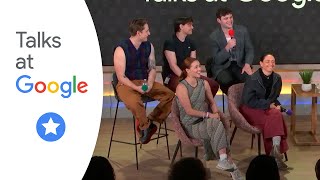
The Broadway cast and creatives of The Outsiders discuss adapting S.E. Hinton's novel for stage, including meeting Hinton during workshops and combining characters like Cherry and Randy. They detail the rumble scene with rain and mud, a tire-centered set, and Tony-winning lighting, plus the emotional toll and trust-building practices that made the production work.
Questions this video answers
Tulsa, Oklahoma, 1967.
"I Could Talk to You All Night" (Emma Pittman & Trevor) and "Throwing in the Towel" (Trevor, Dan, Victor).
Danya Taymor.
Ann James.
Jamestown Revival and Justin Levine.
Chapters
Hi, everybody. Thanks everyone for being here. My name is Mike Abrams. I'm excited to moderate today's panel with the Outsiders musical. So a little bit about the show. The Tony award winning the outsiders. In Tulsa, Oklahoma, 1967, Ponyborg Curtis and his friend Johnny Cade and their greaser family, the Outsiders battle with their affluent rivals the Sochism. The Outsiders navigates the complexities of self discovery as the Greasers dream about who they want to become in a world that may never accept them. With a dynamic original score, the Outsiders is a story of friendship, family, belonging and the realization that there is still lots of good in the world. So we're going to kick this off with two performances. First we're going to have Emma and Trevor sing I can talk to you all night. And then we're going to have Trevor, Dan and Victor sing Throwing in the towel and then we'll have a discussion.
So.
So enjoy the performances.
I was under the impression you'd never read a book at all Too wrapped up in your aggression out on the street and fighting brawls now you're talking about the sunset and how the colors turn bright Suddenly it seems that I could talk to you for hours but these hours go like minutes.
I could.
Talk to you all night I never talk like this with Socious. We keep our feelings to ourselves.
I.
Tell my friends I like their parties wishing I was somewhere else I know.
Exactly what you're saying you got a.
Figure to belong and I'd rather read.
Than.
But greasers have to go along.
It'S like you're always just pretending it's.
Just a part you have to play.
Feels like this pressure's never ending there's got to be a better way.
But.
With you it feels so simple something.
About this feels right.
Sudden it seems.
I could talk to you for hours.
But these hours go like minutes I could talk to you all night.
I.
Don'T want this night to end I bet our friends are wondering where we've been can you imagine what they say.
If any other word is dark this way?
Now get me wrong when I say I'm surprised but I never thought I'd see hope in your eyes it makes me believe that there may be a chance the world beyond the graces and.
The solutions.
Could it ever be?
And just like that the movie was over we talked so dang long I didn't even catch the ending. It was the first time in my life anyone actually listened to me like that.
Suddenly it seems I could talk to.
You for hours.
But these hours go.
Like minutes.
I could talk to you all night. So dumb. Really a mess. Every night I worry myself to sleep while you're watching cartoons. There ain't nothing I can do for you. I know that Ponyboy's really got a damn good heart. Something bout him that really could take him far. But I keep holding him down. I've run this family right into the ground. Maybe you'd be best without me. I don't know what else to say. I lost our brother and I lost my way. I think a fool could have done better. Maybe I've been afraid to say that I'm just not cut out for this. Just another failure on a growing list. And it's harder now than ever. It's more than I can take. There ain't no one to be bail me out. There ain't no saving this now.
I.
Think I'm throwing in the town. On the days when you feel like you're torn into making dinner, paying bills that are overdue. You think that I don't see? He'd go to hell if it was left up to me. And I don't know what we would do if you were not around. No one to keep the ship afloat when it's going down. Daryl, I need you. And daddy won't get see the pony does too. I know you love him. That's all you gotta do. And I don't know what else to say. I know you feel like you've lost your way. But I think you're doing better. Better than you know. But if he comes back, there's a price to pay. What if they lock our brother away? There ain't no way of know. We've gotta get our brother home. This is the darkest hour of the darkest night. Looking up ahead you can't see no light. But the time is now and ever. There ain't no letting go. You might feel like you're giving out. We need you more than ever now. Don't go throwing in the town. I know your head is full of doubt. But brother that's what love is all about. Don't go throw it in the town.
I need you, Daryl.
I can't lose my big brother too.
When you love someone, that's all that you you can do. There ain't no throwing in the tower.
Let's kick things off. This is obviously a story that's well known movie book. A lot of people have read it. What are some of the rewards and some of the challenges of taking such a well known story and bringing it to a Broadway stage?
Hi, everybody. Thank you so much for having us. I'll answer this from my perspective, and I'm curious to hear from the actors as well, because they're portraying these, like, super beloved characters. But we all got to go to Tulsa before we started our rehearsal process and meet Susie Hinton and who. Who wrote the book. And it was amazing to get to talk to her because she kind of freed us to make our own version and encouraged us not to try to replicate the film especially. And that was very freeing, I think, if you know the book, it's really primal. It's very authentic voice. And so part of what was so satisfying about it was to try to bring the essence of something really pure to a new form and try to actually let it live in a new form. So that was amazing. And I think because I had the luxury or the luck, I knew about the book and the movie, but I had never seen them. So I encountered the musical first and read and heard the music, and then I went back and read the book and watched the film, so it didn't kind of hang over my head in the same way it might have.
Okay, what about for you all?
Yeah, I think that, personally, one of my favorite compliments ever is either this is exactly how I imagine Cherry in the book, or my real number one favorite is, you made me like Cherry.
Like.
Cause I think Cherry, like, in the book, on the page, is very. Like, there's not a lot to her textually, but to see how she lives in Ponyboy's mind throughout the entire novel, I think, is what makes her really important. And I think creating this part and being like, the tail end of the creation of Cherry with Danya has been such a great gift because she merged two characters together. If you've read the book, there's also a character named Randy who's really close friends with Bob. And in the musical version, I've kind of like, Cherry has absorbed Bob's character in the way that they both have a lot of empathy and understanding for the other side, for the Greasers, but they won't show it in front of anyone else except for Ponyboy. So that was a really cool, interesting part of creating Cherry, specifically, especially seeing as how she has a lot more like, text in this version. But I think that she still has the same impact on Ponyboy as she does in the novel.
What about from Ponyboy's perspective?
I think one of the biggest challenges about playing him was the fact that most people that I've met in my life can relate to him, and his story and how he is empathetic and considered an outsider. And in their lives, in so many aspects, they feel like that. And so being able to work with Donya and to. Being able to talk to Essie Hinton and working with Miranda, I've. I've gotten a really good. I've gotten a really good blueprint of how Ponyboy should be when it comes to, like, on stage in front of, like. Like a big, big area. Sorry, like a large volume of people and be able to portray that and show it to the back row and, like, without being, you know, too showy. They've been great.
So you mentioned that you saw the music and you heard the music first when you went and thought through the story. Was there any moments in the movie or the book? They were like this. I got to make sure I fully captured in a certain way. Or this is something I want to maybe tweak, to kind of leave out or recreate for a stage.
I think that everything in the book was like a guide for the musical. But stage can't hold as much as a narrative like a book, so there are things that we had to leave out. And over time, I think those the most important things kind of rose to the top. Like Emma was saying, we combine two characters, Randy and Cherry. And many people, when they see it, I don't think notice that one's missing because the essence is still there or the storytelling is still there. I think that what was very important to maintain from the book was the brutality, the honesty. It's like a juvenile book in the best way. It was written by a teenager, so there's an authenticity of voice, and it's not refined, it's just raw. And then I waited to watch the film because I knew visually it wouldn't be that helpful to watch it because we're not trying to recreate it. And so the Tulsa of it, though, was helpful because the film is shot in Tulsa. But actually another film that Coppola made with Essie Hinton called Rumble Fish, which is an adaptation of another of her books that also has Matt Dillon, Diane Lane, that was more inspiring to me because I think they were able to, as their second film together, they were able to push visuals, push edginess more. And so some of our visual references came from that film.
Okay, so from the performing standpoint, your characters go through very emotional arcs, and there's a lot to kind of convey of that challenge. And I mean, everything they're going through, but also the hope that kind of the story tells. So what is that journey like as an actor to be able to bring that to the stage and take your character through the whole story?
I think we're really fortunate. Adam Rapp, our book writer, he, you know, a lot of the work is already done within the lyrics and the words that we're saying. And the, you know, the arc, especially that Daryl has, is pretty strong. And it's kind of just like you're kind of along for the ride. You kind of just live in the moment and feel the scenes as they are organically. I think the minute you start, like, trying to bring something to it is when you can fail. I think just like existing on stage with the incredible actors that you're on there with and just trusting the words and telling the story will get you there. And it's a great time.
Yeah, it's very easy to tap into because of. I think there's some really cool stuff as far as scenography as well. Like, when we touch the ground and the floor, it's tactile and it doesn't move the way a normal stage would. And so I've, you know, I don't have memory. Like, if I step on that stage, I'm on that stage. I know I'm nowhere else in the world or any other show that I've ever done. And that's a gift that Amp, our scenic design team, gave us, which is really cool. And it's not that hard to drop into, you know, that fight sequence when it's raining and there's mud on you and everything. So those are gifts that we were given to, you know, as tools to kind of really get there easily. And then, like Dan said, the actors on stage that we get to work with on any given night, and we have people doing many different roles and everything are just brilliant. And they were so meticulously chosen by our producers, by this woman. So everybody that we could ever say words to or receive words from is like an impeccable human being. And that really helps.
Yeah. And there are different challenges. Like, Trevi can talk to this too. But Ponyboy, the character he plays, is on stage for the entire entire show. He goes off stage for two minutes, and that's to drink some water. That's to. It really is to do business when he's at intermission. If he goes to the bathroom, intermission will be longer because he's. He's got to get his wig changed. He's got to get this done, this done. And so that track is particular. Then you have something like Emma's track where she's on stage and she's so. Cherry is so important when she's on stage. So she has to be like, I come in and I do this incredibly important thing. And then I have this time off stage where I have to maintain. And so, you know, they're both challenging in their unique ways.
You brought up the fight scene, so I want everyone. Everyone probably wants to know, so let's. I want to hear, how does that come to life? How did you decide to add the rain? Like, the visual of it all? Because it's incredible to watch.
I think, as a director, for me, everything always starts with the words. And so in our script, the stage direction of the Rumble is an incredible piece of writing. It describes the scene. It describes it as primordial. It describes the rain, the dirt, the boys. It describes a progression where they can't tell each other apart. They. They're just muddy boys in the rain. And it was very, very inspiring to work from. And when the producers were like, are you sure you need rain? I was like, yes, but it is important to know. I'm sure you guys know that you have to prioritize what you're going to fight for. And this felt so important to prioritize. And so the seed of how we would enact it, because the technical elements are amazing, but it's amazing with nothing. It's amazing with the bodies. That's the core of the spectacle of the Rumble scene, is the way the bodies interact. So we started with a seed of the idea, which was this duet of two people pulling punches, punching the other in the face, and then having to embrace each other so close to be able to flip. And then the other one punches the other. So it's this expression of the intimacy of violence. It's like some of the most. They can speak more to this, but, like, that's seen as some of the most intimate stage choreography I've ever seen. There's so much trust involved. And then over time, we added each of the elements. The sound came first. You know, choreographers work so much with sound. They really work to create the soundscape that is the Rumble. It's not musicalized. And then lights, rain, blood, everything.
It's also really safe and easy to drop into. And it looks as fluid as it is because we were familiar with our bodies in a loving way before we ever choreographed anything physically. Like, that was even pretend violence. And we did this extensive physical and warm up every day and got used to a new person every day. So that when I met them, on the floor that isn't, you know, I'm not meeting them in this even pretend violent way. I know their bodies and they know mine in a loving and, you know, supportive way. And yeah, that was a really cool part of the process. So we all knew each other and you know, our bodies and how we worked in a very supportive and loving way before anything else.
Speaking of the having the, you know, the relationships between the characters, you obviously have, you know, this a little bit of the fight between the two, but also then you all are friends off stage and you all have to kind of do this very intimate moment. So not friends off stage. Okay, you're shaking your head.
Okay.
But I think can you talk a little bit about the relationships that you have to play between, you know, these two polarizing groups of people?
Well, I was going to say we have this incredible intimacy coordinator named Ann James. And while she was there for intimate scenes, she was also there for our like, emotionally intimate scenes, which I think is something that should is being talked about more in the workplace. Because like you were saying, this show, especially for Ponyboy and the brothers and everyone in their own way, is a very, very emotional journey. And it's a lot. It takes a toll on you physically, whether you know, you're dropped in as you can be or is it. It's taking you for the ride. And Ann James helped us prioritize having check ins with our emotions outside of the scenes, which I think was at least for me, especially someone who has to go off and kind of sit around for a scene or two before I come back. And like so much has happened in my world and I have to bring something new. It's great for me to have those check ins where my boyfriend, who plays not my boyfriend in real life, my boyfriend in the show, Kevin, William Paul, he plays Bob. We have a big fight at the end of the drive in and it's very, it feels very dangerous for me. He's in a very volatile state. He's super drunk. He's ready to be violent at a drop of a hat. And we have a moment off stage after the scene where we hold hands and we talk about sloths and little quokkas and videos of cute puppies because it's something that drops us back into the real world. And we're like, okay, Emma and Kevin, William Paul, we're good. We love each other. So I think that that's something that was unique to this experience and I think is only going to help in the longevity of this play for whoever comes along and whoever leaves or for all of us who are still a part of it. I mean, then you've got people like Dan and Victor who come in and they. This person covers seven parts. So like the journey. Yeah. Would you like to speak about what it's like to. To do that?
Yeah. I was really grateful that I got to watch the. I can't imagine being dropped into my job right now. Like, I got to watch for just four weeks straight and then two or three weeks thereafter. The building blocks of this version of the Outsiders musical. It's existed for a long, long time in workshops and in out of town tryouts. But I got to watch somebody make a decision and that. That being built and then I got to write notes and notes about it and then look at somebody else making another decision. And so I got time to digest it. And yeah, I wrote like a bunch of football charts basically for every character in every scene. And then I watched for a while. And it is very easy in this particular building at the Jacobs to do what I do because everyone is so insanely supportive. So I super grateful for the opportunity to be able to live many different stories within the playing space at any given time. And I, you know, every time I'm like, miss something or get down on myself, I'm like, you know, I get to do something different tomorrow and that's exciting for me and, you know, I take it as a blessing. So it's very cool.
Is your pre show routine different for a greaser versus a soc?
No, actually, no. If I'm playing like a character, yeah. I'll go through like the book. And I have, I have, you know, like sticky note markings for every different character that I play in the book to kind of ground myself in what she initially meant for that character. But actually it's the same. I kind of stand on the corner of the stage and I thank the universe and I say, best job in the world. Because whatever I'm doing, it's. I would. For me, that's the best job in the world. Just going out on the stage.
Yeah. Our show is really unique because some musicals have like the acting singing company and then the dancing company. And this show asks so much of everybody who's in it. And so I remember when the producer suggested to me that we could find somebody who would be Victor's job. And so far I've only met Victor, so we'll see how that changes, you know, how we support the show when we move forward. But it's been amazing to see people who didn't think of themselves as dancers necessarily become incredibly high level dancers or people who associated as dancers be incredibly incredible dramatic actors. So the show really, and as a director too, it really asks you to bring everything you've got, which is cool to see people discover things about themselves they didn't know.
So this is obviously a story again, that's been around for a while. How do you feel that the story and kind of the themes resonate in today's world, in the audience that are seeing it at the theater right now?
I think that bond of family, like chosen family, is timeless. I think no matter when you were born or what life you're living, I think we rely on people. And I think everyone at a certain point in their life, like, gets that choice and realizes, like, who's really their friends, who's really their family. So, yeah, it's a time of story. And what was the question again? I mean, yeah, it is like, it works no matter who you are, where you are. I think also our ability to show like men, like emotional men who can comfort each other and be there for each other is really impactful right now as well. I love being a Curtis brother because getting to show those emotions that oftentimes we don't get to show. You can kind of feel the audience really respond to that in real time. So that's really great.
I think one of the themes in the story that really resonates to me, and I think it does hit audiences too, is that you really need to be careful about judging other people based on what you perceive them to be, based on how they look, what you think about them, any number of things. Because it could be as dire as to cost them their life. And I think that the play has a really subtle and powerful way of showing that and asking for the benefit of the doubt and asking us to go a little bit further with people that we think we know, to actually find out and to be curious and to care for. And I love what Dan said about, like, masculinity and tenderness. And it's not surprising that a girl, a teenage girl, wrote this book about these boys, like, as a gift and a way of being seen. I think this show is also about being seen and the power of that.
The music really does kind of bring the whole journey through. So can you talk about how you had the score and be able to bring that from the entire, like, you know, it goes through. There's dark and heavy moments and there's the light and there's fun and then there's the Brothers. And. And there's just so many different pieces, and the music really conveys that story. So can you talk about how you're able to kind of take that music and bring it to everything else that goes with lighting and staging and dancing and everything?
Yes. One thing I thought about a lot with this show is, like, the higher the highs, the lower the lows, so the more dynamics within the whole, the farther you can go in any one direction. So when I. Emma's role was very hard to cast. Looked forever before we found Emma, and it was so important to have this person who could bring so much, like, joy and exuberance and beauty into the space, because that's so important for Ponyboy's character, and we're seeing the whole world through him. And then you get to unpeel the layers of her character, and you get to see her go through this massive arc, and you get to see her exposed. But that's a great example of needing that exuberance, and that's in the music. And the song that introduces Cherry. The Drive in used to be started by a group of men, and it was only kind of through workshopping with Emma that the writers were like, oh, what if this started with her voice? What would that be like? So that's, like, just one example of, like, how working on it changed it. And then, you know, in a musical, everything moves to support that. So some lighting cues can be very simple and static. Some have a lot of movement to support it. I'm curious to hear from you guys.
I think one memory that's coming to mind specifically from tech, for me, as someone who, like, I was saying, I'm in the play, and then I'm not in the play, and I'm in the play. So I had the privilege, kind of like Victor was saying, to go out into the house and watch things slowly be layered on and created. And one of the most fascinating numbers to watch, specifically about lighting, like, only elevating the experience, especially the music experience, was Run, Run, Brother. And it was a number that initially. Not that it was. Not that it was boring, but it was more like. It was like a splash of light, and then, like, the mood would change. And then one day they came in and they took. They took almost every single, like, eight bars, and there was a new light cue. And what the lighting did was it took you on a journey of how Dallas is taking them out of the place that they're in to the train station. And I was like, oh, my God. I'd never. I, like, knew that was happening in the song. But to see it portrayed and layered on top with the lighting only enhanced his storytelling, which was already in the music. So it was really cool. I mean, our Tony Award winning lighting designer did a really great job. Yeah, it was amazing.
Yeah. Just much like the scenography, I think Jamestown Revival and Justin Levine created a score that is unmistakable to where you are. I think there's another version of the Outsiders, maybe in another universe that sounded a little more like classic musical theater. And the fact that, you know, when Ponyboy sings in the orchestrations, I'm like a nerd over this stuff. I'd go down to the pit and like, can I see this bar? Like, can I see what's going on? And that, like, you know, when he's singing, there's a cool, like, draw of a violin or something. It's like there's a suspension of disbelief from the audience, like, minimizes, because you hear that the sound of that time. So the score is super, super helpful. As a singer, you know, when you tap into something like that, I know I can put a little more growl on my voice or anything. I don't have to be traditional musical theater because I'm supported from the band in that, like, Tulsa feel. So.
Yeah, you're mentioning so many nuanced, specific moments, which is, you know, what goes into making such a successful show? What's something that you want? Everyone here who's seeing it, or someone who's just coming to see this for the first time, what do you want them to take away from all of that hard work that goes into it?
I think just a powerful feeling of any kind. I can't say that I want anybody to think something or have this particular feeling, but I want them to feel the sheer force and impact of all that collective energy. And then depending on who they are and what they've lived and what their past is, something will crack open in them. You know, having worked on something for so long, having watched it so many times, especially for me as the director during the technical rehearsals, which, if you don't know, we rehearse in a room with nothing. Then we go into a theater and like, time slows down and you add all the lights, the sound, the effects, and I start to look at it with such a. Such a emotionless, like, visual gaze. And there's a part in our show during a song called Stay Gold, which is like the most famous phrase where it was so important for me because when I was feeling like this thing's off, that's off there. Just hearing people sob around you, like, makes you remember what the whole point is. And I don't know why this person in their 70s is crying and this 12 year old is crying and that person's crying, but they're all having this collective experience for a different reason. And you know, Nancy Pelosi just came to our show. I was just at the Mets game where Brody plays Ponyboy, sang the national anthem and the Mets fans are shouting.
Like, we love your show.
And like the diversity of people all in one space who are like, I get this, this vibes with me. I think makes this show really special and is a reason to come and watch something in a building with other people who you don't know, who you may think I hate you and realize, like, oh, we're kind of similar.
What's the moment in the show for each of you that either resonates the most, either a lyric, a song, a portion? What's your moment that like, really gets you?
Every.
Every performance, the final scene between the Curtis brothers is this very emotional kind of like we finally get the resolution of these three characters or the start of a resolution, I guess. And I think that is the moment in the show every night, no matter who I'm playing, that I feel it like either if I'm changing as I'm a social changing into my dry clothes, I hear them talking, or if I'm on stage playing one of the characters. It's just such a grounded scene and the dialogue is so real and like, what's not being said is it's like, it's so, you know, it speaks more volume kind of. And I think we get to see these characters finally open up to each other every night and finally be a family for the first time and like embrace each other and say that they love each other. And I think, you know, the whole piece, like lays on that moment. And it gets me every time.
People usually ask, like at the stage door what our favorite parts are. Like, what our favorite things to do. Like, is it the rumble? Is it the opening? Is it Run, Run, brother, when you're jumping across planks? And I. And I can't help but always think about stay gold at the end when me and whoever's playing Johnny Cade, whether it's Sky Lakota lynch or Josh Strobel or more recently in rehearsals, Daryl Topa, that moment is so, so real and raw and looking at another. And I just give complete credit to casting because any Johnny who's up there is giving me so much that I can't help but, like, let my emotions take over just, like, a little bit. That moment is, like, really special and is something that I'm never, ever gonna forget. And I could. I could do that one time or a million times, and it's still gonna be just as effective.
It's in that last scene as well. Once Ponyboy takes over, kind of a more narrator role again and kind of wraps up with the audience, the Curtis brothers are left and there's no more dialogue. And they join in on one vocal line. That is. We all come from different places. We all start from different lines. Thank you. Different lines. And more often than not, I find whoever my scene partner was during the whole show, I find, you know, their eyes and kind of. It's kind of like a little mini. I don't know, just like, good game, tap out for me. Or I just thank them from Carry for carrying me through the show. So I love that moment.
I think for me, it would have to be the song that I sang with Trevor. Now I could talk to you all night is, like, one of my most favorite experiences in the theater. Like, the whole drive in sequence, like, Danya was talking about, the first time that you meet Cherry is like, in this, like, super fun, big, dancey musical theater number. And she's like the per. I like to say that she's like the American Girl doll version of Cherry. Like, she's like this perfect thing in Ponyboy's mind. And then in the scene right before I could talk to you all night and into that number, she just kind of like, she feels like. Like you were saying, she could just be vulnerable and real and raw, and it's like she's never done that before. And I can just remember a time when I was 15 and I had that moment. I grew up in Mississippi, and, like, I have very similar life experience to Cherry. And I remember having a friend that I was like, wow, I don't feel like I have to be anything around you and I could we talk about anything? And I'm safe and I'm cared for and I'm heard. And that's so new and exciting. And, like, then the idea, the dreams that can spark out of that feeling is so beautiful. And to get to do it every night is different and true. And it's a gift every night for me. So. Thanks, Tanya.
Do you have a moment from watching?
I can't choose. I can't choose. And at different moments along the way, different things hit me because I've heard it and I've seen it. I think the moment. All the moments that they spoke about have hit me deeply. I could talk to you all night. And the whole drive in sequence was one of the hardest parts to land in the piece and took the longest to find a grounded but exuberant place for. There's a song called Far Away From Tulsa that just reminds me so much of being in my town as a teenager and being on a playground smoking cigarettes with my best friend and just, like, lamenting life. I love that scene so much. It feels so true. But there's so many, you know, Great Expectations is another time I cry often. Yeah.
Right.
So we're gonna open up to audience questions. We have mics on both sides. We also have Dory, which we'll read. While people are lining up, I have a fun question. I already gave you a heads up because I wanted to make sure you had some time to think about it. So if you could put your outsider's character in any other musical world, which world would they thrive in and why? And, Victor, you can just pick one of the seven, right?
That was my plan. Yeah. I. I look, I would like to take the essence of Soda Pop and put him in the world of she Loves Me as Kadai.
Yeah.
Deep cut. But it's. But yeah. Gavin Creel played him in the revival, and it's such a. Like a. Like a. I don't know, like a machismo kind of. Oh, excuse me. Kind of. Yeah. Role that has a lot of swag to him. So that's my answer.
I mean, my heart says, like, you know, Daryl is a very strong, you know, independent force. And I think. I mean, my heart is just saying, like, curly in Oklahoma or something like that. Just like a strong guy who's just, like, singing it, you know? I think curly in Oklahoma.
Trevor, I can go next. I was thinking a lot about it. I had just seen. I just saw the invited dress of Our Town last night. So there was a part of me that thought, like, there's a world where Cherry's in that play and she is kind of an Emily in a way. But then the more that I thought about it, the more I was interested in her. In west side Story, if there was, like, an inverted, like, who cares about the genders? Like, I feel like she's very Tony coded. Like, he's just like, I don't care about anything other than my feelings for this person. And I feel like that's. That's very cherry coated. It's very. In her heart and in her essence.
So, yeah, round us Out.
We had a very special moment right now. Dan Barry inspired me to say Pippin. I think Ponyboy would be so good in Pippin.
Oh, my God. 100%.
He's got to find his corner of the sky. You know, he's trying to find his destiny, and I think it matches character perfectly.
So, yeah.
All right, start over here.
Hi, everyone.
My name is Roya, and I am.
So excited that you guys are here.
I think the Outsiders changed my life. I discovered what Broadway rush was because of you guys. So truly. Thank you so much.
I have a mini question which is.
At the end, you all are eating something. What are you eating?
It's so yummy.
And I was gonna see if you.
Guys even enjoy eating it, because you.
Eat it every day.
Well, what is it?
That's my first question.
But the second question is, dude, it's Mexican rice. And, well, okay, so they switched it up. It used to be this other type of brown, microwavable rice, but it's Mexican rice and green beans, and they just warm it up so. Well, it's hot when it first is on the stage and eating it after.
Yeah, it's delicious.
Yeah, it's just good. It's great.
So thank you.
Brody finishes his plate every time. Love it.
And the second question is, how have your.
This is kind of a big question.
But how have your lives been impacted since after winning best musical compared to before? I'll go. I had the privilege of doing the broadway.com vlog series for this show, and we started opening night, and it ended the week before the Tonys. So it was like a two month process of me carrying around this cute little vlog camera and showing everyone backstage. And like I said, I'm from Mississippi. And so the access to arts education is giving little to none. And so I didn't know broadway.com vlogs were a thing, and they've been a thing for a long time. So I was so excited to get the chance to think about what would little Emma be, like, absolutely gagged for. And so through that, right up until the Tonys, I was like, but this is, like, the most exciting part. Like, I have to show everybody what we're doing because they've been along this journey with us. So I ended up starting my own channel from that because I was just so excited about connecting with the fans and having the chance to show them a little piece of our world.
So that's.
I'm now a vlogger. That's what's different about me.
So so much positive has come from winning it. You know, more audiences, more outreach. But I think there's also, like, intense pressure that comes with something like that, you know, when you're the underdog, which I think we all very much felt we were, there's something freeing about that. And when you're, quote, anointed, and, you know, there's so many feelings about awards. They're amazing. It's amazing to be recognized by your community, but it's also so intense. And this is a cast of mostly young people in maybe their first professional show. This is my first musical. Like, it's so amazing. And then everybody's like, aren't you so happy? And it's like, absolutely. And there's an intensity and a scrutiny and a different. There's like a shadow. And that was really surprising to me because I had never experienced something of this scope and size. And so I think it was in June that the Tonys happened. But I think I'm still like, ask me again in six months, because I'd be curious, like, how does it metabolize? And also, I think about my experience is different because it's up now and I'm maintaining it. But they continue to do it eight times a week. And so it's amazing. And it does shift and put more pressure, even as it provides more resource. Over here.
Thank you. Thanks.
Hey, my name is Max.
Thank you so much for making this show. I really enjoyed it.
Yeah.
I wanted to ask more generally about how the show begins and ends with.
Just cast members on the stage.
And you're just chilling what went into that. And also another, like, stylistic decision about the tire and everything that goes on in that corner of the stage.
I wanted to ask more about the thinking on that. So when I try to think about, like, what's the thing that connects all the plays I've ever done, it's like that 90% of them have the character address the audience directly, and that's how our play starts. And I think I love that space between the audience and the players. And I love acknowledging the space because I think it names something real, which is like, I'm here and so are you. And so that's why Ponyboy starts on stage on the tire. Also, something I learned when we were getting ready is that the play the Glass Menagerie by Tennessee Williams was also in our theater. And that play also starts with a young man in front of a scrim saying, I'm going to tell you something about my life. And so do we. And the tire. We're like, how are we going to do with this fountain? Like, how the heck are we going to do any of this stuff? And so we started with a workshop with very little, with tires and planks and cinder blocks. And our scenic design team was like, if a tire could be a fountain, if a tire. And then it was like, what if a tire could be a grave? What if a tire could be everything we need it to be? And so we just kind of took that idea. The scenic design team call it a memory playground. And I feel like that really is true to how we use the space.
Thanks.
Well, I'm Sophia. I'm reading a question from the live stream.
This question is from Tony. During a recent interview, Danya and Emma.
Spoke about including trust building exercises during rehearsals.
Could you share more about how you.
Approach those exercises and whether you think any of them could be useful for building psychological safety between team members?
1000%. I like one of my favorite things that Danya says in that email, what in that interview is that the trust is not something you just assume of people. You have to build it. And you could say unfortunately or fortunately, it takes time. And you can't rush time, you can't fake time. You have to take it. You have to allow it to be what it is. And some days you connect with someone and you're like, that was weird. That was the best part about the exercises that we would do. We would pull a random number out of a hat. We would be connected with someone. We would do our exercise and then we'd sit in a circle and we would talk about it. And there was an opportunity for. I mean, there was space for, like, well, I hated that today. And, like, that's valid. That is also, you know, valuable to the trust building relationship that you're like, okay, was that something that I need to reflect on or is that just like the day? Or is it my relationship with this person? No matter what it is, it's information that can only be helpful. I thought it was a great way, like Victor was saying, especially when we're doing things that are so intimate in our place, specifically, it was. So it was vital for us to build that trust every single day in the rehearsal room.
Yeah. And a huge part of this process, we do this thing called circle up before shows where one person per day gets to, like, speak out about, you know, either they can read a poem that they found interesting or they can talk about something that they've dealt with in their life. And stuff like that really helps too, because, you know, we do this show eight times a week, you know, and you never know where everyone else is at in their headspace and how they're doing. And I think it really allows everyone to kind of be on the same page and be like, okay, this person's going through this right now. How can I show more grace to that while we're doing the show? Because the show is super. You know, it's one side versus the other, so people can, you know, the lines can get crossed. But I think the circle ups and like, being able to tell. To tell my story and hear everyone else's stories has only developed a stronger bond. I don't think I've ever cried with a group of people as much as I've cried with you guys. So, yeah, it's really special.
I think it would be amazing to see what it would be like in workspaces outside of the theater. I have some of the things that we do I use because I worked in non theater spaces with groups of people, and I was like, what can anybody do? And so a lot of those things are what we do in our space. So I think it would be great in other spaces.
Yeah. I have another question from the live stream.
This one is from Sophie.
Question from For Danya.
I love your Tony speech where you.
Mention artistic risk yields rewards.
Can you talk about a time in.
Your career before the Outsiders where you.
Took a risk directing, writing, et cetera? Yes. I directed a play by a writer named Will Arbery called heroes of the Fourth Turning. It's about. We did the play in 2019. It's about a group of young, hyper intelligent Catholic conservatives, and they're all getting together for their reunion in Wyoming. And it's right after that, Charlottesville, and it's right before the eclipse. So it's like at a very charged time. And the play's not agitprop or propaganda. It's just like this is a time and place. This is a group of people. These conversations are happening. And there's a huge. I don't want to ruin it for anybody who hasn't experienced it, because it is. It's a political Pulitzer Prize finalist play. It's an incredible piece of writing, but there's a long monologue at the end of it, and there were no stage directions. And I had a really intense idea of how to stage it, and I was really afraid to do it because when, you know, it's hard to get reviewed and it's hard to receive criticism that anybody can read forever and ever. And I had this feeling about this moment. But I knew if somebody looked at the script and looked on stage they'd be like she did that they would know. And it wasn't violent but it was intense. And I remember doing it and really feeling fear to do it but also feeling incredible belief to do it and it stayed in the play and the playwright didn't add a description of all of it but one little piece of it remained. And I know that's so vague if you haven't seen what I'm talking about but it was a time I guess I felt like I was putting my gut on stage without any question that it was mine.
Well, thank you all for being here. Thanks everyone for coming and if you haven't been able to see the Outsiders or if you should go again, if.
You look under your seat you'll find tickets to the Outsiders.
You providing them.
Okay?
Okay, thanks.
Thank you all for being here.
Thanks everybody.
Thank you.
More from Guy


Cheryl Strauss Einhorn | The Human Edge: Smarter Decisions in the Age of AI | Talks at Google



Rachel Glennerster | Innovation and the Center for Global Development | Talks at Google

Rebecca Winthrop | Rethinking the Purpose of Education in the Age of AI | Talks at Google

Dr. Robert Wachter | A Giant Leap: How AI Is Transforming Healthcare... | Talks at Google



