Buddha Is as Buddha Does | Lama Surya Das | Talks at Google
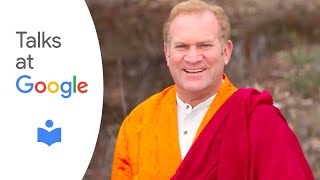
Lama Surya Das, a Western Tibetan Buddhist teacher, explores what it means to be a bodhisattva through Buddhist practice. He leads a brief guided meditation and reflects on mindfulness, presence, and the Buddha-mind.
Chapters
I'm honored to introduce Lama Surya Das. Surya is one of the foremost Western Buddhist meditation teachers and scholars of our time. The Dalai Lama calls him the American Lama. I have no idea what that means actually, but I think it's something like the American Idol, except less exciting. I don't know. I never see you parting. So Surya has spent more than 35 years studying with great spiritual masters of Asia. And 15 of those years he spent in the Himalayas. The other 20 are parting. No kidding. He's the founder of the Jockchen Meditation center and he's a leading spokesman for Buddhism. And he's an authorized Lama in the Tibetan Buddhist Order. That's Lama with one L. Kidding. And as if there's not enough work for him. Surya is also a translator, he's a best selling author, he's a published poet, and he's a chant master. And I think your free time, you do contact haiku. Surya has also been featured in numerous publications and he has appeared on TV numerous times. He has appeared on cnn. He has appeared on MSNBC and Piara and the Colbert Report. And one segment of the sitcom Dharma and Greg was based on his life. I'll let him tell you which one. Before I bring up Surya, I'd like to announce that Surya will be leading a meditation session later today. It's going to be at 1:30 and you'll be in Wichita Building 41. And with that, my friends, I give you Lama Surya Das.
Thank you very much. Is this Lavalier Mic working? Are we picking up? Okay, good. Thank you, Meng. And no, I will not forgive you because you have to. Forgiveness comes from within. I would if I could. I can tell that some of you may not be familiar with what Lama is, although Lama Matthew Ricard has been here, the brainiac of Tibetan Buddhism who spoke on happiness and my old friend and colleague from Nepal. But perhaps you remember, I mean, some of you, I can see by your age you will remember Ogden Nash's lyric, which Meng was so brilliantly referring to his lyric from the 1917 New Yorker. No offense, the 1917 New Yorker magazine where Ogden Nash said, the poet Limericis said, with one L, he's a priest, with two L's, he's a beast. You know, Yama, But I'll bet a pair of silk pajamas there aren't any 3L lamas. Anyway, that went over like a lead balloon. Never mind. Today's subject is Buddha is, as Buddha does, how to be a bodhisattva, a spiritual warrior. An awakener, a wisdom warrior, a light being, a Bodhisattva, literally a Buddha to be through the 10 transformative practices taught by Buddha. Buddha's own guidebook, how to become wise and loving, unselfish, service oriented, a wisdom leader, enlightened leader. What Greenleaf called in his brilliant book on leadership, servant leader. Not leader of servants, but service oriented leader. So rare today. And that's my subject. But I'd like to begin first in a more traditional Buddhist fashion. And don't think of this as a class in Buddhism or anything. We're going to do Buddhas as Buddha does. Our little imitation of Buddha. How to be more awake, more enlightened by having a moment. I'm going to do a little Tibetan chant just to set the mood and appease the local Google gods, especially my old friend from India days, Larry Brilliant. Perhaps you're familiar with Larry, the head of the Google foundation, who is brilliant and is a real Bodhisattva. And I know many of you are good hearted, beautiful light beings. I mean, I could see that. Even I can see that. So let's have a moment of contemplative sweetness, just to arrive and slow down and relax. Have a one minute meditation. I mean this is Buddha's, as Buddha does. Remember, we're not just going to talk about it. Let's have an instant meditation, a one minute meditation, an American meditation. So meditate as fast as you can. And when we get over with that, we'll get back to our important mental activities. So please relax and let yourself arrive and just have a few moments of just being, of breathing, of being present, wakeful and attentive. See if you can let go of the past and past thoughts and memories and preoccupations which are gone and dead. And let go of the future fantasies, plans and imaginings and just settle more into the delectable present. Sink your roots into the good earth of the present moment and imbibe its nutritious essences. Be a human being, just being for once, not just a human doing and becoming. And enjoy a few moments of natural meditation, natural body, natural breath and energy, natural mind. Nothing more to do, remember, figure out, accomplish or achieve. Just enjoy the natural state, the inner peace, the joy of natural meditation. May the Buddha's blessings ever awaken and illumine our minds. May the enlightened one's blessing and inspiration ever unfold in our hearts. May the inconceivable blessing of enlightenment itself dispel the momentary illusion we've ever been separate, incomplete or apart. And I bow to the Buddha. In your seat. Don't overlook her. Just sitting, just breathing, just being aware, attentive, wakeful, mindful rather than mindless is the essence of Buddhist meditation. Just seeing things as they are, not as they ain't. Clear vision, seeing things as they are is wisdom, according to the enlightened teacher named Buddha. Seeing things as they are, not as we think they should be or not as we would like them to be. Seeing things as they are, not as we are, through our interpretations and projections. Just as it is reality, as it is indefinable yet evident, clear, transparent, even. What we seek is right here. The problem is we are usually elsewhere, distracted and scattered. So come home to the present moment, to present awareness, to innate wakefulness, to the Buddha mind, the Buddha heart of our innate wholeness and completeness in the great perfection. Just sitting is sitting Buddha. Just breathing is breathing. Buddha, let Buddha breathe through you. Naked awareness is Buddha mind. One moment of total awareness is one moment of freedom and enlightenment. As Buddha has said, awareness is the essence.
It.
May all beings everywhere with whom we are inseparably interconnected and who want the need the same as we do, may all be awakened, liberated, healed, fulfilled and free. And may we all together complete the spiritual journey all the way to enlightenment. Homage to the Buddha ness within. May you all realize it and be benefited by it. Meditation is our sort of imitation of Buddha. Buddha is not pretending. Authenticity is all. But since we are so full of so much pretense and Persona and so forth, I mean, most of us, I just speak for myself anyway, I don't know about you. It's very important to find a way to be more authentic, to experience a meaningful life, a good life, a true life. Buddhism is not really a faith, although it's one of the seven major world religions. It's more of an ethical, psychological philosophy of awakening, a wisdom tradition, a way of becoming enlightened, of finding out for ourselves Buddha's teachings, his path, his Eightfold path for awakening is rather scientific in a funny way. Let me just float this out to you Googlers. Buddha said, if you reproduce the experiment I made, you can replicate the results in yourself. Is that not the essence of the scientific method? If we reproduce the inner experiment, the experiment in the laboratory of our own experience, we can replicate the results. Buddha said anybody could become as enlightened, as wise and loving as he did. Anybody. Now you might say, here today in the peninsula, here on the Left bank, the Left coast, here in the progressive country of America, everybody's equal. Well, we Know that's not true. Some are more equal than others, but we like to think that way. But how true is it? Is there still not a bit of patriarchy and gender bias, racism, et cetera, class society of oligarchy? Of course there is. Perhaps not here at Google, but in life generally. But 2,500 years ago, Buddha said anybody could become a Buddha could become enlightened by such a way could develop the nirvana, peace and wisdom, and selfless love and compassion that he did not just only one begotten son of God and millions. Have Buddha said anybody? Have I said that before? Male or female? Is there a religion in which females are equal? Friends, very rare. 2500 years ago, Buddha was the first to educate women in mass. He was a huge social activist and reformer. He broke the horrific caste system which still lingers today in India and other caste societies. Anybody could become free of the caste system by joining the Buddhist order. Male or female, young or old, smart or dumb, anybody could become enlightened by this kind of path. What path? Well, Buddha's famous Eightfold Path of enlightenment, which I wrote about in detail in my book Awakening the Buddha, Tibetan Wisdom for the Western World. Awakening the Buddha Within Eight Steps to Enlightenment, about the Eightfold Path, and in my new book, Buddhas As Buddha does, about Buddha's own guidebook to enlightenment, how to be a Bodhisattva. Forgive the prehistoric learning tools here. I'm not smart enough to just project a PowerPoint presentation from my Dick Tracy watch onto the holographic space here, like some of you no doubt are working on doing. But anyway, this will serve. I mean, we'll just slow down here a little bit. We're talking about Buddhism, after all. Does anybody remember the Dick Tracy watch? Science fiction in the 1950s? What could the Dick Tracy watch do? Telephone, computer, didn't even know what to call email then, or text messaging. All the things now that the iPhone can do. Oh, I shouldn't mention that here. Sorry, that's a different sponsor. All of this comes true so fast. And let me say, spiritual life also can come true. It's not instant gratification, but it's not as far away as we think. I don't want to talk about speed and quick here, but it's not as far away as we think. What we seek, no matter what we call it, God or truth or wisdom or heaven, Nirvana or for that matter, love or peace, is always right here. The problem is we're usually elsewhere, scattered and distracted, overlooking it because it's too close. So we Overlook it, seeing through it, not noticing it. Because it's too clear, too evident, too transparent, too obvious. In a way, once you've groked it, once you've caught onto it, we can't get it, obtain it anew because it's not outside ourselves. This is the wisdom of the sages of all the ages. How we can realize the treasure that's within, how we can wake up. That's the meaning of enlightenment. To wake up from confusion and delusion. And that anybody can again remember Buddha's radical reformist war cry. Anybody, male or female, old or young, smart or dumb, even. It doesn't depend on iq. By purifying our hearts and minds and doing good deeds and re realizing our oneness and inseparability with all. So he became enlightened. He said, over 500 lifetimes as a Bodhisattva, an awakening being a Buddha to be through the ten paramitas, or transformative practices, which is the subject of the book, the 10 Paramitas. Now, I'm not here to teach Sanskrit or foreign languages, but it's good to know a few words like karma. It's hard to translate Buddha's. Hard to translate in one word. Paramita, not paramecium, you Latinists. Paramita, Panacean virtue, transcendental virtue, principle of enlightened living, sometimes called the ten perfections. These are the ten Buddhist virtues or Bodhisattva virtues. By practicing them, we become a mensch, as my father would like to say. A mensch doesn't mean man, by the way. It means an authentic person, a mature, decent individual, a true adult. What Confucius, the sage of ancient China, called the superior person. Not superior to others, but the impeccable individual. Confucius said the superior person gives themselves to the benefit of society. This is the Bodhisattva ethic. Altruism. To sum it up, as the Dalai Lama often talks about altruism, helping and serving others. Seva, as Larry Brilliant liked to call it. He's the founder of the Seva foundation, which I was on the first original founding board of in the 70s. Seva. Service to God or service to the highest through serving humanity and serving all service, which is my theme today, how to become a service oriented leader, a Bodhisattva, an enlightened wisdom warrior. Bodhisattva, Buddha to be through these 10 paramitas, transformative practices, Panacean virtues. Panacean. Why? Because they take us all the way. The first one, generosity, not just giving a little Dana Parmita not just giving a little change to a panhandler to get their move there, move them out of our way. That's not royal giving, that's like paying a toll or a tax, but giving of ourselves. Karitas Christian love, self giving, true generosity, unattached, without expectation return which is love in action generosity. So in the outer level, giving materially but on the inner level, giving of ourselves giving protection, encouragement, support, love, empowerment. So in this book and you can read about it and there's 10 chapters, one in each of these how to practice on the outer inner and secret or innermost oneness levels. The spiritual life Meditation is a lot more than just crossing our legs. It's the practice of awareness within, in any posture. Mindfulness in daily life. That's how we live a more wakeful, attentive life rather than sleepwalking through life. Mindfulness is the Buddhist buzzword, but what does it mean? The opposite of mindlessness? Paying attention pays off, being more clear, seeing things as they are, not as they ain't and so forth. Mindfulness is the essence of meditation which we can carry on anywhere, even at work, even in relationships. How we can have mindful loving, cling free relationships or at work or parent, mindful parenting and so on. Mindfulness is the active ingredient of all prayer, contemplative practice, all awake full practice. So each of these virtues has an outer behavioral or objective, an inner attitudinal or consciousness subjective and a secret inmost spiritual oneness level. One of the problems with religion, besides the incredible fundamentalism and dogmatism and violence that we see today in the religious world and I am no fan of organized religion, I can tell you. I mean, it's embarrassing that I've become a lama in the ancient Tibetan Buddhist order. I mean, I'm proud of it also. But it's embarrassing to be on the religious side of the street today. But where religion, which it used to be, which etymologically means to unite or bring together, has become a divisive force in our world. And I know Christopher Hitchens was here and we've talked about this and it's very discouraging. That's why it's important, I think, to discriminate between religion, mere religion, and organized religion and spirituality. Religion is like body politic. It's the church, it's the institution. But the heart of it is the living spirituality. It's the community of love, it's the beloved community, as Martin Luther King called it. We gather together, we need each other to get where we're going, we're all to realize we're all in the same boat. We all rise or fall, sink or swim together, which is the essence of the Bodhisattva Way. Mahayana Buddhism as we call it, the big boat of universal deliverance. Realizing we're all in the same boat, we all rise and fall, sink or swim together. Mahayana Buddhism. There are different schools of Buddhism. The Bodhisattva Way is mainly related to Mahayana Buddhism, the vehicle of universal liberation. Realizing I can't be peaceful and at ease and rest of my nirvana laurels if my family is in strife and turmoil, if my neighborhood is at war, if my country is falling apart, if the world environment is threatened and degraded. Realizing our inter being, as Thich Nhat Hanh of Vietnam calls it, our inseparability, our interconnectedness, our interdependence externally and internally. One of the problems now deeper with religions practice today is people only learn the letter of the law, not the spirit of the law. That's why we try to analyze and practice these practices on the outer inner and secret or oneness level. Not just changing our clothes or our hairstyle, but changing our hearts and our minds. And this is an election year, a national election year. As I know you all know, it's very important that we vote and participate and be informed voters. But I think the real change we need to see in this world is a change of heart. How are we going to affect that? And not just this year in the national election. Every year is an election year, local elections and so on. But let me go further. Every day, every hour, every moment is an election moment. We are voting for how the world will be. Let's remember that and be responsible and not be one issue voters or vulnerable to manipulation by sound bite, fear based reactive voters, but informed, intelligent, principled decision makers and even wise leaders. Mensches maybe it's time for some of us who are getting a little older to become rather than just consumers to become providers and distributors and pass on what we've gathered to the next generations. This could be very important, very helpful. This is the Bodhisattva way. And the first virtue is generosity, giving of ourselves. The second one is ethical self discipline. Sheila, we don't have to go into that. All the religions are more or less the same about this, about living with integrity and virtue, morality and non violence. Buddhism especially stresses nonviolence. But you know, not just not lying to others, but not lying to ourselves. Who doesn't fool themselves. How can we not lie to ourselves? So externally it's good actions, but internally it's being straight, being authentic, being true to ourselves and so on. And secretly or at the oneness level, is being in touch with our untrammeled, innate, luminous spirit. That's far beyond our personality and our actions. Finding the inner light, our pure Buddha nature as we call it in Buddhism. So this is the essence. The third one is patience and forbearance, the antidote to anger. This is an important one. I just want to mention, in our violence times, and you know, anger and hatred are so volatile, The Dalai Lama always teaches that the enemy or the unwanted crisis can be our greatest teacher. This is a very difficult thing, but important to learn in life. There's no life without suffering. That's Buddha's first noble truth. Not that all of life is suffering. There's a lot of other beautiful aspects to life, but all of life is suffering is an exaggeration. But there is no life without suffering. And let me make it more personal, there's no relationship without suffering. It's not just your fault or you're screwed up or you need a new mate. Suffering is part of life and loss and change and so on. The sooner we accept that, the better. Then we can live more joyously. Not pessimistic, optimistic, but realistic. So patience and anger, recognizing the unwanted is part of life. And bowing to that, accepting that we can't always have what we want, that we're not in control, is very helpful. We can gain through loss and change. Sometimes crisis or loss or losing our job or losing our pension or an illness can spring us out of our rut. You know, somebody leaves us in marriage sometimes we didn't want it, but later we realized that was the best thing that ever happened to us. We couldn't do it, but it needed to happen. As it says in the Talmud, the Jewish scriptures, whenever a door closes, a window open, so we can gain through loss, we need to recognize that life is full of difficulties. It's an advanced course for those of us who want to become wise and experienced elders. We all have a lot of experiences in life, but we don't all become wise and experienced elders. Remember deep spirituality, Buddhism, yoga. So these wisdom traditions we're trying to develop. Wisdom and the selfless oneness and love that comes with that. Not just faith and cosmology and ritual, but inner discernment, judgment, wisdom. We don't all become wiser just because we become older. Age is no necessary correlative wisdom. We all have a lot of experiences, but we don't all learn the lessons of experience. This is where awareness and reflecting and learning lessons comes in. As Plato famously said, the unreflected life is hardly worth living. Socrates, the father of Western philosophy, exhorts us to know thyself. The question is how? That's where introspection and meditation and reflection and self inquiry becomes very important. So we all have a lot of experiences. How do we become wise and experienced elders? By paying more attention to our experiences. Life is not just a to do list. By learning the lessons, connecting the dots, not just going from one dot to the next. Learning the principles, synthesizing the principles. The bigger picture. Thinking outside the box. Getting the eagle's eye view from above. Seeing the forest, not just the trees in our face. Seeing the patterns, not just the discrete entities. Learning the lessons, mindfulness and awareness. Slowing down and savoring our experiences helps us become a wise and experienced elder. So needed, so sorely needed in our benighted times. According to Buddhist wisdom, the root of all evil is no, not sex, no, not money, no, not women or men. The root of all evil is ignorance, is delusion and confusion is not knowing who and what we are. Therefore, the wisdom of self realization is the universal panacea. That's the sixth paramita, prajna, transcendental wisdom that we can develop. How do we develop that? Through four stages. Learning, reflection, meditation, information, but not just staying there. Reflection, meditation, and fourth, integration or application in life. Making a part of ourselves. That's the development of wisdom. We can consciously become wiser. You know, the wisest person in the Old Testament was King Solomon. I'm sure you all remember. But who remembers how he got his vaunted wisdom? Anybody remember he got it in a dream from God? Would that we could have such a dream. But how to inculcate such a dream, to incubate such a dream, no one teaches us today. These wisdom traditions teach us how to take learning and information deeper to wisdom. Through reflection and understanding, through meditation and familiarization. And even deeper through application and experience, to trying and making a part of ourselves. Integration. Making a part of ourselves. So we become the wisdom elders this world so sorely needs. Like Mahatma Gandhi said, we must become the changes we want to see in the world. That's probably one of the mottos here at Google, at the Google Foundation, I'm sure since Larry Brilliant is there. Service to all, service to the highest. So the Bodhisattva ideal that we try to become a bodhisattva, an awakener, a wish fulfilling jewel like the good shepherd not retiring at night till all the sheep are brought into the fold. Not just thinking of our own peace, but of universal happiness and well being. Wishing for others just what we wish for ourselves and our beloved family, mates and children. How we can become a wisdom elder, a bodhisattva. That's the theme of this book and that's the theme of my speech today. How we can become a Bodhisattva. And there are a lot of stories in here of the great bodhisattvas of history, the masters of the past, and also celebrity bodhisattvas that we see today, like the Dalai Lama or Mother Teresa, you know, Albert, President Lincoln, Eleanor Roosevelt and so on. Harriet Tubman of the hero of the Underground Railroad. The Bodhisattva is the superhero of Mahayana Buddhism, the ideal. It's the highest spiritual ideal. I know from my 35 and more years of full time spiritual practice and world religion study. I was a Buddhist monk also. The Bodhisattva is the spiritual ideal of the universal compassion vehicle of Buddhism. But the point is not that they're far away like saints, that everybody can be a Bodhisattva, that we all are bodhisattvas already. That we're all spiritual by nature, not necessarily religious or believers. Investigation and healthy skepticism is also a traditional way to find out the truth, a spiritual practice. My next book is about that. Life's big questions, the art of sacred inquiry and how to find your own answers. Healthy skepticism and investigation is one of the seven factors of enlightenment actually taught by Buddha. Not to just accept whatever is said or taught, but to find out for ourselves. So we gain the wisdom, the clarity, the experience. So we become the wise elders that this world so sorely needs. I mean, today we have politicians instead of statesmen, we have celebrities instead of role models. Look at the sports world and the scandals there and the political world, the scandals there. I mean, need I go on? Not to mention the religious world. I live in Boston where we had the pedophile priest heart of the pedophile priest scandal. That's why I say it's embarrassing to be a religion, a Buddhist priest in the religious side of the street. Today when I talk to somebody like Christopher Hitchens, I have to admit, yes, it is embarrassing the people that I'm in bed with. And yet we could look at the half of the glass that's empty or the half of the glass that's filled, the same glass. Are we going to feed our dark side or our bright side friends that's the issue. We're all Bodhisattvas. Is there anybody here that doesn't wish to be a better person and live in a better world? But the question is how? How can we bring these timeless ideals that are taught so commonly in all the religions? I mean, maybe Buddhism specializes in meditation. That's good. We didn't learn that in maybe our churches or synagogues growing up. Maybe Hinduism specializes in yoga. That's great. We didn't learn that in our churches or synagogues growing or science classes growing up. But how are we going to become a better person? We all have that wish. We all want to contribute to a better world, not just for ourselves, but to leave behind. Remember, we're the ancestors of the generations to come. We have to think about this. How are we going to gather the best that we can and pass it on to the next generations? Be providers, not just consumers. This is the challenge. We're all Bodhisattvas. We're all awakening, evolving. Bodhisattva, awakening, being. We're all evolving one way or another. I'm here at Google and in this area we can't but think about progress and the fast paced movement of technological progress and so on. But how much are we learning and how deep is it going? How much is information technology and how much is life wisdom? What's happened to higher education today? It's become like just vocational training. Where's the learning for life? I've taught college. It's a big issue. I want my students to learn how to learn the rest of their lives. Not just go out with a few rote details and a few skills. Of course, we all need to subsist and have a job and take care of ourselves and each other certainly. But what about learning how to be a learner for the rest of your life? A learning organization, as Peter Senge calls it, the individual as a learning organization, lifelong learner and taking learning deeper through reflection and analysis and questioning and introspection, meditation, self observation, curiosity, passionate inquiry into truth and deeper into applying it in life and making it part of ourselves, Grokking it, making it part of ourselves through integrating in daily life, daily life. Applying what we learn on the weekend or in church or from any speaker. Applying in our daily life, our work life, our home life, our family life, our sex life and our spiritual life. It's not just enough to pray or meditate or do good deeds. We need a well rounded, full life, integrated, beautiful, loving spiritual life. We need a contemplative dimension. Most of us grew up in a busy, fast paced society, we need a little inner life, spiritual life, whether it's connecting with nature or being alone. When we exercise or sit in the bathroom or read, we all need a little contemplative dimension to find our inner voice, our inner authenticity, our center. Meditation, prayer, yoga, tai chi, qigong, all very popular today, more than the isms they come from. But these practices, these are transformative practices that can transform us. After all, we need a spiritual experience today, not just to join a new club or culture. A transformative experience that transforms our life. Not just a new belief system, but meditation and prayer and yoga. Not enough. There's the other 23 hours of the day to consider. It's like going to church for two hours on Sunday is not enough. There's six and three quarters rest of the week to consider. Daily life is where the spiritual practice, where the rubber really meets the road on the spiritual path. Integrating spiritual life, what we call Buddhism, Dharma. Liberating spirituality, wisdom and compassion and love and kindness into daily life. For example, through generosity, through ethical living, through wisdom, skillful means and all the ten virtues of the Bodhisattva. The good heart. Bring forth our innate good heart, our basic goodness. As Trung Parinpoche of Naropa Institute in Colorado called it the Buddhist pioneer. Our good heart, what we call him Buddhism, our Buddha nature. But that sounds too foreign. It's not just our Buddha nature. It's not ancient oriental male Buddha nature. It's our Buddha ness. It's the inner God or goddess. It's our innate, luminous, untrammeled, uncorruptible spirit. The inner light, as Quaker founder George Fox called it. The inner light, the clear light, as Tibetans call it. The inner light. It's not just the light for the optic nerve. It's an inner radiance of luminosity, of pure spirit uncorrupted by illness, disease, aging or good or bad deeds. It's our inherent freedom and totality of being. The more we can be in touch with that, the more we reach the ultimate form of wealth, which is contentment, fulfillment, inner peace. Buddhism is fully one third psychology, the entire Buddhist canon. One third is the Abhidharma, Buddhist psychophilosophy, Buddhist psychology, the psychology of happiness, well being and fulfillment. Not just superficial happiness. Sense gratification, you know, a moment on the lips and a lifetime on the hips, as Jenny Craig tells me. Not just a quick fix, a quickie or this or that, a yo, yo, up and down like the drug problem. What goes up must come Down, I'm afraid. But happiness that goes all the way down to satisfaction, to deep fulfillment, joy, bliss and nirvana. Deathless peace and ease. True well being. This is the ultimate positive psychology, the ultimate positivity, the inner radiance that we all participate in. We're not just animals trying to become more spiritual or better people. We're living spirit trying to live in this nitty gritty world as homo sapiens, part of the animal kingdom. Living spirit. But don't take my word for just check yourself. Look into the eyes of your beloved child or dog. Cats maybe. Dog, yes, who's joking? Look into the eyes of your beloved. Don't think about whether there is really a spirit or not. Thinking can only go so far. The intellect and thoughts are a good tool, but a poor master. The problem is we're too much under its power. There's a big difference between awareness and mindfulness that we learn through meditative arts and techniques. Just thinking. We all think a lot. But are we aware of our thoughts? Do we have any perspective or distance, objective perspective on our own thought process and our assumptions and beliefs and how we think we all feel. But are we aware of our feelings while having them? And after we all have perceptions and sensations and volition, intention and mood, are we aware of them? Meditation and mindfulness. Awareness Practice helps us be more aware. Awareness is curative. It's like the sunlight that dispels the fog. Awareness is the panacea. Ignorance is the root of all evil. Not knowing, misknowing, seeing things as they ain't, not as they are. Wisdom. Clear seeing is the panacea. Practice, the sixth practice. The eyes of all the paramitas. These are like the hands and legs of good deeds and good activities. The eyes of the paramita is transcendental wisdom. Seeing things as they are, recognizing our oneness. If we go deep enough inside, we find the universal. If you go deep enough into the finite of anything, you find universal. Like we can observe that all the snow crystals, all the snowflakes are different, but they all have the same crystalline structure. All the forms of water and ice and mist look different, but they're all good old nothing but H2O. When we go deeper into the individual, we find universal. We we can also work from outside in. If we give ourselves to others, we find our true selves, our transpersonal being. So these are the 10 practices. I haven't gone through them all because time is short and I really want to open the floor to questions, which is really the best way to do the Spiritual work together. But I want to emphasize again the Bodhisattva ideal. This is the Bodhisattva code. This is the Buddha's guidebook. How we can can be the wise leaders and wisdom elders, the superior individuals, as Confucius called it, the mentors, as my father was looking for in his kids and so on, and make a better world and leave the world a better place. How we can become a Buddha without even being a Buddhist? Remember, Buddha said anybody can become enlightened, male or female, young or old. Let me go further. Buddhist or otherwise. Buddhism, you don't have to convert to anything. Buddhism is about self discovery and discovery of reality, how things are and how they work, not about joining. You don't have to believe in rebirth. You don't have to be a vegetarian. There's no dogma or creed in Buddhism. It's more of an ethical philosophy really than a religion. Although these lines are very permeable, I think one reason it's so popular today is of course because of Indian impeccable individual representatives like the Dalai Lama of Tibet, Thich Nhat Hanh of Vietnam, Aung San SUU Kyi of Burma and others. Even in the Bay Area here, some very wonderful teachers and individuals like the late Suzuki Roshi and others Americans I could mention also like Jack Kornfield in Marin county and whoever's here, even Shyla Catherine, who teaches vipassana here in Mountain View. But the real point is not to look outside that. It is all within what we seek, we are. All the sages throughout all the ages agree with this. What we seek, we are, is all within. It doesn't mean it's just in me. What's here is elsewhere. What's not here is nowhere, as the ancient Upanishads have said. It's all hyperlinked, as explained in the Buddhist sutra, the Avatamsaka, the net of Indra, in which everything is interconnected and every interstices reflects all the others. The net of jewels. It's an ancient image of understanding, of the interconnected web of being. A practical example of understanding interconnectedness. When I see myself in you and you in me, who would I harm? Who would I exploit and abuse? Does the right hand exploit the left hand? So when we go deeper into ourselves, we find other, the real other. When we go into other, we find ourselves. We can't find love from outside. Love is found through loving again. The practice Buddha is as Buddha does, not just meditating and praying for it to happen, but actually living it, embodying it. Taking it into the world, walking our talk. It's a beautiful way of life, non violent, caring, connected, meaningful, finding true happiness, finding contentment, the ultimate form of wealth, not just thinking about what about me all the time, what about me? We're so small in some ways and there's so much else. This is not a put down. We all vital cog and part of it, like a hologram, every part. The mandala principle of ancient Eastern thought is represented today in holography where the whole is in each part. That's why we say the Godhead is in each of us, the whole is in each part. So enlightenment, to sum up Buddha, is to realize who and what we truly are, to awaken from the sleep of confusion and delusion and not knowing ourselves, thinking that we're separate, thinking that we have scarcity, thinking that remembering our victim story, carrying around our whole story with us. Now you have to pay for every kilo of excess baggage carrying around all these stories where there's freedom in the moment. One moment of total awareness is one moment of perfect freedom and enlightenment. As it says in the Manjushri songs of Manjushri in the Tantric text. One moment of total awareness is one moment of freedom and enlightenment. We don't have to wait many lifetimes schlepping to enlightenment, carrying all the books that you've studied. It's here and now. Thus the practice of coming into the nowness, it's all about nowness. And awareness is the most powerful force in the universe. Not nuclear energy, friends. It's the power of mind that cracked the atom, that unleashed the nuclear energy. That's the power of awareness that can crack the ego and release the limitless spiritual energy that's holding our little ego trip together. That's the atom we need to crack. That's where the infinite spontaneity and buoyancy of enlightened ones come from. By cracking that code, the ego code, all that energy we have is tied up and holding our little ego trip together. When we release that the self clinging the self, preoccupation, there's infinite energy for loving all. Like a fountain, endlessly regenerating himself. That's why the Bodhisattva is the ultimate superhero in Mahayana Buddhism, the universal vehicle. Because dedicated, he's the ultimate socialist activist and social altruist. Because he's dedicated, he or she is dedicated to the ultimate benefit, deliverance, the relief of suffering, Deliverance for the greatest number. All beings, not just human beings, all beings, animals, insects, all beings seen and Unseen, dedicated to the ultimate benefit for the greatest number. So the Bodhisattva ideal is a way that we can cultivate and become the ultimate social and spiritual activist, which is what my offering to you today to think about as an ideal. I know it wasn't on the list that the guidance counselor in high school showed you of possible career choices, but being a Bodhisattva I think is a good role model for us to pass on to next generations. And I dedicated this book to young people thinking that this is a good role model for us to pass on. Unfortunately, the Bodhisattva is a foreign word and I'm not fond of those. But it's hard to translate in one word. Awakener, spiritual warrior, wisdom warrior. You know, the word warrior is a little bellicose Buddha to be awakener. Excuse me. It's nice to see a lot of you young people here. And I know Google is full of your youthful energy, even though it's such an old company now, almost obsolete having been going for at least 10 years. I mean, you know, they're almost obsolete, no doubt at the speed we move out today in this field. But I dedicated this to young people and I begin. Although I know Tibetan and I could quote from many sources, I begin with a quote from the bodhisattva. Dr. Seuss, maybe you remember him, late Theodore Geisel. Dr. Seuss from the Lorax, the first best selling book in America 50 years ago that strongly advocates saving our green planet. Not just green eggs and ham as Dr. Seuss famously wrote, but saving our green planet. Dr. Seuss says, unless someone like you cares a whole awful lot, nothing is going to get better. It's not. Unless someone like us cares a whole awful lot, nothing's going to get better. It's not. We can't wait for the Messiah. We have to participate. We can't just wait for the Messiah so called, to come and usher in the kingdom of Heaven, or the next Buddha and Betraya to come. Our community has to be that Messiah, that savior saving ourselves. We can't wait for some Messiah to usher in the Kingdom of Heaven. We have to be those ushers and usher people in to take their seat on the high ground. Not in Tibet, not in heaven, not in the next life. The high ground which is within, which is here abouts the high ground, is the true inner Tibet. So to sum up about enlightenment and the possibility for us from the Tibetan text, it says we are all Buddhas by nature, not Buddhists. We're all Buddhas. By nature, we only have to recognize who and what we are. That's the essence of enlightenment, of awakening, of satori, of spiritual self realization. To realize our innate great wholeness and perfection, completeness, that we're all Buddhas by nature, we only have to realize, recognize who and what we are. That's the sole spiritual task. And finding a practice that can help transform us is the way. And practicing that daily, weekly, monthly, annually, ongoingly, is the joyous way of awakening. And it's a joyous awakening. Spirit is joy. Spirit is ecstatic, not static. Any questions, please. Please do ask your questions. Don't wait until afterwards. Beforehand you had some questions. Don't wait till. I'm trying to go to one of the many lunch spots that I've seen around here. I'm glad that I don't work here. Yes. Okay. One of the titles of the Dalai Lama is Kundun. Yes. Or the Presence. And you've had the opportunity to study with many great spiritual masters in India. And I was wondering if you could speak to what it was like to be in the presence of these people and just the characteristics and qualities. Well, that's a good question. But I wouldn't want people to think that, you know, like people like myself and others and my friends in Dharma buddies and colleagues were with these people, and now they're dead. The enlightened people, you know, continue to be around. But just to answer your question directly, there are so many things in life that we have high hopes for and that are ultimately disappointing. There are a few things, or maybe one like this table, that I had high hopes for leaning on. But there are a few things, or maybe, as, I don't know, some movie was called Only One True Thing, which is not ultimately disappointing. And it's important for us, I think, to discern brass of those, the fool's gold from the true gold in life. And authentic spiritual teachers or masters, authentic spirituality is not disappointing. It's better than you can expect. So I didn't have that. I was disillusioned with the political leaders and, you know, I had no hope for people like popes and Dalai Lamas when I grew up in the 60s. And so I went to college and, you know, I went to India in 1971 and this and that, but I found a few spiritual masters. You know, an authentic spiritual relationship with a master was far from disappointing. In fact, it was better than I expected because I couldn't know how good that would be. Like, everybody tells you that parenting is so wonderful. I mean, I know it's a mix. But, you know, having a child is like the greatest joy in the world or something. But you can't really know what that means until you experience it. It's not a disappointment exactly, although disappointments may be many, especially in the teen years. But it's a great joy. So I exhort you, if you're interested, to seek such a relationship. Not that we all have to have a guru or a teacher. But I think we all need to have an authentic spiritual life. And authentic, you know, unselfish relations with others. Whether it's a spiritual benefactor, like a teacher or a mentor or a loving mate. You know, a mate relationship yoga is like having a guru, a relationship. The other is a mirror of all that you maybe don't want to see about yourself. But also some of the beauty. They love you. You feel you find it more in yourself. So being with the enlightened masters who treated me as like a Buddha and saw the divinity in me, helped me see it in myself. The guru is like a mirror. We don't need to collect mirrors. It doesn't matter what shape the mirror's in. Where, country. The mirror was made in the mirror to see our higher, true, divine self. So when we meet such a person, like the Dalai Lama, the Kundu in the presence, who stops and bows. And when you see him one to one, it's like you're the only person there with him. Many say, many feel. Even when he leaves the hotel and he bows to the whole lineup of the clerks and porters and cooks and chefs and maids and managers and whoever. One to one, very. You know, he's very present with them as if they're the most important thing in the world. He's bowing to the Buddha to lighten them. So that was beyond any expectation I ever could have. And these people still exist? Not just the Dalai Lama. He's a celebrity master. There are other enlightened masters around who are not so public. But we could find or study with apprentice to. And most importantly, become like, learn from. Ask them how they became that way and become like. Not imitate their hairstyle and dietary habits necessarily, but become more alike. In other words, as they found their true selves. We could find our true selves, not imitate them. And one more question. I was wondering if you could speak to Dzogchen, your tradition. I don't have a very. Yeah, that's a big subject. I'm a lama in the Dzogchen tradition. Dzogchen is a practice of Tibetan Buddhism. It's from the oldest School of Tibetan Buddhism, Ningmapa. It's called the practice of the innate Great perfection. Not that we need to spend many lifetimes schlepping to enlightenment, but that we're all Buddhas by nature. As I was quoting from the Dzogchen teachings, we only have to realize who and what we are. So it's called the direct path or the diamond shortcut. And it's supposed to be. It's been predicted or it's called the teaching for today. It says in the Tibetan. It's a teaching for today when time is short and noses are long. This is an ancient Tibetan prediction, probably referring to Westerners. When time is short and noses are long. If you ever go to Japan or somewhere, you see, they always say we have a very expensive or long nose. Expensive nose is the exact Japanese. So it's a teaching of recognizing the Buddha in ourselves, not worshiping the Buddha, or we can't become Buddha, we can only look towards that. So direct access. It's a mystical teaching of Tibet. Dzogchen, the Natural Great Perfection teachings. I've written books on this and have tape sets and things. And my foundation is the Dzogchen Center. We have Dzogchen retreats. You can look them up on the web. Remember what Buddha said. It's an ancient dictum. Google and you shall find. Questions? Yes, in the back there. Thank you so much for coming today. Google is an environment that is very much set up to make you work. From the bus ride in. In the morning when you're waiting to get to work so that you can have breakfast to. To the time that you wait until 6:30 at night when dinner comes around. And it's very much designed for work. And in my experience it's been very positive for how I work. But I was wondering, in terms of that, from a Buddhist point of view, from your point of view, could you speak to karma yoga and how to appropriately draw boundaries around it such that your work becomes a furtherance for your spiritual path and not a hindrance? That's a good question. I don't know much about the environment here. I just came to visit for the first time. But it's a beautiful and natural environment and lighting and I see the good food and nice people and relaxed and all. But of course, work is work, otherwise we wouldn't get paid. We should not, however, think that work is separate from. I don't know. My subject is spiritual life, so work is part of spiritual life. I don't think we should think work is separate from love. You know, we have to find some joy or love in our work. Otherwise we would be able to do it even if we just love the paycheck. You know what I'm saying? We can't blame somebody else that we have to go to work every day. You don't have to go. You could quit. There are other ways to live than to work at Google or even to work. I'm not advocating that. I'm just saying take responsibility. So even the Buddha who famously was a monk, which we might think means doesn't work. I mean, that's not true. But you know, he didn't have a 9 to 5, he had a 247 thing going. But that's a different problem that we have, I'm afraid. When you make your work and your life one, 24 seven is good. If not 24 seven is a problem. So one of our problems, obviously today is how to get off the grid and ever have time off, family time, downtime, get out of our role, you know, be on vacation or whatever. I'm not going to go into that. I'm not an efficiency expert or career coach, doesn't need to tell you that. But Buddha, who was a monk in his eight steps to enlightenment, his famous Eightfold Path, which is Buddhism 101, how to become enlightened. Eightfold path. Step five is right livelihood, the Buddhist buzzword from Buddha, Right livelihood, or as I like to call it, wise vocation. Making a life, not just a living. Finding work that grows us rather than stunts us. So that's the essence of Right Livelihood and Karma Yoga. Finding work that grows us rather than stunts us. Good work. Gary Snyder wrote a whole book about this. Finding your true vocation. He's an early Buddhist and anthropologist. Gary Snyder, still alive, the poet. Good work. The true work is one of the life's big questions. What are we here to do and what are we here for? What's our calling? What do we feel called to do? Our calling, our true vocation, not just job. So here we have organic materials and organic lighting and organic wood and probably organic food. But do we have our true organic vocation, individually speaking? Which is now, I'm not talking about Google, I'm talking about our life anywhere. What's our right livelihood? Or are we stunting ourselves, selling ourselves too cheap for the paycheck that we all more or less need? And there are plenty of people who work who don't need a paycheck, as you know, but are still committed and involved and motivated for other reasons. So finding our true work, our heart's calling. That's karma yoga, our true work. That's very important, very difficult. Our true vocation. So it's like loving our work and our art that we do it all the time. Not just stop doing it when we leave the office or when we turn off the computer at home or on the weekend. But like an artist loving their true work. And maybe they were a waitress or waiter just to get by. But try and do art 247 and see things creatively, not just hold the materials creatively. So that's the spiritual life actually our true work. Living in such an impassioned or authentic or juiced way. You want to know whether you have your true work or not. See whether you're juiced or drained. But you could apply the same profit loss estimate to your relations. Also what people are with you if you feel juiced and what relations make you feel drained and adjust accordingly. I mean family, it's hard to just discard just because you're not that comfortable. Maybe, but what about your other relations? You know what I'm saying? We can't just discard our parentage and our siblings and our in laws. But we have a lot of just people in the world, acquaintances that the relations become draining. We don't need to continue. We don't need to send out 400 Christmas cards necessarily. So right. Vocation is very important. And that leads to karma yoga. Finding our true work in the world. Our service, if you're a theist, our service to God. How we can give ourselves to all. Giving and receiving, mutually reciprocal. Like a fountain regenerating itself so we don't get burnt out. Not just pouring ourselves out and then getting burnt out. This is a problem with a lot of social activism. They're not in touch with the inexhaustible source within or the higher power or the inexhaustible abundance within. When we're in touch with that, then we're an inexhaustible self replenishing fountain. Not just pouring out and then being drained, getting burnt out. The co dependent healer, the wounded healer problem. So I hope here you have a good wise culture that's evolving consciously and good relations. And you know we see that we life is the people we spend our time with in one way. So it's very important to have discrimination and judgment and be very honest about that and not just make, I mean I don't need to say this so not just make getting things and getting ahead materially one's goal. Not that there's anything wrong with that. But that's not a sufficient goal in my view. So we're going to end here. Thank you very much. Buddha bless. God bless. Thank you.
More from Guy


Cheryl Strauss Einhorn | The Human Edge: Smarter Decisions in the Age of AI | Talks at Google



Rachel Glennerster | Innovation and the Center for Global Development | Talks at Google

Rebecca Winthrop | Rethinking the Purpose of Education in the Age of AI | Talks at Google

Dr. Robert Wachter | A Giant Leap: How AI Is Transforming Healthcare... | Talks at Google



