Camilla Marcus | My Regenerative Kitchen | Talks at Google
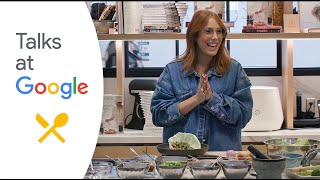
Chef Camilla Marcus makes mushroom larb from her new cookbook and explains regenerative agriculture. She shares kitchen tips like brush-cleaning mushrooms and making toasted rice powder, and discusses how Westbourne sources everyday foods regeneratively.
Chapters
Welcome everybody. I am Chef Randy. For those who don't know me, I am the teaching kitchen chef here in San Francisco. Very happy to call this my home. We do classes like this every single day. And we have the pleasure and the luxury of welcoming Camilla Marcus for this wonderful demonstration on this lob. But we, before we begin.
Sure.
I just want to learn a little bit about you and a little bit about Westbourne and the book as well. So give us a little bit of insight on you.
Thank you so much for having me. And Randy, this is your house, so always nice to be a guest. Come on in. So my regenerative kitchen just came out about two weeks ago, my first cookbook and really the entire mission is bringing regenerative practices into our homes. I get asked a lot, what is regenerative agriculture? Why does it matter? And the response from a lot of people is, well, I'm not a farmer, so what can I do? And that's really the answer that the book is trying to provide are all different ways from you guys have a loamy in a mill to composting, to eating plant based, to sourcing regeneratively in your home. A good example I ask people is most homes in America cook rice at least once a week. There are amazing regenerative rice growers. Lundberg being one of the biggest. You know that's an easy swap, right? That's one thing in your daily life that doesn't really have to change all that drastically, but you can support a regenerative mission. Regenerative agriculture is an ecosystem that pulls carbon from the atmosphere back into our soil. It lends to better food, more sustainable food, and most importantly, it's the only system that can pull down carbon in time to solve the climate crisis. So when you care about climate and you want to do something, it really starts at and ends with your food and what you cook, what you buy in the grocery store and what you feed and nourish yourselves with. So that's the mission of the book and the mission of my company Westbourne. So we create everyday foods regeneratively sourced with a carbon neutral supply chain meant to again, just by living your lives, by cooking, by having fun, by hosting people, you can really support this big transition that's mission critical for the climate crisis. So very excited to be here and let's get cooking.
Yeah, we can go ahead and start cooking. Tell us a little bit about this recipe and what kind of inspired this recipe for you.
Yeah, so I used to have a restaurant also named Westbourne. We were the first zero waste certified restaurant in Manhattan. And we did a lot of events, a lot of really cool activations outside of the four walls. And one of the dishes is this that we used to cook. Kind of inspired by that. I love larb. It's usually made with ground meat, a lot of times lamb. And again, the point of the book is not to give you, quote, unquote, chicken fingers. The idea is just real vegetables, whole vegetables, and knowing that there are recipes that can make them super delicious, innovative and fun. I really like spice love, great heat. And so larb's one of my favorite foods. And we used to do it with incredible mushrooms. And so the idea for this too, and a lot of the recipes in the cookbook are meant to sort of slide, right? You can make this as a canape. If you're hosting a big group, you can do it as an appetizer. A little bit larger format, you could even do it. I love having it sort of like assembly line style, right? Almost like how people do chili bowls, like a chili buffet. You can do this a little bit as a fun hosting, do it yourself buffet. So I think for me, it was also one of those dishes. It's super, super flavorful. There's all different ways that you can do it. I love doing it with any kind of mushroom. We have shiitakes here today. Whatever you can get. At the farmer's market, we were laughing and saying, my only request is like, don't get the plastic wrapped button mushrooms. Like anything but. But it's also great, honestly. You could do it with a squash, you could do it with zucchini. It's really great with any sort of hearty vegetable. But obviously mushroom has that umami. That's sort of the closest you're gonna get to a meat variety.
That was one of the questions that I had for you since in this book we didn't actually list what mushroom was in there. And I think that was important too. So you can use whatever's in season, whatever's available, because mushrooms also have their seasons as well. I'm a big old mushroom fanatic myself. And that's one of the things that, like with cooking in general, especially in the vegetarian space, when you're able to celebrate the vegetables or the mushrooms even as what they are, rather than trying to meat substitute using like tempeh and all these other tofu's and other things like that. So I love that this recipe has the focal point being the mushrooms. And yeah, we can do that.
Well, and in the book, you know, A lot of the conversation is mushrooms are super important in the regenerative ecosystem. They're very, very nutrient dense, but also provide a lot of essential minerals and vitamins to the soil. So there are a lot of mushroom recipes for that reason and intentionally so throughout the book. It's really meant to help you be a flexible cook. I think one of, again, the sort of sad things I hear from people is, oh, I was gonna cook this recipe in this cookbook I love, but I didn't have this one ingredient, and I couldn't find that at my market, so I didn't cook it. And I said, well, the point of a recipe to me should be guidelines and foundational building blocks, much like I'm a restaurant chef. And a lot of the techniques, too, are meant to bridge that restaurant chef to home approach, but so that you can feel empowered to look at a recipe and go, okay, it's just mushrooms. I don't have to be nervous if I can't find a specific one. To slide seasons. But also to give you more confidence, I talk about in the book playing jazz in the kitchen. Like, take the recipe as a base, but have fun. Like, worst case, there's always another thing you can make taking that fear out of it.
I think that's a really funny thing about recipes too, is oftentimes they're written in one season, right. And you get the produce from that season, but it doesn't translate to all the other seasons. So there comes the jazz part where you need to substitute certain ingredients and make it. Make it seasonal. So I think that's. This is a great way to play it. And.
And you'll see in the book, too, there's no preservatives. It's not tofu tempeh. The whole goal is really unprocessed, very natural. Again, I think that things in nature are beautiful, delicious, and incredible. So the book is really meant to honor that rather than it being a substitute for something else or using a lot of processed food, which I do find often in plant based recipes, you get a lot of preservatives, high sugar. So it ends up actually being not nutritious, even though you're being told that it's supposedly good for the earth.
Absolutely. All right, well, let's go ahead and get started on our mushroom lob. And we're super excited about this recipe, so we'll go ahead and start.
Yeah, first things first. So I like to make the sauce actually first.
Okay. We'll bring out some of the ingredients for the sauce.
I like to make the sauce because I feel like as it marinates, it gets better and better. The flavors get to meld. And again, I like spicy. You don't have to make it spicy. You can not put the chilies. The recipe calls for Thai chilies. Cause again, I like it hot. You can use something like a jalapeno if you want it more mellow. Again, knowing that this is meant to sort of ratchet up and ratchet down, not be sort of too strict. And yeah, so I like to have it really kind of meld in. This is based traditional sort of, I would say, Thai dipping sauces. There's sort of a somewhat even mix of usually some sort of, I would say, flavor forward oil. You don't want to go too neutral or to me, it kind of takes away from the flavor. So I like toasted sesame or some sort of infusion. I always tell people too, a lot of times, like, save your oils from when you're cooking because it ends up creating sort of an interesting infusion. I always save them and play around with it. This is a great vessel for that. I also will say you can make this sauce, which I do a lot of times, like the day before, keep it in your refrigerator or I'll make a bigger batch and I kind of use it throughout the week. We like, drizzle it on all sorts of things.
Yeah. And as it sits, it gets more flavorful, right?
Exactly.
So, okay, we got a garlic oil. Actually, we cooked some garlic yesterday and we figured, why not use that for this class.
A little bit of garlic oil, some soy sauce. You could add mirin too, if you keep it at home. A little honey. Again, in traditional Thai, it's usually fish sauce. Obviously we're keeping it plant based. Tamari sometimes gives you a little bit of that kind of fish sauce. Kick some. Sometimes I tell people you can add a little nutritional yeast if you want. Again, a little bit more of that umami. I put a little bit of the raw ginger. Can I snag one more spoon?
Yeah, sorry.
I like to make it interactive just so I'm not just talking to you guys. Any questions from the audience just off the bat?
Yeah. Feel free to raise your hands during this process if you have any questions about the ingredients or anything that interests you. Definitely. We're gonna talk a little bit more about the book a little bit later too. I love some of the other recipes as well, and I would, you know, we're going to highlight some of those other things as well.
Gonna add some lime juice. Do you have A towel by any chance?
I will grab a towel for you.
Kitchen towel. Any of you, Is anyone here a vegetarian? How often do you cook plant based at home? Is it something you think about? Is it something you're nervous about? What do you like to make?
Yeah, we're all vegetarian at home, myself, my partner and our two kids. So like, yeah, every meal. Sometimes it gets hard to think of like, what meals to make if we that have enough protein, if we don't want to do lentils again or tofu again, how to keep things like, interesting while still providing the full nutritional profile that they need. So I guess one question I had for you is like, what are interesting proteins that you like to use to make sure you get like amount of a protein, especially if you're not using tofu and tempeh kinds of.
Yeah, I like. I mean, for me personally, I like a lot of different kinds of beans I think are super important. And there's so many heritage beans. I feel like we're so used to kind of one kind and then you sort of say, ugh, I'm over it. One of my favorite recipes in the book is lentil risotto. Making it in the very exact same style. And it again, not really meant to be a substitute, but just thinking about sort of more protein forward. I also think using those things as like croutons on things. Right. Like lentils crisp up and actually make a really great crunch. Same with certain beans. You can really fry them up. Same with chickpeas is another really big source. But I think thinking about using them as maybe like a topping to get that kick versus it having to always be like the main feature.
Yeah, I think with legumes, pulses and beans, they are such a great regenerative crop actually. So those are one of those things that will add nutrients to the ground and really, really help the farmers create a regenerative crop that's good for the soil and good for the land, good for the ecosystem as well.
That's a great question. I think that's a big the getting the protein in. And again, a big focus of the book is getting that nutrition while also being mindful of the soil. So I'm just kind of mixing it all in to taste really good. You wanna give it a try?
I would love to.
Maybe a little more honey. So I do. Again, little bit of the raw ginger. I actually added a little bit of the garlic. You got a little bit of the garlic infusion. You know, again, depending on sort of how sweet or spicy you want it. The Lime juice adds a really nice citrus kick. I'm gonna throw a little bit more Thai chili. These are more.
You like it spicy?
I do.
I'm a big fan of chilies in general.
Also. Mushrooms have. You know, they do have a bold presence in a dish. So you also wanna make sure that you really are seasoning up. Really want your sauce. I think a mellow sauce is gonna get sort of pulled in too much by the mushrooms, so it has to be able to stand up.
Yeah, you gotta have that contrast. You got a lot of umami coming from shiitakes, and you need that, like, brightness. The citrus is gonna be pulling through with the lime juice. The saltiness from the tamari, and then the honey's giving you that sweetness. It's always important to hit all those flavor profiles that we can taste on our tongue, whether it's salt, sweet, sour, bitter, and umami.
Getting them all out.
Getting them all in there.
All right, so while our sauce marinates, I'm gonna have you.
Put me to work. All right.
We're gonna put me to work the outside layers off.
Let's do it.
I'm going to put everything in compost.
Compost. Beautiful.
Keep our. Should put them on this guy.
Oh, yeah. There we go. That's exactly why I had it. All right, so what do you. What is the best way to work with these? If you've never really broken down a.
Whole cabbage, I really just try and take the leaves off as whole as possible. So by that point, I think you're pretty good. You know, you want them in lettuce cups. I'm also a big fan of, like, it's okay, you know, especially if you're cooking at home, it's okay if it's ripped, you know, pull them over each other. Don't be afraid to try different kinds of cabbages. The only one I would say for this dish probably doesn't work as well on the outside, unless you wanted to blanch it as a caraflex. The ones that are cone shaped, they're pretty dense. They're pretty intense as a vessel for something going on top, like a lettuce cup. You know, I'd probably blanch it just to soften it. So we have an ice bath. Again, can be optional if you want to at home. It's just a little bit of a restaurant trick. And again, some of the things in the cookbook I try and show you want an ice bath? It just crisps it. It keeps the color. And once you pull it off of the cabbage head, it's going to start to wilt. So this helps kind of slow that process, keep it fresh. But again, depends on if you're cooking for yourself, how quick your family, you know, needs to eat. I'd also say these are great activities for kids. Have them pull the leaves off, have them put it in an ice bath. Have them make the ice bath. I also think getting the family involved in things that you're doing, that's why.
She had me do that.
So, yeah, so you just kind of pull the, you know, pull the leaf off.
They tend to be a little bit tougher when they're fresh. You know, they get the nice grip on each other.
And I would say, too, again, you know, you could do a lettuce cup. You can do any sort of fresh head of lettuce. I chose cabbage also, because I feel like it's a little bit unsung. It's very humble, it's really cheap, it's easy to find for the most part. So I also do that. I like using cabbage in a lot of the recipes instead of a traditional lettuce, just to get you thinking differently. A lot of the book is focused on biodiversity as well. Getting to think about new ingredients, not just using, you know, the same as you're typically getting and, you know, trying out a new recipe with it. Kind of like, you know, you want to kind of gently pull it off. As you can see, sometimes it's easier than others.
Yeah, sometimes when you're taking off the base of the cabbage, it's easier to pull off the rest of the leaves. And that's a beautiful cup, I was going to say.
So we'll let that sit. I don't know if you wanna bring.
One, maybe one more.
I'll do a couple more. And then you chop your mushrooms. So, again, it can be anything. These are shiitakes. Today, I honestly like doing a mix. I think it also adds a lot of flavor to have a mix of mushrooms. This is also a great dish, I will say, for leftovers, which is, again, a big theme of the book, like, what do you do with just a couple? Maybe you buy a whole bush, you know, a whole bushel, and you have some leftover. You can add other vegetables. I would also say to this, as you. Again, maybe you have like half a carrot left or half an onion. That's another reason why I love this dish in particular. It's a really good upcycled version.
I think if you ever have the cabbage broken like this, you can actually make it into two cups as well. So that's perfectly fine for a snack and for an appetizer. All right, so we're shocking these in a nice ice bath to keep them crisp and keep them from wilting. Now we're gonna be chopping up some.
Mushrooms, and I'll have you heat some oil and I'll say, gotcha.
Let's use the garlic oil.
Why not?
All right.
Any other questions?
Yeah, give the mic over to you.
And I use the stem. I know that that's not always the case, but I like to use the stem. In the book too. You can use a food processor, but I didn't want it to be too loud for today. You know, it doesn't have to be perfectly minced food processor. If it's easy for you, if you don't like chopping. I like chopping. I find it very soothing. But it's another way that you can do it pretty easy and again, get your kids and family involved. Like anyone can turn on a food processor. So helps make it inclusive. Yeah. Hi. I have a very specific question that has plagued me for years. How do you prep your mushrooms? Because I've been told you shouldn't wash them because you want them very dry. But sometimes when I get them from bulk, they're like covered in dirt. So. Yeah, I am so glad you asked that. And I have the perfect answer for that. Do you have, I don't know what you scrub sort of your pots and things, but I like the natural bristle that has like, the wooden handle. I forget what it's called. But anyway, you can get them at any sort of eco cleaning store. You probably get it online somewhere. So I use that to scrub my pots. And then I have one for mushrooms. It's actually perfect. You just wanna brush them and it'll get that dirt and it gets kind of the bristles get into the crevices, but then it keeps your mushrooms dry.
And if your mushrooms are super dirty.
I kinda have to be honest.
Yeah. If your mushrooms are super dirty, there's no harm in washing em a little bit. They're gonna absorb some of the liquid. But that liquid can be cooked out and steamed out. One beautiful thing about mushrooms, and this is something that I talk about in my classes a lot, is that you cannot overcook mushroom. If you're boiling it in water. It doesn't break down the cell walls. The cell structures are made of chitin, which is kind of like the material that makes our fingernails. It does not break down for long, extended periods of time of cooking. So the only Thing that you can risk is, you know, drying out your mushrooms when cooking. So especially if you're using dry heat or oil. Fun things.
But try the brush. It's really.
But try the brush first.
It's really fun. And also less waste. You know, less wasteful. It takes less time, actually. And again, it's a good way to get someone who potentially says they don't cook to get involved. Like, anyone can brush it. And super sustainable. Easy to wash afterwards.
Very nice.
I like that question. I'm sorry. That's place played to you for years.
Awesome. So what size are we looking for for the mushrooms when we're chopping them up?
You know, I think ideally you want it maybe edamame size, I would say. I mean, it is going to shrink. I would say don't go. I would err on the side of bigger than smaller, because you don't want it to shrink and get really dried out. So you still want it to have a meaty presence. Pun intended, I guess. And again, I would just say, like a rough chop. You can see that's where the food processor is nice. Cause it definitely gets uniform. But I don't like to take it too seriously. All right, so you got your hot.
We're nice and hot. Ready to go.
Some garlic oil.
Garlic oil is in. You want some more?
I'd say maybe a little more.
All right, let's get it just a little more.
Get it all rippled. So here's where I like to put all the aromatics. We were talking earlier about sort of what's the key ingredient. I definitely think lemongrass. It's actually a lot easier to find than people say. I keep it in my refrigerator 247 to me like that. And some form of citrus I probably use the most. I do think that's the key to sort of this flavor profile. I'd say if you really can't find it, it's fine without it. But it does add that little flavor. The other alternative is you could use something like a calamansi or a yuzu sort of. I feel like a more vibrant, floral citrus that'll bring out that same kind of flavor profile.
Yeah. So for those who don't know how to work with lemongrass, what is the best techniques for using the lemongrass? I can go ahead and add.
Yeah, I was gonna say. So we're gonna hit it with lemongrass, garlic, ginger, get our aromatics going. Some shallot, lemongrass.
Too much?
No, no, no. Can never have too much. But I'd maybe. No, I think that's good on the heat. Okay, we'll just load it up with aromatics. Also, this is the best to just have it pre chopped, I gotta say. What a luxury. So you just wanna take the outer stalks. I mean, I'd say similar kind of to a leek. I don't know. If you cook with leeks, that actually would be great in this too. You just wanna take the outer layers off and then you wanna chop. Really, the softer part. Anything that looks like a husk, similar to a corn husk, you're gonna wanna pull off and compost. So you. You get it. I don't know if you can see on the screen. Oh, another nice overhead shot. So you can see it has almost looks like a shallot, but a little bit more dried out. But you don't want the fibrous part in there. I mean, it won't do any harm, but it just doesn't taste very good and it'll be a little too crunchy.
Okay. What else do I need in here?
Maybe slow your heat on that one.
Just a little bit. Yeah, this one's dropped.
Did you get your shallot?
Yeah, we'll hit some more shallots in there. Looks like they can use more shallot.
A little bit more oil. All right. You get your garlic?
Yeah, garlic's in there.
Garlic, ginger.
Ginger we can hit it with.
All right.
All right.
So you can already smell it.
I mean, it's very fragrant.
It's pretty bold. All right, so now. All right.
Mushrooms go in with the aromatics. Yeah, Beautiful.
I don't see salt and pepper, but.
I always have salt. That's one of the things that I cannot miss on a recipe. Always some salt.
Any other questions?
All right.
What's your favorite mushroom recipe?
Ooh, my favorite mushroom recipe. Boy, there is one that I like to teach is like a spicy king sesame oyster mushroom. So we take the oyster mushrooms, we shred them, saute them with a nice fragrance, sesame oil, and lots of chilies. Lots of great stuff. It's like one of those side dishes that can go with everything.
But yeah, I feel like oyster mushrooms and trumpet mushrooms are not used as often by home cooks, even though, again, they're very easy to find. But I feel like that's underutilized.
All right, I'm going to turn up the heat on this one.
I was going to say, can I trouble you for a little more oil?
Oh, yes, we can get some more oil as well.
I might even just combine these for now. Pop these in together. See, I just want to get it Crispy. All right. Just a tiny, tiny bit. Awesome.
Put it in there.
I combined them. We'll do one.
Okay. That sounds good. We don't need a ton up here. This is looking great. I love the smell.
All right. And I would say aromatics to the mushrooms all together. Probably want close to a 1 to 1. I like to have that. Cause again, I like it pretty, pretty powerful. You crank the heat now.
Now that it's all we're going up.
I was gonna say it's been a long time since I've worked on an induction.
Yeah, inductions are great. And the cleanup is easy.
So as that's going, I'm gonna then slice a couple shallots just for some garnish. We'll do a little bit of scallion for garnish, which they've chopped and toasted rice powder. Who's made it at home? Has anyone tried it at home?
I know one person.
All right, you want to tell us a little bit about it?
I'm Lau and hop is the national dish of Laos, actually, along with sticky rice. And so my family and I, we've been making it ever since I was a little girl with my grandma. We have a special blend that we make at home. Essentially, every Lao family makes their own roasted rice for lap and a special blend that grandmas and I use. We call it khao kuo hom. Khao kuo means roasted rice. What we do to make it even more aromatic is we add lemongrass and lime leaves and we re roast it with the rice. And so it makes everything even more fragrant and floral.
Amazing.
That does sound amazing.
And toasted. I was going to say, again, this is something. So we put in the mortar and pestle. You essentially toast the rice raw. And then you grind it. You can grind it, you can pulse it again. Depends on sort of how high tech or low tech you are. This is something too. I just make in batches. I keep it in a jar, sealed in my pantry in a cool, dark place, and I put it on everything. It just adds that perfect crunch again, that nice toasty quality.
And that recipe is also in this book as well.
It is indeed, but very easy and something that, again, I always suggest making. And then you can sort of add it when you want it. It holds for a really long time.
Now, is there a specific, specific type of rice that you want to be using?
I typically use jasmine, like I said. I mean, we're big Lenberg family farms supporters here because of their regenerative practices, but for me, in the book, it's a lot about finding those regenerative rice producers. I think it's, again, a very easy way to support the system at home.
Touch more salt, or is the sauce gonna help that?
No, I do a tiny bit more salt. I'm gonna also give you a little hit of lime juice.
Beautiful.
I also think the heat, we could go up a little bit more. I personally like a little color on it. Again, sort of dealer's choice.
Beautiful.
There we go. But, yeah, I also think lemongrass is underutilized a lot in cooking, and I just. We use that. We use yuzu a lot at home. Big chili pans. All right, so you get that finalized, we'll take one more taste.
Yeah, give it one more shot.
That's really good. Perfect. All right, so you're gonna take. Take one of our. We'll do a giant plate.
The giant one. Okay. We got some plates right over there. Choose whichever one strikes your eye. I know we try to bring out the best for you.
So you want to get this nice and dry. Should come off pretty easily. You're going to put your larb and.
Grab a big spoon first.
All right. And then we have. I like to garnish it with a little bit of just fresh shallot. You can pickle them as well, which I have in the book. Those are things that I keep kind of every day in my pantry. I love a big section of the book is pantry staples, because I feel like, again, adding that extra touch like you would in a restaurant comes down to a lot of those. Just small condiments, those little touches. How you garnish those things are a lot easier if you already have them prepared. So I have sort of 10 things that I always keep in my pantry. Pickled shallots being one of them.
Oh, pickled shallots are a must. I love it.
And a lot easier, especially if you do it in a. I always tell people, do these condiments in a mason jar. Just get a little set of sort of small ones. You know, they're not such big projects. And you can really just put it all in, shake it, put it in the fridge. Will take you less than one minute, and it will uplevel all your food and flavors.
Yeah. One of the things I noticed in your cookbook is you got a lot of pickling recipes and things like that for preservation, which is really great for, you know, if you're considering minimizing your impact or low waste. Right.
And a way to extend seasons. So that's another reason why we talk about it in the book. Right. If you love a certain farm, you love a certain piece of produce, there's all different kinds of ways, whether you're confiting it with oil or you're pickling it for the next season. It's such a great way, I think, also to honor the seasons that you might like and incorporate them into the winter dishes.
Absolutely. All right.
I was gonna say we're just about to launch our holiday box, all regeneratively sourced and grown for Westbourne. And one of the things that we did was a summer strawberry with a little sweet heat with some chilies. So the idea is, right, by using a preservation technique, doing an all natural fruit butter, it's a way to get summer even in the height of winter. So I then hit it with your sauce. As much as sort of the aromatics, I think the better. And I always like to reserve a little bit as sort of a dipping. I'm a big sauce and condiment fan. You get your little. And then do you want to clip our two herbs? And again, I would say on the.
Herb side, do you usually clip or pull or how do you like to do this? I like to pull too, especially when they're fresh. Just give them a little pull.
Exactly.
A little bit of mint next. Mint goes a long way, so you don't need a ton.
And then I hit it with a little bit of scallion again.
Oh, that's gorgeous.
And I think the idea is really you get that freshness so the larb is really cooked, hearty, earthier. And then you get sort of the brightness of this little herb salad and chili on top. And then a pinch of the. The toasted rice.
Gorgeous.
Be as generous as you want. There we go.
You can always serve it with a wedge of lime or just eat it as is.
So love that idea.
Beautiful. That's a gorgeous plate. Definitely something I would serve.
And pretty simple, right? I mean, I don't know how long that took. Half hour. Not bad for. Not bad at all. While we're talking.
I mean. Yeah, that's a simple, simple dish. And we're going to be able to pull out some more tasters for everybody here in a moment. I'm just going to make a second.
She planned another one.
All right, this looks really good. And I want a piece too.
All right, I'll hit you with your sauce. Any other questions?
Yeah, we got a question over here. We'll grab the Michael.
So the question is on sort of where I source. Right? Look, I think a big ethos of the book and my own personal practice lies in balance. I think that there's a place for all of those. And in fact, actually it's interesting. Costco's been really vocal and very focused on regenerative brands and thinking more about making that the new mass. Right. We all know organic became sort of the healthy standard, I'd say, about a decade ago. And regenerative to me is really sort of that next wave of a little bit further into what we need for the earth and for our health. So look, I think it's a mix to me. And again, a lot of the notes in the book are there's places online to find you might have regenerative lumberg rice in your local grocery store, or you can order it online. There's all kinds of pastas, all kinds of. Of flowers that are all regeneratively grown. Some might be able to be found at the farmer's market, some in mass grocery, some online. So for me, it's really a mix. I dream of the day where we walk down a Costco aisle and there's a huge section on regenerative goods so that it makes it even easier. But I do think a mix is right. Supporting your local farmers is super important. Talking to them about what they're doing for soil health. People always say to me, well, how do I know if my farm is regenerative? I said, well, one ask is too. If you start talking to them, if they're regenerative, they're going to talk your ear off. You're going to know very quickly that they're into that because they're going to perk up and get so excited to share all the things that they're investing in. And I think all of that is important. I don't believe in sort of one size fits all. And I do think a mix is more practical for families. And I always say doing something is better than nothing and not being stressed about doing, doing it all right, it's not that every day has to be vegan and completely regenerative. That's not feasible. And I also think not practical for most families and homes. So I think it's really about do something, pick one thing first and then do another and sort of let it snowball and see where it goes. I think to me that's the most important. So I. That's how we do it at our house too, I think, trying to really balance it as much as possible. But my dream and our hope for the future of Westbourne is to make regenerative goods Mass market. I think it's important to reach as many people as we can.
We have another question.
Are you seeing other restaurants follow suit, look for generative menus? And how can consumers support by seeing other restaurants? I think some are, you know, I think, right, you're in San Francisco, places like Chez Panisse with Alice Water started, you know, listing farms and ingredients. Right. It's not just that it's a mushroom larv, it's where did you get the mushrooms from? And that being called out on a menu, I think is a really amazing evolution and part of the movement maybe 10 years ago. I don't see a lot of restaurants doing it yet. I will say I wish more did. I think certainly some at the high end, like a Blue Hill, are doing that. And especially those that are pulling, like One White street in New York, they have Ricker Hill Farm that they work with and have partnered with. I think those kinds of restaurants are definitely starting to get that going. I think it's still few and far between, but I think it's on its way. And how can consumers help one? Again, buying from those brands and those farms, those that are, I think to asking, you know, when you go to your favorite restaurant, say, are you working with regenerative farms? You know, I'd love to see that on the menu. You'd be amazed how much you actually have more pull power than you think as a diner, as a guest, as someone in the grocery store. I mean, you'd be amazed if a store manager in your favorite local grocery store gets asked about Westbourne avocado oil enough times. They're going to reach out and go get it. I think sometimes we feel like the product should be pushed to us, but in fact, you actually hold a lot more power to drive those decisions to drive those purchases. I think much more so than we sometimes give ourselves credit for.
Absolutely. We have any more questions? I got a question for you.
All right.
So with your book, I just want to know what your favorite, favorite recipe is out of this book.
Oh, gosh.
I know that's a loaded question.
It just, it ebbs and flows and varies just depending on the day.
Right.
I do one of them that is very near and dear to my heart is the carrot cake. I feel like carrot cake is really not done well. Most often it's very dense or doesn't have a lot of flavor or frankly overly sweet. And you don't really taste the carrot. It's something that in my family was always, always like the birthday cake. You know, every Family kind of has that dessert that's the one for celebrations and carrot cake was always that for us. So I'm pretty proud of that one. And I share my mom's recipe, which honestly is amazing. And then also compare and contrast it with a cover crop based batter, which is also something that I'm very big on promoting, which is we can't just always use AP flour. Yes, there's certain uses for it, but again, we've sort of become monocrop in how we even bake. And there are so many kinds of grains out there that are incredible and cultures across the world use all different kinds of flour. And I feel like in America sometimes we forget that there's this incredible biodiversity. So I think that one I would say is one of my favorites right now because I think you can see kind of exactly what we're trying to shift, which is how things have always been done kind of without questioning, without thinking about why we got into AP flour. Like a lot of the book talks about, we need to question and follow the money, follow the power and control in this country and the food system as to why we have certain staples that feel necessary like corn, sugar. All these crops all came out of the industrial revolution. They came in post war times. And now you look back and sort of say, okay, but why? We're in 2024. We don't need subsidies for these crops. We don't need to be pumping out corn like there's no tomorrow. There are so many other crops that are incredible and better for you. So I think that recipe for me is a little bit of that mind shift from, okay, you can bake something that's absolutely amazing. And I'm going to show you now how you can do it. Higher nutrient density, ironically gluten free, and again, really sort of vegetable forward and thinking a little bit differently. Even something like baking where I think we're told right, it just has to be butter, sugar, AP flour, like maybe it doesn't.
Yeah, there's actually a subtle danger there of having only monocrops out there. Right. If there's only one crop, what happens if there's a fungus or a peg pestilence or some type of bug that wants to go after that one crop? Guess what? There goes the economy right there. So it's important for us on that side to, you know, look at different, different types of flowers, different types of things and ask, how can I use this in my everyday menus or everyday recipes? So I think that's very, very important thing that we could do on our part to help minimize or help push the. The demand for other crops out there. Right.
Well, that's a great example to the. The virtual question asked, which is, you know, what can we do if you're consistently buying all kinds of flour? Like take baking for example. Right. And it's not just AP all of a sudden grocery stores. I mean people kind of forget. Grocery stores are a very intense business. They're very data driven. And they do look at the numbers. No matter if you're a big size, you know, big mass scale retailer or a small one, they're looking at their numbers. If they start to see, huh, okay, last year, AP flour. You know, it's AP flour and everything else. All of a sudden you start to see those numbers shift and you start to see the buckwheat and oat and sorghum flour and all kinds of interesting cover crops that are super important for soil resiliency and keeping the land from being fallow. They're going to take notice. Like they're graphing it. And I think sometimes we forget that they do look at that data and that we actually are drivers of that data.
Yes. That is incredible. Well, I think there's one last thing that we need to do here.
Taste it.
I think so.
Right. All right, let's do it.
I think it's important to.
And then everyone gets to.
Yeah, we're gonna be plating up right now.
Sorry for those watching, but hopefully you'll make it this week for dinner for your family.
Yes, this is.
And again, remember all different types of mushrooms. That's the goal. Really thinking, you know, I'll talk while you take the first bite.
Okay.
I gotta secretively judge you.
You gotta judge me. All right.
You have to like it. You made it. But again, thinking about this is great with squash. Tis the season. You can do this really with pumpkin would be unbelievably delicious and vibrant. Zucchini, any sort of, I would say again that sort of meatier, tougher texture. Any kinds of those vegetables you can mix them in. Just keeping that flavor profile I think will really sink through. So not feeling like you have to cook mushrooms. I get from some people too. Like, well, there's an eggplant Katsu sandwich in the book and I had someone this weekend ago, I cooked it at a restaurant in Sonoma and someone said, well, I hate eggplant. I go, well first I'll try it. I promise you you're gonna like it. But also there's other things that you can make with it. Right? You can do it with a maitake mushroom. You could do it with a celery ac root. There's all kinds of things that you can do a lot of these recipes with. So give it a chance. And I would say read into the cookbook rather than just going, ugh, I don't like mushroom, and going to the next page. Think about it more as a technique, a flavor profile, and a thought starter. Not like, if you don't have every single one of the ingredients or you don't love all of these ingredients, you can't make it. The goal of flexibility.
Yeah, that's amazing. I actually had that this morning where I was talking with someone, and they were like, well, this might be the dish that changes my mind about mushrooms. Because, you know, every time that people say they don't like mushrooms, it's oftentimes because they've been given those button mushrooms that are flavorless and very, very textureless mushrooms. But oftentimes, if you actually do some digging, other mushrooms have such a variety of flavor textures, and you could create something so great with that. That is really good. Spicy, but really good.
And again, doesn't have to be that spicy. Again, Thai chilies are incredibly, incredibly potent. You could totally do it with something mellow. I will also say another trick. I actually don't know if it's in the book, but pickled chilies oftentimes will mellow that out too. So that's also very helpful if you want to kind of bring it down.
But.
Or no chilies. I mean, again, you can kind of keep it a little more basic.
I think it's definitely for everybody, just depending on how much chilies you put in there. And I think this is incredible. It's got all those flavor profiles, the sour, the sweet, the spicy even, which is a texture or not a texture. It's a feeling sensation. And then the umami, it's just loaded with umami, so it's an incredible dish. I hope you guys really get a chance to enjoy this as we're making it, but. Yeah.
Awesome. Well, now we got to get everyone to go look at the.
Yeah, we got to get everyone over there to try it and taste it. And if there's any other questions you can feel free to ask at this point in time, otherwise, you know, we're going to just enjoy this over here.
Sounds good. Thanks for having me again. Appreciate it, and happy holidays.
Thank you. Sa.
More from Guy


Cheryl Strauss Einhorn | The Human Edge: Smarter Decisions in the Age of AI | Talks at Google



Rachel Glennerster | Innovation and the Center for Global Development | Talks at Google

Rebecca Winthrop | Rethinking the Purpose of Education in the Age of AI | Talks at Google

Dr. Robert Wachter | A Giant Leap: How AI Is Transforming Healthcare... | Talks at Google



