Cleopatra's Nose: 39 Varieties of Desire | Judith Thurman | Talks at Google
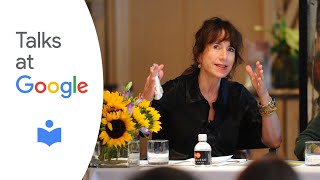
Talk and Q&A (Talks at Google, Nov 29, 2007) with Judith Thurman about her book Cleopatra's Nose: 39 Varieties of Desire, her career at The New Yorker, and her writing process. Thurman recounts family history linking her grandparents to New Yorker founder, early archival research before digitization, her drafting habits (many rewrites — e.g., 28 drafts on a tofu piece between July 12 and Aug 4), experiences with The New Yorker's intensive editorial workflow (each piece read by six people), and reflections on writing about fashion and literature. The talk includes anecdotes about biographies she wrote (including Colette), critical stances (Catherine Millet review), and a described favorite essay about Flaubert.
Questions this video answers
November 29, 2007
20 years
2000
Cleopatra's Nose: 39 Varieties of Desire
Isaac: The Life of a Storyteller (won the National Book Award) and a biography of Colette
Chapters
Thanks so much for coming to today's authorsooglevent. I have the pleasure of introducing Judith Thurman. She has contributed to the New Yorker for 20 years, and she became a staff writer in 2000. Her previous works include Isaac the Life of a Storyteller, which won the National Book Award, and Secrets of the A Life of Colette. Today she'll be discussing her latest book, Cleopatra's 39 Varieties of Desire, a collection of essays and profiles. In her review in the New York Times, Kathryn Harrison writes, blessed with intellectual curiosity, a sharp wit, and an unwillingness to receive opinions, Judith Thurman seems unlikely to produce anything less than a feat of style. Please join me in welcoming Judith Thurman.
Good morning.
I'm very excited to be here, to see the place where so much of my research comes from. That was not always the case. The first two biographies that I wrote, one was done the old fashioned way, on a typewriter, putting in all of the footnotes by hand. And the other one, in the early 90s, things were just beginning to get online, but the archives at the Bibliothque Nationale in Paris were still not. They were just building their online archives. And the old archives, you know, the sort of 400 years or 500 years of French literature were organized not by the date that they were written, not by the author's name and not by the title, but by the date that the library acquired the work. So it was really a Borges story, trying to find information. My son, who started college this year, doesn't believe that there's any other way.
To do research than online.
But this extraordinary campus and the sense of being at the heart of things is in a way a bit like what the New Yorker is for many people. I mean, it's a sort of mythical place. And when I was growing up, most young writers aspire at some point to write or contribute or have a story accepted by or a poem accepted by. And that was certainly true for me when I was young. I grew up in Queens, in New York, and I thought about why. I mean, people are not so curious about what it's like to work at the New York Review of Books or what it's like to work at the Atlantic Monthly. The New Yorker has a peculiar status in American culture. It's sort of like the potola in Tibet, this fortress on a hill. How do you scale the mountain and get inside?
And in the course of the book.
Tour, I've discovered that people are rather interested to hear about what goes on, how in fact, you write for the magazine, what the editing process is like, how you come to storm the fortress. The place that the New Yorker has in my own biography is sort of funny. I write about it in the introduction to Cleopatra's Nose. My grandparents were Hungarian immigrants. They came to New York in the late 1890s. My grandfather was a master baker. The New Yorker was founded by Ralph Fleischmann. He was the first publisher. He was the son of a German baker who founded a very large empire, the Fleischmann Yeast Company.
And my grandfather had got a job.
At that point at the Vienna Model Bakery on East 10th street in New York, which was a New York institution of a different kind. And the first place, really, the concept and fact of a breadline started there, because at the end of the day, whatever goods hadn't been sold, and they were very sort of luxury baked goods were given away to hungry people who would line up at the back door. So my grandfather was in charge of this operation. And Fleischmann's son, Raoul, was something of a playboy in his youth and came from a very privileged world. His father wanted him to learn the business of making dough, both the green kind of dough and the white kind of dough. So he apprenticed him to my grandfather, and they became friends, despite a very large gap of class and education. And when Fleischmann tried to get my.
Grandfather to his son to college, and my uncle, in fact, did briefly attend Williams, where Fleischman had gone, he lasted a month. When my mother was 16, my grandfather called him. He said, fleischmann, do you think you would have something for my daughter Alice at your magazine? A summer job? And I knew that my grandfather had never. Didn't know what the magazine was called, certainly had never read it, probably couldn't have read it. And Fleischmann said, well, Meisner, I can find her something, but tell me something. She's still so fat. My mother was a dreamy teenager, a bookish girl who barricaded herself from the world and from the storms of her family life by eating and reading, often on the fire escape. But at 16, she had emerged from her period of adolescent as her sort of hermit crab period in this shell of flesh. And so she was hired as a temporary receptionist at the New Yorker, where she spent, I think, two summers meeting writers and absorbing the glamour for her, the great glamour of this literary world. And when she graduated from college, she somehow wangled another job at Conde Nast as a fashion forecaster, prefiguring, oddly, her daughter's very unlikely later Occupation as the New Yorker fashion critic, although neither I nor anyone at the magazine really knows what that means. And I asked her what she did, and she said, well, I bought a lot of very nice hats and I went to the opera and to the theater every night. I said, wow, that sounds like fun. She said, no, they wouldn't buy me tickets to the actual performances. I went in the intermissions. I said, oh. And she looked at what people were wearing. She took notes on the trends and the style and the colors and the hemlines and the shoulders. And she rushed back to the office and these notes were. This is, I know, surreal to you. They were transferred to three by five cards, which were then sorted by some kind of cockamamie mechanical machine, and a fashion forecast was produced. So I've always pictured this as Rube Goldberg and Dorothy Parker back at the office at 11 o' clock at night. That glamorous stage in her life ended, and she became an English teacher at a very tough school in Boston, Boys School. And as an English teacher, she is my internalized editor, also always wielding a whip, I have to say. She boasted that she had punctuated Molly Bloom's soliloquy when Ulysses was first published. And she took my homework and my compositions as a girl, and she would sit down at the kitchen table, often without my either invitation or enthusiasm for this. She would take them and cut them to pieces with the scissors and paste them back together again on fresh pieces of paper to show me how much better they read when they had been edited and restructured. I resented a lot of this interference or intrusion as it was, but it really taught me how to write. And I still am constantly cutting and pasting and revising. And the real work of a piece for me begins when I have a first draft and not before. And I never know what it is I want to say. I don't think in a linear fashion at all. I never know what I want to say until a sentence that I've written reveals what my own thoughts and feelings to me. And it's a very scary process to live with that unknowingness until, sort of like magic, it's revealed to you what you have to say until you find the first paragraph, or usually the first sentence or the first paragraph that shows you the way out of the wood. It's not like that for everybody. At the New Yorker, I ran into my colleague Louis Menand, whose nickname is Luke, at a dinner party on a Friday night, and I said, oh, Luke, what are you. What are you doing he said, oh, I'm writing a 5,000 word essay on the metaphysicals. Metaphysical New England or Transcendentalist or something like that. I said, oh, well, when is it due? He said, Monday. I was shocked and I said, well, what are you doing here? He said, well, I have the whole weekend to write it. And he explained that for him, he approaches. He didn't. He didn't. He had the decency not to say, well, I'm a professor at Harvard, so I know what I'm up to. I never know what I'm. Every new piece for me is a thesis in a subject that I have not been studying. He said, I'm a bricklayer and I write one line at a time, one row at a time, one line at a time, like a row of bricks. I lay them out, I mortar them, I smooth off the mortar and I go on to the next line so I don't have to go back. I'm always doubling back. I'm always writing in a state of incredible anxiety about my inability to find that. To find the subject, to make the subject real, to give the sentences the quality that they need to have. And many young writers, when I tell them this, they take heart. They don't quite believe how terrible my own drafts, first drafts are. So I thought just kind of, to give you an example, I would read you some of the first paragraphs that I have thrown away, my many false starts. This was a piece on the making of artisanal tofu. It was an extraordinary assignment. The New Yorker now does themed issues. It's not everybody's favorite, and it sort of seems to work from a publishing point of view. And the food issue, the New Yorker food issue, we all look forward to that because usually means some wonderful assignment. For this last food issue, I wrote about fasting. Fasting and colonics. I went to a spa in the desert. The latter part of it was especially revealing and bizarre. But for the issue before I went to Japan to write about tofu, I loved Japan. I loved everything about Japan. I'm very excited to hear that you have Japanese toilets. I have to figure that somebody would finally get around to importing them. I felt very at home in the culture, which is a culture in some ways, culture of perfectionism. And the more I studied the subject of tofu, the more of a responsibility I felt to give the piece the same purity. I had a great guide for this trip. I was writing another piece at the same time on a kimono master from Kyoto who's an old friend of mine. So he was my interpreter and my guide. And to the temples. And tofu was imported from China along with Buddhism. It started out as a food of the aristocracy, but particularly of the Buddhist clergy. When I came back, I had about two weeks to turn the peace in and the sense of responsibility to Japan, to the artisans who made the tofu, to the history of the subject really paralyzed me. I couldn't. I now know that when something sounds like fun, run in the opposite direction. The fun that you have reporting it is going to be paid for by the struggle you have to bring it to life. So I also had taken copious notes and then copious interviews, and I somehow wanted to get everything into the first paragraph, which happens frequently. I went through 28 drafts between July 12 and August 4, which is actually fairly typical. And what happens is, the more drafts you do, your bearings begin to dissolve, your sense of reality begins to dissolve. It's like a whiteout. If you ski, you don't know really even what's up and what's down, and you become briefly enthusiastic about something you've written. And then you come back after a cup of coffee and it's much worse than you thought. So I won't read you all 28 drafts. I'm just going to read you four. This was the first. I usually do not begin drinking at 11 in the morning, but when Yoshimasa Kawashima, a celebrated tofu maker, oinophile and bon vivant, uncorked a bottle of perfectly chilled 1972 Jeffrey Chambertin in the kitchen of his farmhouse on a hillside outside the city Karatsu on the west coast of Japan, I couldn't say no. Little pretentious then, I was so sort of bowled over by the beauty of the landscape and of the Japanese watercolors and also the kimono paintings that depict the landscape that I wanted to do. My little landscape number. The rainy season started late in Japan this year. For the first three weeks of June, the rice paddies simmered under a milky haze. Housewives, vain of their pallor, went to market wearing hats and gloves or peddled their bicycles with one hand, the other hoisting a parasol. Many, perhaps most of them, came home with a package of tofu, which, in one form or another, is a staple of the national diet. And the extreme, prosaic, boring quality of that last sentence and the overriding, the sort of lush description of the first sentence were deathly not willing to give up on the tour guide. On these sort of wonderful, picturesque notes that I had. I tried this karatsu is a small port city in the Saga Prefecture on the west coast of Japan famous for its pottery, a fortified samurai castle from the 17th century that dominates the bay, a spectacularly eroded shoreline furrowed with caves and cliffs, an ancient tract of virgin pines that fringes a fine beach, and a rowdy, picturesque Shinto harvest festival that attract half a million tourists every November. More recently it has also become known for its zaru dofu, an exquisitely bland and pure form of soybean curd with a meringue like consistency that is molded in a bamboo basket and served in scoops, a delicacy produced every morning between 1 and 5am According to a secret recipe devised by a local artisan, Oynophile Bon vivant, organic farmer, restaurateur, exporter and man about town, Yoshimasa Kawashima. That went on for about 10 more drafts. I was trying also to get in the image of the glass vaulted shopping arcade with the plastic wisteria. I was very determined to get in the plastic wisteria. Never did. Then all of this wasn't working, so I decided I would change tacks completely, try to find another voice, try to find another tone. And I came up with this. Writing about tofu, like cooking with it, is a challenge to one's powers of invention. And I was going to introduce a subject somewhat lacking in inherent drama with a story about my ex mother in law, a vagabond of waifish charm who briefly made a living growing wheat grass in the back of her VW camper and selling its juice with missionary ardor at health food fairs, and who, about 30 years ago, concerned that my eating habits and those of her son were poisoning our youth and helping to despoil the planet, gave us a copy of the Book of Tofu, an essential reference work on the history of soybean curd and its cuisine, which is still in print. But having recently spent three weeks in Japan living largely on tofu, I lost five pounds and feel great. And watching it made with equal measures of reverence, gusto and virtuosity by elderly fisherwomen, Zen monks, Rakish oinophiles and 9th generation masters of the art, I realized with a guilty pang that tofu is, at least among the unenlightened, the mother in law of foodstuffs without the slightest twinge of conscience. People feel entitled to make jokes at tofu's expense, rolling their eyes like Rodney Dangerfield while it bobs guilelessly in its tray of cloudy water at the salad bar or gaily retailing their first encounter at some wacky vegan Thanksgiving in the wilds of Marin county with that tired trope of hippie fundamentalism, the tofu turkey. Well, that was somehow Rodney Dangerfield and tofu and Zen and Kyoto temples were not where I wanted to go. The impact that, the self conscious cleverness of all of those, this hint of dissipation, the Oyne file, the showing off. I have to show off a lot before I kind of slap myself down.
I was.
I still, I was not out of the woods. And I called my editor, Virginia Cannon, at about, I don't know, at the end of the business day, I said, virginia, I have to quit. I'm not up to this. I'm not up to really writing for the New Yorker. I can't do the deadlines. I can't produce this quality of work on such a short, such a short lead. And I'm just in despair. She said, don't worry, I will get you more time. Go take a bath. Relax. Let yourself just relax and think and call me back later. So I took a bath. Actually, a friend came and roughed me first and then I took a bath and in the. In the water, thinking that I had more time, I began to. I began to. To focus on the subject. And I did see my way out and I ran upstairs and I called Virginia and I said, virginia, I think I have it. I'm going to be able to do it. She said, great. I was never going to get you any more time. This finally was the published opening. The Abbot's Garden at the Temple of Daisen in in Kyoto is a rectangle of raked gravel bordered by a white wall on one of its long sides, the wooden porch of an old pavilion on the other, where the monks meditate. From behind the wall, a camellia bush throws off its scent. The grooves made by the rake run horizontally, like steady but freehand rulings on a blank page, until they eddy around two conical mounds, each about a foot tall. One evening last June, just after the temple had closed, I joined the sitting meditation held on the porch and open to the public twice a week. There were five other sitters, all Japanese. One a young mother who had her children in tow, two plump boys and a little girl. I could hear them squirming. At the end of the row, the wood creeks, and once or twice the presiding monk spoke to them in a low voice, breaking the silence. But after a while, with an impressive show of stoicism, they managed to keep still. I had been to Dyson in earlier that week and at my first sight of the stones, I shocked myself by bursting into tears. Perhaps because, for all its austerity. The garden is an image of release. Of the moment at which, after an intractable struggle. You get permission from yourself to let the inessential go. And in that image, the letting go of the inessential, I let myself. I gave myself the freedom to write. And I think in every one of these pieces. There's a moment like that embedded in the piece. Where, after an intractable struggle. I finally discovered what my relationship to the subject really was. And I was able to say it in a sentence in a very clear form that is at least clear to me. I am the most skeptical reader of my own work. The inner Alice, the inner mother, the unforgiving editor is there inside of me. And the New Yorker is a place where you need a lot of humility. Because your pieces are edited very, very, very closely, very intelligently. And you're often sent back. A draft that you think is perfect. Will be sent back for several rewrites. And then it's read. There are six. There are six proofs. Every piece is read by six people. Your editor, the editor in chief, the managing editor, the copy editor, the checker, the fact checker and the proofreader. And your ed synthesize the comments. And you have to answer them, defend them often. So. You need a kind of emotional stamina. To survive the tearing apart of your precious work. When I first went to work with every regime, every sort of editor in chief of the New Yorker. It is rather like a kingdom in which the regimes are defined by the editor. Mr. Shawn. I didn't write for the New Yorker under William Shawn, who is known as Mr. Shawn. No one ever calls him Shawn. And that was a very leisurely, cerebral regime. In which you had six weeks or a month or six months or maybe two years. To produce a 10,000 word piece. On whatever subject you had agreed upon would be interesting or not. I went to work for the New Yorker when Bob Gottlieb had taken over for Mr. Shawn. And he was a traditionalist. The magazine was in transition. But it was really more like the old New Yorker Than the modern New Yorker or the contemporary New Yorker. And the first piece that I wrote on Nadine Gordimer took me eight weeks. I was very intimidated by writing about a great woman writer. Great writer, a great moral figure. And I remember running into John Updike in that period at the library, at some sort of event. And I was curious. He was such a prolific and good critic. I said Mr. Updike, I'm just curious how I'm working on a New Yorker book review. How long does it take you to write a book review? He said, oh, I think a weekend should be enough. So I have learned to write faster, but I haven't really learned to write faster. The first time I got a galley back. The New Yorker had a formidable copy edit editor named Ms. Gould. No one ever saw her, and I know she existed. But she was a mythical figure living somewhere in the building. Who would return your galley microscopically tattooed with critical marks. Like those wonderful tattoos on the feet of Moroccan brides. All of these. And I swore that my ambition for a while was to have a clean Gould galley, to have no grammatical corrections. And I actually never succeeded, although I avowed myself, you know, sort of on behalf of my mother. That I would do the best for both of us. Get as clean a Gould galley as possible. I then took eight years off to write a biography of Colette. And when it was done, David Remnick, who I knew, invited me to come back to the magazine and write for them again. And he said, what would you. What do you think you'd like to write? And I had spent 18 years of my life practically in archives. Dusty, wonderful, but. But locked up. And even beautiful days like this doing research. And I thought it would be fun. Should have known better to write about something that wasn't cerebral and was sort of out in the world and kind of edgy. So I said, well, I could write about fashion. I know quite a bit about it. He said, done. And so I embarked on this peculiar career writing about fashion. It turns out that I think fashion is a very neglected and in a way, underrated subject. When you think that every morning we get dressed, we express ourselves in some way. Or choose not to express ourselves at all in what we wear. And that humans have been doing that really since the beginning of culture. It's the. There's, in a way, a sort of misogynist reputation for it is frivolous. I mean, certainly the fashion world is a frivolous place, but the subject isn't frivolous. How, though you capture its seriousness without. Without making it leaden while keeping the buoyance, while keeping the sort of sense of fun. But writing about it in a way that illuminates the significance of the subject, that's much harder. It's also a very critical world. When you sort of COVID the collections, you discover that you're back in junior high school. It's cliquey, and people are always sort of. There's a hierarchy which is difficult to understand and certainly to break into. They're the popular girls, they're all these other stuff. And in writing about fashion, I've come to understand that it's much, much harder to write something positive than it is to write a negative or jokey or. Or a dismissive piece. There was an article about Jacques Balzan in the magazine a few weeks ago in which the writer said he was a great amateur in the old sense. His education was an ongoing process and he really loved learning. And it struck me, reading that, that a critic is someone who loves the best. Criticism is appreciation rather than panning something. But finding the language to the clear, muscular, decisive language in which to praise something is much harder than dismissing it. And I left out of this collection a number of essays that I thought were kind of form of vigilantism, self appointed vigilantism. When I wanted to. I felt that a writer had needed some discipline, needed a spanking. It's not really worth doing that. Except, though I did treat myself to one little very mean piece in here, and it was a review of Catherine Millet's the Sexual Life of Catherine M. And it struck me in the course of writing this that what gets my goat with writers and with subjects generally is grandiosity. And men tend to be grandiose. Men's fantasies tend to be fantasies of omnipotence, and women's grandiose fantasies tend to be fantasies of uniqueness. There is that sort of gender difference, I think, but I couldn't resist. I couldn't resist the Catherine Millais piece and the tone is summed up, I think, in two sentences. Lust is a great and inexhaustible literary subject, but writing graphically about what excites one isn't literature the same stupid things excite everybody. The piece my son asked me, he'll be thrilled to know, or not thrilled, he'll be humiliated to find out that this will be broadcast on YouTube. He asked me what my favorite piece was and I didn't hesitate, even though I don't know if it's the best piece, but it's my favorite because it was an act of love. It was a sort of a love letter to the writer whom I love the most, Gustave Flaubert. My hard drive is actually called Gustave. And it opens with the description of one of the most unforgettable moments of my life. I had spent a year at the library, the Bibliothque Nationale in Paris, in the manuscript room and on the day that I was to leave, the curator said to me that I could have, as a going away, present any manuscript in her archives for the day. And I didn't hesitate. I said, I'd like Flaubert's Sentimental Education. I could have had Francois Villon, Proust, anything, Anything written in French between 1402 and probably 1970. So I watched her come down the spiral staircase. The manuscript room had one of those cafe staircases. And she was holding a folder, an archival folder that was almost as big as she was. And she set it down on my desk and she gave me a pair of white gloves. And she said. She said, enjoy yourself. And I opened it up. And I didn't know what I expected, but I was trembling. In the next hour, you know what I thought of? Not Flaubert, not literature. I thought of the Shining. The Shining. Stanley Kubrick's film the Shining is, I think, the favorite horror film of most writers that I know. I don't know if you've seen it. Probably have. It's not the axe murders. It's not the hauntings. It's not the labyrinth. It's not any of those scenes that make it so terrifying. It's the moment at which Wendy goes to see what her husband, her crazy husband Jack, has been working on. And in this isolated hotel, snowed in. And she looks at his typewriter, and next to the typewriter, there's a box. And Every. On every one of 500 pages, the same sentence has been retyped. And one little factoid that I loved, which I, of course, found on Google, was that Kubrick, who was himself a mad and, in a way, Flaubertian perfectionist, didn't just run off a Xerox. He had someone retype every one of those sentences on every one of those pages. So there was Flaubert. There was this manuscript. He was very profligate with paper. He was a very frugal writer. But he treated himself to the best writing paper that money could buy. These thick, creamy paper rag sheets. And he covered them with microscopic handwriting rather like that of Ms. Gould. And he copied for the first 50. They were the first 50 pages, which I know almost by heart. Every single page recopied 25 times and crossed out and crossed out and crossed out, but he couldn't move forward. And it was like a battlefield in which the crossings out were the bodies and the incredible expense. And I felt almost that they were. It was animate, that these were soldiers who had fallen in his great battle with himself and with The French language. And I just loved him even more. So that's. I want to leave time for your questions because I actually think that conversations are more interesting than monologues. And I hope you won't be shy about asking them. Thank you. Someone has to start, and then other people will have the courage. No, go ahead.
How did you decide or approach your career as a writer?
How did I decide to be a writer? Well, I think the die was cast with my mother. Luckily, her vicarious ambition coincided with some talent or I'd be in a mental hospital. And I started by contributing. I was a poet first, and I actually did submit all my poetry to the New Yorker and collected the rejection slips. And it never occurred to me to really do anything else. I lived in Europe. I sort of did that. Sort of. My gap year, it was stretched into five years. And I was a cook and I worked as a barmaid and as a tutor, all of those things. But I'm sort of a linguist, and I knew three European languages. And when I came back to America in the 70s, I started writing for Ms. Magazine. And they had a column called Lost Women. And since I knew so many foreign women writers and began to translate them. And that's really how I began. And as I say in the book, Lost Women in fact became a kind of specialty. There are many ways to get lost or to lose yourself. And I think that is my kind of specialty as a writer. But that's how I started just doing journalism. And I did all kinds of journeyman, journeywomen work for years and years. Anything you do, if you do it in the right spirit, it's worthwhile, no? Can you maybe speak to the process for assignments? How are assignments made? Well, there are story meetings frequently, and you come with your ideas, and everybody sort of. You go around a table and people propose articles, not necessarily for yourself, you're proposing them for other people, too. Editors will come to you with an idea, like the tofu piece. I said, great. If I'm going to be in Japan, I would love to do this kimono piece. They said, great. Also, it was a very expensive trip, so doing two pieces was important. And you're free to say no. And sometimes they will say no, that they don't think something is really worthwhile or it needs to be developed some more. So it's a collaborative process. It's a collaborative process. And what I find is that since I am on deadline all the time, I take suggestions more often than I suggest things. I think I probably. People will say, do you want to do this? And I say yes. I almost don't have the time to come up with ideas sometimes, though. What is your research process? The research process? That's a very, very good question. If I'm writing about a writer, a new book, I will get pretty much everything, at least everything recent, pretty much everything that the writer's done, and read as much of it as one can humanly do in the period of time that you have. I'm doing a piece at the moment on Paleolithic cave art, which is again, one of these incredibly exciting pieces to research. And I know it's going to be a very long piece. I know it's going to be very hard to write for the same reason. So I made a trip to the Ardeche in France with all of the Paleolithic art is in a band, geographical, very contained geographical region in France and Spain, Basque part of Spain. I went there, I talked to the scientists, I saw some of the caves, not the Great Chauvet, which I'm writing about, because that's completely closed to the public. I bought, looked up 15 books on the subject, read them, Googled to see what new research was out there, Read that. And then people lead you to other people. And so you email them if you can, you talk to them if you can. Then you have this mass of material that has to somehow be synthesized. And that's really, that's really the hard part. And I'm, as I say, I'm very disorderly. So I. My books are flagged with those little post its and they're underlined, but the entire book is pretty much flagged by the time I sit down to write. So it's not that helpful. And I've never, I've never worked out a system really of great information retrieval. Maybe somebody here will figure that out as books are scanned. I think what will happen is more books are scanned, there'll be another revolution in research. You will be able to search and search for the fact, the name, the passage. That'll change things. Well, you know, you sort of keep. You can leave the fashion world and come back to it. It's not sort of like mathematics or medicine. You can catch the train again. So you don't have to be constant, constantly up on everything that's happened. But I, but I do, when I go back into the fashion world, I'll sort of see what's online. I'll buy the very hip magazines, sort of the street, the sort of street fashion. I'll talk to my friends, my son's friends and, my God, children who are in their 20s see what they know and sort of other fashion insiders. I'm really an outsider and I like it that way because I kind of have distance from it. And then I will force myself to go to Barney's and wander around and see what clothes are in the stores. But I tend to thrift myself. I don't actually shop in those places. Their research. It's research for me. Yep. Yeah. That's spare time reading in my spare time. I don't actually. I don't have a lot of spare time because I. This year is a sort of short year in terms of assignments. I'm just doing six and a couple of talk pieces. Normally it was nine and one year it was 11. And that's an enormous amount of work. So it was pretty much I was reading. Everything was research. And I tend to read nonfiction, though I tend to also read work that will help me write. And I think many writers have a group of writers. It's not necessarily that they're favorite writers, but something about their sentences is like Vaseline. And it just. Or those boat things. When you launch your boat on the sort of trailer things, it helps you launch your boat into the water. Joan Didion is that for me. I go, right, write to her essays. And it sort of frees something in my own tone. So I don't have a lot. And you know what I do when I finish a piece? I take a week off and I do absolutely nothing. I don't read. I stare into space. So that's sort of what I do. Anybody else? Thank you. It was great. It was really an interesting experience being here. Did you have a question? No. Great. Thank you very much.
More from Guy


Cheryl Strauss Einhorn | The Human Edge: Smarter Decisions in the Age of AI | Talks at Google



Rachel Glennerster | Innovation and the Center for Global Development | Talks at Google

Rebecca Winthrop | Rethinking the Purpose of Education in the Age of AI | Talks at Google

Dr. Robert Wachter | A Giant Leap: How AI Is Transforming Healthcare... | Talks at Google



