Company | Max Barry | Talks at Google
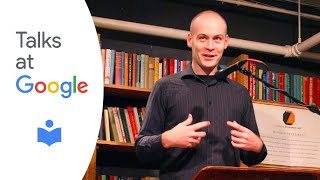
Recording of Max Barry speaking at an Authors at Google event about his novel Company. Barry recounts his marketing and Hewlett-Packard work experiences that inspired scenes in the book, reads excerpts (notably the donut scene and corporate-satire passages), and answers audience questions about influences, Dilbert comparisons, and writing/publishing life.
Chapters
Hi everyone and welcome to today's Authors at Google event featuring Max Berry. Max is the author of three novels, Syrup, Jennifer, Government and most recently Company, which is the book he'll be talking about today. The book was called by the Boston Globe a terrifically funny skewering of modern management techniques and the people who cook them up. Hopefully he's not talking about Google. The book was also optioned by Universal, so hopefully we'll see a movie version sometime in the future. Max is the only author who's ever arrived for his Authors at Google event 24 hours early. I saw him yesterday morning and here he is again. And please join me in welcoming Max Berry to Google. Thank you, thank you. That was not my fault, the whole 24 hours thing. I wasn't just that keen to get started that I got here a day early. It was a whole publishers mix up thing. But thank you for coming out to see me today. I'm very excited about doing a Google event because I do consider myself a little bit of a geek. Not that I want to get into a geek competition with anyone in this room obviously, but I've always had an affinity with Google. I've been traveling around doing this book tour where I've been talking about how there is so much insanity in workplaces and cruelty and how dehumanizing these environments tend to be. And of course I've walked in where bunnies practically hop away from the front door as you walk in and people offer you snacks and juices. And walking through these incredible work environments that I think if I ever crashed and burned with writing novels and had to crawl back to the corporate world and beg for a job, I would want to crawl right here, I think. So what I thought I'd do today is talk a little bit about where this book came from and a little bit about who I am. And then I would read a couple of sections from the book and then we do a Q and A thing where hopefully you ask me questions about something and I come up with answers that make me sound witty and intelligent. So that's the plan. So who I am. I started writing when I was very young, always wanted to be an author whenever I could. Wanted to be a full time author, see my books on the shelves and my writing really, I guess, took off in high school where I discovered that if I wrote short stories and used my classmates as characters in their stories, everyone found that very interesting to read about themselves. For example, I wrote this short story about a girl in my class called Jenny, a very prim and proper girl. And in this short story she has sex with an exchange student, goes crazy and gets hit by a train. And everyone thought this was fantastic. Very interesting story, except for Jenny, obviously. But then I ended up marrying her, so it all worked out in the end. But this was where I really got into that story thing. But I knew that I couldn't expect to come out of high school and become a full time author. You just can't expect to do that and eat. So what I did is I got into marketing. I was interested in finding something that was a little bit creative and a little bit analytical because I've always been interested in English, but I didn't get brilliant marks at it in school. Interested in maths and physics, but never excelled to the degree that I wanted to do that as a pure degree. So yeah, I was looking around for something that would let me not specialize too much in one of those areas. And marketing seemed to provide a good balance. So the reason I'm standing next to this chair, by the way, is I'll do my reading standing up and then maybe I'll relax into it in a minute. But for now I've got a cold and I don't want to compress that diaphragm too much. My voice isn't always this gravelly and masculine, you see, it's just, it's assisted by viruses. So yeah, so I looked at marketing and it seemed really interesting and kind of cool. And I would go to these lectures and I discovered how deceitful the whole practice is. It was a bit of a shock to a young guy and fairly naive guy to be sitting in a lecture hall with dozens or hundreds of other students while the lecturer up the front was basically poisoning us with all these techniques. I remember one that I learned was the just noticeable difference theory, which is based on psychological research into how much you can shrink something by how much difference there has to be in an object before the human eye and brain can actually notice it. And so marketers have taken this research and applied it to how much you can shrink a candy bar by before customers can tell that it's actually gotten smaller. And so it will shrink and shrink and shrink a little bit at a time. The price will remain the same, of course. And then six months later you can come out with your new jumbo sized 20% free bar that takes it back to the place it was before. So there were all these techniques that were not outright lying to people because that's illegal. But certainly a lot of marketing seemed to be based on the concept of leading people along a particular path and letting them jump to a conclusion that you weren't actually allowed to make for them. But it was still an interesting area. And I went to work for Hewlett Packard as my first job out of business school. As I mentioned, I've always been a little bit geeky and interested in computers. And so HP had a. I did some research, saw that HP had quite a good reputation as a good employer, and I more or less knocked on the door and went around asking if I could have a job there somehow, and was hired into this sales team. Now, it was a bit of a question for me as to why I was in this sales team for a while, because everybody except me was a very high paid, experienced, company car driving, very sharp, smart sales rep. And the team was selling these big Unix boxes to other corporate customers. Everyone had million dollar quotas, multimillion dollar quotas to achieve. And then There was me, 22 years old and no experience whatsoever, getting paid, I think about 25,000 US a year. And although this was in Australia, I just converted that for you in my head. And I finally figured out from the sales manager that the problem that I had been hired to solve was that what would happen is our corporate customers would cough up this big order, a multimillion dollar order, once every 18 months or so. And the sales reps, of course, all wanted to be around for that order, to place it in the system and get the commission for it. But they didn't want to spend the next year and a half holding the customer's hand and walking them through all the support problems and implementation problems that were associated with that. So the idea was that once the sales rep had had actually gotten the order out of the customer, they would leap out of bed and I would take over the account. I would slide on into bed and cuddle the customer for the next year, year and a half, to make them feel like they were still being cared about. And then when they were ready to actually perform again, then I would be out and the sales rep would come back. So I was a corporate cuddler. It was my first job. And of course this only worked if I could persuade the customer that I was just as important a sales rep as the guy who had just left left their account. So even though I was 22, so I don't know how anyone actually bought this or whether they did, but I had to park my own car, which was a 1978 Toyota that I eventually sold for about 200 bucks exactly 200 bucks. I had to park it around the back of the customer's building because I didn't want them seeing me driving this absolute piece of crap. And I was trying my best to act like I was one of these guys. I remember actually one time I was just coming back from a customer meeting, and three of my other customers, by coincidence, were at the front of this Hewlett Packard building, which incidentally, looks exactly like one of the Google buildings down the road. It's like this one of the concrete bunkers where it's like concrete and then a strip of tinted windows and then another concrete strip there. It was almost like going home, seeing that building. And so these customers saw me driving my little crappy car. And I remember their shocked faces just as I drove past in this smoking, rattling thing. And I had to tell them that my company car was in the shop, and that's why I was driving this thing. It was so embarrassing. I can't believe I did that. In retrospect, it was clearly doing something to me, this job, which is something that I tried to get in the book. The idea that the longer you spend in a job, the more the job becomes a part of you, starts to develop this work Persona, which is not necessarily the same as your home Persona, who you are away from work. So my time at HP was enjoyable. It was a good job. I dedicated this book to Hewlett Packard for a few different reasons. And one of them was that I got so much material from my workplace for this book, so many real stories. For example, I just got reminded of this. We had ID tags at hp, of course, and the policy of the company was that you had to clip them onto your shirt pocket if you were a man. And of course, everyone was wearing suits and things around hp. Then there was this little trend where people would go around and clipped onto their belts or just their pants. And we would see these guys, these rebels, walking down the corridors with their ID tags clicked down here and go, wow, that's really cool. This is one of these things that only makes sense when you're inside the company, because outside the company, anyone walking around with an ID tag is. Is not that cool. But yeah, it stayed with me, clearly, because I made sure I put my little visitors tag in the cool spot when I checked in here. And another one, another thing was the donuts, which I did rip off and put straight in the book. And I'll read you a little bit in a moment, but we would get these morning snacks at hp. Trolley would be wheeled around and deliver them to each department. And most days it was fairly uninteresting. It was apples on a plate or cookies or nuts or something. But one day a week, it would be donuts. And I finally, it was very important that everyone get their doughnuts. And indeed, these sales reps would miraculously reappear around the place. The doughnuts were due about 10 minutes beforehand. And then one day, there was an incident where one of the guys turned up. One of the important sales reps turned up and asked for his donut or went for his donut. I just realized I had better not say the guy's actual name, because I know this is going on YouTube and he will track me down and kill me. So I'm going to invent a name for him. So let's say this guy Roger turns out for his donut, and there are none left. And of course, he didn't come right out and say, oh, where's my doughnut? I was really looking forward to that because he would have seemed like a total wanker, obviously. But what he did do was let it be known that it was highly disrespectful for people to think he would not want to be left a donut. And everyone should think very carefully about where they were going in the company before making that kind of decision again. So that's the sort of stuff that I've been accumulating over years. These little stories of things that happen in workplaces. And it's impossible to go home after a day like that and complain to my wife, Jen, I had the roughest day. Someone took Roger's doughnut. He was on the warpath about it. It was a nightmare. It sounds insane. You cannot convey how things that are very important inside that bubble world, you just can't explain that to people outside the bubble. The other reason why I dedicated it to Hewlett Packard was because I wrote my first novel while I was working for them. Now I had this sales quota to achieve, and I realized fairly early that I wasn't going to be very happy with myself if all I was doing was selling computers and making my quota, which was then reset to zero at the end of the financial year, and off I would go again. I really wanted to write stories, so I guarded my lunchtimes very jealously. HP had this policy where employees could borrow a laptop computer for up to two weeks for any reason. So in 95, after I joined the company, I borrowed one of these laptops and I would take it off into my crappy little car and write as fast as I could during my lunch break. So I found that it was wonderful, first of all, to just be letting off some stress. The day that I'd spent sucking up to customers and crawling around trying to do my job. I could then I want to say take the piss, but that's an Australian expression that doesn't translate. Parroting basically what I had done during the day, but also because I was creating something and it felt really important to me to be able to build a little bit of this novel every day that was something important. I could go home and think that if I did nothing else to improve my life or improve the world that day, I had at least created this little bit of a novel. So weeks went by and HP never asked for that laptop back. And when I left in 98, I thought maybe I should mention that they had loaned this thing to me. But it was a very old laptop by then and it was this brick and I still have it. It's under my bed. Clearly I'm trying to justify the fact that I stole from the company, but if they ever want it back, then I'll give it to them. But it's kind of this museum piece now collecting dust. So yeah, I thought I would dedicate the book to hp. So what I'm going to do now is read a few little scenes from it. And I expect that none of this will have any relevance whatsoever to you guys at Google, of course, but we'll see how we go Chapter One August Monday morning and there's one less doughnut than there should be. Keen observers note the reduced mass straight away, but stay silent because saying hey, is that only six donuts would betray their doughnut experience. It's not great for your career to be known as the person who can spot the difference between six and seven doughnuts At a glance. Everyone studiously avoids mentioning the missing doughnut until Roger turns up and sees the empty plate. Roger says, where's my donut? Elizabeth dabs at her mouth with a piece of paper towel. I only took one. Roger looks at her. What? She says. That's a defensive response. I asked where my doughnut was. You tell me how many you took. What does that say? It says I took one doughnut, Elizabeth says, rattled. But I didn't ask how many doughnuts you took. Naturally, I would assume you only took one. But by taking the trouble to articulate that assumption, you imply, deliberately or otherwise, that it's debatable. Elizabeth puts her hands on her hips. Elizabeth has shoulder length brown Hair that looks as if it's been cut with a straight razor and a mouth that could have done the cutting. Elizabeth is smart, ruthless and emotionally damaged. That is, she is a sales representative. If Elizabeth Brain was a person, it would have scars, tattoos and be missing one eye. If you saw it coming, you'd cross the street. Do you want to ask me a question, Roger? Do you want to ask if I took your doughnut? Roger shrugs and begins filling his coffee cup. I don't care about a missing doughnut. I just wonder why someone felt the need to take two. I don't think anyone took two. Catering must have shorted us. That's right, Holly says. Roger looks at her. Holly is a sales assistant, so has no right to speak up at this point. Freddy, also a sales assistant, is wisely keeping his mouth shut. But then Freddy is halfway through his own doughnut and has a mouthful. He's postponing swallowing because he's afraid he'll make an embarrassing gulping noise. Holly wilts under Roger's stare. Elizabeth says, roger, we saw catering put them out. We were standing right here. Oh. Roger says, oh, I'm sorry. I didn't realise you were staking out the donuts. We weren't staking them out. We just happened to be here. Look, it doesn't bother me one way or the other. Roger picks up a packet of sugar and shakes it as if it's in need of discipline. I just find it interesting that doughnuts are so important to some people that they stand around waiting for them. I didn't know donuts were the reason we show up here every day. I'm sorry. I thought the idea was to improve shareholder value. Elizabeth says, roger, how about you talk to catering before you start making accusations, alright? She walks off. Holly trails her like a remora. Roger watches her go, amused. Trust Elizabeth to get upset over a donut? Freddie swallows. Yeah, he says. Now I think I'm going to skip ahead a little bit. Yeah. On level 17, morning sunshine pours through the gym's floor to ceiling windows. Holly, entwined in a machine that facilitates bicep crunches, has struck up a conversation with a communications manager from corporate marketing. The communications manager is about 25 and has a jaunty ponytail that swings from side to side as she power walks on a treadmill. Holly is enjoying talking to the communications manager, but she is becoming jealous of that ponytail. First we had to cut out above the line advertising. The communications manager says. Oh, we're on page 59 for people reading along. I just noticed that, you know, if I make any mistakes, just. Just let me know. Then we cut out advertising altogether. After that, we were down to market research and pr. But lately we don't even do those. Then what do you do? Holly asks. Notice I threw in that extra Holly ask just to make it clear for an audience. Not reading along. I'm a professional. Nothing. We don't have the budget. Nothing at all? Not since June. The communications manager winks. Don't tell anybody. So far, no one's noticed. Huh? Holly says. Before then, we were really under the gun. We got warned on expenses three times in a month. But now everyone's feeling really positive. Morale is way up. But what do you do all day? Oh, we're still working. We're working harder than ever. Every day we identify new ways to lower expenses. Just yesterday, we boarded up our office windows. You have windows? Holly cries. Had. Now they're covered in cardboard. Why would you do that? The Infrastructure Management Department bills for windows. Covering them up cut our overhead by 8%. But we're just getting started. Today we're getting rid of our desks and chairs. We figure we don't really need them anymore since we're not doing any actual marketing. And it's way better feng shui. We'll put the computers on the carpet. What do you use the computers for? Holly asks. The communications manager's eyes widen. Hey, hey. That's the kind of thinking we could use in marketing. That's a great idea. Holly stops crunching. If you're not actually doing any marketing, aren't you worried they'll cut your department? With expenses this low, which company do you work for? She laughs. Her ponytail swishes. And I think one more There are stories, or legends really, of the steady job. Old timers gather graduates around the flickering light of a computer monitor and tell stories of how the company used to be, back when a job was for life, not just a business cycle. In those days, there were dinners for employees who racked up 25 years. Don't laugh, you. Yes, 25 years of service. In those days, a man didn't change jobs every five minutes. When you walked down the corridors, you recognised everyone you met. Hell, you knew the names of their kids. Page 42, for those following. The graduates snigger. A steady job? They've never heard of such a thing. What they know is the flexible job. It's what they were raised on in business school. It's what they experienced, too, as they drove a cash register or stacked shelves between classes. Flexibility is where it's at not dull, rigid, monotonous steadiness. Flexible jobs allow employees to share in the company's ups and downs. Well, not so much the ups, but when times get tough, it's the flexible company that thrives. By comparison, a company with steady jobs hobbles along. Hobbles along with a ball and chain. The graduates have read the management textbooks and they know the truth. Long term employees are so last seen century. The problem with employees you see, is everything. You have to pay to hire them and pay to fire them and in between you have to find. That was totally wrong. Let me try that again. Just wipe that from your mind. There was a beautiful little 1, 2, 3 setup there that I have totally destroyed, but I'm going to try to get it back. You have to pay to hire them and pay to fire them and in between you have to pay them. That was hilarious, wasn't it? I'm really glad I went back and made the extra effort to do that again. They need business cards, they need computers, they need ID tags and security clearances and phones and air conditioning and somewhere to sit. You have to ferry them to off site team meetings, you have to ferry them home again. They get pregnant, they injure themselves, they steal. They join religions with firm views on when it's permissible to work. When they read their email, they open every attachment they get and when they write it, they expose the company to enormous legal liability. They arrive with no useful skills and then once you've trained them, they leave. And don't expect gratitude. If they're not taking sick days, they're requesting compassionate leave. If they're not gossiping with co workers, they're complaining about them. They consider it their inalienable right to wear body ornamentation that scares shares customers. They talk about, dear God, unionising. They want raises. They want management to notice when they do a good job. They want to know what's going to happen in the next corporate reorganisation and lawsuits. The lawsuits. They sue for sexual harassment, for an unsafe workplace, for discrimination in 32 different flavours. Get this? Wrongful termination. Wrongful termination. These people are only here because you brought them into the corporate world. Suddenly you're responsible for them for life. The truly flexible company. And the textbooks don't come right out and say it, but the graduates can tell that they want to. Doesn't employ people at all. This is the siren song of outsourcing, the seductiveness of the subcontract. Just try out the words no employees. Feels good, doesn't it? Strong, healthy, supple oh, yes. A company without employees would be a wondrous thing. Let the workers suck up a little competitive pressure. Let them get a taste of the free market. The old timers stories are fairy tales. Dreams of a world that no longer exists. They rest on the bizarre assumption that people somehow deserve a job. The graduates know better. They've been taught that they don't. Thank you. And now I'm going to settle into this Google chair. Thank you. Oh, yeah. How's this? Is this working for me? I feel like I could direct a movie from up here. All right, so now is the part where hopefully you guys have some questions for me and then I answer them. Microphone at some point. Oh, Ricky. Okay, we need to do this into a microphone and we can take questions from the other office from Boulder if there are some too. Yes. Hi. This may be a little off topic, but I noticed you're wearing the same shirt as on your back cover. I realize that too. Just curious whether that was intentional. Yes. I can never wear this shirt again. All right, look. Yeah, I was expecting to come here yesterday. This is my last day on my book tour and I fly home tonight and I was going through my luggage and this was the only clean shirt I have. And that's after I've washed things in the bathtub in hotels before. So I put this on and thought, look, it's a really small picture of me there and no one will probably notice that I. I do have other clothes. Not many, but I have other clothes. Yeah, yeah. Thank you for pointing that out. Thanks a lot. You should have asked us yesterday. We'd let you borrow our washing machines. Where the hell did that voice come from? Oh, right. Tom the comfy chair. I thought maybe Larry or Sergey was talking to me. Not quite right. Washing machines on site. Well, there you go. Obvious question. Comparisons to Dilbert. Yeah, yeah, Dilbert. It was interesting because I knew there was some overlap there, that we were covering the same sort of territory. And it's territory that has been covered so wonderfully in Dilbert. I'm a huge fan of Scott Adams, but there are so many things you can do in a novel that you can't do in a three panel comic strip. So even if we have occasionally strayed onto the exact same, same topic, the exact same issue that people find in workplaces, I think it's quite different being able to explore that with characters and pages and pages in a novel than what you can do in a comic strip. So look, any comparisons to Dilbert, I'll take. That's quite Flattering. And I'm a fan of Dilbert. I hope I haven't actually ripped it off at any point, but yeah, there's so much stuff that I wanted to get in here from my own time at hp, from my own job where I would walk around other people's workplaces and get to see all the things that were similar. I would see these, this dynamic, the sort of dynamics you get in a workplace that is the same because of. That's what happens in corporations. Not because it was just your particular workplace, but because of it's like this emergent behavior from the system. So I got to see that people in workplaces everywhere were, were having these same experiences and had these stories of tragedy or mystery. There was one guy who told me that at the front of his work there are these three parking spaces that nobody is allowed to use. They are reserved. Nobody in the company can remember who they're reserved for. They assume it's someone, but nobody ever parks in the three best parking spaces. So there's things like that. There's a guy who was telling me about his company where it's one floor of, of an office building and there's a single corridor that runs all the way down the middle. So what happens whenever you want to go from one place in the office to somewhere else? You walk down this corridor and you know that experience where you see someone coming, you know, down a corridor and you can wave to them, but they're not close enough to talk to yet, so you have an awkward little pause where you don't really know where to look or whether to say anything. Well, these people in this office have that about a thousand times a day every time they go anywhere. So little things like that stuck in my mind. Also stories like the donut story that I put in there almost verbatim from real life. The only story that I heard that I couldn't get in there, and I kind of wanted to, was a guy who was telling me about the work that his company did. And what would happen is this company would be hired by a corporation to audit their systems administrator, say. So you'd have this person sitting next to auditing the systems admin who would be on their best behavior obviously for the next two weeks during this audit process, doing everything exactly by the book. Then at the end of the two weeks, the sysadmin would be taken into their manager's office, told they were fired, and escorted directly off the premises. And the reason for this was that, that it was never an audit at all. The Reason that person was sitting there was to document their workflow so that someone else could be brought in to take over their job and do it exactly right without taking the risk that this disgruntled systems administrator would go back to their keyboard and destroy the company or steal things or write angry emails. So there are so many stories like this that I had built up over the years that I wanted to find a way to get them into a novel one day. And when I finally sat down to write the book, it was not so much writing a novel for me as colonic irrigation, just clearing all this crap out of my system. That may have been a little too much insight into the creative process that you really wanted to hear. But, yeah, I wanted to write a book that said everything I had to say about corporate life and didn't just take a few jabs at it and walk away, but actually allowed me to feel like, okay, I've done my corporate thing now and I can move on to something else. Another question. I should have brought a moniker or something. I could have done a little bit of thinking. Music. Oh, yeah, I had a comment and a question. I'll give you a quick corporate story. Okay, terrific. Yes, everyone has one. We were once giving a demonstration for the board of directors at this company I worked for. And we discovered that they were going to, you know, they had to visit this office and so on and go down there and then go to some other department. And we discovered they were going to paint the halls, you know, along the path. So, of course, we rearranged our route so that it wound up covering the entire first floor. And, you know, that way got our halls painted. The question was about hp. How receptive have they been? Have you gotten any comments to them? Are you giving a talk there? No, I'm not giving a talk at hp. Strangely, I have not been invited back to hp. It's funny, I've gotten a few emails from people who I used to work with who have heard me on the radio or something and gotten back in touch, and they all think it's pretty hilarious that I've written this book about what went on. I haven't heard from the guy I'm calling Roger to you guys, and I hope he would have a sense of humor about it. But, yeah, one of the things about HP for me was that when I went to work for it, I worked for it for 95 to 98. It really was a good place to work. It had a lot of this, excuse me, this incidental inhumanity and accidental cruelty and things that come out of any workplace. Like we would get these all staff voicemails coming out of Cupertino or Singapore where you would hear the trail back to the original person. So the first voice you heard would be your manager's personal assistant saying message following from Bob. And then you'd hear Bob's voice saying, oh Michelle, can you send this out to my group? And so on all the way back the chain until you heard the original manager saying yeah, send this out to all my head counts please. And so you would hear them calling you headcounts. Just little moments like that. Despite the fact that HP with the HP way had quite a strong culture of empowering employees and trusting them to do the right thing. And I think that really changed after I left the company. The last 10 years have not been good for HP and I do wonder how much of that is due to the fact that Hewlett and Packard both died even though they weren't actively running the company or anything. The fact that that link was severed to the original human beings who founded the company and created all these values. I wonder if that, that was significant in the way that HP seems to have become a very stock price driven company and involved in these terrible scandals like the wiretapping thing where HP was spying on its own employees and eavesdropping on journalists. So yeah, there was another reason I thought it was appropriate to dedicate the book to HP because it was. I think it's quite sad the way that this company that began as a wonderful place to work and a very human focused company has become something different. Hopefully I didn't say anything slanderous in that little. The YouTube broadcast thing is just flashing in the back of my mind now. It's hard to stop thinking about. Excuse me. Yes? I was wondering how timeless do you think a novel in corporate satire is. Do you think this will still be relevant in 50 years and do you think that it's going to change at all corporate culture? Yeah, that's a good question. Corporations have changed quite a lot. They've changed enormously actually, and we don't really think about it. I was struck by the encounter between. I forget the guy's name, but the owner of the Craigslist website had a conference call with a bunch of Wall street investors a few months ago and it was this clash of civilizations where he was basically saying how he wasn't interested in maximizing revenue for the site. It wasn't about making the maximum possible profit, it was about more than that. And these bankers were really confused by this concept and they were trying again and again to just clarify what the hell he was talking about. And it seems to me that a few decades ago, maybe 40 or 50 years ago, that the attitude of this guy wouldn't have been that uncommon. There were many, many businesses, large businesses run for the people involved first. And the idea was to extract a reasonable profit rather than the maximum profit possible. Excuse me one second. And somehow we've gone in quite a short space of time to a situation where this guy is considered, considered a wacky radical for not being interested in extracting the maximum profit possible out of the situation. So yeah, I think that the nature of corporations has evolved quite a lot. And yeah, it may be that in a few decades that this book bears very little resemblance to reality. What I've tended to find is that I tend to write books that prophesize the worst about what's coming. So I've written this. My first novel, Syrup, was a satire of marketing. And I tried to dream up the most outrageous, extreme, terrible things marketers might do. Most of which started coming true before the book had even hit the shelves. When you start thinking about, you try to imagine how you could sell things if you had no self respect or dignity whatsoever, then the marketers are right behind you. It's very hard to keep ahead of them. And then with Jennifer Government, it was a satire of ultra capitalism, completely laissez faire capitalism. And that stuff in that started coming true too, even though it was even more extreme than Syrup. There was the weirdest thing was the book kind of kicks off with this scene where Nike, or a manager in Nike decides to run a marketing promotion for a new line of thousand dollar sneakers that involves shooting people who buy pairs to make it look as if there's so much demand for them that kids are killing each other to get their hands on these shoes. And it's also tied into the fact that there's very limited supply. There's only a very small number of these shoes available despite the fact that millions of people want to buy them. And I think it was last year, possibly the year before, when there was. Oh, and in the book there's a riot outside of Nike town in which all this happens. And then in New York there was this line of Nike pigeons released special limited edition. Only a very small number of shoes made available. And there was a riot outside Nike town in New York as people tried to get their hands on these shoes. No one was actually killed, but there was a guy seriously injured. And then people who got the shoes were selling them on ebay for thousands of dollars. So I did find it a bit scary how some of this stuff did come true at least a lot sooner than I had ever expected. I was wondering if you could talk about your personal experience as an author and with the publishing industry and if there's been any parallels between that and hp. Well, yeah, the job that I have now, which is writing full time and that I've been lucky enough to have since 98, is fantastic. It's got its good bits, good sides and bad sides compared to hp. There are a couple of things that I do miss from that HP environment and one was working with other people. Got to work with a lot of great people at HP and working by myself, it's quite solitary, which I don't mind. I'm that sort of person that can do that. But yeah, it was nice to be able to chat to people and do that basic social thing. I get to see other human beings very rarely now. And the other thing that I miss is not being able to get paid for doing things like going to the bathroom. I'm self employed now, so everything. If I want to earn an income, I have to actually work. Whereas I quite enjoyed that being able to just do whatever I wanted and take a vacation and still know that I was getting paid for it. That was nice. But yes, it's more than balanced out by the fact that I have this incredible job where I get to tell stories and get paid for it. It's fantastic. I have a young daughter and she's. I can go down and have lunch with her during the day and it's just, it's a wonderful job. The publishing industry, I found, is very, very respectful of authors. It's so like, if I send off my manuscript to my editor, I'll get back this edit letter that will say, the first paragraph will be, Let me say again, Max, how excited I am about this new book and how much I look forward to working on it with you. And then the second paragraph will say, having said that, there are some areas that I think we could improve with it. And then the rest of it will be pages of areas to look at and not telling me what to do but just saying the character's motivations in this scene are a bit unclear, error. And then I'll think about whether that's right and if so, how to fix it. And that I've noticed is very different to what happens when you deal with Hollywood writing screenplays, for example, where the writer is much lower on that totem pole where the feedback tends to be, well, first of all, I'll turn in a draft and weeks will go by and hear nothing. And then the feedback will be, yeah, got your draft. Lose the scene in the diner, give the hero a dog and make him a woman. And that's all I hear. I have to try to revise a screenplay based on that. So, yeah, being able to do the publishing book thing is wonderful. I love the format of novels. I'm going to keep writing them for as long as I can, and it's terrific to have control over every word on the page. I shouldn't make screenwriting sound as bad as that. It's actually very fun and good to have that collaboration and that feedback thing going on. But, yeah, novels, is it for me. Well, do we have time? Is there another question? We're kind of meant to finish up now, but if there was one more, we could do that. Okay, well, we can finish up there then. Thank you very much for coming along today, and. Thank you. And I'm going to be signing books somewhere, I guess. Yes, over here. All right. So if you'd like me to deface your copy, bring it on over. Thank you very much. Thank you.
More from Guy


Cheryl Strauss Einhorn | The Human Edge: Smarter Decisions in the Age of AI | Talks at Google



Rachel Glennerster | Innovation and the Center for Global Development | Talks at Google

Rebecca Winthrop | Rethinking the Purpose of Education in the Age of AI | Talks at Google

Dr. Robert Wachter | A Giant Leap: How AI Is Transforming Healthcare... | Talks at Google



