Deluxe: How Luxury Lost Its Luster | Dana Thomas | Talks at Google
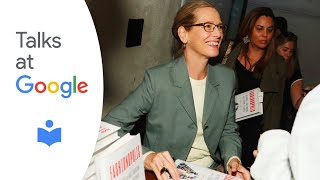
Dana Thomas traces how luxury brands transformed from small European craft houses into corporate-driven empires. When companies went public and prioritized quarterly profits, they outsourced production, cut corners, and flooded the market. The result: degraded craftsmanship, rampant counterfeiting tied to organized crime, and a new wave of rebels like Christian Louboutin fighting to preserve handmade quality.
Chapters
Hello. Hi, everybody. Welcome to today's Authors at Google event. It's my pleasure to introduce Dana Thomas, who will be speaking about her new book, How Luxury Lost Its Luster. Dana has been a cultural and fashion writer for Newsweek for the past 12 years, as well as a contributor to the New York Times Magazine. A scathing indictment of the luxury goods industry, Deluxe is at once funny and informative, witty and critical. About the book Richard Johnson wrote in the New York Post, if you have ever wondered why a woman absolutely needs to buy a $3,000 handbag or why she might perish without a certain shade of lipstick, this book explains it all in empirical, evolutionary detail. Dana Thomas has brilliantly dissected the fashion phenomenon. While the healthy beast still thrives luxuriously on the operating table, Deluxe might make some women pause before spending the rent money on on their Manolo Blahniks. Dana will be talking about Deluxe before taking your questions. If you do have a question, please wait for the microphone to come to you. Dana will also be signing books after her talk today. For anybody who would like to stay for a few minutes with that, please join me and give me a warm Google welcome to Dana Thomas.
Hi there. Can you hear me okay? Oh, there it is. Great. As you can see, I'm actually an Android with my antenna in the back. Thanks for coming. We often say you are what you eat. I believe you are what you wear. As I write in my book Deluxe, the way we dress not only reflects our personality, but also our economic, political and social standing and our self worth. Luxury adornment has always been at the top of the pyramid, setting apart the haves from the have nots. Back in the Stone Age, man set himself apart by decorating his fur with bits of bone and feathers. The Chinese enriched their appearance with silk embroidery as long as 12,000 years ago, as did the Persians and the Egyptians in 3000 BC or sorry, the 2nd century BC 3000 BC is a long time ago. During the reign of the Bourbons and the Bonapartes in France, luxury as we know it today was born. Many of the luxury brands that we patronize, such as Louis Vuitton, Cartier, Hermes, were founded in the 18th and 19th centuries by humble artisans who created the most beautiful wares imaginable for the royal courts of Europe. I'll read you a little bit about that from the book. French King Henry. In the 17th century, French King Henry IV's second wife, Mary de Medici, wore for the baptism of one of her children, a gown embroidered with 32,000 pearls and 3,000 diamonds. Marie Antoinette overran her annual clothing budget of $3.6 million by buying gowns encrusted with sapphires, diamonds, silver and gold. But according to observers, it was money well spent. She was, quote, an object too sublime and beautiful for my del pent described, wrote John Adams in the late 1770s. Her dress was everything that art and wealth could make of it. Napoleon's wife Josephine spent half of the $15 million France earned with the Louisiana Purchase enclose in 10. With the fall of monarchy, which when you consider what I just explained to you, wasn't so surprising and the rise of industrial fortunes. In the late 19th century, luxury became the domain of old money European aristocrats and elite family. American families like the Vanderbilts and the Astors and the Whitneys who moved in closed social circles. Luxury wasn't simply a product. It denoted a history of tradition, superior quality and often a pampered buying experience. Luxury was a natural and expected element of the upper classes, like having the right surname or belonging to the right club. And it was produced in small quantities, often made to order for an extremely limited and truly elite clientele. As Diana Vreeland noted in her memoirs dv, which is a great book that I highly recommend, very few people have ever breathed the pantry air of a house, of a woman who wore the kind of dress Vogue used to show when I was young. In the last 20 years, however, that has all changed. When I first started covering fashion in the late 1980s at the Washington Post, most luxury companies were small, independently run, usually by the founders or the founders heirs. They were still a niche business for niche Clientele. They did 20, 30, maybe $50 million a year. @ the same time, businessmen with no previous connection to luxury or fashion began to buy up these luxury companies from the elderly founders or their heirs. And the tycoons saw great potential for these old luxury houses. It was the beginning of the 1990s economic boom and people were getting richer and richer and wanted to pamper themselves. Like those old industrial revolution barons. The middle class evolved into the middle market. A broad socio economic demographic that includes everyone from teachers and sales executives to high tech entrepreneurs and even McMansion suburbanites and the ghetto fabulous. They became luxury's new target audience. The idea, luxury executive said, was to democratize luxury, to make it accessible. To achieve this, the tycoons launched a two prong attack. First they hyped their brands by trumpeting the brand's historical legacy to give the products an air of integrity, of luxury integrity. Then they replaced longtime couturiers known for demure designs with young bad boy ready to wear. Designers who did S and M inspired clothing which they presented in million dollar fashion shows. To drum up controversy and to make headlines. The tycoon spent billions of dollars on deliberately shocking advertising campaigns. Remember Dior's Grease smudged lesbians to sell handbags. Or St. Laurent's full frontal male nudity shots to sell perfume. And the brands became as recognizable as Nike and Ford. With the help of stylists, they dressed celebrities who in turn told every reporter lining the red carpet which brand provided their gown, shoes, handbags, tuxedo jewelry, watches? The message was clear. Buy our brand and you will live a luxury life too. Then the tycoons made their products more available, even economically and physically. They introduced fashionable lower priced accessories that most anyone could afford. They rolled out thousands of stores around the world that were as ubiquitous and approachable as Benetton or Gap. They opened outlets to sell leftovers at bargain prices, launched E Commerce on the Internet and ramped up their share of duty free retailing. And the companies grew into billion dollar global conglomerates. To understand the exponential rate of growth, consider this. In 1977, Louis Vuitton was a family owned business that did $12 million a year in sales. Today it is a publicly traded corporation with 3O and and it had two stores before, one in Paris and one of Nice. Today it's a publicly traded corporation with 370 stores and last year did more than $3 billion a year in sales. Luxury brands funded this expansion by listing their companies on the world stock exchanges. Going public brings many advantages to luxury companies. Companies. It raises capital, it elevates the brand status. It brings in a higher quality of management. But it also makes brands beholden to stockholders who demand profits every three months. To meet those profit forecasts, the luxury brands have cut corners. They use inferior materials and many have quietly outsource production to developing nations. Most have replaced individual hand craftsmanship with assembly line production and mostly on machines. And simultaneously, most luxury brands have raised their prices exponentially and justify the move by falsely claiming that their goods are made in Western Europe where labor is vastly more expensive. I saw this firsthand when I was traveling to China. I went to a factory. I spent about six weeks of the three years I worked on the book doing research and traveling around China, learning about how luxury goods are sold there as well as made there. And I went to a factory in a town called Dongguan, which is about an hour or two north of Hong Kong. And it's A factory that makes handbags. They've been in the handbag business for two generations. And before, they always made sort of middle market brands like Ann Taylor and department store brands, J.C. penney, Corvettes. But a few years ago, they got into the luxury handbag business, mainly because there were luxury brands who were coming to China looking for factories that would produce luxury handbags for them. And there weren't any at the time. So I went into this factory and I wasn't allowed to talk, tell you who's there. But that's not because they didn't want me to tell you who's there. They didn't want to tell their competitors who else they're producing. So nobody else knows who else is being produced at the factory. And they produce many, many European luxury brands, brands un know, brands you might carry, brands who say they don't produce in China. And I saw them making a handbag there. They had all different levels. As the owner told me, the more glue, the less quality. And I saw them making some luxury handbags with a lot of glue and very assembly line. Girl 1 Stamping and passing, stamping and passing, stamping and passing. Girl 2 Gluing and passing, gluing and passing. But I saw them making one handbag that was actually a very good handbag. It cost about $120 to produce, which is a lot of money in China per item in the country, where they can make things for pennies. Mind you that the workers earn about $120 a month. So each handbag costs as much as one worker's monthly income. And it was a very good handbag by a British company who says that they don't produce in China. And that evening I went down to Hong Kong and I met with some friends at Harvey Nichols, the department store bar. They do that in Hong Kong. They actually meet in department store bars. And saw the exact same handbag on my way in. Because the first department, of course, is handbags, because they're the easiest to sell and they have the logos and. And they're blinking at you, nearly saying, buy me, buy me. And there was the same handbag for $1,200. In that drive, two hours, that handbag had increased by cost 10 times from cost to retail. Now, back in the old days, there used to be middlemen called wholesalers. Anyone here remember wholesalers? The prices would double each step from production to wholesale to retail. But when the tycoons took over the luxury brands, they brought distribution in house. They even sometimes brought production in house. So there are no more middlemen. That 12 times profit is split between the retailer and the brand. And in most instances, the brand is also the retailer. If you think about it for a moment, you walk down the street, I don't know what the street is in San Francisco, but the street, you know Rodeo Drive, Fifth Avenue or Madison Avenue, you know, main streets all around the world and in Waikiki, and you have all the brands having their own stores now. Well, those are all company owned stores. Back in the old days, Vuitton had two stores, Paris and Nice. Now it has 370 stores and they own them all. And you can also only buy Viton in Viton stores. Now. What does this do for a company, this outsourcing to third world nations or developing nations? Let me tell you. In 2004, Valentino reportedly began to outsource its $1,300 men's suits to a factory in Cairo. Valentino, the Rome based luxury company that just celebrated its 45th anniversary this summer. The suits were produced by veiled Muslim seamstresses who learned their craft by watching videos on televisions in the workshop. At the time, Italian textile workers hourly wages were $18.63 cents. The Egyptian workers earned 88 cents an hour. When the suits destined for the European market arrived in Italy, Valentina representatives ripped out the Made in Egypt tags. In Europe, companies do not have to declare where their goods are produced. The Valentino suits for the American and Japanese markets, which have stricter laws about Providence, were produced in Italy, in the United States and in Japan. Perceived quality is more important than real quality. Valentino's CEO explained the cut in manufacturing costs had a positive impact on the bottom line. In 2005, Valentino posted its first profit in years. Now, what does this do for a company and its owners and shareholders? Consider this. Bernard Arnault, the head of LVMH, the big luxury conglomerate that includes 50 brands including Givenchy, Dior, Celine, Kenzo has grown from being a middle class property developer from northern France to the seventh richest man in the world in two decades. You say fine, good for them. That's business, that's capitalism. But there's a dark side to this, a very dark side to this democratization of luxury. And that's counterfeiting. When luxury brands were. When luxury brands went democratic, they thought they could satisfy the middle market with lower priced handbags and perfume. You know, those entry level products that didn't cost very much. But what luxury executives didn't count on was the middle market consumers satisfying their craver for the higher end products by buying fake versions of them and passing them off as real. At the same time, China evolved into the world's manufacturing center with a new class of entrepreneurs who saw counter Counterfeiting is a viable business. The convergence of the two big demand and big supply was cataclysmic, and it took luxury executives completely by surprise. Since 1993, the counterfeiting of all goods has increased 1,700%. Today, 7% of our world production, $600 billion worth, is counterfeit. While that includes everything from baby formula to Ferraris. Yes, they actually counterfeit Ferraris. Now one of the most popular sectors is fashion because it's easy and cheap to copy and even easier to sell. You can now buy fake Louis Vuitton handbags, Gucci sunglasses, Burberry knapsacks in shops on Canal street in New York City, Santee Alley in Los Angeles, the souks of Marrakech and Istanbul, the beaches of the Mediterranean on the Internet, and even in living rooms of suburban America, where housewives host purse parties to make some extra cash. Who are purse party ladies, you ask? I'll read you one. One day in 2004, New York security expert Andrew Oberfeldt and lawyer Heather McDonald were participating in a raid in a counterfeit mall on Canal street in downtown Manhattan when they saw a petite blonde woman sobbing hysterically in a thick Texas drawl. She pleaded with McDonald, this is my first time to New York and this is simply awful. I just want to take my things and go home. McDonald asked the police what the Texans things were. She had 58 of the same handbag, McDonald said. McDonald turned to the Texan and said, no, and the Texan left in a huff. Five minutes later, she returned, tears gone. I'm on my cell phone with my lawyer and he says you can't do this without my day in court, so I'll just take my bags and go. She declared, no. MacDonald responded, I'll take your bags and I'll see you in court. Two days later. Two weeks later, we were doing a raid at a nearby location. McDonald told me, and who do we see? That same Texan. I told her, I thought you said you were never coming back here. And you know what she said? Bite me. I'm sure MacDonald told me she was a purse party lady. Purse party ladies are the drug dealers of the of the counterfeit trade. They buy from the wholesalers, sell to suburban users, folks with a craving for the goods but not enough dough for the genuine thing. Like teenagers gathering at a friend's upper middle class home to buy a couple of joints with their allowance or babysitting money. Suburban housewives converge in well appointed living rooms for wine, hors d', oeuvres, gossip, and fake Louis Vuitton and Gucci handbags. The women hosting these parties will make a killing. They double their investment and never declare it to the irs. Take Virginia Topper, the wife of a lawyer in Long Island, New York. When she was busted in 2003, she had $60,000 cash stashed in her underwear drawer and a Jaguar in the driveway. She was found guilty and sentenced to community service. She was the ultimate Amway lady, oberfeldt told me. In the last 20 years, counterfeiting has ballooned from a small potatoes local business to a global racket run by violent crime syndicates that also deal in narcotics, weapons, child prostitution, human trafficking, and terrorism. The FBI believes that terrorists financed the World Trade center bombing in 1993 with sales of counterfeit T shirts in a store on Broadway in New York City. Profits from counterfeit goods have gone to groups associated with Hezbollah, with farc, Colombia's main rebel army, and with the ira. And to the ira. One of the suspects of the Min Dread train bombings in March 2004 was a known counterfeiter. But that's not the worst of it. I witnessed the worst of it myself. One afternoon in Guangzhou. Shortly after lunch, we drove over to a Chinese law enforcement agency, a typical linoleum flight, fluoride, fluorescent lit office that could be found anywhere in the world. The officers, mostly in their 30s or 40s, were friendly and polite, offering us green tea as they spoke proudly of the success they'd had recently fighting counterfeiting. After a few minutes, the chief came in and announced they'd gotten a tip about a counterfeit workshop across town. The informant was the landlord. He rents to the counterfeiter with full payment up front in cash, calls the cops and gets the reward, and then rents the space again. There are no ethics in this business, the expert who has taken me along on this raid told me. None. The cops strapped on their holsters and put on bulletproof vests. Raids can be dangerous, and sometimes workshop owners pull a knife or have thugs there to beat up the cops. During one raid in the Xin Shing market, someone shot a gun in the air and when everyone hit the ground, the counterfeiters fled. We all went downstairs and hopped into a pair of official vans and sped across town. We pulled into a courtyard of a white stucco tenement and hoofed it up. Seven flights of steps over empty Coke cans and other trash. Excuse me. As we approached the top, the acute toxic smell of glue. I just started thinking about it and coughed again. The acute toxic smell of glue burned in our noses. We walked into the workshop, a long, wide room with barred windows, and before us stood two dozen Chinese boys and girls, roughly ages 8 to 14, sitting at old silver sewing machines or standing behind plywood work tables littered with scraps of black leather, gooey pots of glue and a cookie tin with stamps reading Versace, Boss and Dunhill. The cops told the children to line up single file. They looked at us with their sweet faces filled with confusion, their eyes tired and sad. They didn't know why they were told to stop working. As they walked out, some stopped to punch their time cards in hope of getting paid. When it was time to leave, we had to run across the courtyard to the vans to shield ourselves from the debris that the kids threw from the balconies. To the children, the cops are the bad guys. The children who work in counterfeit factories are housed by the owner. Owners. The kids in the raid I witnessed lived across the courtyard in slum dorms. When a counterfeit factory is raided and the owner is arrested, the children are left not only out of work but are homeless. Sometimes cases are truly horrific. The expert who took me on this tour this raid told me I remember walking into an assembly plant in Thailand a couple years ago and seeing six or seven little children, all under 10 years old, sitting on the floor assembling counterfeit leather handbags. The owner had broken the children's legs and tied the lower leg to the thigh so the bones wouldn't mend. He did it because the children said they wanted to go outside and play. Surprisingly, most luxury companies didn't do much about counterfeiting until the late 1990s. Some players still shrug. Louis Vuitton designer Marc Jacobs told me he thinks counterfeiting is, quote, fantastic. As long as I've been here, he said, everything we have done has been copied. I hope we create a product that is desirable. Prada CEO Patricio Bertelli calls counterfeiting, quote, part of the game of fashion, adding, I would be more worried if my product wasn't copied. So what is luxury today? Does it still exist? Of course it does. And it's driven by what I call luxury refugees designers, perfumers and executives who grew so disillusioned with the compromises and the greed of the luxury corporate world that that they fled to start something small and independent that would allow them to do what they Got into the business for in the first place produce the best that money could buy. One of my favorite luxury refugees is a shoe designer named Christian Louboutin. He's French. I'd like to read you about him. Christian Louboutin may be the most defiant voice in luxury fashion today. I'm just back from meeting someone who wanted to buy my company again, he told me and I said, no again. Louboutin is a rare bird in today's luxury goods industry. A highly successful, purposely small designer owned and run company that produces impeccably made items. Louboutin's silk, satin stilettos and crocodile pumps can be found on the feet of the beautiful and the famous and the fashionably in the know, including Jennifer Lopez, Queen Rania of Jordan, Madonna, Elizabeth Taylor, and apparently Oprah. And Today's show news anchor Ann Curry, who occasionally flashes his signature scarlet soles on camera. Lubu Moutin's company is tiny by luxury standards. After 15 years in business, he has only seven stores and 35 people on staff, including his salespeople. He does no advertising. He has no marketing department. He does not actively pursue dressing the stars for the red carpet. He sells about 100,000 pairs of shoes a year. And when I asked him how much he does in sales annually, he looked at me blankly. I have no idea, he said. What sets Louboutin apart from his confreres is his business philosophy. I see these men who build luxury brands to make money and I am working in the same industry, but I feel I have nothing in common with that. He told me luxury is the possibility to stay close to your customers, to do things that you, you know, they will love. It's about subtlety and details. It's about service. I cannot accept a place where people are badly received. I can't imagine spending several thousand dollars on something and the sales clerk gets annoyed because you take 15 minutes to look. Luxury is not consumerism. It's educating the eyes to see the that special quality. Now, why is this so important? Why have I come here to talk to you about this today? Why have I written this book on this subject? Well, quite simply, I believe that if we lose the art of handcrafted items mated with love and passion, and we lose the integrity that it takes to produce and sell them, then we will lose the soul of our culture. Thank you. Questions? Questions? Put on my glasses so I can see you. Here comes the microphone. There's one way in the.
Back. So you used the example of Christian Louboutin. As kind of somebody that you admire in the luxury.
Business.
But what about like his signature soles being copied by not necessarily counterfeiters, but other kind of more mainstream brands? Like, I don't know, I think that Steve Madden, for example, was putting red soles on the bottom of his shoes. So kind of how did you examine not necessarily like counterfeiters in China, but American brands that are trying to kind of embody this luxury good model.
The old trickle down knockoff practice? Well, actually it's interesting because it's been a big debate recently. The Council for Fashion Designers of America is called the cfda, which is now headed by Diane von Furstenberg. If you don't know anything about fashion, you see, still may have heard of her simply because she's married to Barry Diller and she's leading this charge to stop that from happening. And she's been lobbying Capitol Hill and is trying to have legislation passed so that designers can copyright or trademark certain elements of their designs. And they can't get the trickle down theory. But in fact, that's what makes makes the whole fashion business work. You may see some really fantastic picture of something from the Marc Jacobs show in New York that'll cost $2,000 or $3,000 or something from the Alexander McQueen show in Paris or something from Gucci or Prada in Milan that's just beyond anyone's reach. But then you'll have someone like Banana Republic or Gap or the Limited or, or even brands, companies you've never heard of reinterpret that same look. Which is why we're able to find a $70 little a line dress instead of the $2,700 a line dress. And the same with shoes and the same with handbags. I remember when Tom Ford did a really great collection of denim, these sort of distressed denim. It sort of looked like he went in my closet, all my stuff from high school and just put it on the Runway with some sparkles on it. But it looked really great. And sure enough, three months later, Gap had all this distressed denim skirts with embroidery and beads and feathers hanging off them. And these companies like Nafna in Paris and you know, sort of little rag trade companies. And that is really what keeps the fashion machine running and what keeps us all, well, you know, dressed in a way, because it. We can't all afford to dress like the movie stars, but we can definitely emulate it on our own levels. So it's going to be interesting if this legislation passes and Christian Louboutin can trademark his red soled shoes. And if he can trademark that scarlet sole, will he go after other companies that paint their shoes red too, on the bottom? And it's a, you know, you know, it's a big debate because does that mean that everybody who does a little black dress has to pay royalties to Chanel, who invented it in the 1920s? It's been a fiery topic for the last few weeks and a debate among particularly the legal. The world of property and law, intellectual property. Any other questions? Yeah. Also that law is being very watched by Hollywood. And it's funny because the people in the fashion business in Hollywood don't want it, but the people in the movie business do, because if it passes, then they'll be able to apply it to different aspects of filmmaking and television. Like they'll be able to copyright or trademark set designs and costumes and everything. Everything. And then you'll have to pay royalties every time you blink. You know, you can't be able to go out and get Darth Vader masks without paying royalties.
Yes. So I've noticed in San Francisco, where I live, as well as through websites like Etsy, kind of a rise of handcrafted, one of a kind, unique items. And I'm wondering how these fit into the luxury market, if at all, since the luxury market has become so about mass.
Manufacturing. Well, it's really interesting because that's a little bit about like the luxury refugees I was talking about. There's luxury refugees. People like Louboutin who used to work for the big groups designing shoes, or Tom Ford who used to work for Gucci, now has his own little company in one store in New York and is doing really beautiful handcrafted goods. But you also have a lot of people you've never heard of before because they're very small and they're doing one offs and made to order or made to measure items beautifully handcrafted. They may not even have a store. They just supply little boutiques, I call them. There's luxury refugees who have escaped the world, and then there's luxury rebels who want nothing to do with that world and just didn't even go there to begin with. And I think really luxury in that sense is. And I say luxury, but I think it's across the board in most businesses today. You know, this is sort of. I write about luxury, but I think you could apply this to a lot of areas really at a crossroads. You either have gigantic global corporations that just blanket the earth with product and who are obsessed with profit and turn the business into consumer as opposed to what it was originally, which was craftsmanship and a product with integrity. And then you have a sort of backlash to that. And very small boutique brands that are going back to that original niche business for the niche clientele approach to luxury. But also, I think other businesses, you know, I think you could say the same thing for the restaurant business. You could say the same thing for the music business. Who was it who just left her a big label and is gonna. Oh, it was Nirvana and Madonna too. But Nirvana. Nirvana's releasing their CD on their own thing. They're like, you know, we're over that whole global world, that global culture of the music business. And I think it's happening in publishing, I think it's happening in a lot of businesses that there's a backlash to globalization. I mean, I was just down in your cafeteria at lunchtime today and I was reading on the board about how everything is locally produced. And, you know, the whole rise of farmers markets in America is an example of the big global world and the boutique brand and that we're going back to the, you know, pun intended, the roots, the root vegetables of everything that we want to get back to. Things that are handmade, hand grown. We know the people who made it. We have something invested in this that we're not just throwing down the plastic and picking up something with somebody else's initials on it and carrying it around. And it's one of, you know, know how many thousands that were produced around the world and produced far away by people we never meet. I think it's really. It's a study of society today. Yeah, we have two. Sorry I'm sounding so scratchy today. I think I've been flying too much. Can you comment on the quality of goods made in China versus the goods that were made here or in Western Europe? Also, can you comment on the quality of the counterfeits made in China? Sure. It's very interesting. In that factory that I went to in China that makes the handbags, they flew over Italian craftsman, one brand who started producing there, flew over there, Italian craftsmen to teach the young Chinese workers how to do it. So they're learning from. It was, you know, just as if they were apprentices. And instead of being Italian apprentices, there are Chinese apprentices. But, you know, they're getting the same lesson that the Italian apprentices would have in Italy. And funny enough, when I was in a factory in Italy, a silk factory, they said, do you know how hard it is to find an Italian, a young Italian person who was willing to sit behind a machine all day and make fabric or sew something together. Impossible. He said, they're all university educated. They want nothing to do with this. They want nothing. That was what their parents or grandparents, generations did. They've moved on. So the fact that it's shifting to developing nations is not only for economic reasons, it's also cultural reasons that there have been having trouble finding the workers to do the work in Europe. But as Giorgio Armani said, quite frankly, I don't see any reason why we can't produce in China if we keep an eye on the quality of the production. And we, you know, really are hands on. We don't just send it off and say make it and we don't pay attention to it. But if we are involved in it there as much as we are involved with it in Italy, then why not? I mean, you know, if it's the same materials and the factories and the machines, where does it matter where it comes from? I'm actually going to write a piece about this this week and how the whole made in, the idea of made in is actually quite xenophobic. Only Italians know how to make this. What does that mean? That's crazy. And funny enough, now in Italy, because they're having such a labor shortage, they, they're importing Chinese workers, expat workers. And there's a whole region outside of Florence that is Chinese. Not just Chinatown, China region with schools, shopping centers, everything is in Chinese. All the workers are Chinese. It used to be Italian and now it's Chinese. And they aren't paid Italian wages, but they aren't paid Chinese in China wages either. Somewhere in between. But of course, since they're close to the headquarters, the headquarters can keep better eye on quality. I met with somebody in China who worked for the company Quicksilver, you know, the surf clothes. And he said, you know, we can build a factory from the ground up here in two months. You get state of the art materials, state of the art machines, state of the art factory. And then you take these workers who've never done anything before and you train them to do exactly what you want. They don't have bad habits, they don't have bad skills. You don't, you know, you just get there to 18, 19 years old. It's the equivalent of going to college. In China there are big campuses. Did you know the Nike factory has 30,000 workers? It's a campus. It's as big as like the University of. Not Texas, because that's like 70, right? But, but a major state university. And so, and Everybody's between about 18 and 26, so why not? I mean, I don't think it. I think. And some luxury companies are completely frank about this. Funny enough, the most open are the American brands who didn't have that whole we have to produce in Italy because this is where we've always produced, or we are French and therefore we must be French or we are British, so we can only have our things made in Britain. Problem because these Companies are only 20, 30 years old. Ralph Lauren just celebrated his 40th anniversary this fall and they started out producing in the US and then quickly moved to Hong Kong and have been in China for ages. And so it doesn't matter, but their clothes are just as well made as Valentinos or anybody else's. So it really isn't a problem. It's more an idea of marketing that they marketed so long that you can. It's only valuable because it's made by these workers in Italy that they got kind of stuck and now they can't backpedal, they can't withdraw that and so they have to be secretive about it. Yeah, hi. To paraphrase, I think, I think you said something like Americans value the illusion or perception of quality more than quality itself. No, that was the Valentino CEO who said that too. And that's based on their marketing studies, I guess. Do you agree with that or disagree? I don't think so. I mean, do you? I ask you, my follow up question was, let's take a poll here. Has that always been the case? And if not, how did it come to be that way? Well, it came to be that way if it is the case. But I don't, I really wonder if it is because of the marketing of these brands. Who said, you know, you're paying for, you're paying $1,000 for this instead of $100 for this. Because it's made in Italy by these craftsmen who have generations of experience. And their great grandfather did this and their grandfather did this and their father did this and then it's in their genes, it's in their blood, it's in their bones, it goes back to Rome. And you know, and you know that was just some guy in a suit who came up with all that and they had to do that because of course the owners had no relationship to these businesses other than having bought it. So how are you going to invest? Imbue these companies with some integrity. Armani is still run by Mr. Armani. This is a rare case, but it's also a young company. Ralph Lauren is still run by ralph Lauren. But Mr. Givenchy sold his company, and the Saline founders sold their companies. They got old. They sold them. And so. So then how do you sort of get some of that, well, as I call it, luster into those brands? You say, well, it may not be Mr. Givenchy's company anymore, but we're still doing everything like it was done in the time of Mr. Givenchy. We haven't changed anything. When of course they have, because they couldn't afford to keep it that way. And they changed everything because they've grown into gigantic businesses. I mean, if you stop and think about it, how do you do $2 billion worth of $2 billion a year in sales and say it's all handcrafted in a workshop in Italy? I mean, what's. And you have. And you market this idea that Geppetto is sitting in the back hammering each shoe by hand or sewing each handbag by hand. It's impossible. I mean, just statistically, you just can't. You can't produce that much that way. So they've had to, by growing their company so big, they had to outsource. They had to change from handcrafting to assembly line. But they didn't want you to know that. So it's through marketing, Marketing, marketing. And, you know, we buy it. You know, if it's hammered at you enough, you start to believe it. As we all know about politics too, right? So I don't think Americans care. And they prove that by buying things like Ralph Lauren, Giorgio Armani, who puts on his labels, he produces in China or in Hong Kong. Diane von Furstenberg, who puts on her label, she buys in China and nobody cares. I think that I really don't care. Apparently the Japanese care. But I want wonder, really. But that's what I've been told from marketing marketing people studying this, that the Japanese do care about the Italian craftsmanship, but that's it. Any more questions?
Yeah. First, I'd like to thank you for taking the time to come out here and visit us. This is very.
Interesting. It's very cool. I love being here. I'm absorbing your young, hip energy. I'm getting younger by the.
Minute. And the second thing is, I have a question. How do you feel about mega designers going to a company like H and M which isn't viewed as a luxury company? For example, Cavalli has a line that's coming out in November. And I believe there was someone from Dior that did some designs as well. So what are your thoughts on.
That? I Think it's very cool. And I actually write about it in the book. The first person who did this, who was really, really a big, well known luxury fashion designer, was Karl Lagerfeld from Chanel. And I talked to him about it and I put this all in the book, and it was great. And even Anna Wintour, the editor of American Vogue, told me that she thought it was great because, as she put it, it brings better fashion to more people. Which I guess is what she ultimately wants to do too, with Vogue. But I think it's absolutely terrific and is a way to combat that lobbying for the law of trademarking designs that I was talking about before. Because, you know, H and M is one of the places where they see things on the runways and then they reinterpret them, but if they hire the designer and ask them to do it, then it's okay. And I think it's. That is truly the democratization of luxury because you have the designer of Chanel. I mean, I write about the luxury fashion business for 20 years, I have to admit. I'm married to a banker. That's why I can afford to be a writer. And the only thing I own from Chanel is a bottle of Eau de Parfum that I got as a Christmas present. You know, I couldn't afford anything in that store, but I could afford Karl Lagerfeld at H and M. And I think that's really the true democratization of luxury, as opposed that the idea that Chanel, which is still a pretty small brand, I think it actually does the most business of any of the luxury brands, but it's primarily in perfume and cosmetics, which are core businesses of that brand since it was founded. The people who originally backed Coco Chanel to do number five had been in the cosmetics, cosmetics, theater, makeup business since the mid 19th century. So it's not a stretch that there's Chanel cosmetics, but the clothing line is very small. And they only do women's wear and they only do couture. They don't do menswear, they don't do lingerie, they don't do bathing suits, they don't do kids wear, they don't do hotels, they don't do houseware, they don't do cars, they don't do cell phones, they don't do any of that other stuff, vodka, there's Kabali vodka now. I mean, they don't do any of that stuff that all the other brands do. They really maintain their integrity. It's also still a privately held company. The people who originally bought Coco Chanel are still the people who own it today. But as a result, they were able to let Carl go off and do this other cool, hip thing without worrying that it would eat or cannibalize the Chanel customer base at all. Because it was a completely different audience. It wasn't like somebody like Armani, who has Armani jeans and Armani Ax and Emporio Armani and Armani, blah, blah, blah, that if he was doing. If Giorgio Armani did H and M, people might buy Giorgio Armani H and M instead of buying Ax or jeans. And so I thought it's a very interesting way to bridge the gap and to actually bring, as Annie Wintour said, better fashion. A more, more people. Thanks so much for coming out. It was great. I feel I can go with my voice, and I'll sign books for you.
More from Guy


Cheryl Strauss Einhorn | The Human Edge: Smarter Decisions in the Age of AI | Talks at Google



Rachel Glennerster | Innovation and the Center for Global Development | Talks at Google

Rebecca Winthrop | Rethinking the Purpose of Education in the Age of AI | Talks at Google

Dr. Robert Wachter | A Giant Leap: How AI Is Transforming Healthcare... | Talks at Google



