Dolce Italiano | Gina DePalma | Talks at Google
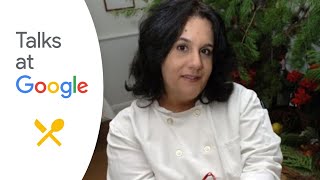
Gina DePalma (pastry chef at Babbo in New York) gives a talk and live demo of a biscotti recipe while discussing her career, Italian family food influences, how her cookbook originated, and practical pastry techniques. The demo includes ingredient specifics, shaping and baking tips, and a brief audience Q&A about recipe sources and gluten-free options.
Questions this video answers
3.5 cups unbleached all-purpose flour; 4 eggs; 2 cups granulated sugar (plus baking powder and kosher salt; chocolate and ~12 oz nuts listed separately).
She says she had been pastry chef at Babbo for 10 years.
Chapters
Hello, and welcome to AuthorsGoogle. It is my pleasure today to introduce a friend of mine, a woman I had the pleasure of working for back when I lived in New York, Gina DePalma. Gina comes to us from Babo in New York. Awesome restaurant. And Gina has just published her first first cookbook. It's a cookbook that she actually wrote every single word, tested every single recipe, and did the cookbook 100% by hand. And it's an amazing accomplishment. It's a beautiful book. The words and her stories is just great. And I'm so happy that we can have Gina here today. So I'd like to introduce Gina.
Thank you. Am I speaking over there?
Yes.
Okay, so I'm going to head over here. Is my mic on? Good. Awesome. Well, thank you all so much. This is amazing. It's a great opportunity to come out here to Google. Can I have a job? Is there anybody watching that might want to give me a job? Because I want to be here. This is, like, a really great energy going on, so I really appreciate the opportunity. And we're going to make some biscotti today from my book. But first, we're going to talk a little bit, of course, because I am supposed to be an author and have some substance, so I'm going to try my best. And Todd suggested that maybe I introduce myself a little bit more personally. And I am the pastry chef at Baba Restaurant, and I've been there for 10 years. I helped open the restaurant, which swore me off of opening any other restaurant ever again, which after you've done that once, you kind of always say you're never going to do it again because it's quite an achievement. And we were very fortunate at Babo that we kind of took off fast, and we didn't really expect to take off so fast. I can remember the first night that we were open, we did what's called a soft opening, and we did about 35 people. And I remember we all looked at each other and we were like, oh, my God, can they afford to pay us all on that? You know, is that going to be enough? And then the next night we did 100. And then the next night we did 175. And then before you knew it, we did 225. And we've kind of never looked back. And for me, it's been a wonderful opportunity because Mario Batali, who I'm sure most of you know. Does everybody know Mario? I was just in Kentucky recently, and nobody knew Mario, and I thought that was really weird. But I kind of liked it, too, because a lot of what I do, if I can digress, a lot of what I do is, you know, I'm kind of like a. We're all kind of conduits sometimes to. They think he's like in our back pocket or something, you know, like, hi, is Mario there? But anyway, what was I saying? What was I talking about?
We were talking about the opening.
We were talking about the opening. And I work for Mario, and, you know, he's this really incredibly intense lover of life and lover of what he does. And he has a deep and profound love for Italian food and Italian culture. He is Italian, I'm Italian. And we kind of had that simpatico immediately because we both grew up the son of the children of Italian immigrants or grandchildren in some cases. And we really kind of meshed immediately. And from day one, he's always let me come kind of do whatever I wanted. He basically said, here's your station. Go for it. And he's never really been anything but a supporter. And we have a really great collaborative effort that we put forth in the menu, and we talk a lot about what we're going to do. And I've never had anything but positive feedback for him. So I'm really lucky because for a pastry chef, a lot of times that doesn't happen. So it's been really great. And I, at some point discovered that I had a large 10 years worth of, or I should say seven years worth when I started writing it, worth of recipes that I wanted to share. And that's kind of what resulted in the book that you all have before you now. And I didn't. I'm one of those accidental chefs. And. And today we have a time where people are going to cooking school in droves. And I remember when I told my mother that I was going to go to cooking school instead of graduate school, she started fingering the beads and oh, my God. And the veil came out and you're ruining your life. You're ruining it. Because I was going to go to law school and I was going to be a lawyer, and I was going to be this shining beacon in our family. And instead I took my loss LSAT application and tossed it in the trash and decided that I was going to go to cooking school. And I'd already been cooking for several years justifying it with that I was saving extra money to go to law school, so I was supposedly socking away all this cash to go to law school and working weekends in kitchens, working nights in kitchens. And at some point I just decided, well, this is kind of silly to be putting effort in one area during the day and another area at night. And I just took that leap and I decided to go to cooking school instead. And it really, when it came down to it, it wasn't a surprise because my entire existence, my entire childhood, was really based on food, obsession with food. Does anyone else come from, like, an ethnic family where, like, dinner is all that matters? You know, the world can be coming to an end, but dinner is the most important thing. And that's the environment that I grew up in. And in the book, you'll be able to read about some of how I describe my mother's kind of obsession with food, but also constant disappointment with food, because she spent part of her childhood in Italy. If you've ever been to Italy, and if you've ever been to Europe and a lot of other countries, the produce and a lot of the food is just more direct and it's just better. And especially coming from New York, she spent part of her childhood in Italy and then in New York, where there was kind of still that European market mentality and we moved to suburban Virginia. And suddenly she had to go to these big supermarkets. And when you have a market mentality, you just buy what you need that day and the next day and you buy little bits and you go every day to the market. But that doesn't really translate in the suburbs, you know, so we would just. We would be pulling up at Safeway or Giant or A and P, like every day. It was just. And it just was a really weird rhythm and we really stuck out in our neighborhood because we were just always going to the grocery store. And you know, the other thing that my mother had a hard time adjusting to was the whole case with the meat and the fish already wrapped. There was no butcher to talk to, there was no fishmonger to talk to. And it was really difficult for her. And I always sensed this disappointment. You know, she would just sigh. You know, we'd go and we'd get some apples and they'd be in a pre. Plastic, pre packaged bag of plastic. She'd sigh. So, you know, it just, it really permeates your childhood when you have someone who places that much importance on food. So when she was wailing and moaning, why wasn't I going to law school? I felt like saying, lady, it's your fault. But, you know, in the end, it all worked out. And I did go to culinary school, and I didn't go for pastry and I think that that's really an important reason why I am where I'm at today, because I think it's very important for pastry chefs to have a sense of food, and I think that that's a trend that's starting to happen. I mean, we have a lot of trends in food these days, and we have a lot of trends in pastry. The whole molecular cooking craze, which I took project physics in high school, I couldn't really figure any of that stuff out. Chemistry was not my thing. I take my hat off to them, but it's a completely opposite thing from what I do. And I like knowing how my pastry is going to fit in the larger menu at Babo, it has to make sense. If I went to Babo, where we serve very beautiful food that is not too fussed with and has bold flavors and a lot of tradition behind it, and made something that was fussy and pretentious and had twills sticking out of it and little dots in concentric circles, it just wouldn't work. And I think that it's really important for pastry chefs to kind of have that sense of food and understand the balance of flavor. It's the balance of salty and sweet, the balance of textures, kind of that interplay that makes a great meal, a great dish happen. It's not just about being able to construct and manipulate and put gelatin and glycerin and all sorts of things I can't pronounce into food to make it manipulate, to look not like food or to do something it wouldn't naturally do. I mean, if I made a beautiful fruit sauce or compote, its natural inclination is not to stand straight up, but to fall kind of sexy on the plate and kind of curve around. And that's what I kind of try and let my food do. So I digressed a little bit. Let me try and get back on track. So came to Babo, was given free reign, and years went by. The restaurant business will just suck the life right out of you before you know it. And at one point, I think it was after you left. Was I working on the book while you were there?
No.
No, I wasn't. I was just trying to survive, right, every day without doing myself in. We all were. And one day, it was a rainy day, and I asked to speak to Mario. I said, do you have a minute to talk? And he said, yeah, come on, let's take a walk in the rain. And we ducked under an awning, and I looked at him, and I said I was having an existential crisis. I was like, I don't know what I'm doing next, and I don't know where I am or where I'm headed. And he said, you're going to write a book? And I said, are you kidding me? And he said, you're going to write a book. I'm seeing it, and we're going to make it happen. And from that moment on, he was my cheerleader. And I wasn't really sure if I could write a book. Mario knew I could write because I think I authored a few indignant memos about something down the line. Memo to file regarding temperature in kitchen. Mario, I'd like to bring to your attention. So he knew I could write, and I guess he saw my collection of recipes and my body of work more clearly than I did. Because when you're in it every day and you're just kind of slugging it out and trying to feed the masses every day, you don't really step back and try to see what you have. It's kind of the same thing with the reaction that people have with Babbo. I love Baba. Babbo is my heart, it's my soul, it's my life, it's my blood. But I don't, you know, I don't get it when people are, you know, so excited and so enthusiastic about our restaurant. Some of you have come up to me and said, we ate at Bobo. We loved it. And I think to myself, you did, really. You came all the way to Baba. Like, you know, I don't get our place in the food world. It's really hard when you're in the middle of something to kind of really understand that. So, you know, I also didn't expect that it would be easy to get a contract to write a book, but, hell, it happened. And I went through the whole proposal process, and I wound up with, you know, my own little vision of what I wanted to do, which is tell the story basically of who I was, how I came to be a chef, and how I came to Bavo. And then it kind of flows from there into kind of presenting my recipes and my collection of work that I've done over 10 years. And in between, there are a lot of stories about my childhood and my wacky family and trips to Italy I've taken. And I think it's a good. Think it's a good ride. So I'm really excited that you all have it. And there's some really gorgeous pictures in there, so good feast for the eyes, I think. And today, what I'm going to make for you from the book is my biscotti, one of my recipes for biscotti. Now, the word biscotti. In America, we tend to only think of biscotti as what they are, what we find in the coffee shop, what we find in that St. Starbucks jar, that's a biscotti. But really any cookie is a biscotti in Italian, just like in England, they'll say biscuit when they mean cookie. And most biscotti, however, did start out with that format. They're not here, are they? No, they're not. Most biscotti did were things that were cooked twice. Biscotto twice cooked. That's where that comes from. So that and I think cookies kind of evolved forward from the original biscotti, which was something that was baked dough slapped together, baked, cut up and then dried, basically. I mean, it goes back as far back as the Roman Empire. This was something that. Soldiers, Gladiators. Gladiators, no, soldiers. What were they called? I watched Rome. I can't remember the ones that went all over the place. Centurions, I don't know. It was something they could put in their bag and take on their journey and it would last weeks. And I've had biscotti that are probably weeks old, right? Yeah, weeks, months, something to sustain them. So that's kind of where the tradition comes of having something that is baked and then baked again to kind of help it maintain its freshness and its longevity. But we all kind of know that shape, we love that shape and we call it biscotti. And it's all ok. Even though Italians get a little bit confused, they don't get it. They think something rounds a biscotti, something squares a biscotti. It's all biscotti. But this is a really simple recipe and a lot of people, I find, are daunted by biscotti and you really shouldn't be because they really are quite easy. And it starts out with eggs. And my disclaimer is that I get really confused at these demos. So if I do the recipe wrong, I'm sorry, do as I wrote, not as I say, does that make any sense? So we're going to start, and I know the recipe says to whisk together the dry ingredients first and that's usually what you do in any kind of baking recipe. And we're going to start with three and a half cups of unbleached all purpose flour. And unbleached flour is pretty much the norm. I remember years ago you used to See bleached flour as an option on the grocery store shelves. And you don't even see it anymore because all bleaching does. I mean, it's a chemical process that kind of takes away the natural goodness of the flourish. All flour in the United States is enriched. That's what enriched flour means. It has extra vitamins added. Some of the vitamins that are taken out during the processing of the flour are added back in. And bleaching just kind of seems extraneous on top of that. There are professional bakers, though, who use bleach flour to have maybe a pure white color, like in a wedding cake or something like that. But unbleached flour is usually the way to go. And we have a little bit of baking powder, and in America we have great baking powder. In Italy, they don't have baking powder just as it is. It comes in these little packets and it's flavored with vanilla. I think they have that in France as well. So it's really hard to make something without it having that vanilla flavor. So when I go to Italy the next time, in past times, I always take a can of baking powder with me. But always make sure your baking powder is fresh, that it's not 16 years old, which can happen. So we have some baking powder and we have some salt, kosher salt. Always use kosher salt. There's no reason to use the other stuff. And I think if you actually take the Morton's iodized salt and taste it, just taste the salt, you'll choke on it. You'll get this chemical feeling in the back of your throat. And if you taste either sea salt or coarse kosher salt, you'll notice that it's a nice, bright, clean flavor. And it's perfectly okay to select the salt that you like the flavor of for different uses. I think kosher salt works best for baking just as a nice all around thing to have on hand and not worry about. But there's sea salt that's really nice as well, that in this kind of grind you don't want to use. The Italians call it salle grosso, the big fat crystals. You wouldn't want to use that. But that's more than I ever thought I could say about salt. Somebody wrote a book about salt though, right? Was it the same gentleman who wrote the book about cod? That's a great. Has anybody read those books? One's called salt and the other one's called cod. And it's about how these. What? Mark Kurlansky, you know more than I do. Really great books about how those two ingredients, like, had huge global impact on history. History from fish. Anyway, so I'm going to take the dry ingredients and I'm going to whisk them together. It's always important to, to whisk the dry ingredients together. Whenever I see one of my assistants kind of, can I say bad words on this? Half assing it and not doing that. Okay. Whenever I see one of them kind of chintzing out on this step, it's going to get a finger wag from me. Because if you don't incorporate your baking powder and your salt evenly throughout the flour when you dump it into your recipe, there's always the chance that it's going to stay concentrated in one place. So that's sometimes why you'll have things go all weird on you. If you're baking little individual things, some of them will rise and some of them won't because they didn't get their fair share of the ingredients. So you always have to. That's an important step, I would say. That's one of those things that's the mark of a true professional. And if anybody has any questions while I'm doing this, just wave your hand wildly and make gestures at me and I will try and stop.
If you could actually, they can actually step up to the microphone and then.
Okay.
And then you can just answer the questions that way.
The microphone, that's like Jay Leno does that, right? That's cool. Wow, that's awesome. Okay, so we're going to start with four eggs. And these are beautiful. Is it all brown eggs out here in California?
The ones we use here at Google.
Good. Only the best for Google. God, God. God. Life is just wonderful within the walls of this campus.
No, it's not a problem.
This is my refuse bowl. This is my dump bowl. Oh, it's very Rachel Ray. Sorry, Rachel. I copied you. And we're going to do four eggs, right? Always crack your eggs on a flat surface. You'll get a much more even break if you do it on this. There's always a chance that the edge will cut into the shell. And it will. If you're trying to separate it, you could break the yolk. And if you're trying to keep shells out of the bowl, that could also not turn out your way. So we're going to start with the eggs and then we're going to add two cups of sugar, two cups of good old white processed sugar applied directly to the hips. And this is an old school KitchenAid, isn't it? This is great. Oh, my God. I want to embrace this like a long lost lover. I made a mistake of giving away my old KitchenAid. My circa 1992 KitchenAid that was just the best ever. I gave it away to someone I don't even like anymore. It's the kind of thing that just keeps you up at night, you know? Damn, where is it? But this one's great. Does everybody have a Kitchenaid? Everybody should have a KitchenAid. They used to be this really big, wild, extravagant purchase. They're really not that expensive. It's now. And you can do so much with them. You can make pasta with them. You can grind meat. All right, so I'm going to start this out on low and then progressively move it up a little bit. And we want to combine the eggs and the sugar until they're kind of fluffy. Now, there's a phrase that's used a lot in baking called ribboning. And that would mean that the mixture gets to the point that if you were to lift the beater up, it would fall down in a ribbon, like how a ribbon piles on top of itself. You don't want to do that here, but I thought I'd just give you the vocabulary lesson anyway, just to kind of keep you off balance. We chefs like to do that. We don't want you guys to know everything. Otherwise, we're out of luck. Right? We're out of a job. So I'm gonna just mix that until it's combined, and it's nicely combined. And we're not. We don't. We don't have the boom. The ESPN shot going over to show you, but it only takes a minute or so, and then pale and thick. And then we're gonna beat in the vanilla extract. And this is paste, and this is becoming the norm in professional kitchens. And I'm not sure if you guys can get it at home yet, but it's like a thick sludge, and it has a lot. Right, Sludge. Is that a good word, Raylene? It's got. It's got all the vanilla bean tar. I used to call that tar in it. So it's not just liquid. You know, vanilla extract was really just alcohol with vanilla. Vanilla beans kind of macerating in it. Now the thinking is remove some of the alcohol and use the actual bean more and just kind of suspend it in a light, flavorless, kind of one of those ingredients that's used a lot in the molecular gastronomy, like something like glycerin or glucose or something like that. Right? Glycerin something like that. And what they do is they just take the whole bean and they suspend it in this stuff and it gives you just so much more flavor than regular vanilla extract. And what I used to hate about vanilla extract is that sometimes it adds a liquid component to your recipes and then they kind of never recover after that moisture. So this is one of my favorite, favorite inventions of recent memory, along with the Ziploc bag with the zipper on top, which for me was personally life altering. So we're going to beat in the vanilla and so we're going to just. I'm going to put that on super low so it doesn't get too, too much, too beaten up. But what I have here is what kind of chocolate do you use, Aileen? Google Chocolate. It's special single varietal. Google Chocolate. Right. It's very special Google Chocolate. Now you can have, you can use chocolate chips for this, which is fine, or you can use baking chocolate that you buy and chop up coarse chop like this. Or you can buy some, in some cases you can buy it kind of pre chopped. I'm going to stop this so I can talk just a minute about the chocolate I like to use. Everybody's starting to learn the vocabulary of chocolate. And single estate varietals of chocolate are becoming very hip. And people are starting to ask me, what percentage of chocolate do you use? And I'm like, what? Like, how do you know that? It's crazy, but people are starting to pay attention to it and I think that's really cool. I use a 66%. I don't know what you use. I don't know what you like to use. I use 72. 72 is like so the norm now. Oh my God, you're like such a sheep. I use 66% myself. Oh, you do? Okay. All right. I'm sorry, I didn't mean to falsely. Jacques, I'm sorry. No, I use 66%. Because you know what? 10 years ago when we opened, that's all you could get your hands on. Really. Honestly, we didn't have all that. So I formulated all my recipes to that percentage. And sometimes when you have to go back and rework all your formulas, I'm too tired for that. But I like to use 66. Or you can use 72 is usually easy to find. And in this area, in this part of the country, you can get Guittard chocolate very easily. And Scharffenberger, of course. Those are both really good brands. I like French chocolate. I happen to love. That's why I Like Guittard. I mean, it's made here, but it's French style. A lot of people like Belgian chocolate, A lot of people like Swiss chocolate. I just think the French really get chocolate. They seem to get the right balance of acid and a little bit of spice and tannin and all those components of chocolate. So I like French chocolate, I like Valrhona, I like Cluiselle. All those are good brands. You should always use good chocolate. If you want to have a good end product, use good chocolate. I know that Nestle is starting to try and come out with a new line of kind of higher end chocolates. And for some reason, nothing's better in a chocolate chip cookie than toll house chips. But really, I think for any other purpose you really want to, if you're going to make a chocolate dessert, you should kind of spend the money and get a really good chocolate. So we have chocolate and then we have hazelnuts. Just want to keep that moving a little bit. Now, hazelnuts used to also be very hard to find, and usually you find them with the skins on. And I have a little blurb in my book, a little sidebar in my book about whether or not you should skin hazelnuts. And I think the fancy French pastry chefs are probably going to be smearing my name because of this, but I said that in some cases, it really doesn't matter. Now, if you're making a really delicate hazelnut mousse and you want to have some hazelnuts in that, you might not want that visual. And also the skins can be a little bit bitter. But first of all, I like a little bitter in my food. I'm just part of bitter, bitter me. I like that. But also, I just think that when other stronger flavors are kind of taking hold, it's not going to make that big of a difference. And I only say that because I used to only be able to get hazelnuts with the skins on. And it's such a pain to try and get the skins off. You have to put them in the oven and toast them until the skins start to crack. And then you rub them while they're still hot in a kitchen towel. And you rub, rub, rub, rub, rub. And then you open up your towel and half of them still have the skins on. And you just want to be like, you know what? I'm just gonna have a beer and I'm not making that recipe today. So my attitude is, if that happens, just leave them with the skins on. It's okay. You know, the world's not gonna fall down. On a good day, you can remove the skins. On a bad day, you can just pretend they're not. Not in there. But even better, you can buy them with the skins removed. Right. Does, like, Trader Joe's sell them without the skins on, which is great roasted, and they're ready to go. And for biscotti, I really like to keep them, not like, just a rough chop. The food processor is not your friend. When you're chopping nuts, you should really have a knife. And for nuts, this is an offset serrated knife. And for chopping nuts and chocolate, it's really great because. And I can even demo this a little bit for you. This is a chef's knife. And while it's wonderful as well, it's sometimes a little hard to get the nuts not to roll around. But the serrated knife, the serration kind of grabs them, and they don't roll around, and you just want to go back and forth. This is one of those really Zen things to do in cooking where you have to just not concentrate on how much of it you have to do. You just have to go to your happy place. You know, try not to cut off your fingers in your happy place, but just kind of, you know, keep on going. Because inevitably, with a food processor, have you ever noticed you. You can't get a rough chop either. Half of them are still whole, and the rest of them are pulverized to a powder. So the answer is to really keep them. Keep doing it by hand and kind of keep them the size that you want. And with these biscotti especially, we call them mosaic biscotti, because you want to have that pretty cross section when you slice them. You want to see the integrity, the structure of that nut kind of intact. So just give them a rough chop. These. They should always smell like really aromatic. And hazelnuts grow a lot all over Italy, but especially in Piemonte. So if you can get your hands on Piemontese hazelnuts, they're something special. And pistachios, of course, came to Italy through Sicily, where the Saracens actually taught the native peoples living in Sicily when they invaded them. Thank you very much. By the way, you could grow some pistachio trees. And Sicily used to have quite a. Quite a huge crop of pistachios. Now it's a little bit overshadowed by their almonds. They grow a lot of almonds there as well, and you can certainly feel free to substitute any nuts. So as long as you have two nuts in the same quantities, it's fine. If you want to do walnuts. If you want to do walnuts and hazelnuts, walnuts and almonds, you know, you can mix and match whatever you want. This recipe will work anyway, so we're almost at the end of it here, but I am going to. These are all measured out, right, Raeleen? Of course they are. This is Google, Really? This is 12 ounces. Wow. Wow. Okay. Looks like a lot. I'm scared now. Okay, so we. We have this in the. It's nice and thick, but it's not quite ribboned. We beat in the vanilla extract, and we're going to beat in our flour. That's one of my challenges, to kind of get the beater where I want it to be. I like to do that. And we're just going to guide the flour in the spatula so that we don't get it all over the place. Kitchenaids always come with that fancy bowl thing that helps you put the dry ingredients in. I don't know anybody who uses that. Do you know anybody who uses that? I throw mine out. It's terrible. I'm sorry, kitchenaid. Sorry. What?
Sometimes I use parchment.
Yeah, parchment. You're right, Todd. Todd's a good man. Do all of you know Todd? You are one of my favorite people in the world. So we're gonna just beat this in. Now. Whenever you have a sequence of ingredients, you don't have to beat them in completely. Unless the recipe says beat it in and mix it thoroughly and completely. You can do it instead of. So we'll add the flour, And then we'll add the nuts, and it continues to mix in. This is where you're going to be glad you spent the money on the KitchenAid. And then we're going to add the chocolate. Hmm. Checking the texture here. Is there a babbling brook outside? Is there, like, a waterfall? Hear the soft sound of cascading water? Maybe it's just. I'm in my happy place here. A natural, happy place. So we're going to add the chocolate. Whoa. Hi. Come on. You can do it, baby. And it looks like it's not going to come together, but it does. It does. Now, whenever you're afraid of something which is like, flour and moisture, know also that after it sits a little bit, the moisture kind of distributes itself through the flour. In fact, at work, we always make, like, pie dough, tart dough, a little dry, and there's, like, wetter clumps and drier clumps. And you put it. You wrap it all up together, and you. That's what chilling it does. It kind of allows that moisture to kind of redistribute itself evenly. It's really quite amazing. So the next thing we're going to do is roll these out, and we want to have ready some baking sheets. And for this recipe, you're going to get. I get five logs usually, and I put three of them on one sheet tray and two of them on another. Okay. I'm breaking for a funny story I once had. This is a half sheet of parchment. Did you work with Stacy?
I did not.
Are you sure? Stacy Casarino. I should probably not say that, but anyway, so these come in big, big sheets in the restaurant, and if you need a half sheet, you cut it in half with a knife. And she spent about four weeks trying to figure out where we kept the half sheets. I always thought that was, like, really funny before. One day she was just like, I just can't find them anywhere. You just cut them. I forget that this is going on the Internet. Oops. Stacy, if you're out there, I love you. Okay, so you lower the bowl, and you. Todd, why is this not working? There it is. Okay. And remove the beater. And this looks like it's not going to come together, but it will. Trying to clear the way here. And we're just going to put a little bit of flour down on our cutting board. I like to kind of spread it out so that you have an evenly floured surface. And. And you just want to take the dough. And shape it. You can eyeball it into five equal pieces. You can also wrap it and chill it and then cut it into five equal pieces. And as chunky as this seems like, my hands tell me that it's wet enough to definitely come together into a log. So that's about as much as we want. And all of that chunkiness is going to definitely make it beautiful when it's sliced across. That's how you get those beautiful. That beautiful visual. So now the challenge is we're going to roll it into a log. Whether you're rolling something into a fat log or a thin disc, anything that you're trying to do in cooking, it's always best to visualize it. Just kind of imagine what you want it to be, and your hands will kind of make that happen if you just trust. Trust yourself. And this is my little inspirational speech I give to all my assistants who are having problems with things. Just kind of keep your eye, your mind focused on what you want the finished product to look like, and then just do it. But when you're rolling a log, keep your fingers separated. Don't go like this because then you'll just have indents. Right, that makes sense. All of this makes perfect sense. Keep your. It does. You have to just stop and consider it. Keep your fingers separated so that the weight of your fingers is evenly distributed. And make a snap snake. Make your snake. And I make these usually just shy of being the length of the pan. Okay. Kind of tighten it up where it looks like it's not tight. And and then just move it onto your sheet tray. And then once it's shaped, you can just press it down slightly like that. And that's basically what you want it to look like your finished log. Okay, so I'm going to do one more. And again, just. Even just sitting here, I can feel that it got goopier. So that moisture, even though it appeared that it wasn't there and that it was clumpy and dry, it's really kind of not. And also remember that sugar has a lot of moisture in it. If you put sugar in a pan, what it'll do, a hot pan, before it starts to cook and caramelize, it'll melt. Right. And it'll be liquid. And that's because it has a lot of moisture in it. Water in it, naturally. And sugar always contributes a lot more texture to a baked good than people think. That's why if something turns out a little dry, if I'm formulating a recipe, I always check if I feel like I've got enough fat in there. The next place I'll check is the sugar content. Because sugar contributes a lot to the final product. And I'm just kind of making the dough do what I want it to do. When it comes apart, I say, no, no, no, and I push it back together. And, you know, it's fine. I think cooking is something that you should do. You should enjoy the process. It should never be like a panic induced state. You know, that's part of it. Otherwise, why are you doing it? Enjoy it. You have to enjoy these little moments. I think people think that cooking, especially cooking professionally, is filled with, like, you know, all this Top Chef esque excitement. First of all, I've never had a chef come into a kitchen and tell me, your challenge for the day is to take these six ingredients that all come from the same zip code and turn them into five different courses. I've never had. I mean, that show just irks me. I'm sorry. Because it just gives a very unrealistic expectation of what's expected of you. In professional cooking, it's really a lot of very small, mundane tasks that you have to do over and over and over again. I've been peeling apples for 17 years. I've been cracking eggs for 17 years. I've been making biscotti for 15 years. Let's say I've been doing the same things over and over again. And that's not a bad thing, because I get to decide how much integrity I put into every task I do. And that's the challenge. It really isn't about flash and fire, right? Yeah, yeah, yep. It's about fire. Finding the enjoyment in the fact that I just did that and it looks really good. And I'm happy with that. And I get that little moment of. I'm happy with that. That's going to look good when it bakes. And that's what you have to keep your eye on the prize when you're doing this for a living. So we're going to get it the shape that we want. And I'm really going to have to do a modified hand wash here because my hands are just absolutely coated. If I had a sink, I'd be washing them. So this is just a pretend sink. If you'll all just indulge me for a moment. Messy, messy. That is one good thing about working in professional kitchens. Someone else will clean up the mess. People ask me all the time if I cook a lot at home, and nine times out of 10, the answer is what? No. I have to do dishes. There's no dish station at home, But I still like cooking at home. So move that out of the way. Well, temporarily at least. And what I'm going to do now, after I clean up again bit is this like the first authors at Google cooking demo. Great. Y' all can, like, watch what went wrong, and it'll be like a game tape, you know? So the next thing I'm going to do, and this is what's really important, if you want to make biscotti and you want to make them so that they look like the ones in the coffee shop. Look, this next step is really important because what I'm going to do is separate this egg and I'm going to keep the white and I'm going to reserve the yolk for a really high cholesterol omelet or something else. Pasta carbonara, maybe. And then I'm going to take. Well, you can use a fork or you can use a whisk and you just want to break it up a little bit, loosen it up an Egg white, molecularly, is very tight. And you want to loosen it up, lighten it up. So you get this little egg white wash. And you want to use a nice pastry brush, nice clean. Whoops. Pastry brush. And it should definitely not be the one that you use to brush the barbecue sauce on. Keep your sweet and savory world segregated. That's a good piece of advice. And you want to just paint on a nice. Coating and you want to get the sides and the top really well. And then the kicker is a little bit of granulated sugar. Or you can use raw sugar. That sugar in the raw. The natural sugar, turbinado sugar, sometimes it's called. And. And it's not a lot. I know this seems like it's a lot, but it's maybe, maybe a half a teaspoon, not a lot. And it's going to go in the magical Google oven. Here's my oven. Wow. It's nice. It's self cleaning, so it's in the oven. But I already baked these for you today earlier. And here is what we have as. Whoops. Did I just step in the oven? I think I did. Here is the finished product. Ouch. Well, it's the almost finished product. I shouldn't say finished product. It's not completely finished. And I'm going to. What did I do? Oh, okay. Oh, thank you. I'm so Catholic. What did I do? I'm so sorry. I'm so sorry. I messed up Google World. So this is where this knife comes in really handy. I did a signing last night and everybody said to me, how do you get your biscotti cut so nicely? And this is the key. This is in every pastry chef's kit. It's an offset serrated knife. It's offset because you can kind of hold onto this little part here and that little dip. It really makes a difference in how easily you can slice things. I prefer an offset serrated knife as a bread knife to a straight one anytime. So you can get these at any store, any cookware store. So these make the. As my mom would say, the Kulo would make a nice little treat. And you can slice these a number of different ways. Well, first of all, we have the beautiful kind of chunkiness that you get from the nuts and the chocolate. And at work, I was told that the official Google biscotti is a thick thing like this, which, if you like thick biscotti like this, this is great. And these taste great that way. It's good for dunking. You can also do them. You can make Them smaller by slicing them straight across instead of on a diagonal, right? That would make them kind of this little hump shape, which is kind of pretty. So you could do that. So we'll make a few that shape. And all you got to do, really, is right on the same pan. You don't even have to change the parchment is lay them out. I kind of like them on the bias. See how they get a little longer as you go on the bias more and more. You don't want to experiment too much, because then you have a lot of waste. Kind of decide what you're going to do and then do it. And then the other thing that I'm doing is I'm not kind of going like, that's a recipe for disaster there. You just got to be very decisive and tell the knife where to go. Another one of my really tiresome cliches in the kitchen, as my staff will tell you, is don't. You're the. You're the boss of the food. The food isn't the boss of you. You tell it what you want it to do. The food, the equipment, you're the boss. So you want to slice. And of course, I'm not using proper technique, but when you're slicing something, you should always try and claw your fingers that way. The knife will never get you that way. It will if you go like this. If you go like this, it will always just hit your knuckles and you just kind of walk your fingers back. So even though this seems like a lot of effort, really, I think biscotti are a lot easier than drop cookies or rolled cookies, because you really just. Just instead, you know, after you stir, slap together those logs, it really doesn't take very long to slice these kind of the way you want them. They smell really good, too, don't they? You get that really pretty mosaic tile effect. I think that's why I call it mosaic escorti, which I like a lot. So this is a great recipe for the holidays because you can make them as thick or thin as you like them. And I'm kind of making these, some of these a little thicker. You can make them whatever diameter you could make. Instead of five logs this size, you could make little mini logs and make little tiny biscotti, which is nice. And then the yield is huge. So, you know, one batch, you can make enough for yourself, your family, some to wrap up, you know, 10 biscotti in little bags and wrap with a ribbon. It's a nice little gift. It's a great hostess gift, or they're just good to have keep on hand for snacking. And they really do last for. They do last a long time. If you have them in a nice, airtight container, they'll last a long time. There's no butter in here. The eggs have been completely cooked, and as long as you keep them in a nice, cool, dry spot, they'll be great. Do we have the finished ones that we did? What? Oh, they're back with the coffee. Oh, I'm sorry. Okay, so the finished product is back there with the coffee. It's okay. Raeleen, what you want to do now is turn your oven down to 200 degrees. 220, 225. And the one thing that I think is special, especially important, is to keep them in a single layer, because the whole object of the game, of course, is to make sure that you're evaporating all that moisture. And if you have them stacked on top of each other, that's not going to happen. So you do want to keep them in a single layer and put them back into the oven. And it's going to depend on whether or not you have a convection oven with a fan or a still oven, how long it takes to dry them out. But just test them with your finger and feel if they're still soft. It should be a low oven. You're not trying to color them, though. Sometimes to color them is nice. You might like toasted biscotti, which I like sometimes very much. So really, you're the boss. But if you want to just keep them the same color and just dry, you want to keep it on a very low oven, like 200 degrees, and that's that. Then they're done and ready to go. And there's our recipe. Yay. Thank you.
If anyone has a question, if you could walk up to the microphone so we could get your voice on YouTube.
So thanks a lot. I have two questions for you. What has been the source of the inspiration for your recipes in your cookbook? Are they primarily family recipes that have been modified? Where does your inspiration come from? That's question number one. And question number two is, you said you went to culinary school with the idea of not becoming a pastry chef. What happened? And I digress. Right. I went off on some ridiculous tangent and didn't finish the story. Well, first of all, the recipes come from a variety of places. They do come from. If I travel, a lot of them are family favorites. A lot of them are just kind of wacky things I dream up, because that's kind of what I'm Paid to do is to be creative and come up with things for the restaurant, for the menu. I usually start out with an ingredient. That's where when I'm starting out with something, scratch that, I have to come up with a new menu item. I will decide what ingredient I want to work with. What's seasonal, what's in season? Are the apples really good? Did these beautiful Bosc pears just come in? Are Meyer lemons in season? And then I go from there. And then I think about, what end product do I want? Do I want something crunchy? Do I want something soft? Do I want a combination? Do I want a tart, a cake, a custard? And then it just kind of organically evolves from that, basically. Other times, it's something that I just see and maybe a component of something will just get me charged and I'll, you know, you try and think of ways that you can turn it around to be something that's your own. And then what happened? What happened? What happened was that I went to culinary school, and you have to do usually an externship. And I went to a small culinary school at the time. It was called Peter Kump's New York Cooking School. It was one of the first cooking schools in New York. It was established by the late Peter Kump, who was a contemporary and friend of the James Beard. And it was a very small program in a nice little townhouse on the Upper east side on 92nd Street. And the classes were very small. And it was just this lovely little French inspired cooking school. And we had very. The class size was really small. We were very close with our instructors. And one of my instructors, Katherine Alford, noticed that I tended to gravitate towards the baking recipes. Whenever we had a baking recipe in the curriculum that day, I would always want to do it. So she said, I think she believed, and I do believe this as well, is that every chef should have a good sense of both sides of the kitchen. Sweet and savory. And she said, you know, you should really, you know, kind of develop that side a little bit more and explore it and just see where it takes you. So she placed me in a pastry externship. And I remember I was like, what? I don't know if that's what I want. But you know what? I did it. And I never looked back. And then when I was done with that and actually stayed longer than I had to, I was having such a good time learning pastry and chocolate technique and all those things that then when I was done, I had experience under my belt in pastry. And back then in New York in the mid-90s, there were just not as many restaurants that you wanted to work in. Good restaurants. Now there's just oodles and oodles of them. But back then you really didn't have a lot of choices. So a job came up in pastry, and I took it and never looked back. And next question. So your recipe looks really beautiful and I look forward to making, making that for my family. Unfortunately, I'm allergic to wheat. I have a gluten intolerance. Do you have that in your restaurant and how do you deal with that as a pastry chef? Well, I mean, I can always come up with gluten free desserts. I mean, that's actually not that hard because custards have no flour in them. Sometimes, usually cookies. For me, it's a little tougher call to make a gluten, gluten free cookie. You can use ingredients like polenta. I am currently experimenting a lot with farro flour, which is really nice. Chestnut. Chestnut flour. The problem with some of those things, though, is that you're not going to get the same structure to your final product. Most cakes, cookies, they're structured doughs, owes to the buildup of the gluten and how much you work the gluten and the way that the gluten forms strands and it's key to the structure. So sometimes you're not just, you're just not going to get the same finished product, but you can learn how to troubleshoot that. I wish that I was the gluten free girl, but there is a gluten free girl cookbook out there that you can definitely look into for baked goods. She might have some good baked goods, but when gluten free, when people who have a gluten allergy come into the restaurant, I always have plenty of options for them. I have panna cotta on my menu all the time. We have great gelato. We have a lot of fruit based desserts. So there's always something. Thank you. Thank you. That's it.
Does anyone have any more questions?
No more questions. I talked a lot, that's all.
Well, I'd like to thank Gina for coming and thank you very much.
Thank you.
More from Guy


Cheryl Strauss Einhorn | The Human Edge: Smarter Decisions in the Age of AI | Talks at Google



Rachel Glennerster | Innovation and the Center for Global Development | Talks at Google

Rebecca Winthrop | Rethinking the Purpose of Education in the Age of AI | Talks at Google

Dr. Robert Wachter | A Giant Leap: How AI Is Transforming Healthcare... | Talks at Google



